Article Contents:
- Purpose of ceiling polystyrene: not just decoration
- Wall-ceiling joint masking
- Visual correction of room proportions
- Space zoning
- Base for lighting solutions
- Style-defining element
- Profile types: from smooth to decorative
- Smooth profiles
- Decorative profiles with relief
- Shadow-casting cornices
- Multi-level composite profiles
- LED lighting cornices: creating a floating ceiling effect
- LED cornice construction
- Types of niches for lighting
- LED strip selection
- Installing lighting in the cornice
- Effects and techniques
- Compatibility with stretch and gypsum board ceilings
- Cornice and stretch ceiling
- Cornice and gypsum board ceiling
- Combined ceilings
- Installation technology: on the wall or under the ceiling?
- Wall mounting
- Ceiling mounting
- Combined mounting
- Cornice installation with lighting
- Installation features on different bases
- Joint sealing: perfect joints without traces
- Types of joints
- Putty materials
- Plastering Technology
- Secrets of Perfect Joints
- Painting and Final Finishing
- Why Paint Polystyrene
- Choosing paint
- Painting technology
- Decorative techniques
- Protective coating
- Ready Solutions by Interior Styles
- Neoclassicism: Elegance and Symmetry
- Modern Style: Minimalism and Light
- Classic: Luxury and Traditions
- Scandinavian Style: Simplicity and Coziness
- Loft: industrial aesthetics
- Provence: French romance
- Manufacturers and Brands: Choice of Quality
- Signs of Quality Polystyrene
- Partnership STAVROS and Hi Wood
- Conclusion

The ceiling is the fifth wall of your interior, often neglected. Yet, the ceiling zone sets the tone for the entire room: it determines whether the room will feel higher or lower, brighter or cozier, modern or classic. And if, in the past, ceiling decoration was limited to whitewashing and a modest skirting board, today polystyrene ceiling panels open up boundless opportunities for design experiments.
Hidden LED lighting creating a floating ceiling effect. Multi-level cornices with ornamental moldings, transforming an ordinary apartment into palace-like apartments. Minimalist shadow-forming profiles that emphasize the minimalism of modern interiors. All of this can be realistically achieved using a lightweight, affordable, and remarkably versatile material — polystyrene ceiling panels.
But how to choose the right profile? How to install a cornice under lighting to ensure even light distribution? How to achieve perfect joints without visible seams? How to combine polystyrene elements with stretch ceilings and gypsum constructions? We will answer these and many other questions in this detailed guide.


Purpose of Ceiling Polystyrene: Not Just Decoration
When discussing ceiling cornices, many perceive them exclusively as decoration — 'it's pretty, and that's it.' But this is an oversimplified view. Ceiling polystyrene performs a whole complex of functions, each of which is important for creating a comfortable and aesthetically pleasing space.




Covering the junction between ceiling and wall
The first and most obvious task — to hide the angle between the ceiling and the wall. Even in new constructions, this junction is rarely perfectly level: sometimes the plaster is unevenly applied, sometimes the stretch ceiling has shifted a few millimeters, sometimes the wallpaper is cut inaccurately. The ceiling cornice covers all these imperfections, creating a clear graphic line that distracts from defects.
This is especially relevant when combining different finishing materials. For example, a stretch ceiling and wallpaper — there is always a technological gap between them that needs to be covered. Standard masking tape looks cheap and quickly peels off. An elegant polystyrene profile turns necessity into an interior accent.
Our factory also produces:


Visual correction of room proportions
A well-chosen ceiling cornice can perform wonders with the geometry of space. A wide white cornice on walls painted in a saturated color visually lifts the ceiling — it appears higher, and the room — more spacious. Conversely, a contrasting dark cornice on light walls 'lowers' the ceiling, making the room more intimate and cozy.
A narrow, delicate profile is suitable for rooms with low ceilings (2.5–2.7 m) — it does not 'consume' precious height centimeters. A wide, substantial cornice is appropriate for rooms with ceilings 3 meters or higher — here it balances proportions and prevents the space from 'falling apart'.
Get Consultation
Space Zoning
In studio layouts, where the kitchen flows into the living room and the bedroom is only conditionally separated from the common area, the ceiling cornice becomes a zoning tool. Different profiles over different functional zones visually divide the space while maintaining the sense of interior unity.
For example, a simple smooth cornice over the kitchen zone, and a more complex decorative one over the living room. Or the same profile, but at different levels: the cornice is lowered over the bedroom zone, creating an intimate atmosphere, and raised over the common zone, emphasizing the openness of the space.
Base for Lighting Solutions
A modern ceiling cornice is not only decoration but also a functional element of the lighting system. Special LED cornices with a recess for LED strips allow you to create a floating ceiling effect, soft background lighting, and color accents. Hidden lighting delicately models the space, does not strain the eyes, and creates an atmosphere.
At the same time, the cornice itself remains invisible — only the effect it creates is visible. This is especially valuable in minimalist interiors, where every detail counts, and any extra element disrupts the purity of lines.
Style-Defining Element
The ceiling cornice is one of the key indicators of interior style. A simple rectangular profile — sign of minimalism or Scandinavian style. A cornice with plant ornament — classic or Provence. Geometric relief — art deco. Wide multi-step profile with moldings — neoclassicism or empire.
Changing the cornice can radically alter the perception of the interior without touching anything else. This is the simplest and most budget-friendly way to refresh the ambiance or adapt the space to new tastes and needs.
Types of Profiles: From Smooth to Decorative
The assortment of polystyrene ceiling cornices is impressive in variety. Manufacturers offer hundreds of profile options - from minimalist to luxurious and complex. Let's explore the main categories.
Smooth Profiles
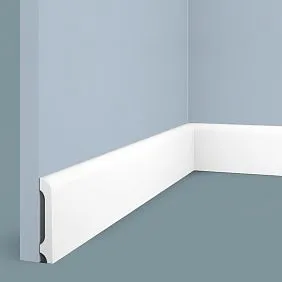
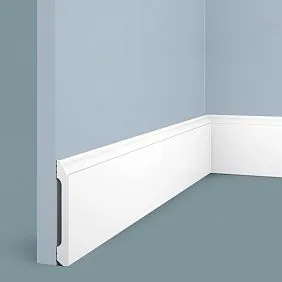
This is the most minimalist option - a cornice without relief, with a flat surface. The cross-section can be simple rectangular, triangular, trapezoidal, or more complex, but without decorative protrusions or recesses.
Smooth profiles fit perfectly into modern interiors - minimalism, Scandinavian style, loft, high-tech. They do not draw attention to themselves, but delicately outline the boundary between the wall and the ceiling. The width of such cornices is usually from 3 to 10 cm - wider ones look bulky without relief support.
Advantages of smooth profiles:
-
Easy to install and join
-
Easy to paint - paint lays evenly without streaks
-
Do not accumulate dust in relief recesses
-
Suitable for humid rooms (easy to clean)
-
Universal - compatible with any finish
Disadvantages:
-
May look dull and impersonal
-
Any surface defects (dents, scratches) are immediately noticeable
-
Look out of place in classic interiors
Relief Profiles
Cornices with decorative relief - this is a whole universe of forms and ornaments. Botanical motifs - acanthus leaves, grapevines, rosettes. Geometric patterns - meanders, Ionic motifs, beads. Complex compositions - interwoven ribbons, architectural orders.
The relief can be flat (2-3 mm deep) or pronounced (up to 10-15 mm). The deeper the relief, the more dramatic the play of light and shadow on the cornice surface, the more expressive it looks. But maintenance is more complex - dust accumulates in deep recesses.
Relief profiles are a choice for classic interiors and their modern interpretations. Classic, neoclassic, art deco, Provence, country - everywhere where decorative appeal and historical reference are valued, a relief cornice is appropriate.
The width of relief cornices varies from 5 to 30 cm and more. Narrow ones (5-8 cm) are suitable for standard apartments, wide ones (from 15 cm) - for high ceilings in country houses, offices, public spaces.
Shadow-Casting Cornices
This is a special type of profiles, specifically designed to create light and shadow effects. Such cornices have a protruding element - a shelf, overhang, or lip - that casts a sharp shadow on the wall or ceiling.
A shadow-casting cornice works even without lighting, simply due to natural lighting. The shadow changes throughout the day depending on the position of the sun and artificial light sources. This creates dynamism and brings the interior to life.
Such profiles are especially popular in modern interiors, where the play of volumes and textures is valued. They combine well with minimalist finishes, emphasizing the simplicity of lines.
Multi-level Composite Profiles
For those who want maximum expressiveness, manufacturers offer complex multi-level cornices. They consist of several parallel strips of different widths and relief, arranged at different levels.
Such profiles create an illusion of multi-layeredness, volume, architectural complexity. They turn the junction of ceiling and wall into an independent decorative element that becomes an interior accent.
Composite cornices are wider than standard ones - from 15 to 40 cm. They require high ceilings (from 3 meters) and spacious rooms where their scale will not overwhelm. Ideal for living rooms, halls, offices in classic or palace style.
Cornices for LED lighting: creating a floating ceiling effect
Hidden LED lighting - one of the most effective techniques in modern interior design. And the main tool for its implementation - specialcornices for lightingmade of polystyrene.
LED Cove Construction
A cove for backlighting differs from a standard one by having a special niche (shelf) — a horizontal or sloped surface on which the LED strip is mounted. The depth of the niche is from 3 to 10 cm, the width is from 2 to 5 cm.
An important parameter is the height of the niche's lip. This is a vertical wall that hides the LED strip from direct view. The lip should be sufficiently high (3–5 cm) so that, standing in the room, you do not see the strip itself — only the light it emits.
The distance from the lip to the ceiling is also critical. The optimum is 5–15 cm. If less, the light will cast a narrow beam, and the "floating" effect will not be achieved. If more, the backlighting intensity will decrease, requiring a more powerful strip.
Types of Niches for Backlighting
Open niche — a shelf without a top lip. Light is directed only upward, toward the ceiling. Creates a "floating ceiling" effect — it appears as if there is a gap between the wall and the ceiling, and the ceiling does not rest on the walls but hangs in the air. This is the most popular option for modern interiors.
Closed niche — a shelf with lips on top and bottom. Light diffuses within the niche and exits only through the front slit. Provides a more directional, graphic beam of light. Used less frequently, mainly in interiors with clear geometry.
Two-sided niche — a shelf from which light goes both upward (to the ceiling) and downward (to the wall). Creates a volumetric glow, brighter and more noticeable. Requires a more powerful LED strip or two strips — one for each direction.
Niche with reflector — the inner surface of the niche is covered with a reflective material (foil, mirror film). This enhances the light flux, making the backlighting brighter and more even.
Selecting LED Strip
Not any LED strip will suit a cove. Several parameters must be considered:
Brightness: for background soft backlighting, 5–7 W/m is sufficient. For bright accent lighting — 10–15 W/m. An overly powerful strip will be glaring and overheat.
Color temperature: warm white (2700–3000K) creates a cozy atmosphere, suitable for bedrooms and living rooms. Neutral white (4000–4500K) — for kitchens, bathrooms, work zones. Cool white (6000K+) is used rarely — it provides a sterile office light.
LED density: the more LEDs per meter, the more even the light, without visible spots. Optimum — 60–120 LEDs per meter. Less — individual spots will be visible, more — no sense, the difference is imperceptible.
Protection class: for dry rooms, IP20 (no protection) is sufficient. For kitchens and bathrooms, IP65 (protection against moisture and dust) is better.
Color: white strip — classic. RGB strip (color) allows changing the backlight color according to mood or event. RGBW strip — also emits white light, more versatile.
Installing Backlighting in a Cove
The LED strip is glued to the inner surface of the cove. The surface must be clean, dry, and degreased — then the strip will adhere securely.
The strip comes with an adhesive layer on the back. Remove the protective film and press the strip onto the surface. But this is not enough — the adhesive layer is not very reliable, and over time the strip may peel off. Professionals additionally secure the strip with special clips or aluminum profile.
Power for the strip is routed to a power supply (transformer), which is hidden behind the cove, in the gypsum board structure's niche or in a special box. The block must be accessible for maintenance — if it burns out, it will need to be replaced.
Controlling backlighting — via a standard switch, dimmer (brightness regulator), or RGB controller (for color strips). Modern option — control via smartphone or voice assistant.
Effects and Techniques
Monochromatic backlighting — one color along the entire perimeter. The simplest and most universal option. Highlights the room's geometry, creates a background.
Zonal backlighting — different zones of the room are lit with different colors or intensities. For example, above the kitchen zone — cool bright light, above the living room — warm soft light.
Dynamic backlighting — color and brightness change according to a program: smooth color transitions, pulsation, moving lights. For parties, holidays, creating a special mood.
Accent backlighting — specific areas are highlighted with light: a TV niche, a wall with a painting, a fireplace zone. The rest of the perimeter remains unlit or minimally lit.
Daylight simulation — an automatic system changes the backlight's color temperature throughout the day: cool invigorating light in the morning, warm relaxing light in the evening. Supports natural circadian rhythms.
Compatibility with Stretch and Gypsum Board Ceilings
A modern interior rarely bypasses a simple painted ceiling. Stretch fabrics, multi-level gypsum board constructions, combinations of different materials — this is the new reality. And the ceiling polystyrene must fit organically into these solutions.
Cove and Stretch Ceiling
Combinationof the ceiling corniceThe cornice and stretch ceiling - a genre classic. This is not just an aesthetic solution, but also a technological necessity: the cornice covers the technological gap between the fabric and the wall, concealing the fasteners.
Installation before stretching the ceiling: the cornice is glued to the wall before installing the stretch fabric. After installing the cornice, stretch ceiling installers arrive and tauten the fabric into the gap between the cornice and the ceiling or behind the cornice. This method is convenient but requires precise calculation: you must know in advance at what level the fabric will be installed.
Installation after stretching the ceiling: first, the stretch ceiling is installed, then the cornice is glued to the wall. The cornice covers the technological gap and the hook (fabric fastener). This method is simpler, but there is a risk of damaging the fabric during cornice installation.
Special cornices for stretch ceilings: profiles with a wide top flange that covers the gap between the fabric and the wall. Some cornices have a special groove into which the fabric edge is inserted, resulting in a perfect seam without gaps.
Cornice with a recess for lighting: installed before stretching. The fabric is stretched at the level of the recess or slightly above. The LED strip is installed after stretching. It is important to choose a low-power strip — it should not heat the fabric (PVC fabric is sensitive to heating above 60°C).
Cornice and gypsum board ceiling
Gypsum board structures are ideal for experimenting with ceiling cornices. Here, options are possible that are not available with simple ceilings.
Cornice on the wall: standard option. The cornice is glued to the wall, and the gypsum board ceiling abuts it from above. The joint can be spackled and painted to match the cornice color — resulting in a monolithic appearance.
Cornice on the ceiling: the cornice is glued not to the wall, but to the horizontal surface of the gypsum board box. Visually, the ceiling appears to 'hang' over the wall. This technique visually lowers the ceiling, making the space more intimate.
Cornice in a recess: in a gypsum board structure, a recess (indentation) is created, into which the cornice is installed. The cornice is recessed relative to the ceiling plane. This is a complex solution requiring precise calculation during the frame design stage.
Multi-level compositions: different cornices are used at different levels of the gypsum board ceiling. For example, a wide decorative cornice on the first level, a narrow smooth one on the second. This creates volume, dynamism, and complexity.
Integration of lighting: in a gypsum board structure, it is easy to hide LED strip power supplies and run wiring. It is possible to create several lighting contours with independent control.
Combined ceilings
Combining stretch fabric and gypsum board — a popular solution. The central part of the ceiling is stretch fabric (glossy for visual space expansion or matte for a calm background). Around the perimeter — a gypsum board box with a recess for hidden lighting.
Polystyrene cornice is mounted on the outer side of the box, framing the stretch fabric. This creates a clear frame that visually lifts the central part of the ceiling. Lighting in the box recess gives the effect of a floating ceiling.
Another option — a decorative cutout in the stretch fabric, framed by the cornice. For example, a circular or oval gypsum board insert in the center, surrounded by fabric. The cornice along the insert's edge emphasizes the geometry and conceals the material joint.
Installation technology: on the wall or under the ceiling?
The method of installing the ceiling cornice depends on the profile's construction and the desired visual effect. Let's examine the main options.
Installation on the wall
The most common method — the cornice is glued to the wall, flush with the ceiling. The top surface of the cornice abuts the ceiling, while the bottom protrudes from the wall.
Advantages of the method:
-
Ease of installation — easily align the level with the ceiling
-
Reliability — large contact area with the wall
-
Versatility — suitable for any type of ceiling
-
Ability to hide wall defects — the cornice can slightly protrude, covering imperfections
Disadvantages:
-
If the wall is uneven, the cornice will replicate all curves
-
Difficult to create a 'floating' cornice effect
-
The gap between the cornice and the ceiling must be carefully spackled
Work sequence:
-
Clean the wall of dust and degrease
-
Apply adhesive to the back of the cornice (in a zigzag or dot pattern)
-
Press the cornice against the wall, aligning the top edge with the ceiling line
-
Hold for 30-60 seconds until the adhesive sets
-
Secure with painter's tape or prop up with a board
-
After one day, fill the gap between the cornice and the ceiling
Mounting on the ceiling
Less common but sometimes more effective method — the cornice is mounted to the ceiling, not the wall. This method is used for special profiles with a wide upper lip.
Advantages of the method:
-
The cornice is independent of wall curvature
-
Can create a visual effect of a hanging ceiling
-
Convenient when using cornices with a recess for lighting
Disadvantages:
-
More complex installation — need to hold the cornice above head level
-
Less contact area — only the upper surface
-
Not suitable for stretch ceilings
Work sequence:
-
Mark the installation line on the ceiling (parallel to the wall)
-
Apply adhesive to the upper surface of the cornice
-
Press the cornice against the ceiling along the marked line
-
Secure temporarily with supports (wooden battens)
-
After one day, remove the supports and fill the joints
Combined mounting
For wide cornices with large surface area, a combined technique is used — adhesive is applied to both the wall and ceiling surfaces of the cornice. This ensures maximum secure mounting.
When installing in this manner, it is crucial to precisely position the cornice: even the slightest misalignment will be noticeable and difficult to correct. Use a laser level or a water level for marking.
Installing cornices with lighting
LED cornices require a special approach. Main rule: the cornice must be installed so that the light is distributed evenly, without dark spots or overexposure.
Distance from the ceiling: for cornices with top lighting (light directed toward the ceiling), the optimal distance from the recess lip to the ceiling is 8-12 cm. If less — light casts a narrow beam. If more — brightness is lost.
Recess lip height: should hide the LED strip from direct view. Minimum 3 cm, optimum 4-5 cm. Check easily: stand at different points in the room and look at the cornice — the strip should not be visible.
Recess for power supply: if a transformer for the LED strip is used, plan in advance where it will be placed. Can be hidden in a drywall niche, behind the cornice, or in a special box. Main thing — ensure access for maintenance.
Installation features on different bases
Concrete, plaster: ideal base. Adhesive holds well. Main thing — surface must be strong, not crumbling.
Drywall: holds lightweight and medium cornices (up to 500 g/m). Heavy, wide profiles are better mounted to framing profiles, not directly to the drywall sheets.
Wallpaper: controversial base. If wallpaper is dense, vinyl, and well-adhered — cornice holds. But more reliable to install cornice on bare wall before wallpapering.
Painted surfaces: depends on paint type. Water-based emulsion — OK. Oil-based paint, glossy enamel — poor. Surface must be sanded or primed.
Stretch ceiling: cannot be glued directly to the fabric. Cornice is glued to the wall or to a built-in (wooden beam, embedded under the fabric).
Seam sealing: perfect joints without traces
Even the most beautiful cornice will spoil the impression if the joints between elements are visible and gaps are gaping. Professional joint filling is a mandatory stage of finishing.
Types of joints
End joints: connection of straight sections of cornice. Occur when the wall length exceeds the length of one strip. The joint must be tight, without a gap, preferably on an inconspicuous area (in the corner, behind furniture).
Corner joints: connection of two strips at a 45-degree angle in a room corner. The most complex and critical type of joint — precision trimming here is essential.
Wall joint: gap between cornice and wall (if cornice is mounted on ceiling) or between cornice and ceiling (if mounted on wall). May be uneven due to the base's curvature.
Materials for filling joints
Acrylic putty: best choice for polystyrene. Elastic, does not crack with temperature expansion, easily sanded, compatible with water-based paints. Sold ready in buckets — convenient, no need to mix.
Gypsum putty: also suitable, but less pliable. May crack if polystyrene slightly shifts. However, cheaper than acrylic and dries faster.
Acrylic sealant: for filling wide gaps (over 5 mm) and joints in damp areas. Can be painted after drying. Do not confuse with silicone sealant — it cannot be painted!
Filling technique
Surface preparation: remove dust, degrease joints (can wipe with alcohol). If gap is wide (over 10 mm), fill it with polystyrene pieces or construction foam.
Applying putty: use a small rubber or metal putty knife. Apply putty with slight excess, pressing it into the joint. Run the knife along the joint, removing excess. For corners, use a corner putty knife.
Profile shaping: if the joint runs along a decorative part of the cornice, use putty to recreate the pattern. Use a thin tool — toothpick, sculpting tool, or fine brush. While the putty is still wet, repeat the ornament lines.
Removing excess: immediately, while the putty is still wet, use a damp sponge or cloth to wipe away any material that landed on the cornice’s front surface. After drying, removal will be more difficult.
Drying: acrylic putty dries in 4–12 hours depending on layer thickness and air humidity. Gypsum putty — 2–4 hours. Do not accelerate drying with a heater — putty may crack.
Sanding: after complete drying, sand joints with fine sandpaper (grit 120–180). Goal — remove minor irregularities and make the transition from putty to polystyrene invisible. Sand gently, without pressing — polystyrene is soft and can be crushed.
Second application: if micro-cracks or depressions remain after sanding, apply a second thin layer of putty, let it dry, then sand again.
Secrets of perfect joints
Quality trimming: the more precisely the ends of strips are cut, the smaller the gap and the easier it is to fill. Use a miter box for precise 45-degree cuts. The cut must be clean, without chips.
Dry fitting: before gluing, connect strips “dry” (without glue) and check the joint tightness. If there is a gap — trim the end. Only after ensuring the joint is perfect, apply glue.
Filling gaps with glue: when gluing the second strip, apply glue not only to the back side but also to the end. Press the strip against the first one, ensuring glue slightly squeezes out of the joint. Immediately wipe away excess with a damp cloth. The glue will act as putty, filling micro-gaps.
Reinforcing problematic joints: if the cornice is heavy or installed in a vibration-prone area (above a door, near a window), a corner joint can be reinforced. On the back side, glue a piece of fiberglass mesh or paper tape, covering both strips. Then apply a layer of putty. After drying, the joint will become monolithic.
Color masking: if the joint is still slightly visible, you can decorate it. Paint the joint with contrasting color or gold paint — it will create a decorative stripe imitating the seam between stones or boards.
Painting and final finish
Polystyrene cornice can remain white — many appreciate the simplicity of this solution. But painting cornices opens new opportunities for integrating decor into the interior’s color palette.
Why paint polystyrene
Material protection: paint creates a protective layer that shields polystyrene from yellowing, mechanical damage, and dirt. A painted cornice is easier to clean and retains its original appearance longer.
Color harmony: a white cornice looks great with white or very light ceilings. But if the ceiling is colored, a cornice in the ceiling’s color visually lifts it. Conversely, a cornice in wall color “lowers” the ceiling.
Creating an accent: a contrasting cornice (dark on light background or vice versa) draws attention and becomes an independent decorative element. This effect is especially striking with ornate, relief profiles.
Imitating expensive materials: using special paints and techniques, you can create the illusion of plaster molding, wooden carving, gold leaf, or patina. Budget polystyrene transforms into luxurious decor.
Paint Selection
The main rule we already mentioned: only water-based paints, no solvents. Suitable:
Water-emulsion paints: the simplest and cheapest option. Provide a matte finish, easily applied with a brush or roller. Minus - not very resistant to abrasion and moisture.
Acrylic paints: higher quality finish, semi-matte or semi-gloss. Resistant to washing, do not fade easily. More expensive than water-emulsion, but the result is worth it.
Latex paints: premium segment. Provide a dense, elastic finish with a slight sheen. Withstand wet cleaning and are not afraid of splashes. Ideal for kitchens and bathrooms.
Special paints for polystyrene: produced by some manufacturers. Take into account the material's specifics - do not dissolve it, apply well, create a smooth finish.
Painting technique
Surface preparation: the cornice must be clean and dust-free. Remove oily stains with alcohol. Fill deep scratches and dents with putty and sand them.
Priming: optional but recommended step. Acrylic primer improves paint adhesion, equalizes surface absorption, saves paint. Applied with a brush in one layer, dries in 2-4 hours.
Painting: you can paint before installation (more convenient on the floor) or after (but you need to protect walls and ceiling with painter's tape). Use a medium-sized soft brush (4-5 cm) or a small velvet roller.
First layer - thin, paint should absorb into the surface. Paint along the length of the cornice, without heavy pressure. Do not try to cover everything in one go - better two or three thin layers than one thick one. A thick layer may run, creating streaks, or lie unevenly.
Drying between layers: most water-based paints dry 2-4 hours "to the touch" and 12-24 hours completely. Apply the second layer only after the first is fully dry.
Final layer: after the second layer, assess the result. If the finish is even and the color is rich - done. If the base shows through or there are uneven spots - apply a third layer.
Decorative Techniques
Patina: creating an aged effect. Base layer - light paint (white, cream, bone). After drying - second layer of dark paint (brown, green, black), which is immediately partially wiped off with a dry cloth. The dark paint remains in the recesses of the relief, highlighting details.
Gilding: imitation of gold or bronze. Base layer - paint with warm tone (ochre, terracotta). After drying - gold or bronze paint (preferably special decorative, not just "gold" color). Applied with a dry brush in light strokes on raised parts of the relief. Creates an effect of gilded molding.
Two-tone painting: different profile elements are painted in different colors. For example, main part - white, ornament - gold or silver. Requires care and painter's tape to separate zones.
Gradient: smooth transition from one color to another. Complex technique requiring skill. Two shades of paint (e.g., white and gray) are applied side by side and blended with a wet brush at the boundary, creating a smooth transition.
Stone or wood effect: special paints and primers allow imitation of marble, granite, or wood texture. Technique is complex and requires experience, but the result is impressive.
Protective Coating
For rooms with high humidity or where the cornice may get dirty (kitchen, children's room), it is advisable to protect the painted surface with varnish. Use water-based acrylic varnish - matte, semi-matte, or semi-gloss (glossy will reflect light, which may look unnatural).
Varnish is applied with a soft brush in 1-2 layers with intermediate drying. It creates a transparent film that repels water, dirt, and simplifies maintenance. A varnished cornice can be wiped with a damp cloth without risking damage to the paint.
Ready-made solutions by interior style
Theory is good, but how to apply all this knowledge in practice? Let's consider specific applications of ceiling polystyrene in different interior styles.
Neoclassicism: elegance and symmetry
Neoclassical interior - is a modern reinterpretation of classicism. Here, clean lines, symmetry, quality materials are valued, but without excessive flamboyance of the Empire or Baroque.
Ceiling cornice: wide (10-15 cm) profile with moderate relief. Not flamboyant Baroque molding, but restrained geometric or floral ornament. Company STAVROS, working with trusted partner Hi Wood, offers collections of cornices ideally suited for neoclassical interiors - elegant profiles with subtle decoration.
Color: usually white or matching ceiling color. For accent - gray, dusty blue, beige. Gilding and patina are used sparingly, only on individual ornament elements.
Lighting: hidden warm white LED strip. Highlights architecture, creates soft ambient lighting. RGB lighting and color effects are not used in neoclassicism - this cheapens the interior.
Additional elements: ceiling rose in center (under chandelier), wall moldings, pilasters at corners or beside fireplace. All elements from one collection, unified in style.
Combination with ceilings: works perfectly with smooth painted ceilings. With stretch ceilings - possible, but better matte, not glossy. Multi-level gypsum constructions are used, but without complex curves - strict geometry, straight lines or smooth arches.
Modern style: minimalism and light
Modern interior means open spaces, abundance of light, functionality, absence of unnecessary decoration. Here, the ceiling cornice serves not as decoration, but as a functional element.
Ceiling cornice: narrow (3-7 cm) smooth profile without relief. Simple geometric shapes — rectangle, trapezoid, asymmetrical cuts. Or entirely hidden profile — LED cornice, where only the recessed lighting is visible, and the cornice itself is barely noticeable.
Color: white - classic. Gray - gaining popularity, especially in loft and industrial style interiors. Black - rarely used but striking, creates contrast and graphic effect. The cornice is painted to match the ceiling (for visual height increase) or the walls (for coziness).
Lighting: key element. Hidden LED strip creates a floating ceiling effect - a hallmark of modern interiors. Light color - neutral or cool white, sometimes RGB with color and brightness adjustment via smartphone.
Minimalist detailing: no outlets, moldings, pilasters. Only cornice along the perimeter and possibly highlighting separate zones (TV niche, sleeping area). Everything is minimalist, strict, functional.
Combination with ceilings: stretch ceilings (matte or satin) - very popular. Drywall structures - strict geometric forms, straight lines. Combination of stretch fabric and drywall box with lighting - top solution.
Classic: luxury and traditions
Classic interior - a return to traditions, reverence for history, love of decoration. Here, polystyrene cornice imitates plaster moldings and creates a palace-like atmosphere.
Ceiling cornice: wide (from 15 cm) with rich relief. Floral ornaments, classical motifs, complex multi-level compositions. HiWood brand offers profile lines inspired by classical orders - Corinthian, Ionic, Doric.
Color: white - base. But often patina (artificial aging), gold leaf, ivory imitation is used. Cornice may be several tones darker or lighter than ceiling, creating volume.
Lighting: not mandatory. Classic relies on chandeliers, wall sconces, floor lamps. But warm indirect lighting is acceptable - it highlights the cornice relief, creating play of light and shadow.
Additional elements: ceiling outlet (often very large, up to 1 meter in diameter), wall moldings (creating panels), pilasters and half-columns, decorative consoles. Everything is rich, everything with ornamentation.
Combination with ceilings: usually smooth painted ceilings or textured plaster (imitating moldings). Stretch ceilings are rarely used in classic style - they are too modern. If used, only matte, no gloss.
Scandinavian style: Simplicity and coziness
Scandinavian interior - light tones, natural materials, functionality, coziness. Decoration is minimal but thoughtfully designed.
Ceiling cornice: narrow to medium (4-8 cm), smooth or with very simple relief (one or two grooves). No ornaments or scrolls - only geometry.
Color: white in 99% of cases. Scandinavian interior is built on white color - walls, ceiling, cornices. This creates a sense of light, cleanliness, spaciousness.
Lighting: used but subtly. Warm white light, soft, diffused. No bright accents, colorful effects.
Minimalism: cornice - and only cornice. No additional moldings, outlets, pilasters. Simpler is better.
Combination with ceilings: painted white ceilings, sometimes with wooden beams (in country houses). Stretch ceilings - rarely used. Drywall structures - only simple, no embellishments.
Loft: industrial aesthetics
Loft - openness, brutality, combination of old and new. It seems polystyrene decor doesn't belong here. But that's not true.
Ceiling cornice: simple geometric profile, often asymmetrical. Or imitation of wooden beam (polystyrene false beam). No classical moldings - only industrial forms.
Color: gray, graphite, black, dark brown (wood-like). Contrast with white or gray walls. Or vice versa - white cornice against brick or concrete background.
Lighting: actively used. Often open - LED strip is not hidden but displayed as part of industrial aesthetics. Cool white light, sometimes colored lighting.
Minimalism and functionality: decoration must have purpose. If cornice - then with lighting or cable channel for wires. Simply beautiful cornice - not for loft.
Combination with ceilings: concrete ceilings (or their imitation), exposed utilities, pipes, beams. Stretch ceilings - rarely used. Drywall - only for zoning or creating technical niches.
Provence: French romance
Provençal - softness, pastel tones, floral motifs, coziness. Polystyrene decor is quite suitable here, but with nuances.
Ceiling cornice: medium width (7-12 cm) with relief. But not lavish classic, rather more restrained forms - floral motifs, but stylized, simple.
Color: white, cream, ivory, dusty rose, lavender. Patina is often used - effect of sun-faded paint. Gold leaf - very delicate, matte, not flashy.
Lighting: soft, warm. Or no lighting at all - provençal relies on natural light from large windows and soft light from lamps with fabric shades.
Additional elements: wall moldings (framing panels, pictures), outlet under chandelier. But everything is not monumental, but elegant, light.
Combination with ceilings: painted ceilings, often with wooden beams (in country houses). Stretch ceilings - undesirable, too modern for provençal.
Manufacturers and brands: choice of quality
There are many manufacturers in the decorative polystyrene market — from well-known European brands to local factories. How to choose a quality product?
Signs of quality polystyrene
Uniform density: the material should not be pressed by fingers, granules (in expanded) should be of the same size and tightly pressed.
Relief clarity: if the profile has ornamentation, all details should be well-defined, without blurred areas.
Geometric accuracy: profiles of the same article are identical and fit together without gaps.
Surface cleanliness: free of stains, streaks, inclusions.
Certification: presence of sanitary-epidemiological conclusions and quality certificates.
STAVROS and Hi Wood Partnership
STAVROS company cooperates with a proven manufacturer of quality decor — the Hi Wood brand (Hi Wood, HiWood). This partnership ensures customers access to a wide range of profiles meeting high quality standards. HiWood products undergo strict control at all production stages, ensuring stable characteristics and long-lasting decor.
ChoosingSTAVROS cornicesMade in partnership with HiWood, you get not just a decorative element, but a comprehensive interior solution with quality guarantee and professional support.
Conclusion
Ceiling polystyrene is a universal tool for creating expressive interiors. From a modest skirting board hiding the wall-ceiling junction to a complex lighting composition with multi-level cornices and hidden backlighting — the material’s possibilities amaze the imagination.
The right profile can transform the space: visually raise ceilings, expand the room, create the desired atmosphere, emphasize the style. LED cornices with backlighting provide soft ambient lighting, making the interior cozy and modern. Proper installation and finishing ensure that the decor will last for years, delighting the eye with flawless appearance.
Modern production technologies, quality materials from trusted partners such as Hi Wood, and a professional approach to selection and installation — these are the three pillars of a successful project. STAVROS company offers a full spectrum of solutions for ceiling decor: from consultation and profile selection to material quantity calculation and installation recommendations. Entrust your interior to professionals — and your ceiling will become a true highlight of your home!