Article Contents:
- Polystyrene in interior design: why it's beneficial
- Where and how to buy polystyrene profiles advantageously
- Online stores: convenience and variety
- Construction hypermarkets: browse and choose
- Specialized stores: expertise and premium segment
- Direct deliveries from manufacturers
- Product quality check: what to pay attention to
- Visual inspection: first impression can be misleading
- Mechanical properties: strength test
- Geometric accuracy: millimeters matter
- Documentation and certificates: paper protection
- Delivery and storage: maintaining quality from warehouse to installation
- Transportation specifics of decorative elements
- Proper storage: creating ideal conditions
- Acclimatization before installation: an important stage
- Comparing online stores: choosing the best supplier
- Criteria for evaluating online platforms
- Pricing policy and special offers
- Service and additional services
- Reviews and reputation: customer voices
- Payment terms and warranties
- Price benchmarks: planning budget correctly
- Basic price ranges
- Additional expenses: calculating honestly
- Cost optimization: how to save without compromising quality
- Regional pricing characteristics
- Features of selection for different rooms
- Living room and hall: creating elegance
- Bedroom: balance of comfort and elegance
- Kitchen and bathroom: practicality comes first
- Children's room: safety and creativity
- Trends and current styles
- Modern classic: timeless values in a new interpretation
- Minimalism: beauty in simplicity
- Scandinavian style: comfort and functionality
- FAQ: Answers to Popular Questions
- Conclusion

Interior finishing is the art of transforming ordinary space into a cozy and stylish home. If just recently decorating walls and ceilings was considered a privilege of expensive mansions with plaster moldings, today the accessibility and variety of decorative elements made of polystyrene open up boundless opportunities for everyone. Lightweight, practical, and visually indistinguishable from traditional moldings, they allow you to realize the most daring design ideas without significant financial costs.
But how not to get lost in the variety of offers? Wherebuy polystyreneat a reasonable price and with quality guarantee? What criteria are truly important when choosing, and what can be ignored? In this article, we will thoroughly examine all aspects of purchasing polystyrene decorative elements — from quality assessment to delivery and storage specifics.


Polystyrene in interior design: why it's beneficial
Before moving on to practical purchasing questions, it's important to understand why polystyrene has become so popular in modern renovation. This material is a foamed polymer that combines lightness, strength, and ease of processing. Unlike plaster, which requires special installation skills and significantly increases the structure's weight, polystyrene elements can be installed even by a non-professional.
The economic attractiveness of the material is obvious: one linear meter of quality polystyrene cornice costs on average 200-800 rubles, while a similar product made of polyurethane costs from 1500 rubles, and plaster molding from 3000 rubles and above. At the same time, the visual difference is minimal, especially after proper painting and finishing.
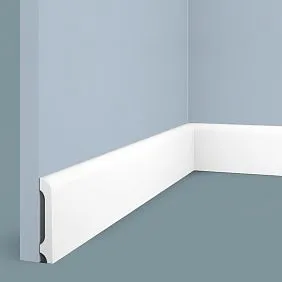
Moreover, polystyrene has excellent thermal insulation properties, making it not only decorative but also functional. Installed under the ceiling cornices help hide gaps through which heat escapes, andwhite polystyrene baseboardelegantly covers the junction between the wall and floor, preventing dust and moisture from entering.




Where and how to buy polystyrene profiles affordably
Our factory also produces:


Online stores: convenience and variety
Online trade of decorative polystyrene elements has undergone a real breakthrough in recent years. Specialized online platforms offer catalogs with thousands of items, detailed photos, technical specifications, and often — the ability to visualize 3D rendering in your interior. The main advantage of this purchasing format is enormous time savings and the ability to calmly compare options without rushing to make a well-considered decision.
When choosing an online store, pay attention to several key factors. First, detailed product descriptions including all dimensions, weight, surface type, and installation recommendations. Serious sellers always provide maximum information, understanding that the customer cannot physically touch the product. Second, the review and rating system — study the experiences of other buyers, especially negative comments, to understand real shortcomings.
Important point — return and exchange policy. Even with the most careful selection, there is a chance thatbuy polystyrene moldingyou will choose the wrong shade or size. Reliable stores offer the possibility to return the product within 14 days if it has not been used and the packaging is preserved.
Get Consultation
Construction hypermarkets: browse and choose
Large chain construction stores are the golden middle ground between online purchases and specialized boutiques. Here you can physically assess the material quality, compare several options, get seller consultation, and immediately take the product. The assortment in such stores is usually presented with main items: classic cornices, baseboards of different heights, universal moldings.
However, there are also drawbacks. Prices in hypermarkets are often higher than with specialized suppliers due to overhead costs for maintaining large retail space. Moreover, the selection may be limited — exclusive designer collections rarely appear on the shelves of mass stores. If you need a standardpolystyrene baseboard— a hypermarket will be perfect, but to create a unique interior, you will need to look for specialized sales points.
Another important nuance — the quality of products in chain stores may vary. Often, different manufacturers' items are stored under the same article number on the warehouse, and you may receive elements with minor defects that are within acceptable standards but unacceptable for perfectionists.
Specialized stores: expertise and premium segment
If your project requires a special approach—complex multi-level ceilings, restoration of historical interiors, creation of luxurious classical ensembles—pay attention to specialized plaster decoration salons. Here, real professionals work who don’t just sell you products but help you create a harmonious composition, select all elements in a unified style, and calculate the required amount of materials taking into account the complexity of installation.
These salons feature collections from European manufacturers, exclusive designer lines, items with hand-finishing and patination. Here you will find not only basic profiles but also rosettes, consoles, pilasters, corner elements, and other details that allow you to create a full architectural ensemble. Naturally, the price range here is higher—but the quality and service match it.
Many specialized salons offer the services of an interior designer who will develop a finishing project specifically for your rooms, taking into account all architectural features and stylistic preferences. This is especially relevant if you plan a large-scale renovation and want to avoid standard solutions.
Direct deliveries from manufacturers
The most cost-effective option in terms of price is purchasing directly from the manufacturer or its official representative. The absence of intermediary markup allows you to save 20-40% of the retail price, especially when buying in bulk. If you need to finish a large area or are renovating several rooms at once, direct cooperation with the factory is a sensible solution.
In addition, manufacturers often offer custom production of elements according to your drawings and sketches. Need awall molding polystyreneof non-standard shape or size? Want to realize an original idea? The factory can produce a batch specifically for your project. However, such a service makes sense only when ordering a minimum quantity—usually from 50-100 linear meters.
When working with manufacturers, it is important to consider production and delivery times. If standard items are in stock and shipped within 1-3 days, a custom order may require 2-4 weeks. Plan your renovation taking these timeframes into account.
Product quality check: what to pay attention to
Visual inspection: first impressions can be misleading
Even if you are buying decor online, when receiving the product, carefully inspect it before signing the acceptance documents. Quality polystyrene items should have a smooth, even surface without visible pores, pits, or roughness. Run your hand along the profile—there should be no sensation of 'grittiness' or unevenness.
Pay attention to the geometry of the item. Place the profile on a flat surface and check for any bends or twists.Floor molding polystyrenemust fit tightly against the surface along its entire length. Even a small deformation will cause problems during installation—gaps will appear between the wall and the profile, which will need to be filled with putty.
The color of the item should be uniform, without spots, streaks, or color variation along its length. Minor technological marks in areas that will be hidden during installation are acceptable, but the front surface must be flawless. Yellowing or grayish tint indicates either poor-quality raw material or improper storage—such material may darken even more over time.
Mechanical properties: strength test
Quality polystyrene should be sufficiently dense and elastic. This can be easily checked with a simple test: gently press your finger on the profile’s surface. If an indentation remains, you are dealing with low-density, inferior expanded material. Such items are easily damaged during transport and installation, and quickly lose their shape during use.
Try bending a small sample (if possible). A quality item should spring back to its original shape. Brittleness and fragility are signs of over-dried material or production process defects. During installation, such elements will crack and crumble, especially when cutting and fitting corners.
Be sure to check the ends of the item. The material’s cross-section should be uniform, with small, evenly distributed pores. Large voids, unevenness, or layering indicate poor quality. Such material is not only weaker but also holds glue poorly, complicating installation.
Geometric accuracy: millimeters matter
Professionals know: the quality of decorative elements is determined by dimensional accuracy. Take a tape measure and check the stated parameters. A deviation of 1-2 mm per meter is acceptable, but if the difference is 5-7 mm, you are dealing with outright defective items. Such items cannot be joined neatly, and gaps and misalignments will always be visible.
Accuracy of angles and joints is especially critical. If you are purchasing a set with corner elements, check how tightly they fit against straight profiles. Gaps exceeding 1 mm will require additional fitting and puttying, increasing both installation time and cost.
When purchasing a large batch, take items from the same production batch. Different batches may slightly differ in size and shade due to technological process specifics. Check the batch number on the packaging—it should be identical for all items.
Documentation and certificates: paper protection
A serious manufacturer always provides a complete set of documents for their products. Certificates of conformity, sanitary-hygienic conclusions, technical passports—all of this is not mere formality but your guarantee of safety and quality. Polystyrene must comply with GOST requirements and not emit harmful substances under normal operating conditions.
Pay attention to product labeling. The packaging or accompanying documents should indicate the following information: manufacturer’s name, item’s article number, dimensions, weight, date of manufacture, storage conditions, and shelf life. Yes, polystyrene also has a shelf life—usually 5-10 years under proper storage. After that, the material begins to lose its properties: it becomes brittle, yellows, and may deform.
If the seller cannot provide documents or avoids this question—it is a serious reason to reconsider the quality of the offered product. Do not hesitate to demand all necessary documentation—it is your legal right as a buyer.
Delivery and storage: preserve quality from warehouse to installation
Special features of transporting decorative elements
Polystyrene is a lightweight material but requires careful handling. Improper transportation may lead to deformation, breakage, and surface damage. Therefore, delivery must be planned in advance, especially for long elements — cornices and %spolystyrene molding on the walllong 2-3 meters.
Most specialized stores offer delivery services taking into account the fragility of the goods. Elements are wrapped in protective film, reinforced with cardboard or polystyrene at corners, secured in the vehicle to prevent movement during transport. The cost of such delivery usually ranges from 500 to 3000 rubles depending on the volume of cargo and distance.
If you decide to pick up the goods yourself, make sure you have suitable transport. Ideally, a truck with a long body where profiles can be placed horizontally. Transport in a passenger car is possible but will require partial disassembly of the interior and extremely careful placement. Never place polystyrene elements vertically or bend them — this will result in irreversible deformation.
When receiving the cargo from the transport company, be sure to open the packaging and inspect the goods in the presence of the courier. If damage is found, record it in the acceptance-transfer act. This is the only way to obtain compensation or replacement of damaged elements.
Proper storage: creating ideal conditions
After delivery, it is important to ensure proper storage conditions until the start of installation. Polystyrene is sensitive to temperature fluctuations and humidity. Ideal conditions: temperature from +5 to +25 degrees, relative humidity 60-70%, absence of direct sunlight. Violation of these conditions leads to deformation, color change, and loss of strength.
Profiles should be stored horizontally on a flat surface. Place sheets of plywood or dense cardboard under the bottom row to prevent contact with the floor. If stacking multiple rows, place soft material — fabric or corrugated cardboard — between them. The height of the stack should not exceed 1 meter; otherwise, lower elements will deform under the weight of the upper ones.
Storage near heating appliances, in rooms with high humidity (bathrooms, unventilated basements) or outdoors is strictly prohibited. Even brief exposure to unfavorable factors may damage the material.Buy polystyrene cornicesand keep them in ideal condition — a task requiring attention.
If you plan to store the items for an extended period (more than a month), do not remove the factory packaging. It protects the items from dust, accidental mechanical damage, and UV radiation. Open the packaging only immediately before installation.
Acclimatization before installation: an important stage
Many forget about this stage, although it is critically important for achieving quality results. After delivery, especially if the goods were transported during cold weather, allow the material to acclimatize in the room where installation will take place. Bring the packaged elements into the room and leave them for 24-48 hours.
This is necessary to equalize the material's temperature with the room's temperature. If you start installing cold material in a warm room, polystyrene will begin to expand on the wall, leading to gaps at joints and deformation. The reverse scenario — installing warm material in a cold room — risks compression and joint rupture.
During acclimatization, do not fully unpack the elements — it is sufficient to cut openings for air access. Complete removal of packaging may cause surface drying and the appearance of microcracks. Remember: patience at this stage ensures a flawless final result.
Comparison of online stores: choosing the best supplier
Criteria for evaluating online platforms
The market for online trade of decorative polystyrene elements is rapidly developing, and the choice is truly impressive. However, not all stores are equally reliable and advantageous. Let’s examine the key criteria by which online platforms should be evaluated before purchase.
The first and most important parameter is the assortment. A good specialized store offers no fewer than 200-300 items: various cornice, baseboard, molding profiles, corner elements, rosettes, consoles. A wide selection allows you to choose elements perfectly suited to your interior, without being limited to basic standard options.
The second criterion is the quality of product visualization. Professional photographs from different angles, detailed drawings with dimensions, the ability to zoom in to examine texture — all of this should be available. Some advanced stores offer 3D product models and virtual fitting rooms, where you can "try on" decor on a photo of your interior.
The third important point is the informativeness of descriptions. It is not enough to indicate dimensions and price. The following should be detailed: material of manufacture, density, weight, installation features, compatibility with various types of adhesives and paints, care recommendations. The more detailed the description, the more seriously the store approaches its work.
Pricing policy and special offers
Prices for identical goods in different online stores may differ by 30-50%, and this is not always related to quality differences. Often, some sellers work with lower markups, while others compensate for price with free delivery or gifts with the order. Therefore, it is important to compare not just price lists, but the final purchase cost taking into account all conditions.
Many stores regularly hold promotions and sales. Seasonal discounts before the start of the repair season (spring) or after its end (autumn) may reach 20-40%. Loyalty programs for regular customers, cumulative discount systems, special offers for wholesale buyers — all of this significantly reduces the final cost.
Pay attention to the pricing system. Honest stores indicate the final price including all taxes and fees. If you see the phrase "price from" or "inquire about cost" — this is a warning sign. The final amount may turn out significantly higher than the initial price after adding "mandatory" services.
Service and additional services
The level of service — what distinguishes a professional store from a one-day intermediary. The presence of a qualified support service that can advise on product selection, help calculate the required quantity, and provide installation recommendations — is invaluable, especially for those who are doing renovation for the first time.
Many serious market players offer free design projects upon ordering a certain amount. This is not just a marketing move — a professional designer will genuinely help avoid mistakes, select harmonious combinations of elements, and calculate optimal placement taking into account the specific features of your space.
Sample ordering is another indicator of a store's seriousness. For a small fee (or even free with a future order), you will receive profile samples to evaluate them in person: touch, attach to the wall, check compatibility with existing finishes. This eliminates the risk of disappointment after placing a large order.
Reviews and reputation: customer feedback
In the era of digital technology, a company's reputation is its most valuable asset. Before placing an order, spend 20-30 minutes reviewing reviews. Look not only on the store's own website, but also on independent platforms, social networks, and specialized forums for renovation and construction.
Pay attention to details. If most reviews are formulaic, overly enthusiastic, and lack specifics — they are likely fake. Genuine reviews always include both pros and cons, specific examples, sometimes photos of the received product. The absence of negative reviews is also a red flag. Every company encounters problems; what matters is how they resolve them.
Check how long the store has been operating. Newcomers to the market may offer lower prices, but the risks of working with them are higher. A company that has been on the market for 5-10 years values its reputation and is unlikely to deceive customers. Check contact information: presence of a physical office or showroom address, multiple communication channels (phone, email, messengers, social media) — signs of stability.
Payment terms and guarantees
Payment methods say a lot about the store. If only prepayment to a physical person's card is offered — run away. A serious company operates as a legal entity, accepts payments via secure payment systems, and provides a full set of documents (contract, invoice, delivery notes, cash receipts).
The ideal option is payment upon delivery or partial prepayment (30-50%). This minimizes your risks. If the store requires 100% prepayment, ensure it has an impeccable reputation and is ready to provide guarantees.
Warranty obligations are another important point. Quality products should have a manufacturer's warranty of at least 1-2 years. The store must replace defective items at its own expense, including the cost of repeat delivery. Carefully read warranty terms: what cases are covered, what documents are required for returns, and within what timeframes complaints are processed.
Price benchmarks: plan your budget correctly
Basic price ranges
The cost of polystyrene decorative elements varies widely depending on the type of product, profile complexity, manufacturer, and region of sale. To plan your budget, it is important to understand average market prices to avoid overpaying or ending up with cheap, low-quality items.
Ceiling moldings — the most popular category — cost from 150 to 1200 rubles per linear meter. Simple smooth profiles without relief cost 150-300 rubles. Moldings with classic ornamentation imitating plaster molding — 400-700 rubles. Exclusive designer models with large, complex relief reach 1000-1200 rubles per meter.
Floor baseboards have more democratic prices: from 100 to 600 rubles per meter.Polystyrene floor baseboardStandard height 50-70 mm without relief — 100-200 rubles. Tall baseboards (100-150 mm) with decorative elements — 300-450 rubles. Premium models with wood-grain imitation or complex multi-level profiles — 500-600 rubles per meter.
Wall moldings offer the greatest price variety — from 80 to 900 rubles per linear meter. Narrow decorative strips (20-40 mm) cost 80-150 rubles.Polystyrene impact-resistant wall moldingMedium width (50-80 mm) with classic ornamentation — 250-450 rubles. Wide moldings for creating panels or framing mirrors — 500-900 rubles.
Additional expenses: calculate honestly
Purchasing decorative elements is only part of the budget. Additional materials and tools are required for full installation and finishing. When planning expenses, be sure to include these items.
Polystyrene adhesive — the most important consumable. There are several types: universal acrylic (150-250 rubles for 300 ml), specialized polystyrene adhesive based on MS-polymers (350-500 rubles for 300 ml), liquid nails (200-350 rubles per tube). For a 20 sq.m. room, 3-5 tubes of adhesive will be needed, depending on the type of installed elements.
Spackle for filling joints and minor defects — another necessary expense. Acrylic finishing spackle costs 250-400 rubles per kilogram. A standard room requires 2-3 kg. Do not economize on spackle — the quality of joint filling determines the final appearance of the entire finish.
Paint — if you plan to paint the decor. Acrylic water-based paint for interior use costs 300-800 rubles per liter depending on the manufacturer and quality. Consumption is approximately 150-200 ml per linear meter for double coating. For a room with a perimeter of 20 meters, you will need 3-4 liters of paint.
Tools: miter saw (300-1500 rubles), fine-tooth hacksaw (250-600 rubles), adhesive gun (150-500 rubles), putty knives (50-200 rubles), brushes and rollers for painting (100-500 rubles). If you don't have a basic set, you will need to spend 1500-3000 rubles on tools.
Cost optimization: how to save without sacrificing quality
Smart planning and strategic purchasing approach allow you to significantly reduce expenses without compromising the quality of the result. The first rule — accurate calculation of the required material quantity. Buying 'with a reserve' may seem reasonable, but excesses often remain unused. Create a detailed plan with dimensions of all surfaces, account for cuts at corners and joints, add 10% for unforeseen situations — this is quite sufficient.
Buying in sets is cheaper. Many manufacturers offer ready-made sets for standard rooms: moldings, baseboards, corner elements, outlets in one style. Such a set may be 15-25% cheaper than buying the same elements separately. Additionally, you are guaranteed to receive perfectly matching parts.
Watch for seasonal sales and promotions. The peak demand for finishing materials occurs in spring and early summer, so the most favorable prices are in autumn and winter. If your renovation is not urgent, it makes sense to purchase materials in advance during discount periods and store them until work begins.
Consider the option of self-installation. Professional services cost 50-150% of the material cost. However, installing polystyrene decor does not require special skills — anyone careful enough to use a ruler and hacksaw can handle it. Numerous video instructions on the internet will help you understand all the nuances.
Regional pricing features
Prices for the same products may vary significantly depending on the region. In Moscow and St. Petersburg, where competition is high and logistics are well-developed, polystyrene decor is usually 10-20% cheaper than in remote regions. On the other hand, delivery to regions may offset this difference.
For residents of small towns, it makes sense to consider purchasing in large regional centers with self-pickup or arranging their own delivery. Savings can amount to 20-30% even after accounting for transportation costs, especially for bulk purchases.
An interesting trend — growing popularity of direct sales from regional manufacturers via the internet. Many factories located in industrial regions actively develop online trade and offer attractive prices for delivery throughout Russia. Don't limit your search to local stores — explore offers from manufacturers in other regions.
Features of selection for different rooms
Living room and hall: creating elegance
The living room is the face of the home, the space where guests are received and family celebrations are held. Here, a more elegant, luxurious decor is appropriate. Wide ceiling cornices with pronounced relief, tall baseboards, wall moldings creating panels or framing pictures — all of this adds dignity and completeness to the interior.
For the living room, choose profiles at least 80-120 mm wide for cornices and 100-150 mm for baseboards. Small elements in a spacious room will disappear and create a sense of incompleteness.Impact-resistant polystyrene wall moldingUse to create classic wall panels — this visually makes the room more noble.
Pay attention to the stylistic unity of all elements. If you choose a cornice with a classic ornament, baseboards and moldings should be in the same style. Mixing different styles — baroque, modern, minimalism — in one room looks eclectic and tasteless. Large manufacturers produce entire collections in a single style, which significantly simplifies the choice.
Bedroom: balance of comfort and elegance
The bedroom is a place for rest, where decor should promote relaxation and comfort. Excessive pomp is unnecessary, but a complete rejection of decorative elements will make the interior dull. The optimal choice is medium-width cornices (60-80 mm) with delicate relief, standard-height baseboards (70-100 mm), possibly — molding to highlight the headboard area.
The color palette for the bedroom is preferably calm. White is a universal option, but you can consider cream, beige, light gray shades. They create a warmer, cozier atmosphere. After installation and priming, polystyrene decor can be easily painted in any color — use this to perfectly match it to the bedroom’s color concept.
An interesting solution — using moldings to create decorative frames around the headboard or on the opposite wall. This adds individuality to the interior without overloading it. Choose profiles with soft, smooth relief — they better suit the bedroom’s atmosphere than strict geometric shapes.
Kitchen and bathroom: practicality comes first
In rooms with high humidity and temperature fluctuations, you must be especially careful when selecting decorative elements. Polystyrene is resistant to moisture, but requires quality finishing. After installation, coat the decor with several layers of moisture-resistant acrylic paint — this will protect the material and simplify maintenance.
For the kitchen and bathroom, choose simple profiles without deep relief or complex ornaments. Moisture accumulates in relief elements, condensation settles, and mold may develop. Smooth or slightly textured surfaces are easy to clean and do not cause problems during use.
Pay attention to the quality of joints. In conditions of high humidity, poorly sealed joints become places for water penetration, which may lead to decor detachment. Use moisture-resistant putty to seal all joints and additionally cover them with sealant before painting.
Children's room: safety and creativity
The children's room is a special space where decor must be not only beautiful but absolutely safe. Choose quality certified materials from reputable manufacturers that do not emit harmful substances. Avoid profiles with sharp edges and protruding elements.
Polystyrene decor opens up wide possibilities for creating themed interiors. Using moldings, you can highlight a play area, create decorative frames for a child's drawings, or design a wall as a princess castle or spaceship. The ease of processing and painting allows you to realize the most daring ideas.
An important point — the possibility of painless decor changes as the child grows. What delights a three-year-old may irritate a teenager. Polystyrene elements are easily dismantled and replaced with new ones without damaging the main finish. Plan the decor with periodic updates in mind.
Trends and current styles
Modern classicism: timeless values in a new interpretation
The classic style in interior design never goes out of fashion, but its modern interpretation becomes more restrained and minimalist. Instead of overloaded baroque ornaments — strict symmetrical lines, instead of heavy moldings — elegant profiles of moderate width. This approach makes classicism relevant even for small modern apartments.
Ceiling cornices in the style of modern classicism have clear geometry, moderate relief, often — a combination of smooth and textured surfaces. Profile height of 80-120 mm is optimal for rooms of standard height 2.7-3.0 meters. Color — predominantly white or white shades, creating a sense of lightness and purity.
Polystyrene moldingIn modern classicism, it is used to create wall panels that visually structure the space. A popular solution — dividing the wall into three parts: the lower third — darker, the middle — main color, the upper — lighter. Moldings serve as boundaries between these zones, adding graphicness and expressiveness to the interior.
Minimalism: beauty in simplicity
Minimalist interiors do not tolerate excessive decoration, but this does not mean a complete rejection of polystyrene elements. Here, they serve as subtle accents, highlighting the purity of lines and geometry of the space. Choose simple profiles without ornamentation: rectangular, with barely noticeable bevel or a single horizontal groove.
Ceiling moldings in minimalism are maximally laconic, 30-50 mm high, often hidden-mounted for LED strip placement. This creates a floating ceiling effect and soft, diffused lighting around the room perimeter. Baseboards should also be narrow (40-60 mm), with strict geometric shapes, preferably in wall color to create a monolithic visual effect.
Minimalism's color palette is monochromatic. White, shades of gray, black — the classic triad. Polystyrene decor is painted to match wall tones or contrasts with them to create clear graphic lines. Metallic effects — silver, bronze, copper — also fit organically into minimalist aesthetics.
Scandinavian style: Coziness and functionality
Scandinavian style, having conquered the world with its practicality and coziness, actively uses polystyrene decorative elements to create its characteristic atmosphere. Here, lightness, airiness, and naturalness are key. Profiles are chosen of medium width (60-80 mm for moldings, 70-90 mm for baseboards), with soft, smooth relief or completely smooth surfaces.
Color — exclusively white or warm white shades (ivory, cream). Contrasting colored elements are not used in Scandinavian style — all decor must blend with light walls and ceilings, creating a unified harmonious space. This visually expands the room and fills it with light.
A key feature of the Scandinavian approach — functionality of each element. A ceiling molding can serve as a base for hanging curtains or concealing utilities, while a baseboard protects the lower part of the wall from dirt and damage during cleaning. Decorative function is secondary, though no less important.
FAQ: Answers to popular questions
How long does it take to install polystyrene decor yourself?
For a standard 20 sq.m. room, an experienced craftsman spends 4-6 hours installing ceiling moldings and baseboards. If you're doing it for the first time, realistically assess your capabilities — it will take 8-12 hours. Add time for surface preparation (1-2 hours), joint sealing and spackling (2-3 hours), final sanding and painting (3-4 hours). Total — a full two-day weekend for a quality result.
Can polystyrene decor be glued onto wallpaper?
Technically — yes, but it is strongly discouraged. Wallpaper may not withstand the weight of the decor and peel off along with it. Additionally, glue may seep through the wallpaper, creating stains. The ideal option — glue onto a clean plastered or spackled surface, then glue wallpaper afterward, trimming it flush against the decor. If wallpaper is already installed and cannot be replaced, use a high-strength specialized glue and additionally secure elements with painter’s tape until drying.
How long does polystyrene decor last before replacement?
With proper installation and maintenance, quality polystyrene elements last 15-20 years without losing their appearance. Critical usage conditions: in rooms with constant temperature and normal humidity, decor is practically eternal. In kitchens and bathrooms, service life shortens to 10-12 years due to moisture and temperature fluctuations. Main enemies of polystyrene — direct sunlight (causes yellowing) and mechanical damage.
How does polystyrene differ from polyurethane for decor?
These are different materials with different characteristics. Polystyrene is lighter, cheaper, easier to process, but less durable and may yellow over time. Polyurethane is denser, stronger, color-stable, but more expensive (2-3 times) and harder to cut. For most residential spaces, polystyrene is the optimal choice in terms of price-to-quality ratio. Polyurethane makes sense for areas with high load or special usage conditions.
How to properly paint polystyrene decor?
Before painting, decor must be clean, degreased, and primed. Use a deep-penetration acrylic primer — it fills pores and creates a base for paint. After primer dries (4-6 hours), apply paint. Best choice — acrylic water-based paint for interior use. Apply at least two coats with 2-4 hours drying time between. For smooth surfaces, use a short-pile roller; for relief, use a medium-sized brush. Avoid solvent-based paints — they may degrade polystyrene.
Where is the best place to store leftover decor after renovation?
Don’t rush to discard scraps — they may be useful for repairing damaged areas. Store them in a dry room with constant temperature, protected from direct sunlight. Ideal — attic, storage room, insulated balcony (not cold). Wrap fragments in polyethylene or cardboard to protect from dust. Label packages (profile name, manufacturer) — finding an identical one years later will be difficult. Properly stored leftovers retain their properties for 5-7 years.
Conclusion
Choosing and purchasing polystyrene decorative elements — a process requiring attention, but not particularly complex with the right approach. Mainly — clearly define your needs, study the market offerings, compare options, and avoid questionable savings at the expense of quality. QualityBuy polystyrene molding for wallis today available at reasonable prices if you know where to look.
Remember the importance of proper transportation and storage — even the highest-quality items can be damaged by improper handling. Don’t cut corners on additional materials — good glue, quality spackle and paint will ensure long-term durability and flawless decor appearance for years.
The modern market offers a vast variety of options for any taste and budget. Manufacturers continuously expand their assortment, develop new collections, and refine technologies. STAVROS, one of the leading suppliers of polystyrene decorative elements, offers a wide selection of quality products to realize any interior design ideas. Professional production approach, quality control at every stage, and accessible pricing make STAVROS products the optimal choice for those who value the combination of beauty, reliability, and reasonable cost.
Creating a beautiful interior is an art accessible to everyone. Polystyrene decor opens up boundless creative possibilities, allowing you to realize the boldest design concepts without multimillion budgets. Careful selection of materials, thoughtful planning of purchases, and precise installation are the keys to a result you'll be proud of for years.