Article Contents:
- Introduction
- From nature to craftsmanship: what is trim in simple terms
- Material characteristics: when species determines fate
- Oak: aristocrat among trees
- Birch: nature's golden middle
- Larch: northern strength
- MDF: When Technology Serves Beauty
- Profile gallery: each shape has its purpose
- Main interior characters
- Construction workhorses
- GOST as guarantee: when standards protect quality
- Production symphony: when craftsmanship meets technology
- Art of finishes: when protection becomes decoration
- Interior styles: when trim defines the character of the home
- Geography of quality: from capitals to provinces
- Moscow ambitions
- St. Petersburg heritage
- Art of selection: when details decide everything
- Checklist for the wise buyer
- Economics of beauty
- Installation technology: when dream becomes reality
- Preparation: patience as the key to success
- Fastening: reliability in every screw
- Angles: where craftsmanship is revealed
- Finishing: the final touches of perfection
- Comparative analysis: choosing by heart and mind
- Innovations with soul: when the future meets tradition
- Questions and answers: wisdom in details
- How does the height of baseboard affect the perception of space?
- Hidden baseboard: revolution or fashion?
- MDF and water-based paints: are they compatible?
- Mitered trim: compromise or advantage?
- How to calculate quantity for a complex room?
- Conclusion: when details create a home

Wooden trim: complete encyclopedia and practical guide


Introduction
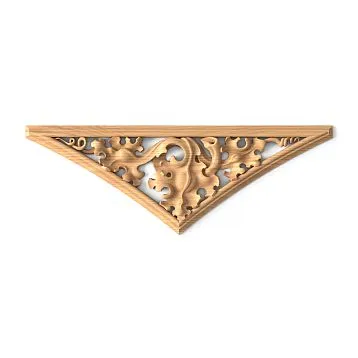
Imagine a house without wooden trim — bare walls meet the floor with a sharp line, doorways reveal uneven joints, and the ceiling simply ends abruptly in emptiness. It is precisely the long-profiled elements with constant cross-section that transform a construction box into a cozy home:moldings, cornices, baseboards, Wooden plank, Wooden beam, Wooden corner bracket— each element plays its part in the symphony of interior design.
Profiled trim is the language of architecture understood by walls. Planed and sanded trim made from noble oak, warm beech, or resinous larch creates that unique atmosphere impossible to replicate with plastic. Each item, manufactured according to GOST 19111-2001, carries a fragment of living wood — its wood moisture is precisely controlled at 8–12%, standard lengths of 2.4–3.0 m are measured with tolerances ±0.3–0.5 mm for face surfaces.
In STAVROS workshops, a special magic is born: four-sided planing frees ideal shapes from rough blanks, CNC profiling creates flawless repeats, sanding to Ra 6.3–12.5 μm gives surfaces silkiness, and water-based finish coatings reveal the full beauty of the wood soul. When it comes to restoration —House Carving— it can bring historical masterpieces back to life, recreating profiles of past eras.
The modern world rushes, but trim items live by their own rules. They require time to mature, attention to detail, respect for traditions. Buying trim from a genuine trim manufacturer means investing not just in finishing material, but in an inheritance for future generations.




From nature to craftsmanship: what is trim in simple terms
A tree grows in the forest, and each of its rings is a year of life, the breath of time, the history of rain and sun. But to become trim, wood must undergo a transformation path where technology meets craftsmanship, and precision meets beauty.
Trim — these are long elements with constant cross-section, like a frozen melody stretching through space, measured in linear meters. The secret of longevity lies in the details: the wood moisture of finished items is maintained in the golden middle of 8–12% for interior work, 12–15% for exterior. This is the moment of equilibrium when wood stops 'breathing' and is ready to serve faithfully and truthfully.
Profiled trim is born under steel router blades, which carve shapes from material like sculptors, maintaining tolerances ±0.3–0.5 mm for face surfaces. Planed trim undergoes a four-sided 'school of beauty' on special machines, achieving roughness Ra 25–50 μm. And sanded trim — this is already the highest level, when abrasive grit 120–180 units transforms the surface into silk with Ra 6.3–12.5 μm.
Round shapes have their poetry: round trim includes balusters with diameters 30–50 mm — vertical guardians of staircases, handrails with cross-section 40×60 mm — reliable companions for ascents and descents, elegant rods of various diameters. Nature does not tolerate randomness, so standard lengths are clearly defined: 2.4, 3.0, 4.2, 6.0 meters — each size is dictated by production logic and ease of use.
Wooden baseboard— this is not just a plank on the wall, but a boundary between vertical and horizontal, creating a sense of completion. Height 60, 80, 100, 120 mm with thickness 16–22 mm — each size corresponds to its interior. Modern modifications with cable channel width 12–20 mm allow hiding the technical prose of civilization, leaving only the poetry of wood on display.
Our factory also produces:


Material character: when species determines fate
Get Consultation
Oak: aristocrat among trees
Oak trim — this is the choice of those who understand the difference between buying and investing. Density 650–800 kg/m³ at 12% moisture speaks of a solid character, and hardness by Brinell 3.7–4.2 units — of readiness to serve for centuries. Oak lives its own special life: its wood moisture is carefully maintained at 8–10% to exclude capriciousness in the form of cracks and deformations.
The price of oak trim (approximately 800–2500 rubles/m) reflects not just the cost of the material, but also the complexity of its 'character' — oak does not forgive mistakes, requiring craftsmanship at every stage of processing. Yet the result exceeds all expectations: over time, oak becomes even more beautiful, acquiring a noble patina of time.
Beech: the golden middle of nature
If oak is aristocracy, then beech trim — an intelligent gentleman with impeccable manners. Density 650–750 kg/m³ at 12% moisture ensures reliability, and uniform structure — predictability in work.Wooden moldingsBeech trim — a designer’s dream: they accept any color, from the softest white to deep wenge, while preserving their natural texture.
Larch: northern strength
Larch trim — this is the embodiment of Siberian character. Density 550–665 kg/m³ at 12% moisture combines with remarkable resistance to moisture. High content of natural extractives makes larch a natural antiseptic — it does not fear moisture, does not attract insects, and does not rot.
| Species | Density kg/m³* | Hardness HV | Moisture % | Price rub/m** | Character |
|---|---|---|---|---|---|
| Oak | 650–800 | 3.7–4.2 | 8–10 | 800–2500 | Aristocratic, eternal |
| Beech | 650–750 | 3.0–3.8 | 8–12 | 600–1800 | Universal, durable |
| Larch | 550–665 | 2.5–3.1 | 10–12 | 700–2200 | Durable, moisture-resistant |
| Linden | 450–530 | 1.8–2.2 | 8–12 | 500–1200 | Soft, fragrant |
*Typical values at 12% humidity
**Prices are approximate and formed based on individual specifications
MDF: When Technology Serves Beauty
MDF profile and trim items — a modern miracle where wood fibers transform into dream material. Density 720–850 kg/m³ with moisture absorption not exceeding 8–12% per day ensures stability that solid wood can only dream of.
GOST for MDF strictly monitors ecology: formaldehyde emission class E1 (≤0.124 mg/m³) means the air in the house remains clean and safe. Prices for MDF trim (approximately 200–800 rubles/m) make quality finishing accessible to a wide range of beauty enthusiasts.
Profile gallery: each shape has its purpose
Main characters of the interior
In the theater of interior design, every element plays its role. Wooden skirting board — the conductor setting the rhythm for the entire space. Its dimensional range was created deliberately:
-
Height 60 mm — for intimate spaces where light perception is important
-
Height 80 mm — the golden standard, suitable for most interiors
-
Height 100 mm — for spacious rooms with ambitions
-
Height 120 mm — for interiors with palace-like grandeur
Thickness 16–22 mm provides necessary strength; fillet radius 2–4 mm creates soft play of light and shadow. Modern cable channel 12–20 mm — a compromise with technical progress: wires are hidden, beauty remains.
Moldings— poets of decoration, creating accents where they are least expected:
-
Narrow 30–50 mm — for delicate furniture decoration
-
Medium 60–100 mm — for creating classic wall panels
-
Wide 120–200 mm — for grand ceiling compositions
Crown Molding— crown the space, like a crown crowns a monarch’s head:
-
Simple (1–2 elements) — for minimalist elegance
-
Medium (3–5 elements) — for neoclassical restraint
-
Complex (6+ elements) — for baroque opulence
Workhorses of construction
Behind the grandeur, simple but indispensable heroes labor.Wooden plank— the foundation of foundations, honest and reliable:
-
Sections 20×40, 25×50, 30×40, 30×50 mm — each for its own purpose
-
Lengths 2.0, 2.5, 3.0 m optimized to minimize waste
-
Tolerances ±0.5 mm in thickness guarantee assembly accuracy
-
Surface roughness Ra 6.3–12.5 μm after planing is ready for any finish
Wooden beam— square honesty in a world of curved lines:
-
Square sections 20×20, 25×25, 30×30, 40×40, 50×50 mm
-
Rectangular 20×40, 25×50, 30×60 mm for special cases
-
Straightness ≤2 mm per meter — guarantee of perfect geometry
Wooden corner bracket— protector of corners and creator of clear lines:
-
Shelves 25×25, 30×30, 40×40, 50×50 mm for various tasks
-
Thickness 16–25 mm ensures reliable fastening
-
Radius of rounding 3–5 mm makes contact safe
-
Angle 90° ±1° — mathematical precision in wood
GOST as guarantee: when standards protect quality
In a world where much becomes disposable, GOST 19111-2001 stands guard over quality traditions. This standard for profiled trim products — is not merely a set of numbers, but a philosophy of responsibility toward the consumer.
Wood moisture is controlled with pharmacy precision: no more than 12% for interior work, up to 15% for exterior. Every 100 linear meters is checked with a moisture meter — such control eliminates unpleasant surprises in the form of cracks and deformations after a year of use.
Quality passport — this is the biography of each batch, where everything important is recorded:
-
Wood species and its pedigree according to GOST 2140-81
-
Actual moisture content accurate to 0.5%
-
Geometric dimensions with honest tolerance indication
-
Surface roughness Ra class — indicator of readiness for finishing
-
Strength test results — especially important for joined products
Certificates of conformity confirm not only technical quality, but also care for health:
-
Ecological safety class E1 — air remains clean
-
Material flammability group (G1–G4) — important for fire safety
-
Biostability for outdoor use — protection against natural enemies
Tolerances ±0.3–0.5 mm for face profiles, straightness ≤2 mm/m, surface roughness Ra 6.3–12.5 μm — behind these figures lies confidence that joints will be flawless and the surface ready for any finish.
Production symphony: when craftsmanship meets technology
In STAVROS workshops, every day a technological symphony unfolds, where profiled trim production becomes an art. The profiled trim line with German equipment and CNC control — this is an orchestra where each instrument knows its part.
First part of the symphony — wood drying. In special chambers, where every degree of temperature and percentage of humidity is controlled with scientific precision, wood slowly releases excess moisture. The process may take weeks, but haste here is the enemy of quality. Final moisture content of 8–12% — this is the moment of harmony when wood is ready for transformation.
Second part — end-grain cutting and joining, where each blank undergoes strict sorting. All defects that could spoil the final product are removed. Short lamellas are transformed into long blanks thanks to D4-grade adhesive — a bond stronger than wood itself.
Climax of the symphony — profiling on four-sided machines, where special cutters, like sculptors, carve the intended shape. CNC and automation guarantee that the thousandth element will be identical to the first with precision ±0.2 mm.
Final chord — sanding trim to Ra 6.3–12.5 μm and painting trim with water-based coatings. The 15,000 m³/hour aspiration system operates like a light production, maintaining air purity and converting waste into resources.
Art of Finishes: When Protection Becomes Decoration
Finishing wood trim is the final transformation, when a good product becomes perfect. The technological process is refined to perfection:
Water-based primers deeply penetrate wood pores, creating a foundation for beauty. P240 sanding between coats removes all imperfections, like a cosmetologist preparing skin for makeup. Two layers of base coating ensure even color, while the final coating with gloss level ISO 2813: 10–90 GU creates the desired mood — from noble matte to festive gloss.
Water-based coatings — the choice of those who think about the future:
-
E1 class eco-friendliness means the home breathes clean air
-
UV resistance for interior use preserves color for years
-
Water resistance with water absorption up to 8% makes products practically indestructible
-
Adhesion ≥2.0 MPa per GOST 31149 — this is the guarantee that beauty won’t peel off
A palette of 150+ RAL and NCS shades — just the beginning. The key is the ability to create exactly the color that lives in the designer’s imagination.
Interior styles: when trim defines the character of the home
Each interior style has its own character, and wooden trim is one of the main ways to express it. It’s like choosing a dictionary for a poet: the same elements can sound completely different.
| Style | Baseboard {count} mm | Casing {count} mm | Crown Molding | Philosophy |
|---|---|---|---|---|
| Classic | 100–120×22 | 80–100×25 | Multi-element | Grandeur and Eternity |
| Neoclassical | 80–100×20 | 70–90×20 | Simplified | Noble Reserve |
| Scandi | 60–80×16 | 60–80×18 | Minimalist | Cozy and Close to Nature |
| Minimalism | 60×16 | 60×16 | Hidden | Purity and Geometry |
| Provence | 80–100×18 | 70–90×18 | Simple Carved | Rustic Romance |
Classic interiors require trim that speaks the language of eternity — high profiles, rich forms, intricate moldings. Here, every element must demonstrate solidity and craftsmanship.
Scandinavian minimalism prefers wooden trim in light tones with simple, yet warm shapes. Here, luxury is not the priority — it’s coziness: soft curves, natural hues, the feeling of home, not a museum.
Quality Geography: from capitals to provinces
Moscow Ambitions
Moscow's joinery is a market where the highest demands meet unlimited possibilities. The capital values not just quality, but exceptionalism. Oak joinery here is not luxury, but a standard of life for those who understand the difference between buying and investing.
STAVROS organizes deliveries for the Moscow region according to an individual schedule, taking into account all the specifics of the megacity — from transportation restrictions to deadlines. Each project is unique, like fingerprints.
Saint Petersburg Heritage
Saint Petersburg joinery lives in constant dialogue with history. In a city where every facade is a work of art, the ability to recreate historical profiles is especially valued.House CarvingHere, it is not just craftsmanship — it is a way to preserve the city's cultural DNA.
Restoration work requires not only technical skill but also historical intuition. Each profile must carry the imprint of its era, every detail — tell its part of history.
The Art of Choice: When Details Decide Everything
The Wise Buyer's Checklist
Buying joinery is not just a commercial transaction — it is the beginning of long-term relationships with a material that will serve for decades. A wise buyer knows what to pay attention to:
Technical Specifications — the foundation of durability:
-
Wood moisture: 8–12% (measured by a moisture meter)
-
Geometric tolerances: ±0.5 mm for precise assembly
-
Straightness: ≤2 mm/m for ideal joints
-
Surface roughness: Ra 6.3–12.5 μm after sanding
-
Grade according to GOST 2140-81, no surprises
-
Length accuracy: ±5 mm for optimized waste
Documents — guarantee of honesty:
-
Quality passport with actual moisture of the batch
-
Certificate of conformity to GOST 19111-2001
-
E1 ecological certificate for a healthy home
-
Adhesive strength protocol for assembled items
The Economics of Beauty
Prices for joinery — are not just numbers, but a reflection of a complex creation process. Understanding pricing mechanisms will help make an informed choice:
Factors affecting cost (approximate coefficients):
-
Wood species: from affordable linden (1.0) to exotic species (3.5)
-
Profile complexity: from simple planks (1.0) to multi-element cornice (2.8)
-
Processing class: from planed (1.0) to premium sanded (1.6)
-
Finish coating: from natural wood (1.0) to artistic paint (2.2)
-
Order volume: the more, the better (discounts 5–25%)
History of one room (18 m², ceiling 2.7 m):
| Position | Quantity | Price per sq. m* | Mood | Total |
|---|---|---|---|---|
| Oak skirting 80×16 | 18 sq. m | 700 | Warmth of the home | 12 600 |
| Casing (3 openings) | 21 sq. m | 800 | Frames for life | 16 800 |
| Materials | 29 400 | |||
| Installation (40%) | Transformation | 11 760 | ||
| TOTAL | Ready-made home | 41 160 |
*Prices are approximate; final cost depends on many factors
This amount is not an expense, but an investment in the quality of life — in those moments when entering your home, you feel: 'Yes, this is my home.'
Installation technology: when a dream becomes reality
Installationmolding products— the final act of the play, when all elements merge into a single symphony of interior design.
Preparation: patience as the guarantee of success
Each item must 'acclimate' to its new home. Acclimatization for 48–72 hours at +18–22°C — this is not a technician's whim, but a necessity. Wood is alive; it must adapt to the room's climate and find its equilibrium.
Base is checked for flatness with tolerance ≤2 mm/m. Porous surfaces are primed — this is like preparing a canvas before painting a picture.
Mounting: reliability in every self-tapping screw
-
Skirting: self-tapping screws 4×40 mm every 40–60 cm, pre-drilling ⌀2.5 mm prevents cracking
-
Casing: finishing nails 1.8×40 mm or PVA glue class D3 — choice depends on the task
-
Crown molding: plastic anchors 6×60 mm every 30–40 cm, strictly into load-bearing structures
Corners: where craftsmanship is revealed
Cut at 45° using a saw with fine teeth (80–100 teeth) — this is the moment of truth. Joint gap ≤0.3 mm separates a professional from an amateur. Thermal expansion is accounted for with a gap of 1–2 mm per every 2–3 meters.
Hidden skirting — a special philosophy: requires a built-in aluminum profile and wall flatness ≤1 mm/m. Result — floating wall effect, but the price of perfection is high.
Finishing: the final touches of perfection
Micro-gaps are delicately filled with acrylic sealant matched in tone. Mounting points disappear under a layer of putty. Sanding P220, priming, two-coat painting — and the material is finally transformed into an interior element.
Comparative analysis: choosing by heart and by reason
| Parameter | Oak | Beech | Larch | MDF | Character |
|---|---|---|---|---|---|
| Density kg/m³ | 650–800 | 650–750 | 550–665 | 720–850 | Sturdiness |
| Moisture resistance | Good | Medium | Good | Good | Practicality |
| Stability | High | Medium | High | Very High | Predictability |
| Ecological | Ideal | Ideal | Ideal | Good (E1) | Family health |
| Workability | Requires skill | Placid | Medium | Light | Work complexity |
| Price rub/m* | 800–2500 | 600–1800 | 700–2200 | 200–800 | Availability |
*Approximate, depends on many factors
Innovations with soul: when the future meets tradition
STAVROS production is where centuries-old woodworking traditions meet 21st-century technologies. Digital profile modeling with precision of 0.01 mm allows realizing the boldest design dreams. Robotization of painting lines ensures perfect coating uniformity and protects nature, saving up to 15% of material.
FSC certification is not just a piece of paper in a folder — it's a promise to future generations. Every tree that becomes part of your home grew in a forest that will continue to live. Waste-free production turns sawdust into fuel briquettes — a beautiful closed-loop formula.
Water-based coatings with less than 30 g/L VOC make your home not just beautiful, but healthy. Energy efficiency is achieved through our own boiler using wood waste — production gives back to nature rather than taking from it.
Questions and answers: wisdom in details
How does the height of the skirting board affect the perception of space?
Wooden skirting board is not just a functional detail, but also a visual design tool. For ceilings 2.6–2.8 m, optimal height is 80–100 mm; for 2.9–3.2 m — 100–120 mm. Golden rule: skirting board height ≈ ceiling height / 25. But most importantly — harmony with the overall interior mood.
Hidden skirting: revolution or fashion?
Hidden skirting creates a magical effect of floating walls, visually expanding the space. But it requires jewel-like precision (≤1 mm/m wall plane) and increases budget by 40–60%. This is a choice for perfectionists willing to pay for perfection.
MDF and water-based paints: are they compatible?
MDF profile trim items perfectly match water-based enamels after proper preparation. Primer-isolator is a mandatory intermediary, preventing fiber lifting. Paint consumption increases by 15–20%, but the result is worth it.
Joined trim: compromise or advantage?
Mitered molding is a triumph of reason over nature's randomness. No knots or cracks, stable geometry, up to 6 meters long without joints. The strength of the glued joint exceeds the strength of the wood — this is a scientifically proven fact, confirmed by tests.
How to calculate the amount for a complex room?
The math is simple: perimeter minus openings plus 10% for trimming. For complex profiles, the reserve increases to 15%. But it's better to entrust the calculation to a professional — saving on material may result in additional expenses and stress.
Conclusion: when details create a home
In a world of mass production and disposable solutions, wooden molding remains an island of authenticity. This is the material for those who understand the difference between shelter and home, between decor and interior design, between purchase and investment in quality of life.
Every morning, waking up in a home finished with quality wooden molding, you feel the difference. It’s in how light plays on the profilesmolding, how perfectly the corners joincasings, how perfectly the lines finishbaseboards. These details don’t shout about themselves — they create a backdrop for life, calm and reliable.
Buying wooden molding from a genuine manufacturer of molding — means choosing the philosophy of longevity. STAVROS doesn’t just produce items — we create the foundation for family stories, the backdrop for childhood memories, the decor for important life moments.
moldings, cornices, baseboardsSTAVROS — this is the choice of those who build not for a year or a decade, but for centuries. Those who understand that true economy lies in purchasing things that don’t need to be replaced. Those who value the quiet of quality over the noise of marketing.
In every STAVROS product, a part of the master’s soul lives — the warmth of wood, the precision of technology, and care for the future. We don’t just process wood — we transform homes into places where you want to live, love, and raise children.
Because a home is not just walls and a roof. A home is the feeling that you are where you belong. And wooden molding from STAVROS helps create exactly that feeling.
Quality certificates: humidity control according to protocols, D3/D4 glue for mitered items, environmental class E1, FSC certification for all raw materials.