Article Contents:
- Natural aristocracy of oak wood
- Textural perfection of solid wood
- Technological Features of Oak Trim Production
- Precision processing and profile forming
- Variety of forms and profiles of oak trim
- Decorative Elements and Their Functionality
- Applications of oak trim
- Commercial and public interiors
- Technical specifications and quality standards
- Quality control and certification
- Installation of oak trim
- Fastening tools and technologies
- Protective and decorative finishing
- Staining and patination
- Economic aspects of choosing oak trim
- Calculating requirements and planning purchases
- Modern trends in design with oak trim
- Integration with modern technologies
- Ecological aspects and sustainable development
- Impact on air quality in rooms
- Care and maintenance of oak trim
- Preventive Measures
- Comparison with alternative materials
- Long-Term Economic Efficiency
- Innovations in oak trim production
- Digital technologies in design
- Professional recommendations for selection
- Alignment with overall interior concept
- Frequently Asked Questions
- Conclusion

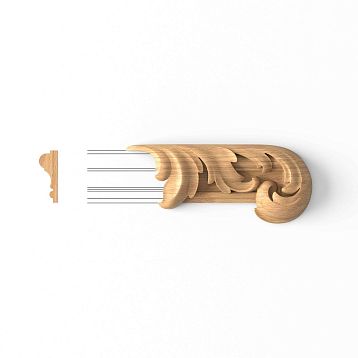
Have you ever wondered what makes an interior truly complete? What transforms an ordinary space into one that breathes nobility and elegance? The answer lies in the details—the very elements that create architectural logic and give a room its unique character.oak trimThis is precisely such a solution, where natural beauty combines with functionality, and traditional craftsmanship meets modern requirements.
In the world of finishing materials, oak trim occupies a special place—it is not merely decorative elements, but true masterpieces of carpentry. Each plank, each profile carries a unique story of the wood that accumulated strength and beauty over decades to become part of your home.


Natural aristocracy of oak wood
Oak wood has long been considered a symbol of strength, durability, and nobility. But what exactly makesTrimming Itemsoak so special?
The density of oak wood ranges from 700 to 900 kilograms per cubic meter, providing exceptional strength and stability in finished products. Its hardness on the Brinell scale reaches 4.2 units, surpassing most other wood species. These characteristics allow for the creation of delicate profiles and complex decorative elements without risk of deformation or damage.
The unique structure of oak fibers creates an incomparable pattern, where large spring wood pores alternate with dense summer growth areas. This natural pattern makes each oak plank absolutely unique, transformingWooden triminto a true work of art.
The tannin content in oak wood reaches 20 percent, which not only imparts a characteristic golden-brown hue but also provides natural protection against moisture, fungi, and insects. This natural preservation allows oak products to retain their original beauty for centuries.




Textural perfection of solid wood
The special structure of oak wood—the presence of medullary rays—creates a unique play of light on the surface of finished products. These natural reflectors give oak trim a particular depth and expressiveness unattainable with other materials.
The color palette of oak solid wood is strikingly diverse: from light honey tones of young wood to rich brown hues of seasoned material. Under the influence of light and time, oak develops a noble patina that only enhances its aesthetic value.
Our factory also produces:


Technological features of oak molding production
Creating high-quality oak trim is a complex technological process requiring a deep understanding of wood properties and strict adherence to production standards. Each stage of production is critical to the quality of the final product.
Raw material selection begins with careful inspection of wood to ensure compliance with quality requirements. Oak blanks must come from trees at least 80-100 years old, when density and hardness reach optimal values. The stem diameter at the base must exceed 60 centimeters to obtain boards of sufficient width.
Drying oak blanks requires special attention to the uniformity of the process. The final moisture content should be 8-10 percent, with deviation not exceeding 1 percent throughout the entire volume of the blank. Non-uniform moisture leads to warping of finished products and distortion of profile geometry.
Get Consultation
Precision processing and profile forming
Modern technologies allow creating the most complex profiles with high precision. Routing of oak blanks occurs on high-precision equipment using special tools developed for working with hardwoods.
Finishing of ready-made items is performed in several stages with gradual reduction of abrasive grit. Final processing achieves a surface roughness of Ra 0.8 micrometers, ensuring a perfectly smooth surface suitable for applying protective-decorative coatings.
Variety of shapes and profiles of oak trim
The modern assortment of oak trim impresses with its diversity.Wooden moldingsProfiles are available in classic and modern variants, ranging from simple rectangular cross-sections to complex multi-step forms with decorative elements.
Wooden baseboardOak trim not only serves a decorative function but also acts as a reliable barrier protecting walls from mechanical damage. The height of the skirting can vary from compact 40 millimeters to impressive 120 millimeters, allowing selection of the optimal variant for any interior.
Oak casingTraditionally used for decorating door and window openings. The variety of profiles — from simple flat to three-dimensional carved — allows creating a harmonious combination with any architectural style.
Decorative elements and their functionality
Wooden planksOak trim finds wide application in modern interiors as elements of space zoning and creating accent surfaces. They can be used for wall and ceiling finishing, decorative panels, and even furniture facades.
Oak crown molding and appliqués made from solid oak give furniture a finished look and highlight the quality of manufacture. They look especially striking on kitchen sets, where the combination of functionality and aesthetics is of primary importance.
Application areas of oak trim
The versatility of oak trim opens up limitless possibilities for its application in various construction and finishing areas. From classic interiors to modern minimalist spaces — this material integrates seamlessly into any design concept.
In residential interiorsOak MoldingIt is used to create a unified architectural image. It allows combining separate interior elements into a harmonious composition, emphasizing the geometry of space and creating visual accents.
Commercial and public interiors
In commercial spaces, oak trim creates an atmosphere of prestige and reliability. Offices, restaurants, hotels, and other public establishments use it to emphasize status and create a memorable image.
Particular value is placed on the use of oak trim in historic buildings and cultural heritage sites. Its use allows preserving the authenticity of architectural appearance during restoration work.
Technical Specifications and Quality Standards
The quality of oak trim is determined by strict adherence to technical standards at every stage of production. The geometric accuracy of profiles must meet tolerances not exceeding ±0.1 millimeters for linear dimensions and ±1 degree for angular parameters.
The moisture content of finished items should not exceed 10 percent, ensuring dimensional stability under changing climatic conditions. The surface must be flat, smooth, and free of wood defects — knots, cracks, insect holes, and other damage.
Sorting of oak trim is performed according to several quality categories. Grade 'Extra' implies complete absence of wood defects and perfect processing quality. Grade 'Prima' allows minor natural wood characteristics that do not affect aesthetic or functional properties.
Quality control and certification
Modern oak trim manufacturers implement quality control systems covering all stages of the production cycle. From incoming raw material inspection to final inspection of finished products — each element undergoes careful examination.
Product certification confirms compliance with ecological standards and safety for use in residential spaces. This is especially important for families with children and individuals suffering from allergic conditions.
Installation of oak trim
Professional installation of oak trim requires specialized knowledge and skills in working with natural wood. Surface preparation must be done with particular care — the base must be flat, dry, and free of contaminants.
Oak elements are fastened using special fastening systems that ensure secure fixation without damaging the wood. It is important to consider the natural expansion and contraction of the material under changing temperature-humidity conditions.
Fastening tools and technologies
Specialized tools are used for working with oak trim — disk saws with carbide-tipped blades, routers for creating joints, pneumatic nail guns. The quality of the tools directly affects the quality of the final result.
Jointing of elements is performed using various types of connections — butt, lap, with the use of connecting elements. Each type of connection has its own characteristics and area of application.
Protective and decorative finishing
Various protective and decorative coatings are used to fully reveal the beauty of oak texture and ensure the longevity of products. Oils and waxes highlight the natural beauty of wood, creating a matte surface with pleasant tactile properties.
Staining oak trim allows achieving the desired color solution without losing textural expressiveness. A wide range of shades—from light honey tones to rich wenge—opens up limitless possibilities for design solutions.
Staining and Patination
Patination creates an effect of noble antiquity, emphasizing the relief elements of the profile and giving products a special elegance. This technique is especially effective in classical and vintage interiors.
Patina creates an effect of noble antiquity, highlighting the relief elements of the profile and giving the items a special elegance. This technique is especially effective in classical and vintage interiors.
Economic aspects of choosing oak trim
Investments in quality oak trim pay off through longevity and enduring relevance of the material. Unlike artificial analogs, natural wood never goes out of fashion and only increases its aesthetic value over time.
The cost of oak trim is determined by multiple factors—quality of raw material, complexity of profile, batch volume, type of protective and decorative coating. It is important to understand that saving on material quality may lead to significant additional expenses in the future.
Calculating material requirements and planning purchases
Accurate calculation of material requirements helps avoid both shortages and excesses of trim. When calculating, it is necessary to consider not only the main volume but also reserve for trimming, possible defects, and future repairs.
Modern trends in design with oak trim
Modern architecture and interior design are experiencing a renaissance of natural materials. Oak trim fits organically into popular styles—Scandinavian minimalism, loft, eco-style, modern classic.
Modern architecture and interior design are experiencing a renaissance of natural materials. Oak trim seamlessly fits into popular styles – Scandinavian minimalism, loft, eco-style, and modern classic.
The trend toward creating biophilic interiors, where people feel connected to nature, makes oak trim especially relevant. Its use helps create an atmosphere of coziness and comfort, essential in today's urban environment.
Integration with modern technologies
Combining traditional natural materials with modern technologies opens new possibilities for design. Oak trim can be integrated with hidden lighting systems, create channels for wiring, and serve as a base for mounting modern equipment.
Smart technologies allow creating dynamic interiors, where oak trim serves as an unchanging foundation for changing design elements.
Ecological aspects and sustainable development
Choosing oak trim from responsibly managed forests contributes to preserving natural ecosystems and supporting principles of sustainable development. FSC certification guarantees that the wood is obtained in accordance with ecological and social standards.
The long service life of oak trim means less environmental impact compared to materials requiring frequent replacement. At the end of their service life, oak products can be recycled or used as a renewable energy source.
Impact on indoor air quality
Natural oak wood has the ability to regulate indoor air humidity, absorbing excess moisture during high humidity and releasing it during low humidity. This natural conditioning creates a healthier microclimate.
Oak wood does not emit harmful chemical compounds typical of many synthetic materials. Instead, natural tannins in oak have antibacterial properties and contribute to air purification.
Care and maintenance of oak trim
Proper care of oak trim ensures preservation of its original properties for many years. Regular cleaning with a soft dry or slightly damp cloth removes dust and dirt without damaging the coating.
Periodic renewal of protective and decorative coatings extends the service life of products and maintains their aesthetic appearance. The frequency of renewal depends on the intensity of use and the type of coating—oil-based coatings require more frequent renewal, while lacquered coatings are more durable.
Preventive measures
Maintaining a stable temperature and humidity regime in the room prevents deformation of oak trim. Optimal parameters are temperature 18–24°C and relative humidity 45–60%.
Protection from direct exposure to sunlight prevents fading and drying out of wood. Using curtains or blinds during sunny hours helps preserve the original color of products.
Comparison with alternative materials
Compared to artificial analogs, oak trim demonstrates superior performance characteristics. MDF and plastic profiles may imitate wood texture but do not possess its unique physical properties.
Oak trim exhibits significantly higher resistance to mechanical damage compared to composite materials. When damaged, oak products can be repaired and restored, whereas synthetic analogs require complete replacement.
Long-term economic efficiency
Although initial investments in oak trim are higher than in alternative materials, the long-term economic efficiency of natural wood significantly surpasses synthetic analogs. The service life of oak products is measured in decades, and with proper care—centuries.
The possibility of multiple restoration and renewal of coatings makes oak trim practically an eternal material, whose cost increases over time.
Innovations in oak trim production
Modern woodworking technologies open up new possibilities for creating unique profiles and surfaces. 3D milling allows creating intricate decorative elements with exquisite precision.
Oak wood thermomodification increases its stability and resistance to external influences. This process yields material with improved performance characteristics without using chemical additives.
Digital Technologies in Design
Using computer modeling allows creating accurate 3D models of future interiors with oak trim. Clients can see the result even before work begins and make necessary adjustments.
Virtual reality technologies offer opportunities for full immersion in the designed space, which is especially important when working with expensive materials.
Professional recommendations for selection
The selection of oak trim should be based on a clear understanding of its intended use and operating conditions. For rooms with high humidity, it is recommended to use specially treated material with enhanced moisture resistance.
When selecting a profile, it is important to consider the scale of the room — large profiles suit spacious rooms with high ceilings, while more delicate profiles look better in compact spaces.
Coordination with the overall interior concept
Oak trim should harmoniously complement other interior elements — flooring, furniture, textiles. Unity in color solution and stylistic direction creates a cohesive and harmonious look.
It is important to consider the functional features of the room — rounded profiles without sharp angles are preferable in children's rooms, while strict geometric forms are better suited for workspaces.
Frequently asked questions
Which grade of oak trim is better for residential interiors?
For residential spaces, it is recommended to choose trim of grade "Prima" or "Extra". These grades provide the optimal balance of quality and cost, ensuring an attractive appearance and durability of the products.
Can oak trim be used in humid rooms?
Yes, but with mandatory preliminary treatment with special moisture-protective compounds. Natural oils with water-repellent properties or special lacquers for humid areas will provide reliable protection.
How often should protective coating be renewed?
The frequency of renewal depends on the type of finish and intensity of use. Oil-based finishes require renewal every 2-3 years, while lacquer finishes last 5-7 years under normal operating conditions.
What is the optimal moisture content for oak trim?
The optimal moisture content of finished products is 8-10 percent. At this moisture level, wood maintains geometric stability and reacts minimally to changes in climatic conditions.
Can oak trim be installed by oneself?
Installation is possible with basic carpentry skills and appropriate tools. However, for an ideal result, it is recommended to consult professional installers, especially when working with complex profiles.
Conclusion
In the world of modern finishing materialsoak trimoccupies a special place, representing the ideal combination of natural beauty, functionality, and durability. This material does not merely decorate interiors — it creates an atmosphere in which a person feels part of nature without sacrificing modern comfort.
Choosing oak trim for your home or office means investing not only in today's beauty, but in value that will only grow over the years. Natural oak wood is a material that unites generations, creating continuity and a connection to natural roots.
For many years, the company STAVROS has specialized in producing high-quality oak trim, combining traditional carpentry craftsmanship with modern production capabilities. Our products meet the strictest quality and ecological safety standards, confirmed by appropriate certifications and years of successful market experience.
By choosing STAVROS, you are not just selecting a material — you are choosing a philosophy of quality that is reflected in every detail of our products. From the initial selection of raw materials to the final packaging of finished goods, each production stage is controlled by experienced specialists who guarantee consistently high quality of our oak trim.