Article Contents:
- Geometry of Inspiration: Why the Circle Rules the Space
- Psychology of Circular Forms in Interior Design
- Mathematics of Perfection
- Material Embodiment of the Idea: From Metal to Solid Wood
- Metallic Round Bases: Strength in an Elegant Shell
- Cast Iron Bases: Centuries of Reliability
- Wooden Round Bases: Warmth of Nature
- Design Concepts: From Classicism to Avant-Garde
- Minimalist Solutions
- Classic interpretations
- Avant-Garde Experiments
- Functional Features: More Than Just Support
- Height Adjustment Systems
- Mobility and Transformation
- Integrated Communications
- Technological Processes: The Path from Idea to Realization
- Design and Calculations
- Manufacturing Technologies
- Quality Control
- Selection Criteria: How to Find Your Ideal Base
- Matching Tabletop Dimensions
- Material Characteristics
- Stylistic Compatibility
- Operational Characteristics: Durability in Action
- Load testing
- Resistance to Environmental Effects
- Durability of Finishes
- Installation and Maintenance: Practical Aspects
- Installation Rules
- Technical Maintenance
- Restoration and repair
- Trends in development: looking into the future
- Smart technologies
- Eco-Friendly Materials
- Customized Production
- Economic aspects: investment in quality
- Life cycle cost
- Impact on property value
- Profitability for Business
- Conclusion: the circle as a symbol of perfection
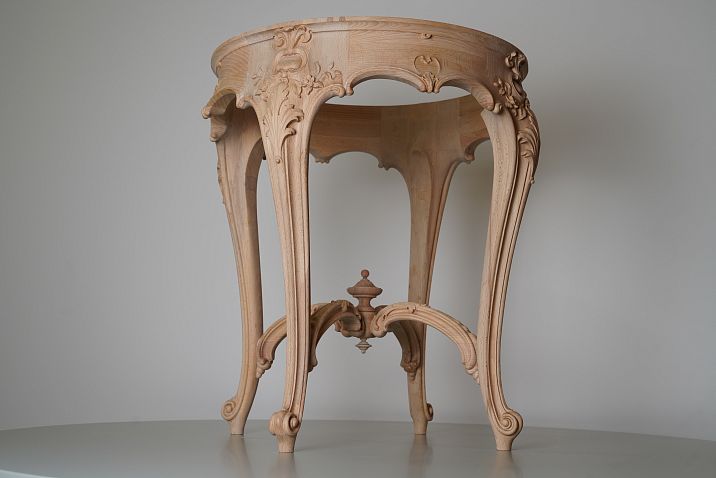
What happens when ancient wisdom of the circle meets modern furniture requirements? It is born. Round apron — an element that transforms an ordinary table into a work of art capable of changing the perception of the entire space. In a world of sharp angles and straight lines, round bases become an oasis of harmony, where every curve tells a story of the balance between beauty and practicality.
Imagine a morning café where sunlight glides over perfectly rounded base outlines, creating a play of light and shadow. Or a home dining room where family gathers around a table on an elegant round base, symbolizing unity and the endlessness of human relationships. Every round base carries the philosophy of perfection, where there is no beginning or end, only a continuous flow of energy and movement.


Geometry of Inspiration: Why the Circle Rules the Space




Psychology of Circular Forms in Interior Design
The human eye instinctively gravitates toward circular forms. This is ingrained in us by nature — the sun, the moon, the horizon, all the most important things in our world have rounded outlines. A round base in interior design acts as a magnet for the gaze, creating a focal point around which the entire room’s composition is organized.
Psychologists assert that circular forms reduce stress levels and create a sense of safety. When we see a round base, our subconscious perceives it as a friendly, safe object. The absence of sharp angles eliminates the feeling of aggression or tension that rectangular forms may create.
Our factory also produces:


The Circle is a mathematical perfection, where all points on the circumference are equidistant from the center. This geometric truth transforms every
into an embodiment of ideal balance. The central support becomes an axis of symmetry around which all forces and loads are evenly distributed. Round apron The diameter of the base of the round pedestal is determined not only by aesthetic considerations but also by precise engineering calculations. The optimal ratio of the base diameter to the tabletop diameter is 1:2 or 1:2.5, ensuring ideal stability with maximum elegance of form.
Material embodiment of the idea: from metal to solid wood
Get Consultation
Metallic round pedestals: strength in an elegant shell
Metal allows creating round pedestals of incredible strength with minimal thickness of elements. Steel pipes with round cross-sections of 60-100 mm form the central support, capable of bearing loads up to 200 kg. A base diameter of 450-600 mm ensures stability even under significant lateral forces.
Chromed surfaces create a mirror effect, visually enlarging the space. Powder coating in RAL colors allows integrating the pedestal into any interior color scheme. Matte finishes give the structure a modern industrial character, while glossy finishes emphasize elegance and luxury.
Cast iron bases: century-old reliability
Cast iron round
embodiment of furniture manufacturing traditions dating back to the 19th century. Casting allows creating complex decorative forms inaccessible when working with sheet metal. Artistic elements — scrolls, rosettes, geometric ornaments — transform the functional pedestal into a work of decorative art. bases for tables The weight of the cast iron base, ranging from 25 to 45 kg, ensures absolute structural stability. Natural patina or special treatment creates an elegant appearance, emphasizing the interior’s respectability. Cast iron is resistant to deformation, preserving geometry for decades.
The weight of the cast iron base ranging from 25 to 45 kg ensures absolute stability of the structure. Natural patina or special treatment creates an elegant appearance, highlighting the dignity of the interior. Cast iron is not subject to deformation, preserving its geometry for decades.
Wooden round pedestals: warmth of nature
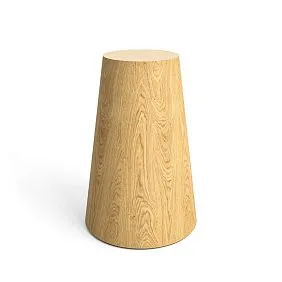
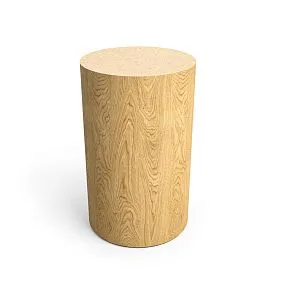
Solid wood brings a unique energy of living material into the round pedestal. Each annual ring tells the story of the tree, each fiber texture is unique and irreplaceable. Turning allows creating smooth transitions in diameter, forming elegant column and baluster silhouettes.
Oak, beech, ash — each wood species has its own characteristics of density and texture. Radial fiber structure in a round cross-section ensures even load distribution, eliminating deformations and cracks. Finish treatment with oils and varnishes highlights the natural beauty of the material.
Design Concepts: From Classic to Avant-Garde
Minimalist solutions
Modern minimalism requires round pedestals to have extreme simplicity of form. A thin metal pipe of 60 mm diameter, a round base of 10-15 mm thickness, absence of decorative elements — such pedestals become practically invisible, allowing the tabletop to dominate the composition.
Color palette is limited to black, white, and gray. Matte finishes eliminate glare and reflections, creating a sense of graphic clarity. Geometry is strictly functional — every element has technical justification, decorative details are completely excluded.
Classic interpretations
Classical Round apron relies on time-tested proportions and forms. The central column may have fluting — vertical grooves, giving the structure a majestic appearance. The capital and base of the column are adorned with traditional elements — Ionic scrolls, Doric fluting, Corinthian acanthus.
The base takes the form of a stylized plinth with profiled edges. Bronze or brass inlays emphasize the nobility of the structure. Patination creates an effect of noble aging, giving the pedestal historical authenticity.
Avant-garde experiments
Modern designers experiment with the forms of round pedestals, creating futuristic constructions. Asymmetric bases, inclined supports, variable diameters — all this breaks classical notions of circle geometry.
Using composite materials allows creating previously impossible forms. Carbon fiber, fiberglass, modern polymers open new possibilities for shaping. Integrated LED lighting transforms the pedestal into an art object.
Functional features: more than just a support
Height adjustment systems
Modern round furniture frames pedestals are often equipped with height adjustment mechanisms. Gas cylinders allow smoothly adjusting the table height in the range of 680-780 mm for dining tables and 950-1150 mm for bar constructions.
Screw mechanisms provide precise adjustment with a step of 5-10 mm. Threaded connections with coarse pitch allow quickly changing the height by rotating the tabletop. Position fixation is achieved with locking rings or clamping mechanisms.
Mobility and Transformation
Hidden rollers in the base convert the table into a mobile structure. Polyurethane wheels with a diameter of 50-75 mm ensure silent movement over any flooring. Locking mechanisms block the wheels in the working position, guaranteeing stability.
Foldable constructions allow quickly disassembling the table for storage or transport. The central support can telescope, reducing height by 2-3 times. The base can fold or disassemble into compact elements.
Integrated communications
Modern pedestals integrate engineering systems. Cable channels in the central support allow discreet electrical wiring to the countertop. Built-in outlets, USB ports, wireless charging systems transform the table into a high-tech workspace.
Climate control systems may include heated countertops for winter terraces or cooling for summer cafes. Built-in speakers create a sound zone around the table without disturbing the surroundings.
Technological processes: the path from idea to realization
Design and calculations
Creating a round pedestal begins with 3D modeling. Modern CAD systems allow calculating all loads and deformations during the design stage. Finite element method identifies critical zones in the structure, enabling material distribution optimization.
Stability calculations consider not only vertical loads but also overturning moments. The center of gravity of the system must be strictly above the base center with a stability margin of no less than 1.5. For tables with a 1200 mm diameter, the minimum base diameter is 600 mm.
Manufacturing Technologies
Laser cutting of metal ensures ideal geometric accuracy of parts. Plasma cutting is used for thick sheets, hydro-abrasive cutting for highly precise operations. Bending on modern presses allows creating complex profiles without welded seams.
CNC machining of wooden elements ensures repeatability of dimensions and surface quality. Milling creates decorative elements and functional grooves. Polishing is performed using abrasives of various grits to achieve a mirror finish.
Quality control
Each pedestal undergoes multi-stage quality control. Visual inspection identifies surface defects, geometric deviations, and assembly quality. Instrumental control verifies dimensional compliance with drawings to within 0.1 mm.
Strength tests include static and dynamic loads. A vertical load of 300 kg is applied at the center of the countertop for 24 hours. Lateral loads of 150 kg test resistance to overturning. Cyclic tests simulate 10 years of operation in just a few days.
Selection criteria: how to find your ideal pedestal
Countertop size compatibility
The diameter of the round base should be 40-50% of the countertop diameter. For 800 mm countertops, the optimal base diameter is 350-400 mm. For larger tables with a 1500 mm diameter, a base of 650-750 mm is required. Exceeding these proportions creates visual heaviness, while undersizing leads to instability.
Pedestal height depends on the table's purpose. Dining tables have a height of 720-750 mm, work tables — 740-760 mm, bar counters — 1050-1150 mm. Deviations from standard sizes require individual justification.
Material characteristics
Material selection is determined by operating conditions. Outdoor cafes require corrosion-resistant materials — stainless steel, aluminum, special coatings. Home interiors allow the use of any materials.
Load capacity must exceed planned loads by 2-3 times. For home tables, 150-200 kg is sufficient; for commercial use — 300-400 kg. Wooden pedestals have load limitations due to material properties.
Stylistic compatibility
Round apron The pedestal should harmonize with the overall interior style. Classic interiors require traditional forms and materials. Modern styles allow experimentation with shapes and colors.
The pedestal's color may contrast with the countertop or harmonize with it. Contrasting combinations create dynamism, harmonious ones — calmness. Surface texture also affects perception — matte surfaces create coziness, glossy ones — grandeur.
Operational characteristics: durability in action
Load testing
A quality round pedestal must withstand loads significantly exceeding nominal values. A static load of 500 kg at the center of the countertop should not cause residual deformations. Dynamic loads of 100 kg at 1 Hz frequency must be withstood without fatigue damage.
Lateral loads are especially critical for round pedestals on a single support. An overturning moment of 200 N·m should not cause loss of stability. This corresponds to a horizontal force of 50 kg applied at the edge of a 1200 mm diameter countertop.
Resistance to environmental effects
Temperature fluctuations from -20°C to +60°C should not affect the pedestal's geometry. Metallic structures have a linear expansion coefficient of 12×10⁻⁶ 1/°C, which at a height of 750 mm results in deformation of less than 1 mm.
Air humidity from 20% to 80% should not cause corrosion or swelling of materials. Wooden elements are treated with moisture-resistant compounds, metallic ones — with anti-corrosion coatings.
Coating wear resistance
Mechanical impacts during daily use should not compromise coating integrity. Coating hardness should be at least 6H on the Mohs scale. Adhesion to the substrate — at least 4 points by the grid cut method.
Coating chemical resistance is tested using household detergents, food acids, and alcohols. Color change should not exceed 2 units on the ΔE scale. Loss of gloss — no more than 10% of the original value.
Installation and maintenance: practical aspects
Installation rules
Installing a round pedestal requires a perfectly level surface. Deviation from horizontal should not exceed 2 mm per meter. Irregularities are compensated by adjustable supports or shims. Installation accuracy is checked with a construction level.
Mounting to the floor is performed using M10-M12 anchor bolts for pedestals over 1 meter in height. Anchor depth in concrete — at least 80 mm. For wooden floors, special concealed-head screws are used.
Technical Maintenance
Regular technical maintenance extends the lifespan of the pedestal. Weekly cleaning of dust and dirt prevents abrasive wear. Monthly inspection of threaded connections prevents structural loosening.
Moving mechanisms require lubrication every 6 months. Lithium-based grease is used for ball bearings, and liquid oils for threaded connections. Excess lubricant is removed to prevent contamination.
Restoration and Rehabilitation
Over time, any pedestal may require restoration. Scratches on metallic surfaces are removed by polishing or local touch-up. Deep damage requires sanding and repainting.
Wooden elements are restored by sanding and reapplying protective coatings. Cracks are filled with wood-colored putty. Chips and dents are repaired by local restoration.
Trends in development: looking toward the future
Smart Technologies
Integration of electronics transforms the pedestal into an intelligent system. Load sensors monitor weight distribution on the tabletop. Automatic height adjustment systems adapt to the user's height.
Wireless technologies allow controlling the pedestal via smartphone. Apps remember personal settings, monitor usage time, and remind users to take breaks. Integration with smart home creates a unified ecosystem.
Eco-Friendly Materials
Growing environmental awareness stimulates the use of renewable materials. Bamboo, recycled plastic, and plant-fiber composites are becoming alternatives to traditional materials.
Recycling technologies enable creating pedestals from production waste. Aluminum alloys with up to 90% recycled metal retain all operational properties. Wood-based composites from sawdust and shavings ensure dimensional stability.
Customized production
Digital technologies make mass production of individual items possible. 3D printing allows creating unique decorative elements. Laser engraving applies personalized inscriptions and ornaments.
Online configurators allow customers to design the pedestal themselves. Virtual reality lets users visualize the result in the interior before manufacturing. Direct production connection reduces manufacturing time.
Economic Aspects: Investment in Quality
Life cycle cost
Quality Round apron Lasts 15-20 years with proper use. Cheap alternatives require replacement every 3-5 years. Lifecycle cost calculation shows the economic efficiency of investing in quality.
Maintenance costs for quality pedestals are minimal — periodic cleaning and lubrication. Cheap constructions require frequent repairs and replacement of worn parts, increasing overall expenses.
Impact on property value
Quality furniture increases property value. Experts estimate that luxury furniture increases apartment value by 5-10%. For commercial real estate, this figure may be higher due to its impact on tenant appeal.
Premium restaurants and cafes use designer furniture as a branding element. Recognizable style attracts customers, builds loyalty, and allows setting premium prices.
Profitability for business
Investments in quality pedestals pay off through increased venue attractiveness. Beautiful interiors increase guest dwell time, average check, and visit frequency. Reliable structures reduce operational costs.
The longevity of quality furniture allows long-term budget planning. Absence of unexpected replacements and repairs ensures stable operating expenses.
Conclusion: the circle as a symbol of perfection
A round pedestal is more than just a furniture structure. It is a philosophy of space, where every line strives for perfection, and every form carries deep meaning. In a world dominated by sharp angles and abrupt transitions, a round table support becomes an island of harmony, a place where functionality and beauty meet.
Choosing a round pedestal is choosing in favor of timeless values: quality, beauty, reliability. It is an investment in creating a space that will delight not only us, but also our children and grandchildren. For true quality knows no time boundaries; it lives through centuries, passing from generation to generation.
Technologies change, styles evolve, but core principles remain unchanged: strength, functionality, beauty. Modern table supports combine traditional craftsmanship with innovative technologies, creating products that meet the highest quality standards.
Each pedestal is born from understanding that furniture is not just household items, but elements shaping our lives. A table standing on a quality pedestal becomes a place for meetings, negotiations, family meals, creative inspirations. Around it, ideas are born, deals are made, memories are created.
Company STAVROS has been creating exceptional furniture structures for over two decades, becoming the foundation for comfortable and beautiful living. Our furniture frames embodiment of the finest furniture craftsmanship traditions, combined with advanced production technologies. Every STAVROS product undergoes strict quality control and is created according to individual client needs. Choosing STAVROS products means choosing not just furniture, but a lifestyle based on quality, comfort, and unique style.