Article Contents:
- Base: The Invisible Architecture That Defines Character
- Base Typology: From Classic to Avant-Garde
- Base Materials: Wood, Metal, Combinations
- Structural Solutions: Stability and Transformation
- Dimensions and Proportions: The Mathematics of Harmony
- Furniture Legs: From Utility to Sculpture
- Precision Legs: Tradition and Variety of Forms
- Rectangular and Geometric Supports
- Carved Legs: Ornament as Identity
- Metal Legs: Industrial Aesthetics
- Furniture Handles: The Point of Contact That Defines Relationship
- Handle Typology: From Buttons to Brackets
- Handle Materials: From Wood to Rare Metals
- Color and Finish: From Classic Sheen to Modern Matte
- Creating a Unified System: Base, Legs, and Handles in Dialogue
- Material Unity
- Form Unity
- Color Unity
- Style Unity
- Functionality: Comfort and Ergonomics
- Height and Proportions of Tables
- Stability and Load Capacity
- Handle Convenience
- Stylistic Solutions 2026: From Neoclassicism to Bio-Futurism
- Neoclassicism: Elegance Without Excess
- Scandinavian Minimalism: Function and Naturalness
- Loft and Industrial Style: Brutality and Contrast
- Mid-Century Modern: Organic and Elegant
- Provence and Shabby Chic: Romance and Lightness
- Practical Aspects: Selection, Purchase, Installation
- How to Choose a Base for an Existing Tabletop
- How to make a base by hand
- Attaching the base to the tabletop
- Choosing and installing handles
- Trends 2026: what determines the choice
- Return to craftsmanship and naturalness
- Modularity and transformation
- Personalization and customization
- Contrasting material combinations
- Color accents
- Maintenance and Durability
- Care for Wooden Elements
- Care for metal elements
- Repair and restoration
- Frequently Asked Questions
- Can a base from one table be used for another tabletop?
- Which base is better — on four legs or with a central support?
- How to choose furniture handles to match the base style?
- How much does a quality wooden base cost?
- Are toe-kicks (lower crossbars) needed between the base legs?
- How to paint a wooden base?
- Can a sliding table be made from a regular base?
- Which is better for a kitchen table — wooden or metal base?
- How often should furniture handles be replaced?
- Which wood is better for furniture legs — soft or hard?
- Ecological sustainability and development
- Certified wood
- Durability as eco-friendliness
- Natural finishes
- Investing in quality: why it's worth paying more
- Service Life
- Repairability
- Emotional value
- Conclusion: furniture as a philosophy of life

A table is not just a horizontal surface for placing objects. It is an architectural object, where the tabletop and supporting structure form a functional and visual unity. Cabinet furniture — this is a system of planes and volumes, where every detail, including hardware, plays its role in the overall composition. In 2026, furniture design reaches a new level of awareness, wherewooden base for tableandFurniture Handlesno longer remain secondary elements but become key tools for creating the character of an object. A rough industrial support turns a table into a loft artifact, an elegant turned base makes it a classic value, and minimalist conical legs — embodiment of Scandinavian aesthetics. Cabinet handles work on the same principle: a brass bracket creates vintage charm, black matte — modernity, carved wood — tradition. The choice of these elements determines not only functionality but also the visual identity of the furniture.


Base: invisible architecture defining character
Most people focus on the tabletop when choosing a table — its size, shape, material. But it isthe base for a tablethat determines the style, proportions, visual perception of the object. A massive baroque base with carved supports creates a sense of grandeur and weight. Delicate and elegant — lightness and airiness. Industrial metal — brutality and modernity.
The base performs two critically important functions. The first — structural: to ensure stability, withstand load, and not deform over time. A table where a family gathers must be reliable — a tipped-over tabletop or a wobbly structure destroys trust in the object. The second function — aesthetic: to create visual balance with the tabletop, match the interior style, and be proportionate to the room.




Base typology: from classic to avant-garde
A classic base consists of fourlegs for the tableSet at the corners and braces — horizontal crossbars connecting legs and providing structural rigidity. This is a universal, time-tested system ensuring maximum stability.
Turned legs with balusters, stretchers, decorative bands — a hallmark of classic style. Oak, beech, and ash are turned on a lathe, creating a symmetrical rotational profile. The complexity of the profile can vary from simple, with one or two convexities, to baroque, with multiple details.wooden baseWith turned legs — an eternal value, suitable for traditional interiors.
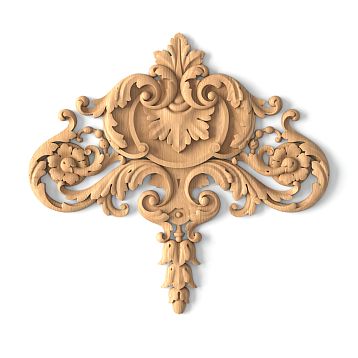
Carved legs elevate the structure into the realm of decorative applied art. Vegetal ornaments — acanthus leaves, grapevines — transform each support into a sculpture. Zoomorphic motifs — lion paws, griffins — are characteristic of the Empire and Classicism styles.Carved apronRequires craftsmanship and time, but the result is impressive.
Rectangular and square legs without turning — a modern alternative. A 60x60, 80x80, or 100x100 mm beam creates a strict geometry, characteristic of minimalism, loft, and Scandinavian styles. Minimal processing, emphasis on the natural wood texture or, conversely, a uniform color finish.
Central support — a solution for round and square tables, where one massive leg in the center supports the tabletop. This allows seated individuals to freely position their legs without resting against the supports at the corners.Round apronWith a central column and cross-shaped base — classic for round dining tables.
X-shaped and A-shaped supports — a constructivist solution, where two diagonal or inclined planes create a stable system. Characteristic of Scandinavian and modern tables, where visual lightness and structural clarity are valued.
Trapezoidal metal frames — loft and industrial style. Welded construction from profiled tubing, painted matte black or left with the natural patina of metal.Loft BaseCombined with a rough wooden tabletop, it creates a contrast of materials — warm and cold, natural and industrial.
Our factory also produces:



Materials for aprons: wood, metal, combinations
Solid wood — traditional and the most noble material. Oak has maximum hardness, strength, and expressive texture. Oakwooden baseServes for decades without losing its shape or beauty. Beech is slightly softer but more uniform, ideal for complex turned profiles. Ash — light-colored with expressive growth rings, suitable for Scandinavian interiors.
Metal — a modern alternative, especially for lofts and industrial interiors. Square or rectangular profiled tubing creates sleek, strong constructions. Round tubing — a more elegant option. Cast iron — heavy, very strong, characteristic of vintage bistro-style furniture.Cast iron apron— a rarity, but creates a sense of monumentality.
Combined aprons combine materials to achieve optimal balance of strength, weight, and aesthetics. Wooden legs with metal braces and stretchers — strengthening the structure while preserving the warmth of wood. Metal frame with wooden inserts — industrial with a touch of coziness.
Get Consultation
Constructive solutions: stability and transformation
Structural rigidity is ensured by braces — horizontal crossbars between legs, and stretchers — lower crossbars creating additional triangular structures. The heavier the tabletop and the greater the expected load, the stronger the braces must be.
Foldable tables require special aprons with a transformation mechanism.Foldable apronHas guides along which the halves of the tabletop spread apart, freeing space for the insert. The mechanism must operate smoothly, without play, ensuring secure fixation in the open position.
Height-adjustable aprons — a trend of recent years, linked to ergonomic workspaces. Electric drive or gas lift allows changing the table height from coffee table (40-50 cm) to bar (100-110 cm) or standing work (up to 120 cm).adjustable baseRequires a strong mechanism capable of withstanding multiple cycles of raising and lowering.
Foldable aprons — a solution for mobile furniture.Foldable apronWith hinges, it allows storing the table, freeing up space. Critical importance is placed on the strength of the fixators — the structure in the open position must be absolutely rigid.
— a critically important parameter determining comfort of use. Standard dining table height — 75 cm from floor to top of tabletop. The base, with a tabletop thickness of 3–4 cm, should be 71–72 cm high.
Base heightWork desk — 73–75 cm. Coffee table — 40–50 cm. Bar table — 100–110 cm. Console — 80–90 cm. Deviation from these norms by 3–5 cm is permissible, but greater deviations make furniture uncomfortable.
The width of leg placement should be 10–15 cm less than the tabletop width on each side, so that a person sitting at the table does not hit their legs against the supports. For a 90 cm wide tabletop, the base width should not exceed 70 cm. For an 180x90 cm tabletop — the base should be approximately 160x70 cm.
Leg thickness should correspond to the size and weight of the tabletop. A lightweight coffee table — legs with a diameter of 40–50 mm. A heavy dining table for 8–10 people — 70–90 mm. Disproportionality is immediately noticeable: thin legs under a heavy tabletop look fragile, while thick legs under a light tabletop look bulky.
The thickness of the legs should correspond to the size and weight of the tabletop. A lightweight coffee table — legs with a diameter of 40-50 mm. A heavy dining table for 8-10 people — 70-90 mm. Disproportionality is immediately noticeable: thin legs under a heavy tabletop look fragile, while thick legs under a light tabletop appear bulky.
Legs for furniture: from utility to sculpture
If the base is a complex support system for the table, thenLegs for tablesand other furniture — are individual elements that can be used independently or as part of more complex constructions. Legs define the character of furniture no less than the body or facades.
Turned legs: tradition and variety of forms
Turning is the oldest woodworking technology, allowing to create symmetrical rotational volumes. The wooden blank is secured in a lathe and shaped with chisels to form the desired profile.
Simple turning — one or two balusters (convexities), several transitions. Suitable for Scandinavian and Provencal interiors, where restrained decoration is valued. Complex Baroque turning — numerous elements, transitions, interplay of convexities and concavities. Characteristic of classical, luxurious interiors.
Grooves — vertical channels cut into the surface of turned legs — add graphic quality and enhance verticality. Spiral-turned legs — a virtuoso work characteristic of Baroque. Each such leg is a work of art requiring hours of manual labor.
Conical legs — smooth tapering downward or widening downward. Widening legs create a sense of stability, tapering legs — lightness and elegance. The cone may be straight or concave — the latter is especially elegant, characteristic of Danish design of the mid-20th century.
Rectangular and geometric supports
Not all furniture stands on round legs. Square and rectangularFurniture Supportscreate strict geometry, characteristic of modern styles.
Straight 40x40, 50x50, 60x60 mm beams — minimalist supports without decoration. May be slightly tapering downward for visual lightness. Chamfering along edges softens the rigidity, making the leg more pleasant to touch.
Trapezoidal legs — widening downward in one or two planes — create dynamism and stability. Characteristic of tables and sideboards in mid-century modern style.
Flat vertical panels instead of traditional legs — Japanese minimalism, where furniture seems to grow from the floor as a single volume. Two wide boards at the ends of a chest or table create a monolithic, sculptural form.
Carved legs: ornament as identity
Carving transforms a functional support into a decorative element. Botanical motifs — acanthus leaves, grapevines, oak leaves with acorns — are classics of European decorative art. Each leaf, each scroll is carved by hand or on a CNC milling machine.
Zoomorphic carving — lion paws, griffins, eagle claws — characteristic of Empire style, where furniture demonstrated the owner’s power and status. Anthropomorphic elements — caryatids, atlantes — are rare, found in formal furniture.
Geometric carving — diamonds, checkerboards, spirals — a more restrained option, suitable for ethnic and rustic interiors. Scandinavian carving with its minimalist geometric patterns creates a balance between decoration and simplicity.
Metal legs: industrial aesthetics
Metal — material of the 20th–21st centuries, symbolizing progress, technology, urbanity. Metal legs for furniture — from simple tubular to complex designer forms — define the character of modern interiors.
Straight cylindrical legs from round tubes — minimalist classic, characteristic of Bauhaus and Scandinavian design furniture. Conical — widening or tapering — add dynamism.
Spindle — thin metal leg with a diameter of 8–12 mm and threading at the end for mounting. Creates an effect of floating furniture, visually weightless, barely touching the floor. Popular for chests, side tables, chairs in mid-century style.
Frame legs from profiled tubes — industrial loft. Square or rectangular cross-section, welded construction, matte black finish. Brutality balanced by the warmth of wooden tabletops and facades.
Designer metal legs — sculptural forms created by renowned designers. Curved, branching, asymmetrical — they transform furniture into art objects. But require appropriate context to avoid appearing pretentious.
Furniture handles: point of contact, defining relationship
A handle is an element we touch daily, opening cabinets and pulling out drawers. It is a point of tactile contact, and its shape, material, and color influence our perception of furniture much more strongly than it might seem.
Handle types: from buttons to loops
Button handles — compact, round or square elements protruding 20–40 mm. Gripped by fingers, convenient for cabinet doors. Can be simple cylinders or complex carved forms.Furniture HandlesButton-shaped handles are universal and suitable for any style.
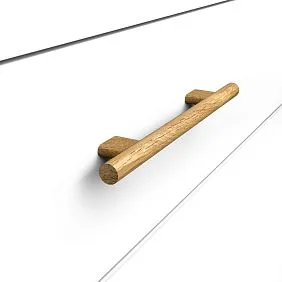
Loop handles — P-shaped or curved elements gripped with the whole palm. Convenient for drawers and heavy doors. The length of the loop can vary from 64 mm (minimum, for small drawers) to 500–600 mm (for wide doors in modern furniture).Furniture HandlesLoop-shaped handles — the most common type.
Sink handles — recessed indentations in the facade, without protruding elements. Create a minimalist, seamless surface characteristic of modern kitchens and wardrobes. Convenient but require precise facades milling.
Ring handles — a classic element where a metal ring is suspended from a rose. Characteristic of vintage furniture and cabinets in classical style. The ring can be simple round or ornately decorated.
Integrated handles — a profile milled along the top or bottom edge of the facade, gripped by fingers. Create a clean, minimalist surface without protruding elements. Suitable for modern kitchens.
Handle materials: from wood to rare metals
Wood — a warm, natural material creating tactile comfort. Wooden handles can be turned, carved, or simple geometric. Solid oak, beech, and ash are finished with oil, lacquer, or wax. Color ranges from natural to stained, from white to black.
Brass — a noble metal with a warm golden hue. Brass handles signify quality, durability, and classic elegance. Can be polished (glossy), satin (soft sheen), or matte. With patina — artificially aged — for vintage interiors.
Bronze — an alloy of copper and tin, slightly darker and more noble than brass. Bronze handles are a tradition in classical furniture. Patinated bronze with greenish patina — suitable for historical interiors.
Steel — modern, strong, and versatile material. Stainless steel resists corrosion and is easy to clean. Can be polished, matte, or black. Steel handles are ideal for modern, minimalist, and industrial interiors.
Aluminum — lightweight, inexpensive, and easy to process. Aluminum handles are often used in mass-market furniture. Can be anodized — coated with a protective oxide layer that imparts color (black, bronze, gold).
Ceramic — fragile but highly decorative material. Ceramic button handles are hand-painted or glazed. Characteristic of Provence, shabby chic, and vintage interiors. Require careful handling.
Leather — a rare but interesting material for loop handles. A leather loop attached to the facade creates softness, tactile comfort, and Scandinavian or ethnic aesthetics.
Color and finish: from classic gloss to modern matte
Polished handles — glossy finish reflecting light. Traditional for classic furniture, creating grandeur and formality. But require frequent cleaning — fingerprints are visible.
Satin (brushed) — a soft silk-like sheen, more practical than polishing. A compromise between gloss and matte, suitable for most interiors.
Matte handles — the main trend of 2026. Velvet-like surface, non-reflective, pleasant to the touch. Matte black, matte brass, matte bronze, matte steel — all create a sense of modernity, quality, and sophistication.
Black handles — a universal choice for modern interiors. Graphite black, matte black, black with metallic sheen — many shades, but all create graphic clarity and contrast.
White and light handles — for light, airy interiors. White ceramic, white lacquered metal, light wood create visual unity with light facades or, conversely, contrast with dark ones.
Colored handles — bold choice for eclectic and children’s interiors. Blue, green, red, yellow — ceramic or painted metal handles add color accents.
Patina handles — artificially aged, with scratches, oxidation, uneven color. Create vintage, historical character, typical for Provence and shabby chic interiors.
Creating a unified system: base, legs, and handles in dialogue
Individual elements — base, legs, and handles — must create a visual system, a dialogue of forms, materials, and colors. When all these elements are coordinated, furniture and interior achieve unity.
Material Unity
The simplest and most reliable way to create harmony is to use one material for all elements. Wooden base of a dining table, wooden legs of a chest, wooden handles of cabinets — all made from the same species (oak, beech, ash), with identical finish (oil, lacquer, tinting). This creates natural unity, a warm, cozy atmosphere.
buy wooden table baseComes with legs and handles made of the same wood — the manufacturer guarantees matching texture, color, and finish quality.
If the entire interior is built on the contrast of warm wood and cold metal, use metal elements consistently. Metal base of the table, metal legs of the shelf, metal handles of cabinets — all made from one metal (black steel, brass, copper) with identical finish (matte, polished, patinated).
Unity of Form
Repetition of shape creates visual rhythm. Ifthe base for a tablehas precisely turned legs with a defined profile, use legs of the same or simplified profile for other furniture. A dining table on four precisely turned legs with three balusters, a chest on legs with one baluster, a side table on simple conical legs — simplification of profile, but preservation of the overall language of forms.
Handles can repeat elements of the leg profile. The convexity of the baluster on the leg corresponds to the convexity of the knob handle. The spiral thread on the support finds reflection in the spiral shape of the handle. This is a subtle, not obvious connection, but it is subconsciously perceived, creating a sense of thoughtful design.
Unity of color
Color is the most powerful unifying factor. All wooden elements painted in one color — white, gray, black — create visual unity even with differing shapes.white basewith white furniture legs and white handles — monochromatic classicism, effective in Scandinavian and Provencal interiors.
black basewith black metal shelf legs and black matte handles — graphic modernity, characteristic of lofts and minimalist spaces.
Contrasting combinations — natural wood supports with black handles — create visual tension, making the interior more dynamic. But they require balance: if there are too many contrasting elements, chaos arises.
Style Unity
All elements must belong to one stylistic family. A classic carved base requires classic carved furniture legs and classic brass or bronze handles. A minimalist geometric base — geometric legs and simple, minimalist handles.
Eclecticism allows mixing styles, but within a certain logic. A vintage table with turned legs can combine with a modern chest on metal spikes, if they are united by color (for example, both painted white) or functional zone (dining area — vintage, storage zone — modern).
Functionality: comfort and ergonomics
Aesthetics are important, but functionality is critical. Furniture must be comfortable; otherwise, its beauty is diminished by daily discomfort.
Table height and proportions
A dining table 75 cm high suits a standard chair 45 cm high (seat height). Distance from seat to tabletop — 30 cm, comfortable for placing thighs and free movement.
A work desk — 73-75 cm for sitting work. When working standing (adjustable-height desk) — 100-110 cm for an average-height person. Distance from the edge of the desk to the wall should be at least 60 cm to allow free movement of the chair and sitting.
A coffee table — 40-50 cm, so that when sitting on a sofa (seat height 40-45 cm), it is convenient to reach items on the table. A console — 80-90 cm, to conveniently place items and lean on it, but it is not intended for sitting at it.
Stability and load
Countertop substructuremust withstand the weight of the tabletop plus items on it plus possible pressure from above. A dining table for 6-8 people with a heavy oak or marble tabletop may weigh 100-150 kg. The base must be designed to handle at least double that load — 200-300 kg.
Furniture legs must withstand the weight of the body and its contents without deformation. A bookshelf filled with books or dishes creates a load of 200-300 kg distributed over 4-6 legs. Each leg must withstand 50-75 kg without bending.
Struts and aprons provide structural rigidity, preventing legs from spreading apart under lateral loads. A table without struts — only with legs — may wobble, creak, and quickly loosen at the joints where legs meet the tabletop.
Handle convenience
The handle should fit comfortably in the hand. A knob handle with a diameter of 25-35 mm is convenient for gripping with fingers. Smaller — too small, larger — too bulky. Handle protrusion from the front — 25-35 mm, to allow comfortable grip without excessive protrusion, so clothing does not catch on it.
The handle bracket must have sufficient distance between the front base and the crossbar (minimum 15-20 mm) to accommodate fingers. The bracket length is chosen according to the front width: for a narrow drawer (40-60 cm) — 64-96 mm, for a wide one (80-120 cm) — 128-192 mm and more.
The handle shape should not be hazardous — sharp angles and protruding elements are excluded. A carved handle with complex relief is beautiful but may be uncomfortable — indentations and protrusions hinder comfortable grip. Balance of aesthetics and ergonomics — a sign of mature design.
Stylistic solutions 2026: from neoclassicism to bio-futurism
Each interior style has its own logic for selecting bases, legs, and handles. Let’s consider the current trends for 2026.
Neoclassicism: elegance without excess
Neoclassical interiors require precisely crafted aprons with a clear, proportional profile. Two to three balusters, smooth transitions, and possibly light fluting.base for a round tablewith a central column and a cross-shaped base — the classic of the genre.
Furniture legs repeat the apron's language — a simplified profile, but the same form logic. Handles — brass or bronze, satin-finished, in the shape of simple brackets or rings. No excessive ornamentation, but with the nobility of material and proportions.
Color palette: natural wood with transparent lacquer, stained in noble tones (walnut, mahogany), or painted in soft neutral colors (grey-beige, grey-blue). Metallic hardware — warm tones of brass or bronze.
Scandinavian minimalism: function and naturalness
Scandinavian style values simplicity, functionality, and natural materials. Aprons — simple geometric shapes, conical legs that widen at the base for stability. Minimal decoration, emphasis on the natural texture of light wood (birch, beech, pine).
Furniture legs — conical, cylindrical, on spikes for a light effect. Handles — wooden knobs or simple brackets, often integrated (milled into the facade). Color — natural light or white.
Contrasting accents are allowed: black handles on white facades, but in moderation, to not disrupt the overall lightness and airiness.
Loft and industrial style: brutality and contrast
Loft Base— metal frame from profiled tubing, welded construction, matte black finish. Countertop — rough plank with natural defects, knots, cracks, emphasizing the material's authenticity. Contrast between cold metal and warm wood — the essence of loft.
Furniture legs — metal tubes, spikes, massive blocks of untreated wood. Handles — black steel, simple geometric shapes, often handmade or custom, emphasizing individuality.
Color palette: black, grey, natural wood with minimal processing. Rusty or patinated metallic elements are permissible.
Mid-century modern: organic and elegant
Mid-century style combines organic forms with functionality. Aprons — conical legs, X-shaped supports, central column with disc base. Forms are smooth, proportions elegant, wood — walnut, teak, oak, stained in warm tones.
Furniture legs — spikes (thin metal with threading), conical wooden legs, creating a floating furniture effect. Handles — simple brass or wooden brackets, sometimes integrated.
Color palette: warm wood tones (from light to dark), brass accents, black and white contrasting details.
Provence and shabby chic: romance and lightness
Provence requires light, elegant aprons — precisely crafted legs with simple profiles, painted in pastel or white colors. Patina and wear marks are possible, creating an antique effect.table basesmall size, on four legs with a cross-shaped base.
Furniture legs — precisely crafted, painted, with artificial wear marks. Handles — ceramic painted, patinated brass, in the shape of rings or brackets with floral motifs.
Color palette: white, cream, pastel shades (lavender, mint, powder pink). Metallic hardware — patinated brass or bronze.
Practical aspects: selection, purchase, installation
Theory is beautiful, but how to implement it in practice? Here is a step-by-step guide.
How to choose an apron for an existing countertop
If you have a countertop and needBuy a pedestalConsider the following.
Dimensions: the apron's width should be 20-30 cm less than the countertop's width, length — equally shorter than the countertop's length. For a round countertop with a 120 cm diameter —Round apronwith a base diameter of 80-90 cm.
Height: standard apron height for a dining table — 71-72 cm (with a 3-4 cm thick countertop, the total table height is 75 cm). For a work table — 69-71 cm.Base heightHeight can be adjusted using screw supports on the legs — this compensates for floor unevenness and allows precise height adjustment.
Style: the apron must match the countertop and interior style. A classic solid oak countertop requires a classic precisely crafted apron. A modern minimalist countertop — geometric. A rough loft plank —loft metal apron.
Color:table base colormust either match the countertop color (full unity) or contrast (white countertop — black base, dark countertop — white base).
How to make a base by yourself
If you have carpentry skills,make a base by yourself— a real task.
Materials: solid wood (60x60 or 80x80 mm beams for legs, 100x25 mm boards for aprons), carpentry glue, screws, furniture corner brackets.
Tools: circular saw or hacksaw, drill, sander, chisels, clamps.
Stages: cutting parts to size, sanding, dry assembly (without glue) to check geometry, gluing joints with additional screw fastening (screws are driven from inside to remain hidden), final sanding, oiling or varnishing.
Joints: aprons are connected to legs via mortise-and-tenon (traditional carpentry joint requiring precision) or via furniture corner brackets (simpler but less aesthetic; brackets must be hidden inside the structure).
Mounting the base to the countertop
How to attach a wooden countertop to the base— a critically important question, determining the table's strength and longevity.
Screws through apron from inside: classic method. Screws (4-5 mm diameter, 40-50 mm long) are screwed through the apron into the countertop from inside at an angle. Screws are not visible, connection is strong. But it's important to consider: wood expands and contracts with humidity changes. A rigidly mounted countertop may crack. Therefore, either special Z-shaped fasteners are used, allowing the countertop to "breathe", or elongated (non-circular) holes are made in the apron, allowing the screw to slightly shift.
Furniture corner brackets: metal L-shaped plates are mounted to the apron and countertop. Simple, reliable, but brackets are visible from inside (not critical if the table's base is not visible).
Decorative fasteners (eight-shaped, Z-fasteners): special elements, one part fitting into a groove on the apron, the other part screwed to the countertop. Allow the countertop to expand/contract, preventing cracking. Professional solution.
Mounting a glass countertop:how to mount a glass countertop on a wooden base— a separate issue. Glass cannot be screwed. Silicone suction cups or special holders are used, which are glued to the glass and screwed to the base. Soft gaskets (felt, silicone) are mandatory between glass and wood to prevent scratches and cracking of the glass.
Handle selection and installation
Handles are selected based on furniture style, facade size, and type of opening (door or drawer).
Center-to-center distance: for handle brackets, this is the distance between mounting hole centers. Standards: 64, 96, 128, 160, 192, 224 mm, etc. Selected proportionally to facade width.
Installation: holes are marked on the facade (symmetrically, equidistant from edges), drilled through with 4-5 mm diameter holes. The handle is placed from the outside, and screws are driven from inside through holes in the handle's legs. Screws must not protrude from inside to avoid scratching drawer contents.
Marking template: for precise installation of multiple handles, a template — a board with holes at the required distance — is used. Applied to the facade, holes are drilled through the template — guaranteed accuracy.
Trends 2026: what determines the choice
Furniture design, like interior design overall, is subject to trends. What is relevant in 2026?
Return to craftsmanship and naturalness
After decades of IKEA dominance and mass production, the value of handmade furniture is returning.Carved apronhandcrafted work, precisely shaped legs with individual profiles, wooden handles with unique carving — all this is in demand among people tired of the faceless mass market.
Natural materials — solid wood, natural stone for countertops, metal without plastic coatings — are signs of eco-friendliness and quality. People are willing to pay more for furniture that will last decades, which can be restored and passed down to children.
Modularity and transformation
Sliding tables, transformable tables, height-adjustable furniture — a response to the demand for flexible living space. A small apartment requires furniture that can change its function and size.Foldable apronWith a transformation mechanism, the table can be compact during normal times and accommodate 8-10 people for a festive dinner.
Mobile furniture on casters, easily movable depending on the situation. Foldable tables that can be stored away. All of this are trends linked to urbanization and shrinking living space.
Personalization and Customization
Mass production is giving way to custom solutions.custom table baseMade to your dimensions, your profile, your color — a service offered by an increasing number of manufacturers.
Handles specially designed for your project, replicating moldings, staircase carvings, and other interior elements. Furniture as part of a unified design concept, not a collection of separate items.
Contrasting material combinations
Wood with metal, wood with stone, wood with glass — contrasting textures and temperatures create visual intrigue.Wooden table with a metal base— classic of loft, but relevant in other styles as well.
It is important that the contrast is intentional, highlighting the strengths of both materials, rather than a random mix.
Color accents
Black, white, and gray dominated in recent years. In 2026, color returns — but carefully, selectively. Colorful handles on neutral facades, brightly painted legs against natural wood tabletops. Not total color saturation, but accents that enliven the space.
Care and longevity
Quality furniture lasts for decades, but requires proper care.
Care for wooden elements
Regular dry dusting. Wet wiping — carefully, avoiding excessive moisture. Wooden legs of furniture, especially at the bottom, accumulate dust and dirt — periodically wipe with a damp cloth.
Finish renewal: oil — every 2-3 years, varnish — every 7-10 years. Oil is applied to a cleaned, lightly sanded surface. Varnish requires complete reapplication with removal of the old finish.
Protection against damage: felt pads under furniture legs prevent scratches on the floor and wear on the legs themselves. Table bases that may be leaned against heavy objects or hit by vacuum cleaners require additional protection at the bottom — a thicker layer of varnish or protective pads.
Care for metal elements
Steel — wipe with a damp cloth, optionally with a mild cleaner. Stainless steel is resistant to corrosion but may develop fingerprints — specialized stainless steel cleaners restore its shine.
Brass and bronze without protective coating oxidize, forming patina. If patina is undesirable — periodically polish with specialized brass cleaners. If patina is part of the aesthetic — leave as is.
Black matte steel requires gentle care — abrasives and aggressive cleaners will damage the finish. Use a soft, damp cloth, no rubbing.
Repair and Restoration
Scratches on wood: minor ones — conceal with a wood-tone touch-up marker or furniture wax. Deep scratches — fill with matching furniture putty, sand, and finish with varnish or oil.
Loose table base: disassemble, clean joints of old glue, re-glue with wood glue, clamp in place until dry (24 hours). If the joint is worn, reinforce with furniture corner brackets or additional screws.
Broken handle: replace with a similar one. If the handle is unique — order a replica or find a similar style.
Frequently asked questions
Can a table base from one table be used for another tabletop?
Yes, if proportions are maintained. The base should be 20-30 cm smaller than the tabletop in both length and width, and the height should match the table type (dining, work, coffee). It is important that the base can support the weight of the new tabletop — a marble tabletop weighs many times more than a wooden one.Countertop substructureSelected according to these parameters.
Which base is better — on four legs or with a central support?
It depends on the tabletop shape and comfort requirements. Four legs at the corners — maximum stability, suitable for rectangular and square tables. But legs interfere with people sitting at the corners. Central support — freedom of leg placement, ideal for round and small square tables. But less stable for large tabletops — for tables over 150 cm in diameter, four legs or a massive central column with a wide base are better.
How to choose furniture handles to match the base style?
Look for common elements. If the base is milled with balusters — handles can also be milled, matching the profile. If the base is carved with floral motifs — handles with floral carving or metal with floral ornament. If the base is geometric and minimalist — simple, minimalist handles. Material is also important: wooden base — wooden handles or brass (warm materials). Loft metal base — black steel handles.
How much does a quality wooden base cost?
It depends on the material, complexity, size, and manufacturer. A simple base on four conical legs made of pine — from 8,000 to 12,000 rubles. buy wooden table base Made of solid oak with turned legs of medium complexity — 25,000 to 40,000 rubles. Carved apron Handcrafted with high detail — may cost 60,000 to 100,000 rubles and more. custom table base Custom design — from 35,000 rubles depending on complexity. The price is justified by longevity — a quality oak base lasts 50 to 100 years.
Are aprons (lower crossbars) needed between the legs of the base?
For heavy dining tables — desirable. Aprons add additional structural rigidity, preventing legs from splaying outward during long-term use. For coffee tables and light furniture — not necessary if the aprons are sufficiently strong. Aesthetically, aprons add visual complexity and make the base more traditional. Minimalist modern tables often omit them.
How to paint a wooden base?
Preparation: thorough sanding with sandpaper — start with grit 120, then 180, finally 240. Remove dust. Apply primer in two coats (mandatory for MDF and porous woods, recommended for dense woods like beech). Allow to dry, then lightly sand between coats.
Painting: acrylic or latex paint is applied in 2–3 thin coats with full drying between layers (4–6 hours for acrylic). Use a brush for intricate profiles, a roller for flat surfaces. Spray paint provides an even finish but requires skill.
Finishing: matte paint does not require additional coating. For extra protection, apply a matte varnish. Glossy paint creates a sufficiently durable finish on its own.
Can a sliding table be made from a standard base?
No, a sliding mechanism requires a special construction with guides along which the tabletop parts spread apart. A standard base does not have this mechanism. If you want to make a sliding table, you either need toBuy a pedestalincorporate a built-in sliding mechanism, or purchase a separate mechanism and integrate it into the construction — this is complex carpentry requiring professional skills.
Which is better for a kitchen table — wooden or metal base?
It depends on kitchen style and usage conditions.wooden table baseIt creates warmth and coziness, suitable for traditional, classic, Provencal, and Scandinavian kitchens. However, it requires moisture protection — a quality lacquer or oil finish is mandatory.
A metal base is more practical — it doesn’t fear moisture, is easy to clean, and doesn’t absorb odors. Ideal for lofts, industrial, and modern kitchens. However, it feels colder to the touch and may create a utilitarian impression unless balanced with warm wooden elements (tabletop, chairs).
How often should furniture handles be replaced?
Functionally — when they break, loosen, or lose their finish. Quality wooden or metal handles last decades without replacement. Aesthetically — when changing interior style. Replacing handles is the quickest and most budget-friendly way to refresh furniture. A vintage chest with brass handles, replaced with modern matte black ones, instantly changes its character. An investment of 2,000–5,000 rubles instead of buying new furniture for 50,000–100,000 rubles.
Which wood is better for furniture legs — soft or hard?
Hardwood — definitely. Oak, beech, and ash withstand loads, do not deform, and do not wear at contact points with the floor. Softwoods (pine, spruce) wear quickly — scratches, dents, and chips appear. For decorative legs of coffee tables, where load is minimal, pine is acceptable. For supports of heavy furniture (dining tables, cabinets, chests) — only hardwoods are suitable.
Ecological Sustainability
In 2026, ecological awareness will influence furniture choice no less than aesthetics.
Certified Wood
Choose bases and legs made of wood certified by FSC (Forest Stewardship Council) — this guarantees the wood comes from sustainably managed forests, where logging is offset by replanting, and ecological and social standards are upheld.
wooden baseLocal species (oak, beech, ash for Russia) are more eco-friendly than exotic species, whose transportation creates a massive carbon footprint.
Durability as eco-friendliness
The most eco-friendly furniture is that which lasts decades without replacement. A quality oak base that will serve 50–100 years and be passed down through generations is more eco-friendly than cheap particleboard furniture that falls apart after 5–7 years and ends up in a landfill.
Repairability and restorability — an eco-friendliness criterion. Wooden elements can be sanded, repainted, and replaced with worn parts. Furniture for life, not for seasons.
Natural coatings
Natural-based oils and waxes (linseed oil, beeswax) are more eco-friendly than synthetic varnishes. They emit no harmful substances, are safe for children and allergy sufferers, and feel pleasant to the touch. Water-based acrylic paints — an eco-friendly alternative to alkyd enamels with strong odors and toxic solvents.
Investments in Quality: Why Pay More
Cheap furniture from mass-market is tempting in price. But is the savings worth it?
Service Life
A cheap table with legs made of MDF, covered with a wood-grain laminate, will last 5-7 years. The MDF base will start to loosen, the laminate will peel off, and the structure will creak. After 7 years — to the landfill, buy a new one.
A quality table withwooden basemade of solid oak will last 50-100 years. During this time, the cheap one will need to be bought 7-15 times. Even if the quality one costs 3-4 times more, the overall savings are obvious.
Repairability
If a leg of a cheap table breaks — it is often impossible to repair it. The material does not hold fasteners, glue does not stick to laminated surfaces. Result — to the landfill.
If the wooden base loosens — disassemble, re-glue, reinforce. If a wooden leg is scratched — sand it down, re-coat it. If a handle breaks — replace it. Quality furniture lasts as long as it is cared for.
Emotional value
Cheap mass-produced furniture does not evoke attachment. It is disposable material that changes when moving, when changing interiors, or with the slightest damage.
Quality furniture, especially custom-made or chosen with love, becomes part of family history. A dining table where three generations of the family gathered. A chest that moved with you through five apartments. This is not just furniture — it is memory, attachment, value, which cannot be measured in money.
Conclusion: furniture as a philosophy of life
We started with technical aspects — types of bases, leg shapes, handle styles. But as the conversation progressed, it became clear: choosing furniture is not just a functional solution. It is a choice of lifestyle, value system, and relationship to objects.
the base for a table, furniture legs, Furniture Handles— these are not secondary details that can be chosen hastily. These are elements that define the character of the object, its interaction with people, its place in the interior and in life.
A precisely crafted classic base speaks of the value of tradition, craftsmanship, and continuity. Minimalist geometric — of modernity, functionality, and clarity of thought. Brutalist loft — of individuality, creativity, and nonconformity. Each choice is a statement about who you are, what you value, and how you want to live.
Furniture handles — points of tactile contact — are especially important. We touch them dozens of times a day, and this touch should be pleasant. Cold smooth metal, warm silky wood, patinated bronze with history — each material creates its own emotional response.
In 2026, when digitalization has reached its limit, when most of our lives occur in virtual screen space, physical objects — furniture we interact with daily — acquire special value. These are islands of reality, tactility, materiality in the ocean of virtuality.
Choosing these objects — is not a consumer act, but a conscious decision about what to surround yourself with, what to bring into your life, what to pass on to your children. Quality furniture made of natural materials, crafted by artisans, repairable and restorable, lasting generations — this is not only a financial, but also an emotional, cultural, and ecological investment.
This is a choice for a slow life over fast consumption. For quality over quantity. For objects that have history and will have a future, against disposable items that will last a season and then be sent to the landfill.
The company STAVROS has helped people make this choice for more than twenty years, offering furniture elements designed to serve for decades.wooden basesmade of solid oak, beech, ash — from simple conical to complex carved — for any styles and tasks.Legs for tablesand other furniture — precisely crafted, carved, geometric — executed with craftsmanship and attention to detail.furniture legsof various shapes and sizes, capable of withstanding any load and decorating any item.
Furniture Handlesmade of wood and metal — from classic carved to modern minimalist — allow you to complete the furniture look, making it unique and perfectly matching your vision. The possibility of custom manufacturing according to your sketches means your furniture will truly be yours — unlike thousands of similar items from mass-market.
The widest assortment allows you to select elements in a unified style —Round apronfor a dining table, legs of the same profile for a chest, handles that match the base’s decor — all from one source, all coordinated, all working toward creating a unified interior.
STAVROS professional consultants will not only help you choose elements, but also build a system — suggest proportions, coordinate colors, select material combinations. This is not just selling a product, but partnership in creating an interior that will delight you for many years.
Quality tested by time. Craftsmanship based on traditions. Attention to details that create beauty. Ecological and durability as basic principles. Individual approach to each client. All of this — STAVROS — a company that understands that furniture is not just utilitarian items, but elements that create space for life.
Choosing STAVROS, you choose quality that will serve generations. Craftsmanship that turns functional elements into works of art. Consciousness that values natural materials and artisanal labor. Create furniture you will be proud of, that you will want to pass on to your children, that will become part of your family’s history. Because real furniture is not a seasonal purchase — it is an investment in quality of life for decades ahead.