Article Contents:
- Roots of tradition: how flat balusters originated
- Constructive features of flat balusters
- Anatomy of a flat baluster
- Advantages of flat configuration
- Flat balusters in modern minimalism
- Lacunar geometry
- Principle of 'less is more'
- Color Palette
- Slavic tradition in modern interpretation
- Simplified ornaments
- Through carving and cutouts
- Combining with modern materials
- Technology of manufacturing modern flat balusters
- Wood selection
- Modern processing methods
- Finishing
- Installing flat balusters: nuances and secrets
- Foundation Preparation
- Mounting methods
- Alignment and fixation
- Flat balusters and round handrails: harmony of opposites
- Why a round handrail?
- Choosing size
- Combining materials
- Installing handrail on balusters
- Round handrail: additional design elements
- What is a round handrail?
- Application in stairwell space
- Sizes and materials
- Interior styles for flat balusters
- Russian style and ethnic
- Scandinavian minimalism
- Loft and Industrial Style
- Modern classic and neoclassic
- Japanese Minimalism
- Care for flat balusters
- Regular Cleaning
- Recoating
- Protection against damage
- FAQ: Answers to Popular Questions
- How do flat balusters differ from turned ones?
- Can flat balusters be used outdoors?
- What distance should be between flat balusters?
- Where to buy flat balusters?
- How much do flat balusters cost?
- Can flat balusters be installed by oneself?
- How to combine flat balusters with railings?
- What patterns are most popular for carved flat balusters?
- Is a handrail support needed for flat balusters?
- How to paint flat balusters?
- Why choose STAVROS to buy flat balusters?
- What sets STAVROS apart?
- Why STAVROS is the right choice for your project?

When architectural tradition meets modern design, something extraordinary is born. Flat wooden balusters — is a unique invention of Slavic architecture, experiencing a second rebirth in 2026. In an era when minimalism dictates the rules of the game, and biophilic design brings us back to natural materials, flat wooden balusters become the perfect bridge between past and future, between tradition and modernity.
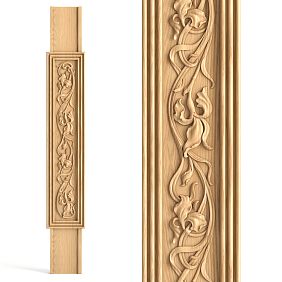
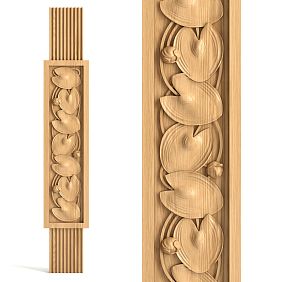
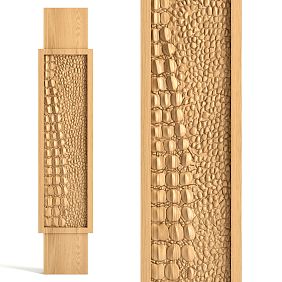
What makes these elements so special? Why are designers around the world once again turning their gaze to Slavic heritage? Unlike turned balusters with round cross-sections, which came to us from Western European architectural tradition, flat balusters are vertical boards adorned with carvings, cutouts, or left in their minimalist geometric purity. This is an expressive, unique element that allows you to create not just a staircase railing, but a whole artistic canvas, where each baluster is part of a unified composition.





Roots of tradition: how flat balusters originated
Delving into history. Wooden architecture of Kievan Rus' was distinguished by a special approach to functionality and beauty. When our ancestors built terem, izbas, and porches, they did not think in terms of 'only practical' or 'only beautiful' — these concepts were inseparable. Every element had to perform its function and at the same time delight the eye, tell a story, protect the house.
Initiallyflat wooden balusterswere used to fence porches and galleries. These were wide boards installed vertically between upper and lower horizontal beams. Practicality is obvious: such a construction is easily made from boards that are already obtained during processing of logs. But Slavic masters never stopped at utility.
Gradually, simple boards began to be decorated. First, geometric cutouts — circles, rhombuses, triangles — appeared. These forms carried not only decorative, but also sacred functions. Solar symbols were intended to protect the house from evil forces, attract light and warmth. Plant ornaments — stylized leaves, flowers, branches — symbolized connection with nature, fertility, life force.
Over time, the craftsmanship of carvers reached incredible heights. Flat balusters transformed into complex carved panels with multi-layered compositions. Each region developed its own style: northern motifs were distinguished by harsh geometry and minimalism, southern ones — by lush plant patterns, central regions preferred balanced symmetry.




Structural features of flat balusters
What distinguishes flat balusters from all other types of stair railings? Primarily, their shape. If a turned baluster is a body of revolution, symmetric about its central axis, then a flat baluster is a vertical plane with a thickness usually from 30 to 60 mm and width from 80 to 150 mm.
Our factory also produces:


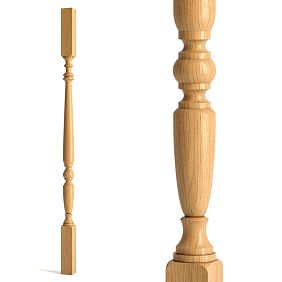

The anatomy of a flat baluster appears simple at first glance. In reality, each element is carefully designed and serves a specific function. The base of the baluster is not merely a mounting platform but an important structural element that ensures even load distribution and secure fixation of the entire structure.
Structurally, a flat baluster consists of three parts. The base — the lower part, which is attached to the step, underbaluster, or floor. This zone usually has increased width for secure mounting and stability of the entire structure. The base may be simple rectangular or have decorative detailing — rounded corners, shaped cutouts.
The central body — the most expressive part, where all decoration is concentrated. Here, carved patterns, through-cutouts, geometric or plant motifs are placed. It is precisely this part that defines the style and character of the baluster. In minimalist versions, the central body remains smooth, showcasing the beauty of wood texture and purity of lines.
The upper part (support) — the zone of attachment to the handrail or handrail support. Usually has a shape corresponding to the base, creating symmetry and visual completeness. May be finished with rounded corners, shaped cut, or decorative element.
Get Consultation
Advantages of flat configuration
Why chooseflat wooden balusters to buyfor a modern project? The flat shape opens up unique possibilities.
Creating rhythmic compositions. Installing balusters closely or with small gaps, you create a continuous visual surface where individual elements merge into a single pattern. This resembles carved shutters, wooden lace of window casings, traditional Slavic ornaments.
Play of light and shadow. Through-cutouts turn the staircase railing into a light filter. Sunlight passing through patterns creates moving shadows on steps and walls. This effect changes throughout the day, making the staircase a living, dynamic interior element.
Material savings. Manufacturing flat balusters does not require complex turning equipment. They are cut from offcuts on a milling or laser machine. This makes production more accessible, and thus the price remains reasonable despite high quality.
Easy installation. Flat elements are easy to align and mount. They do not require precise alignment along the rotation axis, unlike turned balusters. Installation is faster, saving time and resources.
Flat balusters in modern minimalism
Minimalism in 2026 is not the cold sterility of white walls and chrome surfaces. The modern interpretation of this style leans toward warmth of natural materials, tactile qualities, and connection to nature. It is precisely here that flat wooden balusters find their ideal application.
Lack of ornamentation
Imagine a staircase where balusters are strict vertical rectangles made of light ash or bleached oak. No carving, no embellishments — only pure form, wood texture, and the rhythm of repeating elements. Such a solution creates a sense of order, calm, and balanced space.
Minimalist flat balusters pair beautifully withround handrailmade from the same wood species. The contrast between rectangular vertical balusters and the soft roundness of the handrail creates a subtle play of geometric forms.a round wooden handrailwith a diameter of 50 mm — a classic size, comfortable for the hand, visually harmonious.
The principle of 'less is more'
Scandinavian minimalism taught us to value emptiness, pauses, intervals. Flat balusters installed at 10–15 cm intervals create a light, airy railing that does not 'press' on space, does not visually overload. Through the gaps, other interior elements are visible, light passes freely, and the space 'breathes'.
This approach works perfectly in small rooms, where every centimeter counts. A staircase with minimalist flat balusters does not clutter the space, remaining absolutely safe and functional.
Color palette
Minimalism prefers neutral tones. For flat balusters, this means using light wood species or special stains. Bleached oak, natural ash, maple, birch — these species provide a light, almost Scandinavian tone that expands space and fills it with light.
An alternative option — contrasting combinations. Dark balusters made of walnut or stained oak against white walls create a graphic, expressive effect. This is no longer pure minimalism, but its modern interpretation with elements of Japanese aesthetics or even art deco.
Slavic tradition in modern interpretation
How to combine ancient patterns with modern design? How to ensure that Slavic heritage does not look like a museum exhibit, but integrates organically into the current interior? The answer lies in a smart combination of traditional motifs with modern forms and materials.
Simplified ornamentation
Take the classic solar symbol — a circle with radiating rays. In traditional carving, this is a complex multi-tiered pattern with many details. In modern interpretation, this can be a simple circular cutout in the center of the baluster, surrounded by four linear cuts imitating rays. Minimalist, recognizable, stylish.
Plant motifs are also stylized. Instead of detailed carving of leaves and flowers — geometric silhouettes resembling shapes but simplified into graphic symbols. This is a nod to tradition, expressed through modern design language.
Through-cutting and openings
One of the most effective techniques — creating through-cuttings in the baluster body. This can be a row of vertical slits creating a semblance of a picket fence. Or a geometric pattern of rhombuses and triangles. Or an asymmetrical abstract composition.
Through-cutting solves several tasks at once. It visually and physically lightens the structure. It creates a play of light and shadow. It allows air to circulate, which is important for wooden elements. And most importantly — it turns the staircase railing into an art object, a sculpture that changes depending on lighting and viewing angle.
Combining with modern materials
Who said flat balusters must be used only in pure form? Modern design loves mixes and unexpected combinations. Wooden flat balusters combine beautifully with glass inserts. Transparent or matte glass in the cutouts creates additional protection (important if there are small children in the house), while preserving the lightness of the structure.
Another option — combination of wood and metal. Metal posts or frames into which wooden carved panels are inserted. This adds an industrial note, makes the interior more modern, while preserving the warmth and texture of natural wood.
Technology of manufacturing modern flat balusters
How are flat balusters made today? Technologies have advanced far beyond hand-carving of our ancestors, but the principles remain the same — quality of material, precision of execution, attention to detail.
Selection of wood
The same wood species suitable for flat balusters are also suitable for any staircase elements. Oak — the king of strength and durability. Its dense structure perfectly holds thin carved elements without chipping. The texture of oak is expressive, with a distinctive grain that beautifully reveals itself under transparent lacquer.
Ash — an excellent alternative to oak. Slightly lighter, with a more delicate texture, but not inferior in strength. Ash is perfect for modern minimalist interiors due to its light tone.
Beech — optimal price-to-quality ratio. Uniform fine-grained structure allows creating balusters with thin, delicate cutouts. Beech stains well, allowing you to achieve any desired shade.
Spruce — budget option for garden staircases or projects with limited budgets. Softwood is not suitable for complex carving, but it works well for simple geometric cutouts. Spruce is usually painted, allowing you to create colored balusters for country or Provence-style interiors.
Modern processing methods
CNC milling is the primary method for producing complex flat balusters. A 3D baluster model is created in specialized software, then a CNC machine cuts it from a board with precision down to tenths of a millimeter. This allows creating intricate patterns that are identically repeated on all balusters in a set.
Laser cutting is a more expensive but incredibly precise technology. The laser cuts even the thinnest elements without risk of chipping or cracking. The cut edges are perfectly smooth, requiring no additional finishing. Laser cutting is ideal for creating balusters with delicate, lace-like patterns.
Combined processing — combining CNC milling with subsequent manual finishing. The machine performs the main work, while the craftsman refines details, smooths edges, and adds individuality to each element. This is the golden middle ground between industrial production and artisanal uniqueness.
Final finishing
After mechanical processing, balusters are carefully sanded. Various grits of sandpaper are used — coarse for removing tool marks and fine for achieving a silky smoothness. The edges of cutouts are hand-sanded with special tools.
Then a protective coating is applied. For interior balusters, this may be a transparent varnish that highlights the natural wood texture. Or stain to change the color followed by varnishing. Or an oil-based wax coating for the most natural appearance and pleasant tactile feel.
For balusters intended for terraces or outdoor staircases, special compounds with UV filters and water resistance are used. The wood is pre-treated with antiseptics against mold and insects.
Installing flat balusters: nuances and secrets
Installing flat balusters has its own characteristics compared to turned ones. Here, not only the verticality of each element matters, but also alignment in the plane — all balusters must stand strictly in one line, without leaning forward or backward.
Foundation Preparation
The first stage — marking. On steps or under the baluster base, installation points are marked, taking into account their width and spacing between them. It is important to maintain a uniform step along the entire length of the staircase. Typically, flat balusters are installed one per step, but for wide staircases, two can be used.
If balusters are to be mounted on wooden steps, no additional preparation is required. If the base is concrete or metal, a wooden mounting strip must be provided to which the balusters will be attached.
Methods of mounting
Mounting with dowels and slots — a traditional carpentry method. A dowel (projection) is cut at the bottom end of the baluster, and a slot (recess) is cut into the base. The connection is made with carpentry glue. This method ensures rigidity and discreet mounting.
Mounting with metal brackets — a simpler and faster method. Small metal brackets are screwed to the end of the baluster and to the base. This method allows for disassembly without damage if needed.
Mounting into the slot of the handrail support strip — for the upper part of the balusters. A horizontal strip running along the entire row of balusters has a longitudinal slot into which the upper ends are inserted. This creates a rigid system where all elements are interconnected. Then the handrail support strip is installedround wooden handrail 50 mm.
Alignment and securing
After installing each baluster, its verticality must be checked in two planes — along and across the staircase. A construction level is used. Any deviation will be noticeable, especially when balusters are installed in a row.
It is also important to check that all balusters are in the same plane. For this, a string is stretched along the outer edge of the balusters. If any one protrudes or sinks, its position is adjusted using shims or adjusting the mounting.
After final installation and inspection, all connections are additionally secured — with glue or self-tapping screws (depending on the chosen mounting method). Visible mounting points are filled with wood-specific putty matching the balusters' color.
Flat balusters and round handrails: harmony of opposites
One of the most elegant approaches in staircase design — combining flat balusters with a round handrail. The contrast of forms creates visual interest, and functionally, this is an ideal combination.
Why a round handrail?
round handrails for stairs— it is classic, proven over centuries. A round cross-section is the most ergonomic for the hand: fingers naturally wrap around the handrail, providing a secure grip. This is important for safety, especially for children and elderly people.
From an aesthetic standpoint, a round handrail adds softness to the geometric rigidity of flat balusters. This is a balance between straight lines and smooth curves, between angles and curves. Such contrast makes the design more complex and interesting.
Choosing size
Standard diameterof round handrail 50 mm— optimal for most people. It fits comfortably in the hand, provides a secure grip, yet does not look bulky. For children’s staircases or handrails along ramps, a smaller diameter — 40 mm — is sometimes used. For grand, wide staircases in large homes, an increased diameter of 60–70 mm is used.
round handrails 50 mm— it is a universal standard suitable for any interior, from classic to modern. If you are unsure about your choice — select this size, you won’t be wrong.
Combining materials
It is ideal when the handrail and balusters are made from the same type of wood. This creates material unity, harmony of textures and shades.Round oak handrail— pairs beautifully with oak flat balusters, emphasizing the status and reliability of the structure.
For lighter interiors, chooseRound beech handrails— this breed has a warm beige-pink hue that creates a cozy atmosphere. Birch handrails and balusters are ideal for Scandinavian and neoclassical interiors.
A contrasting option — light birch balusters with a dark walnut or mahogany handrail. This combination creates a graphic effect, drawing attention to the railing line running along the staircase.
Installing a handrail on balusters
Buy round wooden handrailcan be in the form of straight sections of standard length (usually 2-3 meters) or ordered to be custom-made according to all turns and curves of the staircase.
Installing a round handrail on flat balusters is done through a handrail support block. This is a horizontal rectangular block (usually 40x60 or 50x70 mm) attached to the top ends of the balusters. A router-cut groove is made in the block for the handrail, or the handrail is screwed onto the block from below.
The advantage of this method is the rigidity of the structure and the ability to precisely set the handrail’s incline angle. All balusters are securely connected to each other through the handrail support block, creating a unified system.
Round trim: additional design elements
If you are using flat balusters and round handrails in the interior, it is logical to continue this theme in other elements.round molding— these are various decorative elements with round cross-sections used for interior decoration.
What is round trim?
wooden round balustersincludes: round glazing stops, round moldings for panel framing, round caps for covering joints, decorative rosettes of various diameters.
Round elements add softness to the interior, soften corners, and create smooth transitions. Combined with flat balusters, they support the theme of contrasting forms, making the design more thoughtfully and cohesive.
Application in stairwell space
buy round moldingis worth considering if you want to decorate the wall alongside the staircase with decorative panels. Round moldings will serve as framing for rectangular panels, creating a classic rhythmic composition. This is especially relevant for neoclassical interiors, where flat balusters are combined with traditional decorative elements.
Round wooden balusterscan be used to create additional wall-mounted handrails. If the staircase is wide enough, in addition to the main railing with balusters, an additionalwall-mounted round handrailmounted on the wall using special brackets. This increases safety and convenience of using the staircase.
Sizes and materials
Round balustrade 50 mm— the most popular size, matching the standard handrail diameter. This creates visual unity among all round elements in the interior. For thinner decorative elements, diameters of 20, 30, and 40 mm are used.
Round wooden trim to buycan be made from the same wood species as the main staircase elements.Round beech balustrade— features uniform structure and pleasant light tone.Round oak balustrade— premium option for status interiors.
Interior styles for flat balusters
In which styles do flat wooden balusters look especially natural? It turns out that their versatility allows them to fit into the most diverse design concepts.
Russian style and ethnic
This is the most obvious application. Flat balusters with traditional carved patterns — solar symbols, floral ornaments, geometric compositions — create an authentic atmosphere of a Russian terem. Especially striking in wooden country houses, where the staircase becomes a central decorative element.
To enhance the effect, balusters are combined with other elements of Russian decor: carved window and door casings, wooden panels with traditional patterns, painted furniture. The color palette — natural wood with transparent lacquer or traditional painting in colors: red, gold, green.
Scandinavian minimalism
Complete opposite to the previous style, but flat balusters are also used here. Only now they are the most minimalist rectangles made of light wood — pine, birch, beech. No carving, only pure geometry and natural texture.
Scandinavian interiors value functionality and honesty of materials. Flat balusters demonstrate the structure of wood, its natural beauty.round wooden handrailsmade from the same wood species complement the picture, creating a warm, cozy atmosphere of a Nordic home.
Loft and industrial style
Unexpectedly, but flat balusters fit perfectly into the brutalist loft aesthetic. Choose rough-hewn wood with preserved saw marks, knots, and irregularities. The finish is minimal — oil or wax, highlighting the naturalness of the material.
Flat balusters made of dark wood or painted graphite create contrast with brick walls and concrete surfaces. They add warmth and texture to a cold industrial space. Combining them with metallic elements — steel posts, frames — enhances the loft atmosphere.
Modern Classicism and Neoclassicism
Flat balusters with moderate decoration — simple geometric cutouts, restrained botanical motifs — work excellently in neoclassical interiors. This is a style for those who appreciate tradition but adapt it to modern realities.
Color — natural wood of noble species or delicate toning towards gray or beige. Balusters pair well with classic cornices and moldings, but without excessive baroque opulence. Everything is restrained, elegant, with a sense of proportion.
Japanese minimalism
The wabi-sabi aesthetic — beauty in imperfection, value in simplicity — finds resonance in flat balusters. Simple vertical elements with minimal processing, visible wood texture, and minor irregularities that are not considered defects but emphasize the material’s naturalness.
Japanese style loves asymmetry, so flat balusters can vary in width with uneven spacing, creating a free, irregular rhythm. This deviates from European tradition of strict symmetry, but the result captivates with its naturalness and calm.
Care for Flat Balusters
How to preserve the beauty and functionality of flat balusters for many years?
Regular cleaning
Wooden surfaces require gentle care. For regular cleaning, use a soft dry cloth or a special wood cloth. Wipe balusters along the grain, removing dust and dirt. Avoid excessive moisture — wood does not like water.
For more thorough cleaning, use a slightly damp cloth, then wipe dry. Do not use aggressive chemical cleaners — they may damage the varnish or tint. Special wood care products are safe and effective.
Recoating
Over time, the varnish may dull, especially in areas of frequent contact. It is recommended to renew the protective layer every few years. Old varnish is removed with fine sandpaper (carefully, to avoid damaging the wood texture and carved elements), the surface is cleaned of dust, and a fresh layer of varnish is applied.
For oil finishes, renewal is simpler — the surface is cleaned, lightly sanded with fine abrasive, and a new layer of oil is applied. The oil absorbs into the wood, refreshes the color, and restores protective properties.
Protection against damage
Be careful when moving furniture and large items up and down stairs. Sharp edges may leave scratches or dents on balusters. Use protective pads and move items carefully.
If damage occurs, minor scratches on varnished surfaces can be masked with a wax pencil in the wood tone. More serious damage requires local restoration — sanding the damaged area and applying fresh finish.
FAQ: Answers to popular questions
How do flat balusters differ from turned balusters?
Flat balusters have a rectangular cross-section and are vertical boards, whereas turned balusters are made on a lathe and have a round cross-section with decorative profiles. Flat balusters allow creating continuous compositions and patterns where each element complements the adjacent one.
Can flat balusters be used outdoors?
Yes, but special protective treatment is required. The wood must be impregnated with deep-penetrating antiseptics, covered with weather-resistant varnish or oil with UV filters. It is better to choose hard species — oak, larch — which are more resistant to external influences.
What distance should be between flat balusters?
According to building codes, the gap between vertical elements of a railing should not exceed 15 cm (for child safety). Usually, flat balusters are installed with a 10–20 cm spacing along the axes, giving a gap of about 7–17 cm depending on the width of the balusters themselves.
flat wooden balusters to buyWhere to buy?
It is best to purchase from manufacturers or specialized companies that work with solid wood. This guarantees material quality, precision of manufacturing, and dimensional accuracy. The ability to order custom designs — a key advantage of direct cooperation with the manufacturer.
How much do flat balusters cost?
Price depends on wood species, processing complexity, size, and quantity. Simple flat balusters from pine without carving cost from 500–800 rubles each. Oak or beech balusters with carved elements — from 2000–5000 rubles. Exclusive models with original carving may cost 10,000 rubles and more.
Can flat balusters be installed by oneself?
Yes, installing flat balusters is simpler than turned ones due to their shape. Basic carpentry skills, tools (drill, screwdriver, saw, level), care, and precision in marking are required. It is important to ensure verticality and alignment of all elements in one plane.
How to combine flat balusters with handrails?
A universal option — a round wooden handrail in the same tone as the balusters. The contrast between round and flat creates an interesting play of forms. You can also use a rectangular handrail, but it should be more substantial than the balusters themselves to stand out and provide a secure grip.
What patterns are most popular for carved flat balusters?
Traditional Slavic motifs: solar symbols (circles, rosettes), plant ornaments (leaves, flowers, branches), geometric patterns (rhombuses, triangles, waves). Modern variations: abstract compositions, minimalist cutouts, asymmetrical patterns.
Is a baluster support plank needed for flat balusters?
It is desirable, especially if the balusters are thin or tall. A baluster support plank connects all balusters into a rigid system, distributes the load from the handrail, and allows precise setting of the incline angle. Additionally, it covers the top ends of the balusters, creating a neat appearance.
How to paint flat balusters?
Before painting, the wood is primed with a special wood primer for better paint adhesion. Then, paint is applied with a brush or roller in 2-3 coats with intermediate drying. Use high-quality water-based or alkyd-based enamels. For a vintage effect, apply patina and aging techniques.
Why choose STAVROS to buy flat balusters?
When you decideflat wooden balusters to buyManufacturer selection is critically important. It determines the quality of the material, precision of manufacturing, and longevity of the final product.
The company STAVROS — two decades of experience in producing wooden decorative elements and staircase components. Over these years, we have created thousands of projects for private homes, restaurants, hotels, and historical buildings. Ourflat wooden balustersdecorate staircases throughout Russia and beyond.
What sets STAVROS apart?
Full-cycle in-house production — from purchasing timber to final finishing. We control every stage, ensuring consistently high quality. Modern CNC machines allow us to create flat balusters of any complexity — from simple minimalist forms to intricate carved compositions.
Wide assortment — over 50 baluster models in various styles are available in the catalog. You can choose a ready-made option or order custom manufacturing based on your individual sketch. STAVROS designers will help adapt traditional patterns to modern interiors or create a unique original composition.
Quality wood — we work exclusively with verified timber suppliers. The wood undergoes kiln drying to 8-12% moisture content, preventing deformation and cracking in finished products. We use oak, beech, ash, and pine — chosen by the client.
Professional consultations — company specialists will help select the optimal baluster variant for your project, calculate the required quantity, suggest combinations with other staircase elements. We also provide 3D visualizations, allowing you to see the future staircase before production begins.
Comprehensive solution — in addition to flat balusters, at STAVROS you can order all necessary elements:Round Handrailposts, baluster supports, steps, treads,round moldingfor decorative finishing. All elements are made from the same batch of wood, ensuring perfect color and texture match.
Delivery throughout Russia and the CIS — we ship orders to any region. Products are carefully packaged for protection during transport. Self-pickup is available from warehouses in Moscow and Saint Petersburg.
Quality guarantee — STAVROS products come with a manufacturer’s warranty. We are confident in our products and stand behind their longevity.
Why STAVROS is the Right Choice for Your Project
Choosing STAVROS, you get not just staircase elements, but the result of decades of experience, modern technologies, and unwavering attention to detail. OurFlat wooden balusters— are a modern interpretation of Slavic traditions, a harmony of minimalism and ornamentation, an element that will turn your staircase into a work of art.
A staircase with flat wooden balusters from STAVROS — an investment in beauty that will never go out of style, in quality that will last for decades, in uniqueness that will make your home special. When you ascend such a staircase, you feel a connection to traditions, experience the warmth of natural wood, and admire the play of light in carved patterns. This is not just a path between floors — it is a daily encounter with beauty, history, and craftsmanship.
Contact STAVROS — we will help you turn your dream of an ideal staircase into reality. Our team of professionals is ready to work on your project, creating balusters that will perfectly fit your interior and become its main decoration. Slavic heritage meets modernity — and something beautiful is born.