












































































Article Contents:
- Anatomy of excellence: what makes wooden baseboards special
- Energy of natural material
- Uniqueness of each element
- Ecological purity and safety
- Aristsocrat breeds: choosing the character of the interior
- Oak: Symbol of Eternity and Reliability
- Oak: elegance and refinement
- Ash: modernity and expressiveness
- Exotic species: exclusivity in every detail
- Profiles and sizes: geometry of beauty
- Simple profiles: the power of minimalism
- Complex cove profiles: luxury of classicism
- Functional profiles: technology at the service of beauty
- Production technology: from log to perfection
- Raw material selection and preparation
- Drying: the art of moisture control
- Mechanical processing: precision down to the millimeter
- Final Finishing: The Path to Perfection
- Installation: the art of flawless mounting
- Preparation Stage: Creating Conditions for Success
- Methods of fastening: reliability above all
- Corner joints: mastery in details
- Finishing and protection: beauty for years
- Preparation for finishing
- Lacquered finishes: strength and beauty
- Oil-Based Finishes: Nature Above All
- Staining and special effects
- Stylistic solutions: from classic to avant-garde
- Classic styles: eternal elegance
- Modern directions: new understanding of beauty
- Eclecticism: mixing styles
- Care and Maintenance: Preserving Beauty for Years
- Daily care
- Climate Control
- Preventive maintenance
- Repairing damage
- Economic rationality: investment in quality
- Initial investments
- Operational costs
- Impact on property value
- The future of wooden baseboards: traditions and innovations
- Eco-Trends
- Technological Innovations
- Personalization
- STAVROS: where perfection is born
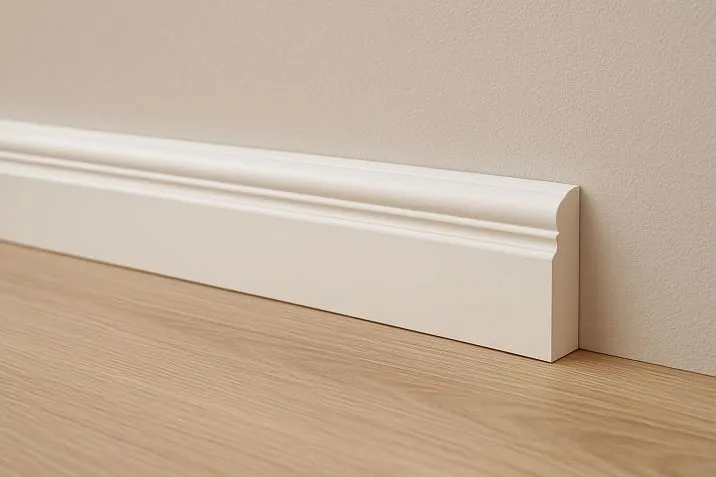
Have you ever wondered why you never see plastic baseboards in luxury hotels, upscale restaurants, and millionaires' homes? Why wealthy people are willing to pay dozens of times more for wooden moldingwhen the market is literally flooded with cheap synthetic alternatives?
The answer lies not only in the plane of prestige or showy luxury. The issue is that true connoisseurs of beauty and comfort understand: between plastic imitation and real wood lies an abyss that no technology can overcome. Wood lives, breathes, ages gracefully, creating an incomparable atmosphere of warmth and coziness. And plastic? It remains a cold piece of chemistry that only degrades over time.
Today we will examine why wooden cove baseboards remain the benchmark of quality and style, despite the onslaught of cheap imitations. Why investing in natural wood is not a whim, but a conscious choice of those who understand the true value of quality.


Anatomy of excellence: what makes wooden baseboards special
When we talk about cove baseboards made of natural wood, we are not simply talking about a finishing material. We are talking about a living substance that has been shaped over decades by exposure to sun, rain, and wind. Every fiber, every annual layer carries the history of the tree, its character, its uniqueness.




Energy of natural material
Touch the surface of a high-quality wooden baseboard. Do you feel this warmth? It's not imagination — wood is indeed warmer to the touch due to its porous structure and low thermal conductivity. wooden cornice creates a special microclimate in the room, naturally regulating air humidity.
Scientific studies confirm: people living in the presence of natural materials experience less stress, sleep better, and get sick less often. This is not mysticism — it's reality, based on millions of years of human evolution in natural environments.
Our factory also produces:


Uniqueness of each element
In the world, there are no two absolutely identical pieces of wood. Each skirting board has its unique pattern, texture, and character. When you choose wooden moldingyou create not just an interior — you create a work of art, each element of which is unique and irreplaceable.
Plastic imitations can reproduce the general wood grain, but they will never convey the living play of light and shadow that appears on the surface of natural wood. They are unable to create the depth and volume that make wooden surfaces so attractive to the eye.
Get Consultation
Ecological purity and safety
In an era of growing environmental concern, choosing natural materials becomes not just a fashionable trend, but a conscious necessity. Wood is a carbon-neutral material that not only does not harm the environment but also actively absorbs carbon dioxide from the atmosphere.
Floor wooden cornice does not emit harmful substances, does not contain toxic compounds, is safe for children and allergy sufferers. Moreover, the wood of some species possesses natural antiseptic properties, improving indoor air quality.
Aristocratic species: choosing the character of the interior
Choosing the type of wood for skirting boards is not just a technical decision. It is choosing the character of the entire interior, its mood, its energy.
Oak: Symbol of Eternity and Reliability
There is no material more noble and reliable than oak. Oak baseboard — it is the choice of those who value tradition, stability, and solidity. The density of oak wood reaches 750 kg/m³, ensuring exceptional strength and durability.
Oak skirting boards can serve for centuries. In old European castles, one can still see oak decorative elements installed 300-400 years ago and retaining their beauty and functionality. Tannins contained in oak wood provide natural protection against rot, mold, and pests.
The color palette of oak is impressive in its variety — from light golden to dark brown, almost black. Especially prized is the stained oak with its deep, noble tone and unique texture.
Beech: elegance and refinement
If oak is strength and power, then beech is elegance and refinement. Beech baseboard has a uniform structure, a soft pink-cream color, and the ability to take any shape without losing strength.
Beech wood is easy to work with, allowing the creation of complex profiles with delicate details. This makes beech an ideal material for classic interiors, where line clarity and form elegance are important.
A distinctive feature of beech is its steam treatment capability, which allows for a more uniform color and increased wood plasticity. Steamed beech acquires a beautiful pinkish hue, highly valued by interior designers.
Ash: modernity and expressiveness
Ash is the choice of those who appreciate expressive texture and high mechanical properties. This species demonstrates a unique combination of strength (comparable to oak) and relatively affordable price.
A distinctive feature of ash is its contrasting texture with clearly defined annual rings. This makes ash skirting boards especially effective in modern interiors, where the natural beauty of the material is valued.
Exotic species: exclusivity in every detail
For those seeking absolute exclusivity, skirting boards made from exotic species — wenge, merbau, teak, and palisander — are available. These materials possess unique decorative properties and exceptional resistance to external influences.
Wenge attracts with its deep chocolate-black color and expressive texture. Merbau enchants with warm golden-brown tones. Teak impresses with its natural moisture resistance and noble silver sheen.
Profiles and sizes: geometry of beauty
The shape of the skirting board cove determines the character of the entire interior. The choice of profile determines whether your space will be strict and modern or luxurious and classic. Wooden molding dimensions which must harmonize with the proportions of the room — this is an art requiring understanding of the laws of visual perception.
Simple profiles: the strength of minimalism
Quarter-round cove — classic, tested over centuries of use. This profile creates a soft, natural transition between wall and floor, without drawing excessive attention to itself. Sizes range from delicate 15×15 mm to imposing 50×50 mm.
Rectangular profiles meet the requirements of modern architecture with its inclination toward clear geometric forms. Such skirting boards fit perfectly into interiors in minimalist, high-tech, and Scandinavian styles.
Complex cove profiles: luxury of classicism
When it comes to classic interiors, simple forms are not enough. Molded baseboards with reeded, oval, or bead profiles transform an ordinary room into a palace hall. The height of such profiles can reach 120-150 mm with a width up to 80 mm.
Creating a complex profile requires the highest level of craftsmanship and modern equipment. Each element must be made with millimeter precision; otherwise, the overall impression will be spoiled.
Functional profiles: technology at the service of beauty
Modern technologies allow creating baseboards with additional functions. Profiles with channels for cable routing solve the problem of hidden communications while preserving the interior's aesthetics.
Baseboards with built-in LED lighting create a "floating" floor effect and provide additional room illumination. This is especially relevant in modern "smart" homes with their numerous technical systems.
Production technology: from log to perfection
Creating a quality wooden baseboard is a complex technological process, each stage of which affects the final product's quality.
Raw material selection and preparation
It all begins in the forest. Trees for producing premium baseboards must be felled during a specific period — winter, when sap movement is minimal. This ensures the best wood quality and minimizes the risk of cracking during drying.
Primary sawing is performed considering the anatomical structure of the trunk. Radial sawing provides the most stable material with a beautiful grain, but requires greater raw material consumption. Tangential sawing is more economical but may lead to warping of the finished product.
Drying: the art of moisture control
Drying is a critically important process, determining all operational characteristics of the finished products. The moisture content of the finished baseboard should not exceed 8-12%, ensuring dimensional stability during use.
Kiln drying allows controlling all process parameters and reduces drying time to several weeks. Modern drying chambers are equipped with automatic systems for maintaining temperature, humidity, and air circulation.
Vacuum drying is an innovative technology allowing the process to be conducted at reduced temperatures. This preserves the natural wood color and minimizes internal stresses.
Mechanical processing: precision to the millimeter
Creating a baseboard profile requires high-precision equipment and operator skill. Modern CNC routers allow creating profiles of any complexity with tolerances no greater than ±0.1 mm.
The quality of routing depends on multiple factors: tool sharpness, feed rate, spindle speed, and wood moisture. Correctly selected parameters guarantee a smooth surface without scratches or chips.
Final finishing: the path to perfection
After mechanical processing, all items undergo multi-stage sanding. Initial abrasive processing with 120-grit removes large irregularities. Intermediate stages (150, 180, 220 grit) gradually improve surface quality.
Final sanding with 320-400 grit abrasive creates an ideally smooth surface ready for any coatings. After each stage, the surface is thoroughly cleaned of dust using specialized dust extraction systems.
Installation: the art of flawless mounting
Quality installation is the guarantee of longevity and aesthetic appeal of wooden skirting boards. Jointing of wooden moldings requires special skills and understanding of natural wood properties.
Preparation stage: creating conditions for success
Material acclimatization is the first and critically important step. Baseboards must remain in the room for at least 48-72 hours to reach equilibrium moisture. This prevents deformation after installation.
Room geometry checking is performed using a laser level and other measuring instruments. Wall deviations from vertical should not exceed 3-5 mm per meter of height. Large deviations require preliminary leveling.
Surface preparation includes cleaning from contaminants, priming porous substrates, filling cracks and irregularities. The quality of preparation directly affects the strength of the bond and the final appearance.
Fastening methods: reliability above all
The choice of mounting method depends on the baseboard size, wall material, and usage conditions. Light baseboards can be mounted only with adhesive, while heavy ones require additional mechanical fastening.
Adhesive mounting uses modern polyurethane compounds, ensuring strong bonding with most construction materials. A 10-15 minute setting time allows adjusting the position of elements during installation.
Mechanical mounting is performed using self-tapping screws or finish nails with concealed heads. Holes for fasteners are pre-drilled to prevent wood cracking. After installation, fastener heads are concealed with wooden plugs or putty.
Corner joints: mastery in details
Corner processing is the most complex and critical part of installation. The quality of corners determines the professional skill of the installer and the overall impression of the work.
Internal corners are formed using the "on the edge" method with a 45° bevel cut. A miter saw with a fine-tooth blade or a high-precision miter box is used to achieve an accurate cut. Precision of the angle is important, but so is the quality of the cut surface.
External corners are less common but require even greater skill. It is necessary to ensure tight contact along the entire joint length while maintaining correct geometry.
For complex profiles, pre-fabricated corner elements are used, ensuring perfect joint quality and saving installation time.
Finishing and protection: beauty for years
Final finishing of wooden skirting boards serves two important functions: protects the wood from external influences and forms the final appearance of the product.
Preparation for finishing
Before applying any coatings, the surface must be perfectly prepared. Fasteners are sealed, joints are sanded, and all dust and contaminants are removed. The quality of preparation directly affects the longevity of the coating.
Primers perform several functions: they equalize the wood's absorption capacity, improve the adhesion of the final coating, and prevent resin and tannin bleed-through.
Lacquered coatings: strength and beauty
Modern lacquers provide reliable protection for wood while preserving its natural beauty. Polyurethane lacquers create a strong, flexible film resistant to mechanical impacts and abrasion.
Water-based acrylic lacquers are environmentally safe, odorless, and dry quickly. They are ideal for residential spaces, especially children's rooms and bedrooms.
Alkyd lacquers penetrate deeply into wood and offer excellent adhesion. They are especially suitable for resinous coniferous species, where resin blocking is crucial.
Oil coatings: naturalness above all
Deep-penetration oils — the choice for those who value the natural beauty and tactile feel of real wood. The oil does not form a surface film but penetrates into the wood’s pores, enhancing its texture.
Modern oil-based formulations contain UV filters and biocides that protect wood from fading and biological damage. They are easy to renew — simply apply a new layer without prior surface preparation.
Hard waxes create a silky finish with a characteristic matte sheen. They are ideal for classic-style interiors, where the atmosphere of vintage luxury is important.
Staining and special effects
Stains allow you to change the color of wood while preserving its texture. This opens up endless possibilities for design creativity — from imitating expensive exotic species to creating entirely unique color solutions.
Patina techniques create an effect of noble aging, especially valuable in classic interiors. Brushing highlights the structure of annual rings, creating an expressive relief surface.
Stylistic solutions: from classic to avant-garde
Wooden baseboards with moldings can support any interior style or become its striking distinctive feature.
Classic styles: eternal elegance
Baroque and Rococo require baseboards with rich profiles and abundant ornamentation. Characterized by complex multi-level profiles, gilded and patinated surfaces, and floral motifs.
Neoclassicism prefers strict, solemn forms with military symbolism elements. The color palette tends toward contrasting combinations — white with gold, dark green with bronze.
English classicism is distinguished by restraint and nobility. Wooden ceiling molding and floor baseboards are executed in a unified style with moderate profiling and natural wood tones.
Modern styles: a new understanding of beauty
Minimalism requires baseboards of the simplest forms or complete absence of them. If baseboards are used, they must be of clear geometric shapes without decorative excesses.
High-tech allows the use of unusual materials and finishes — metallic surfaces, integrated technological elements, non-standard shapes.
Loft prefers rough surfaces with an emphasized industrial character. Dark tones, imitation of charred or aged wood, are popular.
Scandinavian style values light woods with minimal processing. Ceiling wooden molding on paneling Made from pine or birch with white or gray tinting, perfectly conveys the spirit of northern nature.
Eclecticism: mixing styles
Modern designers increasingly resort to intentional mixing of various stylistic elements. In such interiors, wooden baseboards can become a unifying element, creating harmony between disparate components.
Care and operation: preserving beauty for years
Proper care of wooden baseboards is a guarantee of their longevity and preservation of their original appearance. wooden crown molding buy which means taking on certain responsibilities for its maintenance.
Daily care
Regular dry cleaning with soft cloth prevents dust and minor dirt accumulation. Wet cleaning should be moderate — excess moisture may damage the finish and the wood itself.
For cleaning, use special wood surface care products. They do not contain aggressive solvents and abrasives that may damage the finish.
Climate Control
The optimal temperature for wooden items is 18-24°C at a relative humidity of 40-60%. Sudden fluctuations in these parameters may cause wood to crack or warp.
During the heating season, use humidifiers to maintain optimal humidity. This not only preserves your skirting boards but also improves living comfort.
Preventive maintenance
The finish on wooden skirting boards requires periodic renewal. Frequency depends on usage intensity and finish type — from 3-5 years for varnishes to 1-2 years for oils.
Timely renewal of the finish not only maintains aesthetic qualities but also protects the wood from damage. Prevention is always cheaper than repair.
Repairing damage
Minor scratches and scuffs on varnished finishes can be removed with polishing pastes. More serious damage requires local sanding and reapplication of the finish.
Oil-based finishes are easier to restore — simply clean the damaged area and apply a new layer of oil. After drying, the repair boundary becomes invisible.
Economic rationale: investment in quality
When evaluating the cost-effectiveness of wooden skirting boards, it is important to consider not only initial costs but also long-term economic benefits.
Initial investments
The cost of wooden skirting boards significantly exceeds the price of synthetic alternatives. However, this difference is offset by longevity, restorability, and positive impact on property value.
Buy wooden moldings in St. Petersburg in any other city — this is an investment in quality of life, which pays off over decades of use.
Operating expenses
Wooden skirting boards, with proper care, serve 50-70 years without loss of functional qualities. Periodic finish renewal is the only significant expense.
Impact on property value
Quality finishing with natural materials increases property market value by 10-15%. Such properties enjoy higher demand and sell faster.
The future of wooden skirting boards: traditions and innovations
The market for wooden skirting boards is constantly evolving, absorbing new technologies while preserving the best traditions.
Ecological trends
Growing attention to ecology stimulates demand for products made from certified wood. FSC and PEFC certification is becoming an important competitive advantage.
Technological Innovations
Thermal modification of wood allows improving its properties without using chemicals. Nanotechnology coatings provide self-cleaning and antibacterial protection.
Personalization
Advancements in 3D milling technology make it possible to produce unique profiles based on individual sketches. Everyone can become the author of their own design.
STAVROS: where perfection is born
In the world of wooden products, there are companies that don't just follow trends — they create them. STAVROS belongs to such innovators who combine deep respect for traditions with relentless pursuit of innovation and perfection.
What makes STAVROS special? Primarily — the company's philosophy, which views each piece of wood not as raw material, but as a living substance with its own character, history, and potential. Every employee understands: in their hands is not just material, but part of nature that must find its place in a human home.
The STAVROS production complex is a unique combination of centuries-old carpentry craftsmanship and the most advanced modern technologies. Here, machines of the latest generation with CNC control create items with precision down to fractions of a millimeter. But the final quality assessment is always made by a person — a master with years of experience working with wood.
STAVROS pays special attention to ecological responsibility. The company works exclusively with suppliers who guarantee that the wood comes from sustainably managed forests. Every tree used in production is offset by planting several new trees through reforestation programs.
STAVROS's quality control system includes multi-level inspection at every production stage. From raw material receipt to packaging of finished products — each operation is monitored by both automated systems and experienced specialists. This ensures that every item meets the strictest quality standards.
STAVROS's innovation center continuously works on developing new products and improving technologies. Collaboration with leading designers and architects allows the company to anticipate market needs and create products ahead of their time.
STAVROS's customer service is built on principles of individual approach and long-term partnership. Each client receives not just a product, but a comprehensive solution including professional consultations, technical support, warranty and post-warranty service.
The company's logistics network ensures fast and reliable delivery to any point in the country. Specialized climate-controlled transport, professional packaging, cargo tracking systems — all of this guarantees that your order will be delivered in perfect condition, exactly on time.
Choosing STAVROS products means choosing not just skirting boards or moldings. You choose quality proven by time, beauty crafted by masters, reliability backed by modern technology. This is an investment in your home, your comfort, your future.


