












































































Article Contents:
- Coving, skirting, cornice: differences in terms and forms
- Coving: simplicity and functionality
- Ceiling skirting: visibility and structure
- Cornice: scale and luxury
- Where wooden ceiling skirting is used
- Wooden houses and log cabins
- Saunas and steam rooms: heat and humidity
- Apartments in classic style
- Country cottages: naturalness and solidity
- Profiles and sizes: from minimalism to classic complexity
- Simple rectangular profile
- Coving with concave surface
- Simplified classic profile
- Complex classic profile
- Wood species for ceiling skirting
- Linden: lightness and versatility
- Oak: durability and status
- Ash: light strength
- Pine: budget option
- Installation of wooden ceiling skirting
- Surface Preparation
- Cutting corners at 45 degrees
- Attachment to ceiling and walls
- Joint and corner processing
- Final finishing
- Ceiling skirting in saunas: selection and installation specifics
- Requirements for moisture resistance and heat resistance
- Special wood treatment
- Protection against fungus and mold
- Frequently Asked Questions
- How does ceiling skirting differ from floor skirting?
- Can wooden ceiling skirting be painted?
- How to join ceiling skirting in corners without gaps?
- Is it necessary to install ceiling skirting if the ceiling is stretch?
- What is the durability of wooden ceiling skirting?
- Can wooden skirting be installed on an uneven ceiling?
- Conclusion: Natural Beauty Under the Ceiling

The boundary between the wall and the ceiling is a forgotten territory in most modern interiors. The bare joint of a white wall and a white ceiling looks unfinished, like an incomplete building.Ceiling baseboard woodentransforms this technical gap into an architectural detail that completes the room's composition, creates a visual frame, and draws the eye upward. The ceiling ceases to be just a horizontal plane overhead—it becomes the fifth wall of the interior, designed, framed, and integrated into the overall stylistic concept of the space. Wood adds warmth, naturalness, and nobility. Solid oak, linden, or ash is not an imitation or a substitute, but a genuine material with visible texture, natural color, and the ability to age beautifully.
WhereWooden ceiling baseboarddoes it fully reveal itself? In wooden houses and log cabins, where walls made of timber or logs require a natural ceiling frame. In baths and saunas, where wood (especially linden) withstands heat, humidity, and does not release harmful substances when heated. In apartments of classic style, where ceiling cornices complement stucco, moldings, and high baseboards. In country cottages, where one wants to create an atmosphere of solidity, connection with nature, and a rejection of plastic imitations. What profiles exist? How to choose the wood species? How to install corners? What are the special requirements for sauna baseboards? Let's explore in detail.


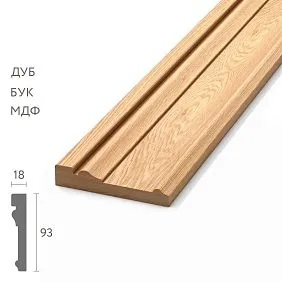

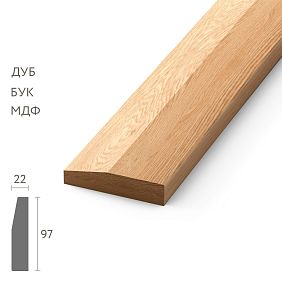


Cove, Baseboard, Cornice: Differences in Terms and Forms
Ceiling framing is called by different names: baseboard, cove, cornice. Are these synonyms or different elements?




Cove: Simplicity and Functionality
A cove is a narrow ceiling baseboard with a simple profile, usually with a concave surface (a cove) that smoothly connects the wall and ceiling. Cove width is 30-80 mm, thickness 10-15 mm. The profile is minimalist—either a smooth concave arc (like an internal radius) or a simple angled strip without decorative elements.
A cove primarily performs a technical function: it covers the joint between the wall and ceiling (which is rarely perfectly even—there is usually a 2-5 mm gap due to surface irregularities or building settlement), hides the edges of wallpaper or paint (the top edge of wallpaper often peels or is unevenly cut; the cove conceals the defect), and creates a visual transition (a sharp right angle between wall and ceiling looks crude; a concave cove softens it).
The decorative function of a cove is secondary. It is a background element that does not attract attention and works subtly. A cove is appropriate in minimalist, Scandinavian, and Japanese interiors where restraint in details is important. The wood of the cove is usually painted white (to match the ceiling—the cove blends in, becomes invisible) or left in its natural color (if the walls are wooden—log, paneling, boards).
Our factory also produces:
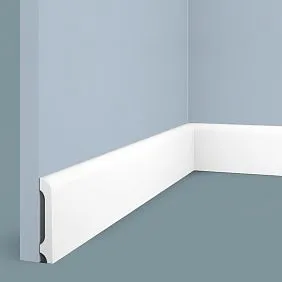
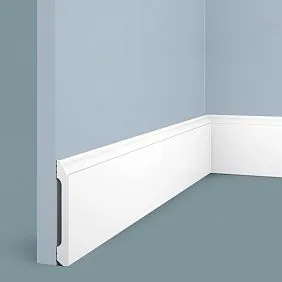
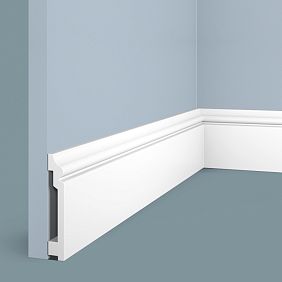
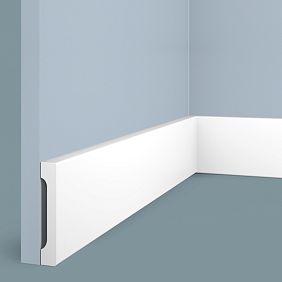
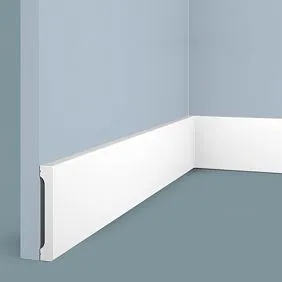
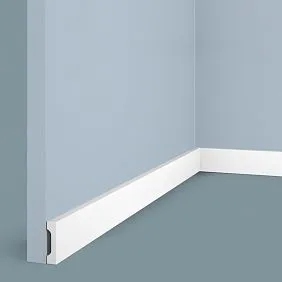

Ceiling Baseboard: Noticeability and Structure
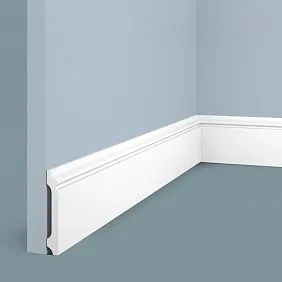
A ceiling baseboard is a wider and more noticeable element than a cove. Width 80-150 mm, thickness 15-25 mm. The profile can be simple (rectangular strip) or complex (with beads, grooves, chamfers). The baseboard creates a distinct horizontal line around the perimeter of the room, separating the wall and ceiling not subtly, but emphatically.
The function of a ceiling baseboard is combined: technical (covers the joint, hides defects) and decorative (adorns the interior, creates architectural structure). The baseboard acts as a frame for the ceiling—the ceiling visually becomes an independent element, framed around the perimeter, which emphasizes its shape, height, and proportions.
Ceiling baseboards are appropriate in classic, neoclassical, and traditional interiors, where detailing and layered finishes are valued.Wooden ceiling baseboard buyare sought to create a finished style, where every boundary is designed, every joint is refined.
Get Consultation
Cornice: Scale and Luxury
A cornice is the widest and most complex element of ceiling framing. Width from 120 to 300 mm and more, thickness up to 40-50 mm. The profile is multi-tiered: several beads, flutes, roundings, and projections creating a play of light and shadow. A cornice doesn't just cover the joint—it creates architectural decoration that dominates the upper part of the room.
The function of a cornice is predominantly decorative. It is an element of luxury, status, and historical styles (Baroque, Rococo, Empire, where ceiling cornices reached widths of 40-60 cm and were adorned with gilding, painting, and stucco ornaments). In modern interiors, wide cornices are used in rooms with high ceilings (from 3.2 m), where a narrow baseboard would get lost and fail to create the necessary proportion.
Wooden cornices are rare due to manufacturing complexity (milling a multi-tiered profile in wood requires high-precision equipment; hand carving is labor-intensive) and weight (a wide oak cornice 2.5 m long weighs 8-12 kg, complicating installation). More often, cornices are made of polyurethane (lightweight, easily molded, accepts any complex profiles); wood is used for medium-width baseboards (80-150 mm), where a balance of weight, cost, and decorativeness is maintained.
Where Wooden Ceiling Baseboard is Used
Wood on the ceiling is not a random choice. There are places where wood is not just appropriate, but the only correct choice.
Wooden Houses and Log Cabins
A house made of timber or logs is an integral wooden structure. Walls of wood, ceiling of wood (beams, boards), floor of wood (parquet, solid wood). Inserting a plastic or polyurethane baseboard into such an interior would disrupt the harmony, introducing a foreign material.Ceiling baseboard woodenbecomes an organic part of the wooden world, a continuation of the walls and ceiling.
The wood species of the baseboard is selected to match the walls and ceiling. If the house is made of pine—the baseboard is made of pine (budget-friendly, texture matches). If the house is made of larch—the baseboard is made of larch (more expensive, but material uniformity creates integrity). If the house is made of oak or ash (premium options)—the baseboard is made of the corresponding species.
The baseboard's finish matches the wall finish. If the walls are coated with clear oil or varnish (preserving natural color and texture)—the baseboard is treated the same way. If the walls are stained (changing color while preserving texture)—the baseboard is stained the same shade. The goal is the visual blending of the baseboard into the wall, perceiving it not as a separate element, but as a natural completion of the wooden plane.
Baths and Saunas: Heat and Humidity
A bathhouse presents extreme conditions for materials. In the steam room, temperatures reach 80-110°C, humidity 60-100%, and the alternation of heating and cooling creates thermal expansion and contraction. A plastic baseboard deforms, melts, and emits odor. Polyurethane withstands temperatures up to 80-90°C, but softens in a steam room at 100°C. MDF swells from moisture and delaminates. That leaves wood—the only material that has been used in baths for centuries and has proven its durability.
Wood species for a sauna are selected based on criteria of low thermal conductivity, moisture resistance, and absence of resin (resin leaks when heated, leaves stains, and can cause burns upon contact). The ideal choice is linden. Linden wood has low density (450-500 kg/m³ compared to 650-750 kg/m³ for oak), which means low thermal conductivity (the baseboard does not heat up to a dangerous temperature, allowing touch without burns). Linden contains no resin (unlike pine and spruce, which release resin when heated). Linden has a pleasant, light aroma (intensifies when heated, creates a sauna scent, and does not overpower the smell of brooms or essential oils).
Alder is an alternative to linden. Its density is slightly higher (500-550 kg/m³), thermal conductivity is also low, it contains no resin, and its color is pinkish-brown (creates a warm atmosphere). Alder is 20-30% more expensive than linden but is stronger and more durable.
Aspen is a budget option. It is lightweight (density 450-480 kg/m³), resin-free, but less durable (the wood is soft, easily damaged, and darkens over time without special treatment). Suitable for temporary saunas and budget projects.
Oak, ash, and beech are not recommended for the steam room. High density means high thermal conductivity—the baseboard heats up significantly and can cause burns upon accidental contact. Oak contains tannins, which release a specific odor when heated (not pleasant to everyone). In the anteroom or relaxation area, where temperatures are lower (25-30°C), oak is quite appropriate.
Treatment of sauna baseboards—only natural compositions without toxic solvents or synthetic resins. Linseed oil, hemp oil, specialized sauna and steam room oils based on natural components. Beeswax (pure or as part of oil-wax impregnations). Varnish is categorically unsuitable (the varnish film can release solvent vapors when heated and crack due to thermal expansion).
Apartments in classic style
Classic interior is a system of architectural elements where every boundary and every joint is designed. Ceiling baseboard is part of this system alongside floor baseboard, door trims, and wall moldings. All elements are executed in a unified style (wood species, profile, color), creating integrity.
In classic styleWooden ceiling baseboardA width of 100-150 mm is standard. A narrow 50 mm skirting board looks insufficient for a classic interior and fails to create the necessary sense of scale. The profile is either a simplified classic (one or two beads) or a complex one (three to four relief elements). Wood species: oak (dark, noble, status), ash (light, visually less heavy), beech (mid-range in color and price).
Baseboard color in classic style—natural or tinted. Natural oak with clear varnish (emphasizes texture, creates a warm brown tone). Tinted oak (walnut, chestnut, wenge stain for darkening, creating contrast with light walls). White baseboard in classic style is appropriate in light neoclassical, French style, where white ceiling baseboard pairs with white floor baseboard and white trims, creating a monochrome system against colored walls (beige, gray, blue).
Country cottages: naturalness and solidity
A country house is a place to step away from urban synthetics and surround oneself with natural materials. Wood, stone, textiles—the foundation of country aesthetics. Wooden ceiling baseboard fits organically, creates a connection with nature, and gives a sense of solidity (unlike lightweight plastic, which is associated with temporary structures).
In living rooms, dining rooms, and studies of country houses, ceiling baseboards 120-150 mm wide made of oak or ash (natural color, clear varnish finish) create an architectural frame, emphasizing ceiling height (country houses often have ceilings of 2.9-3.5 m, where standard narrow baseboards get lost). In bedrooms, narrower baseboards of 80-100 mm are appropriate (less dominant, creating a calm atmosphere).
In rooms with wooden ceiling beams (structural or decorative), the ceiling baseboard is selected to match the color and species of the beams, creating visual unity of wooden elements. Dark oak beams—dark oak baseboard; light ash beams—light ash baseboard.
Profiles and sizes: from minimalism to classic complexity
The shape of the profile determines the style, visual mass, and installation complexity of the ceiling baseboard.
Simple rectangular profile
Minimalist baseboard—rectangular block with cross-section 60×15 mm, 80×18 mm, 100×20 mm. Without any milling or relief. Simply a smooth plank with sharp (chamfered 1 mm) or slightly rounded edges.
Advantages of rectangular profile: maximum installation simplicity (corners are cut at 45° with a miter saw without needing precise alignment of complex relief), easy painting (paint applies evenly on a smooth surface without pooling in grooves), modern minimalist appearance (absence of decoration focuses attention on the material—wood texture, color). Used in Scandinavian, Japanese, minimalist, and industrial interiors.
Rectangular baseboard can be mounted horizontally (wide side to the wall, narrow side visible—creates a thin strip) or vertically (narrow side to the wall, wide side visible—creates a wide band). The second option visually increases wall height, the first—creates a delicate transition.
Cove with concave surface
Classic cove—profile with a concave arc (radius 20-40 mm), smoothly connecting wall and ceiling. Cove width 40-70 mm, thickness 12-15 mm. Concave surface creates a soft transition, visually smooths the corner, reflects light (side lighting creates a gradient from light to dark on the concave surface, emphasizing volume).
Cove is easier to install than rectangular baseboard in rooms with uneven walls and ceilings. Concave surface partially compensates for unevenness—gaps up to 2-3 mm are visually hidden in the shadow of the concavity, less noticeable than on a straight plank. Cove is suitable for old houses where room geometry is far from ideal.
Simplified classic profile
Profile with one bead (convex cylindrical element) in the center or near the top edge. Width 80-120 mm, thickness 15-20 mm. Bead diameter 8-15 mm creates relief, interplay of light and shadow, without overloading the profile. This balances minimalism and classic—sufficient decorativeness for traditional interiors, but without excessive complexity.
Simplified profile suits neoclassical, modern classic, Scandinavian interiors with classic elements. Installation is more complex than rectangular baseboard (corners require precise alignment of the bead on two joining planks) but simpler than multi-step profiles.
Complex classic profile
Multi-step profile with two to three beads, flutes (vertical grooves), chamfers (beveled edges), and roundings. Width 120-180 mm, thickness 20-30 mm. Such a profile creates architectural decoration, dominates the upper part of the room, and requires high ceilings (from 3.0 m) to avoid feeling oppressive.
Complex profile is used in high-level classic interiors—mansions, representative spaces, historical reconstructions. Installation requires high skill (corners are cut with jeweler-like precision, the slightest deviation creates a noticeable break in the relief), use of special tools (miter saw with precise angle settings, miter box for control).
Wood species for ceiling baseboard
Choice of species affects strength, appearance, weight, price, and resistance to operating conditions.
Linden: lightness and versatility
Linden is one of the best species for ceiling skirting boards due to its low density (450-500 kg/m³), uniform texture, and light color. Linden skirting is lightweight (a linear meter of a 100×18 mm profile weighs 600-700 grams compared to 1100-1300 grams for oak), which simplifies ceiling installation (less load on fasteners, lower risk of detachment under its own weight).
Linden has a uniform texture, without pronounced annual rings or medullary rays. The wood appears smooth, calm, and does not draw excessive attention. The color of natural linden is light, almost white with a slight creamy tint. This is ideal for interiors requiring a light ceiling skirting without painting (saving on coating, preserving naturalness).
Linden is easy to work with — its soft wood does not dull tools, cuts cleanly without chipping. Milling complex profiles on linden is done quickly and with high quality. Sanding requires less time (soft wood sands faster than hard wood). Paint and stain apply evenly (the uniform structure absorbs compounds without staining).
Disadvantages of linden: lower strength compared to oak, beech (soft wood is more easily damaged by impacts, but for ceiling skirting, which is not subject to mechanical loads, this is not critical), average moisture resistance (linden is not recommended for damp rooms without special treatment, but is quite sufficient for dry living rooms).
The price of linden skirting is moderate — higher than pine, lower than oak. A linear meter of a 100×18 mm linden profile ranges from 800-1200 rubles depending on profile complexity.
Oak: Durability and Status
Oak is the benchmark for strength and durability. Density 650-750 kg/m³, hardness is high. A ceiling skirting made of oak is practically eternal — it lasts for decades without losing shape, cracking, or darkening (with proper treatment).
Oak has an expressive texture — large annual rings, medullary rays (on a radial cut create a characteristic sheen), contrast between sapwood and heartwood. The wood looks noble, prestigious. The color of natural oak ranges from light brown with a yellowish tint (young oak) to dark brown with gray veins (mature oak).
Oak is moisture-resistant due to its high tannin content — natural preservatives. Oak ceiling skirting can be installed in rooms with high humidity (kitchens, bathrooms with good ventilation) without risk of deformation or mold.
Disadvantages of oak: weight (oak skirting is heavy, requires reliable fastening — adhesive + mechanical fasteners), processing difficulty (hard wood requires sharp tools, milling is slower than with softwoods), high price. A linear meter of a 100×18 mm oak profile ranges from 1500-2500 rubles.
Ash: light strength
Ash combines the strength of oak with a lighter color. Density 650-700 kg/m³, hardness is high (even higher than oak). Texture is expressive — contrasting annual rings create a striped pattern. The color of natural ash is light gray, grayish-beige with a coolish tint (unlike the warm yellow-brown tones of oak).
Ash is ideal for Scandinavian interiors, where light, cool wood tones are valued. Without staining, ash already looks bleached, saving on stain costs. Ash appears visually lighter than oak (light color creates a sense of lightness, despite comparable density), which is important for ceiling skirting that should not feel oppressive.
The price of ash is comparable to oak or slightly lower. A linear meter of a 100×18 mm ash profile ranges from 1400-2300 rubles.
Pine: budget option
Pine is the most affordable species. Density 450-550 kg/m³ (depending on growing conditions), texture is pronounced (annual rings are contrasting, resin canals are visible as dark dots or stripes). The color of natural pine is yellowish-beige with a pinkish tint.
Advantages of pine: low price (2-3 times cheaper than oak), lightness (pine skirting is light, easy to install), pleasant coniferous texture (resin canals create a natural pattern). Disadvantages: lower durability (soft wood is easily damaged, darkens over time without protective coating), resin exudation (in warm rooms, especially under direct sunlight, resin can seep to the surface, leaving sticky spots — requires removal of resin pockets before treatment or use of dense opaque coatings).
Pine ceiling skirting is suitable for country houses, temporary structures, budget projects. The price per linear meter of a 100×18 mm pine profile ranges from 400-700 rubles.
Installation of Wooden Ceiling Skirting
Installing skirting on the ceiling requires precision, proper tools, and an understanding of structural features.
Surface preparation
The wall and ceiling at the skirting attachment point must be clean (free of dust, grease stains, peeling paint), dry (surface moisture no more than 5%, otherwise adhesive won't set), relatively even (variations up to 3-5 mm are acceptable, larger ones require leveling with plaster or filler).
Marking is a critical stage. Around the room's perimeter on the walls, mark the skirting's lower boundary (measure down from the ceiling the skirting's width, e.g., 100 mm, draw a horizontal line). Marking is done with a laser level (projects a horizontal line on all walls simultaneously, accuracy ±1 mm per 10 m) or a water level (two vials connected by a transparent hose filled with water — by the principle of communicating vessels, the water level in both vials is the same, allowing transfer of height marks).
Cutting corners at 45 degrees
Ceiling wooden skirting cornerswhich are joined at 45°, requires precise cutting. Tools — a miter saw with a rotating table (allows setting any cut angle from 0° to 45-50° left and right) or a miter box (a device with slots for fixed angles 45° and 90°, where the skirting is placed and cut with a handsaw).
The cutting direction is critical. Internal room corner: the left plank is cut from right to left (viewing the end, the top part of the plank, adjacent to the ceiling, is shorter than the bottom part, adjacent to the wall), the right plank is cut from left to right (top part longer than bottom). External corner (protruding, e.g., on a column, bay window): cuts are opposite to the internal corner.
Checking the cut: two cut planks are placed together on a flat surface (on a table, floor), the tightness of the joint is checked. If a gap remains between the planks — the cut angle is adjusted (the saw's rotation angle is adjustable to 0.1°, a recut is made). A perfect joint — the planks contact along the entire cut plane without gaps.
Real room angles are rarely exactly 90°. More often 88-92°. Therefore, the cut angle is selected individually. Professionals use an angle finder (tool for measuring the angle between walls), measure the actual angle (e.g., 88°), halve it (88° / 2 = 44°), set the miter saw to 44° instead of the standard 45°.
Fastening to ceiling and walls
Wooden skirting is fastened in two ways: adhesive (using polyurethane construction adhesive or liquid nails) or mechanical (using screws, nails). A combined method (adhesive + mechanical fastener) is most reliable.
Adhesive fastening: apply construction adhesive in a zigzag or dots at 10-15 cm intervals on the back of the skirting (the surfaces contacting the wall and ceiling). The skirting is placed against the wall and ceiling along the markings, pressed firmly for 30-60 seconds. If the skirting is heavy (oak, ash), temporary bracing is required (wooden blocks set at an angle from floor to skirting, holding it pressed to the ceiling until the adhesive fully sets — 12-24 hours).
Mechanical fastening: the skirting is placed along the markings, holes 3-4 mm in diameter are drilled through the skirting into the wall (if the wall is concrete or brick — plastic dowels are inserted into the holes; if wooden — fasten directly), screws 50-70 mm long are driven in (length chosen so the screw enters the wall 30-40 mm). Fastener spacing 40-60 cm. Screw heads are countersunk into the wood by 2-3 mm, the recesses are filled (acrylic wood filler), sanded after drying, and painted or stained to match the skirting color.
Combined fastening: adhesive ensures continuous contact of the skirting board with the surface (without gaps, misalignments), mechanical fasteners prevent the heavy skirting board from peeling off under its own weight. Adhesive is applied along the entire length, the skirting board is pressed, additionally secured with screws (with a smaller interval of 60-80 cm than with purely mechanical fastening).
Joint and corner processing
Corner and straight joints (where two straight sections of skirting board meet on one wall, if the wall length exceeds the plank length) should be as inconspicuous as possible. After installation, joints are inspected, the slightest gaps (up to 0.5 mm) are filled with acrylic sealant (white or wood-colored — sealant is squeezed into the gap, excess is immediately wiped off with a damp sponge, the surface is smoothed with a finger).
Gaps larger than 0.5 mm are filled with wood putty (acrylic or epoxy — applied with a spatula, smoothed, after drying sanded with fine-grit abrasive P180-P220, tinted or painted). For natural wood without painting, putty is selected to match the color or made independently (wood dust from sanding the skirting board is mixed with PVA glue to a paste-like consistency — such putty perfectly matches the color of the skirting board).
Final finishing
After installation and joint sealing, the skirting board is coated with a protective-decorative finish. Coating options:
Oil or oil-wax: penetrating impregnation, absorbed into the wood, emphasizing the grain, creating a matte silky surface. Applied with a brush or cloth in 2-3 coats with intermediate drying of 4-6 hours. Oil does not form a film, does not peel, is easily renewed (sand the damaged area, apply a new coat of oil — surface restored). Suitable for natural wood where preserving the tactile feel and liveliness of the material is important.
Varnish: film-forming coating, creating a hard protective shell on the wood surface. Varnish can be glossy (shiny surface, emphasizes color and grain, but shows the slightest defects), semi-matte (slight sheen, universal option), matte (no sheen, natural look). Applied with a brush or spray gun in 2-3 coats with intermediate sanding P240-P320. Varnish is stronger than oil but harder to renew (requires complete stripping before reapplication).
Paint: opaque coating, completely hiding the wood grain. Suitable for white skirting boards or colored ones (gray, beige, any RAL). Acrylic paint (water-based, odorless, dries quickly) or alkyd paint (based on organic solvents, more durable, but with odor). Applied with a brush or spray gun in 2 coats over primer (white acrylic primer applied before paint improves adhesion and opacity).
Ceiling skirting board in a sauna/bathhouse: specifics of selection and installation
A sauna/bathhouse requires a special approach to material selection and installation technology.
Requirements for moisture resistance and heat resistance
The steam room is an extreme zone. Temperature 80-110°C, humidity 60-100%, alternating heating (when the sauna is fired) and cooling (when the sauna is not in use), water splashes when poured on stones. Wood under such conditions expands (absorbs moisture, swells), contracts (releases moisture, dries out), and can crack (if shrinkage is uneven).
The ceiling skirting board in the steam room must: not release harmful substances when heated (only natural wood, only natural finishes — oil, wax), not deform from moisture and temperature (wood must be well-dried — moisture content 8-12%, treated with hydrophobic compounds), not heat up to dangerous temperatures (wood species with low thermal conductivity — linden, alder, aspen).
In the anteroom, relaxation room, washing area, requirements are softer. Temperature 25-40°C, humidity 50-80%. Denser wood species (oak, ash) are permissible here, as well as more diverse finishes (varnish is possible, although oil is preferable).
Special wood treatment
Skirting board for a sauna/bathhouse is treated with compounds specifically designed for saunas and bathhouses. Ordinary linseed oil when heated can release odor, ordinary varnish cracks from temperature fluctuations. Specialized sauna oils (e.g., Finnish Teknos, Tikkurila, German Osmo) are created based on natural vegetable oils with additives that improve heat resistance, water repellency, and mold resistance.
Treatment is performed in several coats (3-4 coats of oil with intermediate drying of 8-12 hours per coat). Each subsequent coat is absorbed less than the previous one — the first coat penetrates deeply (wood is dry, pores open), the second and third fill the surface layers, the fourth creates a thin protective film on the surface. After complete drying (48 hours after the last coat) the skirting board is ready for use.
Frequency of coating renewal in a sauna/bathhouse — every 1-2 years depending on intensity of use. Signs of need for renewal: wood has darkened (absorbed dirt, moisture), become rough (oil worn off), spots have appeared (uneven moisture absorption). Renewal: light sanding with fine-grit abrasive P220-P320 (removes contaminants, opens pores), application of 1-2 coats of fresh oil (wood is protected again, color restored).
Protection against fungus and mold
A warm, humid environment is an ideal place for fungi and mold. Even linden and alder, resistant to decay, can be affected with insufficient treatment and poor ventilation. Protection includes:
Antiseptic treatment of wood before final finishing. The skirting board is impregnated with an antiseptic composition (bioprotective impregnation on a water or oil basis, safe for humans when heated), which kills fungal spores and prevents their development. Impregnation is applied with a brush, roller, or by dipping (immersing the skirting board in a bath with antiseptic for 5-10 minutes, then drying), penetrates to a depth of 3-5 mm.
Room ventilation. The sauna/bathhouse must have effective ventilation (supply-exhaust or natural) that removes excess moisture after use. After each sauna session, the room needs to be ventilated (open doors, windows for 30-60 minutes to allow moisture to evaporate). Stagnant humidity is the main cause of mold.
Regular cleaning. The ceiling skirting board is wiped with a dry cloth (removing dust, condensation), once a month — with a damp cloth and soap (removing dirt, grease deposits from bath procedures). A clean surface is less prone to mold than a dirty one.
Frequently asked questions
How does a ceiling skirting board differ from a floor skirting board?
A ceiling skirting board is mounted horizontally at the junction of wall and ceiling, a floor skirting board — vertically at the junction of wall and floor. Structurally, a ceiling skirting board is lighter (less load on fasteners, as it does not rest on the floor but hangs on the wall and ceiling), the profile is often concave or flat (creates a smooth transition), dimensions are narrower (width 60-150 mm vs. 80-200 mm for floor). A floor skirting board is stronger (subjected to impacts from cleaning, furniture), has a protruding profile (protects the wall), and has a cable channel (for concealed wiring).
Can wooden ceiling baseboards be painted?
Yes, and often necessary. Opaque painting (white, gray, colored) hides the wood grain, creates a smooth monochrome surface, which is relevant for modern interiors where the ceiling skirting board should blend in or contrast by color, not by texture. Before painting, the skirting board is primed (white acrylic primer in 1-2 coats), sanded (P220-P240), then painted (acrylic or alkyd enamel in 2 coats). Paint protects wood from moisture, dirt, UV radiation (wood does not yellow or darken).
Gaps in corners arise from inaccurate miter cuts or uneven room corners. Solutions: precise miter angle adjustment (measure the actual room angle with a protractor, divide by two, set the resulting angle on the miter saw instead of standard 45°), use of corner elements (ready-made internal and external corners, between which straight sections of skirting board are inserted — corner elements simplify installation but are not always available for a specific profile), gap sealing (if gap up to 1 mm — acrylic sealant, if larger — wood putty with subsequent tinting).
Gaps in corners occur due to inaccurate cutting or uneven room corners. Solutions: precise adjustment of the cut angle (measure the actual room angle with a protractor, divide by two, set the resulting angle on the miter saw instead of the standard 45°), using corner elements (pre-made internal and external corners, with straight skirting sections inserted between them—corner elements simplify installation but are not always available for a specific profile), sealing gaps (if the gap is up to 1 mm—use acrylic sealant; if larger—use wood filler followed by tinting).
A stretch ceiling already has a decorative trim (plastic insert covering the gap between the stretch fabric and the wall). An additional wooden skirting board is mounted optionally to create a more pronounced decor, classic style. The skirting board is attached only to the wall (not to the stretch ceiling, which cannot bear the weight of wood), the upper part of the skirting board covers the edge of the stretch fabric, hiding the trim.
A stretch ceiling already has a decorative trim (a plastic insert covering the gap between the stretch fabric and the wall). An additional wooden skirting board is installed optionally to create a more pronounced decorative effect or a classic style. The skirting is attached only to the wall (not to the stretch ceiling, which cannot support the weight of wood), and its top part covers the edge of the stretch fabric, concealing the trim.
What is the durability of a wooden ceiling skirting board?
With proper treatment and maintenance, wooden skirting boards last 30-50 years or more. Oak and ash skirting boards in dry rooms are practically eternal — they can last 100-150 years in historical buildings. Linden and pine skirting boards last 20-40 years. In a sauna, the service life is shorter (10-20 years due to extreme conditions), but depends on the quality of treatment and care. Regular renewal of the coating (every 2-3 years for regular rooms, every 1-2 years for a sauna) extends the service life.
Can a wooden skirting board be installed on an uneven ceiling?
Yes, but with limitations. Irregularities up to 3-5 mm are compensated by adhesive (when applying a thick layer, the adhesive fills the depressions and presses the skirting board against the protrusions). Irregularities of 5-10 mm require leveling (puttying the ceiling at the skirting board attachment point) or using flexible materials (polyurethane skirting boards are more flexible than wooden ones and better follow irregularities). Irregularities over 10 mm require complete ceiling leveling; otherwise, the skirting board will pull away from the surface, creating gaps.
Conclusion: Natural beauty under the ceiling
Wooden ceiling baseboard buy— a choice in favor of naturalness, durability, and timeless aesthetics. A ceiling framed with a wooden skirting board gains completeness, structure, and visual height. A room transforms from a box with four walls into an architectural space with thoughtful boundaries, transitions, and details. Wood brings warmth (visual and tactile), eco-friendliness (a natural material regulates humidity, does not emit toxins), and individuality (every meter of skirting board is unique in texture).
The choice of wood species determines the character of the interior and operating conditions. Linden is a universal species for dry living spaces and ideal for saunas (lightweight, light-colored, does not heat up, does not release resin). Oak is a status choice for classic interiors, guaranteeing durability for decades (strong, moisture-resistant, noble texture). Ash is a modern alternative to oak with a lighter, cooler tone (suitable for Scandinavian and minimalist interiors). Pine is a budget solution for country and temporary buildings (affordable price, pleasant texture, but less durability).
The skirting board profile varies from a minimalist rectangular block (modern interiors where clean lines are important) to complex multi-step classic profiles (historical styles, rooms with high ceilings where decoration is appropriate). Width is selected according to ceiling height: 60-80 mm for standard ceilings of 2.5-2.7 m, 100-120 mm for elevated ceilings of 2.8-3.0 m, 120-150 mm for high ceilings of 3.2-3.5 m.
Installation requires precision, the right tools, and an understanding of the structure. Cutting corners at 45° is a critical operation that determines the quality of joints (precise cutting gives invisible joints, imprecise cutting results in gaps that are difficult to mask). Combined fastening (adhesive + mechanical fastener) ensures reliability for heavy oak and ash skirting boards. Finishing treatment (oil, varnish, paint) protects the wood, emphasizing or hiding the texture depending on the interior concept.
A sauna requires a special approach: wood species with low thermal conductivity (linden, alder), natural coatings safe when heated (sauna oils), antiseptic treatment to protect against mold, and quality ventilation to remove excess moisture. When technology is followed, a wooden skirting board in a sauna lasts 10-20 years, creating an authentic atmosphere, a pleasant aroma when heated, and safety (does not burn, does not emit toxins).
STAVROS Company is a Russian manufacturer of wooden moldings with a 24-year history, offering a full range of solid wood ceiling skirting boards made of oak, ash, beech, linden, and pine. In-house full-cycle production includes: raw material procurement (dried planed boards and timber of first and second grade, moisture content 8-12%, free of rot, cracks, and loose knots), cutting to size (longitudinal cutting on multi-saw machines, thickness calibration on planer-thicknessers with ±0.2 mm accuracy), profile milling (four-sided CNC milling machines creating profiles of any complexity from simple rectangular to multi-step classic ones), sanding (wide-belt sanding machines with sequential processing using P80-P120-P180-P240 abrasives for a perfectly smooth surface), coating application (priming, tinting, varnishing, painting in climate-controlled paint booths), packaging (shrink film protecting against contamination and damage during transportation).The STAVROS ceiling skirting board range includes over 20 profiles: simple coves 40-70 mm wide (minimalist concave profiles for Scandinavian and modern interiors), simplified classic profiles 80-120 mm wide (with one or two beads, balancing classic and restraint), complex classic profiles 120-180 mm wide (multi-step profiles for traditional interiors), rectangular blocks 60-100 mm wide (smooth planks without milling for minimalism). Standard length is 2.4 m and 2.6 m, custom lengths up to 3.0 m available.
Available wood species: oak (natural light brown, tinted with walnut/chestnut/wenge stains), ash (natural light gray, tinted bleached/gray), beech (natural pinkish-beige), linden (natural light creamy), pine (natural yellowish-beige). Coatings: unfinished (sanded solid wood for self-treatment), primed (white acrylic primer, ready for painting), varnished (clear semi-matte/matte varnish, preserving texture), tinted varnish (stain + varnish, changing color while preserving texture), painted (white/gray/colored enamel, completely hiding texture).
The STAVROS stock program ensures availability of popular profiles (10-12 items constantly in stock in St. Petersburg and Moscow) for immediate shipment. Rare profiles and non-standard lengths are manufactured to order within 5-10 days. Minimum shipment quantity — from 1 plank (retail purchases are welcome), wholesale discounts from 10% for orders from 100 linear meters.
STAVROS delivery is organized throughout Russia: Moscow and Moscow Region — own transport 1-2 days (careful loading, securing skirting boards horizontally to prevent deformation, delivery to the entrance or site), St. Petersburg and Leningrad Region — own transport 1-2 days, Russian regions — via transport companies (PEK, Delovye Linii, KIT, Baikal-Service) 3-10 days depending on distance. Professional packaging: skirting boards are wrapped in shrink film (protection from contamination, moisture), ends are covered with cardboard plugs (protection from chipping), bundles are secured with stretch film, placed on pallets horizontally (preventing sagging), and fixed with straps. Damage rate during transportation is less than 0.3% (thanks to quality packaging and selection of reliable carriers).
STAVROS consulting support: technical specialists will help select a ceiling skirting board profile for your interior (considering ceiling height, room style, wood species of walls and floor for harmonious combination), calculate the required number of linear meters (room perimeter minus door opening widths plus 5-7% reserve for corner cutting and possible defects), recommend a fastening method (adhesive, mechanical, combined depending on wood species and base type), provide detailed installation instructions (how to cut corners, which adhesive to use, how to seal joints). Designers will develop a concept for comprehensive use of moldings (ceiling skirting board combined with floor skirting board, door trims, wall moldings) to create a unified architectural system where all elements are made from the same wood species, same profile style, same coating color.
STAVROS special solutions for saunas and steam rooms: ceiling skirting boards made of linden and alder with special treatment for extreme conditions (antiseptic treatment against fungus and mold, impregnation with sauna oils that withstand temperatures up to 120°C without releasing odor or toxins), simple profiles without complex milling (concise shapes are appropriate in saunas, easy to clean, without dirt accumulation in grooves), length is selected according to room dimensions (standard 2.4 m or custom cutting to size at the factory with accuracy up to 1 mm). Consultations on installation in high humidity conditions: how to ensure a ventilation gap between the skirting board and ceiling (preventing condensation stagnation), which fasteners to use (stainless steel screws, not prone to corrosion), how to renew the coating (frequency, technology, compounds).
STAVROS 3-year warranty on all solid wood products subject to operating conditions (air humidity 40-70%, temperature +10-30°C for living spaces, +80-110°C for saunas subject to special treatment, no direct prolonged contact with water). If during the warranty period the skirting board deforms, cracks, or the coating peels (with proper use) — STAVROS will replace it free of charge. The warranty is documented (warranty card, delivery note, receipt), confirmed by GOST compliance certificates for wood and coatings, sanitary-epidemiological conclusions (confirming safety for living spaces and saunas).
STAVROS custom manufacturing: if standard profiles do not fit your concept, the factory will manufacture skirting boards according to your custom sketch. The process includes: consultation with a designer (discussing profile, dimensions, wood species, coating), development of a profile drawing (exact dimensions of all elements — beads, grooves, roundings, chamfers), manufacturing of a test sample (a 30-50 cm long skirting board piece for visual assessment and verification against the concept), approval (profile adjustment if necessary), launch of series production of the required quantity. Custom manufacturing timelines: simple profiles 7-10 days from drawing approval, complex profiles 15-20 days. Minimum order quantity for a custom profile — from 50 linear meters (to cover equipment setup costs). Cost of custom manufacturing is 30-50% higher than standard catalog profiles.
STAVROS product samples: before ordering a large batch, you can order samples (20-30 cm long pieces of skirting boards of different profiles and species) to visually and tactilely assess the wood texture, processing quality, profile complexity, and color match to expectations. Sample cost is symbolic (150-300 rubles per piece depending on species); when placing an order over 30,000 rubles, the sample cost is refunded (deducted from the order amount). Samples are sent via Russian Post or courier services (SDEK, Boxberry) within 2-3 days after payment.
STAVROS cooperation with designers and construction companies: special conditions for professionals who regularly work with wooden moldings. Designer discounts of 10-15% for regular orders (from 3 projects per year), priority custom profile manufacturing (shortened timelines, possibility of small batches from 30 linear meters), on-site technical support (specialist visit for consultation on installation of complex elements, solving non-standard tasks), free sample delivery (for designer client presentations). For construction companies — wholesale discounts from 12% for orders from 200 linear meters, payment deferral for regular partners (up to 30 days), consolidated deliveries (multiple sites in one shipment with optimized logistics).
ChoosingCeiling baseboard woodenChoosing STAVROS, you choose natural material, professional manufacturing quality, reliability of a Russian manufacturer with 24 years of experience, direct prices without intermediary markups, and an individual approach to each project. You create interiors where details matter, where the ceiling is not a forgotten plane but a full-fledged element of architectural composition, where wood remains wood — a living, warm, durable material that does not become outdated, does not go out of fashion, serves for decades, and becomes part of the home's history.
STAVROS is your partner in creating spaces where the natural beauty of wood rises from floor to ceiling, where every boundary is framed with respect for the material and craftsmanship, where quality is measured not by advertising promises but by real products that you see, touch, install, live with for years, observing how wood ages nobly, preserving shape, strength, and beauty.


