Article Contents:
- Standard dimensions: parameters of wooden skirting boards
- Height: from minimalist 40 mm to palatial 160 mm
- Thickness: from thin 15 mm to massive 22 mm
- Plank length: 2.4-2.6 m standard
- Tall skirting boards: trend towards scale
- Why high skirting boards 100-160 mm are coming back into fashion
- How high skirting boards change room proportions
- Ceiling molding: the upper contour of the interior
- Polyurethane cornices: dimensions and proportions
- Chandelier rosettes: diameters from 30 cm to 150 cm
- Moldings for coffers and panels on the ceiling
- Proportions: how to choose skirting board size relative to ceiling height
- Proportion formula: skirting board as a percentage of wall height
- Balance of skirting board and cornice: symmetry of top and bottom
- Correspondence table: ceiling height — skirting board size — cornice size
- Modern vs classic: skirting board sizes for different styles
- Minimalism and Scandinavian style: low skirting boards 60-70 mm
- Neoclassical: medium skirting boards 80-120 mm
- Classic and Baroque: high skirting boards 120-160 mm
- Frequently Asked Questions
- Conclusion: comprehensive approach to dimensions

Size matters.Wooden Skirting Board Sizesdetermine how space is perceived (low skirting board 60-70 mm visually increases room height, makes ceilings appear higher, creates modern lightness; high skirting board 120-160 mm visually lowers the ceiling, creates intimacy, monumentality, classic respectability).Wooden Skirting Board Heightis selected according to ceiling height (for standard 2.7 m, 80-100 mm is optimal; for high 3.0-3.5 m, 120-140 mm is suitable; for palatial 3.5-4.0 m, 140-160 mm is required — proportions must match the room scale), according to interior style (modern styles prefer low skirting boards 60-80 mm, classic styles require medium and high 100-160 mm), according to visual objectives (need to increase height — choose low skirting board; need to create coziness — choose high).polyurethane ceiling stucco buy— cornices, chandelier rosettes, moldings, coffers — creates the upper contour of the interior (if the skirting board frames the floor, the cornice frames the ceiling — the vertical boundaries of space are closed, the interior is architecturally complete). Skirting board and cornice work in pairs (proportions must be balanced — 100 mm skirting board + 80-100 mm cornice create harmony; 60 mm skirting board + 150 mm cornice create imbalance, cornice dominates). This article examines standard dimensions of wooden skirting boards (height 40-160 mm, thickness 15-22 mm, plank length 2.4-2.6 m — technical parameters that determine installation, cost, visual perception), the trend for high skirting boards 100-160 mm (why modern designers are returning to classic proportions, how high skirting boards change space perception), polyurethane ceiling molding as the upper contour of the interior (cornices 40-200 mm, rosettes with diameter 30-150 cm, moldings for coffers — how to choose sizes relative to skirting board and ceiling height), skirting board proportions relative to ceiling height (calculation formulas, correspondence tables, visual effects of different combinations), differences in skirting board sizes for modern and classic styles (minimalism requires 60-70 mm, neoclassical 100-120 mm, Baroque 140-160 mm — style determines size). Prepare to choose skirting board and molding sizes consciously, understanding how every millimeter of height affects space perception, how skirting board and cornice work together, creating the architectural frame of the interior.





Standard dimensions: parameters of wooden skirting boards




Height: from minimalist 40 mm to palatial 160 mm
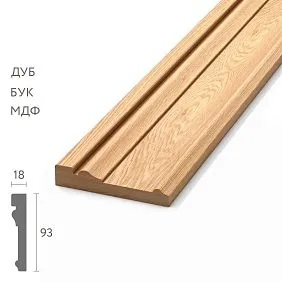
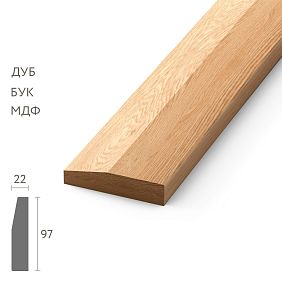
Wooden Skirting Board Height— key parameter that determines visual perception of the lower part of the wall. Minimalist skirting board 40-50 mm (rare, almost unnoticeable, used in ultra-modern minimalist interiors where architectural details are minimized) creates the effect of no skirting board (wall appears to grow directly from the floor, boundary almost invisible), visually maximizes room height (the smaller the skirting board, the higher the ceiling appears). Skirting board 40-50 mm is minimally functional (protects wall from vacuum cleaner and mop impacts, but does not hide gaps between wall and floor wider than 3-5 mm, does not conceal wall irregularities).
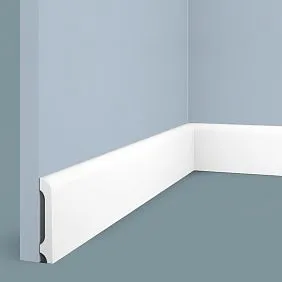
Standard modern skirting board 60-70 mm (most common size in modern interiors, apartments renovated 2015-2026, typical new buildings) balances functionality and aesthetics. Height 60 mm is sufficient to cover standard gaps between wall and flooring (gaps up to 8-10 mm wide, typical for laminate, engineered wood flooring that require 5-8 mm expansion gap around room perimeter), to create a visible but non-dominant horizontal line (60 mm skirting board is noticeable but doesn't attract attention, serves as delicate floor framing). Skirting board 70 mm is slightly more massive (suitable for rooms with 2.7-2.8 m ceilings where 60 mm may seem too thin and 80 mm already excessive).
Classic medium skirting board 80-100 mm — a choice for classic, neoclassical, traditional interiors. A height of 80 mm creates a noticeable horizontal line (the skirting is perceived as an architectural element, not just a technical detail), visually stabilizes the lower part of the wall (the wall stands on the skirting as on a plinth, creating a sense of solidity, reliability). A 100 mm skirting board — a universal classic size (suits most classic interiors with ceilings 2.7-3.0 m, rhymes with classic architraves 90-110 mm wide, creates harmony of vertical and horizontal elements). In rooms with ceilings 2.5-2.6 m, a 100 mm skirting board can visually reduce the height (occupies 4% of the wall height — noticeable, but not critical).
High skirting board 120-140 mm — a choice for respectable classic interiors with high ceilings. A height of 120 mm in a room with 3.0 m ceilings occupies 4% of the wall height (proportion is balanced, the skirting is noticeable, creates monumentality, but does not dominate). A height of 140 mm requires ceilings of 3.2-3.5 m (in a room with 2.7 m ceilings, a 140 mm skirting occupies 5.2% of the height — too much, visually oppressive, lowers the ceiling). A high skirting board allows the use of complex multi-level profiles (a 25-30 mm high cavetto, several grooves, carved elements — on a low 60-80 mm skirting, a complex profile does not fit, gets lost).
Palatial skirting board 150-160 mm — the maximum height for residential interiors (commercial spaces, palaces, museums can use skirting boards up to 200-250 mm, but in residential spaces this is excessive). A 160 mm skirting requires ceilings from 3.5 m and above (in a room with 3.5 m ceilings, a 160 mm skirting occupies 4.6% of the height — proportion is acceptable), requires spacious areas (a small room 12-15 m² with a 160 mm skirting looks overloaded, the skirting dominates; a spacious room 30-50 m² or more with a 160 mm skirting looks monumental, solemn).
Our factory also produces:
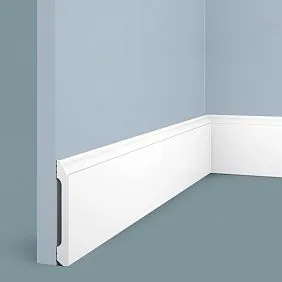
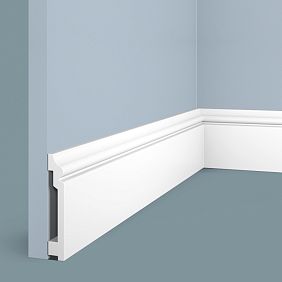
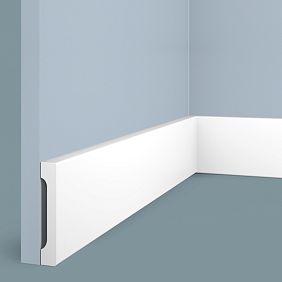
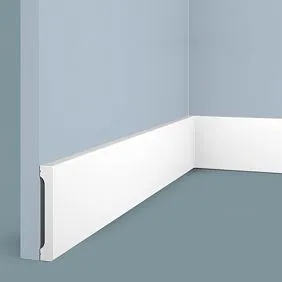
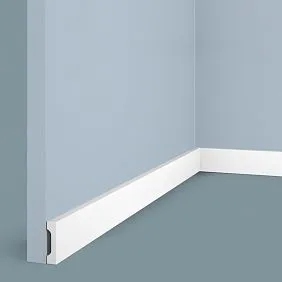
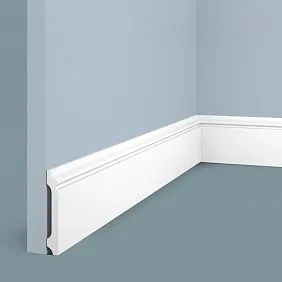

Thickness: from thin 15 mm to massive 22 mm
Skirting board thickness (distance from the wall to the front surface of the skirting) determines the projection of the skirting from the wall, the visual massiveness. Thin skirting 15-16 mm (standard for most modern MDF, beech, ash skirting boards) creates lightness, unobtrusiveness (the skirting almost merges with the wall, projection is minimal 15 mm, does not hinder pushing furniture flush against the wall). Medium skirting 18-20 mm (standard for classic solid oak, beech skirting boards with shaped profiles) creates a noticeable projection (18-20 mm from the wall — the skirting is voluminous, relief, the cavetto of the profile projects, creates play of light and shadow). Massive skirting 22 mm (rare, used for particularly large skirting boards 140-160 mm high with carved elements) creates maximum volume (22 mm projection is noticeable, the skirting is perceived as a sculptural element, not just a trim).
Thickness affects installation: thin skirting 15-16 mm requires flat walls (if the wall is uneven, variations of 5-10 mm, thin skirting will not hide the unevenness, will follow the wall's shape, gaps form between the skirting and the floor). Massive skirting 20-22 mm forgives minor wall unevenness (the skirting's projection is larger, the skirting visually smooths out small wall depressions).
Get Consultation
Plank length: 2.4-2.6 m standard
The length of one skirting board plank (sold as planks of fixed length, not arbitrarily cut in the store) determines the number of joints along the length in a room. Standard length 2.4 m (240 cm) is typical for solid oak, beech, ash skirting boards (length is limited by the length of the original boards from which the skirting is milled — boards longer than 2.4-2.5 m are rare, expensive, contain more defects). Increased length 2.6 m (260 cm) is typical for MDF skirting boards (MDF board is initially large-sized 280×210 cm, planks up to 2.6-2.8 m long can be cut from it without problems).
For a room with a wall length of 5 m, the plank length determines the number of joints: 2.4 m planks require two planks for a 5 m wall (2.4 + 2.4 = 4.8 m, a 0.2 m piece remains from the second plank), one joint in the middle of the wall (joint in the most visible place — undesirable, but inevitable). 2.6 m planks require two planks (2.6 + 2.4 = 5.0 m, joint closer to the corner, less noticeable). To minimize joints, long walls are planned so that joints fall in less visible places (behind furniture, in corners, where joints are masked by miter cuts).
High skirting boards: trend towards scale
Why the fashion for high skirting boards 100-160 mm is returning
The last five to seven years (2019-2026) have seen a return to high skirting boards 100-160 mm after a decade of dominance by low skirting boards 60-70 mm (2010-2018 — the era of Scandinavian minimalism, where everything is reduced to a minimum, skirting boards are low, almost unnoticeable). Reasons for the return: fatigue from minimalism (interiors with low skirting boards, smooth walls, lack of decor seem cold, impersonal, hotel-like), return to classic and neoclassical styles (styles where architectural details are important — wall moldings, ceiling cornices, high skirting boards on the floor), trend towards intimacy and coziness (high skirting boards visually lower the ceiling, create intimacy, coziness, a sense of security — the opposite of the cold lightness of minimalism).
High skirting board 120-160 mm creates a visual foundation for the wall (the wall stands on a massive plinth, a sense of solidity, reliability, respectability). In classic interiors, a high skirting board is mandatory (classic style without a high skirting board looks unfinished, cheap — like a classic suit with a narrow tie instead of a wide one). In modern interiors, a high skirting board is used as an accent (otherwise the interior is restrained, minimalist — smooth walls, simple furniture, but the skirting is high 120-140 mm, creates contrast, architectural interest).
High skirting board allows hiding utilities (electrical cables, antenna wires, internet cables are routed behind the skirting — a 120-160 mm skirting has a cavity behind it 100-140 mm high, where cables up to 10-15 mm in diameter can fit). Low skirting board 60-70 mm does not hide cables (cavity is too small, cables stick out, are visible).
How high skirting board changes room proportions
High skirting board 120-160 mm visually divides the wall into two zones (lower zone — the skirting itself, dark or contrasting in color with the upper; upper zone — the wall above the skirting, light). The boundary between zones (the upper edge of the skirting) creates a horizontal line, which visually lowers the ceiling (the eye catches the horizontal line, perceives it as the lower boundary of the wall, the ceiling seems lower). The effect is enhanced if the skirting is contrasting (dark skirting + light walls — boundary is sharp, noticeable, ceiling-lowering effect is strong; light skirting + light walls — boundary is soft, ceiling-lowering effect is weak).
High skirting board creates intimacy (in a room with 3.0 m ceilings and a 140 mm skirting, the ceiling is visually perceived as 2.86 m — a difference of 14 cm seems small, but perception changes, the room seems cozier, more intimate, less formal). In rooms with low ceilings 2.5-2.6 m, high skirting is undesirable (a 120 mm skirting in a room with 2.5 m ceilings occupies 4.8% of the height — visually the ceiling is perceived as 2.38 m, the room seems low, oppressive).
High skirting board requires high architraves on doors (if the skirting is 140 mm, architraves should be 120-140 mm wide — proportions are balanced; if the skirting is 140 mm, architraves 70 mm — imbalance, skirting dominates, architraves get lost).
Ceiling molding: the upper contour of the interior
Polyurethane cornices: sizes and proportions
polyurethane ceiling stucco buyCeiling molding begins with ceiling cornices (crown moldings, ceiling skirting boards — horizontal elements at the junction of wall and ceiling, create a frame for the ceiling). The height of the cornice (vertical dimension from the lower edge of the cornice to the upper, the part visible on the wall) determines the visual massiveness. Minimalist cornice 40-60 mm (smooth, simple geometric profile, without ornaments) suits modern interiors where molding is used delicately (the cornice marks the ceiling boundary, but does not dominate, does not attract attention). Standard cornice 70-100 mm (classic profile with beads, flutes, light ornaments) suits neoclassical interiors (the cornice is noticeable, creates architectural interest, but not luxury).
High cornice 120-150 mm (classical or Baroque profile with pronounced ornaments — dentils, egg-and-dart, modillions) suits classic interiors with high ceilings 3.0-3.5 m. Palatial cornice 160-200 mm (Baroque profile with lush ornaments — acanthus leaves, scrolls, rosettes) suits luxurious interiors with ceilings 3.5 m and above (the cornice dominates, creates an impression of palatial luxury).
The width of the cornice (horizontal dimension, how much the cornice projects from the wall towards the ceiling) determines how much the cornice covers the wall-ceiling joint. Narrow cornice 30-50 mm projection covers a minimal joint (if the ceiling is flat, walls are flat, the joint is neat — a narrow cornice is sufficient). Wide cornice 60-100 mm projection covers a wide joint (if the ceiling is uneven, walls are crooked, the joint has gaps up to 10-15 mm wide — a wide cornice hides defects).
Ceiling rosettes for chandeliers: diameters from 30 cm to 150 cm
Ceiling rosette (a round or oval ceiling medallion in the center of the room or at the chandelier mounting point, with or without ornament) creates a focal point on the ceiling. The rosette diameter is selected according to the room size and chandelier. Small rosette 30-50 cm in diameter suits small rooms 12-18 m² (bedrooms, studies, children's rooms) and small chandeliers 40-60 cm in diameter (the rosette should be slightly smaller than the chandelier, so as not to compete with it, but serve as a background).
Medium rosette 60-80 cm in diameter suits medium-sized rooms 20-30 m² (living rooms, dining rooms) and chandeliers 70-100 cm in diameter. Large rosette 90-120 cm in diameter suits spacious rooms 35-50 m² (large living rooms, halls) and large chandeliers 110-150 cm in diameter. Giant rosette 130-150 cm in diameter suits very spacious rooms 60 m² and more (reception halls, double-height living rooms) and huge chandeliers 160-200 cm in diameter.
A rosette is not mandatory in modern minimalist interiors (ceiling is smooth, chandelier is mounted directly without a rosette — restraint, laconicism). A rosette is mandatory in classic interiors (a ceiling without a rosette under a chandelier looks unfinished, poor — a rosette adds formality, decorativeness).
Moldings for coffered and paneled ceilings
Moldings (narrow strips 20-80 mm wide, 2.0-2.6 m long) are used to create coffers on the ceiling (a coffer — a square or rectangular recess framed by moldings, creates relief, volume on the ceiling). Coffers divide the ceiling into sections (a 4×5 m ceiling is divided by moldings into coffers 1×1 m in size — resulting in a grid of 20 coffers, the ceiling is visually structured, not flat).
The width of molding for coffers is selected according to the coffer size: for 80×80 cm coffers, narrow moldings 30-40 mm are suitable (narrow lines, light graphics), for 100×100 cm coffers, medium moldings 50-60 mm are suitable (balanced proportions), for 120×120 cm and larger coffers, wide moldings 70-80 mm are suitable (large-scale lines, monumentality).
Moldings are installed with adhesive (polyurethane adhesive is applied to the back of the molding, the molding is placed against the ceiling, pressed for 30-60 seconds — the adhesive sets and holds). In coffer corners, moldings are joined at a 45-degree angle (cut with a miter box or miter saw, joint is tight, without gaps).
Proportions: how to choose baseboard size relative to ceiling height
Proportion formula: baseboard as a percentage of wall height
The optimal baseboard height is 3-5% of the wall height (if ceilings are 2.7 m = 270 cm, 3% = 8.1 cm, 5% = 13.5 cm — optimal baseboard 80-140 mm). Baseboard less than 3% of wall height (for 2.7 m ceilings this is less than 81 mm) is visually too small (gets lost against the wall, looks like a technical detail, not an architectural element). Baseboard more than 5% of wall height (for 2.7 m ceilings this is more than 135 mm) is visually too large (dominates, overloads the lower part of the wall, strongly visually lowers the ceiling).
For standard ceilings 2.5-2.7 m optimal baseboard heights:
-
Ceilings 2.5 m: baseboard 75-125 mm (3-5% of 250 cm), realistically available sizes 80, 100, 120 mm.
-
Ceilings 2.6 m: baseboard 78-130 mm (3-5% of 260 cm), realistically available sizes 80, 100, 120 mm.
-
Ceilings 2.7 m: baseboard 81-135 mm (3-5% of 270 cm), realistically available sizes 80, 100, 120, 140 mm.
For high ceilings 3.0-3.5 m optimal baseboard heights:
-
Ceilings 3.0 m: baseboard 90-150 mm (3-5% of 300 cm), realistically available sizes 100, 120, 140 mm.
-
Ceilings 3.2 m: baseboard 96-160 mm (3-5% of 320 cm), realistically available sizes 100, 120, 140, 160 mm.
-
Ceilings 3.5 m: baseboard 105-175 mm (3-5% of 350 cm), realistically available sizes 120, 140, 160 mm.
Baseboard and cornice balance: top and bottom symmetry
Baseboard and cornice work as a pair (if baseboard frames the floor, cornice frames the ceiling — the lower and upper boundaries of the wall). Proportions should be balanced. Equal sizes (baseboard 100 mm + cornice 100 mm) create symmetry, static, classical harmony (top and bottom are the same, the wall between them is balanced). Baseboard slightly higher than cornice (baseboard 120 mm + cornice 100 mm) creates slight asymmetry in favor of the bottom (the wall stands on a more massive base, cornice is lighter, visually the ceiling does not press down). Baseboard slightly lower than cornice (baseboard 100 mm + cornice 120 mm) creates asymmetry in favor of the top (the ceiling dominates, visually lowers, space feels more intimate).
Strongly unequal sizes (baseboard 60 mm + cornice 150 mm or baseboard 160 mm + cornice 60 mm) create imbalance, visual conflict (one element dominates, the other gets lost, interior is inharmonious). Exception: deliberate asymmetry in authorial interiors, where imbalance is an artistic technique (high cornice 180 mm + low baseboard 70 mm create emphasis on the ceiling, visually making the ceiling the main element).
Correspondence table: ceiling height — baseboard size — cornice size
| Ceiling Height | Optimal baseboard height | Optimal cornice height | Interior style |
|---|---|---|---|
| 2.5 m | 60-80 mm | 50-70 mm | Modern, minimalism |
| 2.6 m | 70-100 mm | 60-80 mm | Modern, neoclassical |
| 2.7 m | 80-120 mm | 70-100 mm | Neoclassical, classic |
| 3.0 m | 100-140 mm | 90-120 mm | Classic |
| 3.2 m | 120-160 mm | 100-140 mm | Classic, Baroque |
| 3.5 m+ | 140-180 mm | 120-160 mm | Baroque, Palace style |
The table shows optimal ranges, not strict rules (you can deviate from the table depending on specific tasks — if you need to visually increase the height, choose baseboard and cornice at the lower end of the range; if you need to create coziness, choose at the upper end).
Modern vs classic: baseboard sizes for different styles
Minimalism and Scandinavian style: low baseboards 60-70 mm
Minimalism (a style where everything is reduced to a minimum — simple forms, neutral colors, no decor) requires low baseboards 60-70 mm. A low baseboard supports the philosophy of minimalism (the baseboard is almost invisible, doesn't attract attention, serves as a technical element, not a decorative one). The baseboard profile is a simple rectangle (one or two bevels, no cap, no grooves, no carving — restraint, conciseness). The baseboard color is usually white or wall-colored (the baseboard blends with the wall, the boundary between wall and floor is soft, unnoticeable) or a contrasting dark color (black, dark gray baseboard on white walls — a graphic accent, but the baseboard is still low, not dominant).
Scandinavian style (light natural colors, wood, simplicity, coziness without excess) also prefers low baseboards 60-80 mm. The baseboard is often wooden (natural light wood — beech, ash, pine with oil or white paint), the profile is simple or slightly shaped (a light cap is acceptable, but carving, grooves are excessive). Cornices in minimalist and Scandinavian interiors are either absent (smooth ceiling, wall-ceiling junction without framing) or minimal 40-60 mm (smooth, simple profile, white, unnoticeable).
Modern Furniture (sofas, armchairs, tables, cabinets of simple geometric shapes, without carving, without ornaments, on thin legs or no legs at all — low-slung, low) harmonizes with low baseboards (low furniture + low baseboards — everything tends to the horizontal, space visually expands, ceilings appear higher).
Neoclassicism: medium baseboards 80-120 mm
Neoclassicism (modern interpretation of classicism — classical forms but restrained, decor present but moderate, neutral colors) requires medium baseboards 80-120 mm. Height 100 mm is optimal for neoclassicism with ceilings 2.7-3.0 m (the baseboard is noticeable, creates an architectural foundation for the wall, but doesn't dominate, doesn't overload). The baseboard profile is classical with a cap and one or two grooves (decorativeness is present but not excessive — a balance between modern restraint and classical respectability).
Baseboard color in neoclassicism is often neutral (white, light gray, beige — the baseboard harmonizes with light walls, doesn't contrast sharply) or natural wood (oak, beech with natural-colored oil — warm wooden palette, rhymes with parquet, wooden furniture). Cornice in neoclassicism 70-100 mm (classical profile with beads, grooves, light ornaments — the cornice is noticeable, creates architectural framing for the ceiling, but not opulence).
Furniture in neoclassicism (sofas, armchairs, tables of classical forms but without excessive carving, with light hints of classical elements — curved legs, capitonné on backs, but not lush Baroque curls) harmonizes with medium baseboards (classical furniture + classical medium-sized baseboards — stylistic unity, balance of tradition and modernity).
Classicism and Baroque: high baseboards 120-160 mm
Classicism (style of the 18th-19th centuries — symmetry, proportions, order system, moderate decorativeness, nobility of materials) requires high baseboards 120-140 mm. Height 120 mm for ceilings 3.0 m, 140 mm for ceilings 3.2-3.5 m (the baseboard is monumental, creates solidity, respectability, characteristic of classicism). The baseboard profile is classical with a cap and several grooves (two-three grooves creating rhythm, relief) or carved (dentils, egg-and-dart — ornaments characteristic of classical architecture).
Baroque (style of the 17th-18th centuries — opulence, luxury, excessive decorativeness, curvilinear forms, gold, marble) requires high baseboards 140-160 mm. The baseboard profile is carved (lush ornaments — acanthus leaves, scrolls, rosettes, along the entire height of the baseboard — maximum decorativeness, luxury). Baseboard color in Baroque is often with patina (gold, silver patina on carved elements — imitation of noble antiquity, palace luxury) or contrasting (white baseboard with gold patina on dark parquet — contrast, solemnity).
Cornice in classicism and Baroque 120-200 mm (classical or Baroque profile with pronounced ornaments — the cornice is large-scale, dominates the ceiling, creates formality). Furniture in classicism and Baroque (sofas, armchairs, tables, cabinets made of solid wood with carving, patina, expensive fabrics — velvet, silk, tapestry) requires high baseboards (large-scale furniture + high baseboards — proportions are balanced, the interior is harmonious).
Frequently asked questions
Can you install a 120 mm high baseboard in a room with 2.6 m ceilings?
Yes, but visually it will lower the ceiling. A 120 mm baseboard in a room with 2.6 m ceilings occupies 4.6% of the wall height (the upper limit of the optimum is 5%, but close to it). The ceiling will be perceived as 2.48 m (difference 12 cm, noticeable, the room seems cozy, intimate, but not critically low). If the goal is to create intimacy, coziness, a 120 mm baseboard is suitable. If the goal is to preserve the feeling of height, a baseboard of 80-100 mm is better (3.1-3.8% of wall height, ceiling visually 2.52-2.50 m, the lowering effect is less).
Is it mandatory to install a cornice if there is a baseboard?
Not mandatory, but desirable for the completeness of the interior. A baseboard without a cornice leaves the ceiling unframed (the wall is framed at the bottom but not at the top — the composition is incomplete, the ceiling hangs in the air). The cornice closes the vertical boundaries (baseboard at the bottom, cornice at the top — the wall is framed on both sides, the interior is architecturally complete). In minimalist interiors, the cornice can be omitted (minimalism allows the absence of framing, smooth surfaces without boundaries). In classical interiors, the cornice is mandatory (classicism without a cornice looks unfinished).
Which baseboard thickness is better — 15 mm or 20 mm?
Depends on the profile and style. Thin baseboard 15-16 mm suits simple profiles (rectangular cross-section, one bevel, no cap) and modern styles (minimalism, Scandinavian — the baseboard is light, unobtrusive). Thick baseboard 18-20 mm suits shaped profiles (cap, grooves, carving — for a voluminous profile thickness is needed, a shaped profile doesn't fit on a thin baseboard) and classical styles (classicism requires volume, relief, massiveness). For a baseboard height of 60-80 mm, thickness 15-16 mm is sufficient. For a baseboard height of 100-160 mm, thickness 18-20 mm is preferable (proportions are balanced, the baseboard looks massive, solid).
How much does a wooden baseboard of different sizes cost?
Cost depends on height, wood species, profile, finish. Veneered MDF baseboard (wood imitation): height 60-70 mm — 850-1200 rub/m, height 80-100 mm — 1100-1600 rub/m, height 120-140 mm — 1400-2200 rub/m. Solid beech baseboard: height 60-80 mm — 1800-2400 rub/m, height 100-120 mm — 2400-3200 rub/m, height 140-160 mm — 3200-4500 rub/m. Solid oak baseboard: height 60-80 mm — 2400-3400 rub/m, height 100-120 mm — 3200-4800 rub/m, height 140-160 mm — 4500-7200 rub/m. Carved baseboard is 40-80% more expensive than smooth (carving increases labor intensity, cost). Baseboard with patina is 30-50% more expensive than natural (patination — an additional operation, requires manual work).
Can you combine a wooden baseboard and a polyurethane cornice?
Yes, and you should. Wood on the floor (baseboard), polyurethane on the ceiling (cornice) — a traditional combination of materials in classical interiors. Wood where it is most valuable (baseboard — an element you see up close, which can be subjected to impacts, moisture — wood is stronger than polyurethane, more durable, tactilely more pleasant). Polyurethane where decorative volume is needed without high cost (cornice — an element hanging at a height of 2.5-3.0 m, you don't touch it, don't see it up close — materiality is not important, form and relief are; polyurethane is 2-4 times cheaper than wood, lighter, easier to install). Colors harmonize: natural oak baseboard beige-brown + white polyurethane cornice — a classic scheme, contrast of warm wood and cold white.
Conclusion: A Comprehensive Approach to Sizes
The dimensions of baseboards and ceiling moldings define the architecture of an interior.Wooden Skirting Board Sizes(Height 40-160 mm, thickness 15-22 mm, plank length 2.4-2.6 m) are selected based on ceiling height (for 2.5-2.7 m, 80-120 mm is optimal; for 3.0-3.5 m, 120-160 mm is optimal — a proportion of 3-5% of the wall height), interior style (minimalism 60-70 mm, neoclassical 100-120 mm, classic and baroque 120-160 mm), and visual objectives (a low baseboard increases perceived height, a high one creates intimacy).Wooden Skirting Board Height— is not a technical parameter, but a tool for managing the perception of space (every centimeter of height changes how the eye perceives the wall, ceiling, and room proportions).
polyurethane ceiling stucco buy— cornices with a height of 40-200 mm, rosettes with a diameter of 30-150 cm, moldings for coffers — creates the upper contour of the interior (if the baseboard frames the floor, the cornice frames the ceiling, the vertical boundaries of the space are enclosed). The proportions of the baseboard and cornice should be balanced (equal sizes create symmetry, a baseboard slightly higher than the cornice creates stability, a cornice slightly higher than the baseboard creates intimacy). A size imbalance (baseboard 60 mm + cornice 150 mm or vice versa) destroys harmony and creates visual conflict.
A trend in recent years is the return to high baseboards of 100-160 mm (after a decade of dominance by low baseboards of 60-70 mm during the minimalism era of 2010-2018). A high baseboard creates solidity, respectability, and architectural interest (the wall stands on a massive plinth, a feeling of reliability), allows hiding utilities (cables behind the baseboard), and allows the use of complex profiles (carving, grooves, torus — which don't fit on a low baseboard). A high baseboard requires high ceilings (3.0 m and above — in rooms with low ceilings of 2.5-2.6 m, a high baseboard visually feels oppressive), and requires high architraves (the proportions of vertical and horizontal elements must be balanced).
For over twenty-three years, STAVROS has been manufacturing and supplying wooden baseboards and polyurethane moldings, offering a full range of sizes for any interior. Solid wood baseboards made of oak, beech, ash, pine, as well as veneered and painted MDF — height from 60 to 160 mm (standard sizes 60, 70, 80, 100, 120, 140, 160 mm — a choice for any ceiling height, any interior style), thickness from 15 to 22 mm (15-16 mm for simple profiles, 18-20 mm for shaped profiles, 22 mm for carved profiles), plank length 2.4-2.6 m (oak and beech 2.4 m, MDF 2.6 m — long planks minimize the number of joints).
Baseboard profiles: simple rectangular (for minimalism, Scandinavian style — one or two chamfers, no decoration), classic with a torus (for neoclassicism, classicism — a convex semi-circular element, creates play of light and shadow), shaped with a torus and grooves (for classicism — two or three grooves, rhythm, relief), carved (for baroque, palace interiors — dentils, egg-and-dart, acanthus leaves, maximum decorativeness). Baseboard finishes: natural oil finish (8 shades — from light natural to dark wenge, wood grain visible, natural color), varnished (glossy or matte surface, protection from moisture, wear), painted with opaque paint (white, gray, black, any color from the RAL catalog — wood grain hidden, smooth surface), patinated (gold, silver, green patina on carved elements — imitation of antiquity, luxury).
Cost of wooden baseboards (as of February 2026): Veneered MDF 850-2200 RUB/m (depending on height 60-140 mm), beech 1800-4500 RUB/m (depending on height 60-160 mm), oak 2400-7200 RUB/m (depending on height 60-160 mm), carved baseboards are 40-80% more expensive than smooth ones, patinated ones are 30-50% more expensive than natural ones. Installation of baseboards by craftsmen 350-650 RUB/m (simple profile 350-450 RUB/m, shaped 450-550 RUB/m, carved 550-650 RUB/m) or DIY (saving on labor, costs only for materials and consumables — liquid nails, screws, putty, paint).
Polyurethane ceiling moldings — cornices with over 150 profiles (height from 40 to 200 mm, projection width from 30 to 120 mm, profiles from smooth minimalist to baroque ornamented — dentils, egg-and-dart, modillions, acanthus leaves), rosettes with over 80 models (diameter from 30 to 150 cm, styles from classical to baroque, with ornaments or smooth), moldings for coffers and panels with over 200 profiles (width from 20 to 80 mm, plank length 2.0-2.6 m, profiles simple, classical, ornamented).
Polyurethane from European manufacturers (Belgium, Germany, Italy) with a density of 200-280 kg/m³ (high density ensures strength, sharpness of relief, whiteness without yellowing for decades), moisture-resistant (can be installed in rooms with high humidity — kitchens, bathrooms, swimming pools), lightweight (a cornice 100 mm high weighs 0.8-1.2 kg/m, a rosette 80 cm in diameter weighs 2-4 kg — installed with adhesive without additional fasteners, does not load the ceiling).
Cost of polyurethane moldings: cornices 320-2200 RUB/m (depending on height 40-200 mm and profile complexity — smooth ones are cheaper, ornamented ones are more expensive), rosettes 2200-25000 RUB/pc (depending on diameter 30-150 cm and ornament complexity), moldings 180-850 RUB/m (depending on width 20-80 mm). Installation of moldings by craftsmen 420-850 RUB/m for cornices (depending on height), 1200-5500 RUB/pc for rosettes (depending on diameter), 280-520 RUB/m for moldings or DIY (installation instructions, video tutorials on the STAVROS website — watch, repeat, save on labor).
Consultations with STAVROS specialists help select baseboard and molding sizes (what baseboard height suits your ceilings, what cornice height will balance the baseboard, what rosette diameter suits your chandelier and room area — calculations, recommendations, visualization), calculate material quantity (linear footage along the room perimeter, number of planks considering length and cutting allowance, amount of adhesive, putty, paint — an accurate estimate without hidden costs), choose profiles and finishes (which profile corresponds to your interior style, which finish harmonizes with parquet and furniture — stylistic unity).
Technical characteristics of materials (solid wood moisture content 8-10% kiln-dried — does not warp, does not crack after installation; polyurethane density 200-280 kg/m³ — strength, durability 50+ years; geometric accuracy ±0.2-0.3 mm — joints are tight, without gaps), quality guarantees (on solid wood baseboards 24 months, on MDF baseboards 18 months, on polyurethane moldings 36 months — if the material is defective, we replace it free of charge), stock program (over 80% of the assortment in stock in St. Petersburg, shipment on the day of order or the next day — no need to wait for production for 2-4 weeks, as with competitors).
Delivery across Russia (Moscow — 2-3 days by road transport, cost from 4500 RUB per order up to 100 kg, regions — 5-10 days by transport companies, cost calculated by weight and volume of cargo), pickup from the warehouse in St. Petersburg (free, convenient for local clients and those who rent freight transport themselves).
By choosing STAVROS, you choose material quality (kiln-dried solid wood, polyurethane from European manufacturers), completeness of assortment (all baseboard sizes from 60 to 160 mm, all molding sizes from 40 mm cornices to 150 cm rosettes — everything for comprehensive interior finishing in one place), professional consultations (help in selecting sizes, calculating quantities, choosing profiles — each project is individual, requires attention to detail), honest prices without markups (the manufacturer works directly with the buyer, without intermediaries, margins are minimal). Create interiors where every millimeter of baseboard height, every centimeter of cornice works for visual effect, where proportions are precise, where architecture is complete from floor to ceiling. With STAVROS, the choice of baseboard and molding sizes becomes conscious, justified, successful.