












































































Article Contents:
- Why precise measurements are critical for wooden baseboard
- Preparing the room for measurements
- Tools for professional measurement
- Methodology for precise measurements around the perimeter
- Accounting for architectural features of the room
- Calculating material quantity and reserve
- Optimizing cutting and minimizing waste
- Specifics of measurements for different types of wood
- Checklist for self-measurement
- Common measurement errors and how to avoid them
- Aligning measurements with installation specifics
- Professional tips and tricks
- Interaction with manufacturer and placing order
- Quality control of received material
- Storage of baseboard until installation
- Additional elements and hardware
- Digital tools for calculation and visualization
- Complex wall configurations with protrusions, built-in cabinets, and communication boxes require sequential measurement of each section. Create a detailed wall layout as if unfolding it onto a flat surface. Mark all protrusions, their depth, and height relative to the floor. This information is critical for optimizing material cutting and minimizing waste.
- Integrating baseboard into overall interior concept
- Coordination with other finishing elements
- Frequently Asked Questions
- Conclusion

Orderof wooden floor skirting boardIt seems like the simplest task, until on the day of installation it turns out that material is missing exactly two meters, and the nearest store is closed. Or, conversely — more than 1.5 times more material was purchased than required, and now quality wood is sitting in the warehouse. Why does this happen? Because measurements are treated carelessly, relying on luck and intuition instead of a clear algorithm. Meanwhile, a professional approach to measurements saves not only money, but also nerves, time, and the master's reputation.
In this article, we will examine the system of precise measurements for ordering wooden baseboard — from preparing the room to accounting for complex architectural details. You will learn what tools are necessary, how to properly create a drawing, where typical errors lurk, and how to calculate material reserve with precision down to the centimeter. This checklist is based on the experience of professional measurers and will allow you to orderWooden baseboardcorrectly from the first time — without overpayment and without shortage.


Why precise measurements are critical for wooden baseboard
Wood is a living, fussy material that requires respect. Unlike plastic or MDF,wooden baseboards for floordo not tolerate rough fitting or numerous rework. Each unnecessary cut reduces the profile's strength, disrupts the texture, and diminishes the master's work. And a lack of material at the final stage may turn into a catastrophe — because wood batches differ in shade, grain pattern, and moisture. Buying an identical baseboard a month later is practically impossible.
Precise measurements are not pedantry for pedantry's sake. It is direct savings for your family budget. Imagine: a room of 20 square meters with a perimeter of 18 linear meters. At the cost of qualitywooden baseboard for floorat 1,000 rubles per linear meter, an error of just 10% results in an extra 2,000 rubles. Multiply by three rooms — and already 6,000 rubles have been wasted. Or, conversely: material was insufficient, so you urgently need to purchase more, drive across the entire city, pay for delivery, and lose a working day.
But it's not only about money. A proper measurement allows optimizing the cutting layout, minimizing the number of joints, and planning the placement of connections so they end up in the least noticeable areas. A professional knows: a joint under a radiator or behind a curtain looks completely different than a joint in the middle of a wall opposite the entrance. And this aesthetics is established precisely during the measurement stage, not during installation.




Preparing the room for measurements
Before taking out the measuring tape, it is necessary to bring the room to a state as close as possible to the final one. Measuring bare walls without accounting for future furniture, door casings, and decorative elements — this is a direct path to error. What needs to be done?
In the first place, complete all "wet" works. The plaster should be dry, the floor screed should have gained strength, and the finish coating should be laid. If you plan toBuy polyurethane wall moldingsorwooden corniceensure that they are already installed or at least their thickness is known. Any protruding element on the wall affects the length of the skirting board.
Secondly, determine the furniture layout. It seems obvious? Far from it. Many make a mistake, measuring the entire perimeter of the room and forgetting that behind a built-in wardrobe-closet two and a half meters long, skirting board is not needed at all. Or they plan to install a kitchen set that fits tightly against the wall for four meters. Why pay for material that no one will see? Create a furniture layout plan and mark areas where skirting board is not required.
Thirdly, check the room's geometry. Even in premium-class new constructions, there are no perfectly straight angles or flat walls. Measure the room's diagonals — if they differ by more than three centimeters, the room has a trapezoidal shape, not a rectangular one. This is critical for calculating the amountwooden floor skirting boardsand planning joints.
Finally, clear the room's perimeter of any unnecessary items. Boxes, construction debris, temporary partitions — all of this interferes with accurate measurements. Sweep the floor along the walls, remove dust. Yes, this seems like a minor detail, but when the measuring tape catches on debris, a one- to two-centimeter error is guaranteed.
Our factory also produces:
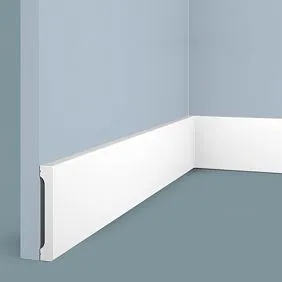
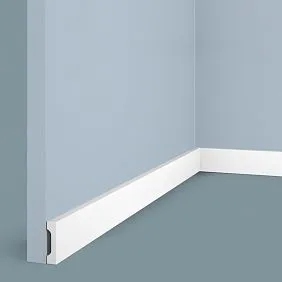
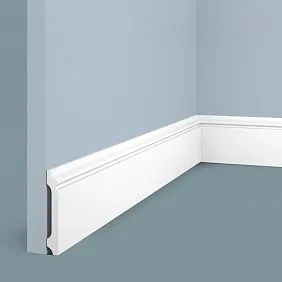

Tools for professional measurement
The quality of measurements depends directly on the tools. Do not try to do with an old metal tape measure with worn markings and a Chinese pencil. Investment in a good set will pay off already on the first project.
First and foremost — a laser distance meter. This is not luxury, but a necessity for accurate measurements. Modern models measure distances up to fifty meters with an error of one millimeter, store results, sum values, calculate areas and volumes. For our purposes, a basic model costing three to four thousand rubles will suffice. A laser distance meter is especially indispensable in spacious rooms, where using a regular tape measure becomes an acrobatic exercise.
However, completely abandoning the tape measure is not advisable. A quality five-meter tape measure with a metal strip and magnetic end will be useful for measuring short sections, checking floor level differences, and taking measurements in hard-to-reach places. Choose models with clear markings and a tape lock — this speeds up work and increases accuracy.
Protractor or small angle — an instrument for measuring angles between walls. Standard ninety-degree angles are rare; more often, angles are eighty-eight or ninety-two degrees. For trimmingwooden baseboardin such angles, precise data is required. A digital protractor shows values accurate to tenths of a degree and costs about one thousand rubles.
A one- to two-meter bubble level is necessary to check the floor's levelness and wall verticality. Floor unevenness affects material consumption — if the floor is sloped two centimeters in one direction, the skirting board will need to be cut at an angle, increasing waste.
Notebook, pencil, calculator — basic set for recording results. Do not rely on memory. Record each measurement with the location noted, mark peculiarities (protrusions, niches, pipes), make sketches. Many professionals use a smartphone with a measurement app, which automatically creates a room plan and calculates material quantity.
Get Consultation
Methodology for precise perimeter measurements
Now we move on to the most critical stage — actual measurements. There are several methodologies, but we will consider the most reliable one, proven by long-term practice.
Start by creating a room sketch. It is not necessary to draw to scale, but it is desirable to maintain proportions. Indicate on the sketch doors, windows, protrusions, niches, radiators. Number the walls clockwise from the entrance door. This will help avoid confusion when recording dimensions and later planning the cutting layout.
Measure each wall separately, do not try to calculate dimensions from the total perimeter. Even if the room appears to be a perfect rectangle, the lengths of opposite walls may differ by several centimeters. Record results with millimeter precision. Yes, forbuy wooden skirting boardmillimeters seem excessive precision, but on long sections, these millimeters accumulate into centimeters, and sometimes even decimeters.
Be sure to account for door openings. Do not simply subtract the door width from the wall length — measure the distance from the corner to the casing on each side of the opening. Casing may be installed asymmetrically, and the gap between the casing andfloor baseboardshould be minimal. Also, consider that some owners prefer not to break the skirting board at the door opening, but to run it through the threshold — in this case, the skirting board length increases by the opening width plus two casing thicknesses.
Special attention — angles. Not all angles in the room are straight, and not all angles are internal. Bay windows, columns, protruding ventilation boxes create external angles that require additional material. Measure each angle, mark its type (internal or external), and fix the deviation from a right angle.
Do not forget about vertical obstacles. Heating pipes, sewage risers, electrical cable channels — all of this requires bypassing, cutting out, and additional joints. Measure the distance from the corner to the obstacle, the pipe diameter, and the height of the protrusion above the floor level. These data will be needed not only for calculating the amountwooden floor skirting boardsbut also for planning the cutting layout and preparing templates for cutouts.
Accounting for architectural features of the room
Rooms with four straight angles are becoming increasingly rare. Modern architecture tends toward complex forms, multi-level spaces, and non-standard layouts. How to account for these features during measurements?
Bays and half-bays — a classic headache for measurers. A semicircular or multi-faceted protrusion requires many short skirting board segments connected at different angles. Here, a detailed drawing indicating the length of each face and the size of each angle is necessary. For a circular bay, measurements are taken along the chord — a straight line between the start and end points of the arc, then the arc length is calculated using a formula or with a flexible tape measure. Keep in mind that for such sections, it is more practical to orderwide wooden baseboardNiche and alcoves are found in old houses and modern studio apartments. It is important to determine whether a skirting board is needed inside the niche. If the niche is deep and contains built-in furniture or appliances, a skirting board is unnecessary. If the niche is decorative, shallow, with open shelves — a skirting board is required. Measure the depth of the niche, its width, and the distance from the floor to the lower shelf. You may need a skirting board of lesser height to avoid interfering with furniture installation.
Multi-level floors are a feature of studios and rooms with raised platforms. A height difference requires either a vertical skirting board (on the platform step) or special detailing at the junction between levels. Measure the height of the platform, its perimeter length, and plan how to join horizontal and vertical skirting boards. Sometimes, for such tasks, it is better to use
or combine with decorative overlays.wooden planks on the wallColumns and half-columns are architectural features that complicate skirting board installation. A round column can be bypassed by cutting the skirting board on both sides; a square or rectangular column can be detailed with separate segments around its perimeter. Measure the distance from the room’s corner to the column, its diameter or side lengths, and the distance from the column to the next corner. Remember that each column bypass adds at least four additional corner joints.
Complex wall configurations with protrusions, built-in cabinets, and communication boxes require sequential measurement of each section. Create a detailed wall layout as if unfolding it onto a flat surface. Mark all protrusions, their depths, and heights relative to the floor. This information is critical for optimizing cutting and minimizing waste.
When installing flooring, is the direction of laying important?
Material Calculation and Reserve
So, all measurements are complete, data recorded, and a sketch prepared. Now, it is necessary to convert these figures into the exact quantity of skirting board planks to order.
Standard plank lengthwooden baseboardvaries from two to three meters. The most common format is two and a half meters. This length is convenient for transportation, does not generate excessive waste when cutting standard rooms, and allows covering most walls with a single piece.
Sum the lengths of all sections where skirting board will be installed. Do not forget to subtract door openings’ widths (if skirting board is not installed in the opening), subtract areas covered by built-in furniture, and add vertical sections’ lengths (if any exist). The resulting figure is the net skirting board length without accounting for trimming and reserve.
Now, account for trimming losses. Each corner joint requires trimming both planks at a 45-degree angle (for a right angle) or at the corresponding angle (for an oblique angle). Trimming results in a loss of three to five centimeters of plank length — this depends on the skirting board height and tool quality. Calculate the number of corners, multiply by five centimeters, and add to the total length.
Add a technological reserve. Even an experienced craftsman may make mistakes — inaccurate cuts, scratches during installation, or miscalculated angles. The minimum reserve is ten percent of the total length. If you lack significant experience working with wood, increase the reserve to fifteen percent. For complex rooms with many corners and architectural elements, the reserve may reach twenty percent.
Consider the possibility of defects and natural wood imperfections. When ordering a large batchwooden floor skirting boardsthe likelihood that one or two planks will have cracks, knots, or warping is quite high. Add another five percent to the final figure.
Always round up to the nearest whole plank. If the calculation shows seven whole planks and three tenths, order eight. The leftover material will not be wasted — it can be used for minor repairs, finishing other rooms, or making decorative elements.
Optimization of Cutting and Minimizing Waste
Proper cutting optimization can save up to fifteen percent of material. This is especially relevant for expensive wood species — oak, ash, and exotic varieties.
Start by planning joint placement. The ideal option is when the joint falls on an inaccessible or visually inconspicuous spot: behind a radiator, behind curtains, or in a corner behind furniture. Create a cutting layout where each wall section is assigned an optimal plank length. Try to use full-length planks on the most visible sections — opposite the entrance, along the central part of the room.
Consider the wood grain direction. In high-qualitywooden baseboard for floorthe grain pattern is clearly visible, and if the laying direction is not respected, joints will be noticeable. Plan the cutting so that the grain on adjacent planks runs in the same direction, and color transitions are smooth.
Use short offcuts for small sections — between a door and a corner, between a window and a radiator, in niches. Do not rush to discard a 40–50 cm piece — it may perfectly suit some fragment. Create a list of short sections sorted by length and a list of available offcuts — this will simplify selection.
For complex corners and curved sections, prepare cardboard or thin plywood templates in advance. Place the template at the installation site, check accuracy, and make adjustments. Only then transfer the contour onto the wooden skirting board. This prevents damage to expensive material due to marking errors.
When working withwide wooden floor skirting boardremember that a wide profile requires more precise corner fitting. Even a small one-degree deviation at a ten-centimeter height creates a noticeable gap at the joint. Use a miter saw with a laser guide and angle adjustment capability to within tenths of a degree.
Specific Measurement Requirements for Different Wood Types
The wood species affects not only the appearance and cost of the skirting board but also the measurement and installation techniques. Different species have varying densities, hardness, and coefficients of linear expansion with humidity changes.
Oak is a classic, the standard of strength and durability. Oak skirting board practically does not deform with humidity changes, withstands mechanical loads, and lasts for decades. When measuring for oak, you can ignore temperature and humidity gaps — they are minimal. However, oak is very hard, and if the tool is not sharp enough, chipping may occur during trimming. Allow a slightly larger reserve for potential defects during cutting.
Ash is similar to oak in properties but has a more pronounced grain and lighter tone. Ash skirting board requires special attention to grain direction — incorrect laying will make tonal differences very noticeable. When measuring, note the direction of light in the room to plan plank placement so as to highlight the beauty of the grain.
Spruce and pine are budget-friendly coniferous species popular due to their affordable price. Coniferous skirting board is softer than deciduous, easier to cut, but also more prone to damage. The main feature is high resin content, which may appear on the surface in hot weather. When measuring, account for the fact that coniferous skirting board shrinks more when drying — add an extra 2-3 percent to the calculated length.
Beech has a uniform texture and a pleasant pinkish hue. Beech skirting board requires stable humidity in the room — it may deform if humidity fluctuates. If installation is planned in a room with an unstable microclimate (a country house with inconsistent heating), it's better to choose a more stable species or provide compensatory gaps.
Exotic species (wenge, merbau, teak) have high density and practically do not react to humidity. But they are also the most expensive, so cutting optimization is critical here. When measuring for exotic species, plan every centimeter, use computer cutting programs, and consult with the manufacturer.
Self-measurement checklist
Let's structure all the above into a step-by-step action algorithm. Print this checklist and follow it during measurements — this guarantees accuracy and completeness of data.
Preparation stage. Ensure all finishing works are completed, the floor finish is laid, and walls are level. Determine furniture placement, mark areas where skirting board is not needed. Prepare tools: laser distance meter, tape measure, protractor, level, notebook, pencil, calculator. Clear the room perimeter of unnecessary items and ensure good lighting.
Sketching. Draw the room plan while maintaining proportions. Mark doors, windows, protrusions, niches, columns, radiators. Number walls clockwise from the entrance. Indicate lighting direction, socket and switch locations.
Measuring walls. Measure the length of each wall from corner to corner with millimeter precision. Record the result on the sketch next to the corresponding wall. Repeat the measurement for verification. Measure room diagonals and compare them — a difference exceeding three centimeters indicates incorrect geometry.
Accounting for door openings. Measure the door opening width at floor level. Measure the distance from corner to door casing on each side. Clarify whether the skirting board will run under the threshold or be interrupted. Record all dimensions on the sketch.
Measuring angles. Use a protractor to measure each angle in the room. Mark the angle type — internal or external. Record the deviation from 90 degrees. Calculate the total number of angles — this number will be needed for calculating the cutting allowance.
Marking obstacles. Mark all vertical obstacles — pipes, risers, cable channels — on the sketch. Measure the distance from corner to obstacle, obstacle diameter or width, and height of protrusion above floor level. Plan how to bypass — cutout in the skirting board or break with installing plugs.
Accounting for architectural features. For bay windows, niches, raised platforms, and columns, create separate detailed sketches indicating all dimensions. Measure the length of each face, angle size, niche depth, platform height. Determine if non-standard elements or special cutting are required.
Checking floor level. Check floor level along each wall using a level. Mark areas with a height difference exceeding one centimeter — here, the bottom edge of the skirting board may need trimming.
Calculating total length. Sum the lengths of all sections where skirting board will be installed. Subtract door opening widths and built-in furniture sections. Add vertical section lengths if any. The resulting figure is the net skirting board length.
Calculating allowance. Add 5 cm to each angle (multiply number of angles by 5 cm). Add 10% technological allowance. Add 5% for possible defects. Round up to the nearest whole number of boards.
Ordering. Prepare a specification indicating wood species, skirting board profile, plank length, and number of planks. Specify desired finish — sanding, staining, lacquering. Agree on manufacturing and delivery timelines.
Typical measurement errors and how to avoid them
Even experienced professionals sometimes make mistakes. Let's examine the most common errors and ways to prevent them.
Error #1 — measuring according to BTI plan. The apartment's technical passport contains dimensions accurate to the centimeter, sometimes even to the decimeter. Actual room dimensions may differ by 10–15 cm. Moreover, the BTI plan does not account for plaster thickness, finish, or built-in furniture. Use the BTI plan only as a reference, but never order material based solely on these data without physical measurements.wooden skirting board purchaseon the basis of these data without physical measurements.
Error #2 — ignoring incorrect geometry. Many assume that if a room appears rectangular, opposite walls are equal. In practice, a difference of 5–7 cm is common. If you don't measure each wall individually, you'll either run out of material or end up with an unsightly joint in the middle of the wall during installation.
Error #3 — insufficient allowance. Trying to save money often leads to problems. Ordered material to the exact fit — and now one plank has a crack, another was incorrectly cut, and the third broke during transport. And now, the renovation is stalled, waiting for a new batch. Always include at least a 10% allowance, preferably 15%.
Error #4 — forgetting about door casings. Measured wall length from corner to corner, subtracted door opening width as per plan, and felt satisfied. But the casing adds 3–5 cm on each side. As a result, the skirting board overlaps the casing, creating an unsightly step, requiring trimming. Always measure distance to the casing, not to the theoretical edge of the opening.
Error #5 — not accounting for furniture. Measured the entire perimeter, ordered material, started installation — and then realized that no skirting board is needed behind a 3-meter kitchen unit. Overpayment, excess material with nowhere to put it. Before measuring, definitely determine the placement of built-in and large furniture.
Error #6 — incorrect angle calculation. Calculated that the room has four angles, added allowance for four cuts, and made a mistake. Each angle requires two cuts (one per each converging plank). Plus external angles, plus internal angles in niches. In the end, the number of cuts may be two to three times greater than the number of angles.
Error #7 — neglecting control measurements. Measured once, recorded, calculated, ordered. But what if you made a mistake? Always conduct control measurements, especially on long sections. Measure the same wall twice and compare results. A discrepancy exceeding one centimeter is reason to remeasure.
Aligning measurements with installation specifics
Measurements are inseparably linked to future installation. How you plan to install the skirting board affects material calculation and fitting technique.
Mounting method. Wooden skirting board can be installed using adhesive, self-tapping screws, or hidden fasteners (clamps). Adhesive mounting requires perfectly flat walls and does not allow for errors — it's difficult to remove and reposition an adhesive plank. Self-tapping screw mounting tolerates minor unevenness but requires precise marking of mounting points. Hidden fasteners are the most aesthetic option but require the highest precision in fitting. When measuring, consider the chosen method — for adhesive mounting, you can minimize allowance; for self-tapping screws, it's better to add an extra 2–3 percent.
End treatment. During installation,wooden baseboardThe ends of the planks are sanded, stained, or coated with varnish or oil. This processing consumes one to two millimeters of length from each side. On short planks, this is not critical, but on a six-meter-long wall made of three two-meter planks, the loss will already be six millimeters. Take this into account when calculating.
Compensatory gaps. In rooms with unstable humidity (cabin houses, suburban homes with inconsistent heating), it is recommended to leave compensatory gaps of two to three millimeters at each joint. Wood will expand and contract, and these gaps will prevent swelling and deformation. When measuring, add three millimeters to each joint.
Use of hardware. Internal and external corners can be finished not with a 45-degree bevel, but with special corner elements. This simplifies installation, speeds up work, and improves the appearance of the joint. However, corner elements have their own dimensions, usually three to five centimeters. When using hardware, subtract five centimeters from the length of each wall for each corner and add the corresponding number of corner elements to your order.
Bypassing pipes and utilities. Cutouts in the skirting board for pipes weaken the plank's structure. If the cutout is deep (more than half the height of the skirting board), it is better to break the skirting board and install two shorter planks with plugs. When measuring, note the depth of the cutouts and plan breaks in advance.
Professional tricks and life hacks
Experienced masters know dozens of techniques that simplify measurements, increase accuracy, and save time. We will share some of them.
Life hack #1 — photo documentation. Before starting measurements, take detailed photos of all walls, corners, openings, and obstacles. Photograph from different angles, close-up, and wide shots. These photos will help when creating a cutting plan, consulting with the manufacturer, and ordering hardware. Often, when returning home, you may discover gaps in your measurements — but photos can help restore missing information.
Life hack #2 — painter’s tape for marking. Stick strips of painter’s tape along the floor next to walls at future skirting board joints. Label each strip with the length of the section, the plank number from the cutting plan, and special notes (corner, cutout, joint). This visualizes the layout, allows you to assess the appearance before installation, and simplifies work for installers.
Life hack #3 — cardboard templates. For complex corners, pipe cutouts, and curved sections, make full-scale cardboard templates. Place the template at the installation site, adjust it, and number it. Then, easily mark and cut wooden planks using these templates without risking errors.
Life hack #4 — measurement app. There are mobile apps that use your smartphone’s camera and sensors to measure distances and angles. Accuracy is lower than a laser distance meter, but sufficient for quick estimates and verification measurements. Some apps automatically generate a room layout and calculate material quantities.
Life hack #5 — three-measurement rule. Any critical dimension (length of long walls, width of openings, size of non-standard angles) should be measured three times using different tools or methods. If three measurements yield the same result, you can trust it. If results differ, measure again and investigate the cause of discrepancies.
Life hack #6 — seasonal considerations. Wood reacts to humidity. If measurements are taken in winter with heating on, but installation is planned for summer, consider that winter humidity is lower, wood is drier and slightly shorter. In summer, it will absorb moisture and slightly expand. The difference is small — one to two millimeters per meter — but in large rooms, this can be critical. Add the appropriate allowance.
Life hack #7 — consultation with the manufacturer. Before finalizing your order, show the manufacturer your prepared plan with dimensions. An experienced technician may point out errors, suggest optimized cutting, recommend specific profiles and hardware. Many manufacturers offer such consultation free of charge, giving you additional assurance of calculation accuracy.
Interaction with the manufacturer and placing the order
When measurements are complete and calculations verified, it’s time to place the order. Proper interaction with the manufacturer or supplier is critically important to obtain exactly the material you need.
Prepare a detailed specification. Indicate the wood species, skirting board profile (height, shape), plank length, and quantity. Clearly specify the finish level — sanded or unsanded, stained or unstained, varnished or oiled. This affects not only the price but also the installation method.
Provide the manufacturer with a room layout including dimensions. Many companies offer optimization services — their specialists will calculate the most economical cutting plan, minimize waste, and suggest optimal plank lengths. This can save up to 10–15% of material.
Confirm production timelines.wooden skirting board purchaseStock items can be delivered quickly, but the assortment is limited to standard profiles and species. Custom manufacturing takes one week to a month depending on complexity and volume. Plan your order in advance, especially if renovation is scheduled according to a timeline.
Discuss delivery conditions. Wooden skirting boards require careful transportation — impacts, temperature fluctuations, and high humidity can damage the material. Confirm how the order is packaged, what transport is used, and to which location it is delivered (into the apartment or only to the courtyard). Consider dimensions — three-meter-long planks may not fit in an elevator.
Specify acceptance conditions. When receiving the order, carefully check the number of planks and inspect each one for cracks, chips, warping, or color inconsistencies. Immediately record any issues in the acceptance act while the manufacturer’s transport is still on-site. After signing the act without remarks, no complaints will be accepted.
Learn about warranty and return policies. Serious manufacturers provide a warranty against hidden defects for a specified period. Also, unused planks in factory packaging can be returned if material is in excess. Return conditions are discussed at order placement and fixed in the contract.
Quality control of received material
Even if you have calculated everything correctly and ordered from a reliable manufacturer, material acceptance requires attention. Some defects only become apparent after delivery.
External inspection. Remove each plank from packaging and inspect it from all sides. Check for cracks, chips, scratches, dents. Ensure the stain is uniform, without spots or streaks. The varnish finish should be smooth, without drips or bubbles. Unfinished skirting boards should not have burrs or fibers.
Geometric check. Place the plank on a flat surface and check if it is warped. Press it against the wall to ensure it fits tightly along its entire length. Place two planks end-to-end — the joint should be tight, without gaps. Measure the skirting board’s height at several points — deviations exceeding one millimeter are unacceptable.
Moisture check. If you have a moisture meter, measure the wood’s moisture content. The optimal value forwooden skirting boards for floorsis 8–12%. Exceeding this indicates insufficient drying, which may cause deformation after installation. If you don’t have a moisture meter, assess by touch — the skirting board should feel dry, not cold or sticky.
Color comparison. Lay all planks side by side and assess color consistency. A slight variation is natural for solid wood, but sharp discrepancies are unacceptable. If you find a plank with significantly different color, set it aside for use in inconspicuous areas or coordinate replacement with the manufacturer.
Check the kit contents. Re-count the number of planks and compare with the packing list. Verify the presence of ordered hardware — corner elements, plugs, clips, fasteners. Ensure all elements are from the same batch and match in tone and texture.
Storage of skirting board until installation
After material acceptance, there is a waiting period — often skirting board installation is carried out at the final stage of renovation. Proper wood storage guarantees preservation of quality.
Storage conditions.Wooden baseboardStore in a dry room at a temperature of eighteen to twenty-two degrees and humidity of forty to sixty percent. This is standard living conditions. Avoid storing in unheated rooms, basements, garages. Sudden temperature and humidity changes cause deformation.
Storage position. Lay the boards horizontally on a flat surface. Place blocks of five to seven centimeters thickness under the bottom row to ensure ventilation from below. Place battens every fifty to seventy centimeters between rows to prevent bending. Do not stand boards vertically against the wall — they may bend under their own weight.
Protection from damage. Do not remove the factory packaging until installation begins — it protects against dust, scratches, and accidental impacts. If the packaging is damaged, wrap the boards in thick paper or plastic film. Do not place heavy objects on the skirting board, do not walk on stacks — even minor loads may leave dents on soft wood species.
Acclimatization before installation. Unpack the skirting board two to three days before installation and leave it in the room where installation will take place. The wood must adapt to the room’s microclimate and reach equilibrium humidity. This prevents shrinkage and deformation after installation.
Additional elements and hardware
In addition to the skirting board itself, quality installation requires additional elements. Their quantity is also calculated during measurements.
Corner elements. Internal and external corners can be finished with ready-made plastic or wooden corner pieces. This simplifies installation, especially for non-straight corners. Count the number of internal and external corners, and add one to two spare elements.
End caps. End caps are installed at skirting board breaks — at doorways, in niches, around pipes. They look neater than an open end. Count the number of break points, multiply by two (caps are installed on both sides of the break).
Connectors. Straight connectors are used to join boards on straight sections. They provide tight connections without gaps, hiding the joint. The number of connectors equals the number of joints minus the number of corner connectors.
Fasteners. For installation using self-tapping screws, you will need the screws themselves (one fastener per forty-five centimeters of skirting board length) and anchors (if walls are concrete or brick). For concealed installation, you will need clamps and special guides.
Adhesive or sealant. For adhesive installation, use special wood adhesives — PVA glue, construction glue, liquid nails. Consumption is indicated on the package, usually one tube per five to seven linear meters. You will also need acrylic sealant to fill gaps between the skirting board and wall, and between the skirting board and floor.
Decorative elements. To enhance aesthetics, you can add skirting boardon the walls, creating a complete classical composition., wooden wall planksoroverlay panelsThese elements highlight interior style, mask imperfections, and divert attention from installation flaws.
Digital tools for calculation and visualization
Modern technologies significantly simplify the measurement and planning process. Do not neglect digital assistants.
Online calculators. Many manufacturers and construction portals offer free calculators for skirting board quantity. You enter room dimensions, number of corners, board length — and receive a ready result with allowance. This is fast and convenient, but remember that calculators use average formulas and do not account for specific room features.
Design applications. There are mobile applications that allow you to create a room plan, place furniture, select finishing materials, and view the result in 3D graphics. Some applications recognize room boundaries from photos and automatically measure dimensions. Accuracy lags behind manual measurements, but is sufficient for preliminary assessment.
Optimization software for cutting. Professional programs calculate optimal material cutting with minimal waste. You specify the length of all sections, standard board length, and allowable joint locations — the program outputs a cutting layout indicating which pieces to cut from each board. This saves up to ten percent of material.
Material databases. Many manufacturers publish detailed product catalogs on their websites with photos, dimensions, and technical specifications. You can virtually "try on" different skirting board profiles for your interior, compare shades, and select the optimal option. This saves time and avoids selection errors.
Video instructions. On popular video platforms, there are numerous videos where professionals demonstrate measurement techniques, share tips, and show typical mistakes. Watching several such videos before starting work will improve your skills and confidence.
When to hire a professional measurer
Despite detailed instructions, there are situations when self-measurement is risky, and it is better to hire a specialist.
Complex architecture. If the room has many bay windows, niches, columns, raised platforms, curved walls — a professional measurer will handle it faster and more accurately. They know all the pitfalls, can work with complex shapes, and use specialized tools and methods.
Large volume. When measuring for an entire apartment or house, the workload is significant. The probability of error increases proportionally to the number of rooms. A professional will complete measurements in one day, prepare a detailed specification, optimize cutting, and coordinate the order with the manufacturer.
When orderingWooden baseboardIf you order from valuable wood species, the cost of error is high. The extra cost of a measurer’s services — one to two thousand rubles — is negligible compared to losses from incorrect material calculation, which can cost one hundred to two hundred thousand rubles.
Lack of experience. If you have never engaged in construction or renovation, do not know how to use measuring tools, or do not understand drawings — do not risk it. Learning on the job may cost a lot. It is better to hire a specialist, observe their work, and ask questions. This will solve the task and provide experience.
Tight deadlines. If renovation is delayed and only one day remains for measurements — do not rush. In a hurry, it is easy to make mistakes. A professional works quickly, precisely, and without unnecessary movements. In a few hours, they will complete the full set of measurements that would take you an entire day.
Baseboard integration into the overall interior concept
Baseboard measurements are not only mathematics, but also aesthetics. The correct choice of height, profile, and color affects the perception of the entire room.
Baseboard height. Standard height — seven to eight centimeters. But in rooms with high ceilings (three meters and above), it is appropriate to usewide wooden baseboarda height of twelve to fifteen centimeters. It visually 'raises' the floor, emphasizing the scale of the space. In low rooms, conversely, it is better to limit oneself to five to six centimeters to avoid weighing down the lower part of the wall.
Color and texture.Wooden baseboardIt can match the color of the floor, doors, or walls. There is no single rule — everything depends on the overall concept. A light-colored baseboard matching wall color visually expands the room, a dark baseboard matching floor color creates a clear boundary. A contrasting baseboard is a bold solution that draws attention to the architecture of the room.
Profile. A classic profile with smooth curves suits traditional interiors. A rectangular profile without decoration — for minimalism and Scandinavian style. A tall baseboard of twelve to fifteen centimeters requires a substantial profile — either classic with large moldings, or strictly geometric with wide planes. A narrow baseboard of five to six centimeters harmonizes only with simple profiles without excessive ornamentation.
The 'shoe' profile is one of the most popular for living spaces. The characteristic rounding at the top creates a smooth transition to the wall, forgives minor irregularities, looks elegant and unobtrusive. It suits almost any style — from neoclassicism to modern eclectic interiors.Wooden baseboardwith a 'shoe' profile easily combines withwith wooden cornicesof similar design, creating a cohesive composition.
Figured profiles with moldings, grooves, and protrusions — a choice for luxurious interiors. Baroque, classicism, palace style require rich decoration. But be careful: a complex profile is harder to clean from dust, visually weighs down the space, requires perfectly flat walls. In a small room with low ceilings, such a baseboard will look bulky and ridiculous.
Coordination with other finishing elements
Baseboard does not exist in a vacuum. It is part of a unified finishing system that includes door and window casings, cornices, moldings, decorative elements. Harmony is achieved through consistency of all components.
Ideal option — whenwooden skirting board purchaseandWooden skirting board purchasemade from the same wood species, tone, and profile. This creates visual unity, emphasizes thoughtful design. If door and window casings are white-painted, the baseboard should also be white. If casings are made of dark walnut, the baseboard should also be dark walnut.
In classical interiors, floorWooden baseboardis often complemented byceiling cornicecan be used in modern interiors —Moldings made of polyurethaneon the ceiling in combination with wooden baseboard on the floor — polyurethane is lighter, easier to install, cheaper, but visually imitates wood.
If the interior useswooden planks on the wall, decorative rose outletspanels — the baseboard must harmonize with them in color and style. Modern slat decoration requires a simple straight baseboard, classical molding — figured with moldings.
Furniture elements. An interesting approach — coordinating the baseboard withwith matching legsandsupportsIf you order or restore furniture, chooseLegs for tablesmade from the same wood species as the baseboard. This creates a unified material palette for the room, linking architecture and furniture.
In two-level apartments and houses, floor baseboard logically coordinates withstair balustersand otherstaircase componentselements. Oak staircase requires oak baseboard, beech — beech. The style of carving on balusters may correspond to the baseboard profile.
Frequently Asked Questions
Can wooden skirting boards be installed on uneven walls?
It is possible, but with limitations.with a classic profile creates a sense of solidity, reliability.It allows unevenness up to three millimeters per linear meter — compensated by the elasticity of wood and sealant. The 'shoe' profile with a rounded top edge hides gaps better than rectangular. For larger unevenness (five to seven millimeters), either wall leveling or using flexible veneer baseboard is required.
How to calculate the amount of baseboard for a room with an irregular shape?
Measure each wall separately, create a detailed sketch indicating all protrusions, niches, door openings. Sum the lengths of sections where baseboard will be installed, add five centimeters to each corner, ten percent for technological allowance, five percent for waste. Round up to the nearest whole plank. For complex rooms, consult the manufacturer — many offer cutting optimization service.
Is baseboard needed behind built-in furniture?
Usually, no. Behind kitchen cabinets, built-in wardrobe, stationary furniture, baseboard is not visible and does not perform any function. Its installation is an unnecessary waste of material and money. Exception — if future furniture rearrangement or replacement is planned. Then install baseboard around the entire perimeter to avoid gaps when changing the layout.
What material reserve is optimal?
Minimum ten percent of calculated length for simple rooms with regular geometry. Fifteen percent for rooms with complex angles, bay windows, niches. Twenty percent for rooms with numerous architectural elements, curved walls, non-standard solutions. Plus two to three spare planks for defects or unforeseen situations. It’s better to have excess than to buy material from another batch with a different tone.
How to account for temperature and humidity gaps?
For stable wood species (oak, ash, exotic) in rooms with constant heating, compensatory gaps are minimal — one to two millimeters per joint. For coniferous species (pine, spruce) and unstable microclimate (cottage, country house), allocate three millimeters per joint. When calculating total length, this adds about one percent — not critical, but better to account for it.
Does the measurement method differ for different wood species?
In principle — no. But there are nuances. For expensive exotic species (wenge, merbau, teak), each centimeter matters — error cost is high, optimize cutting as much as possible. For budget coniferous wood, a slightly larger reserve is acceptable. For softwood, account for possible damage during transport and cutting — add an additional five percent to the reserve.
What to do if excess material remains after installation?
Save the leftoverswooden baseboardfor future repairs. Wood may crack over time, develop chips, requiring replacement of a fragment. Material from the same batch will perfectly match in tone. Also, short offcuts can be used for decorating other rooms, makingdecorative elementssmall carpentry items. Unpainted baseboard can be stored for years without quality loss.
Can you order baseboard in non-standard size?
Most manufacturers produce baseboard to order according to individual dimensions. You can order non-standard height (e.g., 130 mm instead of standard 120 mm), increased thickness (25 mm instead of 18 mm), specific profile according to your sketch. This is more expensive and takes longer than buying standard baseboard, but allows implementing a unique design project.
Should the direction of floor covering installation be taken into account?
Yes, if the floor covering has a distinct directional texture — parquet, solid wood planks, laminate with bevel. It is preferable that the wood grain direction of the baseboard matches the direction of plank laying. This creates visual continuity, and the baseboard appears as an extension of the floor. When laid perpendicular, the floor-baseboard joint appears sharper and more contrasting.
How to check measurement accuracy before ordering?
Perform control measurements of key dimensions using another tool. Compare the sum of lengths of opposite walls — in a rectangular room, they should match within one centimeter. Measure both diagonals of the room — if the difference exceeds three centimeters, recheck all measurements. Create a detailed sketch and show it to a familiar builder or measurer — a fresh perspective often reveals errors.
Does the mounting method affect material calculation?
Slightly. With adhesive mounting, you can use calculated length plus standard reserve. With self-tapping screws, add an additional two to three percent — due to rigid fixation, baseboard does not compensate for minor irregularities, additional trimming may be required. Hidden mounting with clips requires perfect joint fitting — add fifteen percent more than standard reserve.
Conclusion
Accurate measurements for orderingof wooden floor skirting board— this is the foundation of a successful renovation. Spending a few hours on meticulous measurements, sketching, and material calculations saves you days of installation, thousands of budget dollars, and kilometers of stress. A professional approach differs from an amateur one not in speed, but in methodical precision. Checklists, tools, quality control checks, and material reserves—all of this may seem excessive until the first mistake occurs. After that, it becomes obvious necessity.
Don’t rush. Measure twice, order once. Check every corner, every protrusion, every niche. Create a detailed plan, photograph all sections, consult the manufacturer. Modern technologies — laser distance meters, mobile apps, cutting optimization programs — make the process simpler and more accurate. But no technology replaces attention to detail and common sense.
Remember: wooden baseboard lasts for decades. It’s not temporary finishing, but a long-term investment in the beauty and comfort of your home. Quality wood from a reputable manufacturer, precise measurements, professional installation create a result you’ll be proud of for years. Saving on measurements leads to disappointment, rework, and additional expenses.
If you are looking for a reliable supplier of qualitywooden baseboard for floorSTAVROS. This is a manufacturer with many years of experience, specializing in solid wood products and decorative interior elements. STAVROS offers a wide selectionwooden floor skirting boardsof oak, ash, beech, coniferous species — from minimalist straight profiles to elegant classic forms with moldings. The company offers not only standard solutions, but also custom baseboard manufacturing, material quantity calculation assistance, profile and wood species selection consultations.
In addition to baseboards, STAVROS produces the entire range of trim and decorative elements:Wooden cornices, Casings, rails, balusters for staircases, Furniture Legs and Supports, decorative overlays and rose petals, polyurethane moldingThe quality of STAVROS products is confirmed by certificates, positive reviews from professional decorators and private customers. The company works with both retail buyers and wholesale clients — construction companies, design studios, and furniture workshops. An easy-to-use online ordering system, prompt delivery throughout Moscow, St. Petersburg, and regions, and product warranties make cooperation with STAVROS comfortable and reliable.
The quality of STAVROS products is confirmed by certificates, positive reviews from professional decorators and private customers. The company works with both retail buyers and wholesale clients — construction companies, design studios, and furniture workshops. An easy-to-use online ordering system, prompt delivery throughout Moscow, St. Petersburg, and regions, and product warranties make cooperation with STAVROS comfortable and reliable.
Choosingand paint it to the desired shade — standard practice in modern design. It is important to use special wood finishes that allow the material to breathe.At STAVROS, you receive not just material, but a comprehensive solution for your interior. The company’s consultants will help calculate the required quantity, select the optimal profile and wood species, and recommend combinations with other finishing elements. High product quality ensures your renovation will delight you for decades.
Good luck with your measurements and a flawless result!


