Article Contents:
- Psychology of perceiving the bottom horizontal line
- Wide skirting: stability and monumentality
- Narrow skirting: lightness and modernity
- Medium skirting: universal balance
- The influence of skirting color on space perception
- Skirting matching floor color: expanding the horizontal line
- Skirting matching wall color: elongating the vertical line
- Contrast skirting: graphic quality and architectural clarity
- Skirting matching furniture color: visual connection
- Skirting profile and interior style
- Rectangular profile: minimalism and modernity
- Shaped profile: classic and neoclassical
- Carved profile: baroque and palace style
- Skirting and furniture plinth: creating a visual connection
- Matching profiles: skirting and plinth as one line
- Matching height: visual horizontal line
- Matching color: material unity
- Practical examples of coordinating skirting and furniture
- Classic interior: wide white skirting and painted furniture
- Modern interior: narrow skirting matching floor color and minimalist furniture
- Baroque interior: tall carved gilded skirting and carved furniture
- How to choose skirting for existing furniture
- Determine the height of the furniture plinth
- Determine the color and texture of the furniture
- Determine the furniture profile
- How to order coordinated skirting and furniture
- Advantages of comprehensive ordering from STAVROS
- Ordering process: from consultation to installation
- Frequently Asked Questions
- Can a wide baseboard be installed in a room with a low ceiling?
- Is it necessary to change baseboards when replacing flooring?
- How to care for a wooden baseboard?
- How much does a solid wood baseboard cost?
- Where to buy a baseboard that coordinates with the furniture?
- Can a baseboard be painted after installation?
- After how many years should a wooden baseboard be replaced?
- Conclusion: The baseboard is not a minor detail, but the foundation of perception

We look at an interior and don't realize that the eye scans the space along certain trajectories. First, the horizontals: the floor line, the furniture line, the ceiling line. Then the verticals: corners, doors, windows, furniture. Horizontals create stability or lightness, stasis or dynamism. The lowest horizontal is the baseboard. A thin strip between the floor and the wall, which we don't consciously notice, but which forms the first impression of a room.
wooden baseboardA baseboard with a height of 120-150 mm creates a sense of monumentality, solidity, classical architecture. The room seems stable, grounded, substantial. A narrow baseboard with a height of 50-70 mm gives the opposite effect: lightness, airiness, modernity. The room seems weightless, floating, minimalist.
The color of the baseboard changes the visual proportions of a room more radically than one might assume. A baseboard matching the floor color visually increases the floor area (the wall starts higher, the floor captures more space). A baseboard matching the wall color elongates the wall (it goes all the way to the floor, without interruption). A contrasting baseboard (white on a dark floor, dark on light walls) creates a clear boundary, graphic quality, architectural clarity.
But the baseboard does not exist in isolation. It is connected to the furniture through color, material, profile.Classic FurnitureFurniture has a plinth - a lower part standing on the floor. If the baseboard and the furniture plinth match in height, profile, color - a visual connection arises. The furniture doesn't just stand in the room; it is integrated into the architecture, woven into the space through a common lower line.





Psychology of perceiving the lower horizontal
Horizontal lines in space are read by the brain as supports, foundations, boundaries. The floor line is the most important horizontal; everything stands on it, it bears the weight. The baseboard is the visual continuation of the floor, rising up the wall, creating a transition between the horizontal and vertical planes.




Wide baseboard: stability and monumentality
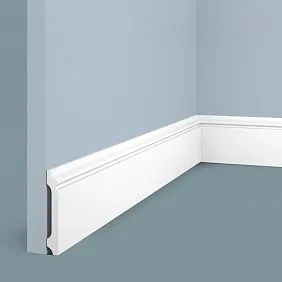
Wide Wooden Skirting BoardA baseboard with a height of 100-150 mm occupies a significant part of the lower wall zone. It is massive, noticeable, weighty. Psychologically, a wide baseboard is read as a foundation: solid, stable, reliable. A room with a wide baseboard seems substantial, classical, permanent.
A wide baseboard lowers the visual center of gravity of the room. The weight shifts downward; the room seems to 'stand on the ground' firmly, without wavering. This is especially important in high-ceilinged rooms (ceilings 3.2-4 meters), where without a wide baseboard the room seems stretched upward, unbalanced. A wide baseboard restores balance: the top is light (high ceiling), the bottom is heavy (wide baseboard) - equilibrium.
A wide baseboard is historically associated with European classical architecture: palaces, mansions, estates had baseboards with a height of 120-200 mm, often profiled, painted white or cream. When we see a wide baseboard in a modern apartment, the brain automatically reads the reference to this tradition - a sense of nobility, status, cultural continuity arises.
Our factory also produces:
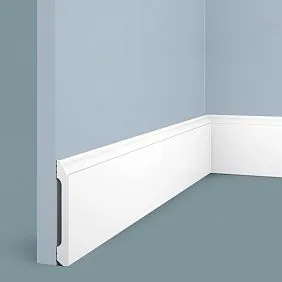
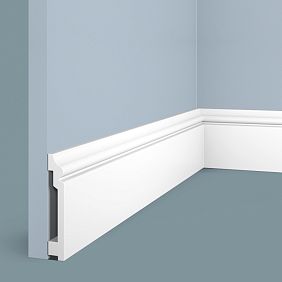
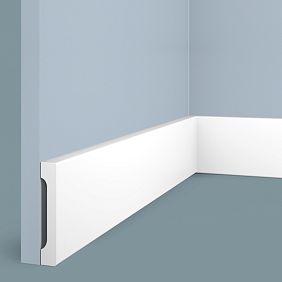
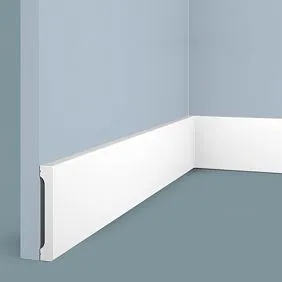

Narrow baseboard: lightness and modernity
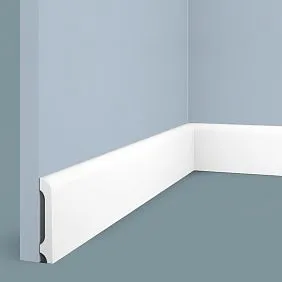
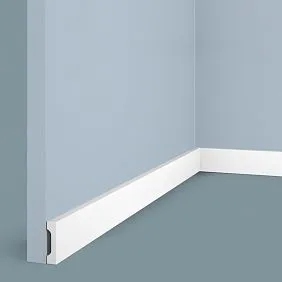
A narrow baseboard with a height of 50-70 mm is almost unnoticeable. It is a thin line, minimally separating the floor from the wall, creating a boundary without emphasis. Psychologically, a narrow baseboard is read as a technical necessity, not a decorative element. A room with a narrow baseboard seems light, minimalist, modern.
A narrow baseboard raises the visual center of gravity. The weight is distributed evenly; the room seems floating, weightless. This is important in low-ceilinged rooms (ceilings 2.5-2.7 meters), where a wide baseboard would visually consume height, making the room squat. A narrow baseboard leaves the wall maximally high, the floor minimally raised - the room seems taller.
A narrow baseboard is associated with modern architecture: minimalism, Scandinavian style, Japanese aesthetics prefer thin lines, the absence of massive elements, maximum smooth planes. A narrow baseboard fits into this philosophy: it is functional (closes the gap, protects the wall) but not decorative (does not attract attention, does not create opulence).
Get Consultation
Medium baseboard: universal balance
A baseboard with a height of 80-100 mm is the golden mean. Not too massive (not oppressive), not too thin (doesn't disappear). A medium baseboard suits most interiors: restrained classical, neoclassical, modern with a hint of tradition. It creates completeness without pomp, structure without overload.
A medium baseboard is universal in proportions: suitable for ceilings 2.7-3.2 meters, for rooms 15-40 square meters, for styles from classic to contemporary. It is visually neutral: it does not significantly shift the center of gravity down or up, does not create monumentality or lightness - it preserves the natural proportions of the room.
The influence of baseboard color on the perception of space
The color of the baseboard is a tool for changing the visual proportions of a room. The same baseboard (profile, height) in different colors creates different effects: enlarges or reduces the floor, elongates or shortens the walls, makes the room lighter or darker, more spacious or more compact.
Baseboard matching the floor color: expanding the horizontal
Whenwith a classic profile creates a sense of solidity, reliability.A baseboard painted or stained to match the color of the flooring (natural oak parquet, natural oak baseboard; walnut laminate, walnut-stained baseboard) blurs the boundary between the floor and the wall. The eye does not see a clear transition: the floor smoothly transitions into the baseboard, the baseboard into the wall. Visually, the floor seems wider, capturing more space.
This technique is useful in narrow spaces (hallways, elongated rooms) where you need to visually widen the floor, create a sense of greater area. A baseboard matching the floor color continues the horizontal; the room seems wider, less corridor-like.
A baseboard matching the floor color enhances the materiality of the floor. If the floor is made of noble wood (oak parquet, engineered board), a baseboard made of the same wood emphasizes it: the floor does not end abruptly but rises up the wall, showcasing the material, texture, and color. The interior appears more material, tangible, and high-quality.
But there is a risk: if the floor is dark (wenge, stained oak), a baseboard in the same color creates a heavy dark stripe around the perimeter of the room. Visually, the room may seem smaller, darker, and more squat. This effect is softened if the walls are light (white, cream, light gray) — the contrast between the dark baseboard and light walls creates graphic quality and clarity but does not overwhelm.
Baseboard matching the wall color: elongating the vertical
When the baseboard is painted the same color as the walls (white walls, white baseboard; gray walls, gray baseboard), the boundary between the wall and baseboard disappears. The wall visually extends all the way to the floor without interruption. The vertical is elongated, making the room appear taller.
This technique is useful in low-ceiling rooms (2.5-2.7 meters), where you need to visually raise the ceiling and make the room less squat. A baseboard matching the wall color 'gives' its height to the wall; the wall becomes 10-15 cm taller (the height of the baseboard), making the room appear more vertical.
A baseboard matching the wall color creates visual cleanliness and minimalism. There is no fragmentation of planes: the floor is one color, the walls another, and the transition is smooth through a baseboard of the same color as the walls. The room appears simpler, more concise, and calmer. This suits Scandinavian, minimalist styles, where the absence of visual noise is valued.
A white baseboard on white or light walls is especially effective: white does not create weight, does not weigh down the lower part, and does not feel oppressive. A white baseboard is lighter than any colored one, even light gray. A room with a white baseboard appears brighter, more airy, and more spacious.
Contrasting baseboard: graphic quality and architectural clarity
A contrasting baseboard is when its color sharply differs from the floor and walls. A classic option: dark floor (stained oak, walnut), light walls (white, cream), white baseboard. Or the opposite: light floor (bleached oak, light ash), white walls, black baseboard (extreme contrast, rare but effective).
A contrasting baseboard creates a clear boundary, graphic quality, and architectural clarity. The floor is one zone, the walls are another, and the baseboard is the boundary between them, marked by color. The eye clearly reads the structure of the room: the horizontal of the floor, the vertical of the walls, and the boundary between them.
A contrasting baseboard accentuates the architecture. If the baseboard is profiled (with a torus, bead, or carving), a contrasting color emphasizes the profile: the relief becomes visible, and the play of light and shadow is enhanced. A white baseboard with a classic profile on dark walls — every detail of the profile is legible; the baseboard becomes an architectural object, not just a technical plank.
A contrasting baseboard visually reduces the height of the walls (the wall starts above the baseboard; the baseboard is perceived as a separate element, not part of the wall). But at the same time, it creates structure, order, and classicism. This technique is traditional for European interiors: dark parquet, light walls, white profiled baseboard — the canon of classic interior design.
Baseboard matching the furniture color: visual connection
When the baseboard is painted the same color as the furniture (furniture is oak stained walnut, baseboard stained walnut; furniture painted with white enamel, white baseboard), a visual connection arises between the furniture and the architecture. The furniture does not stand on a foreign floor — it stands on a floor framed by a baseboard of its color, as if the furniture and baseboard are made of the same material, part of the same system.
This technique creates integrity in the interior.Wood Trimand furniture made of the same wood, with the same finish — everything is from the same family of materials, forms, and colors. The room appears designed as a whole, not assembled from disparate elements.
It is especially effective when the furniture and baseboard are not just the same color but from the same batch of wood, with identical processing (as offered by the company STAVROS: furniture and millwork are produced together, from the same solid wood, with identical finishing). Then the match is absolute: not a 'similar color' but identical, not a 'close texture' but the same.
Baseboard profile and interior style
The baseboard profile is the shape of its cross-section: rectangular, rounded, shaped, carved. The profile determines the style of the baseboard: minimalist, classic, baroque. The profile should harmonize with the style of the interior and furniture.
Rectangular profile: minimalism and modernity
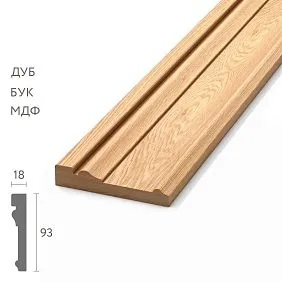
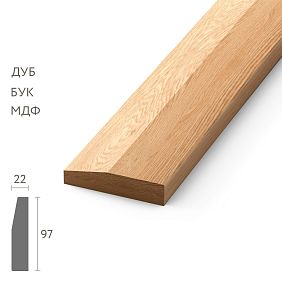
A rectangular baseboard is a plank without relief, with straight edges, sometimes with a chamfer (beveled top edge for softness). This is minimal decor, maximum function. A rectangular profile suits modern interiors: minimalism, Scandinavian style, loft, contemporary.
A rectangular baseboard does not compete with furniture for attention. It is a background, a technical boundary, not a decorative object. Furniture is in the foreground, the baseboard is in the background. This is correct for interiors where furniture is the main focus (designer, custom, accent pieces), and architectural elements are secondary (supportive, not distracting).
A rectangular profile is easy to manufacture; it is cheaper than shaped profiles (less milling, simpler processing). But cheapness does not mean low quality: a rectangular baseboard made of solid oak with perfect geometry, sanded, and oiled is a premium product, simply minimalist in form.
Shaped profile: classic and neoclassical
A shaped baseboard has relief: a torus (concave element), a bead (convex element), a shelf (horizontal plane), an ogee (complex curve). A shaped profile creates a play of light and shadow, volume, and decorativeness. This is classic: European, American, Russian tradition of interior design.
A shaped profile harmonizes with classic furniture: if the furniture has profiled cornices, plinths, overlays — the baseboard should also be shaped. The profiles echo each other: a torus on the baseboard, a torus on the cabinet cornice — a visual rhyme linking the elements.
A shaped profile requires skilled craftsmanship: CNC milling, manual refinement (if sharp edges and clear transitions are needed), multi-stage sanding (each element of the profile is sanded separately with the appropriate grit). A shaped baseboard is more expensive than a rectangular one but creates a classic atmosphere that a rectangular one cannot provide.
Carved profile: baroque and palatial style
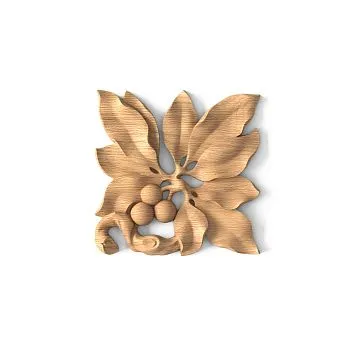
A carved baseboard has an ornament: acanthus leaves, rosettes, scrolls, garlands. The carving is done by hand (expensive, unique) or by machine (CNC milling from a 3D model, more accessible but less refined). A carved baseboard is the maximum in decorativeness, suitable for lavish interiors: baroque, rococo, palatial styles.
A carved baseboard requires coordination with the furniture: if the furniture is carved (with the same motifs — acanthus, roses, scrolls), a carved baseboard continues its decor, creating richness and opulence. If the furniture is simple (smooth fronts, minimal carving), a carved baseboard will be excessive and out of place.
A carved skirting board is tall (usually 120-150 mm so the carving is visible and detailed), substantial, and accenting. It is not a background element but an object that draws attention. This is appropriate in formal rooms (living room, dining room, study) but excessive in utilitarian ones (hallway, kitchen, bathroom).
Skirting board and furniture plinth: creating a visual connection
Furniture stands on the floor. If the furniture has a plinth (a lower profiled strip that raises the body above the floor), this plinth is visible and perceptible to the eye. The plinth is analogous to a skirting board, but on furniture. When the skirting board and furniture plinth match in profile, height, and color, a visual connection arises, and the furniture integrates into the architecture.
Matching profiles: skirting board and plinth as a single line
If the skirting board has a profile with a torus and ogee (classical shaped), the furniture plinth should have the same profile: a torus and ogee of the same proportions, the same curvature. When a cabinet stands against a wall, the skirting board behind it visually continues into the cabinet's plinth—a single horizontal line running around the room, transitioning from architecture to furniture and back from furniture to architecture.
The eye perceives this as a system: the skirting board and plinth are not random; they are designed together, they are a family of forms. The furniture is not alien in this space; it is built-in, it belongs to it.
Matching profiles is achieved when the furniture and skirting board are produced by the same manufacturer (like STAVROS, where the furniture plinth and interior skirting board are milled with the same cutters, on the same machines, according to coordinated drawings). If the furniture is from one manufacturer and the skirting board from another, a match is accidental, unlikely.
Matching height: a visual horizontal line
A skirting board 120 mm high, a furniture plinth 120 mm high—same height, one horizontal line. When a chest of drawers stands against a wall, its plinth is at the same height as the skirting board behind it—a sense of a single plane, a single base on which both the furniture and the walls stand arises.
If the heights do not match (skirting board 100 mm, furniture plinth 150 mm), the lines break: the skirting board runs at one level, the plinth at another—a visual break, dissonance. The furniture seems 'not from here,' brought from another interior, unsuitable.
Matching height is more important than matching profile: even if the profiles are different (skirting board rectangular, plinth shaped), but the height is the same—a connection exists. But the ideal is matching both height and profile.
Matching color: material unity
Skirting board made of oak stained walnut, furniture plinth made of oak stained walnut with the same stain—the color is identical. Place the skirting board next to the plinth—you won't tell them apart. This creates material unity: the skirting board and furniture are made of the same material, same finish, same story.
When the colors do not match (skirting board lighter or darker than the furniture plinth), the connection weakens. The eye sees two different materials, two different systems. The furniture looks separate, not connected to the architecture.
Perfect color matching is possible when the furniture and skirting board are produced from the same batch of wood, with identical finishing. STAVROS offers this: by ordering furniture and skirting board together, the client receives elements from the same batch of oak or beech, stained with the same stain (from the same can, applied by the same craftsman), coated with the same oil (same manufacturer, same number of coats). The color matches 100%.
Practical examples of coordinating skirting board and furniture
Theory is abstract without specifics. Let's consider real schemes for coordinating skirting board and furniture in different interior styles.
Classical interior: wide white skirting board and painted furniture
Interior in classicism or neoclassical style: natural oak parquet (light, texture emphasized), walls painted light gray matte enamel, ceiling white. Furniture painted white enamel (cabinets, chests of drawers, bed—cases white, facades with milling, without carving).
Skirting board:Wide Wooden Skirting Board120 mm high, shaped profile (torus + ogee), painted white matte enamel (same as furniture and ceiling). The skirting board visually continues the ceiling downward: the white color connects the top and bottom of the room, creates a vertical frame (ceiling white, skirting board white, walls gray between them—the walls are framed in white).
Furniture plinth: height 120 mm (like skirting board), profile shaped with torus and ogee (same as skirting board), painted white enamel. When a cabinet stands against a wall, the skirting board behind it and the cabinet's plinth merge visually—a single white line running around the room, transitioning onto the furniture.
Effect: the furniture looks built-in, not freestanding. The cabinet, chest of drawers, bed seem part of the architecture, as if the walls have thickenings, niches, projections, decorated with white furniture. The interior is holistic, monolithic, classical.
Modern interior: narrow skirting board matching the floor color and minimalist furniture
Interior in minimalist style: engineered wide oak plank floor (240 mm) natural color with oil finish, walls painted white matte paint, ceiling white without cornices. Furniture made of solid natural oak with oil finish (table, console, shelving—straight forms, no decor, oak texture visible).
Skirting board: narrow rectangular, 60 mm high, made of solid oak, coated with the same oil as the floor (color identical to the floor). The skirting board is almost unnoticeable, it's an extension of the floor, raised 6 cm up the wall. The boundary between floor and wall is minimal, the floor seems wider, the room more spacious.
Furniture plinth: absent (furniture stands on legs or on a hidden plinth, not visible). The furniture is minimalist, visually light, without a massive base. Skirting board thin, furniture without a plinth—both strategies work towards lightness, airiness, absence of visual weight at the bottom.
Effect: the room seems weightless, floating. There are no heavy horizontal lines at the bottom, no massive bases. Floor, walls, furniture—all light, minimal, functional. The style is modern, Scandinavian, laconic.
Baroque interior: tall carved gilded skirting board and carved furniture
Interior in Baroque style: artistic parquet (rosettes, borders, dark and light woods), walls upholstered in fabric (emerald velvet or golden silk), ceiling with stucco (rosettes, coffers, friezes). Furniture carved and gilded (sofas, armchairs, chests of drawers—with acanthus carving, scrolls, cupids, gilded with gold leaf).
Skirting board: high carved skirting board 150 mm high made of solid oak, CNC carving with manual finishing (acanthus leaves, rosettes, scrolls), gilding (gold leaf or imitation gold leaf on carved elements, the rest painted with cream enamel or stained). The skirting board is lush, accent, decorative — not a background, but an object.
Furniture plinth: height 150 mm, carving with the same motifs (acanthus, scrolls), gilding. The plinth of a chest of drawers or wardrobe looks like a continuation of the skirting board: the same height, the same carving, the same gilding. The furniture does not stand on the floor — it grows out of the architecture, as if the wall has transformed into furniture.
Effect: the interior is overloaded with decor (intentionally, it's Baroque), but the overload is coordinated. The skirting board, furniture, ceiling molding speak the same language of ornament: acanthus everywhere, gilding everywhere, lushness everywhere. This is not chaos, but a system of lushness, where elements echo each other, creating a palatial richness.
How to choose a skirting board to match existing furniture
If furniture already exists (purchased earlier, inherited, antique), the skirting board needs to be chosen to match it, coordinating color, height, profile.
Determine the height of the furniture plinth
Measure the height of the plinth of the wardrobe, chest of drawers, other case furniture (from the floor to the beginning of the case). This could be 80 mm, 100 mm, 120 mm, 150 mm. Choose a skirting board of the same height (or close: ±10 mm is acceptable, but the ideal is an exact match).
If the furniture has no plinth (stands on legs, on a hidden base), be guided by the ceiling height and interior style: ceiling 2.7 m — skirting board 60-80 mm, ceiling 3.0-3.5 m — skirting board 100-120 mm, ceiling above 3.5 m — skirting board 130-150 mm.
Determine the color and texture of the furniture
Furniture is natural oak — skirting board is natural oak (same shade, same texture). Furniture is stained walnut — skirting board is stained walnut (select a stain as close as possible to the furniture color, compare samples in daylight and evening light). Furniture is painted white — skirting board is white (same shade of white: cool or warm, same degree of gloss: matte, semi-matte, glossy).
If an exact match is impossible (furniture is old, color has faded, texture is unique), choose a contrasting option: dark furniture — white skirting board (contrast creates graphic quality, avoids an unsuccessful 'almost match', which is worse than a mismatch). Light furniture — dark skirting board or in the color of the floor.
Determine the profile of the furniture
Furniture with a figured cornice (ogee, torus) — figured skirting board with a similar profile. Furniture with straight smooth fronts — rectangular skirting board. Carved furniture — carved skirting board (if budget allows) or figured without carving (compromise: no ornament, but there is a profile, creating a hint of connection).
If the furniture is of mixed styles (wardrobe is classic, table is modern), choose a neutral skirting board: medium height (80-100 mm), simple figured profile (ogee without lushness), universal color (white, light gray, natural wood). A neutral skirting board goes with any furniture, does not conflict with either classic or modern styles.
How to order coordinated skirting board and furniture
The easiest way is to order the skirting board and furniture from one manufacturer who controls the entire cycle: wood, processing, finishing, profile design. Then a match is guaranteed.
Advantages of a comprehensive order from STAVROS
STAVROS producesWooden floor skirting boardsandclassic furniture at one production facility, from the same solid wood, with coordination of profiles, colors, textures. The client orders furniture (wardrobe, chest of drawers, table, bed) and skirting boards together, the designer designs them as a system:
The furniture plinth and skirting board have the same height (120 mm, if the style is classic; 80 mm, if neoclassical; 60 mm, if modern minimalism).
Profiles are coordinated: if the furniture cornice has an ogee and torus, the skirting board also has an ogee and torus (same proportions, same curves, milled with the same cutters).
Color is identical: furniture and skirting board are from the same batch of oak or beech, stained with the same stain, coated with the same oil or enamel. 100% match, not 'similar', but 'the same'.
Parallel production: while the furniture is being manufactured (6-8 weeks), skirting boards are milled, finished, prepared for installation. By the time the furniture is delivered, the skirting boards are ready, everything is delivered by one truck, installed by one crew.
Order process: from consultation to installation
The client contacts STAVROS: by phone, through the website, visits the showroom (Moscow, St. Petersburg). The designer discusses the project: interior style, what furniture is needed, what skirting board (height, profile, color).
The designer visits the site (free in Moscow, St. Petersburg), measures the rooms, photographs the existing finish (if the skirting board needs to be matched to an already installed floor, already painted walls). Creates a project: furniture specification (dimensions, wood species, finish), skirting board specification (linear meters, profile, finish), 3D visualization (how the interior will look with furniture and skirting boards).
The project is agreed with the client: samples are shown (skirting board strips of different profiles, furniture fragments with different finishes), catalogs (photos of completed projects with skirting boards and furniture). The client makes adjustments (change skirting board height, choose a different stain shade, change furniture size), the project is revised, approved.
Production: furniture and skirting boards are manufactured in parallel (furniture 6-8 weeks, skirting boards 1-2 weeks; skirting boards are prepared earlier, waiting for the furniture). Quality control: each skirting board strip, each piece of furniture is checked (geometry, color, finish). Packaging: furniture in corrugated cardboard and stretch film, skirting boards in protective film (against scratches during transportation).
Delivery: STAVROS's own transport (truck with a tail lift, covered) brings the furniture and skirting boards to the site. Installation: a crew of installers installs the skirting boards (glue + screws, joints at 45°, putty, painting of joints), assembles the furniture, arranges it. Handover: the craftsmen show the result to the client, instruct on care, clean up debris, leave.
Time from order to installation: 8-10 weeks (6-8 weeks furniture production + 1-2 weeks delivery/installation). If timing is critical, acceleration is possible for an additional fee (furniture in 4-5 weeks instead of 6-8, but quality does not suffer — production is simply prioritized).
Frequently asked questions
Is it possible to install a wide skirting board in a room with a low ceiling?
Possible, but with caution. Ceiling height 2.5-2.7 m + baseboard 120-150 mm = risk of visually lowering the ceiling. The room may appear squat. Solutions:
Baseboard matching wall color (visually the wall extends to the floor, baseboard doesn't steal height from the wall).
White baseboard on white/light walls (white is lighter than any color, doesn't feel oppressive).
Baseboard with vertical profile elements (fluting, vertical grooves — visually pull upward, compensate for width).
Alternative: baseboard 80-100 mm instead of 120-150 mm. It's classic (not narrow modern), but not overwhelming.
Do baseboards need to be changed when replacing flooring?
Depends on the color scheme. If the baseboard matched the old floor color (natural oak parquet, natural oak baseboard), and the new floor is different (walnut laminate), the baseboard won't match in color — better to replace.
If the baseboard is contrasting (white on any floor) or matches the wall color, it's universal — suitable for any floor, not necessarily to change.
When replacing flooring, its level often changes (old parquet 15 mm, new engineered board 20 mm — floor raised by 5 mm). The baseboard needs to be reinstalled (remove, raise higher, reattach) or replaced (if damaged during removal).
How to care for a wooden skirting board?
Oil-finished baseboard: wipe with a dry cloth (dust), refresh with oil every 2-3 years (apply a thin layer with a brush, rub in, polish). Oil nourishes the wood, highlights the grain, protects.
Enamel-painted baseboard: wipe with a damp (not wet) cloth and mild detergent. Do not use abrasives (scratch), solvents (damage enamel). Wipe stains immediately, don't let them dry.
Stained baseboard: same as oil-finished (stain penetrated the wood, oil on top — care for the oil).
Avoid: impacts (baseboard can chip, especially at corners), flooding with water (if baseboard is not moisture-resistant, wood will swell), placing heaters directly against it (wood will dry out, crack).
How much does a solid wood baseboard cost?
Depends on wood species, profile, finish, height. Approximate (STAVROS prices 2026):
Rectangular oak baseboard height 60 mm unfinished (for painting): 800-1000 rub/linear m.
Profiled oak baseboard height 100 mm oil-finished: 1400-1800 rub/linear m.
Profiled oak baseboard height 120 mm enamel-painted: 1600-2000 rub/linear m.
Carved oak baseboard height 150 mm with gilding: 3500-5000 rub/linear m.
For a 20 m² room (perimeter ~18 linear m) baseboard will cost: simple 14000-18000 rub, classic profiled 25000-36000 rub, carved with gilding 63000-90000 rub.
Baseboard installation: 300-600 rub/linear m (depends on complexity: straight walls cheaper, walls with niches/protrusions more expensive). For a 20 m² room installation 5400-10800 rub.
Where to buy baseboard coordinated with furniture?
From the manufacturer that makes both furniture and baseboards — like STAVROS. Advantage: color identity (from the same wood batch), profile coordination (furniture plinth and baseboard designed together), single delivery, single installation, single warranty (2 years on baseboard, 3 years on furniture).
Alternative: buy furniture from one manufacturer, order baseboard from another, selecting the closest possible color and profile. But matching is not guaranteed (color 'similar' but not identical; profile 'close' but not the same).
Least reliable option: buy ready-made baseboard from a hardware store, try to match to furniture. Selection limited (5-10 profiles, 3-5 colors), probability of match low. Store baseboard usually pine or MDF (not oak/beech like quality furniture) — even if color matches, grain is different, material reads as cheaper.
Can baseboard be painted after installation?
Yes, but with limitations. Solid wood oil-finished baseboard can be stained (darkened with stain) or painted with enamel (prime, paint). Painted baseboard can be repainted another color (sand old enamel or apply new over if compatible).
Difficulty: painting installed baseboard requires protecting floor and walls (painter's tape, film), precision (don't stain floor, leave drips on wall), time (primer dries 6-8 hours, enamel 12-24 hours — room inaccessible).
Easier: choose the correct finish initially, before installation. STAVROS paints baseboards in a paint booth (ideal conditions, professional equipment, no dust, no drips), dries completely, delivers ready for installation. After installation baseboards are already painted, require no finishing.
If repainting needed (color didn't suit, interior changed), STAVROS performs this for an additional fee: craftsmen come, protect floor/walls, sand baseboard (if needed), paint, dry, remove protection. Repainting cost: 400-700 rub/linear m (cheaper than removing baseboard, transporting to factory, painting, transporting back, reinstalling).
How many years later should wooden baseboards be replaced?
Solid oak/beech wooden baseboards last for decades with proper care. 20-30-50 years is a normal lifespan. The baseboard doesn't physically wear out (it doesn't bear loads, doesn't wear down like flooring), it can only be damaged mechanically (impacts, chips) or lose its appearance (fading, finish dulling).
The finish requires renewal sooner than the baseboard itself: oil every 3-5 years (sooner if it dulls), enamel every 10-15 years (later if it holds up). Renewal isn't replacing the baseboard, but repainting: old oil is wiped off, new oil is applied; old enamel is sanded, new enamel is applied.
Baseboard replacement is needed if: the baseboard is broken (cracks, chips, beyond repair), the interior style has changed (was classic with wide molded baseboard, became modern — narrow rectangular needed), the flooring has been replaced to a different level (old floor 15 mm, new floor 25 mm — baseboard doesn't reach the new floor, a gap forms).
Conclusion: the baseboard is not a trifle, but the foundation of perception
The baseboard seems like an insignificant element: a narrow strip at the bottom of the wall, almost unnoticeable, a technical detail. But it is precisely the baseboard that creates the lower horizontal of the room — the line that the eye reads first, which forms the feeling of stability or lightness, classicism or modernity, integrity or disjointedness.
wooden baseboardWide (120-150 mm) creates monumentality, solidity, classic architectural quality. Narrow (50-70 mm) creates lightness, minimalism, modernity. Medium (80-100 mm) is universal, suitable for most interiors.
The color of the baseboard changes the proportions of the room: matching the floor color expands the floor, matching the wall color elongates the walls, a contrasting color creates graphic quality. The baseboard profile defines the style: rectangular is minimalist, molded is classic, carved is baroque.
The connection between the baseboard and furniture is critical for interior integrity. When the baseboard and furniture plinth match in height, profile, color — the furniture integrates into the architecture, becomes part of it, not a foreign object. This connection is achieved when furniture and baseboard are produced by the same manufacturer, from the same material, with coordination at the design stage.
The company STAVROS offers a comprehensive solution:Wooden skirting boards for floorsandclassic furniturefrom the same batch of wood, with coordinated profiles, identical color. The STAVROS designer designs furniture and baseboards as a system, where the furniture plinth continues the baseboard, where all elements echo each other, where details are coordinated.
Contact STAVROS for a consultation: the designer will discuss your project, show samples of baseboards of different profiles and heights, suggest options for coordination with existing or planned furniture. The consultation is free, the designer's site visit (Moscow, St. Petersburg) is free, and it does not obligate you to anything.
8-10 weeks after ordering, you will receive an interior where the lower line — the baseboard and furniture plinths — forms a single horizontal, running around the room, linking architecture and furniture into a whole. Where the baseboard is not random, but designed for specific furniture, for a specific interior, for a specific person.
The baseboard is not a trifle chosen at the last minute in a hardware store. The baseboard is the foundation of interior perception, the lower boundary, the foundation of the visual construct. Take it seriously — and the interior will respond with integrity, harmony, beauty that doesn't become tiresome because it's based not on fashion, but on proportions, not on chance, but on a system.
STAVROS has been creating such interiors for over 20 years. Thousands of projects whereWood Trimand furniture are coordinated, where details are thought through, where nothing is random. Start with the baseboard — and see how the perception of the entire interior changes.