Article Contents:
- Expressive Profiles: From Classic to Avant-Garde
- Classic Multi-Level Profiles: Historical Continuity
- Scandinavian Minimalist Profiles: Clean Lines
- High-Format Profiles: Architectural Monumentality
- Asymmetric Avant-Garde Profiles: Bold Forms
- Profiles with Integrated LED Lighting
- Metal Inserts: Industrial Chic and Contrast
- Brass Decorative Strips: Vintage Luxury
- Steel Minimalist Accents: Modern Rigor
- Copper Patinated Elements: Artistic Expressiveness
- Black Metal Profiles: Graphic Contrast
- Eco-Oriented Design: Responsible Production and Longevity
- Certified Wood from Sustainable Forests
- Local Species: Reduced Carbon Footprint
- Eco-Friendly Finishes: Natural Oil and Wax
- Durability and Restoration: The Antithesis of Disposability
- Recycling and reuse
- Wood Species: Characteristics and Applications
- Oak: The Benchmark of Strength and Longevity
- Ash: Strength and Light Elegance
- Walnut: Nobility of Dark Tones
- Spruce: Accessibility and Natural Texture
- Exotic Species: Uniqueness and Expression
- Technical Aspects: Dimensions, Installation, Maintenance
- Standard Sizes and Proportions
- Ways to Install Wooden Skirting Boards
- Installing Corners: Cutting and Joining
- Care for wooden baseboards
- Stylistic Solutions: Skirting in Different Interiors
- Classic: Grand Monumentality
- Neoclassic: Reserved Elegance
- Scandinavian Style: Natural Minimalism
- Minimalism: pure geometry
- Loft: industrial brutality
- Country and rustic: village coziness
- Frequently asked questions
- Conclusion: final touch with character

Wooden floor skirting in 2026 ceases to be an inconspicuous detail hiding in the shadow of walls and furniture. It transforms into an expressive architectural element capable of defining the character of an interior, creating visual accents, and unifying disparate elements into a cohesive composition. Expressive profiles—from classic multi-tiered to avant-garde asymmetrical—turn the skirting into a miniature sculpture framing the room. Metal inserts add industrial chic, modernity, and technological sophistication, creating a contrast with the organic nature of wood. Eco-orientation responds to the demands of the time: natural materials, responsible production, durability, and the ability to be restored and recycled.
Wooden baseboards are an investment in longevity, aesthetics, and eco-friendliness. Unlike plastic or MDF alternatives, solid wood lasts for decades without losing its beauty; it can be sanded, painted, or restored. Wood creates tactile warmth, natural texture, and a connection to nature. A wooden baseboard becomes a symbol of conscious consumption, where quality matters more than quantity, durability more than cheapness, and aesthetics more than functionality.




Expressive profiles: from classic to avant-garde
The profile of a baseboard determines its stylistic affiliation, visual complexity, and ability to interact with light. In 2026, both classic proven forms and bold experimental solutions remain relevant.




Classic multi-tiered profiles: historical continuity
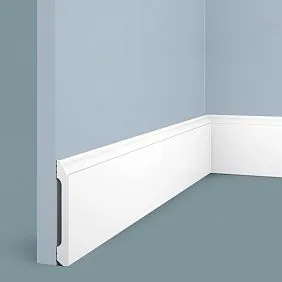
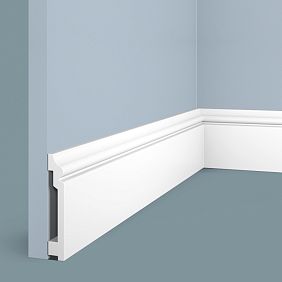
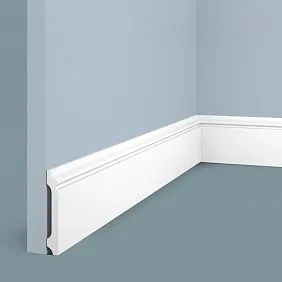
A classic profiled wooden baseboard reproduces the traditions of historical interiors from the 18th-19th centuries. The multi-tiered relief consists of several elements: the base (lower part adjacent to the floor), the main body with grooves and protrusions, and the cornice (upper part with a decorative profile). Each element creates a play of light and shadow, visual depth, and decorative complexity.
Classic profiles differ in complexity: simple two-tiered — base and rounded top, medium three-tiered — base, central body with groove, cornice, complex multi-tiered — four to five elements with grooves (vertical grooves), protruding bands, decorative ends. The more complex the profile, the more expensive the production, but the higher the decorative value.
Classic profiles suit traditional styles: classicism, neoclassicism, English, American colonial, Empire. They create a sense of solidity, tradition, and connection to history. Wooden baseboards of this type are made from noble woods — oak, ash, walnut — emphasizing status. The company STAVROS offersWooden Skirting Boardsvarious profiles made of solid wood.
Our factory also produces:

Scandinavian minimalist profiles: purity of lines
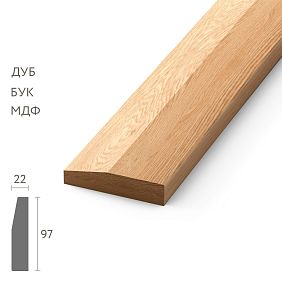
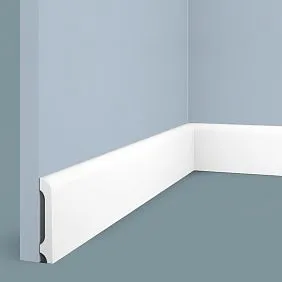
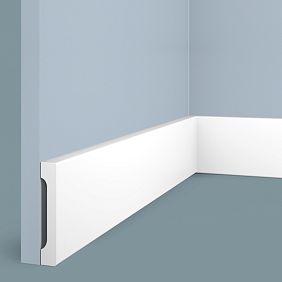
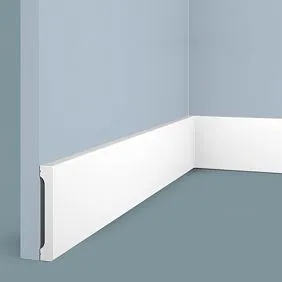
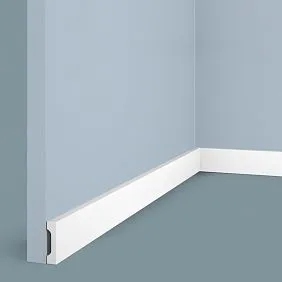
The Scandinavian approach to baseboards — minimalist purity, absence of excessive decoration, emphasis on material and texture. A Scandinavian profile may be straight (European baseboard) — rectangular cross-section without relief, with a rounded top edge — a gentle transition from vertical to horizontal, with a bevel — an upper edge sloped at 30-45 degrees, creating a subtle geometric quality.
Scandinavian profiles are low — 60-80 mm — to avoid overwhelming the space. Color — light wood (ash, birch, white oak) or white paint. Finish — matte — oil, wax — preserving naturalness and tactility. A Scandinavian baseboard creates a subtle framing, emphasizes the purity of space and connection to nature. It suits minimalist, Scandinavian, and eco-interiors.
Get Consultation
High wide-profiled profiles: architectural monumentality
High wooden baseboards, 100-150 mm and more, create architectural monumentality, visually altering the proportions of the room. A wide profile may be smooth — for modern interiors, or complex multi-tiered — for classic ones. A high baseboard visually divides the wall into two zones: lower protective and upper main, characteristic of historical interiors.
High profiles suit rooms with ceilings 3 meters and above — private homes, mansions, commercial spaces. They create a sense of palace grandeur, solidity, attention to detail. A wide wooden baseboard allows concealing behind it utilities — wiring, cables — adding functionality. A height of 120-150 mm becomes a standalone architectural element.
Asymmetrical avant-garde profiles: bold forms
Avant-garde asymmetrical profiles abandon symmetry in favor of dynamic, unexpected forms. The baseboard may have variable cross-section — narrow at the floor, widening upward, diagonal cuts creating a sloped plane, stepped structure with protrusions of varying widths, organic curves reminiscent of natural forms.
Asymmetrical profiles are custom-made according to individual sketches, requiring high-precision CNC machinery. Such baseboards suit avant-garde, art interiors, exhibition spaces, where architecture itself becomes art. Asymmetry creates visual interest, dynamism, and attracts attention. A wooden baseboard with asymmetrical shape — the choice for those seeking uniqueness.
Profiles with integrated LED lighting
A modern trend — integrating LED lighting into baseboards. The profile is designed with a groove or channel at the top, into which an LED strip is installed. The lighting can be directed upward — creating a light line on the wall, downward — illuminating the floor, or diffused — through a semi-transparent insert. A light baseboard creates architectural lighting, visually expanding the space, adding a futuristic touch.
Light profiles are especially effective in hallways, staircases, bedrooms — places where soft, directional lighting is needed. Control via a smart home system allows adjusting brightness, color, and creating lighting scenes. A wooden baseboard with built-in lighting — a hybrid of traditional material and modern technology.
Metal inserts: industrial chic and contrast
Combining wood and metal — a current 2026 trend, creating contrast in textures, temperatures, aesthetics. Metal inserts add an industrial, modern, and technological feel, while wood retains warmth, organic qualities, and connection to nature.
Brass decorative strips: vintage luxury
Brass inserts — thin strips of brass (an alloy of copper and zinc) embedded in a wooden profile — create vintage luxury, evoking art deco and early 20th-century English interiors. Brass has a warm golden hue, develops a patina over time, acquiring a noble darkness. A brass strip may be horizontal — running along the entire length of the baseboard at mid-height, vertical — as short decorative elements with a specific spacing, or combined — creating geometric patterns.
Brass inserts combine with dark wood — walnut, mahogany, stained oak — creating contrast of warm tones. They suit neoclassical, art deco, vintage, eclectic interiors, where decorative quality and detail are valued. Brass requires maintenance — polishing to preserve shine or, conversely, patination for an aged effect. Wooden baseboards with brass — the choice for refined interiors.
Steel minimalist accents: modern austerity
Steel inserts can be thin lines (1-2 mm) — almost invisible but creating a subtle sheen, wide strips (10-15 mm) — expressive decorative elements, or corner caps — protecting the outer corners of the skirting board from damage.
Steel accents suit minimalist, high-tech, loft, and industrial interiors. They create graphic, technological, and modern aesthetics. Steel requires no maintenance — it does not oxidize, tarnish, or lose its luster. A combination of light wood (oak, birch) with matte steel creates Scandinavian minimalism. Dark wood with mirror steel — industrial loft.
Copper patinated elements: artistic expressiveness
Copper — a metal with a warm reddish hue, which over time develops a green patina (copper oxides). Copper inserts create artistic expressiveness, a nod to artisanal traditions, and an antique aesthetic. Copper can be used as decorative rose sockets — round or square elements embedded in the profile, applied panels with embossed ornamentation, or rivets — mimicking hand assembly.
Copper elements combine with dark wood (walnut, wenge), creating a rich warm palette. They suit rustic, steampunk, vintage, and eclectic interiors. Copper can be polished — shiny and new, or patinated — with a green tint, artificially aged. Wooden floor skirting with copper — a choice for characterful interiors.
Black metal profiles: graphic contrast
Black metal — painted steel, anodized aluminum, or blackened metal — creates maximum contrast with any wood tone. Black metal elements can be corner profiles — protecting the outer corners of the skirting board, horizontal strips — dividing the skirting board into sections, or decorative geometric overlays.
Black metal suits modern, minimalist, loft, and Scandinavian interiors with monochromatic palettes. It creates graphic, strict, and dramatic effects. Light wood (white oak, beech) with black metal — a popular Scandinavian technique. Dark wood with black metal creates monochromatic depth. Black inserts require no polishing and hide scratches.
Eco-oriented: responsible production and longevity
Ecological awareness is becoming a decisive factor in material selection. Wooden floor skirting perfectly aligns with eco-philosophy: a natural, renewable material, biodegradable, durable, restorable, and recyclable.
Certified wood from sustainable forests
Responsible forestry implies harvesting trees in managed forests, where new trees are planted in place of the harvested ones. FSC (Forest Stewardship Council) or PEFC (Programme for the Endorsement of Forest Certification) certificates guarantee that the wood comes from ecologically responsible sources. Purchasing skirting boards from certified wood — a contribution to forest conservation.
Certified wood does not mean a compromise in quality — it’s the same oak, beech, pine, but with verified origin. Manufacturers working with FSC-certified materials publish information about the wood’s origin, creating transparency in the supply chain. Eco-conscious buyers choose wooden floor skirting from certified sources.
Local species: reduced carbon footprint
Transporting materials over long distances increases the carbon footprint. Using local wood species — oak, beech, birch, pine from regional forests — reduces environmental impact. Local wood is adapted to the regional climate, reducing the risk of deformation during use.
Local production supports regional economies, creates jobs, preserves artisanal traditions. Wooden floor skirting from local wood may cost less than imported alternatives while maintaining high quality. Preferring local materials — a sign of eco-awareness. The company STAVROS, working with Russian wood species, offersskirting boards from local wood.
Ecological coatings: natural oils and waxes
Traditional solvent-based lacquers emit volatile organic compounds (VOCs), harmful to health and the environment. Eco-friendly alternatives — natural oils (linseed, tung) and waxes (beeswax, carnauba) — are safe, biodegradable, and free of toxins. They penetrate wood, highlighting texture, creating a matte tactile surface.
Oil and wax coatings require renewal every 1-2 years, but this is a simple process — wipe the skirting with oil, rub with a cloth. Water-based lacquers with low VOC content — a compromise between eco-friendliness and practicality. They form a protective film but with minimal emission of harmful substances. Wooden floor skirting with ecological coating — a choice for healthy interiors.
Durability and restoration: the opposite of disposability
Solid wood lasts 30-50 years or more without losing functionality. When damaged, wooden skirting can be sanded to remove scratches and dents, repainted or stained, the damaged section replaced by gluing in a new piece. This is the opposite of disposable plastic skirting, which is only replaced when damaged.
Durability makes wooden skirting economically advantageous in the long term. The initial price is higher, but the cost of ownership is lower — no replacement needed after 5-10 years. Restorability extends the life of skirting, reducing waste. Eco-philosophy values quality and longevity over cheapness and disposability.
Recycling and reuse
At the end of its life cycle, wooden skirting can be recycled: used as fuel (biomass for boilers), processed into MDF or particleboard (ground and pressed), used in compost production (if non-toxic coatings are used), or given a second life in carpentry items, furniture, or decor.
Wood is biodegradable — it decomposes in nature within a few years, unlike plastic, which persists for centuries. Recycling reduces waste in landfills and closes the resource usage cycle. Choosing wooden skirting — a contribution to a circular economy.
Wood species: characteristics and application
The choice of wood species determines the skirting’s strength, appearance, price, and performance characteristics.
Oak: the standard of strength and durability
Oak — a hard, dense wood, resistant to abrasion, moisture, and mechanical damage. Oak skirting lasts for decades without losing its shape. The texture is expressive with large pores and beautiful grain. Color ranges from light beige to brown, can be stained to gray, darkened (black-brown), or whitewashed (light gray).
Oak suits classical, neoclassical, country, and rustic interiors. It creates a sense of solidity, reliability, and tradition. Oak skirting is more expensive than other species, but it’s an investment in longevity. Wooden floor skirting from oak — a choice for heavily used spaces.
Ash: strength and light elegance
Ash is not inferior to oak in strength, but has a lighter tone and more elegant wood grain pattern. The texture is expressive but less contrasting. Color ranges from light beige to gray-brown. Ash stains well and bends easily when steamed. Ash skirting boards suit Scandinavian, minimalist, and modern interiors where light wood is appreciated.
Ash is cheaper than oak for comparable characteristics. It creates a sense of lightness, freshness, and spaciousness. Ash skirting boards pair well with light floors — ash parquet, light laminate, whitewashed planks. Ash wooden skirting boards are an optimal choice in terms of price-to-quality-to-aesthetic ratio.
Walnut: nobility of dark tones
Walnut is medium-hardwood with a beautiful dark-brown tone and complex grain pattern. The texture is rich, with interweaving patterns, sometimes with a slight purple or olive note. Walnut creates a sense of nobility, warmth, and coziness. Walnut skirting boards suit classical, neoclassical, English, and American interiors.
Walnut is more expensive than oak and ash due to its lower availability and more complex processing. It requires quality drying to prevent deformation. Walnut skirting boards pair well with dark floors and create contrast on light walls. Wooden floor skirting boards made of walnut — a choice for premium interiors.
Spruce: accessibility and natural texture
Spruce is soft coniferous wood, lightweight, with distinct annual rings and knots. Color ranges from yellowish to brown with a reddish tint. Spruce is easy to process, stains well, and absorbs protective finishes. Spruce skirting boards — the most affordable option, suitable for cottages, country homes, verandas.
The drawback of spruce is its softness — it scratches and dents under impact. Spruce skirting boards require protective coating — hard varnish or oil. Spruce with knots creates a rustic aesthetic, country-style. Knot-free spruce is more expensive but suitable for painting in solid colors. Wooden floor skirting boards made of spruce — budget-friendly solution.
Exotic species: uniqueness and expression
Exotic species — teak, merbau, mahogany, zebrawood, wenge — create unique colors and textures. Teak — golden-brown with an oily texture, water-resistant. Merbau — red-brown with golden streaks. Mahogany — reddish-brown, noble. Zebrawood — striped, contrasting. Wenge — nearly black, very hard.
Exotic skirting boards are expensive and used in premium interiors, yachts, mansions. They require special processing and are resistant to moisture and pests. Exotic wood creates exclusivity, luxury, and uniqueness. However, ecological considerations require checking certification — many exotic species are endangered.
Technical aspects: dimensions, mounting, maintenance
Standard sizes and proportions
Skirting board height is chosen depending on ceiling height: for 2.4–2.7 m — 60–80 mm, for 2.7–3.0 m — 80–100 mm, for 3.0–3.5 m — 100–120 mm, for above 3.5 m — 120–150 mm and more. Thickness is usually 15–20 mm — sufficient for strength without excessive bulk. Standard plank length is 2000–2500 mm, optimal for transportation and installation.
Width of wall mounting depends on profile: flat skirting boards — 10–15 mm, profiled — 20–30 mm. Wider mounting better hides wall imperfections.
Mounting methods for wooden skirting boards
Screws: classic method. Skirting board is mounted to the wall with screws spaced 40–60 cm apart. Screws are countersunk, holes are spackled, sanded, and touched up. Advantages: reliability, suitable for uneven walls, allows for disassembly. Disadvantages: visible mounting points (though barely noticeable after finishing).
Adhesive: liquid nails or polyurethane adhesive is applied to the back, skirting board is pressed against the wall. Suitable for flat walls and lightweight skirting boards. Advantages: invisible mounting, speed. Disadvantages: difficult disassembly, requires a perfectly flat wall.
Clips: plastic or metal clips are mounted to the wall, skirting board clicks into them. Advantages: hidden mounting, easy disassembly. Disadvantages: requires skirting boards with clips slots, more expensive.
Finish nails: thin nails without heads are driven in at an angle and countersunk. Traditional method for wooden houses. Advantages: invisible mounting, reliability. Disadvantages: requires skill, risk of splitting the skirting board.
Installing corners: cutting and joining
Corners are the most complex part of installation. Internal and external corners require precise 45-degree cuts. Use a miter saw for precise cuts or a miter box for manual work. Two skirting boards, cut at 45 degrees, join at the corner to form a 90-degree angle.
Alternative — corner elements: ready-made decorative corner pieces that cover the joint. Easier to install, but more noticeable, suitable for classic profiles.
Alternative — corner elements: ready-made decorative corners covering the joint. Easier to install but more noticeable, suitable for classic profiles.
Care for wooden skirting boards
Regular cleaning: wipe with dry or slightly damp cloth once a week. Do not use abrasives or aggressive chemicals.
Reapplication of finish: oil or wax finishes should be reapplied every 1–2 years, wiping with oil. Lacquered finishes do not require frequent reapplication; for scratches, locally sand and apply lacquer.
Moisture protection: wipe up spills and puddles immediately. For humid rooms, choose moisture-resistant species (oak, teak) and finishes (lacquer, oil-wax).
Restoration: sand scratches, touch up, apply protective layer. Fill chips, sand, touch up. With proper care, wooden skirting boards last 30–50 years.
Stylistic Solutions: Skirting Boards in Different Interiors
Classic: Grand Monumentality
Classic interiors require high (120-150 mm) profiled skirting boards made of oak, ash, walnut. The profile is complex, multi-tiered, with grooves and protrusions. Color is natural or painted white or cream. Protruding elements may be gilded. A classic skirting board creates grandeur, solidity, and a connection to tradition.
Neoclassicism: Reserved Elegance
Neoclassicism simplifies classical forms: skirting boards 100-120 mm, simplified profile — rounded or with light grooves. Color is monochromatic — matching wall color or white. A neoclassical skirting board creates elegance without excess, suitable for modern apartments.
Scandinavian Style: Natural Minimalism
Scandinavian interiors prefer skirting boards 60-80 mm made of light wood (ash, birch, white oak). Profile is smooth or rounded. Finish is matte oil or wax. Color is natural light or white. A Scandinavian skirting board creates a connection to nature, does not overload space.
Minimalism: Pure Geometry
Minimalist interiors use straight, smooth skirting boards 80-100 mm, painted to match wall color (monochromatic) or contrasting (white, black). Texture may be concealed with thick paint. The skirting board creates pure geometry and completeness.
Loft: Industrial Brutality
Loft prefers skirting boards made of rough wood with brushing, knots, dark tones (worn oak, tinted graphite). Height 100-150 mm. Metal inserts — steel, black — add industrial character. The skirting board creates contrast with concrete, brick, and metal.
Country and Rustic: Rural Coziness
Country uses skirting boards made of natural wood with knots, brushing, light or medium tones (pine, oak). Profile is simple and rounded. Finish is oil or wax. The skirting board creates a rural coziness, connection to nature, artisan authenticity.
Frequently Asked Questions
Which wood species is better for floor skirting boards?
Oak — for maximum strength and longevity. Ash — for light interiors while maintaining strength. Pine — for budget projects. Walnut — for premium dark interiors.
What height of skirting board to choose?
Depends on ceiling height: 2.4–2.7 m — 60–80 mm, 2.7–3.0 m — 80–100 mm, 3.0–3.5 m — 100–120 mm, above 3.5 m — 120–150 mm.
Why is wooden skirting board better than MDF or plastic?
Wood is stronger, longer-lasting (30–50 years), more eco-friendly, restorable, has natural texture and tactile quality. MDF/plastic is cheaper, more moisture-resistant (plastic), but less durable and eco-friendly.
Can wooden skirting boards be installed by oneself?
Yes, with tools (circular saw, drill) and skills for cutting angles. For complex configurations, a professional is recommended.
How to care for wooden baseboard?
Wipe dust, renew oil every 1–2 years (for oil finishes), wipe moisture, restore damage by sanding and repainting.
How much do wooden floor skirting boards cost?
Pine — from 200–400 rubles/m, ash — from 500–800 rubles/m, oak — from 800–1500 rubles/m, walnut — from 1200–2000 rubles/m, exotic — from 2000–4000 rubles/m.
Is it necessary to apply a protective coating to skirting boards?
Essential. Lacquer, oil, or wax protect against moisture, dirt, abrasion, highlight texture, and extend service life.
Where to buy quality wooden skirting boards?
From specialized manufacturers such as STAVROS, guaranteeing wood quality, precision processing, variety of profiles and species.
Conclusion: The Final Touch with Character
Wooden floor skirting boards in 2026 are not just a utilitarian detail hiding technical gaps, but a full-fledged design element capable of defining the character of an interior. Expressive profiles transform skirting boards into architectural accents, creating play of light and shadow, visual complexity. Metal inserts add modernity, industrial chic, contrast, expanding stylistic possibilities. Eco-oriented choices respond to contemporary challenges, favoring naturalness, longevity, and responsibility.
Wooden baseboards are an investment in quality, durability, and aesthetics. They serve for decades without losing their beauty, can be restored and adapted to changing interiors. Wood creates warmth, tactile sensation, and a connection to nature that cannot be replicated with synthetic materials. The choice of species, profile, finish, and additional elements should be carefully considered based on style, usage conditions, budget, and personal values.
STAVROS — manufacturer of solid wood products, offering a wide range ofwooden baseboards— from classic profiles to modern minimalist designs, from light to dark species, various heights — 60, 80, 100, 120, 150 mm. Here you can find baseboards made of oak, ash, pine, with various finishes — lacquer, oil, wax, or primed for painting.
STAVROS works exclusively with high-quality dry wood at 8-12% moisture, uses modern CNC milling equipment, guarantees profile accuracy, clean processing, and absence of defects. The assortment also includeswooden accessories— moldings, door casings, cornices, balusters, capitals — allowing you to create a cohesive composition in a unified style and material.
By consulting with professionals with years of experience working with wood, you receive advice on selecting species and profiles, recommendations for installation and maintenance, the option to order non-standard sizes, and a quality guarantee. Wooden baseboards from STAVROS — the finishing touch that transforms a space into a thoughtfully designed, harmonious, complete environment.
Wooden baseboard — it’s an investment in details that create the whole. It’s an element that contributes to visual harmony, wall protection, and aesthetic pleasure. It’s a choice in favor of quality, naturalness, and durability — values defining the interiors of the new era. Create spaces where every detail is thought out, every element matters, every touch contributes to beauty and comfort — spaces perfected down to the last millimeter.