Article Contents:
- Materials Science: What is MDF and Why It's Ideal for Skirting Boards
- Geometry and Profiles: How Dimensions Affect the Perception of Space
- Advantages Over Alternatives: MDF vs. Solid Wood and Plastic
- MDF vs. Solid Wood
- MDF vs. Plastic
- MDF vs. Polyurethane
- Professional Painting Technology: From Primer to Finish Coat
- Surface Preparation
- Priming
- Painting
- Painting After Installation or Before
- Installation: Step-by-Step Guide
- Preparation and Marking
- Cutting
- Fastening
- Joint Processing
- Operation and Maintenance
- Frequently Asked Questions
- Can MDF Skirting Board Be Used in the Bathroom?
- Which paint is better — matte or glossy?
- How Much Does an MDF Skirting Board for Painting Cost?
- Should the Skirting Board Be Painted Before or After Installation?
- How to Match Skirting Board Color?
- Can MDF Skirting Board Be Bent for Curved Walls?
- What tools are needed for installation?
- How Long Does a Painted MDF Skirting Board Last?
- Conclusion: An Impeccable Interior Starts with Details — Choose STAVROS

A floor skirting board is an element you see every day but only notice when it's chosen incorrectly. Gaps near walls, mismatched colors, and primitive profiles instantly devalue expensive finishes and ruin a carefully thought-out interior concept.— is a horizontal element that frames the room at the bottom of the walls where the wall meets the floor. Skirting boards perform several functions: they hide the technological gap between the wall and floor covering (necessary for thermal expansion), protect the lower part of the wall from mechanical damage, create visual completion, and may conceal wiring.It solves dozens of tasks simultaneously — it covers the joint between the floor and wall, protects the lower part of walls from mechanical damage, hides cables, creates a visual frame for the floor covering, and fits into any color scheme thanks to the possibility of painting.
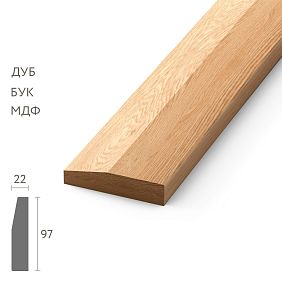
Why MDF specifically? The material combines the advantages of natural wood and modern technologies.MDF for PaintingIt has a perfectly smooth surface without pores, knots, or texture irregularities. After priming and painting, you get a flawless finish indistinguishable from professionally painted solid wood but at a fraction of the cost. Dimensional stability, absence of deformations, and ease of processing make installation accessible even for those holding a handsaw and mounting adhesive for the first time.




Materials Science: What is MDF and Why It's Ideal for Skirting Boards
MDF (Medium Density Fiberboard) is a composite material created by pressing fine wood fibers under high pressure with the addition of binding resins. Unlike particleboard, which uses large wood particles, MDF is made from fibers less than a millimeter in diameter. The result is a homogeneous, dense structure without voids, delamination, or foreign inclusions.
The density of MDF forMDF floor skirting boards for paintingis 760-780 kilograms per cubic meter. This is higher than pine (480-520 kg/m³), comparable to beech (680-720 kg/m³), but lower than oak (720-750 kg/m³). High density ensures strength, resistance to mechanical loads, and clarity of milled profiles without chips or blurred edges.
The binding agent is urea-formaldehyde or melamine-formaldehyde resins. Modern manufacturers use resins of emission class E1, where the content of free formaldehyde does not exceed 0.1 milligrams per 100 grams of dry material. This is a safe level, permissible for residential premises, including children's rooms. High-quality MDF has no chemical odor and does not emit harmful substances during use.
The moisture resistance of standard MDF is limited — prolonged contact with water causes swelling. But for floor skirting boards, this is not critical — they do not come into direct contact with water. Short-term wet cleaning does no harm. For rooms with high humidity — bathrooms, kitchens — moisture-resistant MDF is produced with the addition of paraffin emulsion, increasing water resistance by three to four times.
The workability of MDF is excellent. The material is easily cut, milled, and sanded with standard woodworking tools. Unlike solid wood, MDF has no grain direction, which eliminates chipping when cutting across the grain. The ends come out smooth and do not require additional processing. Milling creates profiles of any complexity — from simple rounding to multi-level relief with coves and shelves.
Paintability is a key advantage for skirting boards for painting. The surface of MDF is smooth and has no open wood pores. Primer is absorbed evenly, creating an ideal base for paint. One coat of primer and two coats of paint give a flawless finish without color variation, base show-through, or roughness. Solid wood requires multiple priming, pore filling, and lengthy preparation — MDF is much simpler.




Geometry and Profiles: How Dimensions Affect the Perception of Space
The height of the skirting board dramatically changes the visual perception of a room.MDF Skirting Board 80 mm for Painting— the golden mean, suitable for most interiors with ceilings of 2.5-2.8 meters. It is noticeable enough to structure the space but does not dominate or 'eat up' the wall height.
Narrow skirting boards with a height of 40-60 millimeters create a sense of lightness and visually expand the walls. They are optimal for small rooms, spaces with low ceilings, and minimalist interiors where decorative elements are minimized. A narrow skirting board hardly attracts attention and functions purely practically—covering the joint and protecting the wall.
MDF skirting board 100 mm for paintingorMDF skirting board 100 mm for painting— the choice for spacious rooms with high ceilings of three meters or more. Such a skirting board becomes a significant decorative element, creating the classic proportionality characteristic of palace interiors, English mansions, and neoclassical spaces. The wide profile allows for complex relief—multiple levels of beads, decorative grooves, and protruding shelves.
High skirting boards of 120-150 millimeters are used in exceptional cases—rooms with ceilings of 3.5-4 meters, where a standard skirting board would be lost. Grand halls, stairwells, and formal living rooms require large-scale framing. However, in an ordinary apartment, a skirting board taller than 100 millimeters looks disproportionate and visually lowers the ceilings.
The width of the skirting board (distance from the wall) is typically 14-20 millimeters. Narrower profiles appear fragile, while wider ones protrude from the wall and are easily kicked or damaged. The optimum is 16 millimeters, providing sufficient adhesive surface and structural strength.
The profile shape determines the style. A rectangular cross-section without relief suits modern minimalism, Scandinavian style, and loft. A profile with a single rounded bead at the top is a universal solution suitable for both modern and classic interiors. A multi-level profile with several beads, protrusions, and recesses suits classic, neoclassical, and art deco styles.
The radius of the bead's rounding affects the softness of perception. A steep, small-radius rounding (3-5 millimeters) creates clear graphics and emphasizes the boundary between the floor and wall. A gentle, large-radius rounding (10-15 millimeters) softens the transition, making the skirting board visually thinner and more delicate.
Our factory also produces:


Advantages over alternatives: MDF vs. solid wood and plastic
Get Consultation
MDF vs. Solid Wood
Solid oak or beech is a noble material with unique texture, tactile qualities, and durability. ButMDF skirting board for painting, buycan be two to four times cheaper than a similar solid wood skirting board. For an apartment of 80 square meters, the savings amount to 30-60 thousand rubles—a significant sum that can be allocated to other renovation elements.
MDF's dimensional stability surpasses that of solid wood. Wood reacts to changes in air humidity—absorbing moisture in autumn and winter and releasing it in spring and summer. A solid wood skirting board can change linear dimensions by 2-5 millimeters over a length of 2.5 meters. This leads to gaps in joints and detachment from the wall during dry periods. MDF changes minimally—no more than 0.5 millimeters over 2.5 meters, which is practically unnoticeable.
Preparing solid wood for painting is labor-intensive. The open pores of the wood absorb primer and paint unevenly. Achieving a smooth surface requires multiple rounds of priming with intermediate sanding, pore filling, and re-sanding. The process takes several days. MDF has no pores—one coat of primer is sufficient, and paint applies evenly the first time.
But solid wood has an advantage—with transparent finishes like oil or varnish, the natural wood grain is visible, creating warmth and liveliness. MDF under a transparent finish looks unexpressive—a uniform brownish surface without pattern. Therefore, MDF is used exclusively under opaque paint, where texture is not important.
MDF vs. Plastic
Plastic (PVC, polystyrene) skirting boards are cheaper than MDF, lighter in weight, and completely moisture-resistant. But they are inferior in rigidity—flexible plastic conforms to wall irregularities, creating waves. MDF is rigid; when installed on an uneven wall, gaps form that need to be filled with putty or sealant, but the skirting board itself remains straight.
Plastic scratches easily and looks cheap upon close inspection. PaintedWhite Paintable MDF Skirting Boardafter applying high-quality paint is indistinguishable from painted solid wood—a smooth, silky surface, deep color, and pleasant tactile feel.
MDF's repairability is higher. A scratch on a painted MDF skirting board is easy to touch up—sand, prime, and apply paint. On plastic, a scratch remains forever, and painting plastic is problematic—paint adheres poorly to the smooth surface.
MDF's environmental friendliness is better than plastic's. When heated (e.g., from heating pipes running along walls), plastic can release volatile substances with a characteristic odor. Class E1 MDF is environmentally neutral.
MDF vs. Polyurethane
Polyurethane skirting boards combine rigidity, moisture resistance, and light weight. They are optimal for ceiling cornices, where lightness is important. For floor skirting boards, polyurethane is excessively costly—it is one and a half to two times more expensive than MDF without significant advantages for this application. Polyurethane has a slightly synthetic surface appearance, while MDF looks more natural after painting.
Professional painting technology: from primer to finish coat
Proper painting ofMDF floor skirting board for painting whiteor any other color determines the durability of the coating, appearance, and ease of maintenance.
Surface preparation
MDF is supplied from the factory with a smooth, sanded surface ready for priming. But before starting work, inspect the skirting board—there may be minor dirt, dust from transportation, or grease stains from hands. Wipe the surface with a slightly damp cloth and let it dry.
If there are dents or chips on the surface (which can occur during transportation), fill them with acrylic putty. Apply the putty with a rubber spatula, filling the defect with a slight excess. After drying (1-2 hours), sand flush with the surface using fine sandpaper P220-P320. Remove dust.
Lightly sand the entire surface with fine sandpaper P220 to create a micro-texture that improves primer adhesion. Do not overdo it—running the sandpaper along the skirting board 2-3 times without strong pressure is enough. The goal is not to remove material but to create a slight matte finish. Remove dust with a vacuum and a slightly damp cloth.
Priming
Primer is a mandatory step; ignoring it will lead to uneven paint absorption, stains, and material waste. For MDF, use water-based acrylic primers. They dry quickly (2-4 hours), are odorless, and create a good base for paint.
Specialized MDF isolation primers contain components that block resin penetration from the board to the surface. Without an isolator, resins can emerge as yellowish stains after several months, especially when painting light colors. An isolation primer eliminates this problem.
Apply primer with a 40-50 millimeter wide brush or a short-nap roller. A brush provides more thorough coverage, painting the relief, but is slower. A roller is faster but may miss profile recesses. The optimal approach is a roller for flat areas and a brush for relief.
Apply primer in a thin, even layer without drips or runs. Immediately blend any excess primer. One coat is sufficient for MDF—the material does not absorb liquid as actively as solid wood. After the primer dries (as indicated on the packaging, usually 2-4 hours), the surface is ready for painting.
If defects—unevenness, roughness—are revealed after priming, perform light sanding with fine sandpaper P320-P400. Remove dust. In most cases, additional sanding is not required.
Painting
Paint selection depends on operating conditions and desired results. For living spaces, water-based acrylic paints are optimal—they are eco-friendly, have no strong odor, dry quickly, and form a durable coating. Alkyd enamels are more durable but have an odor, take longer to dry, and require ventilation.
For white color, choose paint with high hiding power—a hiding power index of class 1 means two coats completely cover the base. Cheap paints of classes 3-4 require 4-5 coats, which is not cost-effective. For colored finishes, use white paint as a base, tinting it with pigments to the desired shade.
Tinting should be done by machine in specialized stores with tinting equipment. Color matching accuracy according to the RAL or NCS catalog is 99 percent. Manual tinting at home does not provide repeatability—if you need to touch up after six months, you won't be able to match the color exactly.
Apply the first coat of paint with a roller or brush in a thin, even layer. Don't try to cover the base in one go—two thin coats give better results than one thick coat. Move the brush along the baseboard with long, smooth strokes. Paint the relief thoroughly, ensuring the paint reaches all recesses.
Let the first coat dry completely. Drying time is indicated on the paint packaging—for acrylic paints, it's usually 4-6 hours. Apply the second coat similarly to the first. After the second coat dries, the coating is ready. If hiding power is insufficient (the primer shows through, uneven tone), apply a third coat.
To create a perfectly smooth surface, characteristic of premium finishes, perform intermediate sanding after the first coat of paint. Let the coat dry completely (preferably for 24 hours), lightly sand with fine P400-P600 sandpaper. Remove dust, apply the second coat. The surface will be silky smooth, without the slightest roughness.
Painting after installation or before
Baseboards can be painted before or after installation. Each option has pros and cons. Painting before installation is more convenient—the baseboard lies horizontally on a table or sawhorses, all surfaces are accessible, and paint doesn't run. But joints, cut ends, and fastener holes remain unpainted and require touch-up after installation.
Painting after installation provides a seamless finish without visible joints—all surfaces are painted simultaneously, and filler in the joints is painted along with the baseboard. But the work is more difficult—you need to protect the floor and walls with painter's tape, paint vertically where paint may run. For non-professionals, painting after installation is risky—it's easy to stain the floor or wall.
A compromise option—apply primer and the first coat of paint before installation, and the final coat after. This gives most of the advantages of both methods—the main work is done in comfortable conditions, and the final coat covers all installation marks.
Installation: Step-by-Step Guide
InstallationMDF for Painting to Buy—a process accessible to a DIYer when following the technology.
Preparation and marking
Start by thoroughly cleaning the lower part of the walls—remove construction debris, dust, and grease stains. The wall should be level, sturdy, and dry. Reinforce loose areas with deep-penetration primer. Prime the surface to improve adhesive bonding.
Marking is not mandatory for simple perimeter installation but is useful for checking levelness. Mark the baseboard height on the wall at several points, check with a level. If the floor is uneven (a common situation), the baseboard will run parallel to the floor, following its irregularities, or strictly level with gaps at the bottom. The first option is more aesthetically pleasing.
Cutting
Measure the wall length from corner to corner. For straight sections without corners, cut the baseboard to size—wall length minus 2-3 millimeters for gaps. Use a fine-toothed saw or a miter saw. Cut strictly perpendicular to the baseboard axis, without bevels.
For corners, cut the baseboard at a 45-degree angle. For an internal corner—both baseboards are cut at 45 degrees, with sharp ends facing away from the corner. For an external corner—sharp ends face toward the corner. Use a miter box for precise 45-degree cuts. Without a miter box, errors are inevitable, and the joint will have a gap.
For corners other than 90 degrees (bay windows, slanted walls), the cut angle is calculated individually. The angle between the walls is divided in half—this is the cut angle for each baseboard. For a 120-degree angle, each baseboard is cut at 60 degrees.
Fastening
MDF baseboard is attached with mounting adhesive—'liquid nails,' polymer adhesive, or synthetic resin-based adhesive. Choose adhesive with high initial tack—the baseboard should hold after 20-30 seconds of pressure without additional fixation.
Apply adhesive to the back of the baseboard in intermittent strips or a zigzag pattern. A continuous strip is not needed—when pressed, the adhesive will spread, and excess will squeeze out. Adhesive consumption—approximately 5-7 dots 10 millimeters in diameter per meter of baseboard length.
Place the baseboard against the wall, aligning it with the marking (if done) or the floor. Press firmly along the entire length, hold for 30-60 seconds. The adhesive will set, and the baseboard will fix in place. Check the fit—there should be no gaps between the baseboard and the wall larger than 1-2 millimeters. Immediately remove excess adhesive that squeezes out from the bottom and top with a damp sponge.
For heavy, tall baseboards (100 millimeters and more) or installation on problematic surfaces (drywall, loose plaster), additionally use mechanical fastening. Drill 2-millimeter holes at 50-70 centimeter intervals in the profile recesses so the heads are invisible. Screw in 40-50 millimeter screws, countersink the heads. After the adhesive hardens, the screws can be removed, and the holes filled with filler, or left in place and concealed with filler and paint.
Joint Treatment
Baseboard joints—in corners, when extending on long walls—require careful treatment. Even with precise cutting, a micro-gap of 0.5-1 millimeter remains. Fill it with white acrylic sealant (if the baseboard will be white) or paintable sealant.
Apply sealant from a tube with a fine nozzle, filling the gap. Remove excess with a damp rubber spatula or finger, smoothing the joint. Work quickly—acrylic sealant sets in 5-10 minutes. After drying, the sealant can be painted along with the baseboard.
Fill the gap between the baseboard and the wall (if the wall is uneven) with the same sealant. Run the tube nozzle along the gap, squeezing out sealant. Smooth with a damp spatula, creating a smooth transition from the baseboard to the wall. The gap between the baseboard and the floor does not need to be filled—it is natural and will be covered when laying the floor covering.
Operation and Maintenance
Painted— is a horizontal element that frames the room at the bottom of the walls where the wall meets the floor. Skirting boards perform several functions: they hide the technological gap between the wall and floor covering (necessary for thermal expansion), protect the lower part of the wall from mechanical damage, create visual completion, and may conceal wiring.—is low-maintenance. Regular dry cleaning—wiping with a soft cloth or vacuuming with a brush attachment—removes dust. Wet cleaning is done with a slightly damp (not wet!) cloth and mild detergent. Do not use abrasive powders or stiff brushes—they scratch the paint.
Stains—spots, splashes, children's drawings—are removed with a damp sponge and detergent. Stubborn stains are scrubbed with a melamine sponge, which acts as a mild abrasive. After cleaning, wipe the baseboard with a clean damp cloth, then a dry one.
Scratches and paint chips are repaired locally. Sand the damaged area with fine sandpaper, remove dust, prime with water-based primer (can use a brush). After drying, apply paint of the same color with a brush in 1-2 coats. If the paint is tinted, color matching is difficult—keep leftover paint for repairs.
Coating renewal is done every 7-10 years or when changing the interior. The surface is washed, degreased, and lightly sanded with fine sandpaper to create adhesion. New paint is applied in 2-3 coats. You can change the baseboard color to adapt it to the new interior. Light colors are easily covered by dark ones. Dark colors require preliminary priming with white isolating primer.
Frequently asked questions
Can MDF baseboard be used in the bathroom?
Standard MDF is not recommended for bathrooms—high humidity and water splashes will cause swelling. Use moisture-resistant MDF with additional protective coating using moisture-resistant paints. Or opt for polyurethane baseboards, which are completely moisture-resistant. If the bathroom is dry (shower cabin enclosed, good ventilation), standard MDF is acceptable but risky.
Which paint is better — matte or glossy?
Matte paint hides minor surface imperfections, looks noble, and doesn't reflect glare. However, it is less resistant to washing and gets dirty more easily. Glossy paint forms a hard, shiny coating that is easy to wash, but it highlights any unevenness. Semi-matte (satin) paint is a compromise, combining the advantages of both types. For skirting boards, semi-matte paint is optimal.
How much does an MDF skirting board for painting cost?
Prices vary depending on height, profile, and manufacturer. A simple skirting board 60-70 millimeters high costs 150-250 rubles per linear meter. A skirting board 80-100 millimeters high with a complex profile costs 250-400 rubles per meter. Moisture-resistant MDF is 20-30 percent more expensive than standard. For an apartment with an area of 80 square meters (perimeter about 40 meters), you will need 15-20 thousand rubles for skirting boards, including corners and fasteners.
Should the skirting board be painted before or after installation?
Both options are acceptable. Painting before installation is easier for the installer, but the joints will remain unpainted and will require touch-up. Painting after installation provides a monolithic coating but requires protecting the floor and walls. The optimal approach is primer and the first coat of paint before installation, and the final coat after.
How to choose the skirting board color?
Classic options: white skirting board for white walls, skirting board matching the floor color, skirting board matching the color of doors and architraves. Modern approaches: skirting board in a contrasting color as an accent, skirting board matching the wall color (visually elongates the walls), skirting board 2-3 shades darker than the walls (emphasizes the boundary). Avoid using different colors for skirting boards, doors, and architraves simultaneously—this creates visual chaos.
Can MDF skirting board be bent for rounded walls?
MDF is rigid and cannot be bent without damage. For bay windows, columns, and rounded walls, use flexible polyurethane or special flexible skirting boards. An alternative is to form the curve using short segments of skirting board, joining them at small angles. On a smooth curve with a large radius (over 2 meters), this yields an acceptable result.
What tools are needed for installation?
Minimum: tape measure, pencil, fine-toothed saw (or miter saw), miter box for 45-degree cuts, mounting adhesive, adhesive gun, spatula, sponge, painter's tape. Desirable: level, screwdriver (if mechanical fastening is planned), sander or sandpaper, brushes and roller for painting.
How long does a painted MDF skirting board last?
With quality painting and normal use—15-25 years without needing replacement. The coating requires renewal every 7-10 years—repainting refreshes the appearance. The MDF itself does not rot or deform and lasts for decades. The limiting factors are mechanical damage, changes in interior design, or the desire to update the style.
Conclusion: a flawless interior begins with details—choose STAVROS
Paintable MDF Floor Skirting Board—a solution combining practicality, aesthetics, and affordable cost. A skirting board correctly selected for height and profile, properly installed and painted, creates a finished look for the interior, structures the space, protects walls, and serves for decades without losing its appearance.
The company STAVROS offers a wide range of MDF skirting boards for any interior task. The catalog includes profiles from 40 to 150 millimeters in height, from laconic rectangular to complex multi-level designs. All skirting boards are made from MDF with a density of 760-780 kilograms per cubic meter and emission class E1, safe for residential spaces.
Production is carried out on high-precision CNC equipment, ensuring perfect profile geometry, clear relief, and the absence of chips or blurred edges. Each skirting board undergoes multi-stage sanding and is supplied from the factory ready for priming and painting.
MDF skirting board 100 mm for paintingThe MDF skirting board in the STAVROS assortment is represented by several profiles—from classic with three beads to modern with minimalist rounding. All profiles are compatible with STAVROS moldings and cornices, allowing for the creation of a cohesive decorative system.
For wet areas, STAVROS offers moisture-resistant MDF with paraffin impregnation, increasing water resistance threefold. This material withstands use in kitchens, hallways, and bathrooms with good ventilation.
The length of the skirting boards is 2600 millimeters, which minimizes the number of joints on long walls. The convenient length simplifies transportation and fits into a passenger car.
MDF for Painting to BuyYou can purchase STAVROS skirting boards retail, starting from a single piece, or wholesale for large-scale projects. The stock program in Moscow and St. Petersburg ensures the availability of popular items, with same-day dispatch. Delivery is organized throughout Russia—our own logistics and partnerships with transport companies guarantee cargo safety.
For professional finishers and construction companies, STAVROS offers special conditions—discounts for volumes from 500 linear meters, deferred payment, and priority dispatch. Managers will calculate the required material quantity based on project plans and recommend optimal profiles.
Technical support includes consultations on selecting skirting boards, installation technology, and choosing adhesive compounds and paints. Experienced STAVROS specialists will answer questions, help avoid common mistakes, and recommend trusted contractors for installation.
The client geography of STAVROS spans from Kaliningrad to Vladivostok. Over 23 years of operation, the company has completed thousands of projects—from standard apartments to country residences, from offices to restaurants and hotels. STAVROS products are chosen by professionals who value consistent quality, a wide assortment, and reliable supply.
buy MDF skirting boards for painting in St. PetersburgYou can see STAVROS skirting boards in the showroom, where all profiles, painting samples, and installation materials are presented. Consultants will help you choose a skirting board for your interior, calculate the cost, and place an order.
By choosing STAVROS, you choose confidence in the quality of every meter of skirting board, precision geometry, material safety, and professional support at all stages—from selection to installation. Create interiors where every detail contributes to harmony, with MDF skirting boards for painting from STAVROS.