












































































Article Contents:
- Philosophy of Size: Why 80-100 mm
- Proportions and Visual Harmony
- Functional Advantages of Increased Height
- MDF Skirting Board 80 mm: Universal Standard
- Specifications and Parameters
- Applications of 80 mm Skirting Board
- Installation and Mounting of 80 mm Skirting Board
- MDF Skirting Board 100 mm: Wide Format for Large Spaces
- Features and Characteristics
- Applications of 100 mm Skirting Board
- Installation Features of 100 mm Skirting Board
- Painting Technology: From Primer to Finish
- Preparing Skirting Board for Painting
- Choosing Paint: Color and Coating Type
- Painting Technique: Before or After Installation
- Number of Coats and Application Technique
- Color Solutions and Stylistic Approaches
- White Skirting Board: Universal Classic
- Dark Skirting Board: Graphic Contrast
- Colored Skirting Board: Bold Self-Expression
- Skirting Board in Wall or Floor Color: Monochromatic Solutions
- Practical Recommendations and Common Mistakes
- Error 1: Incorrect Skirting Board Height Selection
- Error 2: Unprotected Ends
- Error 3: Painting Without Filling Joints
- Error 4: Using Silicone Sealant
- Maintenance and Operation: Durability of MDF Skirting Boards
- Protection and Maintenance
- Conclusion: the optimal solution for modern interiors

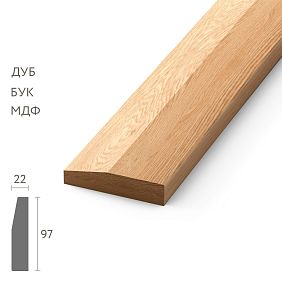
In interior architecture, there is a principle: the proportions of elements must correspond to the scale of the room. High ceilings require wide skirting boards, while low ceilings require compact ones.MDF skirting board 80 mm for paintingandMDF skirting board 100 mm for paintingThese are medium and wide formats that have become the standard for modern interiors. In 2026, when ceiling heights in new constructions vary from 2.7 to 3.2 meters, and in private homes reach 3.5–4 meters, skirting boards 80–100 mm in height provide visual balance, creating a harmonious finish to the floor line. The ability to paint them in any color transforms them from a utilitarian element into a tool for designer self-expression.


Philosophy of size: why 80–100 mm




Proportions and visual harmony
Skirting board height is not an arbitrary value, but an element of architectural proportion. Designers use the rule: the height of the skirting board should be 1/30 — 1/35 of the ceiling height to create visual balance. For standard ceilings of 2.7 m, the optimal skirting board height is 80 mm (2700/35 ≈ 77 mm). For high ceilings of 3.0–3.5 m — 100 mm and above (3000/30 = 100 mm).
MDF skirting board 80 mm for paintingThis is a universal size for most modern apartments. It is high enough to reliably protect the lower part of the wall from mechanical damage, hide the technological gap between the wall and floor (8–12 mm, required for the thermal expansion of flooring), and create a visual framing of the room. At the same time, it does not dominate the space, does not 'consume' height, which is important for rooms with ceilings of 2.6–2.8 m.
MDF skirting board 100 mm for paintingThis is the choice for spacious rooms with high ceilings (from 2.9 m). A wide skirting board creates monumentality, emphasizes the height of the room, and forms a classic sense of grandeur. In country houses, penthouses, and commercial interiors with ceilings of 3.5–4 m, a 100 mm skirting board looks proportionate, whereas a narrow 60 mm skirting board would visually disappear.
Important point: a wide skirting board visually reduces the ceiling height (the top edge of the skirting board becomes a new visual 'floor line'), but simultaneously creates a sense of solidity. A narrow skirting board preserves height but may appear less substantial.MDF skirting board 100 mm for paintingA balance between grandeur and preserving space.
Our factory also produces:


Functional advantages of increased height
Better wall protection: a skirting board 80–100 mm high covers a larger area of the lower part of the wall, protecting it from impacts of furniture, vacuum cleaners, children’s toys, and pet paws. Wall paint is often damaged precisely in the lower part — a wide skirting board minimizes this risk zone.
Hiding imperfections: in real rooms, walls are rarely perfectly flat — there are small waves, deviations from vertical. A wide skirting board hides a larger area of the junction, masking imperfections. A narrow skirting board of 40–50 mm requires perfectly flat walls, otherwise gaps will be visible.
Ability to run cabling: behindMDF skirting board for painting, floor-mounted, whiteA skirting board 80–100 mm high can hide wires — TV, internet cables, lighting wires. Many models of this height have built-in cable channels or cavities for wiring. This is especially relevant in the era of smart homes, where every room is permeated by networks.
Visual completeness: a wide skirting board creates solidity, 'grounds' the interior, making it visually stable. Narrow skirting boards create lightness and airiness, but may appear unfinished. For classical, neoclassical, and modern elegant interiorsMDF skirting board for painting, buyA skirting board 80–100 mm high — a sign of quality design.
Get Consultation
MDF skirting board 80 mm: universal standard
Characteristics and parameters
MDF skirting board 80 mm for paintingIt has the following standard parameters:
-
Height: 80 mm (some manufacturers produce 82–83 mm — rounding)
-
Thickness: 12–18 mm (usually 16 mm) — determines strength and protrusion from the wall
-
Length: 2400 mm (standard for MDF skirting boards) or 2000–2500 mm for wooden ones
-
Material: MDF with density 700–800 kg/m³, emission class E1 or E0
-
Finish: white primer in 1–2 coats, ready for final painting
The profile of the 80 mm baseboard can vary:
-
Straight (European baseboard) — top part at a right angle to the wall, minimalist design
-
Rounded — top edge smoothly rounded, classic soft profile
-
With bevel — top edge beveled at 30-45 degrees, elegant modern look
-
Profiled — complex relief with grooves and protrusions, for classic interiors
The weight of the 80 mm baseboard is approximately 1.2–1.5 kg per linear meter — lighter than wooden, but heavier than polystyrene. This ensures strength without excessive load on the mounting hardware.
Applications of 80 mm baseboard
Apartments with ceilings 2.6–2.9 m: this is the most common housing category — standard apartments in new builds, panel and brick houses.MDF skirting board 80 mm for paintingHere it is optimal — sufficiently high for protection and visual weight, without overloading the space.
Modern interiors: minimalism, Scandinavian style, contemporary — styles where simplicity is valued, preferring baseboards of medium height. A straight 80 mm profile creates clean lines, painted white or grayMDF floor baseboard, paintable, whiteBlends with walls, becoming barely noticeable trim.
Neo-classical interiors: an 80 mm baseboard with a light profile (rounded or beveled) combines classic elegance with modern restraint. Painted white, cream, or light gray, it creates a noble frame without overloading the space with decoration.
Children's rooms and bedrooms: spaces where visual lightness and calm are important. An 80 mm baseboard provides functionality (protects walls from children's play and cleaning), without visually dominating.MDF skirting board for painting, buyCan be painted in pastel tones — soft blue, pink, mint — creating a gentle children's atmosphere.
Commercial spaces: offices, clinics, hotels with ceilings 2.7–3.0 m use 80 mm baseboard as standard. It is practical (protects walls from carts, luggage, suitcases), neutral, and can be painted in corporate colors.
Installation and mounting of 80 mm baseboard
An 80 mm baseboard is mounted using adhesive or a hidden mounting strip (hidden mounting system). Adhesive mounting — liquid nails or mounting adhesive is applied in zigzag pattern to the back of the baseboard, which is then pressed against the wall. Simple, but removal is difficult.
Hidden mounting — a metal or plastic strip with clips is screwed to the wall, and the baseboard is slipped onto it. The clips hold the baseboard in place, and mounting and removal are repeatable (can be removed for wiring, then reinstalled). The hidden mounting system is suitable forMDF baseboard, paintable, 80 mmwhen subsequent renovation or communication maintenance is planned.
Corners of 80 mm baseboard are joined at 45 degrees (internal and external angles). For precise cutting, use a miter saw or miter box. The quality of the joint is critical — gaps over 1 mm are noticeable even after sealing with caulk.installing polyurethane moldingand MDF baseboard have similar miter-cutting technology.
MDF baseboard 100 mm: wide format for large spaces
Characteristics and features
MDF skirting board 100 mm for painting— this is a wide format, creating a monumental effect:
-
Height: 100 mm (some models 102–105 mm)
-
Thickness: 16–22 mm (thicker than 80 mm, to ensure rigidity)
-
Length: 2400 mm standard
-
Weight: 1.8–2.2 kg per linear meter — requires secure mounting
Baseboard profiles 100 mm are more diverse:
-
High straight — for ultra-modern minimalist interiors
-
Classic profiled — with multi-level relief (grooves, protrusions, coves)
-
With top shelf — the upper part protrudes as a shelf, creating a complex silhouette
-
Combined — combination of flat and relief sections
A wide baseboard allows creating more expressive profiles.MDF skirting board 100 mm for paintingWith a classic profile, it reproduces palace-style wooden baseboards, but costs significantly less.
Applications of 100 mm baseboards
Rooms with high ceilings (2.9–3.5 m): living rooms, halls, dining rooms in private homes, townhouses, penthouses. A 100 mm baseboard is proportionally appropriate here — it does not visually disappear, creating a sense of solidity. A narrow 60–70 mm baseboard would look unimpressive in such rooms.
Classic and neoclassical interiors: styles valuing architectural expressiveness require wide baseboards with profiles.MDF skirting board 100 mm for paintingWith routed relief, after painting in white, cream, or light gray, it creates an atmosphere of classic elegance, visually indistinguishable from wooden baseboards.
Commercial and public spaces: hotels, restaurants, banks, salons — places where prestige matters. A wide baseboard creates respectability, emphasizes status. Painted in dark colors (graphite, anthracite, dark brown), it creates a contrasting frame against light walls.
Rooms requiring multiple cable runs: home theaters, music studios, IT offices. Behind a 100 mm baseboard, you can hide bundles of cables — HDMI, audio, network. Some 100 mm baseboard models feature an enlarged cable channel or a two-level system for separate power and low-voltage cable runs.
Design interiors with accent baseboards: when the baseboard is not concealed but becomes a decorative element.MDF floor baseboard, paintable, whiteAt 100 mm height, painted in a contrasting bright color (emerald, blue, terracotta), it creates a color frame for the room.
Features of installing 100 mm baseboards
Due to greater weight and size, a 100 mm baseboard requires more secure mounting. Adhesive mounting is possible, but the adhesive must be professional-grade — liquid nails or two-component mounting adhesive. Apply adhesive more generously (more frequent dots), press and secure the baseboard with weights or supports until it sets (2–4 hours).
Mechanical mounting — hidden mounting strip or screws installed from inside the baseboard (through the back wall into the wall at an angle to remain hidden from the outside). For 100 mm baseboards with cable channels, screw mounting is more convenient — screws are driven into the wall, and their heads are concealed by the cable channel or decorative strip.
Angles of 100 mm baseboards require special precision in cutting — due to height, even a slight deviation from 45 degrees creates a noticeable gap. A miter saw with a laser guide or a professional-grade miter box is recommended.Corner elements for moldingReady-made corner pieces for 100 mm baseboards are rare; corners are usually mitered.
Painting technology: from primer to finish
Preparing the baseboard for painting
MDF floor baseboard, paintable, whiteUsually supplied primed with white primer in 1–2 coats. This is a base coat ready for final painting. However, factory primer quality varies — budget baseboards may have uneven primer with gaps.
Check primer: inspect baseboards under bright light. If unevenness, spots, or unprimed areas are present, apply an additional primer coat. Use acrylic primer for wood and MDF, apply with brush or roller, dry 2–4 hours.
Ends — critically important area. When cutting baseboards, ends are exposed — revealing the porous MDF structure, unprotected by factory primer. All ends must be primed in 2–3 coats — this protects against moisture. An unprimed end is a path for water into MDF, leading to swelling.
Sanding: after primer dries, lightly sand the surface with fine-grit sandpaper (grit 180–220). This removes raised fibers (MDF fibers slightly lift when wetting primer), creating a smooth base. Dust is removed with a damp cloth or sticky wipe (special wipe for dust removal before painting).
Filling defects: if baseboards have chips, dents, or scratches (from transport or installation), fill them with acrylic wood putty. After drying, sand flush with the surface. The putty must be paintable — not silicone-based.
Choosing paint: color and finish type
White color — classic, expands space.MDF floor baseboard, paintable, whitePainted in pure white (cool tone) or cream-white (warm tone). A white skirting board visually blends with light walls, creating a unified space. Matte white paint — for modern interiors, satin (semi-gloss) — for classic styles.
In wall color — monochromatic approach, when the skirting board is painted exactly to match the wall color. The skirting board does not stand out, walls visually continue to the floor, making the room appear higher. Suitable for rooms with low ceilings (2.4–2.6 m), where it is important to preserve every centimeter of height.
Contrasting color — the skirting board becomes a decorative accent. A dark skirting board (graphite, black, dark brown) on light walls creates graphic effect and modernity. Colored skirting board (emerald, blue, terracotta) on neutral walls adds character and individuality.MDF skirting board for painting, buyand paint in a bold color — a way to personalize the interior.
In floor color — the skirting board is painted to match the floor finish (parquet, laminate, engineered wood). The skirting board visually continues the floor, creating a single horizontal line. This visually expands the floor, suitable for narrow spaces (hallways, entryways).
Types of paint:
-
Acrylic — optimal choice, eco-friendly, odorless, dries quickly, washable
-
Latex — premium, especially durable and washable, for high-traffic areas
-
Alkyd enamel — for humid areas, creates a hard glossy finish
-
Water-emulsion — budget-friendly, but less durable, for areas with minimal load
ForMDF baseboard, paintable, 80 mmand 100 mm in residential spaces, acrylic paint is optimal — balance of price, quality, and safety.
Painting technique: before or after installation
Painting before installation: skirting boards are laid horizontally on a flat surface (scaffolding, floor with protective film), painted with a roller or spray gun. Advantages — convenience (no need to paint while kneeling), even coverage, possibility to paint all sides (including the bottom, which will be on the floor after installation). Disadvantage — after installation, ends (cutting areas) and joints need to be touched up with a brush, possible color differences.
Painting after installation: skirting boards are installed, joints are sealed with sealant, then the entire structure is painted on-site with a brush. Advantages — joints are painted together with the skirting board, no color transitions, sealant is painted over (becomes invisible). Disadvantage — inconvenient work (kneeling along walls), need to protect the floor and lower wall sections with painter’s tape, risk of paint stains on walls.
Optimal approach — combined: base coat (1–2 layers) before installation for convenience and evenness, finish coat after installation to cover joints and create a unified finish.MDF skirting board 100 mm for paintingWide, it is more convenient to paint before installation with a roller, then touch up joints with a brush.
Number of layers and application technique
Paint is applied in 2–3 layers with intermediate drying:
-
First layer — base, creates the color foundation, lays unevenly (especially on primer), may show through
-
Second layer — leveling, intensifies color, creates saturation, hides any showing-through
-
Third layer — finish, if needed, intensifies color and removes defects (especially for dark and bright colors)
Between layers, drying time is observed according to paint instructions (2–4 hours for acrylics, 12–24 hours for alkyds). Each layer is applied thinly — better three thin layers than one thick. Thick layers cause drips, unevenness, and take longer to dry.
Roller — for smooth, straight-profile skirting boards. Velvet roller 10 cm wide, paint is applied along the skirting board with even strokes. Roller provides even coverage without brush marks.
Brush — for profiled skirting boards with relief. Flat brush 4–6 cm, synthetic bristles, paint is applied along the skirting board. Brush penetrates into relief grooves, which a roller cannot reach.
Spray gun — for painting large quantities of skirting boards before installation. Paint is sprayed in a thin layer, lays perfectly even. Requires skill and protection of surrounding surfaces.
Color solutions and stylistic approaches
White skirting board: universal classic
White — the most popular color for skirting boards, suitable for any style.MDF floor baseboard, paintable, whiteCreates cleanliness, light, visually expands space. White skirting board matches any wall or floor color.
Cool white (pure white, snow-white) — for Scandinavian, minimalist, modern interiors. Creates freshness, coolness, cleanliness. Matches with cool gray walls, white furniture, light floors.
Warm white (cream, milk, ivory) — for classic, Provence, country interiors. Creates coziness, softness, tradition. Complements beige walls, wooden floors, natural-toned textiles.
Matte white affects perception: matte white is restrained, modern, does not reflect light. Satin (semi-matte) is noble, classic, easy to clean. Glossy is formal, palace-like, visually expands space through reflections, but reveals all flaws.
Dark skirting board: graphic contrast
Dark skirting board on light walls — a trending 2026 style. Graphite, anthracite, black, dark brown skirting boards create a contrasting frame, emphasize the room’s geometry, and add drama.
MDF skirting board 80 mm for paintingIn dark color, visually grounds the interior, creates stability. WideMDF skirting board 100 mm for paintingOf dark color becomes an architectural element, forming the character of the space.
Dark skirting board pairs with:
-
Light walls (white, light gray, beige) — classic contrast
-
Dark floor (dark parquet, laminate) — skirting board continues the floor, creating a unified dark horizontal line
-
Dark accents (dark furniture, doors, window frames) — skirting board unifies dark elements into a single system
Colored skirting board: bold self-expression
Colored skirting board — a way to add character to the interior without major redesign.MDF skirting board for painting, buyAnd paint in bold color — a trend of personalization for 2026.
Saturated colors (emerald, sapphire, terracotta, mustard) create a color frame for the room, adding energy. Suitable for eclectic, boho, maximalist interiors.
Pastel colors (soft blue, mint, powder pink, lavender) create softness, romance. Suitable for children’s rooms, bedrooms, Provence-style interiors.
Metallic colors (gold, silver, copper) create luxury, glamour. Suitable for art deco, glamorous, maximalist interiors.MDF skirting board 100 mm for paintingOf gold color becomes a decorative accent.
In wall or floor color: monochromatic solutions
Skirting board in wall color — monochromatic approach, visually increasing room height. Skirting board does not stand out, walls appear to continue down to the floor. Suitable for rooms with low ceilings or to create visual calm.
Skirting board in floor color — skirting board continues the flooring, creating a wide horizontal line. Visually expands the floor, suitable for narrow rooms. If the floor is dark, a dark skirting board creates a dark lower zone contrasting with light walls.
Practical recommendations and common mistakes
Error 1: Incorrect skirting board height selection
Installing a narrow 60 mm skirting board in a room with 3.2 m ceilings creates visual imbalance — the skirting board disappears and looks unimpressive. Installing a wide 100 mm skirting board in a room with 2.4 m ceilings 'eats' height, making the room appear low.
Solution: follow proportions. For ceilings 2.4–2.7 m — 60–80 mm. For 2.7–3.0 m — 80–100 mm. For 3.0–3.5 m — 100–120 mm.MDF skirting board 80 mm for painting— universal choice for most rooms.
Error 2: Unprotected ends
Installing skirting boards with unprimed and uncolored ends in humid areas (kitchens, bathrooms — if using MDF) leads to rapid swelling. Water penetrates through ends, MDF expands, paint cracks.
Solution: all ends (cutting areas) are primed in 2–3 layers, then painted together with the rest of the surface. The end must be fully sealed. For humid areas, it’s better to use polyurethane or PVC instead of MDF.
Error 3: Painting without sealing joints
Painting skirting boards without pre-sealing joints with sealant results in visible gaps at corners and connection points, spoiling the overall impression.
Solution: After installation, all joints are filled with white acrylic sealant (or tinted to match the future paint color). The sealant is smoothed with a wet finger, excess is removed. After drying, the joints are sanded with fine sandpaper. Then the entire skirting board, including the joints, is painted — the sealant is painted over and becomes invisible.
Error 4: Use of silicone sealant
Silicone sealant does not paint — paint will peel off it. If joints are filled with silicone, after painting they will remain white (or transparent), contrasting with the painted skirting board.
Solution: Use only acrylic sealant for interior work. It is paintable with water-based paints, and after painting, it blends into the surface. Silicone sealant is used only in areas where painting is not required (e.g., plumbing sealing).
Maintenance and Use: Durability of MDF skirting boards
Protection and Maintenance
MDF floor baseboard, paintable, whitePainted with quality acrylic or latex paint, it lasts 20–30 years without losing its appearance. The paint protects MDF from moisture, mechanical damage, and dirt.
Wet cleaning: skirting boards painted with latex or alkyd paint can be cleaned with a damp cloth and cleaning agent. For skirting boards painted with water-emulsion paint, only a slightly damp (not wet) cloth may be used — water-emulsion paint is not water-resistant.
Local repair: scratches and chips are sanded with fine sandpaper, primed, and repainted with the same paint. For a seamless repair, repaint not only the defect but also a surrounding area (10–20 cm), blending the edges. After drying, the repaired area blends with the main finish.
Repainting: MDF skirting boards withstand 5–7 repaints. The surface is sanded with fine sandpaper (grit 220–320), cleaned, primed (if radically changing color), and painted.MDF skirting board 100 mm for paintingCan be initially painted white, repainted gray after 5 years, and graphite after another 5 — adapting to changing interior styles.
Conclusion: Optimal solution for modern interiors
MDF skirting board 80 mm for paintingandMDF skirting board 100 mm for paintingThese are formats that have become the standard of modern interior design. They combine functionality (wall protection, gap concealment, utility cabling), visual balance (proportionality to most rooms), and freedom of color expression (painting in any color).
MDF skirting board for painting, buy, MDF skirting board 100 mm for painting, MDF floor baseboard, paintable, whiteAll these solutions are available in a wide range of profiles, enabling the realization of any design concept — from ultra-modern minimalism to classic elegance.
Company STAVROS offers a full range ofof MDF skirting boards for paintingheights of 60, 70, 80, 100, 120 mm — straight and profiled, with or without cable channels, ready for final painting. Also availablesolid wood skirting boards, Moldings, Crown Molding, decorative elementsAll elements are made from high-quality E1 class MDF, primed, ready for painting. Experienced consultants will help you select the size and profile to match your room’s parameters, calculate the exact quantity including waste at corners. Delivery to Moscow, Saint Petersburg, and all of Russia makes purchasing convenient. Create interiors with proper proportions and unlimited color options — choose STAVROS!


