












































































Article Contents:
- Why oak — the king among wood species?
- Aesthetic merits of oak texture
- Technological features of manufacturing solid oak baseboards
- Raw material selection and preparation
- Profiling and mechanical processing
- Final surface finishing
- Variants of oak baseboards by construction
- Solid oak baseboard
- Glued oak baseboard
- Combined Constructions
- Size range and geometric parameters
- Baseboard height
- Thickness and length of products
- Surface coating and finishing options
- Lacquer systems
- Oil finishes
- Staining and special effects
- Special functional solutions
- Baseboards with integrated communications
- Baseboards with lighting
- Thermally modified wood
- Technology of Professional Installation
- Preparatory work
- Mounting methods
- Corner and joint finishing
- Operation and maintenance of oak baseboards
- Regular Maintenance
- Protective measures
- Restoration and repair
- Ecological aspects and impact on health
- Ecological purity of the material
- Beneficial effect on microclimate
- Coating safety
- Style compatibility and design solutions
- Classic Interiors
- Modern aesthetics
- Scandinavian Style
- Loft and industrial solutions
- Economic analysis of investments
- Analysis of total ownership cost
- Impact on property value
- Innovative technologies of the future
- Smart materials
- Intelligent systems
- Biotechnology in processing
- Regional application specifics
- Humid maritime climate
- Continental climate
- Northern Regions
- Conclusion
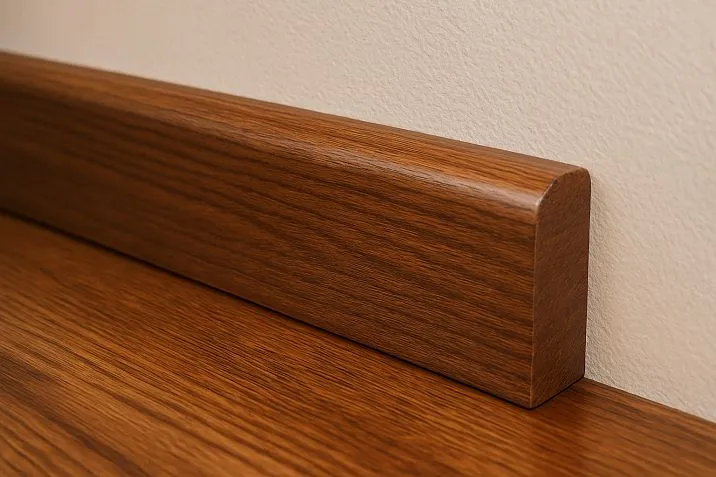
What could be more beautiful than the natural perfection of oak wood, embodied in elegant baseboard forms? When you decide to buy baseboard from solid oak, you are not choosing just a finishing material — you are investing in enduring beauty that will delight the eye and serve faithfully for decades. Let’s dive into the wonderful world of oak baseboards and uncover all the secrets of choosing this aristocratic material.


Why oak — the king among wood species?
Oak rightfully bears the title of the most noble wood species in the world of building materials. This majestic species has evolved over millennia, accumulating in its fibers the strength of the earth and the energy of the sun. When it comes to creating luxury baseboards, no other species can match oak in terms of combined characteristics.
The hardness and density of oak wood reach impressive 700-800 kg/m³, making baseboards made from it practically immune to mechanical damage. Imagine — your oak baseboard withstands furniture impacts, pet claws, heavy use, while maintaining its original beauty for half a century!
Structural stability — another indisputable advantage. Properly dried oak wood demonstrates minimal deformation under changes in temperature and humidity conditions. This means that the installed baseboard will not crack, warp, or shrink even under Russian seasonal fluctuations.
Oak’s natural moisture resistance is due to high tannin content — natural tannins that create a natural barrier against moisture penetration. These compounds also impart the wood with distinctive antiseptic properties, preventing mold and mildew growth.




Aesthetic merits of oak texture
Visual appeal — this is what makes oak baseboard a true work of art. The coarse-grained structure of the wood creates a unique pattern, where each plank possesses unique individuality. Bright annual rings, characteristic rays, natural color variations — all this transforms a simple baseboard into a premium decorative element.
The color palette of natural oak ranges from light golden to rich brown with numerous intermediate shades. The sapwood is usually lighter than the heartwood, creating a natural contrast play on the surface of the finished product.
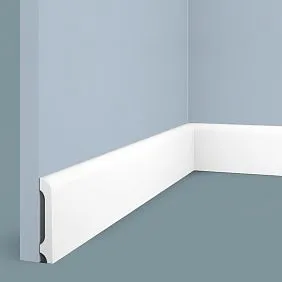
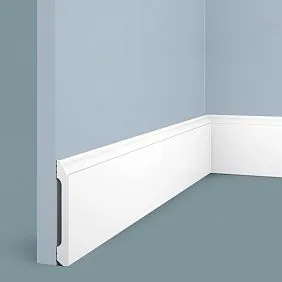
Our factory also produces:


Technological features of producing solid oak baseboards
Manufacturing high-quality baseboards from solid oak is a complex technological process requiring skill and precise adherence to numerous parameters.
Get Consultation
Raw material selection and preparation
For producing elite baseboards, oak trees aged at least 80-100 years are used, when the wood reaches optimal density and stability. The logs are carefully selected from the central part of the trunk, where the wood is most uniform and free of defects.
Kiln drying — a critically important stage determining the quality of the future product. The wood is dried in special kilns under strictly controlled parameters:
- Initial temperature: 35-45°C, gradually increasing to 65-75°C
- Air humidity: gradual reduction from 90% to 15%
- Duration: 4-8 weeks depending on the log cross-section
- Final humidity: 8-10%
Profiling and mechanical processing
After reaching the target humidity, the logs undergo precise mechanical processing on high-precision milling machines. Modern CNC equipment allows creating baseboards with complex profiles to the accuracy of tenths of a millimeter.
Main profile types:
- Classic European with smooth rounded transitions
- Modern minimalist rectangular
- Traditional with 45° beveled edges
- Exclusive custom profiles with decorative elements
Surface finish largely determines the appearance of the finished skirting board. The process includes multi-stage sanding with gradually decreasing abrasive grit from P100 to P320.
Surface quality largely determines the appearance of the finished skirting board. The process includes multi-stage sanding with gradually decreasing abrasive grit from P100 to P320.
Sanding stages:
- Rough sanding (P100-P120) — removal of milling marks
- Main sanding (P150-P180) — surface leveling
- Fine sanding (P220-P240) — preparation for coating
- Final polishing (P280-P320) — achieving perfect smoothness
Types of oak skirting boards by construction
Modern manufacturers offer several main types of products, each with its own advantages.
Solid oak skirting board
Premium solution, where to buy baseboard from solid oak means obtaining a product from a single piece of wood without gluing or composite additives.
Advantages of solid oak skirting board:
- Maximum durability (50+ years of service)
- Ability for multiple restorations
- Full ecological safety
- Unique texture of each item
- High prestige and status
- Stability with proper drying
Glued oak skirting board
Manufactured by gluing 2-3 oak wood laminates under high pressure. This technology allows eliminating internal stresses and obtaining a more stable product.
Technological advantages:
- Increased geometric stability
- Ability to manufacture long boards (up to 4 meters)
- Optimal use of raw material
- Reduced likelihood of cracking
- More affordable cost while maintaining quality
Combined constructions
For special applications, combined skirting boards are developed, combining oak solid wood with other materials:
- Base of coniferous species with oak facing
- Integrated plastic cable channels
- Metallic reinforcement inserts for increased loads
Size series and geometric parameters
Correct selection of dimensions — the key to creating a harmonious interior.
Baseboard height
60-80 mm — compact sizes for small rooms and minimalist interiors. Create a sense of lightness and do not visually overload the space.
90-120 mm — universal size suitable for most residential rooms. Provides optimal wall protection and creates a balanced visual appearance.
130-160 mm — tall baseboards for rooms with ceilings over 3 meters. Emphasize the grandeur of the interior and visually increase wall height.
170-200 mm and above — exclusive solutions for special design projects. Become a standalone decorative element and require a professional approach.
Thickness and length of items
The thickness of quality oak baseboards varies from 12 to 25 mm. For solid wood items, 18-22 mm is optimal, providing necessary strength at a reasonable weight.
Plank length:
- 1.5-2.0 m — for small rooms
- 2.4-2.5 m — standard length for most applications
- 3.0-4.0 m — long planks for minimizing joints
Coating options and surface treatments
The type of finish coating is critically important for the operational characteristics and appearance of the baseboard.
Urethane coatings create a wear-resistant, high-strength finish for heavily used surfaces. Acrylic formulations provide an eco-friendly coating for residential spaces with children.
Two-component polyurethane varnishes — the most durable and long-lasting coatings. Form a hard film on the surface resistant to abrasion, moisture, and chemical exposure.
Technical characteristics of quality PU coating:
- Hardness by Koenig: 150-220 seconds
- Adhesion to wood: 1-2 points
- Abrasion resistance: AC4-AC5 class
- Gloss: from 5% (matte) to 90% (glossy)
Water-based acrylic varnishes — an environmentally safe alternative with minimal odor. Dry quickly, do not yellow over time, but have lower chemical resistance.
Alkyd-polyurethane compositions — a compromise solution combining the eco-friendliness of alkyds with the durability of polyurethanes.
Oil finishes
Hard waxes and oils — modern formulations based on natural components. Deeply penetrate wood structure without forming a surface film.
Advantages of oil-based coatings:
- Preservation of wood’s tactile feel
- Coating breathability
- Ease of local repair
- Antistatic properties
- Humidity regulation in the room
Staining and special effects
Staining allows to radically change the wood color while preserving its natural texture.
Popular shades:
- “Golden Oak” — warm honey tone
- “Cognac” — noble amber-brown
- “Stained Oak” — deep dark brown
- “White Oak” — light tones with emphasized texture
- “Walnut” — rich chocolate tone
Brushing — mechanical processing in which soft wood fibers are removed while hard ones remain. Creates a pronounced textured surface.
Patination imitates noble antiquity using special compounds and artificial aging techniques.
Special functional solutions
Modern technologies allow creating skirting boards with additional features.
Skirting boards with integrated communications
Cable channels of various configurations allow concealing electrical wiring, internet cables, and antenna wires.
Types of cable channels:
- Open with removable cover
- Closed with technological slots
- Multi-section for different cable types
- With special guides
Skirting boards with lighting
Integration of LED strips creates an impressive decorative lighting effect:
- Directional floor lighting
- Diffused lighting through matte diffusers
- RGB lighting with changeable color
- Systems with motion sensors
Thermally modified wood
TMD technology changes the wood structure at the molecular level:
- Processing temperature: 160-220°C
- Stability increase by 70-80%
- Moisture resistance improved by 4-5 times
- Uniform color throughout the cross-section
- Surface hardness increased by 20-25%
Professional installation technology
Quality installation — the key to long service life of oak skirting boards.
Preparation Work
Material acclimatization — mandatory procedure. Skirting boards must remain in the installation room for at least 72 hours to equalize humidity.
Optimal acclimatization conditions:
- Temperature: 18-22°C
- Relative humidity: 45-60%
- No direct sunlight
- Horizontal storage with spacers
Tool preparation:
- Circular saw with wood-cutting blade (80-120 teeth)
- Drill with set of wood drill bits
- Impact driver with bits
- Measuring Tools
- Miter gauge for precise trimming
Methods of mounting
Mechanical fastening with screws — classic and most reliable method for solid skirting boards.
Installation algorithm:
- Marking mounting locations (spacing 50-70 cm)
- Drilling guide holes Ø3-4 mm
- Countersinking for screw heads Ø8-10 mm
- Driving screws until flush
- Filling holes with wooden plugs
- Sanding and staining plugs
Clip mounting — modern concealed installation system for skirting boards with special grooves.
Adhesive mounting is used for lightweight items on perfectly flat walls using polyurethane or MS polymer adhesives.
Corner and joint finishing
Internal corners are finished with precise 45° trimming. When walls are not perpendicular, the angle is adjusted according to actual conditions.
External corners require special care as the most prominent elements:
- Trimming with slight allowance
- Precise fitting to location
- Additional seam sealing
- Clamping during adhesive polymerization
Pre-cut corner elements eliminate complex trimming and guarantee a perfect result.
Operation and care of oak baseboards
Proper care extends the lifespan of the skirting board and preserves its original beauty.
Regular Maintenance
Dry cleaning is performed weekly:
- Soft microfiber cloth for smooth surfaces
- Special brushes for profiled elements
- Vacuum cleaner with attachment for delicate surfaces
- Antistatic compounds to prevent dust accumulation
Wet cleaning is performed as needed:
- Slightly damp cloth
- Special wood care products
- Immediate removal of excess moisture
- Exclusion of aggressive chemicals
Protective measures
Mechanical protection:
- Soft pads for furniture legs
- Protective mats in high-traffic areas
- Careful handling of household appliances
Climate control:
- Maintain humidity at 40-60%
- Avoiding sudden temperature changes
- Protection from direct sunlight
- Ensure air circulation
Restoration and Rehabilitation
Solid oak skirting board is suitable for multiple restorations:
Minor repairs:
- Scratch concealment with wax pencils
- Fading of scuffs with special markers
- Polishing of surface defects
- Local coating refresh
Major restoration:
- Full surface polishing
- Repairing deep damage with putty
- Re-staining if necessary
- Applying new protective coating
Ecological aspects and health impact
In the era of ecological awareness, natural materials become especially relevant.
Ecological purity of the material
Oak as a renewable resource does not harm nature when managed properly. Responsible manufacturers obtain FSC certification, confirming sustainable forestry.
The carbon footprint of oak products is minimal. Wood sequesters carbon throughout its lifespan, helping reduce CO2 in the atmosphere.
Positive impact on microclimate
Humidity regulation — a unique property of natural wood:
- Absorption of excess moisture during high humidity
- Release of stored moisture during low humidity
- Stabilization of room microclimate
Oak's natural antiseptic properties are due to high tannin content:
- Suppression of pathogenic microflora
- Air purification from harmful substances
- Creation of a healthy atmosphere
Coating safety
Quality coatings have ecological certifications:
- Compliance with European EN 71-3 standards
- No formaldehyde and toxic emissions
- Safe for children and allergy sufferers
Style compatibility and design solutions
The versatility of oak skirting allows its use in any stylistic direction.
Classic Interiors
In traditional styles, oak skirting becomes an accent element:
- High profiles (140-200 mm) with intricate detailing
- Dark noble stains
- Use of patina and gilding
- Combination with molded decorative elements
Modern aesthetics
Minimalism and contemporary prefer simplicity:
- Simple rectangular shapes
- Natural or slightly tinted shades
- Matte finishes
- Clear geometric lines
Scandinavian style
Northern design philosophy leans toward light solutions:
- Whitewashed and bleached shades
- Medium-height skirting boards (80-100 mm)
- Matte surfaces
- Combination with other natural materials
Loft and industrial solutions
Contrast of warm wood with cool materials:
- Intentionally rough surface finish
- Dark saturated tones
- Combination with metal, concrete, brick
- Functionally emphasized solutions
Economic analysis of investments
When planning a budget, it is important to consider oak skirting as a long-term investment.
Analysis of Total Ownership Cost
Initial costs for quality oak skirting are significant, but are offset by longevity:
Comparative table of service life:
- PVC skirting: 5-8 years
- MDF with film: 8-12 years
- Veneered: 15-20 years
- Solid oak: 50+ years
Calculation of economic efficiency:
With proper care, solid oak skirting will last 50-70 years, equivalent to 6-10 replacements of budget alternatives. Considering the costs of dismantling, purchasing, and installing new skirting, savings amount to 300-500%.
Impact on property value
Quality elements made of natural wood increase the market value of real estate by 8-15% compared to properties finished with artificial materials.
Factors increasing value:
- Prestige of natural materials
- Durability and reliability
- Aesthetic appeal
- Ecological safety
Innovative technologies of the future
The industry of oak skirting is developing, offering revolutionary solutions.
Smart Materials
Nanomodified coatings with nanoparticles:
- Self-Cleaning Surfaces
- Antibacterial Properties
- Increased wear resistance
- Wood UV protection
Intelligent systems
"Smart" skirting boards with integrated electronics:
- LED lighting controlled via smartphone
- Motion and light sensors
- Wireless data transmission systems
- Room climate monitoring
Biotechnology in processing
Modification of wood by biological methods:
- Enzymatic treatment to improve properties
- Biological impregnation instead of chemical
- Use of natural antiseptics
Regional application specifics
Climate conditions influence the selection of oak skirting board characteristics.
Humid maritime climate
Coastal regions require a special approach:
- Additional hydrophobic treatment
- Use of moisture-resistant adhesives
- Increased ventilation gaps
- Regular condition monitoring
Continental climate
Sharp temperature fluctuations dictate requirements:
- Use of stabilized wood
- Increased compensatory gaps
- Elastic sealants at joints
- Control of humidity in rooms
Northern regions
Severe winters create specific conditions:
- Long heating season
- Risk of wood drying out
- Need for air humidification
- Use of frost-resistant compositions
Conclusion
Solution to buy baseboard from solid oak This is a choice in favor of eternal values: quality, beauty, and reliability. In a world of synthetic materials and fleeting fashion, oak skirting remains an island of stability and aristocratic elegance.
Natural oak wood embodies the wisdom of centuries and the power of nature. Each plank carries a unique story of the tree’s growth, captured in its annual rings and distinctive texture. This is not merely a decorative material — it is a link between man and nature, a source of positive energy in the home.
Investing in high-quality solid oak skirting creates a foundation for an interior that will delight not only you, but also your children and grandchildren. This is a solution for those who understand the true value of natural materials and are unwilling to compromise on quality.
Modern production and processing technologies allow creating oak skirting that harmoniously fits any stylistic direction — from classic palace interiors to ultra-modern minimalist spaces. A wide range of profiles, sizes, and finishes offers limitless possibilities for realizing the boldest design ideas.
STAVROS is a recognized leader in the Russian market for elite solid wood products. Over more than twenty years of operation, STAVROS specialists have accumulated invaluable experience in creating masterpieces of wooden architecture, participating in the restoration of historical landmarks and developing unique interior solutions. STAVROS masters work exclusively with premium wood, combining traditional craftsmanship with modern high-precision equipment. STAVROS products are a guarantee of flawless quality, proven over time and recognized by the most demanding clients. Choosing STAVROS, you get not just skirting, but a work of art that will adorn your home for many decades.


