Article Contents:
- What Matters More: MDF or Solid Wood
- Solid Wood: An Investment in the Future
- MDF: Practicality and Stability
- A Choice of Conscience
- Advantages of Solid Wood Floor Skirting: More Than Just Decor
- Naturalness and ecological purity
- Strength and durability
- Aesthetics and Status
- Repairability and Restoration
- Sound and thermal insulation
- Profile Types: From Classic to Avant-Garde
- Classic Profile: Timeless Elegance
- Euro Skirting: Minimalist Forms
- High Skirting: Grandeur and Drama
- Figurative and Carved Profiles: For Detail Connoisseurs
- Wood Species: Character in Texture
- Oak: The King Among Species
- Beech: The Universal Classic
- Ash: Strength and Expressiveness
- Pine: Affordability and Aroma
- Skirting Functions: More Than Just a Strip
- Concealing Expansion Gaps: The Unspoken Necessity
- Cable Channel: Order Without Compromise
- Wall Protection: Practicality for Years
- Decorative Function: The Fine Line of Style
- Soundproofing and Microclimate: Invisible Benefits
- Installing Wooden Skirting: Mastery in Details
- Preparation: Acclimatization and Base Inspection
- Marking and Cutting: Precision to the Millimeter
- Mounting Methods: From Classic to Innovative
- Corner Treatment: The Art of Joining
- Final Finishing: The Last Touches
- Caring for Wooden Skirting: Simple Rules for Longevity
- Daily and Weekly Care
- Protection from Moisture and Mechanical Damage
- Updating protective coating
- Microclimate: Stability is the Key to Durability
- Where to Buy Quality Skirting: A Matter of Trust
- What to pay attention to when choosing
- Manufacturer or reseller
- Delivery Geography and Logistics
- Additional elements and accessories
- Cost and value: calculating correctly
- Pricing factors
- MDF: saving without compromising style
- Installation cost: professionals vs DIY
- Total cost of ownership: calculating for decades
- Answers to popular questions
- What height of baseboard to choose for a standard apartment?
- How to Attach Wooden Skirting Boards to Drywall?
- Can wooden baseboard be used in the bathroom?
- How does MDF baseboard differ from plastic?
- How to join baseboard in corners without gaps?
- Should a gap be left between the baseboard and the floor?
- How much material to order with a margin?
- Can already installed baseboard be painted or tinted?
- How to choose baseboard color: matching the floor or walls?
- After how many years will replacement or restoration be needed?
- What tools are needed for self-installation?
- What to do if the walls are very uneven?
- Is wooden baseboard compatible with underfloor heating?
- Conclusion: the choice that creates atmosphere

A conversation about floor finishing without mentioning baseboards is an incomplete conversation. This seemingly modest element performs several critically important tasks at once: it protects walls from damage, masks technological gaps, hides utilities, and gives the interior a finished, well-groomed appearance. But most importantly, a properly selected Wooden baseboard can radically change the perception of the entire room, becoming that very finishing touch without which even luxurious finishing looks incomplete.
Why wood specifically? Because natural wood carries the warmth, aroma, and energy of a living material. Because it breathes along with the home, rather than sitting as a dead weight on the walls. And because choosing of floor wooden skirting is a choice for decades, not just a few years.


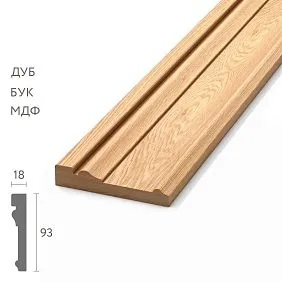

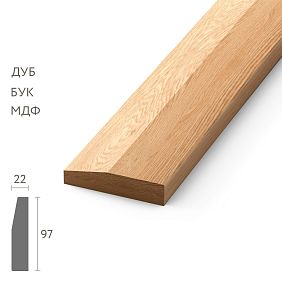


What's more important: MDF or solid wood
The eternal buyer's dilemma: MDF Skirting Board or solid wood? Each option has its own truth, its own strengths, its own philosophy. Let's speak frankly, without marketing gloss.




Solid wood: an investment in the future
When talking aboutbaseboards made of oak, the conversation immediately shifts to a different plane — the plane of investment. Yes, the initial price is higher. But an oak profile will live in your home not just for years — for decades. Thirty, fifty years, and with proper care, even longer. It will withstand any mechanical impact, isn't afraid of moisture (within reasonable limits), and can be repeatedly restored, sanded, and repainted.
Imagine: in twenty years you undertake a cosmetic renovation. MDF will have to be completely replaced. But Wooden baseboard? It will simply be sanded and coated with fresh varnish — and it's as good as new.
Beech profiles are slightly more affordable in price but have their own charm: a smooth, fine-pored texture is perfect for painting in any colors. Beech bends easily after steaming, which is indispensable for rooms with complex wall geometry. Pine and ash are more budget-friendly options but remain natural, breathable, and environmentally impeccable.
Our factory also produces:
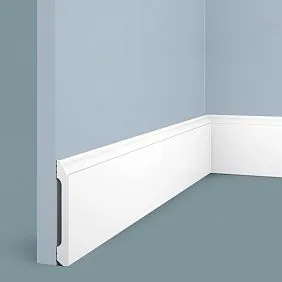
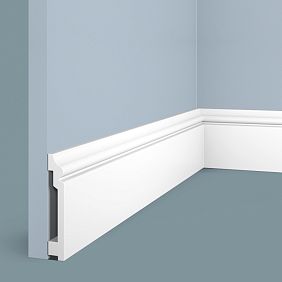
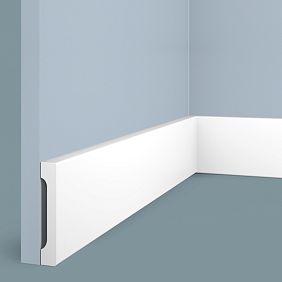
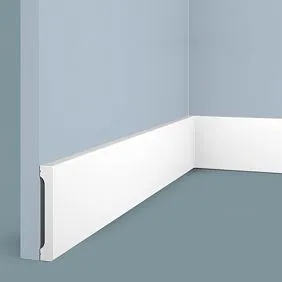
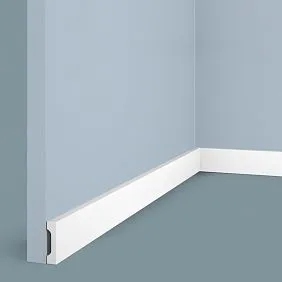
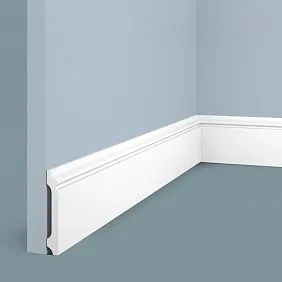

MDF: Practicality and Stability
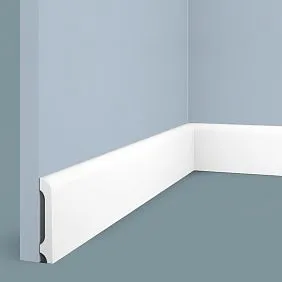
MDF Skirting Board— is a modern engineering solution where technology compensates for the whims of nature. The main advantage is absolute geometric stability. No knots, no cracks, no internal stresses. Has the humidity changed? MDF will stay in place, while solid wood may slightly warp.
Color PaletteMDF Skirting Boardsis practically limitless: from classic white to imitations of rare wood species.White MDF Skirting Board— is the undisputed sales leader in modern interiors, where purity of lines and conciseness of forms are valued.
Another nuance: processing. MDF cuts perfectly, without chipping, without the need to use expensive carbide tools. For a home craftsman, this is a significant saving of time and nerves.
But there is also a downside: if MDF is seriously damaged, it cannot be restored — only replaced. If the decorative layer is punctured, the gray fibrous structure is exposed. Solid wood, however, can be restored indefinitely.
Get Consultation
Choice by Conscience
If the budget allows — takeOak skirting. If you need versatility and predictability —Oak skirting boardwill become the golden mean. If the main thing is price and ease of installation — choose qualityMDF Skirting Board, but from a trusted manufacturer.
And remember: cheap products are always cheap products. A miser pays twice not only in proverbs.
Advantages of Solid Wood Floor Skirting: More Than Just Decor
When youbuy wooden skirting boardmade of solid wood, you are not just buying a decorative strip. You are buying a whole complex of functions and advantages that cannot be obtained from plastic or MDF.
Naturalness and Environmental Purity
Wood is a living material. It continues to breathe even after processing, regulates humidity in the room, and releases phytoncides. This is not a marketing myth — it's biology. In a house with a lot of natural wood, the air is indeed cleaner and fresher. This is especially appreciated by allergy sufferers and families with small children.
Unlike some composite materials, qualityWooden skirting boardsdo not release formaldehyde, phenols, and other toxins. You can sleep peacefully knowing there are no sources of chemical danger in your bedroom.
Strength and Durability
Oak profiles withstand loads that would crack plastic or crumble MDF. Impacts from furniture, pet steps, accidental collisions with a vacuum cleaner — solid wood endures all this stoically. Yes, scratches may remain. But they are easily eliminated by sanding.
The service life of a properly installedof wooden floor skirting boardis measured in decades. In old European houses, you can find skirting boards that are over a hundred years old — and they are still in place, still performing their function.
Aesthetics and Status
There is a special magic in the natural texture of wood. The annual rings of oak, the fine lines of beech, the resinous patterns of pine — these are patterns that cannot be replicated by a printer. Each plank is unique, and it is this uniqueness that gives the interior character and individuality.
Wooden Skirting Boardsraise the status of a room. This is immediately noticeable: the room acquires nobility and solidity. This is especially important in living rooms, studies, bedrooms — places where you want to create an atmosphere of coziness and dignity.
Repairability and Restoration
Scratched the surface? Local sanding and a new layer of varnish — problem solved. After ten years, the coating has faded? A full restoration will return the original shine. Want to change the color? Remove the old coating, apply a stain of the desired tone — and get a completely different interior.
Such tricks won't work with plastic and MDF. Damaged — replace it. Tired of the color — replace it. Faded — replace it. Solid wood gives you freedom: you decide when and how to update the finish.
Sound Insulation and Thermal Insulation
Wood has natural sound-absorbing properties. Of course, a baseboard is not an acoustic panel, but it does contribute to noise reduction. This is especially noticeable in wooden houses, where every element works towards overall acoustic comfort.
Wood has low thermal conductivity. This means thatWooden baseboardit will not feel icy to the touch even in winter. A small detail, but it is precisely such details that create a sense of coziness.
Profile types: from classic to avant-garde
Shape matters. The profileSolid Wood Skirting Boarddetermines not only the appearance but also the stylistic affiliation of the entire interior. Let's explore what options exist and what each is intended for.
Classic profile: timeless elegance
A classic profile typically features a rounded top, a smooth transition to the plane, and sometimes a small bevel or fillet. This is a form tested by centuries, suitable for most interiors. It doesn't shout for attention but doesn't get lost against the walls and floor either.
Suchwooden baseboardIt fits perfectly into classic, neoclassical, and Provence-style interiors. It pairs well with parquet, solid wood flooring, and even high-quality laminate. The height is usually 70-80 mm—the golden mean for most apartments.
Euro baseboard: simplicity of form
Euro baseboard features straight lines, clear edges, and minimal decoration. The top edge may have a small 45-degree bevel, but nothing more. This style comes from Scandinavian and German interiors, where functionality and visual purity are valued.
Wooden floor skirting boardsBaseboards in the Euro style work excellently in modern spaces: lofts, minimalism, high-tech (if wood is even appropriate in high-tech). They don't overload the interior and serve as subtle dividers of planes.
Euro baseboards are often produced in white or light shades. This visually expands the space and makes the room brighter.buy wooden skirting boardChoosing a baseboard in the European style means opting for restraint and elegance.
Tall baseboard: grandeur and drama
HighWooden baseboardis a separate story. Heights of 100, 120, and sometimes 140 mm—this is no longer just a protective element; it's an architectural detail. Such profiles are appropriate in rooms with high ceilings, from 3 meters and above.
Tall profiles create an impression of solidity and reliability. They visually raise the walls and make the room more proportional. In classic interiors, such baseboards can be complemented with carvings, decorative elements, and patination.
But there is a nuance: in small rooms with low ceilings, a tallwooden skirting board purchasewould be a mistake. It will 'eat up' precious space, make the room squat and heavy. A sense of proportion is crucial here.
Figurative and carved profiles: for those who appreciate details
CarvedWooden baseboardis the pinnacle of woodworking craftsmanship. Decorative elements can be simple (grooves, beads) or complex (floral ornaments, geometric patterns). Such products are made on high-precision equipment or by hand.
CarvedWooden skirting boardsThey are appropriate in classic, Baroque, and Rococo interiors. They require a corresponding environment: stucco, cornices, moldings. In a minimalist space, they will look out of place.
Another important point: carved profiles are more difficult to maintain. Dust accumulates in the recesses, requiring more thorough cleaning. But if you value the beauty of details—it's a small price to pay.
Wood Species: Character in Texture
Choosing the type of wood is not just a matter of budget. It's a matter of style, character, and durability. Each species has unique properties that must be considered when making a choice.
Oak: The King Among Species
Oak is the standard of strength and durability. Wood density of 650-750 kg/m³, Janka hardness of 5.5 kN—these numbers speak for themselves.Oak skirtingIt will withstand any mechanical impact, is not afraid of moisture, and does not rot.
Oak has an expressive texture: clear annual rings, sometimes medullary rays. The color varies from light beige to dark brown, depending on the cutting method and processing. Toning emphasizes the natural beauty and makes the pattern even more expressive.
OakFloor wooden skirtingcontains natural tannins that protect the wood from biological effects. This means that even after decades, the profile will not lose its strength.
The only downside is the price.buy oak skirting boardmore expensive than counterparts made from other wood species. But it's an investment that pays off through its service life.
Beech: The Universal Classic
Beech wood has a uniform, fine-pored structure and a neutral pinkish hue. This makes itBeech skirtingideal for dyeing and tinting.
Beech density is 620-680 kg/m³ — slightly less than oak, but still high. Its bending strength even surpasses oak — 120 MPa versus 105 MPa. This means beech profiles won't break under load or crack during installation.
A unique property of beech is its formability. After steaming at 100°C, the wood becomes plastic and can be bent with a minimum radius of 400 mm. This is indispensable for rooms with complex geometry: bay windows, rounded walls, columns.
Nuance: beech is hygroscopic. It is sensitive to humidity fluctuations and may swell slightly or dry out. Therefore, oak is a better choice for damp rooms. But in ordinary living rooms with a stable climate, beech performs excellently.
Ash: strength and expressiveness
Ash is comparable in strength to oak, but its texture is more expressive. Contrasting annual rings create a beautiful pattern, especially effective with tangential cutting. Color — light, grayish, or yellowish.
Solid skirting boardmade of ash holds its shape well and does not crack. It is used in interiors where one wants to emphasize the naturalness of the wood without excessive decor. Scandinavian style, eco-style, modern classic — these are where ash truly shines.
Pine: Affordability and Aroma
Pine is the most budget-friendly solid wood species. Density 450-500 kg/m³ — half that of oak. This means lower strength but also less weight. PineWooden baseboardis easy to install and can be nailed with thin nails without risk of splitting.
Pine texture is soft, with characteristic resin pockets. Color ranges from almost white to yellowish. The resinous aroma is a bonus many appreciate, though it fades over time.
A disadvantage of pine is its softness. It is easily scratched or dented. Therefore, pineWooden floor skirting boardsis suitable for low-traffic areas: bedrooms, children's rooms (though mechanical damage often occurs in children's rooms).
Another nuance: pine is prone to blue stain in high humidity. Therefore, it must be treated with antiseptics and protective coatings.
Skirting Functions: More Than Just a Strip
wooden skirting board purchasemeans solving several tasks at once. A modern floor profile is a multifunctional element that works for both comfort and aesthetics simultaneously.
Masking Technological Gaps: A Necessity No One Talks About Aloud
There is always a gap between the floor and the wall. This is not a installation defect — it's a technological necessity. Any flooring experiences thermal and moisture deformation. Laminate, parquet, solid wood boards — they all 'breathe,' expanding and contracting. If no expansion gap is left, the flooring will buckle and develop waves.
The gap size is usually 10-15 mm. Leaving it open would ruin the entire appearance of the room. This is where thewooden baseboardcomes in. It covers the gap, creates a neat junction, and gives the finish a polished look.
Cable Channel: Order Without Compromise
Wires are a perpetual headache in interiors. Internet, TV, speakers, chargers — all require connection to outlets. Leaving wires on the floor? Unattractive and dangerous. Chasing walls? Expensive, messy, noisy.
The solution is aWooden baseboardwith a cable channel or installing wires behind the profile. Some models have special grooves or removable strips that allow neatly laying several cables. On the outside — nothing is visible; inside — everything is organized.
However, it should be noted: cable channels are not always made in solid wood profiles. The reason is that cutting a groove weakens the profile, and it may crack. Therefore, cables are often simply laid behind theFloor wooden skirting, in the space formed between the profile and the wall.
Wall Protection: Practicality for Years
The lower part of the wall is the most vulnerable. This is where the vacuum cleaner passes, the mop hits, furniture legs rest, and shoes bump. Without protection, paint will quickly wear off, wallpaper will tear, and plaster will begin to crumble.
Wooden baseboardtakes the hits. An oak or beech solid wood profile will withstand what would crack a plaster wall. Even if scratches appear on the profile, they are easily fixed with local restoration.
Decorative function: the fine line of style
But the main thing is aesthetics.wooden baseboardis the line that connects the floor with the walls, creating a visual unity of space. A correctly chosen profile can visually raise ceilings, expand a room, and add nobility.
Color matters. A lightto buy wooden baseboardmakes the room feel more airy. A dark one adds contrast, making the interior graphic. Matching the floor color makes the space feel like a single whole. Contrasting with the walls creates a clear frame, structuring the room.
Sound insulation and microclimate: invisible bonuses
Wood has natural sound-absorbing properties. Of course, onewooden baseboardit won't solve the acoustic problem entirely, but it does contribute. This is especially noticeable in wooden houses, where every element works toward overall comfort.
Wood also regulates humidity. When there is excess moisture in the air, the wood absorbs it; when there is a lack, it releases it. These are microscopic processes, but together they create a healthier microclimate.
Installing wooden baseboards: craftsmanship in the details
A beautifulWooden baseboardin the store is half the job. The second half is proper installation. Sloppiness at this stage can ruin even the highest quality material. So let's talk about the rules and nuances of installation.
Preparation: acclimatization and base inspection
First rule: the wood must acclimatize. If you broughtWooden skirting boardsfrom outside or from storage, let them rest in the room for at least 2-3 days. The wood must get used to the room's temperature and humidity, reaching an equilibrium state. If you start installation immediately, the profile may warp after installation.
Second: the base must be level and dry. There should be no construction dirt, dust, or oil stains. Check the walls for verticality and evenness. If there are serious irregularities (more than 3-5 mm), they need to be corrected, otherwise theFloor wooden skirtingwill pull away from the wall, creating gaps.
Marking and cutting: precision to the millimeter
Start installation from a corner, typically from the door. Measure the wall length with a tape measure, transfer the measurement to the profile. Don't forget about corners. If it's an internal or external corner, the ends need to be cut at a 45-degree angle.
The tool for cutting is a miter saw or a miter box. A miter saw gives a perfect cut, especially with a laser guide. A miter box is a more budget-friendly option but requires skill and a sharp saw. Cutting with a dull tool will cause chips and tears on the solid wood.
Important: actual room corners are rarely exactly 90 degrees. Therefore, it's better to measure the angle with a protractor and then halve it. Only this way will you get a tight fit without gaps.
Fastening methods: from classic to innovative
There are several ways to fasten theWooden baseboard.
Fastening with screws is the most reliable method. Holes are drilled in the wall, dowels are inserted, then the baseboard is screwed on with screws. Fastener spacing is 50-70 cm. Near corners and doors, fasteners are placed more frequently, every 15-20 cm. Screw heads are countersunk and filled with wood-colored putty.
Advantage of the method: maximum strength. Disadvantage: labor-intensive and visible fasteners (though they can be masked).
Fastening with adhesive is for perfectly level walls. Polyurethane adhesive or liquid nails are used. Adhesive is applied in a zigzag pattern on the back of the profile, then pressed firmly against the wall. The method gives a clean appearance without visible fasteners.
But there's a nuance: if the wall is even slightly uneven, the baseboard will pull away. Moreover, removal without damaging the profile is practically impossible.
Fastening with clips (clamps) is a modern technology. Special metal clips are attached to the wall, and theWooden baseboardsnaps onto them. Advantage: hidden fasteners and the possibility of removal. Disadvantage: not all profiles have a groove for clips.
Finish nails or a pneumatic nail gun — the professional method. Thin nails are driven into the top and bottom parts of the profile at 30-50 cm intervals. The heads are almost invisible and can be filled with putty. A pneumatic nail gun speeds up the process and makes the fastening neat.
Corner treatment: the art of joining
Corners are the weakest point during installation. This is where the installer's skill truly shows. A perfect corner is one where the gap between the planks does not exceed 0.5 mm.
For internal corners, the ends are cut at a 45-degree angle, joined, and secured. If the corner is not perfectly square, you'll have to adjust it on-site with fine sandpaper. Gaps up to 1 mm can be filled with wood-colored acrylic sealant.
For external corners, the technique is the same, but the precision requirements are higher. An external corner is always in plain sight; any defect will be noticeable. An alternative is to use ready-made corner trims, but they don't suit all profiles.
Final finishing: the final touches
After installationWooden skirting boardsneeds to be brought to perfection. Nail or screw heads are filled with wood putty. After drying, they are sanded with fine sandpaper.
Ifwooden skirting board purchasewithout a finish coating (so-called 'ready for painting'), it needs to be primed and coated with varnish or paint. Primer is applied with a brush or roller and allowed to dry. Then, 2-3 coats of varnish are applied with intermediate sanding using P320 grit abrasive.
If the profile is already factory-coated, it's enough to wipe it with a damp cloth to remove dust.
Caring for wooden skirting boards: simple rules for longevity
buy wooden skirting boardis only the beginning of the story. For it to serve for decades, care is needed. Don't be alarmed — it's nothing complicated, just regularity and common sense.
Daily and weekly care
Dust is the main enemy of wooden finishes. It not only spoils the appearance but also acts as an abrasive, gradually wearing away the protective coating. Therefore, once a weekWooden baseboardneeds to be wiped down.
The best tool is a soft, dry microfiber cloth. You can also use a vacuum with a soft brush attachment. Wet cleaning is allowed, but the cloth must be wrung out well — water should not run down. No abrasive sponges, stiff brushes, or aggressive cleaning agents.
Protection from moisture and mechanical damage
Wood does not like excess water. If water gets on thewooden baseboard(spilled, washed the floor and touched it), wipe it dry immediately. Constant moisture can lead to swelling, darkening, and mold formation.
Be careful when rearranging furniture. Sharp legs, heavy corners of cabinets can leave dents and scratches. Use soft pads, place cardboard underneath.
Updating protective coating
Every 2-3 yearsWooden baseboardit is advisable to refresh the coating. If it's an oil-wax finish, the procedure is simple: light sanding with fine sandpaper, application of a fresh coat of oil. The oil soaks into the wood, restoring protection and shine.
If the coating is varnish, assess its condition. Light wear can be masked with wood polishes. If the varnish is cracked or peeling — a full restoration is required. The old coating is removed, the surface is sanded, and new coats of varnish are applied.
Microclimate: stability is the key to durability
Ideal conditions for solid wood: temperature 18-24°C, air humidity 45-65%. In such a climate, wood is stable, does not dry out or swell. Sharp fluctuations in humidity (more than 15% over a short period) are stressful for wood. Warping and cracks may appear.
Transitional seasons are especially critical, when heating is turned on or off. The air becomes sharply dry or humid. If possible, use humidifiers in winter and dehumidifiers in damp weather.Oak skirtingis less sensitive to humidity than beech, but it too will appreciate a stable climate.
Where to buy quality skirting boards: a matter of trust
The market is overflowing with offers. From cheap pine planks of dubious quality to elite oak profiles with hand-carved details. How not to get lost andbuy wooden skirting boardchoose a skirting board that will truly last for decades?
What to pay attention to when choosing
Wood moisture content is a critical parameter. For floorSolid Wood Skirting Boardit should be 8-12%. Lower — the wood is overdried and may crack. Higher — the profile will warp after installation, and gaps will form. Demand a certificate from the seller specifying the moisture content.
Wood quality grade — the presence of knots, cracks, resin pockets. Foroak baseboardKnots larger than 3 mm in diameter are unacceptable for premium grade. First grade allows minor defects, but they must not affect strength.
Profile geometry – a ruler and square are your friends. Place a ruler along the skirting board – it should be perfectly straight. Curvatures and waves indicate improper drying technology. Such a profile cannot be installed properly.
Surface finish quality – run your hand over thewooden skirting board. The surface should be smooth, without tears, burrs, or fuzz. If you feel roughness – it's either poorly sanded or made of low-quality wood.
Final coating – if thewooden baseboardis sold with a coating, check its uniformity. Drips, runs, and missed spots are defects. A good coating is applied in several thin layers, without imperfections.
Manufacturer or reseller
It's best to buywooden skirting board purchasedirectly from the manufacturer. This guarantees product freshness, fair pricing without intermediary markups, and the ability to order custom sizes. Moreover, the manufacturer is directly responsible for quality.
STAVROS specializes in solid oak, beech, and MDF millwork. Production is located in Russia, using European equipment and technology. Wide range of profiles: from compact 60 mm to prestigious 120 mm, from simple straight to intricate carved designs.
Delivery geography and logistics
Buy wooden skirting board in Moscowcan be shipped from the warehouse with prompt delivery.wooden skirting buy in SPbis also available with regular deliveries. But the geography is not limited to the two capitals.
Skirting board with deliveryto any region of Russia – from Kaliningrad to Vladivostok. Professional packaging protects products from damage during transit. Long profiles are packed in rigid boxes that prevent deformation.
Additional elements and accessories
Don't forget about corner pieces, connecting strips, and end caps. A good seller will offer a complete installation kit. Also, pay attention to otherTrimming Itemsfrom the same manufacturer:Wooden beams, Wooden moldings, Wooden casings create a frame around the opening, visually highlighting it from the wall plane. A classic casing has a profiled section that corresponds to the profiles of baseboards and moldings.. A unified style and profile compatibility will create a harmonious ensemble in the interior.
Wooden railsandWooden angleswill complement the composition, allowing for the realization of complex design ideas. The entire range of STAVROS moldings, cornices, and skirting boards is created for integration into unified interior solutions.
Cost and value: calculating correctly
Priceper meter of wooden skirting boardcan surprise and frighten. A range from 200 to 4000 rubles and above – that's the market reality. But let's break down what determines the cost and how to calculate correctly.
Pricing Factors
Wood species – the main pricing factor. A pine profile may cost 200-400 rubles per meter. Beech – 800-1500 rubles. Oak – 1500-3000 rubles. Rare species (ash, walnut, exotic woods) – even more expensive.
Profile size – the taller and wider, the more wood is used.A 60 mm wooden skirting boardwill be cheaper than awide 120 mm wooden skirting boardmade from the same species.
Profile complexity – a straight plank is simpler and faster to produce than a shaped profile with coves and carving. Hand carving can increase the cost by 3-5 times.
Finish type — raw profile (for painting) is cheaper. Primed and painted — more expensive. Oil or varnish coated — even more expensive. Tinted with patina — premium segment.
Quality class — top grade without defects costs significantly more than first or second grade. But it guarantees flawless appearance.
MDF: savings without style compromises
Significantly lower than solid wood.usually 2-3 times lower than solid wood.MDF skirting board 60 mmcan be found for 150-300 rubles per meter.MDF skirting board 80 mm— 200-450 rubles.MDF skirting board 100 mm— 300-600 rubles.
MDF skirting board white 80 mm buy— popular query. Cost starts from 250 rubles per meter for simple profiles.MDF skirting board buy whitewith figured profile will cost 400-700 rubles.
— is a horizontal element that frames the room at the bottom of the walls where the wall meets the floor. Skirting boards perform several functions: they hide the technological gap between the wall and floor covering (necessary for thermal expansion), protect the lower part of the wall from mechanical damage, create visual completion, and may conceal wiring.gives creative freedom. Can be tinted to any color, change shade during next renovation.MDF skirting board oak, MDF skirting board wenge, MDF skirting board gray— imitations of popular textures at an affordable price.
Installation cost: professionals vs DIY
Wooden skirting board installation price per metervaries depending on region, complexity of work, craftsman's qualification. Average across Russia 150-350 rubles per meter. In Moscow and St. Petersburg can reach up to 500 rubles.
MDF skirting installation price per meterusually lower — 100-250 rubles, as the material is easier to process.How much does wooden skirting board installation costdepends on volume. A small room will be more expensive per meter due to the minimum cost of the craftsman's visit.
Can it be installed independently? If you have tools (miter saw, drill, screwdriver) and basic skills — quite possible. But remember: redoing will cost more than hiring a professional right away. Moreover, improper installation can ruin expensive material.
Total cost of ownership: calculating for decades
Let's return to the beginning:wooden skirting board price per linear meteris higher than MDF or plastic. But let's calculate for 20 years ahead.
MDF Skirting Boardwill last 7-10 years on average. So, over 20 years you'll have to replace it 2-3 times. Multiply material and installation cost by number of replacements. Result is 3000-5000 rubles per meter.
Oak skirtingwill last 30-50 years. Over 20 years — zero replacements, maximum one restoration for 100-150 rubles per meter. Total: initial cost plus restoration — 2500-4000 rubles per meter.
Conclusion: solid wood in the long term is not more expensive, and often cheaper than MDF. Plus bonuses: eco-friendliness, possibility of restoration, increase in property value.
Answers to Popular Questions
What height skirting board to choose for a standard apartment?
For apartments with ceilings 2.5-2.7 meters high, the optimal choice is70 mm wooden baseboardorwooden skirting 80 mmThis is a universal size that looks neither too small nor overly bulky. For rooms with low ceilings (up to 2.5 m), it's better to chooseA 60 mm wooden skirting board.
How to attach a wooden skirting board to drywall?
For drywall, special butterfly anchors with a diameter of 6 mm are used. They open up behind the sheet and provide secure fastening. Installation spacing is 40-50 cm, more frequent in corners. An alternative is to attach directly to the metal frame if its location is known.
Can wooden baseboards be used in the bathroom?
Yes, but with caveats. It's better to chooseOak skirting, as it is more moisture-resistant. High-quality treatment with moisture-protective compounds is mandatory — yacht varnish or special oil for wet areas. Good ventilation is a must.
What is the difference between MDF baseboard and plastic baseboard?
MDF Skirting Boardis made from wood fibers, making it closer to natural materials. Plastic (PVC) is a synthetic polymer. MDF looks more noble, better imitates wood, and does not fade in the sun. Plastic is cheaper, lighter, and has built-in cable channels. For living spaces, MDF or solid wood is preferable. For offices and commercial spaces, plastic is more practical.
How to join baseboards in corners without gaps?
The secret lies in accurately measuring the actual angle of the room. Use an angle finder — corners are rarely exactly 90°. Divide the obtained angle in half and cut the ends at that degree. Fit the pieces in place, refining with fine sandpaper if necessary. Fill micro-gaps (up to 0.5 mm) with acrylic sealant matching the wood tone.
Is it necessary to leave a gap between the baseboard and the floor?
For floating floors (laminate, engineered click-lock flooring) — it's mandatory. A 2-3 mm gap allows the flooring to expand freely.Wooden baseboardis attached only to the wall, without touching the floor. For rigidly fixed parquet or solid wood flooring, the gap is minimal, 1-2 mm for a neat appearance.
How much material to order with a margin?
For straight-line rooms, add 5% for cutting. If there are many corners — 10-15%. For complex geometry (bay windows, niches, columns) — up to 20%. It's better to take a small surplus than to later search for missing 30 centimeters from the same batch. Wood shades can vary between batches, and planks purchased later may stand out.
Can an already installed baseboard be painted or stained?
Yes, but removal is better. IfWooden baseboardis varnished, it needs to be pre-sanded with sandpaper. Then apply stain, oil, or paint. Painting in place requires care — it's easy to stain walls and floors. Painter's tape is mandatory. Professionals recommend removing the profiles, treating them in a workshop, and reinstalling them.
How to choose baseboard color: matching the floor or walls?
There is no universal rule.wooden baseboardmatching the floor creates a visual expansion of space. The floor seems to 'extend' onto the walls, making the room appear larger. Matching the walls is a classic technique, where the profile becomes part of the vertical plane. A contrasting option (white on dark walls or dark on light) adds graphic quality and clarity. Try samples on-site under natural lighting.
After how many years will replacement or restoration be needed?
Oak skirtingcan last 30-50 years without replacement. Restoration (sanding and renewing the finish) will be needed in 10-15 years depending on usage intensity.MDF Skirting Boardlasts 7-10 years, restoration is impossible — only replacement. Pine profiles are less durable — 8-12 years.
What tools are needed for DIY installation?
Minimum set: miter saw or miter box with a handsaw, tape measure, pencil, drill with a set of bits, anchors and screws, screwdriver. For precise angle cutting, a miter saw with a laser guide is desirable. An angle finder helps determine the actual wall angles. Wood filler, sandpaper P180-P240 for final finishing. If planning to glue — notched trowel and liquid nails.
What to do if the walls are very uneven?
There are several options. First — level the walls with plaster or drywall. Second — use flexibleMDF Skirting Board, which better follows irregularities. Third — install on adjustable clips. Fourth — use sealant or acrylic filler to fill gaps between the profile and the wall. MassiveWooden baseboardrequires a level base — that's a fact.
Is wooden skirting compatible with underfloor heating?
Absolutely.Floor wooden skirtingis attached to the wall, does not contact the floor covering. Underfloor heating does not directly affect the skirting. The only nuance — monitor air humidity. Underfloor heating can overdry the air in winter, which negatively affects wood. Use a humidifier to maintain optimal 45-65% humidity.
Conclusion: the choice that creates atmosphere
Finishing determines the face of the interior.Floor wooden skirtingis not just a strip covering the gap between floor and wall. It's a connecting link, a frame for your living space, a detail that unites disparate elements into a single composition.
QualityWooden baseboardserves for decades. It will outlast several cosmetic renovations, wallpaper changes, wall repainting. It can be restored, re-tinted, adapted to a new interior concept. This is an investment in durability and quality of life.
Choosing between, which covers the technological gap. The top edge may be detailed with a cornice or left open.andMDFdepends on your priorities. Value naturalness, durability, restoration possibility — choose solid wood. Need dimensional stability, wide color palette, affordable price — MDF becomes a reasonable choice. Both options have a place in a quality interior.
Wood species open wide possibilities.oak— a choice for centuries, a symbol of reliability.beech— versatility and bending possibility. Ash — expressive texture. Pine — budget accessibility. Each species has a character it brings to the space.
Skirting profiles — from laconic European to tall classical, from simple straight to exquisite carved — allow realizing any stylistic concept.60 mm skirtingfor minimalism,120 mm skirtingfor formal spaces.A white MDF baseboard creates visual continuity with white door casings, white ceiling cornices, and white window frames. When all architectural details are executed in the same color, they form a unified system, a spatial framework that connects disparate elements — floor, walls, ceiling, furniture — into an integral composition. This technique is fundamental to Scandinavian design, where white architectural decor creates a light shell within which the most diverse colors and textures can coexist.for modern interiors, tinted oak for classic.
Proper installation — half the success. Material acclimatization, precise cutting, reliable fastening, careful corner treatment. These stages require attention and patience. Can be done independently with basic skills and tools. Can be entrusted to professionals, saving time and guaranteeing results.
Care for wooden profile is simple: regular dry cleaning, protection from excessive moisture, maintaining stable microclimate. Every few years — renewal of protective coating. These simple procedures will extend the lifewooden baseboardsfor decades.
STAVROS offers a full range ofof solid wood floor skirtingand MDF. Production on modern equipment, quality control at every stage, wide supply geography. The catalog presents profiles of various sizes, shapes and finishes — from budget to premium.
Besides skirting, STAVROS specializes in production ofwood trim: crown moldings, molding, casings. All elements are made in unified style, compatible with each other, allowing creation of harmonious interior solutions. Carved elements, balusters, decorative profiles — complete set for classical or authorial interior.
buy wooden skirting boardin STAVROS — means choosing quality, tested by time. Direct supplies from manufacturer, honest prices, professional consultations. Delivery across all Russia, help calculating material quantity, installation recommendations.
The finishing touch creates integrity.Wooden baseboard— is that very touch without which even expensive finishing looks incomplete. Invest in quality, choose consciously, create interiors that will please you and your loved ones for decades.