Article Contents:
- What is trim and why is it measured in meters
- Tools for precise measurement: preparation for calculations
- Tape measure — the foundation of measurements
- Laser rangefinder — technology of precision
- Notebook and pencil — data recording
- Calculating the quantity of wooden floor skirting: step-by-step instructions
- Step one: measuring the perimeter of the room
- Step two: subtracting door openings
- Step three: accounting for complex sections
- Step four: adding allowance for trimming and defects
- Step five: converting meters to number of planks
- Architrave mathematics: calculation for door openings
- Standard scheme: two and a half times the opening height
- Double-sided trim: doubling the meterage
- Accounting for architrave width and connection method
- Window architraves: calculation specifics
- Calculation features for different types of rooms
- Rectangular room without complications
- Studio or open-plan apartment
- Room with a bay window: measurement nuances
- Corridor with multiple doors
- Choosing skirting height: impact on meterage and aesthetics
- Narrow skirting: modern minimalism
- Standard skirting: universal solution
- Wide skirting: classic elegance
- Wood species: how material choice affects calculation
- Oak: investment in eternity
- Beech: optimal balance
- Ash: Strength and Beautiful Grain
- Birch: Cost-Effectiveness for Painting
- Accounting for Corners and Joints: Technical Nuances of Calculation
- Internal Corners: Classic Connection
- External Corners: Increased Waste
- Straight Joints: Minimizing Waste
- Creating an Estimate: From Square Footage to Budget
- Basic Cost Calculation Formula
- Influence of Wood Species on Cost
- Additional Expenses: Don't Forget the Small Things
- Practical Calculation Examples for Typical Apartments
- One-Room Apartment Thirty-Five Square Meters
- Two-Room Apartment Fifty-Five Square Meters
- Three-Room Apartment Eighty Square Meters
- How to Avoid Calculation Errors: Typical Mistakes
- Forgot About Internal Partitions
- Incorrectly Accounted for Door Openings
- Didn't Add a Reserve or Added an Insufficient One
- Measured by Floor Instead of Wall
- Purchase Optimization: How to Save Without Losing Quality
- Buy Planks of Standard Length
- Calculate the Cutting Layout Before Purchase
- Buy in One Batch from One Collection
- Agree on Returning Excess Materials
- Tools and Materials for Installation: What to Consider When Purchasing
- Cutting Tool: Miter Saw or Miter Box
- Fasteners: Screws, Dowels, Clips
- Glue or Liquid Nails: Alternative to Mechanical Fastening
- Wood Putty: Concealing Defects
- Influence of Layout on Square Footage: Complex Cases
- Open-Plan Layout Without Doors
- Round and oval elements
- Multi-level floors
- Additional elements: moldings and cornices in the overall concept
- Moldings: decor for walls and furniture
- Cornices: ceiling framing
- Modern trends: how fashion influences calculations
- Hidden baseboard: minimalism in everything
- Wide baseboards in classic style
- Contrasting door casings
- FAQ: Answers to Frequently Asked Questions
- Conclusion: calculation accuracy is the foundation of successful renovation

The renovation is finished. The floor is laid, walls are leveled and painted, doors are installed. But the interior looks incomplete, as if a painting lacks a frame. The joints between floor and wall gape with technical gaps, door frames expose mounting foam, and the overall impression of the space remains blurred. It is at this moment that two heroes of the renovation's final chord take the stage: wooden floor baseboard and wooden door casing. These millwork products transform technical elements into architectural details, and disparate surfaces into harmonious space.
But how to avoid mistakes with quantity? How to calculate the footage so as not to overpay for excess and not run to the store a second time for missing planks? The mathematics of millwork is simple but requires attention to detail. This article is your guide to the world of precise calculations and impeccable results.

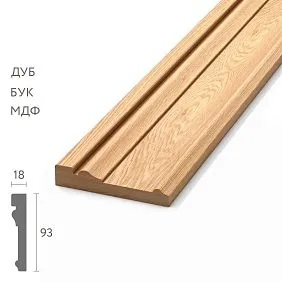

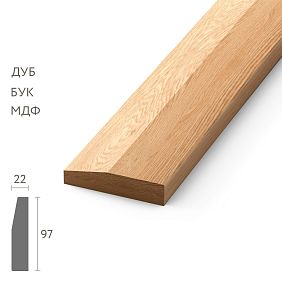


What is millwork and why it's measured in meters
The term 'millwork' comes from the word 'linear' - meaning measured by length without considering width and thickness. When you buy wooden baseboard or wooden door casings, the price is indicated per linear meter. This means that regardless of the baseboard height - sixty, eighty, or one hundred twenty millimeters - you pay for one meter of length of a product made from a specific wood species and profile.
Floor wooden skirtingis a plank that covers the technological gap between floor and wall, protects the lower part of the wall from damage, and conceals the edges of the flooring. Wooden door casing is the framing of a door or window opening that masks the joint between the frame and wall, giving the opening a finished appearance.
The standard length of wooden baseboards is two thousand to two thousand five hundred millimeters. Solid wood floor baseboards are rarely made longer due to transportation and installation features. Door casings usually have a length of two thousand two hundred to two thousand four hundred millimeters, which corresponds to the standard height of a door opening with allowance for trimming.




Tools for precise measurement: preparation for calculations
Before starting calculations, prepare measurement tools. Measurement accuracy determines calculation accuracy, which means savings in budget and nerves.
Our factory also produces:


Tape measure - the foundation of measurements
Use a tape measure at least five meters long - this is sufficient for measuring most walls in an apartment. A metal tape is preferable to a cloth one: it doesn't stretch over time, maintains shape, and provides accurate readings. For measuring long walls, a seven-and-a-half to ten meter tape measure or laser distance meter is convenient.
Get Consultation
Laser distance meter - technology of precision
A laser distance meter measures distance to three hundredths of a millimeter, which is excessive for baseboards but provides absolute confidence in measurement correctness. Especially convenient for measuring long walls, diagonals, and opening heights. The drawback is the higher price compared to a regular tape measure, but for professionals the tool is indispensable.
Notebook and pencil - data recording
Don't rely on memory. Record each measurement immediately, indicating what exactly was measured: the wall in the living room from corner to door, the height of the door opening in the bedroom, the width of the window in the kitchen. Create an apartment diagram with dimensions indicated - this will simplify calculations and eliminate confusion.
Calculation of wooden floor baseboard quantity: step-by-step instructions
Step one: measuring room perimeter
Start by measuring all walls in the room. Walk around the perimeter with a tape measure, recording the length of each wall. If the room is rectangular - measure length and width, multiply by two, add the results. For example: a room four meters by five meters. The perimeter equals (four plus five) multiplied by two, which is eighteen meters.
For rooms with complex shapes, measure each wall separately, then sum them up. Bay windows, niches, protrusions - all these increase baseboard footage. Don't miss any section.
Step two: subtracting door openings
In places where doors are installed, baseboard is not mounted - the opening is occupied by the door frame with casings. Measure the width of each door opening. The standard width of an interior door is eight hundred to nine hundred millimeters, entrance door - nine hundred to one thousand millimeters. Subtract the width of all openings from the total perimeter.
Let's return to our example: a room with an eighteen-meter perimeter, one door nine hundred millimeters wide (zero point nine meters). Subtract: eighteen minus zero point nine equals seventeen point one meters.
Step three: accounting for complex sections
If the room has radiators installed flush with the floor, measure their width and subtract from the total footage—baseboards are usually not installed behind radiators. Built-in furniture that extends from floor to ceiling and is flush with the wall is also excluded from the calculation.
Bay windows, columns, and protrusions require additional measurements. Go around each protrusion, measure all faces. For a bay window with five faces, measure each face separately and sum them up.
Step four: adding a margin for trimming and defects
Even with perfectly accurate measurements, situations arise during installation that require additional trimming: wall unevenness, miter angle errors, accidental damage to the plank. Professional practice recommends adding a margin of five to ten percent to the calculated footage.
For our example: seventeen point one meters plus a ten percent margin. Ten percent of seventeen point one is one point seventy-one hundredths of a meter. Round up to two meters of margin. Total required: nineteen meters.wooden floor skirting boards.
Step five: converting meters to the number of planks
The standard length of a wooden baseboard is two point five meters. Divide the required footage by the length of one plank: nineteen divided by two point five equals seven point six. Round up to eight planks. When purchasing, order the exact number of planks, not abstract meters—this simplifies communication with the seller and prevents misunderstandings.
Casing mathematics: calculation for door openings
Wooden casing is installed around the perimeter of a door or window opening. The quantity calculation differs from baseboards, as it considers the framing configuration and the method of joining planks at corners.
Standard scheme: two and a half times the opening height
The classic formula for calculating casing for one door: opening height multiplied by two point five. Why two and a half? Because casing is installed on the two vertical sides of the opening (two heights) plus the horizontal top plank (half the height, accounting for the opening width and margin for miter cuts).
Standard interior opening height is two thousand millimeters. Multiply by two point five: two multiplied by two point five equals five linear meters for one door on one side.
Double-sided casing: doubling the footage
If the door is installed in an interior partition, casing is mounted on both sides of the opening. In this case, the calculated footage is doubled: five meters multiplied by two equals ten meters for one door.
For an apartment with four interior doors (each requiring double-sided casing), you will need: four multiplied by ten equals forty meters of wooden casing. The entrance door is usually cased only from inside the apartment, so for it, calculate five meters.
Accounting for casing width and joining method
Standard casing width is seventy to ninety millimeters. The wider the casing, the more prominent the opening framing becomes, but the more linear footage is used for the top horizontal plank. If the opening width is nine hundred millimeters and the casing width is eighty millimeters, the top plank will be nine hundred plus two times eighty (on each side), which is one thousand sixty millimeters or one point zero six meters.
When cutting at a forty-five-degree angle (classic corner joint), part of the plank length is used to form the angle. With a straight butt joint (top plank laid over vertical ones without cutting), the footage calculation is simpler, but the joint aesthetics are inferior to miter cuts.
Window casing: calculation specifics
Window casing is installed on all four sides of the opening, unlike door casing, where the bottom part remains uncased. The formula for a window: (opening height plus width) multiplied by two plus a margin for trimming.
A standard window of one thousand two hundred millimeters by one thousand four hundred millimeters requires: (one point two plus one point four) multiplied by two equals five point two meters of casing. Add a ten percent margin: five point two plus zero point five equals five point seven meters for one window.
Calculation features for different types of rooms
Rectangular room without complexities
The simplest case—a rectangular room with one door, no bay windows, niches, or built-in furniture. Measure the perimeter, subtract the door width, add a ten percent margin—done. Even a beginner can handle such a calculation in five minutes.
Studio or open-plan apartment
In studios and open-plan apartments, zones smoothly transition into one another without door partitions.to buy wooden baseboardFor such a space, baseboards are needed along the entire perimeter, including internal partitions separating functional zones. Measure the total perimeter of the external walls, add the length of all internal partitions adjacent to the floor. Subtract the width of the entrance door and, if present, the width of doors to bathrooms and utility rooms.
Room with a bay window: measurement nuances
A bay window is a protruding part of a room with windows, creating additional floor space. A classic bay window has three, five, or seven facets. Measure the length of each facet of the bay window separately. The facets are usually short—from five hundred to one thousand five hundred millimeters each—but their combined length significantly increases the linear footage of the baseboard.
Example: a bay window with five facets, three front facets each eight hundred millimeters, two side facets each six hundred millimeters. Total length of the bay window: three times eight hundred plus two times six hundred equals three thousand six hundred millimeters or three point six meters additional to the main perimeter of the room.
Corridor with many doors
Corridors and hallways in apartments are often narrow spaces with a large number of doorways: entrance door, doors to rooms, bathroom, walk-in closet. Baseboard is required here in minimal quantity—only on free sections of walls. However, a lot of door casings will be needed.
Measure the perimeter of the corridor, subtract the width of all doorways. It often turns out that only three to five meters of baseboard are needed, while thirty to fifty meters of door casings are needed for framing five to seven doors on both sides.
Choosing baseboard height: impact on linear footage and aesthetics
The height of a wooden floor baseboard does not affect the linear footage—a linear meter of baseboard sixty millimeters high is equal in length to a meter of baseboard one hundred twenty millimeters high. But the height affects the visual perception of space and, indirectly, the cost per linear meter.
Narrow baseboards: modern conciseness
Baseboards sixty to seventy millimeters high are the choice for modern minimalist interiors with low ceilings up to two point seven meters. A narrow baseboard visually does not break up the wall, creates a neat floor framing, and does not attract excessive attention. The cost per linear meter of a narrow baseboard is usually lower than that of a wide one due to less wood consumption.
Standard baseboards: universal solution
Eighty millimeters high—a classic of the genre, a universal size for most apartments with ceilings two point six to two point nine meters. Wooden floor baseboards of this height look harmonious in almost any interior, sufficiently cover the joint between floor and wall, but do not look bulky.
Wide baseboards: the respectability of classic style
Baseboards one hundred to one hundred twenty millimeters high are used in classic interiors, rooms with high ceilings from three meters, in representative spaces where solidity and substantiality are important. A wide baseboard emphasizes the height of the ceilings, creates a sense of stability and reliability. The cost per linear meter is higher due to the larger volume of material.
Wood species: how material choice affects calculation
Wood species does not directly affect linear footage, but it affects the final cost of the molding and the durability of the products, which indirectly determines how much material reserve is necessary.
Oak: an investment for eternity
Oak baseboards and door casings are the most expensive option, but also the most durable. Oak density is seven hundred twenty to eight hundred eighty kilograms per cubic meter, hardness is phenomenal. Oak practically does not deform, withstands high mechanical loads, and retains its shape for decades. The allowance for defects when working with oak molding can be minimal—five percent, as the quality of the material excludes most defects.
Beech: optimal balance
Beech is twenty to thirty percent cheaper than oak, while strength and durability are close to oak. Beech density is six hundred fifty to seven hundred kilograms, texture is calm, color is warm pinkish-beige. Beech processes, turns, and paints excellently. A ten percent allowance is optimal.
Ash: strength and beauty of grain
Ash has an expressive texture with contrasting annual rings. Density is high, about seven hundred kilograms, the material's elasticity allows it to withstand dynamic loads. Ash baseboards with oil finish reveal all the beauty of the natural pattern. Allowance ten percent.
Birch: economy for painting
If painted molding is planned—white baseboards and door casings under enamel—birch is ideal. Density about six hundred kilograms, strength is sufficient for baseboards. Texture is inexpressive, which is a plus for paint. Cost is thirty to forty percent lower than beech. Allowance fifteen percent, as birch is more prone to warping with changes in humidity.
Accounting for corners and joints: technical calculation nuances
Every corner of a room, every joint of baseboards requires mitering and fitting. The more corners, the more material waste, the larger the necessary allowance.
Internal corners: classic connection
An internal corner of a room (where walls form an angle into the room) is a standard situation. Baseboards are mitered at forty-five degrees and joined. With proper mitering, waste is minimal—the cut-off part equals the height of the baseboard multiplied by the square root of two, which for a baseboard eighty millimeters high gives about one hundred thirteen millimeters of waste per corner.
A rectangular room has four internal corners. Eight miter cuts (two per corner) result in a total waste of about one meter per room. This meter is already included in the ten percent allowance.
External corners: increased waste
An external corner (column, protrusion, bay window) requires mitering in the opposite direction. Each external corner increases material waste. If a room has a square-section column, it adds four external corners, increasing waste by another half meter.
Straight joints: minimizing waste
On long walls where the length exceeds that of a single baseboard strip, the strips are joined end-to-end. Modern baseboards have a beveled end that makes the joint less noticeable. Waste from a straight joint is minimal—two to three millimeters for trimming to ensure a tight fit.
Creating an estimate: from linear footage to budget
After calculating the linear footage, proceed to creating an estimate. The price for baseboards and door casings is given per linear meter, but the final cost depends on the wood species, profile height, complexity of profiling, and type of finish.
Basic cost calculation formula
Multiply the baseboard linear footage by the price per linear meter plus the door casing linear footage by the price per linear meter plus the cost of accessories (corner pieces, end caps, fasteners). For example: nineteen meters of baseboard at three hundred fifty rubles per meter equals six thousand six hundred fifty rubles. Forty-five meters of door casings at two hundred eighty rubles per meter equals twelve thousand six hundred rubles. Total: nineteen thousand two hundred fifty rubles for the trim.
Impact of wood species on cost
Oak baseboard eighty millimeters high can cost from seven hundred to one thousand two hundred rubles per linear meter. Beech—from four hundred fifty to seven hundred rubles. Ash—from five hundred to eight hundred. Birch for painting—from two hundred fifty to four hundred fifty rubles. Multiply the price difference by the linear footage—and the range of the final cost can amount to tens of thousands of rubles.
Additional expenses: don't forget the small items
Besides the strips themselves, you will need: internal and external corner pieces for baseboards (if you don't plan to miter the corners), end caps, connectors for straight joints, fasteners (screws, dowels, clips), glue or liquid nails for adhesive installation. Allocate two to three thousand rubles in the estimate for accessories for a standard two-room apartment.
Practical calculation examples for typical apartments
Theory without practice is an abstraction. Let's look at specific calculation examples for typical apartment layouts.
One-room apartment thirty-five square meters
Layout: hallway four meters by one and a half meters, room four and a half meters by four meters, kitchen three meters by two and a half meters, combined bathroom two meters by two meters. Three interior doors (entrance to the room, entrance to the kitchen, entrance to the bathroom) plus the apartment entrance door.
Baseboard calculation:
-
Hallway: perimeter (four plus one and a half) multiplied by two equals eleven meters minus three door openings of zero point eight meters each equals eleven minus two point four equals eight point six meters.
-
Room: perimeter (four point five plus four) multiplied by two equals seventeen meters minus one door zero point eight meters equals sixteen point two meters.
-
Kitchen: perimeter (three plus two point five) multiplied by two equals eleven meters minus one door zero point eight equals ten point two meters.
-
Bathroom: perimeter (two plus two) multiplied by two equals eight meters minus one door zero point seven equals seven point three meters (the bathroom door is usually narrower).
Total: eight point six plus sixteen point two plus ten point two plus seven point three equals forty-two point three meters. Add a ten percent reserve: forty-two point three plus four point two equals forty-six and a half meters of baseboard.
Door casing calculation:
Four doors with double-sided casing (interior): four multiplied by ten equals forty meters. Entrance door single-sided: five meters. Total forty-five meters of door casings plus a five percent reserve equals forty-seven and a half meters.
Two-room apartment fifty-five square meters
Layout: hallway five meters by two meters, living room five meters by four meters, bedroom four meters by three and a half meters, kitchen three meters by three meters, bathroom two and a half meters by two meters, balcony. Five interior doors plus entrance door plus balcony door.
Baseboard calculation: perimeters of all rooms minus door openings plus a reserve gives approximately sixty-five to seventy meters of baseboard.
Door casing calculation: five double-sided interior doors (fifty meters) plus single-sided entrance door (five meters) plus single-sided balcony door (six meters, as balcony doors are taller) plus a reserve equals approximately sixty-five meters of door casings.
Three-room apartment eighty square meters
More complex layout, possibly with a bay window, two bathrooms, a storage room. The calculation is similar to the previous ones, but the linear footage increases. Typically, such an apartment will require eighty to ninety meters of baseboard and seventy to eighty meters of door casings.
How to avoid mistakes in calculation: typical errors
Even experienced craftsmen sometimes make mistakes in calculations. Let's look at typical errors and how to avoid them.
Forgot about interior partitions
When measuring the perimeter, it's easy to overlook interior partitions that divide the space. A small two-meter partition adds four meters of baseboard (on both sides), which, if forgotten, results in a material shortage.
Doorways were incorrectly accounted for
Measure the width of a doorway at the floor, not by the door leaf. The opening is always wider than the leaf by the thickness of the frame on each side. A standard eight-hundred-millimeter door is installed in a nine-hundred-millimeter opening. If you subtract eight hundred instead of nine hundred, you'll get a shortage of one hundred millimeters per door.
Did not add a margin or added an insufficient one
A five percent margin is the minimum for perfectly straight walls and an experienced craftsman. In reality, walls are rarely ideal, corners aren't always right angles, and accidental damage to a plank during transport or installation is common. It's better to allocate ten percent and have a small leftover than to be short by a meter and have to buy more, wasting time and money on delivery.
Measured at the floor instead of the wall
Baseboard is attached to the wall and follows its contour. If the floor is uneven (which is common in old houses), measuring at the floor will give an inaccurate result. Measure along the wall at a height of five to ten centimeters from the floor.
Purchase optimization: how to save without compromising quality
After calculating the linear footage, the question arises: how to purchase the required amount while optimizing costs and avoiding excess?
Buy standard length bars
Standard planks of two point five meters (baseboard) or two point two meters (casing) are optimal for transport and installation. Ordering non-standard lengths increases cost and production time.
Calculate the cutting layout before purchase
Before buying, create a cutting diagram: which walls will be covered by which planks, where short offcuts will go. If a wall is four point eight meters long, you'll need two planks of two point five meters each—one will be used whole, from the second you'll cut two meters, leaving a fifty-centimeter offcut. This offcut can cover a short section elsewhere.
Buy in one batch from one collection
The shade of wood, even within the same species, varies from batch to batch. If you buy baseboard later, it may differ in tone. Purchasing the entire volume at once guarantees uniformity of color and texture.
Agree on returning excess
Some suppliers accept returns of unused planks in perfect condition. Clarify this possibility before purchase. This allows ordering with a small margin without the risk of financial loss.
Tools and materials for installation: what to consider when purchasing
In addition to the baseboards and casings themselves, tools and consumables for installation will be required. These also need to be included in calculations and budget.
Cutting tool: miter saw or miter box
For cutting forty-five-degree angles, a miter saw or a quality miter box with a fine-toothed saw is needed. A miter saw ensures a perfect cut but costs from five thousand rubles. A miter box is a budget option for five hundred to a thousand rubles but requires skill.
Fasteners: screws, dowels, clips
The fastening method depends on the wall material. For concrete and brick—six by forty millimeter dowels with screws. For drywall—butterfly dowels. For wooden walls—wood screws. Clips are used for hidden fastening but require special grooves on the back of the baseboard.
Fastener consumption: one fastener per fifty to seventy centimeters of baseboard. For nineteen meters of baseboard, about thirty fastening points are needed, meaning thirty dowels and thirty screws.
Adhesive or liquid nails: an alternative to mechanical fasteners
For perfectly straight wallsFloor wooden skirtingyou can glue with liquid nails. Consumption—one three-hundred-milliliter cartridge for ten to fifteen meters of baseboard when applied in dots. The advantage of adhesive mounting is the absence of visible fastener holes. The disadvantage is the inability to remove without damaging the plank.
Wood filler: masking defects
After installation, fastener holes are masked with wood filler matching the wood tone. One two-hundred-gram jar is enough for complete treatment of trim in a two-room apartment.
Impact of layout on linear footage: complex cases
Some architectural solutions significantly increase the linear footage.
Open floor plan without doors
Modern studio apartments without interior partitions require maximum baseboard footage, as there are almost no deductions for doorways. However, door casings are needed minimally.
Round and oval elements
If the apartment has a curved wall, a round-section column, or arched openings, standard straight planks will have to be bent (which is difficult) or special flexible baseboards used. The footage increases because waste during fitting is significant.
Multi-level floors
Podiums, interior steps, and multi-level zones require baseboard installation on the vertical edges of steps and podiums. Measure the height of each step, multiply by the number of steps, and add to the total footage.
Additional elements: moldings and cornices in the overall concept
Often, other linear products are used together with baseboards and door casings to create a complete interior.
Moldings: decor for walls and furniture
Wooden moldingsare used to create decorative panels on walls, frame mirrors, and embellish furniture. Calculating molding footage is similar to calculating baseboards: measure the perimeter of the decorated area and add allowance for corners.
Cornices: ceiling framing
Wooden corniceis installed at the junction of the wall and ceiling, creating a finishing touch for the upper part of the space. Calculating cornice footage is identical to calculating baseboard footage: room perimeter minus door openings plus allowance.
If you plan comprehensive finishing (baseboard, door casings, moldings, cornices), purchase all elements from the same wood species and with a unified finish type to create a harmonious ensemble.
Modern trends: how fashion influences calculation
Fashion trends in interior design influence the choice of linear products and, indirectly, the footage.
Hidden baseboard: minimalism in everything
The popular hidden (shadow) baseboard today is a gap between the floor and wall without a visible plank. Lighting in the gap creates a floating floor effect. For this solution, a baseboard is not needed at all, but a special profile embedded in the wall is required. The footage of the embedded profile equals the room perimeter.
Wide baseboards in classic style
The resurgence of interest in classic interiors increases demand for wide baseboards with a height of one hundred to one hundred twenty millimeters. The footage does not change, but the cost per linear meter increases.
Contrasting door casings
The trend for contrasting door casings (white on dark walls, dark on light ones) requires painted linear products. If you buy pre-painted casings, consider that the manufacturer has included the painting cost in the price. If you plan to paint them yourself, purchase primed linear products for painting.
FAQ: Answers to Frequently Asked Questions
How much baseboard is needed for a room four by five meters?
Perimeter of a room four by five meters: (four plus five) multiplied by two equals eighteen meters. Subtract the width of the doorway (usually zero point nine meters) equals seventeen point one meters. Add ten percent allowance: seventeen point one plus one point seven equals nineteen meters of baseboard.
How to calculate the amount of door casings for five doors?
One door with double-sided casing requires ten meters of casings. Five doors: five multiplied by ten equals fifty meters. Add ten percent allowance: fifty plus five equals fifty-five meters of casings.
Can leftover baseboard be used for short sections?
Yes, leftovers from long planks are used for short sections between doors, in niches, behind radiators. Plan the cutting to minimize waste.
Is a material allowance needed if I order exactly according to calculation?
It is definitely needed. Even with perfectly accurate measurements, unforeseen situations arise: uneven corners, accidental damage to a plank, cutting errors. Minimum allowance is five percent, optimal is ten.
How to account for baseboards behind furniture?
If the furniture is built-in and extends from floor to ceiling without gaps, baseboards are not installed behind it. If the furniture might be moved someday, it's better to install baseboards behind it for completeness.
Does the calculation differ for MDF and solid wood?
No, the linear footage calculation is identical. The difference lies in the cost per linear meter and the durability of the material.
How much does the installation of baseboards and casings cost?
The cost of installation work typically ranges from fifty to one hundred fifty rubles per linear meter for baseboards and eighty to one hundred fifty rubles per linear meter for casings, depending on complexity and region.
Is it possible to save on wood species?
Yes, but with caveats. If the baseboard will be painted, choose a cheaper species (birch) for painting. If you plan a transparent finish that highlights the grain, saving on the species will affect aesthetics.
How to calculate baseboards for a studio apartment?
Measure the perimeter of all exterior walls plus the length of interior partitions, if any. Subtract the width of the entrance door and bathroom doors. Add a ten percent surplus.
How often do baseboards and casings need to be updated?
With quality solid wood and proper finishing, baseboards and casings last for decades without needing replacement. Refinishing the coating (varnish, oil) is needed every five to seven years.
Conclusion: Calculation accuracy is the foundation of a successful renovation
Calculating the quantity of millwork is a task requiring attention and care, but not mathematically complex. Measure room perimeters, subtract door openings, add a surplus — and you will get the exact linear footagewooden floor skirting boardsandof wooden casings. Accurate calculation saves your money, time, and nerves, eliminating the need to hastily purchase additional material or wonder what to do with extra linear meters of millwork.
Choosing quality millwork made from solid wood is an investment in the durability and aesthetics of your home. Natural wood creates an atmosphere of warmth and coziness, lasts for decades, and enhances even the simplest interior. Correct linear footage calculation allows you to realize a design concept without unnecessary expenses.
The company STAVROS has specialized for over two decades in the production ofwooden laths made of natural wood. In-house production, equipped with high-precision CNC machinery, chamber drying of wood to a moisture content of eight to twelve percent, multi-stage quality control at all stages — all this guarantees that every baseboard plank, every casing meets the specified dimensions with an accuracy of up to half a millimeter.
The STAVROS catalog features baseboards with heights from sixty to one hundred twenty millimeters made from solid oak, beech, ash, birch, as well as MDF baseboards for painting. A variety of profiles — from minimalist straight lines to classic shaped profiles with coves — allows you to find a solution for any interior style. Wooden casings are available in a wide range of widths from seventy to one hundred millimeters, with various profiles and finishing options.
STAVROS offers millwork with various types of final finishes: natural oil with hard wax, highlighting the wood grain; polyurethane varnish with varying degrees of gloss, creating a protective film; primed items for painting for individual coloring; stained with dyes in noble shades from light walnut to dark wenge; patinated with an antique effect for vintage interiors.
An individual approach to each project is the philosophy of STAVROS. Professional consultants will help calculate the exact linear footage of millwork for your apartment, taking into account all layout features, suggest the optimal combination of baseboards and casings, select additional elements —Wooden moldings for wall decoration,Wooden beams for ceiling framing, creating a comprehensive solution for your interior.
STAVROS works with private clients, interior designers, and construction companies across Russia. In-house production, established logistics, a flexible discount system for wholesale buyers, delivery to any city in Russia from Kaliningrad to Vladivostok. Visit STAVROS showrooms in Moscow and St. Petersburg to see the full range of millwork, assess the quality of craftsmanship, and choose optimal solutions for your project.
STAVROS is about traditions of woodworking craftsmanship, modern production technologies, European quality standards, and care for every client. ChoosingFloor wooden skirtingandWooden casing from STAVROS means choosing quality tested by time, the beauty of natural wood, and confidence in dimensional accuracy. Create interiors that delight every day, last for decades, and are passed on to future generations as examples of taste and quality.