Article Contents:
- Introduction: skirting board — the unnoticed hero of interior design
- What is skirting board and why is it needed
- Definition and Purpose
- Functional tasks of skirting board
- Psychological effect of proper skirting board
- Skirting board height: critical parameter for selection
- Standard skirting board heights
- Choosing height depending on ceiling height
- Psychological effect of skirting board height
- Skirting board profiles: from simple to complex
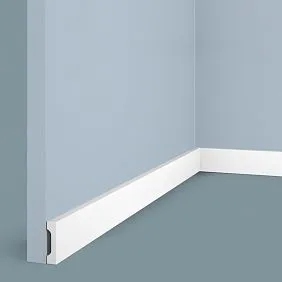
- Simple rectangular profile
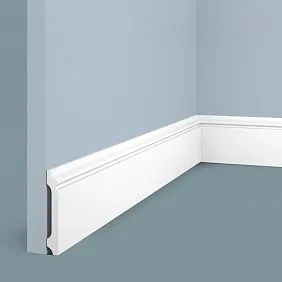
- Half-round profile (beveled)
- Complex carved profile
- With bevel and molding
- Profile with groove
- Table for selecting skirting board height and profile
- Skirting board junction with door casings: critical design point
- What is a door casing and where it is located
- Junction rule: profile harmony
- Junction height and gaps
- Junction options in corners
- Materials for wooden skirting boards
- Spruce — universal choice
- Oak — premium choice
- Beech — balance of quality and price
- Ash — elegant alternative
- Larch — wear resistance
- Color and finish of wooden skirting boards
- Natural wood color
- Painting
- Under the floor level
- Contrasting skirting board
- Practical calculation
- How to calculate the required amount of skirting board
- Cost calculation
- Typical mistakes when choosing skirting board
- Error 1: Too low skirting board for high ceilings
- Error 2: Too high skirting board for low ceilings
- Error 3: Mismatch between skirting board and door casing style
- Error 4: Incorrect fitting
- Error 5: Saving on material
- Compatibility with other finishing elements
- Coordination with flooring
- Coordination with doors
- Coordination with moldings and cornices
- Frequently Asked Questions
- What height of skirting board to choose for a Khrushchev apartment?
- Can skirting boards made of different materials be used in different rooms?
- What profile of skirting board to choose for minimalism?
- How to install skirting board in corners?
- Can skirting board be installed by oneself?
- Is primer needed before painting skirting board?
- How often should skirting board paint be refreshed?
- What skirting board to choose for a bathroom?
- Can plastic skirting board be used next to wooden one?
- Where to buy wooden skirting board?
- Skirting board installation process
- Surface Preparation
- Choosing Fasteners
- Corner cutting
- Installation sequence
- Conclusion: Choosing skirting board as an investment in beauty




Introduction: Skirting board — the unnoticed hero of interior design
When we enter a room and look at it critically, the skirting board is the last thing we focus on. And that’s correct. The ideal skirting board is one that doesn’t draw attention, yet does everything right. However, when the skirting board is chosen incorrectly, its flaws become obvious. The room loses its completeness, visual harmony is disrupted, and a sense of incompleteness appears.
wooden skirting board purchaseThis is a solution that requires understanding several key parameters. The height of the skirting board, its profile, the way it connects to the door casing — all of this affects how your interior will look. In this article, we will discuss how to make the right choice and how to avoid mistakes that will turn your room into a space with a sense of carelessness.




What is a skirting board and why is it needed?
Our factory also produces:
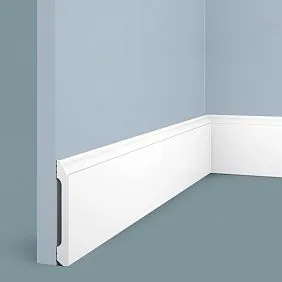
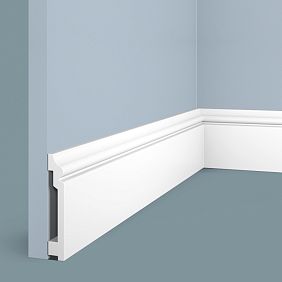
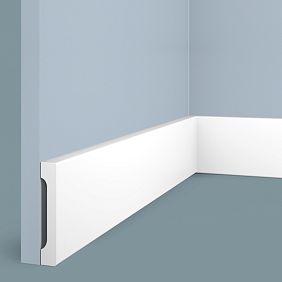
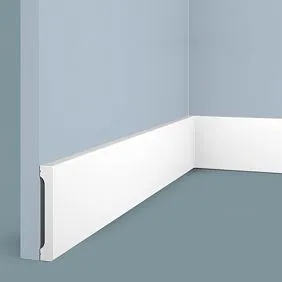
Definition and purpose
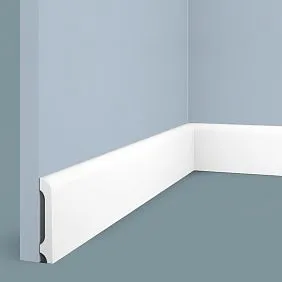
Skirting board is a finishing element that is mounted along the perimeter of the room at the floor level, concealing the gap between the wall and the floor. The historical origin of the skirting board is linked to a practical necessity — the gap between the floor and the wall needed to be covered with something to prevent dust from entering and to make it easier to clean the floors.
But over time, the skirting board acquired not only a functional, but also an aesthetic value.Wooden floor skirting boardsBecame an important element of architectural design, visually completing the room, creating line purity and proportion harmony.
Get Consultation
Functional tasks of the skirting board
The skirting board solves several practical tasks:
-
Concealing the gap between the floor and the wall
-
Protecting the lower part of the wall from damage (impacts, moisture, dirt)
-
Hiding communications (cables, pipes) inside the hollow profile
-
Visual completion of the room, creating clean lines
-
Visual expansion of space (properly selected skirting board)
Psychological effect of the correct skirting board
When the skirting board is chosen correctly, the room appears more well-maintained and thoughtfully designed. It's like well-chosen accessories in clothing — they don't draw attention, but complete the look. An incorrect skirting board creates the opposite effect — a feeling that something is off, even though the viewer cannot immediately understand what exactly.
Skirting board height: a critical selection parameter
Standard skirting board heights
The height of the skirting board is not an arbitrary parameter. There are standard sizes used in professional design:
-
Minimum height: 30 millimeters (very rare, only for minimalist interiors)
-
Low height: 40-50 millimeters (modern interiors, loft)
-
Standard height: 70-100 millimeters (classic interiors, universal choice)
-
High height: 120-150 millimeters (spacious rooms, classic, baroque)
-
Very high height: 180-250 millimeters (palatial interiors, high ceilings)
Choosing height depending on ceiling height
This is the main rule you need to remember: the height of the skirting board should be proportional to the height of the ceiling.
If the ceilings are 2.5 meters — chooseWooden floor skirting boardsheight of 70-80 millimeters. In this case, the skirting board will occupy approximately 1/35 of the room's height, creating harmony.
If the ceilings are 3 meters — you can choose a skirting board height of 100-120 millimeters. This will occupy 1/25-1/30 of the height, which looks proportional.
If the ceilings are 3.5 meters and higher — you can afford a skirting board height of 150-200 millimeters.
Psychological effect of baseboard height
A high baseboard visually 'raises' the wall, giving the room a sense of space and grandeur. A low baseboard creates an impression of compactness and modernity.
Important: do not choose a too-low baseboard for high ceilings. It will look 'lost' and inappropriate. Conversely, an overly high baseboard in a room with low ceilings 'eats' space.
Baseboard profiles: from simple to complex
Simple rectangular profile
This is the most minimalist option. The baseboard is a simple rectangular strip without embellishments. Such a profile is used in minimalist interiors, modern style, and lofts.
Advantages: simplicity, easy to clean, does not collect dust.
Disadvantages: may look boring, not suitable for classic interiors.
Semi-circular profile (rounded)
The top part of the baseboard is rounded. This is a classic option suitable for most interiors.with a classic profile creates a sense of solidity, reliability.With a semi-circular profile, it looks softer than rectangular.
Advantages: versatile, suitable for classic and modern styles, looks softer.
Disadvantages: dust may accumulate in the recessed part.
Complex carved profile
This is a baseboard with many details, carvings, and ornamentation. Used in classic interiors, baroque, and empire styles.
Advantages: looks expensive and luxurious, suitable for classic style.
Disadvantages: expensive, difficult to clean, requires professional installation.
Profile with bevel and molding
This profile has a beveled top part angled toward the wall, creating a transition to the wall. This helps visually 'open up' the wall, making the room appear brighter.
Advantages: visually expands space, suitable for any style.
Disadvantages: requires more careful mounting.
Profile with groove
The baseboard has a groove into which you can insert a cable or pipe. This is a practical option for modern interiors with lots of electrical equipment.
Advantages: practical, allows hiding utilities.
Disadvantages: may look 'technical', not always suitable for classic styles.
Baseboard height and profile selection table
| Ceiling height m | Recommended baseboard height mm | Recommended profile | Interior style | Effect |
|---|---|---|---|---|
| Up to 2.6 | 40-50 | Rectangular, semi-circular | Minimalism, loft | Compactness |
| 2.6-2.8 | 60-80 | Semi-circular | Modern, classic | Balance |
| 2.8-3.0 | 80-100 | Semi-circular, carved | Classic, modern | Harmony |
| 3.0-3.5 | 100-150 | Carved, complex | Classic, empire | Grandeur |
| 3.5+ | 150-250 | Very complex carved | Baroque, empire | Luxury |
Baseboard meeting with casing: critical design point
What is a casing and where is it located
Wooden skirting board purchaseIt is a finishing element that frames a door or window opening. The casing covers the gap between the frame and the wall, giving the door or window a finished look.
The bottom edge of the casing is at the point where it meets the baseboard. This is a critical point where two finishing elements meet.
Joining rule: profile harmony
Main rule: the baseboard and casing profiles must match. Ideally, they are made from the same profile or have similar 'tongue' detailing.
If the baseboard is rectangular, the casing should also be rectangular or minimalist.
If the baseboard has carving, the casing should have similar carving or at least the same style.
If these elements 'conflict' in style, the room looks unfinished and disorganized.
Joining height and gaps
The bottom edge of the casing should end approximately 2-5 millimeters above the top edge of the baseboard. This ensures clean lines and hides any irregularities.
There should be no visible gaps between the baseboard and casing when viewed from the side. If there is a gap, it indicates poor installation.
Joining options in corners
Option 1: Skirting board stops before the architrave
The skirting board ends 5-10 centimeters from the architrave. This creates clean lines but requires careful rounding of the skirting board ends.
Option 2: Skirting board 'enters' under the architrave
The skirting board is mounted under the architrave, creating a single line. This is the cleanest, most professional option. Requires precise fitting.
Option 3: Architrave covers the skirting board
The architrave is installed so that its lower edge covers the upper edge of the skirting board. This hides gaps but looks less elegant.
Materials for wooden skirting boards
Spruce - universal choice
wooden skirting board purchaseFrom spruce - this is the most popular option. Spruce is a soft, easily workable wood. It cuts well and stains easily.
The height of spruce skirting board can be from 30 to 200 millimeters. The price of spruce is medium, accessible to most.
Disadvantage: spruce may warp with humidity changes and may release resin.
Oak - premium choice
Oak - hard, noble wood.with a classic profile creates a sense of solidity, reliability.From oak, it will last for decades. Oak has a beautiful texture and rich color.
The price of oak is 2-3 times higher than spruce, but it is an investment in longevity.
Beech - balance of quality and price
Beech - hard wood, more affordable than oak. Beech skirting board looks elegant and holds its shape well.
Price is literally between spruce and oak.
Ash - elegant alternative
Ash has a beautiful texture, similar to oak, but cheaper. Ash skirting board looks stylish and modern.
Larch - durability
Larch is known for its hardness and resistance to moisture. Larch skirting board is suitable for rooms with high humidity.
Color and finish of wooden skirting boards
Natural wood color
The skirting board can be left in the natural wood color, coated with transparent varnish. This highlights the beauty of the wood texture.
This option suits classic and modern interiors where one wants to emphasize naturalness.
Painting
The skirting board can be painted in any color. Classic options include white, gray, or to match the floor covering.
Colored skirting board - bolder solution, suitable for certain styles.
To match the floor
Baseboard matching the floor color creates a visual extension of the floor, visually expanding the room.
Contrasting baseboard
A baseboard contrasting in color with the floor and walls is a designer solution that draws attention. Used rarely, requires caution.
Practical calculation
How to calculate the required amount of baseboard
-
Measure the room's perimeter - add up the lengths of all walls.
-
Add 10% allowance for cutting and losses.
-
Divide the resulting number by the length of one baseboard plank (usually 2 or 2.5 meters).
-
Round up.
For example, room perimeter is 20 meters. With allowance: 20 + 2 = 22 meters. Baseboard is sold in 2.5-meter planks: 22 / 2.5 = 8.8, rounded up to 9 planks.
Cost calculation
Wooden baseboardMade of pine, costs approximately 300-800 rubles per linear meter, depending on height and profile.
Made of oak - 800-2000 rubles per meter.
Made of beech - 500-1200 rubles per meter.
For a room of 20 sq.m (perimeter approximately 18 meters):
-
Pine: 18 * 500 = 9000 rubles
-
Book: 18 * 800 = 14400 rubles
-
Oak: 18 * 1200 = 21600 rubles
Plus installation, cutouts, paint - on average another 5000-10000 rubles.
Typical mistakes when choosing baseboard
Error 1: Too low baseboard for high ceilings
Installed a 50 mm baseboard in a room with 3-meter ceilings - looks lost, inappropriate.
Error 2: Too high baseboard for low ceilings
150 mm baseboard in a Khrushchev apartment - visually 'eats' space.
Error 3: Mismatch between baseboard and casing style
Ornate carved baseboard + simple rectangular casing = style conflict.
Error 4: Incorrect fitting
Gaps are visible between baseboard and casing, or baseboard is unevenly cut - this is due to careless installation.
Error 5: Cutting costs on material
Cheap baseboard made of low-quality pine deforms within a year and starts squeaking.
Compatibility with other finishing elements
Should harmonize with the floor finish. If the floor is dark parquet, use skirting board of the same wood. If the floor is light laminate, the skirting board should also be light.
wooden baseboards for floorSkirting boards on doors should be made of the same material and in the same style as the skirting board.
Alignment with doors
Skirting boards on doors should be made of the same material and in the same style as the skirting board.
Alignment with moldings and cornices
If there are moldings on the walls or a cornice under the ceiling in the room, the skirting board should be in the same 'design language'.
Frequently asked questions
What height of skirting board to choose for a Khrushchev apartment?
For low ceilings (2.5 meters), a skirting board height of 60-80 millimeters is recommended. This is a balanced option.
Can skirting boards made of different materials be used in different rooms?
Yes, it is possible. But in one room — only one material, one color.
What profile of skirting board to choose for minimalism?
Rectangular profile, without ornamentation, in white or gray color.
How to install skirting board in corners?
The corners of the skirting board should be cut at a 45-degree angle. This requires precision and special tools.
Can skirting board be installed by oneself?
Yes, it is possible if you have the necessary tools and skills. But it is better to consult professionals.
Is primer needed before painting the skirting board?
Yes, primer is necessary for better paint adhesion and uniform color.
How often should the paint on the skirting board be refreshed?
Every 3-5 years, depending on room conditions and paint quality.
What skirting board to choose for a bathroom?
For a bathroom, it is better to choose a skirting board made of hardwood (oak, larch) or even polyurethane. A wooden skirting board in a bathroom requires good ventilation.
Can plastic skirting board be used next to wooden skirting board?
Not recommended. Materials should be coordinated.
Where to buyWooden baseboard?
From specialized suppliers of building materials.buy wooden skirting boardCan be purchased from reputable companies with quality guarantees.
Skirting board installation process
Surface preparation
Before installing the skirting board, the floor must be clean and dry. If the floor is uneven, use adjustable legs under the skirting board.
Choosing fasteners
Baseboard is mounted using finish nails, screws, or adhesive. The choice depends on the type of flooring.
Cutting corners
Baseboard corners must be cut at a 45-degree angle. This requires using a miter saw.
Installation Sequence
-
Start with straight sections, then move to corners.
-
Use a level to check for horizontal alignment.
-
Leave a small gap at corners for thermal expansion.
Conclusion: Choosing baseboard as an investment in beauty
Correctly selected and installedWooden baseboard— is an investment in the beauty of your home. It is not just a functional element, but an architectural detail that completes the interior, creates clean lines, and gives the room a sense of completion.
Choosingwooden baseboards for floor— consider ceiling height, interior style, coordination with window casings and other finishing elements. Do not compromise on material quality — a properly installed wooden baseboard will last for decades.
STAVROS company offers a wide selection ofwooden baseboards— of various heights, profiles, and materials. From classic, heavy-dutywooden skirting boards for floors— to modern minimalist options — all of this is available in the STAVROS catalog.
Consider ceiling height, room size, interior style, and functionality.of wooden floor skirting board— or if necessary to coordinate it withwooden window casings— consult STAVROS specialists. They will help you select the ideal solution, taking into account all parameters of your room.
buy wooden skirting board— choosing STAVROS means getting a guarantee of quality, professional advice, and long-lasting results. Your home deserves the best.