Article Contents:
- Hardness: when every Brinell unit matters
- What does hardness difference mean in practice
- Scratches and abrasion: microscopy of destruction
- Stability: how wood reacts to microclimate
- Shrinkage coefficients: dry numbers of wet reality
- Tendency to warp: oak versus beech
- Humidity fluctuations: seasonal cycles and their consequences
- Equilibrium moisture: dynamic balance
- Adsorption hysteresis: wood's memory
- Reaction to extreme conditions: flooding and over-drying
- Flooding: when upstairs neighbors forgot to close the tap
- Over-drying: winter in an apartment with central heating
- Repairability: second life after damage
- Local sanding: removing scratches and scuffs
- Filling cracks and dents: when damage is severe
- Resanding and re-coating: total restoration
- Texture and aesthetics: subjective perception of objective properties
- Patina and aging: how materials change over time
- Price and value: is the extra cost justified
- Ecology and health: impact on microclimate
- Compatibility with floor coverings
- Technical nuances of installation
- Availability and assortment
- Frequently asked questions: practical answers
- Conclusion: conscious choice between classic and elegance

When choosing wooden skirting board, most buyers face a dilemma: oak or beech? Both options belong to hardwoods, both manufacturers position as premium, both look beautiful in catalogs. But is oak worth its price, which is usually 20–40% higher than beech? Or is the extra cost a result of clever marketing, not real advantages? The answer is not on the surface. It lies in the physics of the material, its behavior under humidity fluctuations, reaction to mechanical loads, ability to retain aesthetics for decades. This is not theoretical reasoning — it is the result of long-term observations of oak and beech skirting boards in real interiors, in homes with different microclimates, under different usage styles.wooden skirting board purchaseOak or beech — a choice requiring understanding of nuances that manifest not at the moment of purchase, but over months and years of use.




Hardness: when every Brinell unit matters
Let's start with the most measurable parameter — hardness on the Brinell scale. This is not an abstract number from technical documentation, but an indicator directly affecting the skirting board's durability in real conditions. The measurement method is simple and visual: a steel ball with a 10 mm diameter is pressed into the wood surface under a 100 kg load for 30 seconds. Then the diameter of the remaining indentation is measured, and hardness is calculated in conditional units using a special formula.
Oak: hardness 3.7–4.0 Brinell units (depending on variety and growing conditions). Northern European oak, growing slowly in harsh climates, has denser growth rings and hardness closer to 4.0. Southern oak, growing faster, is slightly softer — 3.7–3.8. But even this seemingly insignificant difference is critical in the long term. The density of oak wood at standard 12% moisture content is 650–750 kg/m³, providing a sense of solidity, sturdiness, and monumentality.
Beech: hardness 3.5–3.8 Brinell units. European beech, predominant on the Russian market, usually shows 3.6–3.7. The difference from oak is 0.2–0.3 units — on paper, this appears insignificant, only 5–8%. But in reality, this difference manifests in resistance to punctual impacts, depth of scratches from abrasive particles (sand carried on shoes), and wear rate in areas of constant contact. The density of beech wood is practically identical to oak — 650–700 kg/m³ — so both materials are visually and tactilely perceived as equally "heavy."




What does hardness difference mean in practice?
Let’s imagine a typical scenario: a hallway in an urban apartment. The skirting board daily contacts shoes (leather, rubber, with hard heels), bags (placed on the floor, leaning against the wall), umbrellas, strollers, scooters. Each contact is a micro-impact, creating stress in the surface layer of the wood. A hard material distributes this stress, deformation is minimal, no trace remains. A softer material deforms more deeply, gradually accumulating damage.
After one year of active use, an oak skirting board in a hallway may acquire 1–2 barely noticeable dents from strong impacts (a heavy bag fell, a bicycle hit it). A beech skirting board under the same conditions — 3–5 dents, plus minor scratches in areas of constant contact. After five years, the difference becomes obvious: the oak skirting board retains 90–95% of its original appearance, while the beech retains only 80–85%. This does not mean beech is bad. It means that for rooms with high mechanical load, oak is preferable.
In bedrooms, offices, and living rooms, where the intensity of mechanical impacts on the skirting board is dozens of times lower, the difference in hardness is negligible. Here, beech serves as long as oak, but at significantly lower cost.wooden skirting board purchaseBeech for bedrooms — a rational choice. For hallways — oak justifies the extra cost.
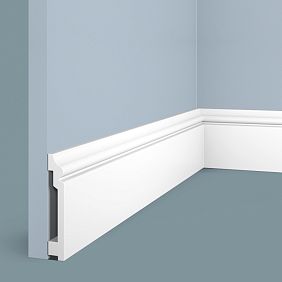
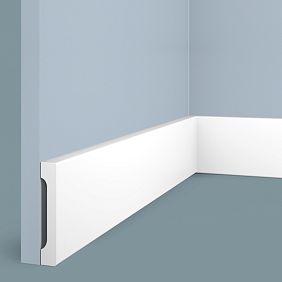
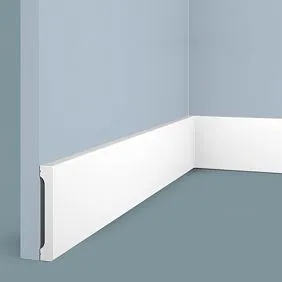
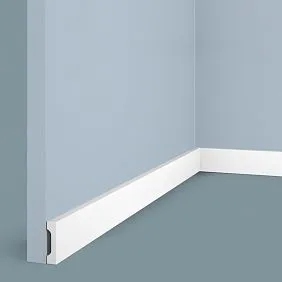
Our factory also produces:
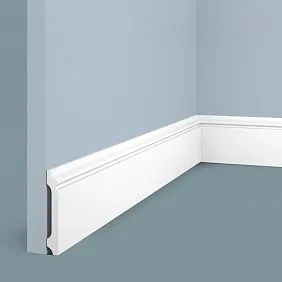

Scratches and wear: microscopic destruction
Hardness affects not only resistance to impacts but also resistance to scratches and wear. Every time you vacuum the floor, the vacuum cleaner’s brush or body brushes against the skirting board. Sand particles and microscopic abrasive particles remain on the sole, which act like sandpaper during friction — shaving off the thinnest layers of material.
Oak, due to its high hardness, resists this process more effectively. Scratches are shallow (usually no deeper than 0.1–0.2 mm), affecting only the top layer of finish (varnish or oil), without damaging the wood itself. During wear of the finish in areas of constant contact, the wood is exposed, which is itself sufficiently dense to resist further destruction for a long time.
Beech scratches slightly more easily — scratch depth 0.15–0.25 mm. When the finish wears away, the wood is exposed, which is dense but slightly softer than oak. The destruction process accelerates. After several years of active use in high-traffic zones (corners, areas near doors), a beech skirting board may require restoration, while an oak skirting board continues to serve without intervention.
Important nuance: both species restore well. Local sanding, repainting, and applying a protective layer restore the original appearance. But if an oak skirting board requires restoration every 10–15 years, beech requires it every 7–10 years. Additional restoration means time, money, and inconvenience (moving furniture, breathing dust from sanding). For many, this is an argument in favor of oak.
Get Consultation
Stability: how wood reacts to microclimate
Wood stability — the ability to maintain dimensions and shape when the temperature and humidity of the surrounding environment change. This is a critically important parameter for skirting boards, which are fixed to walls in one position and must maintain tight contact for years.
The physics of the process is as follows: wood is hygroscopic — it absorbs moisture from the air when relative humidity increases and releases it when humidity decreases. Wood fibers, saturated with water, swell — the wood expands. When losing moisture, they contract — the wood dries. However, changes occur unevenly: across the grain (in width and thickness), wood changes significantly, along the grain (in length) — minimally, only 0.1–0.3%.
Shrinkage coefficients: dry numbers of wet reality
Stability is quantitatively expressed by shrinkage coefficients — the percentage of size change when the wood’s moisture content changes by one percent. Three coefficients are distinguished:
-
Radial (change in direction from the center of the trunk to the periphery)
-
Tangential (change in direction tangent to growth rings)
-
Volumetric (change in volume)
Oak:
-
Radial shrinkage coefficient: 0.18
-
Tangential shrinkage coefficient: 0.27
-
Volumetric shrinkage coefficient: 0.43
Beech:
-
Radial shrinkage coefficient: 0.17
-
Tangential shrinkage coefficient: 0.32
-
Volumetric shrinkage coefficient: 0.47
At first glance, beech appears even more stable than oak in radial shrinkage (0.17 vs. 0.18). But tangential shrinkage is more critical, because most skirting boards are made from tangentially sawn boards (growth rings run in an arc across the plank). And here beech loses: 0.32 vs. 0.27 for oak. A difference of 0.05 may seem insignificant, but in absolute terms, it is substantial.
Let’s take a skirting board 80 mm high, manufactured at 10% wood moisture. Install it in a room where, during winter (heating season), relative air humidity drops to 30% (corresponding to 6% equilibrium wood moisture), and in summer rises to 60% (corresponding to 12% equilibrium wood moisture). The amplitude of wood moisture fluctuations: 12% − 6% = 6%.
Height change = 80 mm × 0.27 × 6% = 1.3 millimeters
Height change = 80 mm × 0.32 × 6% = 1.5 millimeters
Oak skirting board:
Height change = 80 mm × 0.32 × 6% = 1.5 millimeters
Only a difference of 0.2 millimeters, but it is critical at joints, in corners, at junctions with door casings. After several expansion-contracting cycles, the beech skirting board slightly more "moves", joints may diverge, gaps appear. Oak behaves more stably, gaps are smaller or absent.
Susceptibility to warping: oak versus beech
Warping — deformation of the strip, during which it bends, twists, losing its original flatness. The main cause — uneven moisture change across the thickness or length of the strip. If the front surface of the skirting board (coated with varnish or oil) absorbs and releases moisture more slowly than the back (adhering to the wall, often untreated or less intensively treated), tensions arise, bending the strip.
Studies show: beech is more prone to warping than oak. The reason — higher hygroscopicity of beech. It absorbs moisture more actively when air humidity increases and releases it more actively when it decreases. Fluctuations occur faster, the wood does not have time to react uniformly, moisture gradients arise, leading to deformations.
In practice, this manifests as: a beech skirting board installed in a room with an unstable microclimate (a country house with intermittent heating, an apartment with poor ventilation) may begin to detach from the wall in the central part of the strip after one or two years, forming a visible gap. The skirting board has bent into an arc. Oak, under the same conditions, retains flatness significantly better.
In rooms with a stable microclimate (urban apartment with constant heating and ventilation, humidity 40–60% year-round) the difference is less noticeable. Both oak and beech behave stably. But if the microclimate is problematic,wooden skirting board purchasechoose oak — less risk of unpleasant surprises.
Fluctuations in humidity: seasonal cycles and their consequences
Air humidity in a room is not constant. In winter, when heating is on, it drops to 20–35% (in poorly ventilated apartments even down to 15–20%). In summer, especially during rainy periods, it rises to 60–70%. These fluctuations are inevitable, and wood reacts to them continuously.
Equilibrium moisture: dynamic balance
Wood strives for equilibrium moisture — a state in which the amount of moisture absorbed from the air equals the amount released. Equilibrium moisture depends on temperature and relative humidity. There are tables linking these parameters:
-
At 20°C and relative humidity 30%: equilibrium moisture of wood ≈ 6%
-
At 20°C and relative humidity 50%: ≈ 9%
-
At 20°C and relative humidity 70%: ≈ 13%
Oak: natural equilibrium moisture of freshly-sawn wood (stored outdoors under cover) is about 50%. This means that oak in freshly-sawn condition contains relatively little water compared to other species. It is inherently "drier", less saturated with moisture. After kiln drying to furniture-grade moisture of 8–10%, oak quickly reaches equilibrium with the surrounding environment and thereafter fluctuates within a narrow range.
Beech: natural equilibrium moisture is about 64%. Beech in freshly-sawn condition contains more water, it is a more "moist" species. This means that beech wood has a more developed capillary system, exchanges moisture with the surrounding environment more actively. After kiln drying, beech also reaches 8–10%, but its reaction to changes in air humidity is faster and more pronounced.
Practical experiment (conducted by an independent research center): samples of oak and beech skirting boards, dried to 10% moisture, were placed in a climatic chamber. Over a month, air humidity cycled: one week at 30%, one week at 70%. Samples were weighed daily, and size changes were recorded.
Results:
-
Oak sample fluctuated within a moisture range of 7–11% (amplitude 4%)
-
Beech sample fluctuated within a range of 6–13% (amplitude 7%)
Beech sample gained and lost moisture nearly twice as actively. Consequently, its geometry changed more significantly, material stresses were higher, risk of cracking and warping — greater.
Hysteresis of sorption: wood's memory
Interesting nuance: wood exhibits sorption hysteresis. This means that at the same relative air humidity, the equilibrium moisture of wood differs depending on the direction of the process (sorption or desorption). Wood gaining moisture reaches one equilibrium moisture level. The same wood, losing moisture at the same relative air humidity, has another (slightly higher) equilibrium moisture level.
Beech demonstrates more pronounced hysteresis than oak. This adds instability: under cyclic humidity changes, beech does not simply oscillate — it "lags", creating additional stresses in the material. Oak responds more linearly, predictably.
For the buyer this means: if your home or apartment has an unstable microclimate (old stock without proper ventilation, a country house with intermittent occupancy, ground floor with a damp basement), oak skirting board — a safe choice. If the microclimate is stable (new construction with supply ventilation, apartment with air conditioners and humidifiers), beech skirting board will last just as long at a lower price.
Reaction to extreme conditions: flooding and drying
Real life sometimes throws extreme situations that test materials for durability.
Flooding: when neighbors upstairs forgot to close the tap
Typical urban tragedy: flooding from neighbors. Water reaches the floor, naturally contacting the skirting board. Question: how will oak and beech behave?
Oak contains a significant amount of tannins — tannic substances that give wood its characteristic smell and color. Tannins have hydrophobic (water-repellent) properties. They do not make oak waterproof, but slow down water absorption. During brief contact (a few hours), an oak skirting board absorbs water slowly, primarily through ends and unprocessed areas. If water is quickly removed and the skirting board is dried (with a fan, heat gun), consequences are minimal: slight swelling that disappears after drying, possibly localized darkening (tannins react with water).
Beech is devoid of tannins, its wood is more porous and permeable to water. Under the same brief contact, a beech skirting board absorbs 20–30% more water than oak. Swelling is stronger, drying takes longer. If drying occurs quickly (heat gun, direct sunlight), there is a high risk of cracking: surface layers dry faster than inner layers, creating stress, and the wood cracks. After drying, a beech skirting board often deforms more severely — it may 'bend' (bend, twist).
Prolonged flooding (water stood for several days) is critical for both species, but beech suffers more. It not only swells more, but is also more susceptible to fungal damage (blue mold, mildew). Oak, thanks to tannins with antiseptic properties, resists fungi more effectively.
Practical advice: if flooding occurs, immediately remove water, dismantle skirting boards (if possible), dry them slowly in the shade with good ventilation. Do not use intense heating. After drying, assess the condition: if the skirting board retains its shape and has not cracked, it can be reinstalled. Oak skirting boards withstand flooding in 70–80% of cases without critical consequences. Beech skirting boards — in 50–60%.
Over-drying: winter in an apartment with central heating
Opposite situation: winter, radiators hot, air humidity drops to 15–25%. Wood intensely loses moisture, dries out, and the risk of cracking appears.
Oak dries more slowly and evenly. Its structure is dense, moisture leaves gradually. Cracks appear primarily in areas of stress concentration: knots, zones with sharp changes in fiber direction. A high-quality first-grade oak skirting board, properly dried before installation, rarely cracks even at extremely low humidity. Small hairline cracks (up to 1 millimeter deep, 0.1–0.3 millimeter wide) may appear, practically invisible to the eye.
Beech dries faster and unevenly. Its more porous structure allows moisture to leave more intensely, creating moisture gradients between surface and core. Cracks in beech appear more frequently, are deeper (up to 2–3 millimeters), wider (up to 0.5 millimeter), and more noticeable. A second-grade beech skirting board, with natural stresses around knots, may crack quite significantly.
Interestingly, both materials demonstrate memory of shape: after humidity normalizes, small cracks partially close (wood swells), but do not completely disappear. Deep cracks remain permanently, requiring restoration (filling with putty, sanding, finishing).
Practical advice: in rooms with central heating, use humidifiers to maintain relative humidity at 40–50%. This is beneficial not only for skirting boards but also for health (dry air dries mucous membranes and weakens immunity). If humidifying is not possible, choose oak skirting boards — lower risk of problems.
Repairability: second life after damage
Repairability — the ability of a material to restore its functional and aesthetic properties after damage without complete replacement. For wooden skirting boards, this is one of the key parameters distinguishing them from plastic or MDF analogs.
Local sanding: removing scratches and scuffs
The simplest form of restoration — local sanding. Scratches up to 0.5 millimeter deep, scuffs, and worn areas of finish are removed using fine-grit sandpaper (grit 180–220 for initial treatment, 320–400 for finishing). After sanding, the damaged area is coated with the same composition as the entire skirting board (varnish, oil, wax).
Oak sands relatively easily due to its uniform dense structure. Large pores are filled with sanding dust, creating a smooth surface. The boundary between the restored area and the rest of the skirting board is practically invisible, especially if sanding is done carefully with smooth transitions. Oak wood accepts finishes well, and color is evened out.
Beech sands slightly more difficult due to its finer and denser texture. Small pores take longer to fill with sanding dust, requiring more passes. But the result is excellent: beech wood after sanding is silky, smooth, and pleasant to the touch. The finish applies evenly. The restoration boundary is also barely noticeable.
In terms of sandability, both species are practically equal. Both materials are excellent for local restoration. The difference is that oak skirting boards require such restoration less often (due to high hardness), while beech skirting boards require it more often.
Filling cracks and dents: when damage is severe
Deep scratches (over 0.5 millimeter), dents, chips, and cracks require filling with wood putty before sanding. Putty is matched to the wood tone, fills the damage, and after drying is sanded flush with the surface.
Oak: putty on oak holds well due to its dense structure and rough surface of damage (chips and cracks in oak have ragged edges, providing good adhesion for putty). After sanding and finishing, the putty is barely noticeable, especially on stained oak or oak with pronounced texture, where minor color variations are natural.wooden skirting board purchaseOak — means having the ability for multiple restorations without loss of aesthetics.
Beech: putty on beech also holds well, but more noticeably. Beech wood is uniform, light, with fine texture — any foreign inclusions are more contrasting. Putty, even if precisely matched in color, may differ in gloss and texture. After varnishing, the difference becomes even more noticeable: wood and putty refract light differently. On natural beech (without staining), restoration is visible upon careful inspection. On stained beech, putty is better masked.
Practical nuance: for quality restoration, the putty shade selection is critical. Manufacturers offer dozens of shades, but exact matches are rare. Professionals mix several shades to achieve maximum match, or use tinting additives. For oak, shade selection is easier (texture masks minor differences), for beech — more difficult.
Resanding and re-finishing: total restoration
When local restorations are insufficient (skirting board covered with numerous small damages, finish worn, color faded), total restoration is applied: complete resanding with re-finishing. The skirting board is dismantled, sanded over the entire surface, removing old finish and surface wood layer (typically 0.5–1 millimeter), then re-finished.
Oak withstands 3–5 such cycles (depending on initial profile thickness). After each resanding, the wood is renewed, color becomes slightly lighter (patina is removed), texture becomes more pronounced. An oak skirting board after total restoration looks like new, sometimes even better: old wood acquires a unique noble texture unattainable in fresh wood.
Beech also withstands 3–5 cycles. Beech wood lightens more than oak after resanding (beech is initially lighter, patina is more contrasting). The result is excellent, but there is a nuance: if beech was stained, complete resanding removes the stain, requiring re-staining. Matching the original shade is difficult, and often all skirting boards in the room must be restained for uniformity.
Restoration economics: full restoration of oak skirting (disassembly, sanding, finishing, reinstallation) costs 40–60% of the price of new. For beech — 35–55% (beech is cheaper, saving is less). Considering that restoration is needed every 10–15 years, and a quality skirting lasts 50–70 years, over its entire service life you will spend an amount comparable to purchasing another set. But this is still more cost-effective and eco-friendly than replacing skirting entirely.
Texture and aesthetics: subjective perception of objective properties
Besides technical characteristics, aesthetics matter — how the material looks, how it is perceived, what emotions it evokes.
Oak: texture is coarse, expressive, dramatic. Annual rings are clear and wide, creating a wavy pattern on tangential cuts. Medullary rays (heartwood rays) — a distinctive feature of oak — appear as light or shiny streaks running perpendicular to the grain. On radial cuts, they create a "mirror" effect, playing with light. Oak color varies from light straw to dark brown. Young oak is lighter, old oak darker. Water-aged oak (soaked for decades) acquires a gray-black hue with silver reflections.
Oak looks rugged, substantial, monumental. It is associated with strength, durability, tradition. Oak skirting is ideal for classic interiors (English classic, American colonial style), libraries, offices, masculine spaces. In modern interiors, oak is used as a contrasting element, bringing warmth and naturalness into minimalist spaces.
Beech: texture is fine, uniform, delicate. Annual rings are barely noticeable, pattern is weakly expressed. Medullary rays are present, but thinner and less noticeable than in oak. Beech color ranges from light pink to reddish-brown, with a characteristic warm tone. After polishing, beech surface is silky, with a soft satin sheen.
Beech looks elegant, refined, unobtrusive. It is associated with delicacy, European style, quality without flamboyance. Beech skirting is ideal for bedrooms, children's rooms, living rooms in Scandinavian or modern styles. Beech stains beautifully, taking any shade — from whitewashed to dark wenge. This makes it versatile for designers: need a light interior — whitewashed beech, dark — stained to walnut or wenge.
Patina and aging: how materials change over time
Oak darkens over time. This is a natural oxidation process of tannins under the influence of light and oxygen. After 5–10 years, light oak becomes golden-brown, medium oak dark brown. This is perceived as noble patina, a sign of authenticity and age. Many deliberately accelerate this process using stains, patination, ammonia treatment (fumigation). Older oak skirting is valued higher than new.
Beech also darkens, but less expressively. Its pinkish tone becomes more brown, warmer. Changes are gentle, gradual, barely noticeable. Beech does not acquire the dramatic patina that oak does. This is not a drawback, but a feature: beech skirting after 10 years looks almost as new, which is important for interiors where aesthetic stability is critical.
Ultraviolet (sunlight) affects both species. Oak fades slowly, lightening by one to two tones under prolonged intense exposure, but texture remains pronounced. Beech fades faster, losing its pinkish tone, becoming grayish-yellow. UV filters are used in varnishes and oils for protection.
Price and value: is the extra cost justified?
Oak is 20–40% more expensive than beech depending on region, grade, and processing. First-grade oak skirting costs 800–1200 rubles per linear meter. Beech equivalent — 600–900 rubles. For a 20 sq. m room (perimeter around 18 meters), the difference is 3600–5400 rubles. For a 60 sq. m apartment (3 rooms) — 11000–16000 rubles.
Is the extra cost justified? It depends on usage conditions and personal priorities.
Oak justifies the extra cost if:
-
Room with high mechanical load (entryway, hallway, children's room)
-
Unstable microclimate (country house, old building, ground floor)
-
Maximum durability without restoration is important
-
Expressive texture and patina effect are valued
-
Classic interior requiring noble materials
Beech is a rational choice if:
-
Room with low load (bedroom, office, living room)
-
Stable microclimate (new apartment with ventilation)
-
Budget is limited, cost-saving is important
-
Prefers uniform, delicate texture
-
Planned tint in non-standard color
Choice formula: for public zones (entryway, living room, dining room) — oak. For private (bedrooms, children's rooms) — beech. Compromise: oak in entryway and living room, beech in bedrooms. Savings of 30–40% while maintaining high quality in critical zones.
Ecology and health: impact on microclimate
Oak contains tannins — natural antiseptics. They suppress bacterial, fungal, and mold growth. Oak skirting creates a healthy microclimate, especially important for allergy sufferers, asthmatics, and young children. Tannins also repel wood-boring insects. Risk of infestation of oak skirting by insects is minimal.
Beech lacks tannins, but this does not make it less eco-friendly. Beech wood is hypoallergenic, does not emit volatile substances, is safe for health. Absence of tannins makes beech more neutral: it neither positively nor negatively affects the microclimate. For the absolute majority of people, this is irrelevant.
Ecological properties of both species are high. Choice based on this criterion is subjective: if antibacterial properties are important — oak; if neutrality is important — beech.
Compatibility with floor coverings
Oak combines ideally with oak parquet, solid planks, and oak engineered boards. The species and tone match, creating a monolithic effect. Oak also harmonizes with dark species (walnut, wenge, merbau) due to its expressive texture. With laminate "oak," oak skirting creates contrast: natural wood highlights the artificial imitation, which may be an advantage (honesty of materials) or a disadvantage (exposure).
Beech is universal due to its delicate texture. It combines with any floor covering: parquet (oak, ash, exotic), engineered boards, laminate, vinyl tiles. A beech skirting, tinted to the desired tone, creates a harmonious frame that does not conflict with the floor. This makes beech a designer’s choice when working with diverse materials.
Technical installation nuances
Oak is harder and denser. During installation, it requires pre-drilling holes for screws (drill bit diameter 0.5 mm smaller than screw diameter). Without pre-drilling, oak may split, especially near ends. Nails are harder to drive and require a heavy hammer. Adhesive holds well due to dense structure. Cutting oak requires sharp tools: circular saw with carbide inserts, fine-toothed hacksaw. Dull tools create chips and ragged edges.
Beech is slightly softer and easier to work with. Pre-drilling is desirable but not always necessary (depends on wood quality and screw diameter). Nails are easier to drive. Adhesive holds well. Cutting is simpler, tools dull slower. For DIY installation, beech is slightly preferable, especially for beginners.
The difference is insignificant and irrelevant for professional installers. But if you plan to install skirting yourself, beech is slightly easier to work with.
Availability and assortment
Oak: widely available on the Russian market. Most manufacturers offer oak skirting in various profiles, heights, and finishes. The choice is vast: from simple straight profiles to complex classic ones with carving. Oak is available in any region with minimal delivery times.
Beech: well represented, but the assortment is slightly narrower. Not all manufacturers work with beech (it requires more precise humidity control during production). The selection of profiles and sizes is sufficient for most tasks, but less than oak. In some regions, beech availability may be lower, and delivery times longer.
For standard projects, availability of both species is sufficient. For non-standard (unique profiles, large volumes, urgent deadlines) oak is preferable.
Frequently Asked Questions: Practical Answers
Which skirting is better for the hallway: oak or beech?
For hallways where mechanical loads are maximum, oak is preferable. Its high hardness and stability guarantee long service life without restoration.
Can beech skirting be used in humid rooms?
Yes, but with reservations. Beech is more hygroscopic and requires quality moisture-resistant coating (multi-layer lacquer or oil-wax). In bathrooms with good ventilation, beech serves normally. In rooms with consistently high humidity (sauna, pool), oak or moisture-resistant conifers (larch) are preferable.
Why is oak more expensive than beech if their characteristics are similar?
Oak grows slower (70–100 years to technical maturity vs. 40–60 for beech), so there is less raw material. Processing oak is more complex due to high hardness. Demand for oak is higher due to reputation and aesthetics. All this contributes to the price.
How to visually distinguish oak skirting from beech?
Oak: large, expressive texture, clear annual rings, medullary rays (light streaks), color from light yellow to brown. Beech: fine, uniform texture, faint rings, pinkish tone.
Do skirting need additional treatment before installation?
Quality skirting arrives with factory coating and does not require additional treatment. If purchasing untreated (for painting), treat before installation: sanding, priming, coating (lacquer, oil, enamel), drying. Treating after installation is more difficult and less effective.
Which species tints better?
Beech tints better due to uniform structure. It takes stain and paint evenly, creating a uniform tone. Oak tints well, but texture remains visible (dark areas of annual rings stain more intensely than light areas), which may be an advantage (expressiveness) or disadvantage (non-uniformity).
How to care for oak and beech skirting?
Identical: dry or damp cleaning with soft cloth, periodic renewal of coating (polish for lacquered, oil for oiled). Avoid abrasives, aggressive chemicals, excessive moisture.
Which skirting is more eco-friendly?
Both are absolutely eco-friendly. Oak contains tannins with antibacterial properties — a minor advantage for allergy sufferers. Beech is neutral and hypoallergenic. The difference is minimal.
Can oak and beech skirting be combined in one apartment?
Yes, if they are in different rooms and not visible simultaneously. Visually, the species differ, and combining them in one space creates dissonance. But if oak is in the hallway and beech in bedrooms — no problems.
How long do oak and beech skirting boards last?
With proper installation and maintenance: oak 50–70 years, beech 40–60 years. The difference is due to oak’s higher hardness and stability. Both materials can be restored, extending service life to 100+ years.
Conclusion: a conscious choice between classicism and elegance
wooden skirting board purchaseOak or beech — a decision based not on blind adherence to fashion or price orientation, but on understanding the real properties of materials, usage conditions, and personal priorities. Oak is the choice for those who value maximum longevity, are willing to pay for it, and prefer a dramatic, bold aesthetic. Beech is the choice for rationalists who value quality at a reasonable price, delicate elegance, and versatility.
Oak’s hardness is 5–8% higher — this is evident in rooms with high mechanical loads. Oak’s stability is better — critical in environments with humidity fluctuations. Repairability is comparable — both species restore excellently. Aesthetics are subjective — some prefer dramatic oak, others refined beech.
Universal recommendation: for hallways, corridors, children’s rooms with active play — oak. For bedrooms, living rooms, offices — beech. If budget allows, oak everywhere. If budget is limited, beech everywhere. Both options ensure quality, longevity, and beauty.
STAVROS offers a wide selection of oak and beech skirting boards made from premium-grade solid wood. Each batch undergoes strict moisture control (guaranteed 8–10%), geometry (tolerance ±0.3 mm), and surface finish quality. STAVROS’ assortment includes skirting boards of various profiles (straight, classic, high), heights (50–150 mm), and finishes (natural lacquer, oil, tinted variants).
STAVROS specialists will help you choose the optimal species for your conditions, calculate the required material quantity, and provide a full set of accessories (angles, connectors, caps).wooden baseboards for floorSTAVROS — the combination of traditional carpentry craftsmanship, modern technologies, and honest customer relations.
STAVROS also offersFurniture legs, Furniture Handles, balusters for staircases, wooden planks on the wall, MoldingsAll elements for creating a harmonious interior from natural wood. Choose consciously, buy from reputable manufacturers, and enjoy quality for decades.