












































































Article Contents:
- Why baseboard remains an indispensable element
- Functional necessity
- Aesthetic role
- Round molding: functionality in cylindrical form
- Ergonomics of round cross-section
- Visual lightness
- Technological advantages
- Material unity: why using the same wood species matters
- Textural consistency
- Color Harmony
- Response to treatment
- Oak: the choice for prestigious interiors
- Natural durability
- Visual expressiveness
- Investment in property value
- Beech: European quality at a reasonable price
- Uniform structure
- Perfect coloring
- Formability when steamed
- MDF: a modern alternative to solid wood
- Geometric Stability
- Capability for complex profiles
- Ecological safety
- Package contents: what's included in the full set
- Baseboards
- Door and Window Skirting
- Ceiling Cornices
- Wall Mouldings
- Round molding for various purposes
- Proportions and scale: rules of harmony
- The one-tenth rule
- Baseboard and casing ratio
- Element thickness
- Installation: features of setting up a comprehensive solution
- Sequence of work
- Corner joints
- Fasteners and adhesives
- Treatment and protection: durability of the set
- Oils and Waxes
- Lacquers
- Staining
- Stylistic solutions: from classic to minimalism
- Classic Interiors
- Scandinavian minimalism
- Modern aesthetics
- Economic solution: when the set is more advantageous
- Batch consistency
- Unified treatment
- Price advantage
- Compatibility guarantee
- Custom order: when standard doesn't fit
- Non-standard sizes
- Unique profiles
- Rare wood species
- Frequently Asked Questions
- Can wooden skirting boards be combined with MDF architraves?
- What diameter of round molding should be chosen for a handrail?
- Does wooden molding require acclimatization before installation?
- How often should the oil coating be renewed?
- Can wooden skirting boards be installed in a bathroom?
- How to calculate the number of linear meters for a set?
- Service life of a wooden set?
- Can oak skirting boards be painted white?
- Conclusion
- Practical scenario: what a comprehensive solution looks like in a real project
- Design accents: how to make an interior expressive using skirting boards and round molding
- Economics of the solution: how to calculate cost and understand the benefit
- Answers to popular questions about skirting boards and round molding
- What height should the skirting board be for a standard ceiling height?
- What to choose: oak, beech, or MDF for skirting boards?
- Why use round molding at all if you can limit yourself to just skirting boards and architraves?
- Can oak skirting boards be combined with MDF molding or vice versa?
- How to care for wooden skirting boards and round molding?
- Can wooden trim be used in wet areas?
- Conclusion: why STAVROS

When it comes to architectural interior finishing, many focus on furniture, flooring, or wall color. But there is a category of elements that, while remaining unobtrusive, shape the character of the entire space. It is preciselyskirting boards and round molding as a setthat create that completeness which distinguishes a well-thought-out interior from a random collection of items. These elements work like invisible threads, connecting the floor, walls, and ceiling into a single composition, where every line matters, every transition is considered.
Wooden skirting boards protect the lower part of the wall from mechanical damage, conceal thermal expansion gaps in flooring, and mask installed utilities. Round molding — handrails, rods, decorative strips — adds functionality and visual interest to vertical planes. But their true value emerges when these elements are selected as a single ensemble: one wood species, coordinated surface treatment, harmonious proportions. It is the comprehensive approach that turns technical details into an architectural statement.


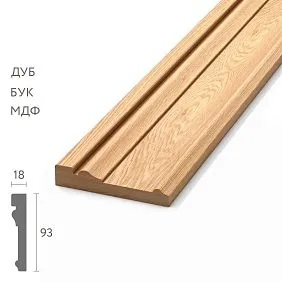

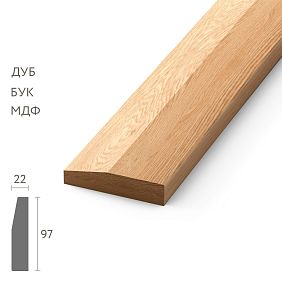


Why skirting boards remain an indispensable element
Can you do without skirting boards? Technically yes — modern technologies allow for shadow joints, hidden skirting boards, built-in solutions. However, practice shows: abandoning visible skirting boards deprives the interior of visual support, makes the transition between floor and wall unfinished, and the room itself — cold and uninhabited. Wooden skirting boards solve this problem elegantly and reliably.




Functional necessity
The joint between vertical and horizontal surfaces is always subject to increased loads. Dust accumulates here, impacts from vacuum cleaners, mops, and accidental furniture bumps during rearrangement occur. It is preciselyWooden baseboardthat takes these impacts upon itself, preserving expensive wall finishes. But this is only the beginning.
Any flooring — parquet, solid wood, laminate — requires an expansion gap around the perimeter of the room. Wood reacts to humidity changes by expanding and contracting. Without a technological gap, the floor will start to buckle, creaks and deformations will appear. Skirting boards elegantly conceal this gap, turning a technical necessity into a decorative advantage.
Behind the skirting board, you can run electrical cables, low-voltage lines, cable channels for internet and television. The modern home is saturated with utilities — and the ability to hide them from view while maintaining accessibility for maintenance is invaluable. A tall skirting board of 100-120 mm can even conceal quite thick cable bundles.
Our factory also produces:


Aesthetic role
But functionality is only one side.Wooden baseboardcreates a visual frame for the floor, clearly delineating the horizontal plane from the vertical. This separation is fundamentally important for perceiving the proportions of a room. Without a baseboard, the eye finds no point of support at the bottom, and the space appears blurred.
The height of the baseboard affects the visual perception of a room's height. A high baseboard (100-140 mm), characteristic of classic interiors, visually lowers the ceiling, creating a sense of intimacy and coziness. A low baseboard (50-70 mm), popular in minimalist spaces, conversely makes the room appear visually taller and lighter. The choice of height is an architectural decision that influences the character of the entire interior.
The profile of the baseboard—whether a simple rectangular or a complex shaped one—sets the stylistic tone. Classic profiles with curves, grooves, and decorative protrusions reference traditional architecture. Modern minimalist baseboards with sharp edges and straight lines emphasize the conciseness of the interior. Intermediate options—a rounded top with a straight base—work in transitional styles: Scandinavian, contemporary.
Get Consultation
Round molding: functionality in a cylindrical form
What unites a staircase handrail, a towel bar in the bathroom, a curtain rod, and a decorative wall batten? All these are variants of round molding—cylindrical wooden products of various diameters and purposes.Round wooden balusterspossesses universal appeal: a cylinder is comfortable for the hand to grasp, visually neutral, and technologically efficient to produce.
Ergonomics of a round cross-section
The human hand is evolutionarily adapted to grasp cylindrical objects—branches, tools. A diameter of 30-50 mm is optimal for a reliable grip by an adult's palm. This is precisely why round handrails are used on stairs, ramps, and in public spaces—where safety and comfort of movement need to be ensured.
a round handrail 50 mmhas become the de facto standard for residential staircases. This diameter provides a balance between structural strength and grip comfort. A smaller diameter of 30-40 mm is used for children's stairs or secondary (children's) handrails. A larger diameter of 60-70 mm is used in prestigious interiors or when there are increased strength requirements.
The smooth surface of round molding is pleasant to the touch. When moving a hand along a handrail, there are no unpleasant sensations, no risk of splinters or scratches—unlike a poorly finished square block. This is especially important for children's institutions, medical facilities, and public spaces.
Visual lightness
A round cross-section is perceived as visually lighter and more elegant compared to a square one of the same mass. This property is used in interiors where a sense of airiness is desired, to avoid visual overload. Decorative battens with a round cross-section, 15-30 mm in diameter, mounted vertically or horizontally on a wall, create rhythmic compositions without heaviness.
Round molding has no corners that visually 'catch' the eye. Light smoothly flows around the cylindrical surface, creating soft shadows and highlights. In classic interiors, this creates a sense of refinement; in modern ones, it creates concise elegance.
Technological Advantages
Manufacturing round molding on lathes ensures perfect geometry along the entire length of the product. Diameter deviation does not exceed ±0.5 mm over a section of several meters. Such precision is unattainable with manual processing and is critically important for the aesthetics of the finished product.
A round cross-section is equally strong in all directions. A square block behaves differently under bending depending on the direction of the applied load. A cylinder resists bending equally in any plane, which simplifies calculations and increases the reliability of the structure.
The absence of sharp edges makes round molding safer in case of accidental impact. This is important in homes with children and in rooms with limited maneuvering space. Furthermore, minor scratches and wear marks that occur during use are less noticeable on a cylindrical surface.
Material unity: why the same wood species is important
Imagine an interior whereOak skirtingis combined with pine handrails, beech architraves, and ash moldings. Technically, each element can be of high quality, but together they create visual dissonance, a sense of randomness, and lack of thought. The reason is simple: different species have different textures, colors, and surface characteristics.
Textural consistency
Oak has a large-pored structure with pronounced annual rings and medullary rays. The surface of an oak product shows characteristic lines creating a recognizable texture. Beech, on the contrary, has a fine-pored, homogeneous structure with almost no visible pattern. Pine displays contrasting annual rings with frequent transitions from light to dark.
When all wooden elements in a room are made from the same species, their texture works as a unified pattern, connecting the space. The eye glides from the baseboard to the architrave, from the handrail to the molding—and everywhere encounters a familiar texture, creating a sense of integrity. This works on a subconscious level: a person may not notice specific elements but perceives the space as harmonious.
Color Harmony
Even within the same species, the color of wood varies—from light shades of sapwood to dark tones of heartwood. However, these variations occur within a certain range characteristic of that species. Oak varies from light honey to brownish-gray, beech from pinkish to light brown, ash from creamy to straw-colored.
When using elements from the same species, their color shades, even if different, remain within the same range. This creates natural color harmony. If species are mixed, the color ranges intersect incorrectly: yellowish pine next to pinkish beech creates an unpleasant contrast.
Reaction to treatment
Different species react differently to staining, oils, and varnishes. Oak, with its porous structure, intensively absorbs stains, yielding a rich color. Beech absorbs finishes evenly, ensuring a uniform coating. Coniferous species, due to the presence of resin, may yield a spotty coloration.
When all elements are made from the same species and treated with the same composition, the result is predictable and uniform. Baseboards, architraves, moldings, and round molding acquire an identical shade, degree of gloss, and tactile properties. This creates the feeling that all elements were produced specifically for this particular interior, not randomly assembled from disparate sources.
Oak: the choice for prestigious interiors
If the budget allows,Oak skirtingin a set with oak round molding is a solution for decades. Oak is not just durable—it is practically indestructible with proper treatment. A wood density of 700-900 kg/m³ ensures high resistance to mechanical impacts. An oak baseboard will survive multiple vacuum cleaner hits, furniture movement, and accidental impacts without visible damage.
Natural Durability
Oak wood contains up to 10% tannins — tanning substances that are natural antiseptics. These substances protect the wood from rot, mold, and insect infestation. In historical buildings, oak structures last for centuries, while elements made from other species require replacement.
For spaces with high durability requirements — halls, entryways, commercial areas — oak skirting boards and moldings become a sound investment. The initial cost is higher, but the absence of the need for replacement over 30-50 years makes the solution economically justified.
Visual Expressiveness
Oak texture has character. Large pores, contrasting annual rings, and radial rays create a rich pattern that is discernible even on small elements.Round handrail 50 mmmade of oak showcases the texture around its entire circumference, creating visual interest under any lighting.
Oak takes staining superbly. Stains penetrate the open pores, creating an effect of depth and volume. Dark staining emphasizes the contrast between dense and porous zones of the wood, enhancing expressiveness. Light staining, on the contrary, softens the contrast, creating a noble pastel shade.
Brushing — a technique of artificial aging where soft fibers are removed with a brush while hard ones remain — is perfectly suited for oak. A brushed oak skirting board acquires a textured surface, pleasant to the touch and visually interesting. This technique is often used in country, Provence, and loft style interiors.
Investment in Property Value
High-quality oak finishing is a recognized marker of premium housing. Appraisal experts note the use of oak as a factor that increases the market value of a property. When selling a house or apartment, the presence of oak skirting boards, architraves, and handrails becomes an argument for a higher price.
Beech: European Quality at a Reasonable Price
Wooden baseboardmade of beech is the optimal balance of quality, durability, and cost. Beech is traditionally used in the European furniture and construction industry due to its technological properties. A density of 650-750 kg/m³ provides sufficient strength for most applications in residential interiors.
Uniform structure
Beech wood is distinguished by an exceptionally uniform structure without large pores or contrasting transitions. This makes it visually neutral, able to organically fit into any interior without dominating. A beech skirting board does not 'shout' about itself or draw excessive attention — it serves as an elegant frame that highlights other interior elements.
For minimalist interiors where wood texture should be noticeable but not dominant, beech is the ideal choice. The light shade of beech wood (from pinkish to creamy) creates a sense of lightness, airiness, and visually expands the space.
Perfect Coloring
The fine-pored structure of beech ensures exceptionally uniform absorption of stains, paints, and enamels. If elements of intense, uniform color are required — white, gray, colored — beech becomes the preferred material. A painted beech skirting board has a perfectly even tone without spots or transitions.
This property is especially valuable in Scandinavian interiors, where white or light gray skirting boards and architraves are a stylistic norm. Beech elements coated with white enamel create an impeccable surface that is impossible to achieve with more textured wood species.
Formability When Steamed
A unique property of beech is its ability to be molded after heat treatment. When steamed at a temperature of 100°C, beech wood becomes plastic and can be bent using templates with a radius of up to 400-500 mm without fiber breakage. The shape is fixed after drying.
This allows for the manufacture of curved elements — arched architraves, radius skirting boards for bay windows, curved handrails for spiral staircases. For interiors with complex geometry, curved walls, and non-standard openings, beech moldings open up possibilities unavailable for other wood species.
MDF: A Modern Alternative to Solid Wood
The budget does not always allow for the use of natural wood. In this case, high-quality high-density MDF becomes a reasonable alternative. Modern MDF skirting boards from STAVROS have nothing in common with cheap Chinese imitations — this is a high-tech material with a density of 750-850 kg/m³, comparable to natural wood.
Geometric Stability
The main advantage of MDF is absolute dimensional stability under changes in humidity and temperature. Natural wood, even of high-quality kiln-dried grade, reacts to fluctuations in room climate by expanding or contracting. With significant humidity fluctuations, a wooden skirting board can pull away from the wall, crack, or deform.
MDF is free from these drawbacks. The coefficient of thermal expansion is the same and minimal in all directions.Skirting board made of MDF, installed correctly, will last for decades without the slightest deformation even in spaces with unstable climates.
Capability for Complex Profiles
The homogeneous structure of MDF allows milling profiles of any complexity without the risk of chipping or breakage. Carved moldings, complex cornices, and multi-level skirting boards made from MDF achieve perfect clarity of pattern. Where natural wood might chip at the cutter exit or crack in thin sections, MDF maintains integrity.
This opens up wide possibilities for classic interiors that require skirting boards and moldings with complex profiling — flutes, coves, decorative elements. MDF skirting boards from STAVROS reproduce historical profiles with a precision unattainable for solid wood.
Ecological safety
The modern E1-class MDF used by STAVROS has formaldehyde emissions of no more than 0.1 mg/m³. This meets the strictest European standards and is comparable to the emissions of many natural materials. E1 MDF is completely safe in residential spaces.
Important advantage: MDF does not release volatile substances when heated. A wooden skirting board installed along a heating radiator or underfloor heating may release the smell of resin (coniferous wood) or tannins (oak) when warmed. MDF remains neutral at any operating temperature.
Package contents: what is included in the full set
When it comes toskirting board and round moulding included in the package, it is important to understand what is required to complete the interior. A fragmented approach — buying only the skirting board and forgetting about the architraves, or installing handrails without considering their match to the skirting — leads to a visually disjointed space.
Baseboards
The base element, framing the floor along the entire perimeter of the rooms. The skirting board height is chosen depending on the ceiling height and interior style:
-
50-70 mm — for rooms with a height of 2.4-2.7 m, minimalist interiors, modern styling
-
80-100 mm — for standard rooms with a height of 2.8-3.0 m, a universal solution for most interiors
-
110-140 mm — for spacious rooms with a height of 3.2-3.6 m, classical and neoclassical interiors
The skirting board profile should match the style: simple rectangular or with a rounded top for modern interiors, complex shaped with coves for classic styles. Important: the skirting board should be more substantial than the architraves and mouldings — it is the base element, the visual foundation.
Door and window casings
Wooden casingsframe the openings, linking them to the overall style of the room. The width of the architrave is usually 10-20 mm less than the height of the skirting board. For a 100 mm skirting board, architraves of 70-80 mm are optimal; for a 70 mm skirting board — architraves of 50-60 mm.
The architrave profile should echo the skirting board profile but be simpler and more elegant. If the skirting board has a rounded top, the architrave should also have rounding. If the skirting board is shaped, the architrave repeats the main elements of the profile in a lighter version.
Ceiling cornices
Ceiling cornicecompletes the vertical plane of the wall, creating a transition to the ceiling. In a comprehensive solution, the cornice must be coordinated with the skirting board and architraves in terms of wood species, finish, and profile style.
Cornice height depends on the room height:
-
45-60 mm — for rooms 2.4-2.7 m
-
80-100 mm — for rooms 2.8-3.0 m
-
120-150 mm — for rooms 3.1-3.5 m
-
160-200 mm — for high rooms from 3.6 m
The cornice can be more substantial than the skirting board in classical interiors, where the upper part of the room is accentuated. In modern interiors, the cornice is often absent or replaced with a minimalist cove.
Wall Moldings
Wooden moldingscreate horizontal or vertical wall divisions, form panel systems, frame mirrors and paintings. In a comprehensive solution, mouldings are coordinated with the skirting board and architraves in profile and finish.
Typical applications:
-
Horizontal belt at a height of 80-100 cm from the floor to divide the wall into a panel and an upper section
-
Framing of boiserie panels in classical interiors
-
Vertical elements for creating pilasters and rhythmic divisions
-
Framing mirrors, paintings, televisions
Round moulding for various purposes
Round balusterincludes many elements:
-
Stair handrails with a diameter of 50 mm — the main element of railings
-
Wall-mounted handrails with a diameter of 35-50 mm for corridors, ramps
-
Towel bars, coat hooks with a diameter of 25-35 mm for bathrooms, dressing rooms
-
Curtain rods with a diameter of 25-40 mm for window decoration
-
Decorative battens with a diameter of 15-30 mm for wall compositions
All these elements, made from the same wood species with uniform processing, create a sense of thoughtfulness and a comprehensive solution.
Proportions and scale: rules of harmony
One common question is: how to determine the correct baseboard height, casing width, handrail diameter? There are proven proportional relationships derived by architects based on centuries of practice.
The one-tenth rule
The baseboard height should be approximately 1/30 of the room height. For a room with a height of 2.7 m, the optimal baseboard is 90 mm; for 3.0 m — 100 mm; for 3.6 m — 120 mm. This ratio ensures visual balance: the baseboard is noticeable, creates a floor frame, but does not dominate.
Violating the proportion in either direction creates discomfort. A baseboard that is too low (50 mm in a room 3.2 m high) looks stubby and disproportionate to the scale of the space. A baseboard that is too high (150 mm at a height of 2.5 m) visually 'eats up' the height, making the room squat.
Baseboard and casing ratio
The casing should be lighter and more delicate than the baseboard. A typical ratio is that the casing width is 70-80% of the baseboard height. For a 100 mm baseboard, the casing is 70-80 mm; for an 80 mm baseboard — 60-70 mm.
This rule reflects the hierarchy of elements: the baseboard is the basic frame of the entire room, the casing is the framing of a specific opening. The base element should be more massive than the local one.
Element thickness
The baseboard typically has a thickness of 15-22 mm depending on its height. A high baseboard of 120-140 mm requires a thickness of 20-22 mm for sufficient rigidity. A low baseboard of 50-70 mm can have a thickness of 12-16 mm.
Casings are usually 2-4 mm thinner than baseboards. Moldings are even lighter — their thickness is determined by the profile and is 10-18 mm. This gradation creates a visual hierarchy from the massive baseboard to the light decorative elements.
Installation: features of installing a comprehensive solution
wooden skirting board purchase— is just the beginning. The quality of installation determines the final result no less than the quality of the products themselves. A comprehensive approach to installation ensures the visual unity of all elements.
Work sequence
Correct sequence for installing wooden elements:
-
Ceiling cornices — installed after finishing the ceiling and walls, but before installing the floor covering
-
Floor covering — laid with a 10-15 mm expansion gap from the walls
-
Baseboards — installed after the floor is completely laid, covering the expansion gaps
-
Casings — installed after mounting the door leaves
-
Moldings and decorative elements — attached last
-
Round millwork (handrails, rods) — installation is carried out after all finishing work is completed
This sequence minimizes the risk of damaging already installed elements.
Corner Joints
The quality of corner joints is an indicator of professionalism. External corners of baseboards and casings are joined at a 45° angle using a miter joint. The ends are cut with a miter saw with high precision — a deviation of more than 0.2° will lead to a visible gap.
Internal corners are less critical — a small gap is masked with sealant. However, for a quality result, internal corners are also cut precisely, minimizing the need for filling.
For complex profiles with coves and relief, the method of scribing may be used: one element meets the corner straight, the second is cut to the profile of the first, repeating its shape. This ensures a perfect fit without gaps.
Fasteners and adhesives
Wooden baseboards are attached to the wall with screws through pilot holes spaced 400-500 mm apart. The screw heads are countersunk 2-3 mm and covered with wooden plugs or matching putty. Additionally, polyurethane adhesive is applied along the entire length to increase joint rigidity.
Light elements — moldings, decorative battens — can be attached with adhesive only, without mechanical fasteners. Modern polyurethane adhesives provide joint strength exceeding that of the wood itself.
Round millwork — handrails— requires special attention during installation. Mounting is done on brackets spaced 80-100 cm apart. The brackets should be made of the same wood or metal that matches the overall style.
Processing and Protection: Kit Durability
Wooden baseboard pricewhich can amount to a significant sum, requires proper protective treatment for durability. All kit elements must be treated with the same type of coating for visual and tactile consistency.
Oils and waxes
Oil-wax coatings highlight the natural wood texture, preserve the natural matte finish, and are pleasant to the touch. The oil penetrates the wood structure, strengthening it from within. The wax creates a thin protective layer on the surface, imparting a silky feel.
Advantages of oil-wax:
-
Natural appearance — the wood texture is fully preserved
-
Restorability — local damage is easily repaired by reapplication
-
Eco-friendliness — formulations with natural components are safe
-
Pleasant tactility — the surface is warm, matte
Disadvantage — the need for periodic renewal every 2-3 years in high-contact areas (handrails, top of baseboards in the hallway).
Lacquers
Lacquer coatings create a durable protective film on the wood surface. Modern water-based lacquers are eco-friendly, dry quickly, and are odorless. Polyurethane lacquers provide maximum wear resistance for high-traffic areas.
The degree of gloss varies from deep matte to glossy. For most interiors, a semi-matte sheen (10-30% on the gloss scale) is optimal — it highlights the texture without creating unwanted glare.
Lacquered elements are more resistant to dirt, easier to clean, and do not require frequent renewal. The service life of a quality lacquer coating is 7-10 years without the need for renewal.
Staining
Stains and tinting oils allow changing the wood color while preserving the visibility of the grain. This is important when wooden elements need to be coordinated with furniture, doors, and other interior elements.
Oak tones excellently into dark colors — wenge, fumed oak, dark walnut. Open pores actively absorb the tinting composition, creating a contrasting texture. Beech stains evenly into any shade thanks to its homogeneous structure.
Important: all kit elements must be tinted simultaneously from the same batch of stain. Even a slight difference in shade will be noticeable if the baseboard and trim are installed side by side.
Stylistic Solutions: From Classic to Minimalism
Wooden baseboard and round molding in a kitadapt to any interior style. The right choice of profile, wood species, and treatment turns technical elements into stylistic accents.
Classic Interiors
Classic style requires tall baseboards 120-140 mm with complex profiling. Characteristic features include roundings, coves, and decorative bands. Material — oak or beech, treatment — clear lacquer highlighting the texture, or dark tinting.
Cornices are massive, 150-200 mm, with rich plasticity — dentils (tooth-like elements), ovolos (egg-shaped elements), acanthus leaves. Trim is wide, 80-120 mm, with relief repeating the cornice motifs.
round handrailswith a diameter of 50-60 mm with a smooth or textured surface. In formal interiors, handrails may be complemented with carved inserts, decorative elements.
Scandinavian minimalism
Scandinavian style prefers simple forms, light colors, natural textures. Baseboards 50-80 mm, rectangular or with a rounded top. Material — light beech, ash, whitewashed oak.
Coating — white or light gray enamel, or natural oil preserving the light wood tone. Cornices are often absent or replaced with minimalist coves. Trim is narrow, 50-60 mm, with a simple rectangular cross-section.
Decorative round-section battens 15-25 mm, placed vertically on the wall with a spacing of 50-100 mm, create characteristic Scandinavian graphics.
Modern aesthetics
Contemporary style balances between minimalism and expressiveness. Baseboards 70-100 mm, often with concealed mounting featuring a shadow gap or a special profile creating a gap between the baseboard and wall.
Materials are diverse — from natural oak with pronounced texture to painted MDF in saturated colors. Coating — matte lacquer or enamel without gloss.
round moldingis used functionally and decoratively: stair handrails, rods in wardrobes, decorative battens on accent walls. Diameters are small, 25-40 mm, forms are laconic.
Solution Economics: When a Kit is More Advantageous
Why it's more advantageous tobuy baseboard and molding as a kitWhy not pick elements individually? There are several reasons, and not all of them are obvious.
Batch Consistency
Natural wood is a living material with natural variations in color and texture. Even within the same species, color can range from light to darker shades. When manufacturing a batch of products, the producer selects wood with similar characteristics to ensure uniformity.
When you order a set of elements, they are all made from wood of the same batch. The color tone, texture prominence, and shade will be as close as possible. If you buy elements at different times, they may come from different wood batches—and the difference will be noticeable after installation.
Uniform Processing
Surface treatment—staining, varnishing, or oiling—is performed according to technological specifications. Minor variations in parameters (stain concentration, number of coats, drying time) result in differences in the final outcome.
A set of elements is processed in a single production cycle with identical parameters. This guarantees an absolute match in shade, gloss level, and surface texture. Elements processed at different times may differ slightly but noticeably.
Price Advantage
Manufacturers, including STAVROS, offer favorable terms for purchasing sets. The discount on a set of skirting boards, architraves, cornices, and handrails can be 10-15% compared to the total cost of purchasing elements separately.
Logistics are also optimized: one delivery of a set instead of multiple deliveries of individual elements saves time and money. A single payment may provide additional benefits.
Compatibility Guarantee
The profiles of the set elements are designed with their joint use in mind. Skirting boards, architraves, and moldings have complementary profile elements—radii of curves, bevel angles, and protrusion sizes are coordinated with each other.
This creates visual unity: the elements are perceived as parts of a single system, not a random assortment. Achieving such consistency is difficult when independently selecting elements from different collections or manufacturers.
Custom Order: When Standard Doesn't Fit
Standard solutions cover 80% of needs. However, there are projects requiring non-standard sizes, unique profiles, or special wood species. STAVROS offers custom manufacturing of wooden moldings according to individual drawings.
Non-standard sizes
A skirting board height of 180 mm for a room with a 4.5 m ceiling. An architrave width of 150 mm for a wide door portal. A round handrail with a diameter of 70 mm for a grand staircase. Standard product lines do not always include such sizes.
Custom production allows obtaining elements of precisely the required dimensions. The minimum batch for a non-standard profile is from 50 linear meters, which corresponds to outfitting an average private house.
Unique Profiles
Recreating a historical profile for restoration. A custom designer profile for a unique project. Adapting a classical profile to modern styling. All of this requires manufacturing special tools—cutters, knives—for the specific profile.
STAVROS has its own tooling base and can produce almost any profile complexity based on provided drawings or samples. The lead time for tooling and the first batch is 2-4 weeks depending on complexity.
Rare Wood Species
In addition to standard oak, beech, and ash, manufacturing from rare and valuable species is possible. Walnut, cherry, wenge, merbau—these species are used in exclusive projects where special aesthetics are required.
Working with the customer's own wood is possible. If you have blanks of valuable wood, STAVROS will manufacture moldings from them according to your specifications.
Frequently asked questions
Can wooden skirting boards be combined with MDF architraves?
Technically yes, but visually it will be noticeable. Even with a perfect color match, the texture of wood and the smooth surface of MDF differ. Under certain lighting angles, the difference becomes obvious. If the budget is limited, it's better to make the entire set from MDF than to combine materials.
What diameter of round molding should be chosen for a handrail?
For adults, a diameter of 50 mm is optimal. This is a standard proven by decades of use. A 40 mm diameter is suitable for a secondary (children's) handrail or lightweight structures. A 60-70 mm diameter is used in prestigious interiors or where higher strength requirements exist.
Is acclimatization of wooden moldings necessary before installation?
Absolutely. The wood must adapt to the humidity and temperature of the room. Unpack the products and leave them in the room where installation will take place for 5-7 days. This prevents deformation after installation.
How often should the oil finish be renewed?
On skirting boards and cornices that are not subject to active contact, oil finish lasts 5-7 years. On handrails, which are constantly touched by hands, the oil wears off faster—refinishing will be needed after 2-3 years. Local refinishing is easy: the area is cleaned, lightly sanded, and a fresh coat of oil is applied.
Can wooden skirting boards be installed in a bathroom?
Possible under certain conditions. Use durable wood species — oak, larch. High-quality moisture protection treatment is mandatory — oil-wax or varnish with increased moisture resistance. Ensure good room ventilation. If these requirements are met, a wooden skirting board will last for decades in a bathroom.
How to calculate the number of linear meters for a set?
For skirting boards: room perimeter minus door opening widths, plus 5% for cutting. For architraves: (opening height × 2 + width) × number of openings, plus 10% for miter cuts. For cornices: room perimeter minus opening widths, plus 5%. For handrails: length of the stair flight along the incline, plus 10% for fitting.
Lifespan of a wooden set?
With proper care, an oak set lasts 50+ years. Beech — 30-40 years. High-quality MDF — 20-25 years. An important factor: restorability. Wooden elements can be sanded multiple times, refinished, locally repaired — this extends the service life almost indefinitely.
Can an oak skirting board be painted white?
Yes, but it defeats the purpose of using oak. Under opaque enamel, the grain is completely hidden — and expensive oak becomes indistinguishable from budget pine or MDF. If a white color is required, it's more rational to use beech (it takes paint better) or quality MDF. Oak only makes sense with a clear or tinted finish that preserves the visibility of the grain.
Conclusion
A well-thought-out interior is a symphony of details, where every element has its place.Skirting boards and round moldings in a setcreate that very sense of completeness which distinguishes professional design from amateur. Unity of material, coordination of profiles, harmony of proportions — all this works to create a cohesive, well-thought-out space.
I will continue from the point where the thought was cut off and finish the article in the given logic without footnotes and without references to other resources, using only anchor links to your site.
Let's supplement the concluding block and smoothly lead the reader to the company STAVROS.
Let's supplement the phrase:
The choice between oak, beech, or MDF is determined by budget, style, and operating conditions. Each material has its advantages: oak — unsurpassed durability and status, beech — excellent workability, stable geometric dimensions with proper climate control and a more accessible budget, MDF — the ideal option for those who value complex profiles, impeccable geometry, and neat finishing at an optimal cost. It's important not just to choose a material by price, but to understand how it will behave in a specific interior: in a city apartment with a stable microclimate, in a country house with seasonal humidity fluctuations, in a commercial space with high traffic.
When you consider which wooden skirting board to buy for your apartment or house, it makes sense to focus not only on the profile height and color, but also on how it will combine with door leaves, flooring, stairs, and decorative elements. A competent choice begins with an analysis of the entire scope of work: which rooms need to be finished, are there stairs, is the use of decorative panels or battens planned, will you frame door and window openings with architraves, and is a connection with stair handrails and other round elements needed. It is in this comprehensive approach that the potential of the 'skirting board and round moldings as a set' solution is revealed.
Practical scenario: what a comprehensive solution looks like in a real project
Let's imagine a typical task: a client is finishing a two-level apartment or a country house with a staircase. The floor is solid wood or engineered parquet, walls are partially painted, partially decorated with wooden battens. In this case, it's logical to consider not a separateOak skirting, but an entire system, which will include floor skirting boards, architraves, ceiling cornices andRound wooden balusters.
In such a project, the floor skirting board duplicates the floor material or, conversely, contrasts with it, creating a visual frame. If the floor is made of oak, it's logical to use an oak skirting board with a similar shade of tinting, so the wall-floor junction looks monolithic. Simultaneously, a round handrail of the same species and with the same finish tone is selected — this is how the feeling is created that the staircase and floor are 'from the same collection'. Additionally, boiserie or simple rectangular wall panels formed from wall moldings are integrated into the project, and door openings are framed with architraves whose profile visually echoes the skirting board profile.
Next, the question arises: what to choose — solid wood or MDF, if the project is large and the budget is limited? In this case, a reasonable approach is to differentiate by the status of zones. In formal areas — hall, living room, dining room — solid oak or beech is used, while in secondary areas (storage rooms, utility rooms, service rooms) quality MDF painted to match the wall color can be employed. At the same time, the profile geometry remains uniform throughout the project, so the eye perceives the composition as whole. When you think about which wooden skirting board to buy and how to combine it with other elements, it's important to think not in terms of a single room, but the entire project as a whole.
Design accents: how to make an interior expressive with skirting boards and round moldings
It would seem that a skirting board is a background element: it shouldn't draw attention to itself. But in the hands of an experienced designer, it is precisely the skirting board and round moldings that become the strokes that turn a simple interior into an expressive one.
In a classic interior, a high skirting board made of solid wood with a figured profile supports the scale of the room: its height can reach 120–140 mm, especially if ceilings are above 3 meters. Combined with ceiling cornices and wall moldings, it forms an architectural framework into which furniture, textiles, and lighting fixtures are integrated. Round moldings here can manifest as elegant handrails on stairs and galleries, as well as decorative rails and handles made from the same wood species and in the same tone.
In modern and Scandinavian interiors, the logic is different: skirting boards and round moldings work in a maximally laconic way. The skirting board can be relatively low, rectangular in cross-section, with clear geometry and subtle milling or none at all. Round elements — thin battens, minimalist handrails, wardrobe system rods — become graphic lines that structure the space without excessive decorativeness. In this case, painting is often used: the skirting board either matches the wall color, creating a dissolving effect, or, conversely, stands out in a contrasting shade, emphasizing the room's geometry.
In industrial and loft formats, tactility plays a big role. HereRound balustermade of oak with a brushed surface, massive wooden handrails, expressive beams, and accent skirting boards work to create a feeling of 'honest' materials. Metal, concrete, and brick are softened by the warm texture of wood, and even a simple-profile oak skirting board becomes an important part of the overall composition. In this case, it makes sense to emphasize the texture of the natural material — use oils or matte varnishes that do not hide the wood grain.
Economics of the solution: how to calculate cost and understand the benefit
The money question is always acute, especially during comprehensive renovation or construction. At first glance, it seems that a solid oak skirting board and round moldings from the same species are excessive luxury, whereas you could take inexpensive MDF and save. However, if you consider the cost not at the moment of purchase, but over a horizon of 10–20 years, the picture changes.
Solid oak and beech, with proper drying, processing, and use, last for decades. If local damage appears, elements can be re-sanded, re-tinted, the finish renewed — and they look fresh and neat again. This is especially important for skirting boards, which are regularly subjected to impacts, friction, and dirt. If you install a quality oak skirting board and matching round moldings once, you may not need to consider replacement at all, limiting yourself to periodic restoration.
MDF skirting board in this sense is more sensitive to mechanical damage: strong impacts, flooding, deep scratches can lead to the need to replace entire sections. However, its cost is significantly lower, and the geometry remains perfect. Therefore, with competent design, solutions are often combined: solid wood in areas of increased prestige and visual load, MDF where perfect complex profiles and predictable behavior are required.
One should not forget about indirect benefits either. An interior executed in a unified style using natural wood and high-quality millwork increases the final value of a real estate property. For a private house or a business-class apartment, this is a direct investment in liquidity. For commercial interiors — offices, showrooms, hotels — it is an investment in image and the impression the client receives.
Answers to frequently asked questions about skirting boards and round millwork
Finally — a block of practical answers to the questions most commonly asked by clients when choosing skirting boards and round millwork.
What height should a skirting board be for a standard ceiling height?
For a ceiling height of about 2.6–2.8 m, a good starting point is the range of 70–90 mm. Such a skirting board is noticeable enough to create an expressive floor frame but does not 'eat up' the room's height. For lower ceilings (around 2.4 m), a height of 50–60 mm can be considered, especially if the interior is executed in a minimalist or Scandinavian aesthetic. For ceilings from 3 meters and above, it makes sense to look towards skirting boards of 100–120 mm and higher, especially in classic and neoclassical styles.
What to choose: oak, beech, or MDF for a skirting board?
If the goal is maximum durability and status, oak is optimal: it is best combined with high-quality solid wood or engineered wood flooring, as well as oak staircases and handrails. Beech is a reasonable compromise: it takes paint excellently, is suitable for complex profiles and curved elements, and performs well in a stable urban microclimate. MDF is the choice when budget, perfect geometry, and complex profiles are important, especially when painting to match the wall color or in custom shades. When deciding which specific wooden skirting board to buy, it is important to consider not only the price but the entire interior concept.
Why use round millwork at all if you can limit yourself to just skirting boards and architraves?
Round millwork is not just handrails for staircases. It includes rods for wardrobes and bathrooms, curtain rods, decorative battens, space-dividing elements, and accent lines. It provides ergonomics (comfortable grip), visual lightness, and completeness. When the skirting board and round millwork are made from the same wood species and finished identically, the interior is perceived as cohesive, not assembled from disparate parts.
Can you combine an oak skirting board with MDF millwork or vice versa?
Technically it's possible, but visually the result is often questionable. If MDF needs to be used, it is more logical to do so consistently: for example, use MDF skirting boards and moldings with paint, and round millwork made of oak or beech, but also painted the same color. If the wood is left in its natural state, it is better not to mix species and materials within the same room: differences in texture and shades will be noticeable.
How to care for a wooden skirting board and round millwork?
Care is simple: regular dry cleaning with a soft brush or a vacuum cleaner with a brush attachment, periodic damp wiping with a well-wrung cloth. It is important to avoid aggressive cleaning agents and abrasives. For minor scratches and wear marks, they can be carefully sanded and the finish touched up locally. For more serious damage, professional restoration is possible without replacing the entire element.
Can wooden trim be used in humid areas?
Yes, provided the correct wood species is selected, high-quality moisture protection treatment is applied, and ventilation functions reliably. Oak skirting board and round millwork, combined with modern paint and varnish materials and a well-designed ventilation system, perform excellently in bathrooms and toilets. It is important to follow installation technology, avoid direct contact with water, and prevent prolonged flooding.
Conclusion: why STAVROS specifically
A well-thought-out interior is truly a symphony of details, where every element has its place. It is preciselyskirting boards and round molding as a setthat allow for that completeness which distinguishes professional design from a random solution. When all elements — from the floor skirting board to the staircase handrail — are united by a single wood species, a unified profile logic, and common finishing principles, the space begins to 'sound' differently: it becomes cohesive, confident, and architecturally precise.
The company STAVROS owns the full production cycle of millwork products: from careful raw material selection to final finishing. It is here that you can select an oak skirting board, beech profiles, high-quality MDF, as well as coordinated wooden round millwork in the form of handrails, battens, cornices, and other elements. The range and depth of profile development allow not just to fulfill a technical task, but to form a comprehensive architectural solution — from floor to ceiling.
Working with STAVROS, you receive not a set of disparate elements, but a well-thought-out system in which every profile, every radius, and every line is subordinated to a single idea. And if your goal is an interior that will remain relevant not for one season, but for decades, then choosing a comprehensive solution based on skirting boards and round millwork from the STAVROS assortment becomes not merely an aesthetic, but a strategic decision. Ultimately, it is an investment in quality of life, in the status of the space, and in that very 'quietness in the details' always valued by professionals.
And yes, when STAVROS speaks, wood truly sounds.


