Article Contents:
- Psychology of White Color in Interior Design: Light, Purity, Space
- Visual expansion of boundaries
- Creating Contrast with Dark Flooring
- Purity and Freshness of Perception
- Materials for White Baseboard: Solid Wood for Painting
- Pine Solid Wood: Budget-Friendly Base
- Linden Solid Wood: Ideal for Enamels
- Beech Solid Wood: Strength and Smoothness
- Oak Solid Wood: Premium Status Base
- Technology of Painting Wooden Baseboard White
- Stage 1: Wood Sanding
- Stage 2: Primer – Foundation for Quality Coating
- Stage 3: Choosing White Paint
- Stage 4: Paint Application Technique
- Stage 5: Final Treatment and Protection
- Combining White Baseboard with Interior Elements
- White Baseboard and White Walls: Monochrome Harmony
- White Baseboard and Dark Floor: Classic Contrast
- White Baseboard and Colored Walls: Universal Background
- Combination with White Architraves, Moldings, Cornices
- Care for White Wooden Baseboard
- Regular Wet Cleaning
- Removing Stains with Mild Cleaners
- Touching Up Wear and Scratches
- Protecting White Baseboard from Stains
- Interior Styles Where White Wooden Baseboard Shines
- Scandinavian Style: Cult of Light and Simplicity
- Minimalism: Purity of Lines and Forms
- Neoclassicism: Traditions with a Modern Interpretation
- Frequently Asked Questions About White Wooden Baseboards
- Does White Wooden Baseboard Yellow Over Time?
- Can a White Baseboard Be Repainted a Different Color?
- How is White Wooden Baseboard Better Than White Polyurethane?
- What Width of White Baseboard to Choose for a Small Room?
- Should Baseboard Be Painted Before or After Installation?
- How to Protect White Baseboard in the Hallway?
- Conclusion: Whiteness as a Philosophy of Space

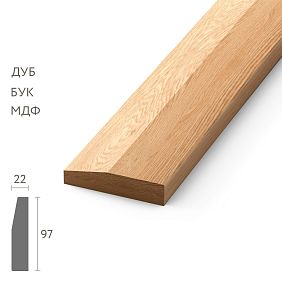
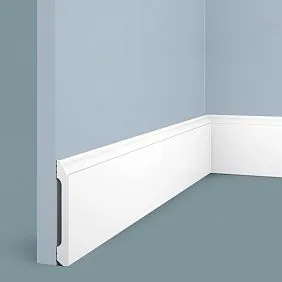
White color in the interior is a bold choice. It demands impeccable execution, purity of lines, and quality of materials.White Wooden BaseboardIt becomes not just a technical element covering the joint between the floor and wall, but an architectural detail that shapes the character of the space. A white baseboard works as a visual frame, separating vertical planes from horizontal ones, creating clear room geometry. It optically expands the space, reflects light, making rooms appear taller and brighter. The combination of solid wood and white color unites the natural fundamentality of the material with the modern aesthetics of minimalism. Why specifically wood under white paint, and not plastic or MDF? How to properly paint a wooden baseboard to achieve a perfectly smooth white surface without visible wood grain and drips? What shades of white exist and how to choose the right one for a specific interior? How to care for a white baseboard so it remains snow-white for years? We examine in detail, based on designers' experience and real installation practice.
White baseboard is the foundation of Scandinavian style, which values light, air, and minimalism of details. But it works not only in Scandinavian interiors. Neoclassicism, modern minimalism, French Provence, American classicism — white baseboard finds its place everywhere. It is neutral and universal, combines with any wall and floor colors, does not draw attention, creates a background structure upon which the main interior composition unfolds. Solid wood under white paint means strength, durability, repairability, the eco-friendliness of natural material plus the visual lightness and freshness of white color. Plastic white baseboard is cheaper but looks cheap — synthetic shine, hollow structure, fragility, yellowing over time. MDF under white laminate is stronger than plastic, but with the slightest damage, the laminate peels off, revealing a dark base, making repair impossible. Painted solid wood can be repainted as many times as desired, sanded, restored, it serves for decades while maintaining a perfect appearance.




Psychology of White Color in the Interior: Light, Purity, Space
White is not just a color, but a tool for managing the perception of space. How does a white baseboard change a room?




Visual Expansion of Boundaries
White color reflects the maximum amount of light (reflection coefficient up to 80-90% compared to 5-10% for black). A white baseboard reflects light from windows, ceiling lights, table lamps, dispersing it throughout the room. Visually, this creates a feeling that the room's boundaries are pushed back, walls don't feel oppressive, and the space breathes. The effect is especially noticeable in small rooms (10-15 m²), where a dark baseboard visually reduces the area, while a white one expands it.
A white baseboard combined with white walls dissolves the boundary between vertical and horizontal. The wall and baseboard are perceived as a single plane, the wall height visually increases (the ceiling seems higher than it actually is). The effect is enhanced if the ceiling cornice or molding is also white — the vertical plane is framed by white borders at the top and bottom, which elongates the space.
Our factory also produces:

Creating Contrast with a Dark Floor
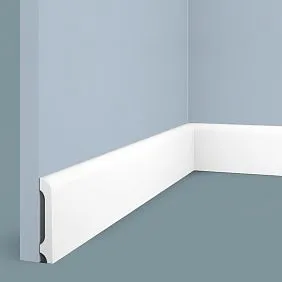
A white baseboard against a dark floor (wenge, walnut, dark oak, black parquet) creates sharp contrast. The floor boundary becomes clearly outlined, accentuated. The dark floor visually grounds the space, the white baseboard lightens it, preventing dark tones from feeling oppressive. The contrast emphasizes geometry — the floor is one plane, the walls are another, the baseboard is the boundary between them.
Playing with contrasts creates dynamism. Monochromatic interiors (only light tones or only dark ones) are static, calm, but can be boring. The combination of a dark floor and white baseboard adds visual tension, makes the interior more interesting, holds attention. It's important not to overdo it — if there are many contrasting elements in the interior (dark furniture, black picture frames, contrasting cushions), the white baseboard harmonizes them, serving as a neutral buffer.
Get Consultation
Purity and Freshness of Perception
White is associated with purity, novelty, order. A snow-white baseboard creates the impression that the renovation has just been completed, everything is perfect, nothing has had time to gather dust or get scratched. This is a psychological effect that works regardless of the actual age of the renovation — even if the white baseboard is 5-10 years old, with proper care it looks fresh.
The purity of white requires discipline. Dust, dirt, and scuffs on a white baseboard are immediately noticeable. This encourages maintaining order, regular cleaning, and monitoring the condition of the finish. In homes with children or pets, white baseboard requires more frequent care, but it creates a visually healthier, cleaner environment.
Materials for White Baseboard: Solid Wood for Painting
Not all wooden baseboards are equally suitable for painting white. The choice of wood species affects coating quality, durability, and cost.
Solid Pine: Budget Foundation
Pine is the most affordable wood species for baseboards intended for painting. Density 450-550 kg/m³, the wood is soft, easy to work with, absorbs primers and paints well. Pine has an expressive grain — contrasting annual rings, resin canals. When painted with opaque enamels, the grain is completely hidden (which is required for a white baseboard), but thorough preparation is necessary.
The problem with pine is resin. Even after drying, resin pockets remain in the wood, which can release resin when heated (from radiators, direct sunlight). The resin seeps through the paint as yellow spots, ruining the snow-white surface. Solution: before painting, remove resin pockets mechanically (carve out with a chisel, fill with wood filler) or treat with a resin-removing agent (solvent, alcohol), then apply an isolating primer (alkyd or shellac) that blocks the resin.
Advantages of pine for painting: low price (linear meter of pine baseboard 100 mm high from 400-700 rubles), availability (pine is mass-produced, always in stock), ease of processing (soft wood is easy to saw, sand). Disadvantages: lower strength (scratches easily, dents from impacts), demanding preparation before painting (resin removal, priming).
Solid Linden: Ideal for Enamels
Linden is the best wood species for baseboards that will be painted white. Density 450-500 kg/m³, the wood is soft (like pine), but without resin. The texture is uniform, annual rings are faint, the surface is smooth. Linden absorbs primers excellently, paint applies evenly without stains or streaks.
The color of natural linden is light, almost white with a slight creamy tint. This simplifies painting — a light base requires fewer coats of opaque white paint (2-3 coats vs. 3-4 for dark wood). The texture does not show through the paint even with a thin coating, which saves material and time.
Linden does not release resin, does not darken over time (unlike pine, which acquires a yellowish tint upon oxidation), and has no specific odor. The wood is stable — minimally prone to warping, shrinkage, cracking. A linden baseboard painted white maintains its geometry for years without deformation.
The price of a linden baseboard is average — higher than pine, lower than oak. A linear meter of 100×18 mm linden profile starts from 800-1200 rubles. For a baseboard intended for painting, linden offers the optimal price-quality ratio.
Solid beech: strength and smoothness
Beech is a hard wood species (density 650-700 kg/m³), strong, wear-resistant. The texture is fine-pored, uniform, the surface after sanding is perfectly smooth. Beech paints well with opaque enamels, paint applies evenly, adheres firmly, and does not peel.
The color of natural beech is light pinkish-beige. When painted white, the pinkish tint does not show through (is concealed by opaque paint in 2-3 coats). A beech baseboard is stronger than pine or linden — it withstands mechanical loads, impacts, and scratches less. Suitable for high-traffic areas (hallways, corridors, living rooms), for homes with children and pets.
The disadvantage of beech is its hygroscopicity. Beech wood actively absorbs and releases moisture, reacting to changes in air humidity by warping and swelling. For baseboards, this is less critical than for furniture or parquet (a baseboard is rigidly fixed to the wall, limiting movement), but requires controlling room humidity (optimally 40-60%). A painted baseboard is partially protected from moisture (paint creates a barrier), but the ends and back side remain exposed, requiring treatment with primer or paint before installation.
The price of a beech baseboard is higher than linden. A linear meter of 100×18 mm beech profile starts from 1100-1600 rubles.
Solid oak: a status foundation
Oak is a premium wood species for baseboards. Density 650-750 kg/m³, high hardness, maximum durability. An oak baseboard is practically eternal — it lasts 50-100 years without losing shape or strength. A painted white oak baseboard combines the natural power of the material with modern aesthetics.
The texture of oak is expressive — large annual rings, medullary rays. When painted with opaque enamels, the texture is concealed, but the depth and density of the wood are visually perceptible — a painted oak baseboard looks more massive, more substantial than a pine or linden one of the same width and thickness.
Oak contains tannins — natural preservatives that protect the wood from rot, mold, and insects. An oak baseboard can be installed in rooms with high humidity (kitchens, bathrooms with good ventilation) without risk of deformation. Tannins can react with water-based compounds, causing darkening (especially on oak with high tannin content — bog oak, swamp oak). Before painting oak white, an isolating primer (alkyd, shellac) is recommended to block tannins and prevent yellowing from showing through.
The price of an oak baseboard is high. A linear meter of 100×18 mm oak profile starts from 1500-2500 rubles. For premium interiors where material durability and status are valued, oak under white paint is the right choice.
Technology for painting a wooden baseboard white
Wooden skirting made by handPainting white is possible with the right materials, tools, and sequence of actions. The quality of the coating depends 70% on surface preparation and only 30% on the paint and application technique.
Stage 1: Sanding the wood
Solid wood baseboards come from the factory already sanded (usually to P180-P220 grit), but additional sanding is required before painting. Goals: remove contaminants (dust, fingerprints, grease stains accumulated during storage and transportation), open the wood pores (for better primer absorption), smooth out micro-irregularities (burrs, raised grain that lifts upon contact with water).
Tools for sanding: random orbital sander for flat, wide surfaces of the baseboard; vibrating sander for narrow areas; hand sanding (sandpaper on a block) for profiled elements (beads, grooves where a machine cannot reach).
Abrasive sequence: first pass P180 (removes major defects, levels), second pass P220 (final sanding, creates a smooth surface). For an exceptionally smooth finish (under gloss enamel), a third pass P240-P280 is possible, but for matte white paints, P220 is sufficient.
Sanding direction: along the wood grain (not across, crosswise motion leaves scratches visible after painting, especially on dense species — oak, beech). Moderate pressure — the machine glides over the surface under its own weight, no need to press (excessive pressure heats the wood, clogs the abrasive with resin on pine).
After sanding, remove all wood dust completely: with a vacuum (industrial vacuum with suction power from 1000 W, brush nozzle), then wipe with a damp cloth (slightly moistened with water, not wet — excess water raises the grain), let dry for 1-2 hours.
Stage 2: Primer — the foundation of a quality coating
Primer performs several functions: evens out the wood's absorbency (without primer, paint absorbs unevenly — more in some spots, less in others, creating stains of varying color saturation); blocks the seepage of tannins, resins, natural wood pigments (which can tint white paint yellowish or pinkish); improves paint adhesion (paint adheres more firmly, does not peel); reduces consumption of finish paint (primer is cheaper than paint, it's economically advantageous to apply 1-2 coats of primer + 2 coats of paint instead of 3-4 coats of paint without primer).
Types of primers for wood under white paint:
Acrylic water-based primer — universal, odorless, fast-drying (2-4 hours between coats), suitable for linden, pine (previously deresinated), beech. Primer color white (matches the finish paint, simplifies coverage). Consumption 100-150 ml per linear meter of baseboard 100 mm high (one coat). Applied with a brush (for profiled baseboards with relief) or roller (for smooth rectangular baseboards).
Alkyd primer — blocking, isolating. Contains solvents (white spirit, solvent), has an odor, but possesses the property of blocking the seepage of resins, tannins, natural pigments. Recommended for pine (if not all resin pockets are removed), for oak with high tannin content. Color white or light gray. Drying time 6-12 hours (longer than acrylic). Applied with a brush in a thin coat.
Shellac primer — a professional solution for problematic wood (with knots, resin pockets, stains). Shellac (a natural resin, a product of lac insect secretion) dissolved in alcohol creates a dense isolating film, blocking any wood exudates. Expensive (500-1000 rubles per liter vs. 200-400 for acrylic primer), used spot-on (only on problematic areas) or fully (for maximum quality). Drying time 1-2 hours (alcohol evaporates quickly).
Primer application technique: flat brush (wide 50-80 mm for smooth surfaces, narrow 20-30 mm for relief), dip the brush one-third of the bristle length into the primer (do not immerse fully — excess drips, creates runs), wipe off excess on the rim of the can, apply primer along the wood grain with long, even strokes, spread in a thin coat (primer should soak into the wood, not remain as a thick film on the surface). After applying the first coat, let dry completely (2-4 hours acrylic, 6-12 hours alkyd), inspect the surface — wood after primer raises the grain (tiny wood fibers that were pressed down during sanding straighten upon contact with the water in the primer), the surface becomes rough. Intermediate sanding with fine abrasive P280-P320 (light movements, only the raised grain is removed, the primer is not sanded off), remove dust with a damp cloth, apply a second coat of primer (for dense coverage, evening out absorption).
Stage 3: Choosing white paint
White paint color is not uniform. There are dozens of shades of white in paint manufacturers' catalogs. Main groups:
Cool white — with a slight bluish or grayish undertone. Associated with purity, freshness, sterility. Suitable for Scandinavian interiors, minimalism, high-tech. Example names: arctic white, ice white, Scandinavian white, white night.
Warm white — with a creamy, yellowish, pinkish undertone. Creates coziness, softness, a homely atmosphere. Suitable for classic interiors, Provence, shabby chic. Examples: ivory, creamy white, milk, vanilla.
Neutral white — without a pronounced undertone, pure white. Universal, combines with any colors. Examples: super white, snow white, white RAL 9003, NCS S 0500-N.
How to choose a shade of white for a baseboard? Focus on the color of the walls, ceiling, other white interior elements (casings, moldings, doors). If the walls are cool white — the baseboard should be cool white (matching shades creates harmony). If the walls are warm beige — the baseboard should be warm white (ivory). Neutral white is suitable when warm and cool tones are combined in the interior (the white baseboard serves as a buffer, a neutral element).
Types of paints for wooden baseboards:
Water-based acrylic enamel — modern standard for interior wood painting. Odorless (or faint odor, dissipates in a few hours), eco-friendly (contains no toxic solvents), fast-drying (2-4 hours between coats, 24 hours full cure), creates a matte or semi-matte finish (gloss level 5-30 units on the gloss scale), durable after full curing (resistant to abrasion, washing). Consumption 80-120 ml per linear meter of baseboard 100 mm high (one coat, depends on the absorbency of the primed wood). Price 300-800 rubles per liter (budget Russian brands — Tex, Lakra, Optimist, premium European — Tikkurila, Dulux, Caparol).
Alkyd enamel — classic enamel based on organic solvents (white spirit). Has an odor (requires room ventilation for 1-3 days after painting), creates a more durable glossy or semi-gloss finish (gloss 40-80 units), dries slower (6-8 hours between coats, 48 hours full cure), more resistant to mechanical impact and moisture (suitable for kitchens, bathrooms). Consumption 90-130 ml per linear meter. Price 250-600 rubles per liter.
Polyurethane enamel — professional coating of maximum durability. Two-component (base and hardener are mixed before use), creates a hard, wear-resistant coating (resistant to scratches, impacts, chemical cleaning agents), slow curing (full hardness after 7-14 days), high price (1500-3000 rubles per liter). Used for commercial facilities, high-traffic areas, homes with pets.
Gloss or matte finish? For white baseboards, matte or semi-matte finish is often chosen (gloss 5-30 units). Reasons: matte surface hides minor defects (scratches, dust, substrate irregularities are less noticeable than on gloss), looks modern (gloss is associated with classic style, sometimes with cheap plastic; matte is noble, restrained), does not create glare (glossy baseboard reflects light, creates distracting glare; matte absorbs light, remains in the background). Glossy white finish is appropriate in classic interiors (Empire, Baroque, where all elements shine — gilding, polished marble, crystal chandeliers), in Art Deco (where gloss contrasts with matte surfaces, creating a play of textures).
Step 4: Paint application technique
Paint is applied in 2-3 coats (number depends on paint opacity, primer color, desired coverage density). First coat — base, leveling (fills wood pores remaining after priming, creates a base). Second coat — covering (completely hides the primer, creates uniform color without spots or show-through). Third coat — finishing, optional (for maximum coverage density, perfectly white color without the slightest hint of the substrate).
Tool for paint application:
Brush — for profiled baseboards with relief (roller cannot reach grooves, recesses). Flute brush 40-60 mm wide with synthetic bristles (for water-based paints, synthetic is better than natural bristle — does not swell, does not lose shape). Technique: load paint onto one-third of bristle length, squeeze out excess, apply thin coat along baseboard with long strokes, spread paint evenly without drips or thick buildup.
Roller — for smooth rectangular baseboards without relief. Roller with short nap (4-8 mm, for smooth enamels) 100-150 mm wide. Technique: pour paint into a paint tray, dip roller, squeeze on tray's ribbed surface (remove excess paint), roll roller over baseboard with light pressure 2-3 times (paint distributes evenly, without streaks).
Spray gun (pneumatic or electric) — for large volumes (painting baseboards before installation, when planks lie horizontally on sawhorses or tables). Paint is thinned to required viscosity (acrylic thinned with water 5-10%, alkyd with solvent), sprayed with an even fan from 20-30 cm distance. Advantages: fast, perfectly even coating without brush or roller marks. Disadvantages: requires experience (easy to create drips, uneven coverage, paint overuse), requires protection of surrounding surfaces from overspray.
Drying time between coats: acrylic paint — 2-4 hours (surface feels dry, not tacky, next coat can be applied), alkyd — 6-8 hours. Intermediate sanding between coats with fine abrasive P320-P400 (very light, only to remove raised fibers, dust particles stuck to fresh paint) — optional, but improves final smoothness. After sanding, remove dust with a damp cloth, let dry, apply next coat.
Step 5: Finishing and protection
After applying the final coat of paint and full drying (24 hours for acrylic, 48 hours for alkyd), final treatment can be performed to enhance protective properties:
Application of protective varnish (optional) — clear matte or semi-matte water-based varnish applied in a thin coat over the painted baseboard. Enhances wear resistance (baseboard harder to scratch, coating lasts longer), simplifies maintenance (smooth varnished surface is easier to clean, dirt does not absorb). Used for high-traffic areas or homes with children, pets. Water-based varnish does not yellow over time, preserves paint whiteness.
Corner protection — external baseboard corners (in doorways, wall protrusions) are most prone to damage (vacuum cleaner hits, feet, furniture). For protection, clear plastic or silicone corner covers can be installed (attached with double-sided tape or adhesive, inconspicuous, absorb impacts) or reinforce corner areas with an extra coat of paint/varnish (apply locally on corners a third-fourth coat to increase coating thickness).
Combining white baseboard with interior elements
White baseboard does not exist in isolation — it is part of a finishing system interacting with floor, walls, ceiling, doors.
White baseboard and white walls: monochrome harmony
White baseboard against white walls creates a unified vertical plane. The boundary between wall and baseboard is noticeable only by relief (if baseboard is profiled with beads, grooves) or by plane change (baseboard protrudes from wall by 15-20 mm). Color is unified, which visually elongates the wall, makes the room taller.
Matching shades of white is important. If walls are cool white (with bluish undertone), and baseboard is warm white (with yellowish undertone) — they contrast, creating an undesirable effect (baseboard looks yellowish, dirty against clean walls, or walls appear bluish against creamy baseboard). Solution: paint walls and baseboard with the same paint (guarantees shade match) or use neutral white for baseboard (it combines with any shades of white walls).
White baseboard and dark floor: classic contrast
Combination of dark floor (wenge, dark walnut, stained oak, black parquet) and white baseboard — one of the most effective techniques in interior design. Contrast emphasizes the boundary, makes room geometry clear, graphic. Dark floor grounds the space, white baseboard lightens it.
Width of white baseboard against dark floor can be increased (100-150 mm instead of standard 60-80 mm). Wide white baseboard creates a visual stripe that separates dark floor from wall, enhancing contrast. Narrow baseboard (40-60 mm) gets lost against dark floor, contrast is less pronounced.
White baseboard and colored walls: universal background
White baseboards complement any wall color—gray, beige, blue, green, pink, or dark shades (graphite, navy, burgundy). White is neutral, doesn't clash with other colors, and serves as a visual frame that separates the colored wall from the floor.
Against bright, saturated walls (red, blue, green), white baseboards create a contrasting border, calm the space, and prevent the wall color from visually 'spilling' onto the floor. Against pastel walls (beige, gray, light blue), white baseboards enhance the lightness and airiness of the interior.
Combination with white trim, moldings, and cornices
White baseboards are often part of a white trim system: white door and window casings, white wall moldings (panel framing, horizontal stripes on walls), white ceiling cornices or coving. All elements are executed in a uniform color (same paint, same shade of white), creating an architectural system where the trim forms the structure of the interior.
Element profiles should harmonize. If the baseboard is a simple rectangular shape (minimalist), the casings and moldings should also be simple. If the baseboard is classic with rounded beads, the casings and moldings should repeat the relief (beads of similar diameter, roundings of similar radius). Unity of profiles creates stylistic integrity.
Caring for white wooden baseboards
White color requires regular maintenance. Dust, dirt, and wear marks are more noticeable on white than on dark or natural wood.
Regular damp cleaning
Frequency: every 1-2 weeks (depending on room traffic, presence of children/pets, general dustiness). Tool: a soft microfiber or cotton cloth, slightly dampened with water (not wet—excess water can seep into the joints between the baseboard and wall, causing paint peeling or wood swelling).
Technique: wipe the baseboard along its length, removing dust and light soiling. Pay special attention to corners, joints (where dust accumulates more), and relief elements of the profile (grooves, beads—dust gets trapped, requiring a cloth pass with light pressure). After damp cleaning, you can wipe with a dry cloth (to remove residual moisture, polish the surface).
Removing stains with gentle cleaners
Shoe marks, spilled liquid stains, fingerprints (on baseboard sections near doors, switches) are removed with mild cleaning agents. Do not use abrasive cleaners (powders, pastes with scrubbing particles—they scratch the painted surface, matte paint becomes even more matte in friction areas, glossy paint loses its shine), aggressive chemical solvents (acetone, mineral spirits, alcohol—they can dissolve the paint, leave discolored spots).
Recommended products: liquid soap (baby soap, without fragrances or dyes, diluted in water 1:10), specialized products for painted wooden surfaces (sold in hardware stores, contain mild surfactants, do not damage paint), baking soda solution (a teaspoon per liter of water, effective and safe for removing grease stains).
Stain removal technique: apply the cleaning solution to a soft cloth (do not pour directly onto the baseboard—excess liquid will run onto the floor, seep into joints), wipe the soiled area with light circular motions, rinse off residue with a clean damp cloth, wipe with a dry cloth.
Touching up wear marks and scratches
Over time, white baseboards develop wear marks (areas where paint has worn off from frequent contact, friction—near doors, in corners), scratches (from furniture, vacuum cleaners, shoes), chips (from impacts with heavy objects). On dark or natural wood, minor damage is less noticeable; on white, they stand out.
Repairing local damage: light sanding of the damaged area with fine-grit sandpaper P320-P400 (remove flaking paint, smooth edges), dust removal with a damp cloth, applying a thin coat of paint with a brush (the same paint used for the entire baseboard—keep leftover paint for repairs, label cans with room and painting date), feathering the paint toward the edges of the damage (so the boundary of the touched-up area doesn't stand out), drying, applying a second coat if necessary.
If no leftover paint was saved, you can find a white paint of a similar shade at a hardware store (bring a sample—a piece of baseboard or a photo in daylight, a consultant will help match). A perfect color match is hard to achieve (white paints from different manufacturers and even different batches from the same manufacturer vary), but for local repairs of small areas (5-10 cm), a 5-10% shade difference is unnoticeable from 1-2 meters away.
Radical repair: if the baseboard has multiple wear marks, scratches, stains, lost its original whiteness (yellowed, grayed over time), it can be repainted entirely. Light sanding of the entire surface with P240-P320 (no need to remove old paint, just smooth defects, create roughness for new coat adhesion), dust removal, applying 1-2 coats of fresh white paint. The baseboard looks like new, repair cost is minimal (paint consumption for an entire apartment: 1-2 liters, price 300-800 rubles).
Protecting white baseboards from soiling
Prevention is better than repair. How to minimize soiling of white baseboards:
Use doormats at entry doors (shoes are cleaned of outdoor dirt on the mat, not tracked through the house, soiling baseboards near doors). Install protective bumpers on lower door corners (silicone or rubber stoppers, preventing doors from hitting baseboards). Train pets not to rub against baseboards (fur, dirt from paws remain on the white surface). Use vacuum cleaners carefully (the vacuum attachment shouldn't hit the baseboard—black marks from rubber or plastic remain on white).
Interior styles where white wooden baseboards shine
Scandinavian style: cult of light and simplicity
Scandinavia is a region with a lack of sunlight for most of the year. Interiors compensate by maximizing light: large windows without heavy curtains, white walls, light floors (whitewashed oak, ash, light pine), white baseboards.White Wooden BaseboardIn Scandinavian style, the baseboard is often simple in profile—a rectangular plank or a concise cove without excessive decoration. Width is medium (80-100 mm), finish is matte (shiny surfaces are alien to Scandinavian aesthetics, which values naturalness and tactility).
White baseboards in a Scandi interior pair with white or light gray walls, light wooden floors (creating a monochrome light base, with accents from textiles—pillows, throws, rugs—and plants). The baseboard doesn't draw attention, works in the background, creating a neat border.
Minimalism: purity of lines and forms
Minimalism excludes excess. Every element must be functional and visually concise. A white wooden baseboard with a simple rectangular profile is ideal for minimalism. Width can be increased (100-150 mm)—a wide strip of white baseboard on a white wall creates geometric clarity, emphasizes the horizontality of the floor.
Minimalism often uses contrasts. White baseboard + dark floor (black, dark gray) + white walls—a classic minimalist palette. No halftones, intermediate colors—only pure white and black (or dark gray). The baseboard in this system is the boundary separating light and dark.
Neoclassicism: Tradition with a Modern Interpretation
Neoclassicism combines classical proportions, symmetry, and architectural details with modern color restraint, eschewing excessive gilding and plasterwork. A white wooden skirting board in neoclassicism features a simplified classical profile (one or two beads, concise roundings), a width of 100-120 mm, and a matte or semi-matte finish.
White skirting boards are paired with white tall door casings, white wall moldings (framing panels on walls), and white ceiling cornices. All architectural trim is white, while walls can be colored (light gray, beige, pastel), creating a contrast with the white frames.
Frequently Asked Questions about White Wooden Skirting Boards
It depends on the quality of the paint and wood. Water-based acrylic enamels do not yellow (pigments are stable, do not oxidize). Alkyd enamels may yellow slightly after 5-10 years (solvents oxidize under UV exposure), especially in areas exposed to direct sunlight. The wood under the paint (if pine was used without an isolating primer) may over time release resin or tannins, which can seep through the paint as yellow stains. Solution: use high-quality acrylic paints, isolating primers, and avoid direct sunlight (curtains, blinds on windows).
Depends on paint quality and wood. Water-based acrylic enamels do not yellow (pigments are stable, do not oxidize). Alkyd enamels may yellow slightly after 5-10 years (solvents oxidize under UV exposure), especially in areas exposed to direct sunlight. Wood under the paint (if pine was used without an isolating primer) may over time release resin or tannins, which seep through the paint as yellow stains. Solution: use high-quality acrylic paints, isolating primers, avoid direct sunlight (curtains, blinds on windows).
Yes, a wooden skirting board can be repainted an unlimited number of times. Process: light sanding with P240-P320 (to create roughness for new paint adhesion), dust removal, primer application (if the new color is darker than white — use a primer matching the paint color; if the new color is light or the same white — primer is optional), application of 2-3 coats of new paint. A white skirting board is easily repainted to any color (the white base does not show through dark paints). The reverse process (repainting a dark skirting board white) is more difficult — it requires 3-4 coats of opaque white paint or prior application of an isolating primer.
Yes, a wooden baseboard can be repainted an unlimited number of times. Technique: light sanding with P240-P320 (to create roughness for adhesion of the new paint), dust removal, primer application (if the new color is darker than white — primer matching the paint color; if the new color is light or the same white — primer is optional), application of 2-3 coats of new paint. A white baseboard can easily be repainted to any color (the white base does not show through dark paints). The reverse process (repainting a dark baseboard white) is more difficult — requires 3-4 coats of opaque white paint or preliminary application of an isolating primer.
Wooden skirting boards are stronger (solid wood withstands impacts, does not deform under load), more durable (lasts 50-100 years, polyurethane lasts 15-25 years, after which it yellows and becomes brittle), more repairable (wooden skirting boards can be sanded, repainted; polyurethane ones must be replaced after damage), and more eco-friendly (natural wood does not emit harmful substances; polyurethane production uses isocyanates, which may residually remain in the product). Disadvantages of wood: higher price (2-4 times more expensive than polyurethane), greater weight (requires more secure fastening), more complex installation (requires precise miter cuts; polyurethane is easier to glue).
Wooden baseboard is stronger (solid wood withstands impacts, does not deform under loads), more durable (lasts 50-100 years, polyurethane 15-25 years, after which it yellows, becomes brittle), more repairable (wooden baseboard can be sanded, repainted; polyurethane baseboard must be replaced after damage), more eco-friendly (natural wood does not emit harmful substances; polyurethane production uses isocyanates, which may residually remain in the product). Disadvantages of wood: higher price (2-4 times more expensive than polyurethane), greater weight (requires more secure fastening), more complex installation (requires precise miter cuts; polyurethane is easier to glue).
For small rooms (10-15 m²), medium-width skirting boards of 80-100 mm are recommended. Narrow skirting boards of 40-60 mm get lost and do not create a visual structure. Too wide skirting boards of 120-150 mm visually consume wall area, making the room appear even smaller. Medium width strikes a balance — creating a clear boundary without overloading. The white color expands the space, compensating for the skirting board's width.
For small rooms (10-15 m²), baseboards of medium width 80-100 mm are recommended. Narrow baseboards 40-60 mm get lost, do not create visual structure. Too wide baseboards 120-150 mm visually consume wall area, making the room appear even smaller. Medium width balances — creates a clear boundary without overloading. White color expands space, compensating for the baseboard's width.
Both options are possible. Painting before installation: skirting boards lie horizontally on sawhorses or tables, are painted on all sides (including the back and ends), paint applies evenly without drips, and it's convenient to use a paint sprayer. After installation, only local touch-ups of joints and fastener points are needed. Disadvantage: paint can be damaged during installation (chips, scratches from tools), requiring care.
Painting after installation: the skirting board is attached to the wall unpainted, then painted in place with a brush or roller. Paint fills the joints with the wall, hides fastener points, and the coating becomes seamless without visible boundaries. Disadvantage: painting a vertical surface is more difficult (drips), requiring protection of the wall and floor with painter's tape and film.
Painting after installation: the baseboard is attached to the wall unpainted, then painted in place with a brush or roller. Paint fills the joints with the wall, conceals fastener points, resulting in a seamless finish without visible boundaries. Disadvantage: painting a vertical surface is more difficult (drips), requires protection of the wall and floor with painter's tape and plastic sheeting.
Professional approach: main painting before installation (2 coats of paint on all surfaces of the skirting board), final touch-up after installation (locally on joints, fastener points, and if necessary, a thin third coat over the entire visible surface to even out the color).
The hallway is a zone of maximum soiling (street dirt, shoes, umbrellas, bags). A white skirting board in the hallway requires enhanced protection: use wear-resistant paints (alkyd or polyurethane instead of acrylic), apply an additional protective layer of clear varnish (matte, increasing coating hardness), install protective plastic covers on the lower corners of the skirting board (in the most vulnerable spots), use large mats at the entrance door (they trap dirt maximally, preventing it from spreading further into the apartment), clean hallway skirting boards with a damp cloth more frequently (2-3 times a week instead of once for other rooms).
The hallway is the area of maximum soiling (street dirt, shoes, umbrellas, bags). A white baseboard in the hallway requires enhanced protection: use wear-resistant paints (alkyd or polyurethane instead of acrylic), apply an additional protective layer of clear varnish (matte, increasing coating hardness), install protective plastic covers on the lower corners of the baseboard (in the most vulnerable spots), use large mats at the entrance door (maximally trap dirt, prevent it from spreading further into the apartment), perform wet cleaning of hallway baseboards more frequently (2-3 times a week instead of once for other rooms).
Alternative: install a skirting board in the hallway that is not white, but gray or in a natural wood color (on which dirt is less noticeable), and use white in the other rooms (creating a visual boundary — the hallway is a functional zone, the other rooms are clean living spaces).
Conclusion: Whiteness as a Philosophy of Space
A white wooden skirting board is more than just a finishing detail. It is a choice in favor of light, purity, modernity, and visual expansion of space. Solid wood under white paint combines the natural strength of the material with minimalist aesthetics, creating a foundation upon which the interior unfolds. White skirting boards are universal — they work in Scandinavian light interiors, in contrasting minimalist spaces with dark floors, in neoclassical compositions with white moldings and casings, and in cozy Provencal rooms with pastel walls.
The technology for painting a wooden skirting board white requires sequence: sanding the wood (removing defects, opening pores), priming (equalizing absorption, blocking resin and tannin seepage, improving adhesion), applying 2-3 coats of opaque white paint (acrylic for most rooms, alkyd for kitchens and bathrooms, polyurethane for maximum wear resistance), final protection if necessary (clear varnish to enhance durability). The choice of white shade (cool, warm, neutral) depends on the wall color and the overall interior palette — matching shades create harmony, contrasting shades disrupt integrity.
Caring for a white skirting board requires regularity: damp cleaning every 1-2 weeks (removing dust and light soiling with a soft, damp cloth), stain removal with mild detergents (liquid soap, baking soda solution, specialized products for painted surfaces without abrasives and aggressive solvents), local touch-up of scuffs and scratches (light sanding of the damaged area, applying a thin coat of paint with a brush, blending to the edges), complete repainting after 7-10 years if necessary (if the skirting board has lost its whiteness, accumulated multiple defects — sanding and applying 1-2 coats of fresh paint restores the original appearance).
The color white demands discipline in care, but rewards with visual cleanliness, freshness, and a sense that the space breathes, reflects light, and expands beyond the physical boundaries of the walls. It is an investment in the atmosphere of a home, where every detail is thought out, where boundaries between planes are framed with respect for geometry and material.
Company STAVROS — a Russian manufacturer of premium-quality wooden millwork with a 24-year history, offering a wide range of skirting boards made from solid oak, ash, beech, linden, and pine for painting and ready-made white skirting boards with factory coating. In-house full-cycle production ensures quality control at all stages: wood procurement (dried planed boards and beams of first and second grade, moisture content 8-12%, selection without critical defects — rot, loose knots, deep cracks), cutting to size (multi-saw machines, thickness calibration on planers with ±0.2 mm accuracy), profile milling (four-sided CNC milling machines, precise reproduction of profiles from simple rectangular to complex classical), sanding (wide-belt sanding machines, sequential processing with P80-P120-P180-P240 abrasives for surface smoothness), coating for ready-made white skirting boards (professional primers and enamels, application in painting booths with controlled temperature and humidity, 3 coating layers — primer + 2 enamel coats, intermediate sanding), packaging (shrink wrap, cardboard end caps, horizontal stacking to prevent deformation during transport).
STAVROS range of skirting boards for painting and ready-made white: simple rectangular profiles 60-100 mm high (smooth blocks for minimalism, Scandinavian style), simplified classical profiles 80-120 mm high (with one or two beads for neoclassicism, modern classic), complex classical profiles 100-160 mm high (multi-stepped with three-four relief elements for traditional interiors), European-style skirting boards 100-160 mm high (modern wide profiles for high-ceilinged rooms). Standard length 2.4 m and 2.6 m, custom orders up to 3.0 m. Wood species: linden (optimal for painting white, light base, no resin, uniform grain), pine (budget-friendly, requires resin removal before painting), beech (strong, dense, smooth), oak (premium, maximum durability).
STAVROS skirting boards for painting: for those who want to create a custom white shade (mix paint according to their own recipe, achieve an exact match with wall color) or plan to paint skirting boards along with other interior elements (casings, moldings, doors — for coating uniformity). The skirting board is supplied sanded to P240 (ready for priming and painting, no additional sanding required), packaged in protective film (wood remains clean, free from soiling during transport).
STAVROS consultation support: technical specialists will help choose the wood species for painting (linden is optimal for white, pine requires additional preparation, oak and beech are premium), select a skirting board profile to match the interior style (simple rectangular for minimalism, simplified classical for neoclassicism, complex for traditional classicism), calculate the required linear meters (room perimeter minus door opening widths plus a 5-7% allowance for cutting), recommend paints and primers for DIY painting (tested brands compatible with wood, application technology, material consumption). STAVROS designers will develop a concept for the comprehensive use of white millwork (white skirting boards + white casings + white moldings + white ceiling cornices) to create a unified architectural finishing system.
STAVROS delivery: Moscow and Moscow Region — with own transport in 1-2 days (careful loading, horizontal stacking of skirting boards, securing to prevent shifting and damage, delivery to the entrance or site with floor ascent), St. Petersburg and Leningrad Region — with own transport in 1-2 days, Russian regions — via transport companies (PEK, Delovye Linii, KIT, Baikal-Service) in 3-10 days depending on distance. Professional packaging: skirting boards wrapped in shrink film (protects white coating from soiling, scratches), ends covered with cardboard caps (protection from chipping), bundles stacked horizontally on pallets (prevents sagging, deformation), secured with straps. Damage rate during transport is less than 0.3% (thanks to quality packaging and selection of reliable carriers).
STAVROS warranty: 3 years on all solid wood skirting boards (including ready-made white with factory coating) subject to operating conditions: air humidity 40-70%, temperature +10-30°C, no direct prolonged contact with water. If within the warranty period the skirting board warps, cracks, or the coating peels (under proper use) — STAVROS will replace it free of charge. Warranty on factory white coating: color retention without yellowing for 5 years (in the absence of direct sunlight), coating strength retention without peeling or cracking for 7 years.
STAVROS product samples: before placing a large order, you can order samples (30 cm long skirting board sections of different profiles, wood species, and finish options — for painting and ready-made white in various shades) to visually and tactilely assess the quality of the wood, processing, finish, and the conformity of the white shade to your expectations. Sample costs: skirting board for painting 150-300 rubles per section depending on the wood species, ready-made white skirting board 200-400 rubles. When placing an order for 25,000 rubles or more, the cost of the samples is refunded (deducted from the order amount). Samples are shipped via Russian Post or courier services (SDEK, Boxberry) within 2-3 days after payment.
STAVROS collaboration with designers and construction companies: special terms for professionals who regularly use wooden moldings in projects. Designer discounts of 10-15% for regular orders (from 3 projects per year), free sample delivery (for client presentations), consultations on selecting profiles and white shades for specific projects, priority production of custom profiles or shades (if standard ones are unsuitable). For construction companies — wholesale discounts from 12% on orders from 200 linear meters, payment deferral for regular partners up to 30 days, consolidated deliveries (multiple sites in one shipment with logistics optimization).
STAVROS environmental responsibility: wood is purchased from loggers operating under sustainable forestry principles (logging in permitted areas with forest restoration). Paints and primers for factory white coating are water-based (acrylic, without toxic solvents, without formaldehyde, safe for residential premises, have sanitary-epidemiological certificates). Production waste (sawdust, shavings, trimmings) is not disposed of but used rationally: pressed into fuel briquettes, transferred to farms for animal bedding, composted to produce organic fertilizer.
ChoosingWhite Wooden BaseboardChoosing STAVROS means choosing light, purity, visual expansion of space combined with the natural strength and durability of solid wood. White skirting board works as an architectural detail that shapes the character of the interior, creates clear geometry, reflects light, and emphasizes boundaries between planes. It is an investment in the atmosphere of a home, where every detail is thought out, where modern aesthetics meet traditional material quality, where whiteness remains white for years thanks to the right choice of wood, professional coating, and regular care.
STAVROS is a manufacturer that understands the philosophy of white color in interiors, offering solutions from budget pine skirting boards for self-painting to premium oak ones with factory three-layer snow-white coating. Own production, quality control at all stages, 24 years of experience working with solid wood, thousands of completed projects from apartments to country mansions — a guarantee that the white wooden skirting board will last for decades, preserving its original beauty, purity of lines, and flawless boundaries between floor and wall. Whiteness as a choice, as a philosophy of space, as respect for light and geometry — all this is embodied in every linear meter of STAVROS white wooden skirting board.