












































































Article Contents:
- Philosophy of using wood in finishing a country house
- Wooden beams: types, constructions, applications
- Wood materials and species for beams
- Processing and finishing of beams
- Beam layout schemes on ceilings
- Wall finishing with wood: panels, planks, boards
- Country style decor: creating an authentic atmosphere
- Practical aspects of beam installation
- Combining beams and wall finishes

A country house is a space where urban hustle gives way to natural harmony, where industrial materials yield to natural ones, where architecture speaks the language of wood, stone, textures, proven by centuries of rural and mountain architecture. Finishing walls with wood and using ceiling beams transform a modern structure into a cozy home with character, history, soul — whether it’s a Russian izba, Swiss chalet, American ranch, or Provençal cottage. A wooden beam is not merely a structural or decorative element — it is an architectural code signaling belonging to a certain tradition, valuing natural materials, striving for solidity and longevity.
Unlike city apartments, where beams often become an unexpected accent in modern minimalist spaces, in a country house they are organic and expected — here they belong, here they fulfill their original role of creating a country lifestyle atmosphere. False beams made of wood allow achieving a visual effect of massive load-bearing structures without their weight, complexity of installation, and cost of solid timber, while preserving the authenticity of texture, color, and character of natural wood. The combination of wooden beams on the ceiling and wall panels made of wood or materials imitating wood creates a unified environment where verticals and horizontals are connected by a common material language, where space acquires structure, rhythm, visual support.


Philosophy of using wood in finishing a country house
Wood in the interior of a country house is more than just a finishing material. It is a connection with the nature surrounding the house, continuing the forest landscape inside the dwelling. It is tactile warmth in contrast to the coldness of stone and concrete. It is a living texture that changes over the years, acquiring a noble patina, telling a story. It is eco-friendliness — the ability of wood to regulate air humidity, absorb carbon dioxide, release beneficial phytoncides. It is acoustic comfort — wood absorbs sound, making the space quieter, cozier.
In styles such as country, chalet, rustic, Scandinavian, eco, wood dominates in finishing, creating the material basis of the interior. Ceiling beams set the rhythm and scale of the space, wall panels form textured surfaces, wooden floors complete the natural triad. It is important to understand that wood in a country house is used differently than in urban interiors — here, a rough, minimally processed texture with visible knots, cracks, saw marks is appropriate. These are not defects, but virtues, emphasizing the natural origin of the material, its authenticity, the handcrafted nature of its processing.
The color palette of wood in country interiors leans toward natural tones — from light honey hues of pine and spruce through reddish larch to dark chocolate shades of weathered oak or walnut. Each tone sets its own mood: light wood creates a sense of airiness, Scandinavian freshness, visually expanding the space; dark wood adds monumentality, respectability, coziness of a closed, protected space; medium tones are universal, creating a balance between lightness and solidity.




Wooden beams: types, constructions, applications
Ceiling beams in a country house can be real load-bearing structures or decorative imitations. Load-bearing beams are part of the floor structure, supporting the floor of the upper level or the roof. They are made from solid timber with large cross-sections — 150x150, 200x200, 150x250 millimeters and more, depending on calculated load and span. In old houses and authentic wooden structures, load-bearing beams remain exposed, becoming the main architectural accent of the interior. Their texture, darkened wood from time, possible traces of axe or saw create an atmosphere of history, solidity, connection with tradition.
However, in modern construction, load-bearing structures are often made of concrete, metal, or hidden wooden beams embedded into the floor structure. The ceiling becomes flat, smooth — functional, but lacking character. Here, help comes fromwooden false beams— decorative elements imitating massive load-bearing beams, but not performing a structural function.
False beams are hollow boxes made of boards, assembled in the shape of the letter 'P' or 'G', attached to the ceiling, creating a visual effect of a solid beam with significantly less weight and cost. A 'P'-shaped false beam consists of three boards — two side walls and a bottom surface, the top is open and attached to the ceiling. From below, a false beam is indistinguishable from a solid one — three sides with wood texture, massive cross-section, sense of structural strength. A 'G'-shaped false beam consists of two boards forming an angle, used for decorating corners between walls and ceilings, framing openings, creating corner accents.
Advantages of false beams over solid timber are numerous. Weight — a false beam is 5-7 times lighter than a solid beam of the same cross-section. A 'P'-shaped beam with a 150x150 mm cross-section, 3 meters long, made of 20 mm thick pine boards weighs about 12-15 kg compared to 70-80 kg of solid timber. This simplifies transportation, installation, reduces load on the ceiling. Installation of false beams is accessible to two people without special equipment, while a solid beam requires at least three-four people or lifting equipment.
Cost — false beams cost 3-5 times less than solid timber of the same cross-section. Savings are achieved through less wood consumption and simpler processing — boards are planed, cut, assembled into boxes. Solid timber requires drying of large cross-sections (a lengthy process with risk of cracking), planing or sanding of all four sides, precise end processing.
Functional versatility — the cavity inside false beams allows concealing utilities: electrical wiring for lights suspended from beams; ventilation channels; low-voltage cables for security systems, internet. This is practical and aesthetic — utilities are hidden, the interior is clean of wires and pipes. In a solid beam, running utilities requires drilling channels, which weakens the structure and is technically more complex.
Variety of finishes — false beams can be made from various wood species, processed in different ways to achieve the desired visual effect. Planed smooth beams with clearly defined texture — for neat, restrained Scandinavian-style interiors. Brushed beams with soft fibers removed, emphasized annual ring relief — for interiors emphasizing texture. Weathered beams with imitation of darkening, cracks, insect marks — for authentic village interiors, Provence, rustic. Painted or stained beams — for color accents or harmony with the overall palette.
Applicationceiling beamssolve several tasks simultaneously. Visual structuring of space — beams divide the ceiling into segments, create rhythm, guide the gaze. Transverse beams (perpendicular to long walls) visually expand narrow spaces. Longitudinal beams (parallel to long walls) emphasize length, create dynamic movement along the axis. A grid of intersecting beams creates a coffered ceiling, adds geometric complexity, turns the ceiling into an architectural element rather than just a horizontal plane.
Zoning — beams mark functional zones in open spaces. In a house with an open-plan layout, where kitchen, dining, and living areas are combined, beams over the dining zone create a visual accent, separating the dining area from the rest of the space without physical partitions. Beams over the kitchen island emphasize this center of activity.
Reducing visual height — in houses with very high ceilings (3.5–4 meters and above), space may appear uncomfortable, cold, disproportionate. Beams at 2.8–3 meters create a visual "ceiling," reducing perceived height to a comfortable level while preserving physical volume above the beams for air circulation and hidden lighting placement.
Lighting integration — lights are suspended from beams: chandeliers on chains or ropes in rustic or industrial style; track systems with directional spotlights for modern interiors; pendant lights over dining tables or bar counters. The beam becomes a structural element for lighting, freeing the ceiling from mounting points and creating interesting lighting scenarios.
Hiding ceiling defects — if the ceiling has unevenness, cracks, stains, beams divert attention, creating a volumetric relief against which defects are not noticeable. In houses with insulated ceilings, where insulation creates unevenness, beams mask these technical features.
Our factory also produces:


Wood species and materials for beams
The choice of wood species for beams is determined by aesthetic preferences, budget, and usage conditions.
Spruce — the most accessible and common species forof wooden beams. Light-colored, with yellowish or pinkish hues, distinct texture, and characteristic knots. Soft, easy to work with, holds fasteners well. Spruce beams are a choice for most country interiors where natural wood color is desired at a reasonable price. Spruce’s resin provides natural protection against rot, and its pine aroma adds atmosphere. The downside — over time, resin may exude as spots, especially in hot rooms or under direct sunlight. Solution — treatment with oils or lacquers that isolate the resin.
Fir — similar to spruce, but lighter, less resinous, with a more uniform texture without prominent knots. Fir beams suit Scandinavian interiors, where light, clean wood is valued. Less moisture-resistant than spruce, requires quality protection.
Larch — a coniferous species with unique characteristics. Denser and harder than spruce, color ranging from yellowish-red to reddish-brown, expressive texture. High resin content makes larch practically rot-resistant even without treatment — ideal for humid spaces (bathrooms, saunas, kitchens with high humidity), terraces, pergolas with exposed beams. Larch beams cost 2–3 times more than spruce, but longevity justifies the price. Over time, larch darkens, acquiring a noble grayish-brown hue.
Oak — the king of wooden interiors, the standard of strength, durability, and status. Oak beams — for centuries. Color ranges from light yellow (young oak) through honey-brown (mature oak) to dark brown and nearly black (stained oak). Expressive texture with large pores and medullary rays, creating a distinctive pattern. Oak beams — choice for prestigious interiors, classic, English, castle styles. Oak’s mass and visual weight require appropriate room scale — low ceilings and small rooms may be overwhelmed by oak beams. High price — oak beams cost 4–6 times more than spruce, but it’s an investment for generations.
Ash — an alternative to oak with similar strength, but lighter color and less contrasting texture. Yellowish-white, grayish, with a soft, beautiful pattern. Ash beams — for interiors where oak’s strength is needed but a lighter palette is preferred. Easily stains, accepts various shades.
Old barn wood (aged wood) — boards removed from old barns, sheds, houses, aged from several decades to a century or more. Wood dried over decades of natural use, stable, does not deform. Surface shows characteristic signs of time — cracks, darkening, patina, sometimes nail marks, wear. Barn wood beams — choice for interiors where authenticity, history, uniqueness are valued. Each beam is unique, has its own story and character. High price due to material rarity and labor-intensive processing (nail removal, cleaning, sorting), but visual effect is exceptional.
Get Consultation
Beam finishing and treatment
The visual character of beams is largely determined by the finishing treatment.
Sanding — basic treatment where boards pass through a jointer or planer, achieving a smooth, even surface with clearly visible wood texture. Sanded beams — for neat, modern, Scandinavian interiors where clean forms and materials are valued. Surface is smooth, pleasant to the touch, wood texture is fully visible.
Brushing — process of removing soft wood fibers with metal brushes, resulting in a textured, relief-like surface. Hard annual rings remain, soft wood between them is removed, creating an expressive relief and tactile texture. Brushed beams emphasize the natural wood, adding texture, especially effective under side lighting, creating light and shadow play on the relief. Suitable for rustic, eco-interiors.
Aging — a complex set of techniques creating the effect of wood that has lived for decades. Includes brushing, patination (application of dark stain or paint followed by partial removal to leave dark pigment in pores and cracks), creating artificial cracks, wear, tool marks, wormholes. Aged beams — for Provence, country, rustic, vintage interiors where atmosphere of history, time, and lived-in character is important.
Charring (Yakisugi technique) — surface charring of wood with open flame followed by brushing to remove loose charcoal. Result — deep black or dark brown color, emphasized texture, natural protection against rot and insects (charred layer — natural antiseptic). Charred beams — for modern interiors with industrial accents, lofts, minimalist spaces with dramatic contrasts. Combination of black beams and white walls creates graphic clarity, strong visual effect.
Coloring with oils and stains changes the wood’s color while preserving texture visibility. Light oils (white oil, white pigment oil) lighten the wood, creating a Scandinavian effect of bleached wood. Colored oils and stains provide shades from golden and walnut to dark brown and black. Each wood species accepts staining differently — spruce becomes more reddish, oak darkens nobly, larch acquires a reddish-brown hue.
Painting with covering paint hides wood texture, providing a uniform color tone. White beams — classic for Scandinavian and Provence interiors, where beams carry structural logic but should not dominate by color. Dark beams (gray, black, brown) on light ceilings — a contrasting solution, emphasizing each beam as a graphic element. Colored beams (blue, green, terracotta) — for eclectic, designer interiors.
Lacquering creates a protective layer, highlights texture, provides gloss or maintains matte finish depending on lacquer type. Matte lacquer preserves the natural wood appearance, adding protection against moisture and dirt. Satin lacquer provides a soft silk-like gloss. Glossy lacquer creates a bright sheen, visually intensifying and deepening the wood’s color — suitable for classic, glamorous interiors. Water-based lacquers are eco-friendly, odorless, dry quickly. Alkyd and polyurethane lacquers are more durable but have odor during application.
Waxing — application of natural wax that absorbs into wood pores, creating a water-repellent layer, highlighting texture, providing a soft matte gloss and tactile silkiness. Waxed wood is pleasant to the touch, has a characteristic natural wax scent, looks natural and noble. Requires periodic renewal (every 1–2 years), but the process is simple — applying wax and polishing.
Beam layout schemes on the ceiling
Beam placement determines the visual logic of space, its rhythm, proportions.
Parallel beams — the most common scheme. Beams run parallel to each other with regular spacing (60–120 cm) along one axis of the room. If beams are parallel to the short wall — visually expand the space, making it feel more spacious. If parallel to the long wall — emphasize length, create dynamism along the movement axis. Number of beams depends on room size and desired density — from three beams in a small room to ten or more in a spacious hall.
Crossing beams (coffered ceilings) — beams run in two directions, forming a grid of rectangular or square cells. This creates complex ceiling geometry, adds architectural significance, makes the ceiling the main interior element. Coffered ceilings — a tradition of classical architecture, from Roman temples to English mansions. In country homes, wooden coffered ceilings create monumentality and solidity. Cells between beams can be painted in contrasting colors (white beams — dark ceiling or vice versa), enhancing the geometric effect.
Radial placement — beams radiate from a central point (usually where a central chandelier is planned) to the ceiling edges, like rays. This creates a dynamic, centripetal composition, focusing attention on the center. Suitable for spacious halls with central dining or fireplace placement. Technically more complex than parallel beams, as it requires precise angle and mounting calculations.
Asymmetric placement — beams are not arranged in a regular grid but randomly, creating a dynamic, modern composition. Two beams in one part of the ceiling, one in another, varying spacing between beams — this approach suits modern interiors where individuality and departure from classical schemes are valued. Requires good design sense to make asymmetry appear intentional rather than random.
Zoning framing — beams form a rectangular outline around a functional zone (over a dining table, over a living area in an open space). This visually highlights the zone, creating a "room within a room" effect without physical partitions. Within the outline, another ceiling finish (stretch ceiling, different color paint) can be applied, enhancing zoning.
Single accent beam — a single strong beam running through the center of the ceiling. Suitable for narrow, elongated spaces (hallways, galleries), where one central beam establishes an axis, structures the space, and serves as a structural element for pendant lights. The mass of a single beam must match the room’s scale — too thin a beam will disappear, too massive a beam will overwhelm.
Wall finishing with wood: panels, planks, board
Wooden wall cladding complements ceiling beams, creating a material unity in the interior.
Plank is a classic material for wall cladding in country houses. It consists of profiled boards with a tongue-and-groove system, allowing boards to be tightly joined without visible gaps. The width of the plank is usually 80-150 millimeters, thickness 12-20 millimeters. Planks can be made from various species — pine for budget solutions, larch for humid rooms and durability, lime for saunas (does not overheat, does not emit resin), oak for prestigious interiors.
Profile variations of planks affect the visual effect. Euro-plank has beveled edges, creating a rhythmic relief with visible grooves between boards during installation. Shiplap (plank-shiplap) — has a flat profile with rounded edges, joints are less noticeable, surface is smoother and more modern. Block-house — imitates a round-sawn log, front surface is convex semicircular, creates a log wall effect. American style — has a sloped profile, imitating an overlap, characteristic of American rural architecture.
Plank installation can be vertical, horizontal, or diagonal. Vertical installation visually increases room height, creates an upward direction — suitable for rooms with low ceilings. Horizontal installation visually expands space, emphasizes wall length — suitable for narrow rooms. Diagonal installation (elm pattern, checkerboard) creates a dynamic pattern, visual complexity — for accent walls, custom solutions.
Wide board — wall cladding with wide boards (150-250 millimeters and more) without profiling or with minimal profiling. Creates an effect of more substantial, robust cladding than plank. Wide boards emphasize wood texture, especially effective with species having expressive grain — oak, ash, larch. Joints between boards can be covered with trim strips (narrow boards), typical for Scandinavian style, or left open with a small gap.
Solid wood paneling — more complex constructions where wooden cladding forms frames, panels, and volumetric compositions. Classic English panels consist of vertical and horizontal rails (studs) forming rectangular frames, within which are installed panels — thin solid wood or veneered MDF panels. Panel height is usually 100-120 centimeters (one-third or half of wall height), above panels the wall is painted or covered with wallpaper. Such wall division is characteristic for classic, English, American country interiors.
Amber board cladding — using aged wood with traces of time for wall cladding. Each board is unique, has its own texture, color (from gray and silver of weathered wood to dark brown of long-term indoor use), cracks, nail marks. A wall made of amber board becomes the main interior accent, a work of art made from natural material and time. Suitable for industrial, vintage, rustic interiors.
Wall cladding with wooden trim — a modern trend, where walls are clad with vertical or horizontal rails with 30-50 millimeter gaps between them. Creates a rhythmic texture, play of light and shadow, visual depth. Behind rails, a contrasting wall color may be used (black rails — white wall, light rails — dark wall), sound-absorbing material for improved acoustics, hidden lighting. Rail cladding combines the naturalness of wood and modern geometry.
Country style decor: creating an authentic atmosphere
Country style in a broad sense encompasses various regional directions of rustic aesthetics — American ranch, French Provence, Swiss chalet, Russian izba, Scandinavian farmhouse. Common to all directions — predominance of natural materials, functional simplicity of forms, connection with nature and rural lifestyle, value of handmade and traditional.
American country (ranch) is characterized by massive dark wooden beams on a light ceiling, wall cladding with wide boards or planks in natural tones, wide wooden floors, presence of a fireplace as a compositional center, furniture made of solid wood with simple forms, textiles from natural fabrics (linen, cotton) with checkered or striped patterns. Color palette is warm — beige, brown, terracotta tones with accents of red, orange.
French Provence is lighter and more delicate — beams painted white or light gray, walls plastered white or pastel tones (lavender, mint, peach), wooden cladding used partially and also painted in light tones, furniture more elegant, often painted and aged, textiles with floral prints, ruffles, lace. Overall impression is airy, sunny, with emphasis on French provincial elegance.
Swiss chalet — style of mountain houses, where dark wood, massiveness, solidity dominate. Beams made of dark oak or larch, walls fully clad in wood, often brushed to emphasize texture, floors made of wide boards, stone used in fireplace and wall cladding, furniture massive wooden, textiles warm (wool, fur, coarse linen). Colors are natural — brown tones of wood, gray stone, accents of red and green. Atmosphere of a protected warm refuge in the mountains.
Scandinavian country (farmhouse) — light wood, white walls, minimalism of forms while preserving natural materials. Beams made of light pine or spruce, painted white or left in natural color, walls white plastered or clad in whitewashed boards, floors made of light wood, furniture with simple forms made of light solid wood, textiles linen, cotton, neutral colors. Overall impression is clean, fresh, with emphasis on light and space.
Russian country (izba) — traditional wooden architecture with log or beam walls, exposed beams, fireplace as the center of the house, abundance of natural-toned wood, textiles with traditional patterns (Gzhel, Хохлома, Pavlovsk shawls), furniture made of solid wood, often with carving, icons and traditional household items. Colors are warm natural — honey, reddish, brown with accents of red, blue, green from textiles and ceramics.
Common elementsdecor in country stylefor all directions include natural materials (wood, stone, ceramics, textiles from natural fibers), handcrafted or imitating handcrafted items (carving, weaving, embroidery, ceramics), functional items as decor (baskets, tableware, tools), plant motifs (flowers, herbs, vegetables in decor and textiles), fireplace or stove as compositional and functional center, abundance of wood in cladding and furniture.
Practical aspects of beam installation
Installing wooden beams requires preparation, precision, understanding of structural principles.
Ceiling preparation begins with assessing load-bearing capacity. If the ceiling is concrete or wooden with a reliable structure — no problem, any beams can be mounted. If the ceiling is drywall — it is important that beam mounting falls on metal frame profiles or specially reinforced zones. False beams are relatively light (12-20 kg per linear meter), but long beams create significant moment when mounted at multiple points. For heavy solid beams, the ceiling must be load-bearing or reinforcement is necessary.
Marking beam positions is critically important for levelness. Use a laser level or water level to mark lines. If beams are parallel — mark the position of the first beam (usually at a certain distance from the wall, e.g., 40-60 cm), then measure the spacing to the next beam (70-100 cm — typical spacing), continue marking along the entire ceiling length. Check that the last beam does not end up too close to the opposite wall — if the distance is less than 40 cm, it is better to adjust the spacing of all beams so that the end beams are equidistant from the walls.
False beam mounting is done through a mounting block (a piece of wood) attached to the ceiling along the beam installation line. A 40x40 or 50x50 mm block is mounted to a concrete ceiling with anchor bolts or plastic anchors spaced 50-70 cm apart. To a wooden ceiling — with strong screws. The block must be precisely aligned along the line and in one plane (use a level and add shims if necessary). Then, a P-shaped false beam is placed on top of the block and screwed to it from the inside, through the side walls of the beam. Screws are invisible from the outside, the beam hangs on the block, imitating a massive structure.
Alternative method — mounting on metal brackets or special hidden hangers, which are mounted to the ceiling, and the beam is screwed to them. This allows height adjustment, which is convenient for uneven ceilings.
Beam end joints (if room length exceeds beam length) are made by butt joint with beveled ends at 45 degrees for less noticeable seams. The joint should fall on a mounting point (mounting block) so both beam parts have support. The gap in the joint is filled with wood putty, sanded, stained, or covered with a tint matching the beam. With proper fitting, the joint is practically invisible.
Corner beam joints (when creating coffered ceilings) — a more complex task. Beams running in two directions intersect, creating cross joints. You can make slots in beams (a slot at the top in one beam, at the bottom in the intersecting beam), so beams fit into each other flush. Alternatively, you can lay one beam over another, creating a volumetric joint. The second method is simpler, but the joints become more massive.
Final finishing after installation includes filling gaps between beam and ceiling (if they appear due to uneven ceiling) with acrylic sealant matching beam or ceiling color, or putty. Touch-up or tinting of joint areas and screw holes (if open mounting was used). Final coating with oil, wax, or varnish, if beams were not pre-treated before installation.
Combining beams and wall cladding
Harmonious combination of ceiling beams and wall cladding creates a cohesive interior.
Unity of material — beams and wall panels from the same type of wood, with identical treatment and staining. For example, pine beams and pine siding, both coated with natural-tone oil — creates a monolithic wooden environment, maximally natural. Suitable for chalets, Russian country style, Scandinavian style.
Color contrast with material unity — beams and wall panels from the same type of wood but different colors. Dark beams from weathered oak, light oak wall panels in natural tone — contrast highlights the structure, creating visual complexity while maintaining material unity. Or white-painted beams and walls from natural light wood — creates the airy feel of Provence.
Combination of wood and plaster — classic pairing for Mediterranean and French styles. Ceiling beams from dark or medium wood, walls plastered and painted in white or pastel tones. Wood adds warmth and structure, plaster adds lightness and brightness. Variation — lower part of the wall clad with wooden panels up to 100-120 centimeters, upper part plastered.
Combination of wood and stone — pairing for chalets, rustic, castle styles. Heavy wooden ceiling beams, one wall (usually with a fireplace) clad in natural stone or its imitation, other walls wooden or plastered. Stone adds monumentality, counterbalances the warmth of wood, creates material diversity.
Verticals and horizontals — ceiling beams create horizontal lines, vertical siding on walls creates vertical lines. Intersection of horizontals and verticals creates a geometric structure, visual support. If beams and siding are from the same material and color — structure is soft; if from contrasting materials — sharp, graphic.
Accent wall — three walls neutral (painted or plastered), one clad in wood or clad in stone. Ceiling beams echo the material of the accent wall, creating a connection between vertical and horizontal elements. This is a balance between wooden richness and openness of space.
Country house withwooden beamsThis is a space where nature enters architecture, where materials speak of tradition and durability, where each element serves for decades, acquiring character and patina over time. This is an investment in quality of life, in connection with nature, in creating a home that will become a place of strength and comfort for the whole family.
Get Consultation
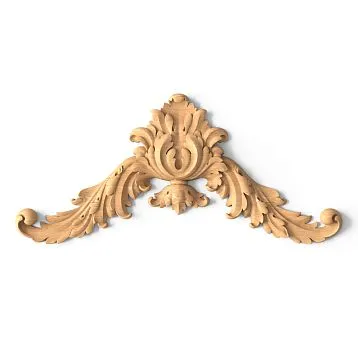
Wooden decor N-008
from 31.25 $

● Universality. The wooden trim K-017 is suitable for any style and room, whether it's a living room, bedroom, office, kitchen, bathroom, or hallway. The wooden trim K-017 can be used for various purposes and tasks, such as framing, cladding, decorating, or zoning. The wooden trim K-017 easily complements other decorative elements, creating a harmonious and cohesive look.
from 21.85 $

Tile HL-041M Furniture Handle
from 23.93 $

Wooden Skirting PLT-001-075
from 64.17 $


