Article Contents:
- Rosettes: central stars of composition
- How to work with rosettes
- Pilasters: vertical architecture on a plane
- Pilaster styles: from Doric to modern
- Capitals: crowns of vertical elements
- Materials and Manufacturing Technologies
- Columns: from load-bearing structures to decorative accents
- Types of columns and their application
- Plates: universal decor for any surfaces
- Stylistic solutions
- Installing decorative elements: from preparation to finish
- Professionals' secrets
- Combining elements: creating harmonious compositions
- Color and texture: playing with perception
- Lighting: how to reveal the beauty of relief
- Interior styles and decorative elements
- Cost and Budgeting
- Where to Buy
- Maintenance and Durability
- Modern trends
- Mistakes to avoid
- Decorative elements in different rooms
- FAQ: Answers to Popular Questions
- Conclusion: architecture in details

The wall is no longer just a partition. It has become a stage where architectural drama unfolds, with main characters — rosettes, pilasters, capitals, columns. These elements transform a flat surface into a three-dimensional sculpture, giving the interior scale and nobility. Wall finishing with decorative elements — the language through which space speaks of taste, status, and understanding of beauty.
Why are we returning to architectural details that seemed forgotten? Because minimalism has run its course. Smooth walls have become dull, standard layouts oppress with monotony. Anddecorative wall insertsthey return individuality, depth, and character to interiors — without overloading space with unnecessary objects.



Rosettes: central stars of composition
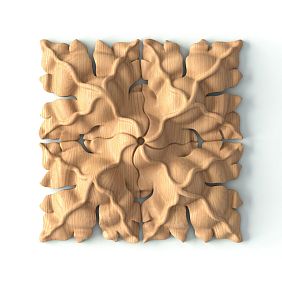
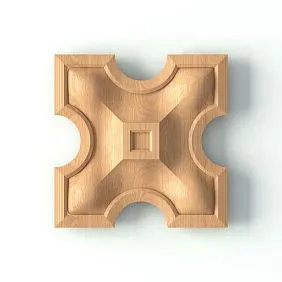
A rosette is not just a round plate. It is an accent that draws the eye to a single point, organizes the space around it. A classic ceiling rosette frames a chandelier, but on walls it works differently — it becomes an independent ornament or part of a complex composition.
Wall-mounted rosettes are placed symmetrically on both sides of a fireplace, mirror, or door frame. They can be the center of a molding frame, an ornament on a pilaster, or the completion of a vertical line of pilasters. Diameter varies from modest 15 centimeters to monumental 80-100 — choice depends on room scale.
Rosette ornament sets the style. Strict geometric lines speak of classicism. Ornate plant motifs with acanthus leaves — this is baroque. Minimalist rays or concentric circles — neoclassicism or art deco. Modern rosettes may be abstract, with asymmetrical patterns, but they retain the main feature — central composition.
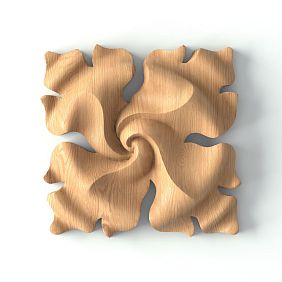
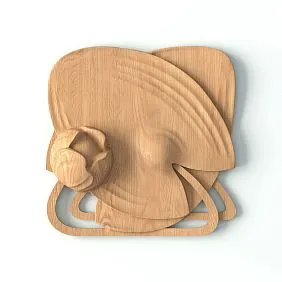
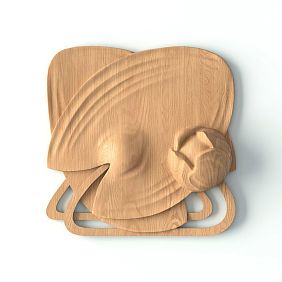
Sculptural decorationsRosette plates for walls are made of polyurethane, plaster, or wood. Polyurethane is lightweight, moisture-resistant, and easy to install — ideal for modern conditions. Plaster is heavy, requires professional installation, but creates a sense of authentic luxury. Wood — warm, alive, with unique texture — choice for those who value naturalness.




How to work with rosettes
Symmetry is the basis of composition. A single rosette should be placed strictly at the center of the wall or functional zone. Paired rosettes — at equal distance from the axis of symmetry. Violating this rule creates visual imbalance.
Scale is critical. In a room with 2.7-meter ceilings, a large rosette with a 60 cm diameter will look bulky. Here, elements of 20-35 cm are appropriate. In rooms with ceilings 3.5 meters or higher, you can confidently use monumental rosettes — they emphasize scale.
Combination with other elements. A rosette rarely lives alone. Often it crowns a molding composition, framesSculptural wall decorationand becomes the center of a symmetrical layout. It is important that all elements are unified in style.
Color enhances or softens the effect. A white rosette on a dark wall — maximum contrast, a bright accent. A rosette matching the wall color creates a subtle relief playing with light. A gilded or patinated rosette — this is luxury requiring an appropriate setting.
Our factory also produces:



Pilasters: vertical architecture on a plane
A pilaster is a flat column protruding from a wall. It does not bear load; its purpose is purely decorative: to establish rhythm, divide space, create an illusion of monumentality.Architectural elements for wallsIn the form of pilasters, they transform a room into an ancient temple or palace hall — depending on the style of execution.
A classical pilaster consists of three parts: base (foundation), shaft (body), capital (top part). This structure originated in ancient architecture, where each element had its own significance and proportions. Today, one can use a full pilaster or its fragments — for example, only the capital as a decorative applique.
The placement of pilasters follows architectural logic. They frame door and window openings, divide long walls into sections, highlight a fireplace, niche, or arch. In spacious halls, pilasters create a colonnade without sacrificing usable floor area. In narrow corridors, single pilasters add verticality, visually raising the ceiling.
Proportions — that’s everything. The height of the pilaster should correspond to the height of the ceiling. The width of the shaft — to the width of the wall. A too narrow pilaster in a large room will disappear, while a too wide one in a small room will overwhelm. Golden rule: the width of the pilaster is 1/8–1/10 of its height.
Get Consultation
Pilaster styles: from Doric to modern
Doric order — strength and minimalism. Simple capital without ornamentation, shaft with fluting (vertical grooves), massive base. Such pilasters suit male offices, libraries, spaces with a brutal character.
Ionic order — elegance and refinement. Capital with characteristic volutes (spirals), more slender shaft, delicate base. This is the choice for living rooms, bedrooms, spaces where elegance matters.
Corinthian order — opulence and ornamentation. Capital decorated with acanthus leaves, rosettes, scrolls. The shaft may be smooth or fluted. This is the most luxurious option, suitable for grand interiors.
Modern pilasters deviate from classical canons. Geometric forms, abstract patterns, asymmetry — all this works well in minimalist, loft, and Scandinavian interiors.PilasterIt can be a thin metal strip, a wooden beam with texture, or a polyurethane profile with minimal relief.
Capitals: crowns of vertical elements
A capital is the top part of a pilaster or column. It determines the architectural order to which it belongs and sets the style of the entire composition. However, a capital can also exist independently — as a decorative applique, decorating a wall, door opening, or arch.
The function of the capital is to visually complete the vertical. It stops the gaze, creates a point, after which a new zone begins — ceiling, cornice, arch. Without a capital, a pilaster looks unfinished, like a chopped-off phrase.
The size of the capital is proportional to the thickness of the pilaster’s shaft. A too small capital on a massive pilaster creates imbalance. A too large one on a slender pilaster looks ridiculous. Classical proportion: the height of the capital is 1/4–1/5 of the shaft’s diameter.
The ornament of the capital — it is the language of style. Acanthus leaves speak of classicism. Geometric rosettes — of neoclassicism. Abstract forms — of modernity.decorative wall insertsIn the form of capitals, they allow creating an accent without installing full pilasters.
Materials and Manufacturing Technologies
Gypsum — a classic material for capitals. It allows creating the most complex reliefs and the finest details. Gypsum capitals — this is real art, handmade by master sculptors. But they are heavy, require professional installation, and fear moisture.
Polyurethane — a modern alternative. Lightweight, strong, moisture-resistant, it does not deform or crack. Polyurethane capitals imitate gypsum so accurately that you can only distinguish them up close. Installation is simple — with adhesive. Price is several times lower than gypsum.
Wood — for those who want warmth and naturalness. Carved wooden capitals — this is a separate world. Each one is unique, each carries the imprint of the master’s hand. Oak, walnut, ash, beech — different species give different textures. Such capitals can be stained, patinated, or gilded.
Composite materials — a new word in decor. They combine strength, lightness, and detail. They allow creating elements of any complexity at an affordable price.
Columns: from load-bearing structures to decorative accents
A column is an archetypal element of architecture. For millennia, it performed a load-bearing function, supporting vaults and domes. Today in interiorsColumns and pilastersare more decorative, but their symbolic meaning has not disappeared — they still embody strength, stability, and monumentality.
Full columns in residential interiors — a rarity. They require much space, high ceilings, appropriate architecture. More often, half-columns protruding from walls or decorative columns not bearing load are used.
Zoning is the main function of interior columns. In studios and open layouts, they mark boundaries between the living room and dining area, the sleeping zone and the office. This is a soft division that does not steal space and does not disrupt air and light circulation.
Framing is the second task. Columns highlight a fireplace, an arch, a staircase, turning them into grand elements. Two columns on either side create a portal that draws the eye and organizes the space.
Types of Columns and Their Applications
Smooth columns — minimalist, without ornamentation. Suitable for modern interiors where clean lines are important. Can be painted any color, including contrasting with walls.
Fluted columns — with vertical grooves. A classic variant inherited from antiquity. Grooves create play of light and shadow, adding dynamism to the vertical.
Twisted columns — baroque luxury. The stem spirals, often adorned with plant motifs. This is the most decorative variant, suitable for historical interiors.
Composite columns — assembled from several elements. This allows creating complex shapes and combining materials. For example, a gypsum capital, wooden stem, polyurethane base.
Adhesives: Universal Decor for Any Surfaces
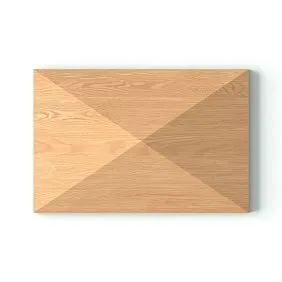
Decorative adhesives — this is a separate universe. They can be any shape: rectangular, oval, rhomboid, asymmetrical. Any size: from miniature 5x5 cm to monumental panels one meter by one meter. Any style: from strict classicism to futuristic abstraction.
Adhesives are used where an accent is needed, but there is no room for a full architectural detail. Above a door, in a corner of a room, on a wall partition, in the center of a wall. They can be individual or assembled into compositions.
Corner adhesives mask wall joints, adding completeness. Central adhesives create focal points. Framing adhesives highlight mirrors, paintings, panels.Plaster ornament for walls and ceilingsAs adhesive panels, they allow to realize any designer idea.
The feature of adhesives — ease of combination. You can create endless variations of compositions by changing placement, scale, color. This is a constructor for adults, where the rules are set by you.
Stylistic solutions
Classic adhesives — symmetrical, with plant ornamentation. Acanthus, laurel, grapevine, rosettes. They create a sense of nobility and respectability. Good for living rooms, offices, dining rooms.
Geometric adhesives — rhombuses, squares, circles, lines. Suitable for modern interiors where clear forms are important. You can create abstract compositions, play with rhythm.
Plant adhesives — not only classic leaves, but also stylized flowers, branches, grasses. Work well in Provence, shabby chic, eco styles.
Abstract adhesives — free forms, unusual contours. This is original decor that makes the interior unique. Requires boldness and sense of measure.
Mounting decorative elements: from preparation to finish
Everything begins with a project. Draw a wall plan, mark the location of each element. Consider doors, windows, furniture. Check symmetry and proportions. An error on paper will cost less than on the wall.
Surface preparation — a critical stage. The wall must be flat, clean, dry, and primed. Imperfections will show under adhesives, glue won't stick to dusty surfaces, moisture will destroy the connection.
Marking is done with pencil and level. For vertical elements, use a plumb bob or laser level. For horizontal elements — water or laser. Check all distances twice.
Trimming elements. If a pilaster doesn't fit the height, it can be shortened. If an adhesive is too large, trim it. Use a fine-toothed saw for polyurethane, a circular saw for wood.
Glue is applied to the back of the element. For polyurethane — special polyurethane glue or liquid nails. For wood — carpenter's glue plus additional fixation with screws. For gypsum — gypsum paste.
Press the element against the wall, hold for 30-60 seconds. Secure heavy details with supports until fully dry. Wipe off excess glue immediately with a damp cloth.
Final finishing. Fill joints with putty, sand. Prime. Paint in the desired color.decorative wall finishingRequires patience and care.
Secrets of professionals
Material acclimatization. Remove elements from packaging one day before installation. Let them adjust to the room's temperature and humidity.
Dry fitting. Place all elements against the wall without glue, check how they match. Number them to avoid confusion during installation.
Should you paint before or after installation? Polyurethane elements are easier to paint before installation. Gypsum and wooden elements — after, to mask joints.
Use of sealant. After installation, run acrylic sealant along all joints — between elements, between element and wall. This creates a perfectly smooth surface.
Combination of elements: creating harmonious compositions
Rosettes and pilasters — a classic ensemble. Two pilasters frame a rosette, creating a symmetrical composition. Below, between the pilasters, you can place a fireplace, console, or painting.
Pilasters and moldings.Wall finishing with moldingsPerfectly complemented by pilasters. Moldings create horizontal lines, pilasters — vertical ones. Together, they form an architectural grid.
Capitals and arches. If there is an arch in the interior, its supports can be adorned with capitals. Even if there are no physical supports, you can create their illusion using appliqués.
Appliqués and frames. A molding frame with a central appliqué — a simple yet effective solution. The appliqué draws the eye, while the frame organizes the space around it.
Color and texture: playing with perception
White — a universal choice for decorative elements. It creates contrast on any walls and suits any style. But this is not the only option.
Painting in wall color — a modern trend. Elements blend into the surface, leaving only the relief. This creates a subtle play of light and shadow, very elegant.
Contrasting color — a bold solution. Black pilasters on white walls, gold rosettes on blue, gray appliqués on beige. This works well in eclectic, authorial interiors.
Gilding and patina — classics for historical styles. Gold on white or ivory — a combination proven over centuries. Patination adds noble antiquity.
Wood texture — warmth and naturalness.Wooden wall claddingUsing carved elements creates a special cozy atmosphere.
Lighting: how to reveal the beauty of relief
Side lighting reveals volume. Wall sconces placed beside pilasters or rosettes create dramatic shadows, emphasizing relief.
Directed lighting from above. Spotlights aimed at decorative elements make them the main focus of the interior.
Hidden backlighting. LED strips hidden behind cornices or in niches create soft glow that delicately highlights shapes.
Interior styles and decorative elements
Classic — here, all elements are in their proper place. Pilasters frame zones, rosettes crown compositions, capitals complete verticals. Symmetry, proportions, grandeur.Internal wall finishingIn classic style, architectural details are unthinkable without.
Neoclassicism — a more restrained version. Simpler elements, less decoration, cleaner lines. But the structure remains.
Baroque and Rococo — a riot of decoration. Many elements, complex ornaments, gilding, curved lines. Here, everything is appropriate: carved appliqués, twisted columns, luxurious capitals.
Art Deco — geometry and luxury. Symmetrical compositions, strict forms, but with emphasis on expensive materials and finishes. Gold, bronze, black lacquer.
Modern style — minimalism in decoration. Simple appliqués, sleek pilasters without capitals, geometric forms. Color matching wall tones.
Loft — seemingly, there is no place for classical elements here. But contrast works: a white rosette on a brick wall, a wooden pilaster on concrete. This creates tension, making the interior more interesting.
Cost and Budgeting
Price depends on material, size, and complexity of execution. Polyurethane elements — the most affordable. Rosette — from 500 to 5000 rubles. Pilaster — from 2000 to 15000. Capital — from 1000 to 8000.
Gypsum elements are more expensive. Handmade rosette — from 5000 to 30000 rubles. Pilaster — from 10000 to 100000. Capital — from 8000 to 50000.
Wooden carved elements — exclusive. Price starts from 15000 for a small appliqué and can reach hundreds of thousands for a full handmade pilaster.
Don't forget about installation. Professional installation may increase the budget by 50-100%. But if the elements are gypsum or wooden, saving on the master is risky.
Where to buy
Specialized decor and molding stores — the first choice. Wide assortment, opportunity to view samples, consultations.Buy internal wall claddingAvailable both in retail stores and online.
Building hypermarkets — budget option. Selection is more modest, but main items are available.
Direct supplies from manufacturers. If volume is large or non-standard elements are needed, it makes sense to contact directly.
Individual workshops. For exclusive carved elements, non-standard sizes, and custom projects.
Care and longevity
Polyurethane practically requires no maintenance. Wipe with a damp cloth once a month. It is not afraid of moisture, does not accumulate dust, does not deform. Lasts for decades.
Gypsum is more fragile. Cannot be washed with aggressive cleaners, protect from impacts. But with careful handling, it lasts for centuries.
Wood requires periodic renewal of finish. Lacquer or oil protects against moisture and mechanical damage. Monitor humidity in the room.
Modern Trends
Large formats. Big rosettes, massive pilasters, monumental appliqués. This works in spacious rooms, creating a wow effect.
Asymmetry. Deviation from classical symmetry, free placement of elements. Requires a delicate sense of balance.
Combination of materials.Decorative wall finishing with woodand polyurethane, gypsum and metal. Different textures create richness of surface.
3D elements.3D Wall Finishingusing raised appliqués and relief panels creates a sculptural impression.
Coloring in unexpected hues. Bright, saturated tones on decorative elements make them main accents.
First mistake - unstructured mixing. A classic chair, loft table, Scandinavian chest, and minimalist cabinet in one room is not eclecticism, but visual chaos. Each item draws attention to itself, not creating cohesion. A system, logic, unifying idea is needed. Choose one dominant style, add a second as an addition, and possibly a third as an accent. But no more than three, and all should have something in common - color, material, era, or functionality.
Mismatch of scales. Large elements in a small room create a cramped feeling. Small elements in a large space get lost.
Mixing styles. A Baroque rosette and minimalist pilaster in one composition — this is dissonance.
Over-decorating. When there are too many elements, the interior becomes a museum, loses its residential atmosphere.
Poor installation. Gaps, misalignments, glue marks — all of this destroys the beauty of the most expensive elements.
Ignoring proportions. Architectural elements obey mathematics. Violating proportions creates visual discomfort.
Decorative elements in different rooms
Living room — main scene. Here, full compositions are appropriate: pilasters framing the fireplace, rosettes on walls, molding frames with appliqués.Wall finishing photorealized projects demonstrate the richness of possibilities.
Bedroom requires restraint. Headboard framed by pilasters, central rosette above it, a few appliqués — that’s enough.
Office — strictness and respectability. Classical pilasters, geometric appliqués, dark wood.
Entryway — grandeur from the first step. Pilasters framing the entrance, mirror surrounded by rosettes.Decorative corridor wall finishingcreates the first impression.
Dining room — solemnity. Columns or pilasters dividing space, rosettes on walls.
FAQ: Answers to popular questions
Can decorative elements be used in modern interiors?
Yes, if you choose minimalist forms, paint them in wall colors, and do not overload the space.
Which material is better for humid rooms?
Polyurethane. It does not fear moisture, does not deform, and is easy to clean.
How long does it take to install pilasters in a room?
A pair of pilasters — one day including preparation, installation, and finishing.
Can polyurethane elements be painted?
Yes, with any acrylic or latex paint. Prime them first.
How to calculate pilaster height?
From floor to ceiling cornice. Or from floor to an imaginary line if making shortened pilasters.
Do walls need to be leveled for decorative elements?
Absolutely. Imperfections will be visible, and elements may detach.
Can elements be installed by myself?
Polyurethane — yes, if you have tools and patience. Gypsum and wooden — better to entrust to a professional.
How to care for carved wooden elements?
Wipe with slightly damp cloth, periodically renew oil or varnish.
How much does a project with decorative elements cost?
From 30,000 rubles for a modest composition to millions for full decoration of a large house.
How to combine elements from different collections?
Look at style, scale, and detail. They must harmonize.
Conclusion: Architecture in Details
Decorative wall finishingThese are not luxuries, but ways to give space character and depth. Rosettes, pilasters, capitals, columns transform standard rooms into unique interiors, where every detail is thought out and meaningful.
Decorative wall finishing optionsThey are so diverse that any idea — from strict classicism to avant-garde modernity — can be realized. The key is understanding proportions, sense of style, and willingness to invest time in planning.
Wall Finishing ElementsThey work not only aesthetically but psychologically. They create a sense of completion, order, solidity. An interior with architectural details is perceived as thoughtfully designed, serious, and expensive — even if the budget was modest.
STAVROS company offers a full range of solutions for creating interiors with character. The assortment includesMoldings for Ceilingwalls and pilasters of all orders, rosettes from classical to avant-garde, handcrafted capitals,decorative elementsof any complexity. Materials — from polyurethane to carved wood. Consultants will help select the optimal solution, calculate quantities, and advise on installation. Quality materials and precision guarantee that the result will last decades without losing its beauty.
Decorative elements are an investment in atmosphere. They create interiors that never get old, that delight every day, that become a backdrop for life. And this is accessible to anyone willing to take a step from the standard to the unique.