












































































Article Contents:
- Fundamental Triad: Base, Middle, Finishing Touch
- Proportional Relationships of Elements
- Unity of Profile and Material
- Vertical Logic of Wall Finishing
- Plinth Zone: Foundation of Composition
- Main Zone: Plane of Expression
- Frieze Zone: Grand Finishing Touch
- How to Combine Profile and Room Proportions
- Standard Ceilings 2.5–2.7 Meters: Balance of Scale
- High Ceilings 3.0–3.5 Meters: Increased Scale
- Monumental Spaces 4.0–5.0 Meters: Grandeur of Scale
- Color Solutions and Lighting Effects
- Color Solutions and Lighting Effects
- Monochromatic Composition: Tonal Gradation
- Contrasting Composition: Play of Colors
- Lighting Effects: Architectural Lighting
- Composition Integrity — Foundation of Style
- Classic Style: Grand Symmetry
- Modern Style: Minimalist Purity
- Transitional Style: Balance of Tradition and Modernity
- Interior as a Unified Work of Art
- Designing with Overall Integrity in Mind
- Implementation: From Concept to Realization
- Longevity of Integrated Composition
- Conclusion

Architectural integrity of the interior arises from a system of interconnected elements, where every line and profile serves a unified concept.Wooden baseboardforms the visual foundation from which the vertical composition is built.Moldingcreates intermediate horizontal divisions, structuring the wall plane.Wooden cornicecrowning the composition, completing the transition from vertical to horizontal ceiling.Decorative Railadds vertical accents that organize the perception of space.MDF Skirting Boardensures economic efficiency without compromising visual integrity, allowing the creation of complex multi-level systems within a reasonable budget.
Relationship between baseboards, moldings, and cornices




Fundamental triad: base, middle, crown
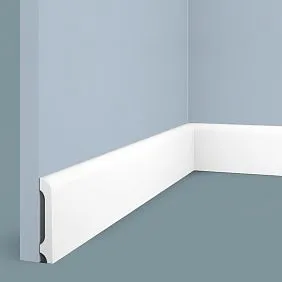
Architectural composition of the interior is built on three mandatory levels, creating vertical division of space.Wooden baseboardAt the base of the wall, it forms a visual foundation, plinth zone, contact with the ground. A height of 80-120 millimeters creates a horizontal line at foot level, marking the boundary between the vertical wall and the horizontal floor. This line is subconsciously perceived as the architectural foundation of the entire composition.
MoldingAt mid-height of the wall, it creates an intermediate division. The classical placement at 90-110 centimeters from the floor corresponds to the waist level of an average-height person. This division is visually comfortable and corresponds to the proportions of the human body. The molding divides the wall into a lower zone — plinth and panel — and an upper zone — main wall surface. A width of 40-60 millimeters is sufficient to create an expressive horizontal line.
Wooden corniceAt the ceiling, it crowns the composition, creating an architectural conclusion. A width of 100-180 millimeters forms an expressive transition from the vertical wall to the horizontal ceiling. A complex profile with ovolo, moldings, and flutes creates a shadow pattern that enriches the upper zone of the room. The cornice is the most massive element of the triad, dominating in visual hierarchy.
Our factory also produces:



Proportional relationships of elements
Classical architectural theory establishes mathematical relationships between the elements of the triad. The height of the baseboard to the width of the cornice is a 2:3 ratio. If the cornice has a width of 120 millimeters, the baseboard should be 80 millimeters high. This ratio creates a visual balance where the crowning element is larger than the base, corresponding to tectonic logic — heavy elements at the bottom, light ones at the top.
The width of the middle molding to the height of the baseboard is a 1:2 ratio. At a baseboard height of 80 millimeters, the molding should have a width of 40 millimeters. This proportion creates a visual gradation of sizes — the molding is smaller than the baseboard, the baseboard is smaller than the cornice. The gradation forms a visual lightening from bottom to top, which corresponds to the natural perception of structural stability.
The golden ratio 1:1.618 is applied to the ratio of zones that create horizontal divisions. If the molding is located at 100 centimeters and the ceiling height is 270 centimeters, the upper zone is 170 centimeters. The ratio of the lower zone to the upper zone 100:170 is close to the inverse golden ratio 0.588:1. This proportion is perceived as harmonious, visually comfortable, and natural.
Get Consultation
Unity of profile and material
Visual connection between the elements of the triad is created through unity of profile.Wooden baseboardof the classical profile with a molding and ovolo repeats the profile in a reduced scalewooden corniceMiddleMoldinghas a simplified profile with one molding, representing intermediate complexity between the baseboard and cornice.
Unity of material strengthens visual connection. All three elements made of natural-toned solid oak with oil finish create material identity. The characteristic grain pattern on the baseboard, molding, and cornice is perceived as a single natural system. Unity of color, texture, surface character forms a cohesive architectural composition.
Contrasting solution uses different materials for different levels.MDF Skirting Boardwhite at the base creates a neutral line. Middle molding made of solid oak forms a natural accent. White MDF cornice completes the composition with a neutral line. Alternating white and wood creates a rhythmic structure organizing the verticality of the wall.
Vertical logic of wall decoration
Plinth zone: foundation of composition
The plinth zone from floor to 90-110 centimeters height forms the visual foundation of the interior.Wooden baseboardheight of 100 millimeters creates the lower boundary of the zone. The upper boundary is formed by the middlemoldingwidth of 50 millimeters. The area between the baseboard and molding is treated distinctly from the main wall.
Classical solution for the plinth zone — painting 2-3 tones darker than the main wall. If the main wall is light gray RAL 7035, the plinth zone is painted medium gray RAL 7036. Dark color visually emphasizes the base, creating a sense of stability. The boundary between zones is emphasized by the molding, which is read as a clear horizontal line at the transition of colors.
Alternative solution — panels in the plinth zone. Solid oak panels 900 millimeters high form a natural textured surface.Wooden baseboardin the tone of the panels creates visual continuity of material. The molding completes the panels from above, creating a transition to the painted wall. Material division strengthens visual separation of zones.
Wallpaper in the plinth zone. Textured linen wallpaper creates a tactile surface contrasting with smooth painted walls above. Wallpaper protects the lower part of the wall from mechanical damage and adds visual interest.Moldingcreates a frame surrounding the wallpaper from above and on the sides.
Main zone: expression plane
The main wall zone spans from the molding at 90-110 cm to the frieze molding at 200-220 cm, forming the primary wall surface. This zone is the main field for interior decorative solutions. Painting, wallpaper, photo wallpaper, decorative panels are placed in the main zone. The height of the zone, 110-130 cm, creates an expressive vertical plane.
Wallpaper with ornament in the main zone creates a decorative accent. Classic damask patterns, geometric ornaments, and botanical motifs are placed on the main wall surface. The plinth zone and frieze zone remain uniform, framing the decorated main zone.
creates clear boundaries separating the ornamented zone.Moldingcreates clear boundaries separating the ornamented zone.
Decorative RailVertical orientation in the main zone creates a textured surface. Solid oak battens with a 40x40 mm cross-section, spaced 50 mm apart, form a rhythmic structure. The battens are installed from the lower molding to the frieze molding, creating a connection between horizontal levels. Vertical lines visually increase the room's height.
Frieze zone: grand finale
frieze molding at 200-220 cm towooden corniceunder the ceiling constitutes the upper grand band. The frieze zone height is 50-70 cm in rooms with 2.7-2.8 m ceilings. This zone traditionally receives decorative treatment — molded garlands, rosettes, ornaments.
Molded ornament in the frieze zone creates classic decorativeness. Botanical garlands, ribbons, rosettes made of polyurethane or plaster are placed in the central part of the frieze. Rhythmic repetition of ornaments creates a grand atmosphere.
crowning the ornamented frieze, forming a luxurious finish to the wall.Wooden cornicecrowning the ornamented frieze, forming a luxurious finish to the wall.
Frieze zone lighting creates a modern effect. LED strip is placed behind the cornice, directing light onto the frieze. A light spot 50-70 cm high illuminates the upper part of the wall, creating a floating ceiling effect. Warm light at 2700 Kelvin adds coziness, cool light at 5000 Kelvin — freshness. Brightness and color control adapt lighting to time of day and mood.
How to combine profile and room proportions
Standard ceilings 2.5-2.7 meters: scale balance
Rooms of standard height require moderate profiles, corresponding to a chamber scale.Wooden baseboarda height of 70-80 mm creates a delicate base without visual heaviness. A simple profile with one molding or bevel forms a clear line without excessive decoration. Complex multi-level profiles in low rooms create a sense of overloading.
a width of 40-50 mm at a height of 90-100 cm divides a 250-270 cm high wall in a ratio of approximately 1:1.7. This ratio is close to the golden section, creating visual harmony. The molding width is sufficient to create an expressive line, but not excessive for a chamber-scale room.Moldinga width of 80-100 mm completes the composition with moderate scale. According to the 2:3 rule, a cornice 90 mm wide corresponds to a plinth 60 mm high. A cornice profile with two to three elements — molding, bevel, shelf — creates a shadow pattern without excessive complexity. Four to five profile elements create visual overload in a low room.
Wooden cornicewith a width of 80–100 millimeters, it completes the composition with moderate scale. According to the 2:3 rule, a cornice 90 millimeters wide corresponds to a skirting board 60 millimeters high. A cornice profile with two or three elements — ovolo, bead, and cove — creates a shadow pattern without excessive complexity. Four to five profile elements create visual overload in low-ceilinged rooms.
High ceilings 3.0-3.5 meters: scale increase
Rooms with increased height require more scaled profiles.Wooden baseboarda height of 100-120 mm creates a base corresponding to the monumentality of the space. A complex profile with base, stem, and capital forms a miniature column in horizontal position. Three to four profile elements create a rich shadow pattern.
a width of 60-70 mm at a height of 100-120 cm structures the increased wall height. An additional frieze molding at 220-240 cm creates a second horizontal division level. Two intermediate moldings divide the wall into three zones — plinth, main, frieze. A multi-level system corresponds to the scale of a high room.
Wooden cornicea width of 140-180 mm crowns the composition with monumental scale. A complex profile with four to five elements — cove, husk, bevel, dentils, shelf — creates a luxurious finish. Moduleons — brackets imitating support for the cornice projection — add sculptural quality. Such a cornice becomes an architectural work, dominating the upper part of the room.
Monumental spaces 4.0-5.0 meters: grand scale
Rooms of extreme height — grand halls, atriums, churches — require maximum profile scales.Wooden baseboarda height of 150-200 mm forms a plinth zone visible even from a distance. A two-level system — main plinth 120 mm high plus plinth molding 80 mm high at 20 cm from the floor — creates an elaborate base.
The system of horizontal divisions includes three to four levels of moldings. Panel molding at 120-150 cm, medium molding at 220-250 cm, frieze molding at 320-350 cm, and subcornice molding 50-70 cm below the ceiling. Four horizontal levels divide a 4.0-5.0 m high wall into five zones, each receiving its own decorative solution.
Wooden cornicea width of 200-300 mm crowns the composition with maximum scale. The profile includes five to seven elements with moduleons, dentils, Ionic elements, and channels. The cornice height from wall to ceiling reaches 300-400 mm. Such a cornice is perceived as an architectural structure, not a decorative element. The grand scale corresponds to the monumentality of the space.
Color Solutions and Lighting Effects
Monochromatic Composition: Tone Gradation
Monochromatic solutions use various shades of one color to create a visual structure. The white range, from warm white RAL 1013 in the base zone through neutral white RAL 9010 in the main zone to cool white RAL 9003 in the frieze zone, creates a temperature gradient.MDF Skirting Boardwarm white, neutral white moldings,Wooden cornicecool white form a subtle gradation.
The gray range, from dark gray RAL 7024 at the base through medium gray RAL 7036 in the middle to light gray RAL 7035 at the top, creates visual lightness. The gradation from dark to light from bottom to top corresponds to the natural distribution of light.Wooden baseboardis painted dark gray, mediumMoldingto medium gray, cornice to light gray. Walls between moldings are painted in intermediate shades.
The beige range creates a warm, cozy atmosphere. From medium beige at the base through light beige in the middle to nearly white cream at the top. The warmth of the color is enhanced by warm lighting at 2700-3000 Kelvin.Wooden baseboardThe natural tone of solid oak harmonizes with the beige range, creating a natural warmth.
Contrasting Composition: Color Play
Contrasting solutions use opposite colors to create visual tension. White architectural elements -MDF Skirting Boardmoldings, cornice - on dark blue walls create maximum contrast. Clear white horizontal lines structure the dark vertical, creating graphic expressiveness. Contrast highlights architectural geometry.
Dark elements on light walls create reverse contrast.Wooden baseboardfrom dark walnut, moldings andWooden cornicefrom weathered oak on light gray walls form dark horizontal lines. The natural texture of dark wood adds visual complexity to the color contrast. The combination is modern and elegant.
Colorful walls with white elements create vivid expressiveness. Terracotta walls with whiteMDF baseboardmoldings, cornice form a Mediterranean atmosphere. Green walls with white elements - English classic. Blue walls - Scandinavian freshness. White architectural elements are universal and harmonize with any wall color.
Lighting Effects: Architectural Lighting
cornice backlighting creates a floating ceiling effect. LED strip is placed behindwooden corniceand directs light toward the ceiling. A light spot 50-80 centimeters wide illuminates the ceiling perimeter, creating an illusion of a gap between the wall and ceiling. The ceiling is perceived as floating, unsupported by walls. Visually, the room height increases by 10-15 percent.
baseboard backlighting creates a floating wall effect. LED strip behindwooden baseboarddirects light onto the floor and lower part of the wall. A light strip 30-50 centimeters high creates an illusion of the wall detaching from the floor. Walls are perceived as light, weightless, floating. The effect is enhanced by a 10-15 millimeter gap between the baseboard and floor.
moldings backlighting creates horizontal light lines. LED strip above the middlemoldingdirects light upward onto the main wall zone. A light spot 80-120 centimeters high creates a bright central zone between the dark base and frieze zones. The lighting stratification enhances the visual division of the wall into horizontal zones. Dynamic brightness control for each zone creates various lighting scenarios.
Composition Integrity — Foundation of Style
Classic Style: Grand Symmetry
Classic interiors are based on strict adherence to proportions, symmetry, and hierarchy of elements.Wooden corniceA molding 150 millimeters wide with a complex profile crowns the composition.Wooden baseboardA molding 100 millimeters high with a classic profile forms the base. The 3:2 ratio creates visual balance. A middle panel molding 50 millimeters wide at 100 centimeters high and a frieze molding 70 millimeters wide at 220 centimeters high create a system of horizontal divisions.
Traditional color scheme - white or cream-colored profiled elements on colored walls. The plinth zone is painted in medium green, the main zone in light green, and the frieze zone in almost white cream. The gradient from saturated at the bottom to light at the top creates a visual lightness. White moldings clearly mark the boundaries of zones.
The plinth zone panels are formed by vertical moldings, creating rectangular sections 60x80 centimeters. Within the sections, the wall is painted the same medium green or covered with fabric wallpaper. The molding frame creates a classic panel system. Symmetry of panels, adherence to proportions, and unity of profiles form a majestic composition.
Modern style: minimalist purity
Modern interior reduces architectural elements to a minimum.MDF Skirting BoardA simple rectangular profile 60-70 millimeters high creates a delicate line at the base. Absence of a ceiling cornice - the ceiling meets the walls at a right angle. Absence of intermediate moldings - the wall appears as a single plane from skirting to ceiling.
Monochromatic color scheme - white walls with white skirting create visual continuity. The skirting blends into the walls, almost unnoticed. Architectural lines are minimized, focus shifts to the purity of planes, surface quality, and play of light on smooth walls. Absence of decoration becomes a philosophy - beauty in simplicity.
Accent wall withdecorative lathadds texture while preserving minimalist philosophy. Vertical laths of solid oak on one wall create a natural accent. Other walls are smooth white with minimal skirting. Contrast of smoothness and texture, white and wood, creates visual interest without excessive decoration.
Transitional style: balance of tradition and modernity
Transitional style combines classical architectural elements with modern restraint.Wooden baseboard80 millimeters high with simplified classical profile - one molding, one fillet - creates a link to tradition.Wooden cornice100 millimeters wide with moderately complex profile crowns the composition without excessive decoration.
a width of 40-50 mm at a height of 90-100 cm divides a 250-270 cm high wall in a ratio of approximately 1:1.7. This ratio is close to the golden section, creating visual harmony. The molding width is sufficient to create an expressive line, but not excessive for a chamber-scale room.MoldingIt is present but positioned higher than the classical position - at a height of 120-140 centimeters. This creates a more modern division of the wall, where the plinth zone is less pronounced. Molding with a simple profile - rectangular section with bevel - corresponds to modern restraint.
Neutral color scheme - light gray walls with white architectural elements or white walls with wooden elements in natural tones. Absence of bright colors, moderate contrasts, natural materials create a calm, elegant atmosphere. Transitional style - balance between the grandeur of classicism and the calmness of modernity, popular choice for residential interiors.
Interior as a single artwork
Design with regard to wholeness
Creating an architecturally cohesive interior begins with comprehensive design.Wooden baseboard, Molding, Wooden corniceVertical wall sections are designed simultaneously as a unified system. Proportions are calculated mathematically, profiles are visually coordinated, materials and colors are selected to create harmony.
Vertical wall section drawings show the placement of all horizontal elements with precise dimensions. Skirting height, molding positions, cornice width are fixed on the drawing. Proportional relationships are verified by calculation. Visualization shows the future composition appearance, allowing to assess visual balance before starting work.
Coordination with other interior elements ensures cohesion. Panel molding height matches door opening height. Cornice width corresponds to chandelier scale. Color of wooden elements harmonizes with parquet color. Each decision is made considering the entire composition, not in isolation. STAVROS provides professional consultation during the design phase, helping to create a harmonious system.
Implementation: from concept to realization
Implementation of the designed system requires precision and professionalism.Wooden baseboardIt is installed strictly along a horizontal line marked by a laser level. Deviation from horizontal more than 2 millimeters per 3 meters creates visual discomfort. Corner joints are made at an exact 45-degree angle on a miter saw.
MoldingIt is installed at the specified height with precision ±5 millimeters. Marking is done from the ceiling, not from the floor, as the floor may have unevenness. Horizontal alignment of molding is critical for visual comfort - even a slight slope is noticeable to the eye. Mounting via clips or direct screwing ensures rigidity.
Wooden corniceIt is installed last, crowning the composition. Simultaneous mounting to wall and ceiling creates maximum stability. Corner joints require special precision - the cornice is visible from below, any gaps in corners are noticeable. Final puttying, sanding, and painting create an ideal surface.
Architectural composition made of STAVROS quality elements serves for decades.
Made of solid oak, retains functionality for 30-50 years. Kiln-drying wood to 8-12% moisture minimizes deformation. Quality protective coating - varnish, oil-wax - ensures longevity. Possibility of restoration through resanding and reapplying coating extends service life.Wooden baseboardMade of solid oak, serves for the same duration. In historic buildings, wooden architectural elements aged 100-150 years retain functionality and aesthetics. Noble patina of time adds charm. Modern STAVROS elements are designed for the same longevity.
MoldingandWooden corniceMade of solid oak, serves for the same duration. In historic buildings, wooden architectural elements aged 100-150 years retain functionality and aesthetics. Noble patina of time adds charm. Modern STAVROS elements are designed for the same longevity.
MDF Skirting BoardServes 15-20 years under normal use. The stability of MDF geometry eliminates deformation. Quality painting in three to four layers creates a durable finish. After 15-20 years, elements are typically replaced during the next cosmetic renovation, but the composition remains intact — new elements are installed in the same positions, preserving the original architectural concept.
Conclusion
A unified interior architecture is created through a thoughtfully designed system of interconnected elements.Wooden baseboardforms the visual foundation from which the vertical composition is built.Moldingcreates intermediate horizontal divisions, structuring the wall plane.Wooden corniceCulminates the composition, completing the transition from vertical to horizontal.
Decorative RailAdds vertical accents, enriching the composition with texture and rhythm.MDF Skirting BoardEnsures economic efficiency, allowing the creation of complex systems within a reasonable budget. The combination of various materials, colors, and profiles creates endless design possibilities.
Since 2002, STAVROS has created architectural elements that form the foundation of cohesive interior compositions. 23 years of experience, deep understanding of proportions and styles, and professional consultation during the design phase help create interiors as unified works — from floor to ceiling, where each element contributes to the overall concept, creating harmony perceived subconsciously as perfection.


