Article Contents:
- Window as an architectural portal: history and symbolism
- Transformation of functions: from protective charm to aesthetics
- Regional palette of styles
- Constructive anatomy: elements and their interaction
- Architectural composition of window framing
- Technology of connection with window unit
- Ornamental grammar: language of symbols and forms
- Floral motifs in window decoration
- Zoomorphic images and their interpretation
- Geometric symbolism in architectural decoration
- Materials science: from traditions to innovations
- Wood species and their artistic possibilities
- Modern wood processing technologies
- Composite materials in window decoration
- Modern design: from concept to implementation
- Architectural analysis and stylistic planning
- Artistic design of decorative elements
- Technical solutions and constructive joints
- Installation and operation: technology of durability
- Preparatory work and installation planning
- Installation technology processes
- Maintenance and repair system
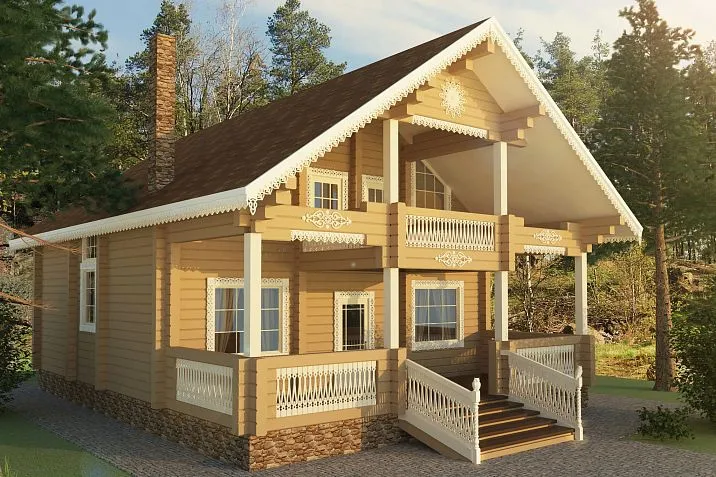
Did our ancestors spend months creating carved frames for simple windows? Could practical Russian masters afford such "luxury" as windows with cornices in Russian styleThe answer lies in a deep understanding that a home is not merely shelter from the weather, but a living organism, whose soul is expressed through every detail, every carved swirl, every ray of light refracting through the patterns of window decoration.
Windows have always been the eyes of the house, and cornices their framing, much like eyelashes frame human eyes. But in Russian tradition, this comparison takes on a special meaning: cornices did not merely decorate — they protected, safeguarded, and created an energetic shield around the most vulnerable areas of domestic space.
Today, when plastic windows and standardized construction threaten to erase the last traces of architectural individuality, returning to the traditions of carved window decoration is not merely a nod to nostalgia, but an act of cultural resistance. Every window adorned with carved cornices is a statement that beauty can and should be part of everyday life.


Window as an architectural portal: history and symbolism




Transformation of functions: from protective charm to aesthetics
In ancient Russian architecture, a window was never perceived as a simple technical opening in a wall. It was a portal between worlds — the internal, protected space of the house and the external, full of uncertainty and potential dangers. That is why window framing required special artistry and craftsmanship.
The first window casings appeared not out of a desire for beauty, but out of practical necessity. They sealed gaps between window frames and walls, protecting against drafts, rain, and snow. But even then, masters understood: a functional element must also be beautiful. Thus was born wooden house carving, transforming a utilitarian detail into a work of art.
Over time, the protective function of window casings transformed into symbolic meaning. Carved patterns became talismans, each element carrying deep sacred significance. Solar symbols attracted sunlight and energy into the home. Plant motifs symbolized fertility and abundance. Geometric patterns created protective magical networks.
Gradually, window casings became the house’s calling card, revealing the social status, material condition, and aesthetic preferences of its owners. Wealthy merchants competed in the opulence of window decoration. Master craftsmen passed down carving secrets from generation to generation, creating entire dynasties of carvers.
The industrialization of the 19th–20th centuries threatened the traditions of carved decoration. Mass construction, standardization, and cost-saving — all this displaced handcrafted beauty. Yet the tradition survived, preserved in remote villages, in the works of enthusiastic restorers, and in museum collections.
Our factory also produces:


Regional palette of styles
The vast expanses of Russia gave rise to an astonishing diversity of window decoration styles. Each region developed its own artistic language, favorite motifs, and technical methods for working with wood.
Northern regions — Arkhangelsk, Vologda, Karelia — created a severe and majestic aesthetic for window casings. Here, large, monumental forms dominated, deep relief carving, and minimalist geometric ornamentation. The climate discouraged extravagance — every decorative element had to withstand harsh winters and short, intense summers.
Central Russian regions — Moscow, Vladimir, Yaroslavl — developed a more refined and detailed style. Here, delicate lace-like carving flourished, creating a wooden lace effect. Masters of these regions were renowned for combining carving with polychrome painting, producing festive, ornate compositions.
Volga traditions were distinguished by exceptional decorative richness and ornamental motifs. The influence of various cultures — Russian, Tatar, Mordovian — created a unique blend of artistic traditions. Here, one could encounter strict geometric patterns, lush floral compositions, and complex narrative scenes.
Southern Russian regions contributed steppe freedom and Cossack boldness to window decoration. Casings here were more open, airy, often supplemented with wrought iron elements. The influence of Ukrainian and Belarusian traditions created a distinctive flavor of southern Russian style.
Get Consultation
Constructive anatomy: elements and their interaction
Architectural composition of window framing
Traditional Russian window casing represents a complex compositional system, where each element has both functional and symbolic purpose. Understanding this system is essential for creating harmonious modern window decoration.
The crown part of the casing — the ocher or sandrik — served as the architectural crown of the window. Here, the most expressive decorative elements were placed: suns, birds, floral compositions. The shape of the ocher could be triangular, semicircular, or complex multi-tiered. The proportions and decoration of this part determined the entire character of the window composition.
The side elements—jambs or posts—framed the window on the right and left, creating a vertical rhythm in the composition. They could be strictly geometric or decorated with carved ornamentation. Often, vertical plant motifs—stylized trees, winding vines, floral garlands—were placed on the jambs.
The lower part of the casing — the sash or apron — completed the composition from below and simultaneously performed an important protective function, diverting rainwater from the wall. Its decoration was usually more restrained, but necessarily harmonized with the overall artistic solution.
Cornice elements — small projections and eaves — created additional play of light and shadow, protected the carving from atmospheric precipitation, and added volume and expressiveness to the composition.
Proportional relationships of all elements were based on folk understanding of harmony, intuitively following the principles of the golden section. These proportions created a sense of naturalness and beauty, pleasing to both eye and soul.
Technology of joining with window blocks
Modern design windows with casings in Russian style requires careful consideration of the features of modern window systems and construction technologies. Traditional solutions must be adapted to new materials and structures.
Mounting casings to modern window blocks has its own specifics. Plastic and aluminum frames require special mounting systems that prevent deformation and ensure secure connection with wooden decorative elements. Mechanical fasteners, adhesive compounds, and combined systems are used.
Sealing joints — a critically important aspect of modern installation. It is necessary to provide protection against moisture, drafts, and freezing while maintaining the breathability of the structure. Modern sealants, sealing tapes, and vapor barriers are used.
Compensation for thermal deformations takes into account the differences in expansion coefficients of wood, plastic, metal, and wall stone materials. The mounting structure must allow for minor movements of elements without compromising the integrity of the decoration.
Ensuring repairability allows replacing damaged casing elements without dismantling the entire window block. Modular construction, disassemblable joints, and accessibility of fasteners — all this simplifies maintenance and repair.
Ornamental grammar: language of symbols and forms
Floral motifs in window decoration
The world of plants provided Russian craftsmen with an inexhaustible source of inspiration for creating decorative compositions. Each plant had its symbolic meaning, which was passed down to future generations through carving.
The rose — queen of flowers — symbolized beauty, love, perfection. Roses in jambs could be naturalistic, with carefully detailed petals, or highly stylized, transformed into geometric rosettes. Rose motifs were especially common in the decoration of windows in the female part of the house.
The sunflower embodied the idea of following the sun, loyalty, constancy. Its large form and distinctive seed pattern made it recognizable even in strong stylization. Sunflower motifs symbolized hospitality and openness of the home.
The grapevine, introduced into Russian ornamentation through Christian tradition, symbolized spiritual nourishment, blessing, abundance. Grape leaves and clusters created rich decorative compositions, especially popular in decorating the homes of the clergy.
Oak leaves and acorns symbolized strength, longevity, masculinity. These motifs often decorated windows of the main facade of the house, emphasizing the status of the owner and the solidity of family foundations.
Birch motifs — leaves, catkins, stylized trunks — embodied the feminine principle, purity, maternal care. They created an atmosphere of tenderness and coziness, especially suitable for decorating children's rooms.
Zoomorphic images and their interpretation
The animal world also occupied an important place in the symbolic system of Russian window decoration. Each creature possessed certain qualities that craftsmen sought to convey to the inhabitants of the house.
The horse — the central image of the Russian zoomorphic style — symbolized the sun, movement, vital energy. Horses on roofs, stylized horse heads in jambs were meant to bring solar power and good fortune into the house. becomes a form of cultural resistance, a way to preserve a connection with historical roots. Each window adorned with traditional decoration is a statement about the value of beauty, the importance of individuality, and respect for the craftsmanship of ancestors. often included horse motifs.
Birds — intermediaries between earth and sky — had multiple symbolism. The rooster symbolized vigilance and courage, the owl — wisdom and secret knowledge, the swan — purity and fidelity, the eagle — power and keenness. Bird motifs adorned the tops of jambs, creating a sense of flight and freedom.
Fish symbolized fertility, abundance, vital energy. Fish motifs were often found in coastal areas where fishing was the main occupation. Stylized fish could transform into abstract wave-like ornaments.
The bear — lord of the forest — embodied the power of nature, protection, practicality. Bear paws, tracks, stylized figures served as talismans for hunters and lumberjacks.
Mythical creatures — dragons, phoenix birds, unicorns — came to Russian ornamentation from Byzantine and Western European art, but received a unique interpretation here. They symbolized mastery over elements, victory of good over evil, spiritual perfection.
Geometric symbolism in architectural decoration
Geometric forms in Russian art were never simple abstractions. They embodied the oldest concepts of the structure of the world, the connection of man with the cosmos, the harmony of existence.
The circle — universal symbol of the sun, time, perfection — appeared in window decoration in countless variations. Simple circles, concentric rings, complex rosettes created solar compositions intended to bring light and energy into the home.
The square and rhombus symbolized the earth, the material world, sown fields. Rhombic grids, square frames created a sense of order, stability, connection with agricultural traditions.
The triangle had dual symbolism depending on its orientation. Pointing upward, it meant fire, aspiration toward the sky, the masculine principle. Pointing downward — water, fertility, the feminine principle.
The spiral embodied the idea of development, eternal motion, vital energy. Spiral curls created a sense of dynamism, the living breath of the ornament.
The cross — the main Christian symbol — served as a powerful talisman protecting the home from evil forces. Crosses of various forms — equal-armed, oblique, flourishing — adorned jambs, transforming them into sort of iconostases.
Material science: from traditions to innovations
Wood species and their artistic possibilities
The choice of material for making jambs was determined not only by its availability, but also by symbolic properties, decorative qualities, and technical characteristics. Russian wooden architecture used various species according to their characteristics.
Spruce — the most common species for making jambs — combined accessibility with excellent working qualities. Its straight-grained wood was easy to work with, held carving well, and possessed natural antiseptic properties due to high resin content. Spruce jambs were known for their durability and ability to retain carving clarity for many years.
Linden was prized by craftsmen for its exceptional softness and uniform structure. Linden was used to create the thinnest and most delicate decorative elements, requiring jewel-like precision in execution. Linden wood allowed for conveying the finest details of ornamentation, creating a lace-like effect from wood.
Birch was used to create especially refined casings. Its light wood, with a distinctive silky sheen, evoked a sense of purity and freshness. Karelian birch, with its unique texture, was a material for elite products.
Oak was used for making casings in prestigious buildings — estates, administrative structures. Hard oak wood was difficult to carve finely, but ensured exceptional durability of the products. Oak casings were a symbol of wealth and social status.
Aspen, despite its "bad reputation" in folk beliefs, was widely used for outdoor work due to its remarkable resistance to decay. Aspen casings could serve for decades without special treatment.
Modern wood processing technologies
Modern window casing production uses advanced technologies that allow achieving quality unattainable by traditional methods, while preserving the authenticity of the artistic solution.
Kiln drying of wood — the foundation of quality material processing. Modern drying chambers ensure even moisture removal to an optimal level of 8–12%, preventing deformation and cracking of finished products. Computer-controlled processes allow precise control of temperature, humidity, and air flow speed.
CNC machines open new possibilities for creating complex profiles and ornaments. wood carving door casings Can be executed with mathematical precision, ensuring ideal repeatability of elements in mass production.
Laser cutting revolutionized the creation of delicate elements. The laser beam allows cutting extremely fine details inaccessible to traditional tools, creating intricate ornaments with perfect line clarity.
3D milling allows creating decorative elements of any complexity in volume. A computer model is converted into a control program, which is reproduced in the material with high precision.
Modern wood protection systems include deep impregnation with antiseptics, fire retardants, and bioprotective compounds. Vacuum impregnation ensures penetration of protective compounds to the full depth of the wood.
Composite materials in window decoration
The development of chemical technologies has provided manufacturers of casings with new materials combining the aesthetic qualities of wood with improved performance characteristics.
High-density polyurethane allows creating decorative elements visually indistinguishable from wood, but superior in resistance to external influences. Polyurethane casings are not afraid of moisture, are not affected by fungi and insects, and do not deform under temperature fluctuations.
Wood-polymer composites (WPC) retain the natural wood grain, but have increased dimensional stability. These materials are ideal for outdoor use in harsh climatic conditions.
Fiberglass allows creating especially complex and detailed elements that cannot be made from natural materials. Modern technologies allow giving fiberglass any texture and color.
Metal-polymer composites combine the lightness of polymers with the strength of metals. This is especially important for large architectural elements that must retain their shape under their own weight.
Modern design: from concept to implementation
Architectural analysis and stylistic planning
Every window decoration project begins with a deep analysis of the building's architectural features, its historical context, and stylistic affiliation. Only understanding this context allows creating a harmonious solution.
Facade surveying includes not only measurements of window openings but also studying the building's proportions, rhythm of architectural elements, color scheme, and wall texture. All these factors influence the choice of style and proportions of future casings.
Historical research helps determine the original style of the building, identify later distortions and overlays, and decide on the degree of reconstruction or stylization. Archive materials, old photographs, and similar buildings from the same period provide valuable information for design.
Urban planning analysis considers the building's surroundings, its role in shaping the urban environment, and conservation status requirements if the building is an architectural landmark. Casings must not only decorate a specific building but also harmoniously fit into the broader architectural context.
Functional programming determines special requirements for window decoration depending on the building's purpose. Residential buildings, public buildings, and religious structures require different approaches to the symbolism and stylistic elements of decorative features.
Artistic design of decorative elements
Creating ornamental composition is a creative process requiring deep understanding of traditions and ability to interpret them in a modern context. Traditional casings for houses Serve as a source of inspiration for modern craftsmen.
Researching historical analogs is the first stage of artistic design. Studying museum collections, folk art albums, and on-site surveys provides material for creatively reinterpreting traditional motifs.
Sketch development includes multiple compositional solutions, searching for optimal proportions, and developing ornament details. The best ideas often emerge not in the first sketches but as a result of prolonged creative exploration.
Computer modeling allows quickly calculating various options, checking their scalability, and creating precise working drawings. Three-dimensional modeling helps evaluate the volumetric and spatial qualities of future products.
Manufacturing full-scale or scaled-down mockups allows checking the artistic solution in the material, assessing ornament readability from various distances, and identifying necessary adjustments.
Author supervision at all production stages ensures accurate realization of the artistic concept. Working with live material always brings surprises requiring creative solutions.
Technical solutions and constructive joints
Modern casings must not only be aesthetically pleasing but also provide reliable protection for the window unit against external influences, integrate with modern window systems, and allow for simple maintenance and repair.
The mounting system is developed individually for each project, taking into account wall material, casing weight, and climatic loads. Stainless steel mechanical fasteners are used, ensuring long-term connection durability.
Sealing of joints is a critically important construction element. Modern sealants and gaskets provide protection against moisture and drafts while maintaining the wall structure's vapor permeability.
Drainage systems ensure removal of moisture from the casing structure, preventing its accumulation and associated problems. Hidden drainage channels do not compromise the product's aesthetics.
Thermal expansion compensators account for different material behaviors under temperature changes. The mounting structure must allow for minor movements without damage.
The modular system allows replacing damaged elements without dismantling the entire structure. This is especially important for complex multi-element compositions.
Installation and operation: technology of longevity
Preparation and planning for installation
Quality installation windows with casings in Russian style Begins long before the products appear on-site. Careful preparation is the key to successful installation and long-term operation.
Detailed measurements of window openings must consider not only nominal dimensions but also all deviations from the design position, wall irregularities, and characteristics of existing window units. Modern laser distance meters and 3D scanners ensure the required measurement accuracy.
Wall condition assessment includes checking the foundation's strength, identifying hidden defects, and evaluating the load-bearing capacity of structures. Special attention is given to window zone conditions, which are often subject to increased moisture.
Tool and equipment preparation is a crucial stage determining the quality and speed of installation work. Specialized woodworking tools, measuring instruments, and protective gear must be prepared in advance.
Logistical planning considers the characteristics of delivering large and fragile items, lifting capabilities to height, and temporary storage requirements on-site. Carved casings require especially careful handling.
Coordination with other works ensures optimal sequence of construction processes. Installing casings must be coordinated with facade, roofing, and finishing works.
Installation technology processes
Installing casings is a responsible operation requiring high skill from installers and strict adherence to technological requirements.
Position marking of elements is performed using laser levels and precise measuring tools. Even minor errors in marking can lead to disruption of the composition's geometry.
Preparation of mounting locations includes drilling holes, installing anchors or dowels, and treating with antiseptic compounds. The quality of foundation preparation determines the reliability of the entire structure.
Pre-assembling large elements on the ground and subsequently lifting and installing them into the designed position ensures better connection quality and work safety.
Final fastening is performed with controlled tightening forces to avoid damaging wood or weakening connections. Torque wrenches and other specialized tools are used.
Sealing joints completes the installation work. Quality sealing protects the structure from moisture and creates a finished exterior appearance.
Maintenance and repair system
Proper maintenance is key to the longevity of wooden casings. A preventive maintenance system allows identifying and eliminating defects at an early stage.
Regular inspections are conducted at least twice a year — in spring and autumn. Special attention is given to the condition of protective coatings, integrity of fastening elements, and absence of biological damage.
Routine maintenance includes cleaning from contaminants, tightening loose connections, and renewing protective coatings on individual sections. Timely execution of these tasks prevents the development of serious defects.
Major repairs are carried out as needed and may include replacing damaged elements, complete renewal of protective coatings, and upgrading the mounting system. The modular construction of casings simplifies repair work.
Condition documentation is recorded in special journals and includes photographic documentation, descriptions of identified defects, and completed work. This helps plan future repairs and analyze the effectiveness of various solutions.
Today windows with cornices in Russian style Experience true rebirth. In an era of standardization and mass construction, people increasingly feel the need for individuality, cultural roots, and authentic beauty. Each window adorned with carved trim becomes an act of cultural self-expression, a statement of commitment to traditional values.
Modern technologies allow creating casings that rival historical examples in beauty, yet surpass them in durability and functionality. Computer-aided design, precision machinery, and contemporary materials open new creative possibilities while preserving the spirit of traditional craftsmanship.
Choosing carved casings is choosing quality over cheapness, beauty over utility, individuality over standardization. It is an investment in creating an environment that will delight not only us but also our descendants, passing on the richness of Russian culture.
STAVROS stands at the forefront of reviving the traditions of Russian wooden architecture, creating products that honor the great heritage of domestic craftsmanship. Every STAVROS casing is the result of deep study of historical examples, creative reinterpretation of traditions, and application of the most advanced woodworking technologies. Partnering with STAVROS, you acquire not just decorative elements, but the opportunity to become part of a living tradition that connects us with the wisdom of our ancestors and passes it on to future generations.