












































































Article Contents:
- History of Column Framing: From Antiquity to the Present Day
- Origin of Tradition
- Evolution Through Eras
- Modern trends
- Materials for Column Framing
- Natural Wood — Eternal Classic
- Stone — Symbol of Eternity
- Modern Materials — New Possibilities
- Styles of Column Framing
- Classic Framing
- Modern Minimalist Framing
- Eclectic Framing
- Technical Aspects of Column Framing
- Design and Calculations
- Installation and mounting
- Maintenance and care
- Column Framing in Various Architectural Styles
- Classicism and Neoclassicism
- Baroque and Rococo
- Modern and art deco
- Modern Architecture
- Column Framing in Interior and Exterior Design
- Columns in Interior Design
- Columns in Exterior Design
- Columns in Landscape Design
- Conclusion
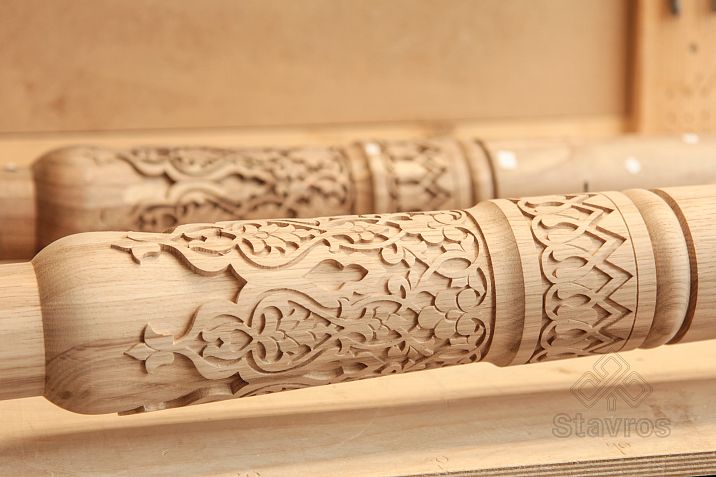
In the world of architecture, there are elements that, despite their thousand-year history, do not lose their relevance and significance. One such element, without a doubt, is column framing — an art that has passed through centuries, preserving its monumentality and grandeur. Columns are not merely structural elements supporting architectural structures, but also the most important decorative components capable of transforming any space, giving it a unique character and atmosphere.


History of Column Framing: From Antiquity to the Present Day




Origin of Tradition
History column framing It traces its roots to deep antiquity. In ancient Egypt, columns were adorned with intricate patterns and hieroglyphs, turning them into true works of art. However, it was in ancient Greece that the classical system of orders was established, defining the fundamental principles of column framing for millennia to come.
Greek architects developed three main orders — Doric, Ionic, and Corinthian — each with its own characteristics in column framing. The Doric order was distinguished by its strictness and simplicity, the Ionic by its elegance and refinement, and the Corinthian by its richness and ornate decoration. These principles formed the foundation of all subsequent European architecture.
Our factory also produces:




Evolution Through Eras
The Romans, inheriting the Greek tradition, added their own elements, creating the Tuscan and Composite orders. During the Renaissance, architects returned to classical ideals but reinterpreted them in accordance with new aesthetic concepts. Baroque brought opulence and theatricality to column framing, while Classicism introduced strictness and rationality.
In the 19th century, during the era of Historicism, architects freely combined elements of various styles, creating eclectic yet harmonious compositions. Modernism of the early 20th century introduced organic, natural motifs into column framing, while Constructivism and Functionalism of the mid-century practically abandoned decorative framing, focusing instead on the structural role of columns.
Get Consultation
Modern trends
Today we observe a revival of interest in classical forms column framing, but on a new technological level. Modern materials and technologies allow us to create decorative elements that do not fall short of historical examples in beauty, yet surpass them in strength, durability, and ease of installation.
At the same time, new stylistic directions are developing, in which column framing takes unexpected forms and solutions. Minimalism, high-tech, eco-style — each of these directions offers its own perspective on how columns should appear in modern interior or exterior design.
Materials for Column Framing
Natural wood — eternal classic
Wood remains one of the most popular materials for column framingIt possesses natural beauty, warmth, and a unique texture that cannot be replicated artificially. Each type of wood has its own characteristics, allowing one to select a material ideally suited to a specific design concept.
Oak, due to its strength and expressive texture, is ideal for creating classical columns. Ash, with its light tone and beautiful wood grain pattern, gives columns a sense of lightness and elegance. Walnut, with its rich dark-brown color, creates a feeling of luxury and nobility.
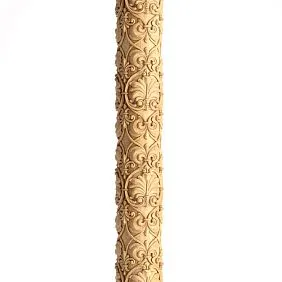
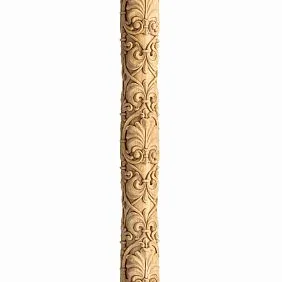
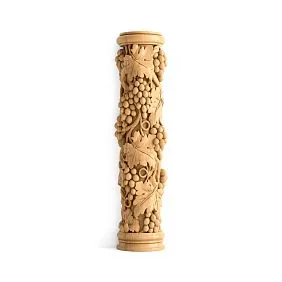
Wooden column framing can be simple and minimalist or richly decorated with carving. Wood carving techniques allow for creating incredibly complex and detailed patterns, transforming columns into true works of art.
Stone — symbol of eternity
Stone — a material associated with monumentality and durability. Marble, granite, limestone — each of these materials has its own unique characteristics and aesthetic qualities.
Marble, with its delicate texture and variety of shades, is ideal for creating refined and elegant columns. Granite, due to its exceptional strength and resistance to external influences, is used for columns that must withstand significant loads. Limestone, with its warm tone and porous structure, creates a sense of antiquity and historical significance.
Stone column framing can be monolithic or assembled. In the latter case, columns are clad with stone slabs or mosaic, allowing for the creation of complex decorative compositions.
Modern materials — new possibilities
The modern industry offers a wide range of materials for column framing that combine the aesthetic qualities of traditional materials with improved technical properties.
Polyurethane — a lightweight and strong material that allows creating decorative elements of any complexity. It is resistant to moisture, temperature fluctuations, and mechanical impacts, making it an ideal choice for column framing both indoors and outdoors.
MDF (Medium Density Fiberboard) — a material that combines the advantages of natural wood and modern technologies. It is easy to process, allowing for the creation of complex profiles and patterns, while also possessing high strength and dimensional stability.
Metal — a material that gives columns a modern and industrial look. Aluminum, steel, bronze — each of these metals has its own unique characteristics and aesthetic qualities. Metal column framing can be minimalist or richly decorated, depending on the overall interior or exterior style.
Column framing styles
Classic trim
Classical column framing is based on ancient traditions and the orders system. It is characterized by strict proportions, symmetry, and harmony of all elements. Classical columns usually have a base, shaft, and capital, each of which is finished according to the chosen order.
Doric columns are characterized by simplicity and minimalism; their capitals consist of a simple cushion and abacus. Ionic columns are more elegant, their capitals adorned with volutes — spiral scrolls. Corinthian columns are the most ornate and decorative, their capitals decorated with stylized acanthus leaves.
Classical column framing creates a sense of solemnity and grandeur; it is ideally suited for official and representative spaces, as well as for creating interiors in the neoclassical style.
Modern minimalist trim
Modern minimalism in column framing is characterized by clean lines, absence of excessive decoration, and emphasis on functionality. Minimalist columns often have a simple cylindrical or rectangular shape, without a pronounced base or capital.
Materials for minimalist column framing often include concrete, metal, or glass. The color palette is usually restrained — white, gray, black, sometimes with accents of natural wood or metal.
Minimalist column framing creates a sense of space and light; it is ideally suited for modern interiors in minimalist, high-tech, or Scandinavian styles.
Eclectic trim
Eclecticism in column framing implies a free combination of elements from different styles and eras. This may involve a combination of a classical base with a modernist capital, or a traditional shaft with avant-garde decoration.
Materials for eclectic column framing can be the most diverse — from natural wood and stone to glass, metal, and plastic. The color palette can also be very varied, including bright and contrasting combinations.
Eclectic column framing creates a sense of individuality and creative approach; it is ideally suited for interiors where it is important to express the personality and taste of the owner.
Technical aspects of column framing
Design and calculations
Designing column framing is a complex process that requires consideration of many factors. It is necessary to consider not only aesthetic aspects, but also the structural features of the building, the loads that will act on the columns, as well as the materials from which they will be made.
For load-bearing columns, precise calculations of strength and stability are especially important. It is necessary to consider not only vertical loads, but also possible horizontal forces, such as wind loads or seismic forces.
For decorative columns that do not bear structural loads, calculations may be less strict, but it is still necessary to ensure their stability and safety.
Installation and mounting
Installation column framing — is a process that requires high qualification and precision. Depending on the material and construction of the column, various installation methods may be used.
For monolithic columns made of concrete or stone, formwork is used into which concrete mix is poured or stone masonry is laid. After the concrete hardens or the mortar sets, the formwork is removed, and the column takes its final shape.
For cladding existing columns, various methods of attaching cladding materials are used. This may include adhesive methods, mechanical fastening with anchors or special profiles, or a combined method.
For assembled columns made of separate elements, various connection systems are used that ensure the strength and stability of the structure.
corner trim
Column casing care depends on the material from which they are made. Wooden columns require regular treatment with protective compounds that prevent rot, insect damage, and fading. Stone columns may require periodic cleaning of dirt and treatment with hydrophobic compounds that prevent moisture penetration.
Metallic columns may require corrosion protection, especially if they are located in a humid environment or exposed to aggressive substances. Polyurethane and MDF columns usually do not require special care; regular cleaning from dust and dirt is sufficient.
In any case, proper care of column casings will help preserve their beauty and functionality for many years.
Column casings in various architectural styles
Classicism and Neoclassicism
In classical and neoclassical architecture, columns play a key role, being one of the main elements of the facade and interior. They strictly follow ancient canons, maintaining proportions and details of the appropriate order.
In classicism, columns are usually made of stone or materials imitating it. They can be freestanding or integrated into walls (pilasters). Columns are often grouped into colonnades or porticos, creating majestic and monumental compositions.
In interiors, columns of classicism are often used to divide space into functional zones, as well as to create a grand and ceremonial atmosphere.
Baroque and Rococo
In Baroque and Rococo styles column framing becomes more ornate and decorative. Columns often have spiral shapes (so-called 'twisted' or 'Solomonic' columns), their shafts are adorned with carvings, stucco, and gilding.
Capitals of columns in Baroque and Rococo styles often do not conform to classical orders, but instead feature fanciful compositions with plant motifs, angel figures, mascarons, and other decorative elements.
In interiors, Baroque and Rococo columns are often used in combination with other decorative elements — mirrors, stucco, frescoes — creating rich and theatrical compositions.
Modern and Art Deco
In modern and Art Deco styles, column casings take on new, non-traditional forms. Modern columns often have organic, natural shapes resembling tree trunks or plant stems. Their capitals may be decorated with stylized flowers, leaves, or insects.
Art Deco columns are more geometric and abstract. They may have stepped or zigzag shapes, and their decoration often includes geometric patterns, stylized plant motifs, and elements of exotic cultures.
Materials for modern and Art Deco columns can be traditional — stone, wood, metal — or new for that time — concrete, glass, plastic.
Modern Architecture
In modern architecture, column casings can take the most diverse forms, from traditional to experimental. Modern columns can be strictly functional, devoid of any decoration, or become independent art objects, attracting attention with their unusual shape or material.
Materials for modern columns can include concrete, steel, glass, composite materials, as well as traditional materials used in a new context or with new technologies.
In modern interiors, columns often become an important design element; they can be used for zoning space, creating a certain atmosphere, or simply as a decorative accent.
Column casings in interior and exterior design
Columns in interior design
In interiors, columns can serve both structural and decorative functions. They can be used to support ceilings, divide space into functional zones, create a certain style or atmosphere.
Interior columns can be made from various materials — from natural wood and stone to modern composite materials. Their design can range from classical order columns to contemporary minimalist or avant-garde forms.
Special attention in designing interior columns is given to their proportions and scale. Columns must harmoniously fit into the overall interior design, not appearing too massive or, conversely, too fragile.
Columns in exterior design
In exteriors, columns often become an important element of the facade's architectural composition. They can be used to create porticos, balconies, galleries, or as independent decorative elements.
Exterior columns must be resistant to environmental influences — rain, snow, wind, ultraviolet radiation. Therefore, materials with high resistance to external influences — stone, concrete, metal, as well as modern composite materials — are used for their manufacture.
The design of exterior columns usually corresponds to the overall architectural style of the building. These can be classical order columns for buildings in the classical or neoclassical style, twisted columns for Baroque, geometric forms for modernism, and so on.
Columns in landscape design
In landscape design, columns can be used to create pergolas, gazebos, entryways, as well as standalone decorative elements. They can be made from various materials — stone, concrete, wood, metal.
When designing landscape columns, special attention is given to their resistance to environmental influences and harmonious integration with the surrounding landscape. Columns should appear natural and organic within the context of a garden or park.
In landscape design, columns are often used in combination with other architectural elements — arches, balustrades, fountains — creating cohesive and harmonious compositions.
Conclusion
column framing This is an art that has endured through millennia, maintaining its relevance and significance. From ancient temples to modern skyscrapers, columns remain a vital element of architecture, imparting buildings with a unique character and atmosphere.
Modern technologies and materials open up new possibilities for framing columns, allowing the creation of forms and textures that were previously unavailable. At the same time, traditional techniques and materials retain their value, continuing to inspire architects and designers to create new interpretations of classical forms.
Regardless of style or material, well-designed and high-quality column framing will always attract attention, create a specific atmosphere, and impart a unique character to the space. This is an art that demands deep knowledge, skill, and creative approach, but the result is always worth the effort.
In a world where everything changes rapidly, columns remain a symbol of stability, strength, and eternity. They remind us of great civilizations of the past while also pointing the way forward, harmoniously blending tradition and innovation into a unified whole.


