












































































Article Contents:
- Philosophy of Details: Why Frames and Handles Matter More Than It Seems
- Scale and Hierarchy of Decorative Elements
- Unity of Material: Wood as the Unifying Thread
- Wood Species as a Stylistic Marker
- Finishing and Treatment: From Natural to Painted
- Unity of Form: Profiles, Carving, Geometry
- Classic Profiling: Repetition of Lines
- Carving as a Decorative System
- Geometric Clarity: Minimalism and Modernism
- Color as a Unifying Factor
- Monochromatic Solutions: White on White
- Contrasting Accents: Black on Light
- Natural Wood Tones: Warmth and Harmony
- Colored Solutions: Boldness and Individuality
- Stylistic Solutions: From Classic to Eclectic
- Classic and Neoclassic: Symmetry and Elegance
- Provence and Shabby Chic: Romance and Lightness
- Scandinavian Minimalism: Function and Naturalness
- Loft and Industrial: Brutality and Contrast
- Art Deco: Geometry and Luxury
- Practical Creation of a Unified System
- Step 1: Define the Base Style and Material
- Step 2: Choose Profile and Decorativeness
- Step 3: Select Furniture Handles Matching the Style
- Step 4: Coordinate Color and Finish
- Step 5: Create a Repetition System
- Step 6: Extend the System to Other Elements
- Technical aspects of installation
- Installation of Wooden Door Frames
- Installing Furniture Handles
- Painting and Final Finishing
- Maintenance and Durability
- Care for Wooden Mouldings
- Care for Furniture Handles
- Common Mistakes and How to Avoid Them
- Error 1: Mixing Incompatible Styles
- Error 2: Color Inconsistency
- Error 3: Scale Disproportion
- Error 4: Ignoring Door Hardware
- Error 5: Cutting Corners on Quality
- Frequently Asked Questions
- Must door casings and furniture handles be made of the same material?
- Can different handles be used on different furniture in the same room?
- Do you need to replace all door casings in an apartment at once?
- How to choose door casing color to match door color?
- How much does creating a unified system of casings and hardware cost?
- Can door casings and handles be painted a different color later?
- Is a transom needed above the door, or are vertical casings sufficient?
- Which handles are more practical — wooden or metallic?
- Conclusion: Details Create Cohesion

Enter any room and look around with an attentive gaze. What does your brain register first? Door openings — portals between spaces — and furniture — the functional fill of rooms. Now look closer at the details: how are these openings framed? What handles are on cabinets and chests? Are these elements random, or is there a visual connection between them? In 2026, interior design redefines the role of decorative details, transforming them from scattered elements into a unified system of visual accents.Door Frame InstallationandFurniture Handles— seemingly elements of different scales and functions — become tools for creating stylistic identity, visual rhymes that link architecture and the world of objects into a unified whole.
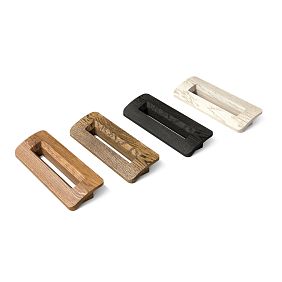
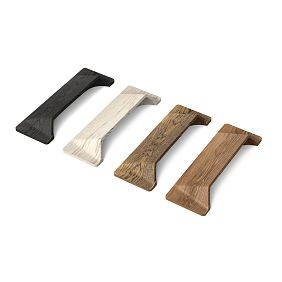


Philosophy of Details: Why Casings and Handles Matter More Than It Seems
Imagine an interior without door casings — bare openings with visible mounting gaps, uneven edges, technical flaws. Imagine furniture without handles — smooth fronts that cannot be opened, or worse, with utilitarian, cheap handles that have nothing to do with the style of the object. Such a space lacks completeness; it looks unfinished, random.
Now imagine the opposite:decorative door openingwith carved casings, an elegant transom above, carefully selected elements in color and style. And furniture with handles that echo this framing in shape, material, and decorative motifs. Such a space achieves cohesion — every detail connects with another, creating a visual symphony where architectural elements and decorative objects harmonize.
Why is this important? Because the human brain seeks patterns, logic, connections. A chaotic space where each element lives its own life tires the eye and does not allow it to rest. An orderly space with a visual system calms the viewer and creates a sense of harmony and thoughtfulness. This is not a conscious perception — few people, entering a room, think: 'Oh, what beautifully coordinated casings and handles!' But subconsciously, the brain registers: everything is in its place, everything is thoughtfully designed, and here you can trust the homeowner’s taste.




Scale and Hierarchy of Decorative Elements
Door Frame Installation— an architectural element, medium-scale. Larger than furniture hardware, but smaller than ceiling cornices or wall panels. It structures vertical wall planes and creates accents at points of transition between spaces.
Furniture handles — elements of small scale, the smallest details in the interior. But precisely these are the points of tactile contact, elements we interact with dozens of times a day. Opening a cabinet, pulling out a drawer, we touch the handle, and this touch should be pleasant, and visually, the handle should match the overall style.
Creating hierarchy means that larger elements set the tone, while smaller ones support it.Wooden casingWith a specific profile, carving, and color, it becomes a tuning fork. Furniture handles pick up on this theme — repeating the material, simplifying decorative motifs, and coordinating in color.
Our factory also produces:


Material Unity: Wood as the Connecting Thread
The simplest and most reliable way to create visual connection between door frames and furniture hardware is to use one material. Wood is a universal choice, working in any style from classic to contemporary.
Get Consultation
Wood Species as a Stylistic Marker
Oak — the king of classic interiors. Dark stained oak creates grandeur, respectability, characteristic of English, Victorian, and colonial interiors. Light oak with pronounced texture — Scandinavian naturalness. Medium-toned oak — universality, suitable for most styles.
Wooden casingMade of oak, installed on all door openings.Furniture HandlesMade of the same oak — on cabinets, chests, and sideboards. Unity of species creates unity of texture, color, and tactile sensations. This is a natural, organic connection, requiring no additional effort.
Beech — an alternative to oak for classic interiors where uniformity is needed. Beech texture is less expressive, allowing emphasis on shape, profile, carving, rather than natural wood grain. Beech door casings with classic profiles and beech carved handles create refined restraint.
Ash — light-colored wood with elasticity, suitable for modern and Scandinavian interiors. Ash door casings with simple geometric profiles and minimalist ash handle-pins or buttons create lightness, airiness, and naturalness.
Exotic species — walnut, mahogany, wenge, teak — for luxurious, status-oriented interiors. Dark, almost black wenge creates drama. Warm walnut tone — coziness and nobility. If using exotic wood for door casings, logically use the same wood for furniture handles or at least for decorative inlays on furniture.
Finishing and Treatment: From Natural to Painted
Natural wood with transparent finish (oil, wax, lacquer) highlights texture, preserves warmth and naturalness of the material. This is a choice for interiors valuing natural beauty — eco-style, Scandinavian, rustic, Japanese minimalism.
Door Frame InstallationMade of natural wood, coated with oil, tactilely pleasant — the hand gliding over the casing feels a velvety surface. Furniture handles with the same finish create tactile unity.
Stained wood allows changing color while preserving texture visibility. Stains, tinting oils, and colored lacquers provide shades from light bleached to deep wenge. Important: if door casings are stained in a specific shade, handles must be stained the same. Even a slight color mismatch creates visual dissonance.
Painted wood with covering paints hides texture, creating a uniform colored surface. White — classic for Provence, shabby chic, neoclassicism. Black — modernity, graphic design, minimalism. Grey — universality, Scandinavian restraint. Colored — boldness, individuality.
Painted door casings and painted furniture handles in the same color create color unity even with differing forms. White door casings and white wooden handles against pastel walls — airy lightness of Provence. Black door casings and black handles against white walls — graphic clarity of modern minimalism.
Unity of Form: Profiles, Carving, Geometry
Material is important, but form is no less. Door casing profile, handle shape — this is the visual language through which the interior speaks.
Classic Profiling: Repeating Lines
Classic door casings have profiled shapes — alternating convexities and concavities, creating play of light and shadow. The profile may be simple (two-three elements) or complex (five-seven elements with deep relief).
decorative door openingThe door opening sets the profile. Furniture handles can repeat this profile in miniature. Convexity on the casing corresponds to convexity on a button handle. Concave profile element corresponds to concave shape of a pin handle.
This is not literal copying — the handle should not be an exact scaled-down copy of the casing. It is visual rhyme, recognizable kinship of forms. The profile is simplified, adapted to the handle’s scale, but retains key elements — proportions of convexities, character of transitions, overall rhythm.
Carving as a Decorative System
Carved door casings — the pinnacle of decorative craftsmanship. Vegetal motifs — acanthus leaves, grapevines, oak leaves — transform architectural elements into works of art. Geometric ornaments — meanders, rosettes, spirals — create rhythmic structure.
Ifframing the doorway with a casingIf casings include carved elements, logically use carved furniture handles with the same motifs. Acanthus leaves on the casing — acanthus leaves on handles. Grapevine on the sash above the door — grapevine on drawer pulls.
It is important to maintain balance in intensity. If carving on casings is very active, rich in detail, carving on furniture handles should be slightly restrained to avoid visual overload. Conversely — if casings are restrained, with minimal carving, handles may be more decorative.
Carved corner elements — rosettes in the corners of door frames — can repeat in the form of furniture button handles. A round rosette with vegetal ornament in the corner of the casing and a similar rosette, but smaller in diameter, as a handle on a cabinet door — direct visual connection.
Geometric Clarity: Minimalism and Modernism
Modern interiors value geometric clarity. Door casings — flat rectangular strips without profiling. Handles — simple geometric shapes: cylinders, parallelepipeds, pin handles with straight lines.
Door Frame InstallationWide flat casings 80-120 mm wide create a graphic frame. Furniture handles — simple square-sectioned pins or cylindrical buttons — support this geometric clarity.
It is important to coordinate the scale. Wide casings require proportionate handles — not small and lost against massive facades, but sufficiently large to be visually substantial. A handle length of 128–192 mm harmonizes with a casing width of 80–100 mm.
Color plays a key role in minimalist interiors. Contrastdecorative door openingof the opening — black casings on white walls — requires contrasting handles. Matte black handles on light furniture facades create a system of black graphic accents that unify the space.
Color as a unifying factor
Even with differences in form and materials, color can create a visual connection between door casings and furniture hardware.
Monochromatic solutions: white on white
White is a universal color, expanding space, creating lightness and freshness. White casings on white or light walls create a delicate relief without visual overload. White furniture handles on white or light facades support this lightness.
Important: white is not the same for white. Warm white (with cream, beige, pink undertones) creates coziness. Cool white (with gray, bluish undertones) — freshness and modernity. Casings and handles must be painted in the same shade of white; otherwise, a visual conflict arises.
Monochromatic white interiors avoid monotony through variety of textures. Matte casings, glossy or satin handles, textured walls — all white, but different in tactile sensation and light reflection.
Contrasting accents: black on light
Contrast is a powerful tool for creating visual accents. BlackWooden casings create a frame around the opening, visually highlighting it from the wall plane. A classic casing has a profiled section that corresponds to the profiles of baseboards and moldings.on white walls turn door openings into graphic frames, clearly structuring the space. BlackFurniture Handleson light facades continue this graphic quality at the level of objects.
Black can be varied: deep matte black, black with slight sheen, graphite, anthracite. The key is consistency: if casings are matte black, handles must also be matte black.
The system of black accents can be expanded: black mirror and picture frames, black lamps, black door hardware. All of this creates a visual grid that unifies the space.
Natural wood tones: warmth and harmony
If casings are made of natural wood with a transparent finish preserving texture and color, furniture handles should be made of the same wood or visually similar in tone. Medium oak on casings — medium oak on handles or warm honey-toned brass, harmonizing with the wood.
Dark wood (walnut, mahogany, wenge) on casings pairs with dark wooden handles or bronze, patinated brass — metals whose color complements the depth of dark wood.
Light wood (birch, beech, white oak) requires light handles — light wood, matte steel, matte chrome, creating lightness and airiness.
Color solutions: boldness and individuality
Colored casings — a bold solution, suitable for eclectic, maximalist, vintage interiors. Emerald green, sapphire blue, terracotta, burgundy — saturated colors create drama, character, individuality.
IfDoor Frame Installationcolorful, furniture handles may be:
-
Same color — direct color unity
-
Contrasting color, but harmonized in tone (e.g., blue casings — gold handles, creating a classic blue-and-gold combination)
-
Neutral color (white, black, gray), balancing the activity of colored casings
Stylistic solutions: from classic to eclectic
Each interior style offers its own logic for coordinating door casings and furniture hardware.
Classic and neoclassic: symmetry and elegance
Classic style requires profiled casings with clear, proportional relief. A cornice above the door, sometimes consoles below it, rosettes in the corners. Everything is symmetrical, everything adheres to the rules of classical orders.
Wooden casingmade of oak or beech, with a classic profile, painted white or left in natural color with varnish. Furniture handles — brass or bronze handles, rings, rosettes with classic ornamentation. Metal and wood — a traditional combination, where warm brass harmonizes with the warmth of wood.
Neoclassicism simplifies classicism, making it more streamlined. Casings have less complex profiles, less ornamentation, but classical proportions. Handles — satin brass or matte, without excessive ornamentation, but with elegance of form and material.
Provence and shabby chic: romance and lightness
Provence is the south of France, lavender fields, whitewashed walls, patina of time.Door Frame InstallationSimple casings, painted in white, cream, pastel tones. Artificial patina, worn areas create an antique effect.
Hardware handles — hand-painted ceramic (white with blue ornament, floral motifs), brass or iron patinated, painted wood. Important: handles should look slightly worn, vintage, used — new, shiny ones ruin the atmosphere.
Color harmony: if casings are pale blue, handles may be ceramic with blue ornament. If casings are cream, handles — patinated brass or wood in tone.
Scandinavian minimalism: function and naturalness
Scandinavian style — light wood, simple forms, functionality, naturalness. Casings — simple, rectangular or minimally rounded, from light wood (birch, beech) or painted white.
Hardware handles — wooden cylindrical or conical, leather hinges, simple metal brackets. Material — light wood, matte black metal (contrasting accent), rarely brass (for a warmer Scandinavian style).
The main thing — naturalness and simplicity. No carved excesses, ornaments, gold plating. The form should be honest, functional, comfortable.
Loft and industrial: brutality and contrast
Loft often rejects traditional casings, leaving openings unframed or using minimalist metal corner protectors. But if casings are present — they are simple, geometric, often metal or wood with rough finish.
Door Frame InstallationIn loft, it may be a black metal profile, creating an industrial aesthetic. Hardware handles — black steel, rough leather hinges, sometimes vintage brass or copper (for a warmer loft).
Contrast of materials — key technique. Metal casings and metal handles create an industrial unity. Wooden elements (if any) should be rough, unprocessed, or minimally processed.
Art Deco: geometry and luxury
Art Deco — geometric forms, luxurious materials, contrasts. Casings — geometrically precise, with stepped profiles, often painted in deep colors (black, dark blue, emerald) with gold or silver accents.
Hardware handles — brass or chrome, geometric shapes (trapezoids, stepped pyramids, hexagons). Possible black lacquered wooden handles with metal inlay.
Color combinations: black with gold, dark blue with silver, emerald with bronze.decorative door openingThe opening and hardware handles should work within these contrasting pairs.
Practical creation of a unified system
Theory is beautiful, but how to implement it in practice? Here is a step-by-step guide.
Step 1: Define the base style and material
Start with analyzing the overall interior style. Classic, modern, eclectic? Which materials dominate — wood, metal, stone? What color palette — warm or cool, light or dark?
Based on this, choose the base material for casings. For classic and traditional interiors —Wooden casingsolid wood. For modern — wood with simple geometric shape or painted, possibly MDF for painting. For loft — metal or rough wood.
Step 2: Choose profile and decorative level
Determine how decorative the casings should be. Simple rectangular profile for minimalism. Moderately profiled for neoclassicism. Complex carved for classic luxurious interiors.
framing the doorway with a casingThis sets the decorative level for the entire interior. If you choose highly decorative casings, furniture and hardware must match this level.
Step 3: Select hardware handles matching the style
Now, knowing the style and material of casings, selectFurniture Handles.
For wooden classic casings — wooden turned or carved handles, or brass/copper with classic design.
For painted white casings — white wooden handles, white ceramic or white with decoration, brass (for neoclassicism).
For black minimalist door casings — black matte metal or wooden handles of simple geometric shapes.
For natural light wood — light wooden handles or matte steel/chrome.
Step 4: Coordinate color and finish
This is critically important. If the door casings are finished with matte oil, the handles must also be matte-finished (oil, wax, matte varnish). If the casings are glossy lacquered, polished or satin-finished handles are acceptable, but not matte ones.
The color must match as closely as possible. Use samples — place the handle against the casing under natural light. Even a slight difference in shade (warm vs. cool white, light gray vs. medium gray) will be noticeable and create visual dissonance.
Step 5: Create a system of repetition
It’s not enough to select matching elements — they must be arranged correctly. Each room should have door casings of the same style and color. Each piece of furniture — handles of the same family.
Variations are allowed: on large furniture (cabinets, chests) — larger knob handles, on small (nightstands, table drawers) — buttons. But all must belong to the same stylistic family, be made of the same material, and be the same color.
Step 6: Extend the system to other elements
Baseboards, cornices, wall moldings must match the door casings in material, profile, and color. If the casings are classic profiled oak, the baseboards must be oak with a matching profile.
Door hardware (hinges, catches, lock holes) must match furniture handles in material and color. Brass furniture handles — brass door hardware. Matte black — matte black.
Technical aspects of installation
Beautiful elements must be installed correctly; otherwise, the result will disappoint.
Installing wooden door casings
Door casings are attached to the door frame with flat-head nails (finish nails) or liquid nails. Corners are mitered at 45 degrees for a neat joint. Use a miter saw or a circular saw for precise mitering.
Important: casings are installed after wall finish but before baseboards. The baseboard is fitted against the casing, not the other way around.
The gap between the casing and door frame — 3–5 mm — to visually emphasize the casing and create a frame. Too tight a fit makes the framing less pronounced.
Installing furniture handles
Mark holes on the front — symmetrically, equidistant from the edges. For knob handles, precise center-to-center distance (distance between mounting hole centers) is critical. Standards: 96, 128, 160, 192 mm.
Drill through holes with a 4–5 mm diameter. Place the handle on the outside, and screw in screws from the inside through holes in the handle’s base. Screws should not be too long to avoid protruding inward.
For precise installation of multiple handles, use a template — a strip with holes at the required distance. Place the template against the front, drill through it — guaranteed accuracy.
Painting and final finish
If elements are delivered unfinished (primed), they must be painted before installation — it’s simpler and better.
Casing and handles are painted with the same paint, in the same number of coats, using the same application technique. Even with the same paint, different techniques (brush vs. roller vs. spray) may yield different shades.
Water-based acrylic paint — optimal choice. Eco-friendly, odorless, dries quickly, provides durable finish. Latex — even more durable, but more expensive. Apply in 2–3 thin coats with drying time between layers.
Care and longevity
Correctly installed and finished elements last for decades, but require maintenance.
Care for wooden casings
Regular dry dusting. Wet wiping — once a month, with a soft damp (not wet!) cloth. Avoid abrasives and aggressive chemical cleaners.
Casing with oil finish requires reapplication every 3–5 years. Surface is lightly sanded with fine sandpaper (grit 240), cleaned, and new oil is applied. Lacquered casings last 10–15 years without reapplication.
Damage (scratches, chips) on painted casings are repaired with local touch-up. On casings with transparent finish — with furniture marker in matching tone or wax.
Care for furniture handles
Wooden handles are cared for like casings — wiping, reapplying finish as needed.
Metal handles: brass and bronze without protective coating oxidize, forming patina. If patina is desired — leave it. If not — periodically polish with special agents.
Matte black handles require gentle care — soft damp cloth, no abrasives. Fingerprints are removed with slightly damp microfiber cloth.
Ceramic handles are the most durable, can be washed with any cleaner, and are not afraid of moisture. But they are fragile — avoid impacts.
Common mistakes and how to avoid them
Error 1: Mixing incompatible styles
Classic carved dark wood casings and ultra-modern chrome handles on minimalist furniture — a visual conflict. Styles should at least roughly match each other.
Solution: choose a base style and stick to it. If the interior is eclectic, find a unifying element — color, material, shape — that ties together contrasting elements.
Error 2: Color inconsistency
Warm-toned white casings (with cream undertone) and cool-toned white handles (with bluish undertone) — the difference will be noticeable, especially under natural light.
Solution: always use samples, check compatibility under daylight. It’s better to buy all elements from one manufacturer, from one series — guaranteeing color harmony.
Error 3: Scale disproportion
Massive wide casings and tiny furniture handles with 20 mm diameter — a scale imbalance. Elements should be proportionate.
Solution: large casings require large handles (buttons 35-40 mm in diameter, hinges 128-192 mm long). Small elegant casings — correspondingly smaller and more delicate handles.
Error 4: Ignoring door hardware
Casings and furniture handles are coordinated, but door hinges, door handles, and lock cylinders — are completely different in style and color.
Solution: consider door hardware as part of a system. Brass furniture handles — brass door hardware. Matte black — matte black on doors.
Error 5: Cutting corners on quality
Cheap plastic wood-effect casings and cheap flimsy handles will ruin even a good interior impression. Saving money here is inappropriate.
Solution: better to use fewer but high-quality elements than many cheap ones. Skip framing for secondary doors (pantry, bathrooms), but use quality casings on main doors. Save on internal drawers without handles (push-to-open), but equip visible fronts with quality handles.
Frequently asked questions
Must casings and furniture handles be made of the same material?
Not necessarily, but it’s desirable to create visual harmony. Wooden casings can pair with metal handles if the metal is chosen appropriately. Warm brass harmonizes with warm wood. Cold steel — with cool gray wood. The key is tonal and stylistic compatibility.
Can different handles be used on different furniture in one room?
Yes, if they belong to the same stylistic family. On large furniture (cabinets) — knobs, on small (side tables) — buttons, but all from the same material, color, and style. Chaotic mixing of contrasting handles creates visual clutter.
Must all casings in an apartment be replaced simultaneously?
Ideally — yes, for creating unity. But if budget is limited, start with main rooms — entryway, living room, bedroom. Secondary (pantry, utility rooms) can remain with simple casings or even without them.
How to match casing color to door color?
Classic approach — casings in the same tone as doors or slightly lighter/darker. Modern approach — contrast: white doors — black casings, dark doors — white casings. The key is intentional choice, not randomness.
How much does creating a unified system of casings and hardware cost?
It depends on area, number of doors and furniture, materials.Wooden casings create a frame around the opening, visually highlighting it from the wall plane. A classic casing has a profiled section that corresponds to the profiles of baseboards and moldings.Solid oak — from 1500–3000 rubles per set per door.Furniture HandlesWooden — from 300–1000 rubles per piece. For a standard two-bedroom apartment (5–6 doors, 20–30 handles) — from 30,000 to 80,000 rubles depending on materials and complexity.
Can casings and handles be painted a different color later?
Yes, this is one of the advantages of wooden elements. Casings and handles can be repainted multiple times. The surface is sanded, cleaned, primed (optional), and painted with new paint. This allows refreshing the interior without replacing elements.
Is a sash needed above the door, or is it sufficient to have vertical casing?
classic interiors require fullDoor opening framingwith a sash. Modern minimalist interiors can do with only vertical casings or even without framing at all. A sash adds completeness, grandeur, and visually lowers the doorway (especially relevant for high rooms).
Which handles are more practical — wooden or metallic?
Metallic handles are stronger, resistant to moisture, and easier to clean — more practical for kitchens and bathrooms. Wooden handles feel warmer to the touch, create coziness, but require more delicate care. In living rooms (bedrooms, living rooms, offices), wooden handles are quite practical and provide tactile comfort.
Conclusion: Details create wholeness
We started with a simple question: how to coordinate door frame casings and furniture hardware? As we discussed, it became clear: this is less a technical question and more a philosophical one. It’s about creating spaces where every detail has meaning, where nothing is accidental, where everything serves a single idea.
Door Frame Installation— this is not just a way to hide mounting gaps. It’s an architectural accent, structuring space, creating visual frames, emphasizing transitions between rooms.Furniture Handles— not just a means to open a door, but a point of tactile contact, the final touch, completing the object’s image.
When these elements are coordinated — by material, shape, color, style — the interior achieves wholeness. This is not an obvious, eye-catching quality. Few consciously notice: 'What beautifully coordinated casings and handles!' But subconsciously, it’s perceived: here, it’s thoughtfully designed, here, it’s harmonious, here, the owner understands the value of details.
In 2026, when interior design reconsiders the role of details, when maximalism of details opposes minimalism of forms, creating a system of decorative accents becomes a sign of a mature, thoughtful approach. This is not an eclectic mix, where each element is purchased from different places without connection. It’s an intentional formation of a visual language, wheredecorative door openingdoorway casings and furniture hardware — are words from the same dictionary.
STAVROS has helped create such systems for over twenty years, offering elements capable of working within a unified style.Wooden casings create a frame around the opening, visually highlighting it from the wall plane. A classic casing has a profiled section that corresponds to the profiles of baseboards and moldings.of various profiles — from simple geometric to complex classical carved — made from solid oak, beech, ash.Furniture Handlesmade from the same wood species, coordinated in style with the casings — polished, carved, minimalist.
The possibility of custom manufacturing according to your sketches means you can create a unique casing profile and matching handles — elements distinctive only to your home, expressing your individuality. An extensive assortment allows selecting elements for any style — from classic to avant-garde, from Provence to loft.
STAVROS professional consultants will help you build a system — select casings and handles coordinated by material, shape, color. They will help calculate quantities, choose mounting methods, and provide recommendations for finishing and care. This is not just selling products — it’s partnership in creating interiors where details are not random, but meaningful.
Quality materials, tested over time. Craftsmanship based on traditions. Variety of forms and styles, allowing to find a solution for any project. Customization possibilities, creating unique elements. Professional support at every stage — from selection to installation. All of this — STAVROS — a company that understands: beauty lies in details, and details must work together.
Choosing STAVROS, you choose not just casings and handles. You choose a system, logic, consistency. You choose an interior where architectural elements and decorative items speak the same language, creating harmony that is not immediately noticeable but felt every day. Create spaces where details are not random, where everything is thought out, where quality is visible in every small detail. Because it is precisely the small details —CasingsandHandlesprofiles and textures, colors and shapes — that create a sense of wholeness, transforming a collection of items into a home, and the home into a place where you want to be.


