












































































Article Contents:
- Low profile: philosophy of horizontal space
- Height standards: from physiology to aesthetics
- Visual psychology of low furniture
- Low profile and interior style
- Proportions: mathematics of harmony
- Ratio of leg height to leg cross-section
- Ratio of legs to tabletop
- Tabletop thickness and visual balance
- Distance from tabletop edge to legs
- Conical supports: dynamics and elegance
- Geometry of the cone: angles and proportions
- Visual effect of conical shape
- Conical legs in different styles
- Geometry: purity of lines and forms
- Cylindrical legs: classic simplicity
- Square and rectangular legs: architectural quality
- Bevels and chamfers: softening geometry
- Combined shapes
- Minimalism: philosophy of less
- Features of minimalist legs
- Materials for minimalist legs
- Minimalism and Functionality
- Modern: from historical to contemporary
- Historical modern (Art Nouveau): organic forms
- Mid-century modern: optimism of form
- Contemporary modern: freedom of experimentation
- Flexible styling: adaptation to interior
- Neutral universal forms
- Accent contrasting solutions
- Color Adaptation
- Texture and Finishing
- Visual Balance: Center of Gravity and Perceptual Stability
- Leg Placement and Visual Stability
- Visual Center of Gravity
- Symmetry and Asymmetry
- Leg Materials: Impact on Balance and Style
- Wood: Warmth and Variety
- Stained Wood: Color Solutions
- Metal: Cold Strength
- Combined Solutions
- Practical Considerations for Selection
- Calculating Required Strength
- Resistance to Overturning
- Height Adjustment
- Floor Protection
- Where to Buy and What to Pay Attention To
- Wood Quality
- Quality of processing
- Manufacturer's Reputation
- Possibility of Custom Manufacturing
- Company STAVROS: Professional Quality
- Conclusion: Conscious Choice Instead of Randomness

A coffee table is not just a utilitarian surface for a coffee cup and remote control. It is the central point of composition in the living room, around which the entire spatial geometry is arranged. And if the tabletop defines the functionality, thenLegs for coffee tablesform the visual perception of the entire structure. Thin or thick, straight or conical, tall or low — each parameter affects how the table will feel in space: floating or grounded, elegant or brutal, weightless or monumental.
This article is not a catalog of forms, but a guide to the visual mathematics of furniture. Here there is no room for subjective 'likes or dislikes'. Here are specific proportions, height calculations, rules of visual balance, tested over decades of design practice. Because randomly guessed aesthetics rarely work. But understanding principles always does.

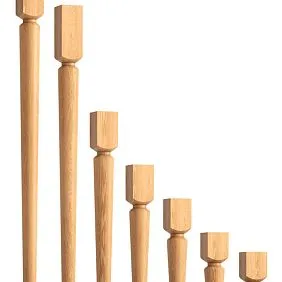



Low Profile: Philosophy of Horizontal Space
A coffee table fundamentally differs from a dining table not only in function, but also in philosophy. A dining table — vertical, a place of activity, a place where one sits upright. A coffee table — horizontal, a place of relaxation, a place to which one leans back, reclining on the sofa.Low Profile— not a technical term, but a concept defining the entire character of the furniture.




Height Standards: From Physiology to Aesthetics
The height of a coffee table from the floor to the top of the tabletop varies in the range of 400–500 mm, which is significantly lower than a dining table (720–760 mm). This is not an arbitrary choice, but the result of ergonomic research. The standard height of a sofa seat is 420–450 mm. A coffee table tabletop positioned at seat level or slightly above (by 0–50 mm) ensures comfortable access to items on the table without needing to lean forward.
Classic formula: tabletop height = sofa seat height + (0...50 mm). If your sofa seat is at 430 mm, the optimal tabletop height is 430–480 mm. Subtracting the tabletop thickness (usually 20–40 mm), we get the required leg height: 390–460 mm.
But this is a basic calculation. Reality is more complex. Super-low tables at 300–350 mm create an atmosphere of Eastern minimalism, where life flows near the floor. Such tables require deep sofas with low seating or floor cushions. They visually expand the space, make ceilings appear higher, but hinder access to items on the table for people with limited mobility.
High coffee tables at 480–550 mm approach the height of side tables and are suitable for use with high chairs, in work zones of the living room, where the table serves as an additional work surface. This height already goes beyond the classic coffee table, but remains relevant for multifunctional spaces.
Our factory also produces:


Visual Psychology of Low Furniture
Low furniture changes the perception of space at a subconscious level. A person perceives the height of a room relative to the height of the furniture. The lower the furniture, the higher the ceiling appears. A coffee table withlegs for a coffee tableheight of 350–400 mm does not 'consume' vertical space, leaving the space open.
The effect is enhanced if the legs visually appear thin or transparent (glass, metal). Under the table, there remains air — both physically and visually. The gaze flows freely across the floor, creating a sense of spaciousness. This is especially critical in small living rooms, where every square meter counts.
Psychologically, low furniture is associated with relaxation. Lounge areas in hotels, spas, relaxation zones — everywhere the furniture is low and horizontal. This is not accidental. Verticality activates and mobilizes. Horizontality calms and relaxes. A coffee table on low legs programs the space for rest.
Get Consultation
Low Seating and Interior Style
Different styles relate differently to furniture height. Minimalism prefers low profiles — this is part of the philosophy 'less is more'. A low coffee table does not compete with space, does not shout about its presence, dissolving into the horizontal plane of the floor and sofa.
Japanese style elevates low seating to an absolute. Traditional Japanese furniture (chabudai — low table for tea ceremonies) has a height of only 200–300 mm. Modern interpretations of Japanese aesthetics use coffee tables at 320–380 mm, maintaining adherence to the principle of closeness to the ground.
Scandinavian style balances functionality and lightness. Coffee tables at 400–450 mm — the golden middle — provide comfortable use while maintaining visual lightness. Scandinavians add thin conical legs to low seating, enhancing the effect of weightlessness.
Mid-century modern (mid-20th century modern) uses low tables at 380–420 mm on characteristic slanted legs. This is a visual signature of the style — dynamics of the horizontal, movement, direction, but without detachment from the ground.
Classic styles (baroque, empire, neoclassicism) rarely descend below 450 mm. Classicism leans toward verticality, monumentality, presence. A low table in a classic interior — nonsense, a contradiction to the basic principles of the style.
Proportions: Mathematics of Harmony
Leg height is only one parameter. Harmony arises from the relationship of height, leg diameter, tabletop size, and distance between supports. Visual balance — this is mathematics, where each number affects the result.
Ratio of leg height to leg cross-section
Basic rule: the higher the leg, the thinner it should be to maintain visual lightness. Conversely, a low, heavy leg creates a sense of solidity.
Slimness formula: the ratio of leg height to diameter (or side of square cross-section) should be in the range of 8:1 to 12:1 to create visual lightness. A leg 400 mm high should have a diameter of 33–50 mm for optimal balance.
Example:Legs for tablesheight 380 mm and diameter 40 mm gives a ratio of 9.5:1 — visually slim but not fragile. The same legs with a diameter of 60 mm give a ratio of 6.3:1 — already heavy, solid, suitable for large heavy tabletops or industrial style.
For square cross-section, the calculation is similar, but visually square legs appear 10–15% heavier than circular legs of the same cross-section. A 45×45 mm square visually equals a circle with a diameter of 50–52 mm.
Ratio of legs to tabletop
Tabletop — the dominant element, legs — the support. But what is the optimal proportion?
Visual weight rule: the total cross-sectional area of all legs should be 0.5–1.5% of the tabletop area for visually balanced construction.
Example: a 1000×600 mm tabletop has an area of 600,000 mm². The optimal total cross-sectional area of four legs: 3000–9000 mm². This corresponds to four round legs with a diameter of 30–55 mm or square legs 27–47 mm.
Deviation toward the smaller side (thinner legs) creates an effect of fragility, lightness. This is appropriate for glass tabletops, minimalist interiors, small spaces. Deviation toward the larger side (thicker legs) creates brutality, solidity, suitable for heavy wooden tabletops, lofts, spacious living rooms.
Tabletop Thickness and Visual Balance
Empirical rule: the leg diameter should not exceed 1.5-2 times the thickness of the tabletop. A 30 mm thick tabletop harmonizes with legs up to 45-60 mm in diameter. A 50 mm thick tabletop allows legs up to 75-100 mm.
Empirical rule: the leg diameter should not exceed 1.5-2 times the thickness of the tabletop. A 30 mm thick tabletop harmonizes with legs up to 45-60 mm in diameter. A 50 mm thick tabletop allows legs up to 75-100 mm.
Distance from the edge of the tabletop to the legs
Furniture legsLegs of a coffee table are usually placed with an offset from the edge of the tabletop. This offset affects visual perception.
Minimum offset of 50-80 mm creates a sense of compactness; the tabletop seems to grow out of the legs. This is suitable for small tables where every centimeter counts.
Standard offset of 100-150 mm creates a visual 'breathing space'; the tabletop appears to float above the base. This is a universal solution suitable for most cases.
Large offset of 200-300 mm creates a dramatic cantilever effect; the tabletop extends significantly beyond the supports. This requires strength calculations (especially for stone tabletops), but provides a striking visual effect.
Conical legs: dynamism and elegance
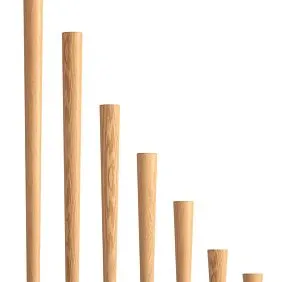
Conical shape — when the leg tapers from top to bottom — is one of the most popular options for coffee tables.Conical legsCreate visual dynamism, a sense of upward movement, lightness.
Geometry of the cone: angles and proportions
The cone angle determines the character of the leg. A shallow cone (angle 2-4 degrees from vertical) is barely noticeable, creating a delicate elegance without obvious form. Such legs appear almost straight but slightly slimmer.
Medium cone (angle 5-8 degrees) — classic for mid-century modern. The shape is obvious but not aggressive. This is a balance between dynamism and restraint.
Steep cone (angle 10-15 degrees) — bold statement, pronounced form, attention-grabbing. Such legs become a central design element of the table, requiring appropriate surroundings.
Calculating cone angle: if a leg 400 mm high has a top diameter of 50 mm and bottom diameter of 35 mm, the diameter difference is 15 mm, radius changes by 7.5 mm over 400 mm length. Cone angle: arctg(7.5/400) ≈ 1.07 degrees — this is a very shallow cone, barely noticeable.
For a medium cone with 6-degree angle: radius change should be 400 × tg(6°) ≈ 42 mm, i.e., diameter change of 84 mm. If top diameter is 55 mm, bottom will be 55-84 = -29 mm — physically impossible. Therefore, for coffee table legs, angles over 6-7 degrees are rare in practice.
Visual effect of cone shape
A conical leg creates a sense of upward movement. The gaze slides from the wider base to the narrower top, to the tabletop. This dynamizes the static structure.
Tapering downward also visually lightens contact with the floor. A narrow support point creates the impression that the table barely touches the floor, ready to lift off and fly away. This enhances the airy effect, important for small spaces.
Psychologically, a cone is associated with growth, development, upward movement. This is an optimistic shape, creating a positive impression. It is no coincidence that conical legs dominated during the optimistic 1950s, when modernism was synonymous with progress and a bright future.
Conical legs in different styles
Mid-century modern — the birthplace of conical legs. Designers of the 1950s (Hans Wegner, Arne Jacobsen, Charles Eames) used conical legs as a visual signature of the style. Cone angle is usually 5-7 degrees, material — light wood (teak, walnut, ash).
Scandinavian style adapted conical legs, making them slightly shallower (3-5 degrees) and lighter (birch, pine, ash with natural finish). Scandinavians added roundness to the cone, softening the lines.
Contemporary minimalism uses conical legs in metal (chrome steel, aluminum) or painted wood. Cone shape is more pronounced (7-10 degrees), lines are sharp, without rounding. This is a graphic interpretation of the classic form.
Eclecticism allows combining conical legs with unexpected tabletops: marble, glass with colored backing, wood with rough unfinished edges. The cone introduces order into the chaos of disparate elements.
Geometry: purity of lines and forms
Geometric legs — straight lines, sharp angles, no decoration.GeometryForms create a sense of order, structure, rationality.
Cylindrical legs: the classic simplicity
A straight cylinder — the simplest form, yet not primitive. A cylindrical leg of constant diameter creates a sense of stability, reliability, calm. It is a form without pretensions, without the desire to surprise, pure functionality.
Cylinders of different diameters create different impressions. Thin cylinders (diameter 25–35 mm) — elegance, minimalism, visual lightness. Suitable for small tables, glass tops, Scandinavian interiors.
Medium cylinders (diameter 40–55 mm) — a universal solution, balancing strength and elegance. Suitable for most standard-sized coffee tables.
Thick cylinders (diameter 60–80 mm) — solidity, monumentality. Suitable for large tops, heavy materials (stone, solid wood), industrial interiors.
Square and rectangular legs: architectural character
A square cross-section creates a more architectural impression than a round one. A square is a structure, a frame, a structure.Legs for a coffee table to buysquare cross-section — a choice for interiors where graphic appeal is valued.
The size of the cross-section affects the impression similarly to cylinders. A 30×30 mm square — elegance, 45×45 mm — standard, 60×60 mm — brutality.
Rectangular cross-section (e.g., 60×40 mm) creates anisotropy — the leg appears differently from different sides. The wider side facing the observer creates a sense of massiveness. The narrow side — slenderness. This allows controlling perception depending on the main viewing angle.
Bevels and chamfers: softening geometry
Pure geometry may seem cold, aggressive. Bevels (slanted edges) and chamfers soften the form, making it friendlier.
Small bevels (1–2 mm) — technical, prevent corner chipping, but visually imperceptible.
Medium bevels (3–5 mm) — noticeable, create additional facets, complicate light and shadow play, add detail.
Large bevels (7–10 mm) — transform a square into an octagon, significantly soften the form.
Full chamfering — a square becomes a circle with smooth transitions. This is no longer geometric, but organic form.
The degree of corner treatment depends on the style. Minimalism prefers sharp angles or small bevels. Scandinavian style — medium bevels and chamfers. Classic styles — pronounced bevels.
Combined forms
Modern design often combines geometric forms: the upper part of the leg — square, middle — octagon (square with beveled corners), lower — circle. This creates visual complexity, interest, and detail.
Transitions can be sharp (clear boundary between forms) or smooth (gradual transformation). Smooth transitions require precision-machined forms, sharp transitions — milling or hand finishing.
Minimalism: philosophy of less
Minimalism in furniture design — not merely the absence of decoration, but a philosophy of reduction to essence.Minimalismrequires legs that perform their function without visual noise.
Signs of minimalist legs
Simplicity of form: straight lines, geometric shapes, absence of complex profiles. Cylinder, square, cone — basic forms without additions.
Minimal cross-section: legs are thin, as much as structural strength allows. Height-to-diameter ratio of 10:1 and higher.
Monochromatic: one color, without contrasts, without decorative finishes. Natural wood with clear coating or monotonous color (white, black, gray).
Invisibility: legs should not attract attention. Their function — to support the tabletop, remaining visually secondary.
Materials for minimalist legs
Light wood (birch, beech, maple) with natural finish using oil or clear lacquer. Wood texture is visible but not contrasting, creating a warm neutrality.
Stained wood in monochrome colors. White — for creating lightness and blending legs into a light interior. Black — for graphic effect, creating sharp lines. Grey — a compromise between white and black, neutrality without coldness or heat.
Metal — chrome steel, matte aluminum, black metal. Metal legs can be thinner than wooden ones while maintaining strength, enhancing the minimalist effect.
Minimalism and functionality
Minimalistlegs for a table to buyMinimalism does not mean sacrificing functionality. On the contrary, minimalism requires maximum functionality with minimal means.
Thin legs must be sufficiently strong. This requires proper material selection (hardwood species, metal), correct cross-section calculation, and proper leg placement.
Minimalism does not tolerate excess, nor does it tolerate insufficiency. Four legs for a 1000×600 mm table — optimum. Three — insufficient (unstable), five — excessive (visual overload).
Modern: from historical to contemporary
The term 'modern' in the context of furniture has two meanings: the historical style at the turn of the 19th-20th centuries (Art Nouveau) and contemporary design (modern, contemporary).ModernIn both cases, it is characterized by rejection of classical canons, but through different approaches.
Historical modern (Art Nouveau): organic forms
Modern design at the end of the 19th century drew inspiration from natural forms. Furniture legs imitated plant stems, roots, waves. These are fluid, curved, asymmetrical forms.
For coffee tables, historical modernism offers curved legs with smooth lines, often with carved vegetal elements. Height is standard for the era — 500–550 mm (at the beginning of the 20th century, the concept of 'coffee table' was still forming).
Such legs create a romantic, artistic impression and suit eclectic interiors where eras and styles are mixed.
Mid-century modern: optimism of form
Mid-century modernism (1950s–1960s) radically differs from Art Nouveau. It is geometry, functionalism, new materials.Furniture SupportsLegs of this period — conical, thin, often slanted.
A characteristic feature of mid-century modern — legs slanted outward. Vertical is replaced by a slight slant (5–10 degrees from vertical), creating dynamism, stability, and visual lightness. The table seems to stand on tiptoes, ready to move.
Materials — teak, walnut, rosewood with natural oil finish, emphasizing texture. Less often — bright color staining (yellow ochre, terracotta, turquoise) — the color palette of the era.
Height of mid-century modern coffee tables — 380–420 mm, creating a characteristic low profile matching the low sofas of the era.
Contemporary modern (contemporary): freedom of experimentation
Contemporary design has no rigid canons. It is freedom of experimentation, combining the incompatible, searching for new forms.Legs for coffee tables to buyIn contemporary style, legs can be any shape as long as they are functional and visually interesting.
Characteristic techniques:
-
Asymmetry (legs of different heights, creating a slanted tabletop)
-
Contrast of materials (wood + metal, wood + stone)
-
Unexpected cross-sections (triangular, hexagonal)
-
Sculptural forms (leg as an art object)
Height varies widely from 300–500 mm depending on concept. Contemporary design allows both super-low and relatively high coffee tables.
Flexible styling: adaptation to interior
The журнальный стол is not in a vacuum. It is part of the interior, and its legs must harmonize with the surroundings.Flexible styling— the ability of legs to adapt to different contexts.
Neutral universal forms
Some leg forms are so neutral that they fit into most interiors. Straight cylindrical legs 40-50 mm in diameter made of light wood with natural finish — the universal soldier of furniture design. They do not conflict with minimalism, Scandinavian style, or modern classicism.
Similarly, square legs 45×45 mm with small chamfers — neutral geometry suitable for a wide range of interiors.
Neutrality is not synonymous with blandness. It is the ability to not draw attention, allowing other interior elements to dominate while remaining a high-quality functional background.
Accent contrasting solutions
The opposite approach — make the legs an accent. Legs contrasting in color, shape, or material turn the table into a noticeable interior element.
Black polished legs under a light tabletop in a white Scandinavian interior — a clear graphic accent. Gold-colored metal legs under a marble tabletop in a neoclassical interior — an accent of luxury.
Contrast works when the rest of the furniture is neutral. If the entire interior is colorful, contrasting legs will create visual chaos.
Color adaptation
The color of legs — a powerful tool for integrating the table into the interior.Buy furniture legs for a 200-room hotel project — this is not an ordinary deal, but a partnership requiring a special approach.can be in natural wood or with finish matching the interior color.
Toning to match the floor color creates a visual connection with the horizontal plane, making the table appear to grow out of the floor. This enhances the sense of spatial unity.
Toning to match wall color (if walls are not white) creates a connection with the vertical plane, integrating the table into the overall color background.
Toning to match other furniture items (sofas, chairs, cabinets) creates a set-like harmony, a sense of a thoughtfully coordinated ensemble.
Contrasting coloring highlights the table from its surroundings, making it an accent.
Texture and finish
The surface texture of the legs also affects the styling. Glossy lacquer finish creates a sense of luxury and tradition, suitable for classic interiors.
Matte lacquer finish is more neutral and modern, suitable for most styles.
Oil finish highlights the wood texture, creates tactile quality and naturalness, suitable for Scandinavian style, eco-interiors, mid-century modern.
Brushing (removal of soft wood fibers with stiff brushes) creates a pronounced relief, suitable for lofts, industrial interiors, rustic styles.
Enamel finish (covering paint that hides texture) creates a clean color, suitable for minimalism, modern interiors, where color graphics are important rather than material texture.
Visual balance: center of gravity and perception stability
Physical stability of the table (does not tip over) — a necessity. Visual stability (does not appear to tip over) — an additional requirement affecting psychological comfort.
Leg placement and visual stability
Standard placement — four legs at the corners of the tabletop with a slight inward offset (100-150 mm from the edge). This creates a sense of reliability and predictability.
Legs flush with the tabletop edge (offset 0-20 mm) create a compact silhouette but visually less stable — it appears as if the tabletop might slide off.
Legs with large offset (200-300 mm) create a dramatic console overhang. The tabletop seems to float, but visually this is less stable. A heavy tabletop (stone) or substantial legs are required to compensate for the sense of imbalance.
Central support (one leg in the center or a cross-shaped base) creates a different feeling — not four points, but one area of support. Visually stable if the base is wide enough (diameter no less than 50-60% of the tabletop diameter for round tables).
Visual center of gravity
People subconsciously evaluate the center of gravity of a structure. A heavy tabletop on thin legs creates the impression that the center of gravity is high, making the structure appear unstable. A light tabletop on thick legs — the center of gravity is low, resulting in excessive stability.
Optimal balance — when visual mass is evenly distributed. This is achieved by matching the heaviness of the tabletop and legs.Legs for tablesshould appear capable of supporting the tabletop without strain.
Symmetry and asymmetry
Symmetrical leg placement (equal spacing from all sides, identical legs) creates stillness, calmness, predictability. This suits classical, minimalist, Scandinavian interiors.
Asymmetrical placement (unequal spacing, different legs, angles) creates dynamism, interest, modernity. This suits contemporary, eclectic interiors.
But asymmetry must be intentional. Random asymmetry looks like an error. Intentional asymmetry is a designer’s choice. The difference lies in details: asymmetry must be obvious, you cannot create the impression of 'almost symmetrical, but something is off.'
Leg materials: influence on balance and style
Material determines not only strength but also visual perception. Different materials create different impressions of lightness, heaviness, warmth, or coldness.
Wood: warmth and variety
Oak — classic, strong, with pronounced texture and large pores. Color ranges from light gray to dark brown depending on finish. Oak legsLegs for coffee tablecreate a sense of reliability, tradition, quality.
Beech — lighter than oak, fine-grained uniform structure. Color ranges from pink-beige to yellow-brown. Beech creates a softer, friendlier impression, suitable for Scandinavian and modern interiors.
Ash — contrasting texture, light wood with distinct growth ring patterns. Visually more dynamic than oak, suitable for interiors where the expressiveness of natural material is valued.
Walnut — dark, noble wood with chocolate tones. Walnut legs create a sense of luxury, exclusivity, suitable for neoclassical and vintage interiors.
Birch — light, almost white wood with fine texture. Visually light and airy, suitable for Scandinavian style and children’s rooms.
Painted wood: color solutions
Painting hides texture, creating a clean color. White legs visually blend into light interiors, creating an airy effect. Black legs create graphicness, clear lines, contrast. Gray legs — neutrality without the coldness of white or the heat of black.
Colored legs (blue, green, yellow, red) — bold choice for eclectic, playful interiors. Require color support in other interior elements (pillows, paintings, accessories).
Metal: cold strength
Metal legs for coffee tables — choice for industrial, minimalist, high-tech interiors. Polished steel creates shine, reflections, a sense of technology. Matte steel is more restrained, modern. Black metal is more brutal, suitable for lofts.
Metal allows legs to be thinner than wooden ones while maintaining strength. A metal leg with a 20-25 mm diameter can withstand the same load as a 40-50 mm wooden leg. This enhances the minimalist effect.
Combined Solutions
Modern design often combines materials. A wooden upper part of the leg smoothly transitions into a metallic lower part. Or a metal rod is clad with wooden inlays. The combination creates visual interest, combining the warmth of wood and the technology of metal.
Practical aspects of selection
Aesthetics matter, but functionality comes first.buy legs for a tablemust be considered in light of real usage conditions.
Calculation of required strength
A coffee table does not experience dining loads, but overloads are still possible. People may stand on it (to reach something on a high shelf), place a stack of books weighing 20-30 kg, or lean on it with their full weight.
Basic calculation: weight of tabletop + 50 kg of operational load + safety factor of 1.5. For an oak tabletop 1000×600×30 mm (weight around 13 kg): 13 + 50 = 63 kg, with safety factor 95 kg — required load-bearing capacity of all legs combined.
Four oak legs with 40 mm diameter easily handle this load (load-bearing capacity of one leg 400 mm high and 40 mm in diameter — about 150 kg, four legs — 600 kg, multiple safety margin).
Stability against tipping
A coffee table may be accidentally bumped, a child may lean on it, or a heavy object may be placed on its edge. Stability against tipping is determined by the position of the system's center of gravity.
Rule: The projection of the center of gravity (top + load) must lie within the area bounded by the leg support points, with a safety margin of at least 100 mm from the edge.
For a 1000×600 mm table with legs set back 100 mm from the edge: support area 800×400 mm. The tabletop center (under uniform load) projects to the center of the support area — safety margin of 200 mm along the long side, 100 mm along the short side. Sufficient for household use.
If significant uneven loading is expected (e.g., a child frequently leans on one edge), legs should be positioned closer to the tabletop edges (offset 50–70 mm) or additional supports should be used.
Height adjustment
Floor unevenness — a common situation in real apartments. Adjustable feet (threaded levelers) allow compensation for unevenness up to 10–15 mm without using cardboard.
Adjustable feet add 20–30 mm to leg height (must be considered in height calculations). Visually, they are almost invisible if made from the same material as the legs.
Floor protection
Felt pads on leg ends are mandatory for all floors except concrete. They prevent scratches during table movement and reduce noise.
Felt thickness of 3–5 mm is optimal. Thinner felt wears out quickly; thicker felt makes the table visually lower and may hinder contact with uneven surfaces.
Where to buy and what to pay attention to
The market for furniture components is extensive. Quality varies from professional to handmade. What should you pay attention to?
Wood quality
Humidity — a critical parameter. Furniture-grade wood must have a humidity of 8±2%. At humidity above 12%, legs will dry out and deform. Quality manufacturers indicate humidity and conduct kiln drying.
Absence of defects: knots, cracks, resin pockets reduce strength and spoil appearance. Defects are unacceptable in visible parts of legs. In hidden areas (top part covered by tabletop) — small, non-penetrating knots are acceptable.
Texture: for items with natural finish, texture beauty is important. Prominent annual ring pattern, contrast, and color uniformity are signs of quality wood selection.
Surface finish quality
Geometric accuracy: legs in a set must be absolutely identical in height (tolerance ±0.5 mm), diameter/cross-section, profile. A height difference exceeding 1 mm will cause the table to wobble.
Surface quality: after sanding, the surface must be smooth, free of scratches, marks, or roughness. Especially critical for legs under oil finish — any defect will be visible.
Coating quality: lacquer or enamel must be applied evenly, without drips, runs, uneven coverage, or dust inclusions. Coating must cover all surfaces, including ends and hard-to-reach areas of turned parts.
Manufacturer Reputation
A manufacturer with long experience and a portfolio of completed projects deserves more trust than an anonymous seller. Customer reviews, warranty availability, and technical support are indicators of professionalism.
Possibility of custom manufacturing
Standard legs suit most projects, but sometimes non-standard sizes, shapes, or finishes are required. A manufacturer offering custom manufacturing provides freedom to realize any design idea.
Company STAVROS: professional quality
Company STAVROS — a leading Russian manufacturer of solid wood products, specializing in premium furniture components for over 15 years.
Assortment: more than 130 modelsof furniture legsVarious styles — from classic turned to modern geometric. For coffee tables, legs are available from 300 to 500 mm in height, 30 to 100 mm in diameter, in all main shapes: cylindrical, conical, square, turned.
Materials: solid oak, beech, ash kiln-dried with humidity 8±2%. Wood undergoes strict selection; defective blanks are rejected. Only dense hardwoods are used, ensuring longevity.
Processing: professional equipment (CNC lathes, milling centers) ensures ideal geometry of products. Height tolerance ±0.3 mm — legs in a set are absolutely identical, and the table will not wobble.
Coatings: customer choice — polyurethane lacquers (glossy, semi-matte, matte), water-based acrylic lacquers, hard wax oil, enamels in any RAL color. All coatings are applied under professional conditions in a spray booth, ensuring uniformity and durability.
Quality control: multi-stage inspection at every production stage. Geometry is checked with measuring tools, surface — visually and by touch, coating — for uniformity and adhesion. Only products passing all control stages are delivered to customers.
Custom production:Legs for coffee tables to buycan be not only from the catalog, but also from individual drawings. Any height, any cross-section, any turning profile, any finish. The production time for custom orders — from 7 working days.
Consultations: STAVROS specialists will help select legs for a specific tabletop, calculate the required quantity and cross-section of supports, recommend the optimal finish, and explain mounting nuances. This is not just selling components, but professional project support.
Delivery: within Moscow and the Moscow region — by our own logistics with guaranteed safety. Across Russia — through verified transport companies with professional packaging, ensuring no damage.
Conclusion: conscious choice instead of randomness
A coffee table — the center of composition in the living room. Its legs — not utilitarian supports, but tools for controlling the visual perception of space.Legs for coffee tablesdetermine whether the table will float or press down, dissolve or dominate, calm or excite.
Proportions — this is the mathematics of harmony. The ratio of height to diameter, leg sizes to tabletop dimensions, support thickness to slab thickness — all of this is calculated, not guessed. Formulas exist not to restrict creativity, but to guide it toward efficiency.
Height — not an arbitrary choice, but the result of ergonomic calculation, taking into account sofa seat height, anthropometric data, and the lifestyle of the owners. Low seating at 350–400 mm creates a relaxed atmosphere, visually expands the space, and emphasizes horizontality. Higher options at 450–500 mm are more functional but visually heavier.
Visual balance — the result of correctly distributing visual mass between the tabletop and legs. A heavy tabletop on thin legs creates discomfort, while a light tabletop on heavy legs appears comical. Balance is achieved through harmony, not contrast.
Conical legs — not just a nod to mid-century modern style, but a tool for creating dynamism, visual lightness, and the illusion of movement in a static structure. The angle of conicity determines the degree of effect: a shallow cone (3–5°) — delicate elegance, a steep cone (8–10°) — obvious dynamism.
Geometry of forms — choosing between the organic roundness and architectural clarity of the square, between the simplicity of the cylinder and the complexity of a turned profile. Each form carries meaning, creates an impression, and programs perception.
Minimalism requires reduction to essence — slender legs, simple forms, monochromatic colors. This is the philosophy of less, but not less quality. Minimalist legs must be flawless in execution, because there is no decoration to hide defects.
Modern — from the organic curves of Art Nouveau to the geometric clarity of mid-century and the experimental freedom of contemporary — shows the evolution of approaches to form. Each era creates its own legs, reflecting the spirit of the time.
Flexible styling — the ability of legs to adapt to different contexts through material, color, and finish choices. Neutral forms integrate unnoticed, while accent forms create visual focal points.
Company STAVROS createscoffee table legswith understanding of all these principles. Each model in the catalog — the result of thoughtful design, where proportions are precise, forms are accurate, and quality is flawless. From classic turned legs to modern geometric ones, from super-low for Japanese interiors to standard for universal use — the assortment covers the entire spectrum of needs.
Choose consciously. Calculate precisely. Create with understanding of principles. Let every coffee table in your home or project stand on legs that do not merely support the tabletop, but create visual harmony, support stylistic concepts, and ensure spatial balance. STAVROS — your partner in creating furniture where functionality is inseparable from aesthetics, and quality is proven by decades of successful work.


