Article Contents:
- Anatomy of a Furniture Support: What Lies Behind the Simple Form
- Wood species: oak vs. beech in practical use
- Kitchen table legs: real-world loads
- Chairs: load dynamics and critical stress points
- Coffee tables: when lightness meets strength
- Turned supports: the art of lathe craftsmanship
- Geometric supports: minimalism without compromise
- Carved legs: when furniture becomes art
- Mounting: how the leg connects to the furniture body
- Support height: ergonomics and standards
- Final Finishing: Protection and Aesthetics
- Interior styles and support compatibility
- How to buy correctly: a buyer's checklist
- Restoration and replacement: giving beloved furniture a second life
- Frequently Asked Questions
- Can pine legs be used for a dining table?
- How to calculate the required cross-section of legs for a homemade table?
- Why do chair legs wear out faster on the front supports?
- Should legs be varnished before installing on furniture?
- How to prevent floor scratches from wooden legs?
- Why are turned legs more expensive than straight legs of the same length?
- Can oak legs be painted white without losing texture?
- What leg height is optimal for a sofa?
- How to determine if legs are made from solid wood rather than laminated wood?
- Is it worth paying extra for hand finishing of turned legs?
- Conclusion: partnership with woodworking craftsmen

Furniture lives in motion — every day tables bear the weight of dishes and elbows, chairs slide across the floor under the weight of those sitting down and standing up, coffee tables withstand the onslaught of coffee cups and accidental impacts. In this daily balance between function and aestheticschair legsand table supports become the foundation on which the comfort and style of your home rests. But how to choose the right support that will last for decades, maintain its shape, and become an interior decoration? Let's figure it out — not superficially, but deeply, with an understanding of material, construction, and loads.


Anatomy of furniture supports: what lies behind the simple form
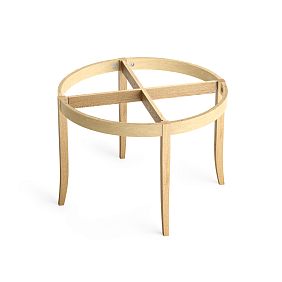
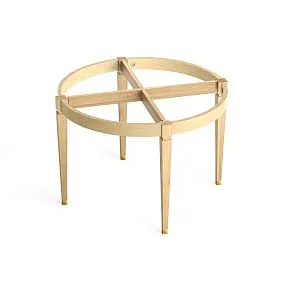
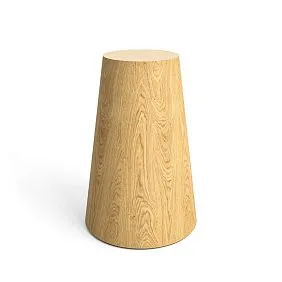
Look at an ordinary chair or table. What do you see? A surface and four supports. Simple? At first glance. But eachfurniture leg— this is the result of complex engineering calculations that take into account weight distribution, stress points, dynamic and static loads. We're not talking about decorative sticks, but about load-bearing elements that determine how long your furniture will last.
The structure of a wooden leg begins with the grain direction. Vertical grain orientation provides maximum compressive strength—this is why quality manufacturers never use wood with cross-grain for supports. Wood works along the grain, supporting hundreds of kilograms, but breaks across the grain with minimal effort. This is a basic principle that everyone choosing furniture should know.
Leg cross-section is the second critical parameter. Round supports with a diameter of 40-50 millimeters are suitable for lightweight chairs and coffee tables weighing up to 30 kilograms. Square sections of 50×50 or 60×60 millimeters are necessary for dining tables, where the total load from the tabletop, dishes, and leaning elbows can reach 150-200 kilograms. Massive 80×80 millimeter supports are used for heavy case furniture—dressers, wardrobes—where weight is distributed across four points and each must hold a quarter of the total mass plus a safety margin.




Wood species: oak versus beech in practical use
When it comes to choosing material for furniture supports, two classic species come into contention—oak and beech. And this is not just a question of price or aesthetics, but a fundamental difference in the physical properties of the wood.
Oak is a material with a density of about 700 kilograms per cubic meter, making it one of the hardest among common species. Brinell hardness is 3.7-3.9 units—this means an oak leg is resistant to dents, scratches, and mechanical damage. If a chair with oak legs falls or is struck by something heavy, the likelihood of damage is minimal. The second feature of oak is its high content of tannins, natural tannins, which make the wood resistant to moisture, fungus, and insects. Oak supports can even be used in high-humidity conditions—in kitchens, dining rooms, where water is spilled.
But there is a nuance: oak is difficult to work with. Its high density requires powerful tools, sharp cutters, and patience when drilling. For the manufacturer, this increases the cost of the process. For the buyer—a higher price. However, the service life of oak legs is measured not in years, but in decades. Oak doesn't just age—it develops a noble patina, darkens, and gains depth of color.
Beech offers a different philosophy. Its density is slightly lower—about 650 kilograms per cubic meter, hardness 3.2-3.5 units. This is still a durable material, but more pliable in processing. Beech legs are easier to turn, carving on them comes out sharper, and sanding requires less time. Beech's texture is uniform, without sharp transitions—this makes it ideal for painting, tinting, and creating smooth surfaces.
A critical feature of beech is its hygroscopicity. Beech wood actively absorbs moisture from the air and just as readily releases it. When humidity changes from 40 to 70 percent, a beech leg can increase in diameter by 2-3 percent, and shrink back when drying. For furniture standing in rooms with a stable microclimate—living rooms, bedrooms, studies—this is not a problem. But in a kitchen with boiling pots or in an unheated cottage, beech can behave unpredictably—swell, deform, crack.
Our factory also produces:
Legs for a kitchen table: real-world loads
The kitchen table is the epicenter of loads. It's not just a cup of coffee sitting here; here meat is cut, dough is kneaded, frying pans are dropped, people lean with their full body weight.legs for a kitchen tablemust withstand not only the static weight of the tabletop, but also dynamic impacts, vibrations, and lateral loads.
The calculation is simple: a standard dining table measuring 160×90 centimeters with a wooden tabletop 40 millimeters thick weighs about 40-50 kilograms. Add dishes, utensils, food—another 20-30 kilograms. When a person leans on the edge of the table, the nearest legs bear an additional load of 30-40 kilograms. Total—up to 120 kilograms on four supports, meaning 30 kilograms on each. That's in calm mode.
Now imagine: someone accidentally leans on the table with both hands, transferring their body weight. The instantaneous load on the two nearest legs increases to 80-100 kilograms. Or a child decides to climb onto the table—the entire mass is concentrated at one point. This is why kitchen tables are recommended to have legs with a cross-section of at least 60×60 millimeters made from hardwoods—oak or beech. Thinner supports simply won't provide the necessary safety margin.
Shape also matters. Straight cylindrical legs with a diameter of 70-80 millimeters provide maximum stability and even weight distribution. Turned legs with thickenings at the top and tapering towards the bottom create visual lightness but require precise calculation—the narrowest point must have sufficient cross-section to withstand loads. Tapered legs that widen at the base add stability and reduce the likelihood of tipping.
Get Consultation
Chairs: load dynamics and critical stress points
A chair is not a stationary structure. It is constantly in motion: it's pulled back, pushed in, people sit down abruptly, rock on it, drag it across the floor. Each of these actions creates a specific load on the legs.
When a person sits on a chair, the load is distributed unevenly. At the moment of sitting, the front legs take up to 70 percent of the body weight—an instantaneous impact of 50-60 kilograms on two supports. Then the weight redistributes, and in a seated position, all four legs carry approximately equal loads. But when a person leans back, resting their back against the backrest, the front legs are unloaded, and the rear legs take on the entire weight plus the lever moment from the backrest. At this moment, each rear leg can bear up to 45-50 kilograms.
Rocking on a chair is a classic situation of critical load. When a person balances on two rear legs, their entire mass is concentrated on the area of two supports, plus the added dynamic component from movement. The legs work not just in compression, but also in bending. This is why chairs intended for intensive use—in cafes, restaurants, public spaces—require reinforced supports with a safety margin of at least three times.
The shape of chair legs is dictated by ergonomics. Rear legs often have a slight backward tilt—5-7 degrees from vertical. This ensures structural stability and comfort for the sitter, allowing natural leaning back. Front legs are strictly vertical, providing support when standing up. A cross-section of 35×35 or a diameter of 40 millimeters is the minimum for home use. For commercial projects—at least 45×45 millimeters.
Coffee tables: when lightness meets strength
Legs for coffee tableoperate in a different paradigm. There are no massive loads here, but there are other requirements—visual lightness, elegance, the ability not to clutter the space. A coffee table is an accent element of the living room, and its legs should emphasize, not weigh down, the composition.
A typical load on a coffee table is a few books, a cup of coffee, a vase, a TV remote. The total weight rarely exceeds 10-15 kilograms plus the weight of the tabletop itself at 8-12 kilograms. This allows for more delicate supports—round with a diameter of 30-40 millimeters or square 30×30 millimeters. Such proportions create visual airiness, making the table seem to float above the floor.
But there is a nuance: the low height of a coffee table (usually 40-50 centimeters) means the legs are short, and the shorter the support, the higher the requirements for its stability against tipping. Narrow, long legs can create a high center of gravity effect. Therefore, coffee tables often use designs with a widened base or additional horizontal ties between the legs.
Turned legs with elegant profiles are a classic for coffee tables. Smooth transitions in diameter, balusters, spherical elements add decorativeness without excessive massiveness. Tapered legs that narrow towards the bottom create dynamism and modernity. Curved cabriole-style legs are for classic interiors where the table should echo antique furniture.
Turned supports: the art of lathe craftsmanship
Woodturning is one of the oldest techniques for creating decorative elements. On a lathe, a rotating workpiece is processed with cutters that remove layers of wood and form a profile of the desired complexity. The result is a leg with a perfectly symmetrical relief, where thickenings and narrowings, convexities and concavities alternate, creating a play of light and shadow.
Modern production uses CNC machines, where the leg profile is programmed in a digital model. This ensures absolute identity of all items in a series—a critically important requirement when a set of four, six, or eight identical legs is needed. Hand turning cannot provide such precision: each leg will have micro-differences noticeable upon installation.
Profiles of turned legs vary from simple cylinders with a couple of rings to complex multi-tiered compositions with balusters, spheres, and cones. The classic profile includes an expanded base for stability, a refined central part for elegance, and another expansion in the upper third for reliable attachment to the tabletop or seat. This shape is not only decorative but also functional—stresses are distributed optimally.
Geometric supports: minimalism without compromise
An alternative to turned forms is strictly geometric supports. Rectangular, square, trapezoidal cross-sections with clear edges, without smooth transitions and decorative excesses. This is the language of modern design, where form follows function, and beauty arises from the honesty of the construction.
Square legs with a 50×50 millimeter cross-section and a slight chamfer on the edges are a minimalist solution for tables in the Scandinavian style. The wood remains recognizable thanks to its texture, but the form is extremely laconic. Such supports pair well with simple solid wood tabletops, undecorated aprons, and industrial interiors.
Trapezoidal legs, widening towards the bottom, add dynamism and stability. The inclination of the faces creates an optical illusion, making the furniture visually lighter, although physically it remains just as sturdy. An angle of 3-5 degrees is optimal—a greater angle creates a sense of instability, a smaller one will be unnoticeable.
Carved legs: when furniture becomes art
Wood carving transforms a functional element into a piece of decorative and applied art. Carved legs are adorned with ornaments, floral motifs, and geometric patterns, created by hand or on CNC milling machines. This is a choice for classic interiors, where furniture should demonstrate status, craftsmanship, and belonging to tradition.
The production of carved legs combines technologies: the basic shape is turned on a lathe, then the main relief of the carving is applied on a CNC router based on a 3D model, and finally, a master carver manually refines the details, smooths transitions, and adds subtle elements inaccessible to the machine. This hybrid approach ensures repeatability of form while preserving the individuality of handwork.
Carving styles vary geographically and historically. Baroque carving is lush, dynamic, with an abundance of scrolls, leaves, and flowers, creating an impression of abundance. Classical carving is more restrained, with clear symmetrical motifs, fluting, and rosettes. Gothic carving features vertical lines, pointed forms, and strict geometry.
Attachment: how the leg connects to the body of the furniture
The strength of furniture is determined not only by the material of the legs but also by the method of their attachment to the body. There are several basic systems, each with its own advantages and limitations.
Mortise and tenon joint is a classic of joinery. A rectangular or round-section projection—the tenon—is formed on the upper end of the leg, which fits into a corresponding recess in the tabletop or chair rail—the mortise. The joint is glued with wood glue and forms a monolithic structure. The strength of such a joint, when properly executed, is comparable to the strength of the wood itself—it withstands both axial loads and bending moments. The disadvantage is non-disassembly. If a leg is damaged, replacing it is problematic.
Bolt fastening uses metal hardware—furniture bolts with washers and nuts. A blind hole is drilled in the leg, into which a bolt is screwed. The tabletop or rail has a through hole through which the bolt passes and is secured with a nut. The advantage is the disassembly of the structure, the possibility of transportation in a disassembled state, and ease of replacing damaged elements. The disadvantage is that the connection can loosen over time, requiring periodic tightening.
Threaded inserts are a modern solution for lightweight furniture. A metal threaded insert is glued into the leg, into which a stud or screw is threaded, passing through the body of the furniture. This allows for height adjustment, compensation for floor unevenness, and quick assembly and disassembly of the structure. It is used primarily in coffee tables, lightweight chairs, and designer furniture.
Mounting plates are metal elements screwed to the lower surface of the tabletop or seat, to which the legs are then attached. The plate distributes the load over a larger area, reducing the likelihood of indentation or cracking of the material. It is used in furniture made of MDF, chipboard, and thin tabletops where direct leg attachment is impossible.
Support height: ergonomics and standards
The height of the legs determines the functionality of the furniture and its ergonomic fit to the human body. Established standards, developed over decades of practice and research, apply here.
Dining tables have a height of 72-75 centimeters from the floor to the upper plane of the tabletop. This provides a comfortable arm position while eating for a person of average height sitting on a chair 45 centimeters high. Accordingly, if the tabletop is 40 millimeters thick, the legs should be 680-710 millimeters high. A deviation of 2-3 centimeters is acceptable, but a greater change causes discomfort—either forcing one to raise their shoulders or lower them, which leads to muscle tension during prolonged sitting.
Chairs for dining tables have a seat height of 43-47 centimeters. Considering a seat thickness of 20-30 millimeters and a rail (horizontal frame between the legs) of 50-60 millimeters, the net leg length is 350-380 millimeters. The rear legs are usually extended upward to form the backrest frame, and their total height reaches 850-950 millimeters.
Coffee tables are lower—40-50 centimeters. This allows for easy reach while sitting on a sofa or armchair. The legs are correspondingly short—360-460 millimeters depending on the tabletop thickness. Short supports require more attention to stability—the base must be wide enough to compensate for the low center of gravity.
Bar tables are the complete opposite. A height of 100-110 centimeters requires legs 1000-1060 millimeters long. Such supports experience not only compression but also significant bending moments under lateral loads. Therefore, bar legs are made more massive—with a cross-section of 70×70 or a diameter of 80 millimeters minimum, with additional horizontal ties between the legs at a height of 250-300 millimeters from the floor, which also serve as footrests.
Final finishing: protection and aesthetics
Untreated wood is vulnerable. It absorbs moisture, dirt, gets scratched, and darkens from ultraviolet light. Finishing creates a protective barrier and simultaneously reveals the beauty of the material.
Oil finishes penetrate the structure of the wood, filling pores and fibers. Oil does not create a surface film but modifies the top layer of wood, making it denser and more resistant to moisture. The advantage is the natural look of the wood, tactile warmth, and the possibility of local repair. A scratch on an oiled leg can be sanded and re-oiled, and the mark will disappear. The disadvantage is that oil requires periodic renewal, every 2-3 years depending on the intensity of use.
Varnish coatings form a hard, transparent film. Polyurethane varnish creates a strong barrier that protects wood from water, chemicals, and scratches. Gloss varnish enhances the contrast of the grain, makes the color more saturated, and adds shine. Matte varnish preserves the natural look with a slight satin sheen. Varnish is durable—it lasts 7-10 years without renewal, but local repair is impossible—the entire old layer must be removed and a new one applied completely.
Wax is a traditional coating for antique furniture. Beeswax is rubbed into the wood, creating a thin protective layer and a soft shine. Wax emphasizes the grain, makes the wood pleasant to the touch, and imparts a light honey aroma. But the protective properties of wax are weaker than oil and varnish—it requires regular renewal and cannot withstand intensive loads.
Toning changes the color of the wood while preserving the visibility of the grain. Stains on a water or alcohol basis penetrate the fibers, coloring them from within. Light beech can be turned into dark walnut, and oak can be toned to resemble wenge or bog oak. Toning requires a preliminary test—the same stain gives different shades on oak and beech, on sapwood and heartwood, on radial and tangential cuts.
Interior styles and matching supports
Furniture legs are the language of style, by which the belonging of an interior to a certain aesthetic concept is read.
Classical style requires turned legs with proportions dating back to ancient canons. Column-like supports with a base, shaft, and capital, fluting (vertical grooves), balusters with smooth diameter transitions. The wood is toned in noble dark shades—walnut, mahogany, bog oak. Carving is minimal—rosettes at joints are possible, but without Baroque opulence.
Baroque and Rococo—the triumph of carving. Curved cabriole legs with an S-shaped profile, ending in a scroll or animal paw. The surface is covered with carved ornamentation—acanthus leaves, shells, scrolls. Gilding, patination, artificial aging create an impression of antiquity and luxury. Such legs are used in expensive living rooms, studies, demonstrating the owner's status.
Scandinavian minimalism is the complete opposite. Light wood without toning, simple geometric forms, conical legs with a slight incline. Beech or ash is coated with clear oil or white lacquer with a whitening effect. No carving, no decorative elements—purity of lines and honesty of the material.
Loft and industrial style allow for roughness of treatment. Brushed legs with emphasized relief of growth rings, tool marks, deliberate carelessness. Wood is combined with metal—legs made of thick oak blocks are joined with metal ties, bolts with large washers. Toning in dark shades or, conversely, bleaching to a concrete gray color.
Provence – the romance of the French countryside. Turned legs in light tones with a distressed effect, patina, and artificial traces of time. Painted in pastel colors – milk, ivory, pale blue – with partial paint removal on protruding areas, imitating natural wear. Carving is delicate – floral motifs, garlands, ribbons.
How to Buy Correctly: A Buyer's Checklist
Choosing furniture supports is a process that requires attention to detail. Here are the criteria that separate a quality product from a mediocre one.
Wood moisture content should be 8-12 percent. This is the equilibrium moisture content for living spaces. Wood that is too dry (below 6 percent) can absorb moisture from the air and swell. Wood that is too wet (above 15 percent) will dry out, warp, and crack. Unfortunately, it is impossible to check moisture content without a moisture meter, so rely on the manufacturer's reputation.
Geometry must be flawless. Place the leg on a flat surface and check if it wobbles. The end must be strictly perpendicular to the axis. If the leg is turned, the profile must be symmetrical relative to the central axis – any eccentricity is immediately visible. For a set of four legs, check for identicalness – place them side by side and compare height, diameters, proportions.
The surface should be smooth, without fuzz, chips, or cracks. Run your hand along the grain – it should feel silky. A slight roughness across the grain is acceptable – this is normal for wood. Knots, if present, should be healthy (light, tight), without falling out or cracks around them.
The smell of wood is an indicator of drying quality. A fresh woody aroma is normal. A musty, moldy smell indicates storage problems. A sharp chemical smell points to non-eco-friendly impregnations or glue.
Fasteners should be included or at least specified in the documentation. Bolts, washers, nuts, mounting plates – all must match the leg design. Lack of fasteners means you will have to select them yourself, risking mistakes in size and type.
Restoration and Replacement: A Second Life for Beloved Furniture
Furniture breaks. A leg cracks, dries out, gets damaged during rearrangement. Throwing away an entire piece because of one spoiled support is wasteful. Replacing legs gives furniture a second life.
The first step is to determine the type of attachment. If the leg is on a tenon, it needs to be carefully tapped out with a rubber mallet, after preheating the joint with a heat gun to soften the glue. If on a bolt – unscrew the fastener. Use the extracted leg as a sample for finding a replacement – measure all dimensions, sketch the profile, take a photo.
Finding an identical leg is difficult if the furniture is old or non-standard. The solution is tobuy a furniture supportthat is as close as possible in style and modify it yourself – trim to height, adapt the attachment, tint to the desired color. An alternative is to order a copy to be made by a turner if the leg is complex.
Installing a new leg requires precision. If the attachment is tenon-based, the mortise must perfectly match the tenon – too loose will create play, too tight may split the wood when driving. Gluing a tenon joint is done with PVA wood glue or polyurethane glue – both provide strength comparable to wood.
If not one, but all four legs are changed – an opportunity to update the furniture style. An old Soviet table with straight legs turns into an elegant piece with turned supports. A dresser acquires classic features with carved legs. This is a low-budget way to radically change the perception of furniture without replacing the main body.
Frequently Asked Questions
Can pine legs be used for a dining table?
Pine is a soft species with a density of about 450 kilograms per cubic meter, which is half that of oak. For lightweight furniture – coffee tables, shelves – pine is acceptable. But for a dining table, which experiences significant loads, pine legs are unreliable. They will deform, dents will quickly appear on them, and their service life will be reduced. Saving on material will result in the need for early replacement.
How to calculate the required cross-section of legs for a homemade table?
Basic calculation: sum the weight of the tabletop, the expected load (dishes, food, elbows), add a 50 percent safety margin. Divide by the number of legs. Each leg must withstand the resulting load. For oak and beech, the permissible compressive load is about 500 kilograms per square centimeter of cross-section. If a leg bears 40 kilograms, the minimum cross-section is 0.8 square centimeters, i.e., a square with a side of 9 millimeters. But this is purely theoretical. In practice, add a safety factor of 5-7, resulting in a cross-section of 45-50 millimeters.
Why do chair legs wear out faster on the front supports?
The front legs of a chair bear the maximum load when standing up – a person leans on the armrests or the edge of the seat, shifting weight forward. Additionally, when moving the chair on the floor, the front legs are the first to contact obstacles, get scratched, and chipped. The rear legs wear out more slowly because they usually do not move when the chair is pushed back.
Should legs be varnished before installation on furniture?
Yes, definitely. Untreated wood quickly gets dirty, darkens, and absorbs moisture. Coating legs after installation is difficult – varnish seeping into joints, uneven coverage. Treat the legs before installation, let them dry completely, lightly sand the ends after drying (they may raise the grain), then install.
How to prevent floor scratches from wooden legs?
Glue felt pads onto the lower ends of the legs – they are sold in any hardware store. Felt is soft, does not scratch the floor covering, and also muffles the sound when moving furniture. An alternative is plastic or rubber glides, but they are less aesthetic and may leave marks on light floors.
Why are turned legs more expensive than straight legs of the same length?
Turning requires more time and material. To turn a leg with a diameter of 50 millimeters and thickenings up to 70 millimeters, the original blank must be 70x70 millimeters along its entire length. A significant portion of the wood is removed as waste. A straight leg 50x50 is made from a 52x52 blank – almost no waste. Plus machine operation time, operator skill, complexity of quality control – all this increases the cost of turned products.
Can oak legs be painted white without losing the grain?
Yes, use white semi-transparent paint or varnish with added white pigment. The oak grain will remain visible, but the color will change. Apply a thin layer, controlling the degree of coverage. An alternative is white stain followed by clear varnish. Fully opaque enamel will hide the grain, turning the wood into a monochrome surface.
What is the optimal leg height for a sofa?
Standard is 5-10 centimeters. This is the minimum height that allows vacuuming under the sofa. Taller legs (15-20 centimeters) create visual lightness, make the sofa appear airier, but require more massive supports to compensate for the tipping moment. Low legs (3-5 centimeters) are used in modern-style platform sofas, where a squat and monolithic form is important.
How to determine if legs are made from solid wood rather than laminated wood?
Inspect the end grain. Solid wood has a continuous pattern of annual rings running across the entire cross-section. Laminated wood consists of several lamellae, and glue lines are visible. A laminated construction is not necessarily worse—it is more stable and less prone to warping. But for classic furniture, solid wood is preferred for aesthetic reasons.
Is it worth paying extra for hand-finishing of turned legs?
If it's about exclusive, expensive furniture—yes. Hand-finishing removes micro-defects that cannot be eliminated by machine processing, adds individuality, and makes each leg unique. For mass-produced furniture, hand-finishing is excessive—the quality of modern CNC machines provides sufficient precision and surface finish.
Conclusion: Partnership with woodworking craftsmen
Choosing furniture legs is a choice between a temporary solution and an investment in durability. Cheap supports made of softwood, with poor geometry and incorrect moisture content, will last a year or two, after which deformations, cracks, and loosening of fasteners will begin. High-quality legs made of oak or beech, manufactured with proper technology, will last for decades, maintaining strength and appearance.
Company STAVROS has specialized in manufacturing furniture components from solid wood for over twenty years. The range includes hundreds of leg models—from classic turned to modern geometric, from miniature supports for coffee tables to massive legs for dining tables and case furniture. Each product undergoes strict quality control, the wood is dried to optimal moisture content, and processing is performed on CNC machines ensuring dimensional accuracy.
STAVROS works with both professionals—furniture factories, designers, restorers—and private clients creating furniture themselves or updating their interiors. Technical support, selection consultations, assistance with load calculations, and mounting recommendations are all part of the standard service.
Choosing STAVROS products means choosing not just wooden parts, but reliability proven by thousands of completed projects. These are the supports on which your comfort, your safety, and your interior stand. Furniture lasts long when its foundation is made correctly.