












































































Article Contents:
- Shape determines everything: anatomy of dining table legs
- Square section: when brutality matters
- Rectangular section: play of proportions
- Round section: eternal classic
- Turned shape: art in wood
- Cone: dynamism and modernity
- Trapezoid: unusual geometry
- Strength: what withstands, what breaks
- Wood species: comparative analysis
- Dependence of strength on shape
- Influence of height on stability
- Mounting methods and their strength
- Finish: protection and aesthetics
- Enamel coating: color and protection
- Oil coating: naturalness and tactility
- Wax coating: tradition and shine
- Lacquering: universal protection
- Staining: color in depth
- Patination: effect of time
- Style compatibility: what suits where
- Classic: turned shapes and natural tones
- Baroque and Rococo: carving and gilding
- Minimalism: geometry and monochrome
- Loft: metal, brutality, contrasts
- Provence: aged look and pastel
- Scandinavian style: light wood and cones
- Combining materials: wood and more
- Wood and metal
- Wood and glass
- Wood and stone
- Practical tips for selection
- How to determine the required section
- How to choose finish based on usage conditions
- How to combine legs with the countertop
- Number of legs
- Maintenance and care
- Regular Cleaning
- Recoating
- Protection against damage
- Conclusion: conscious choice for perfect result
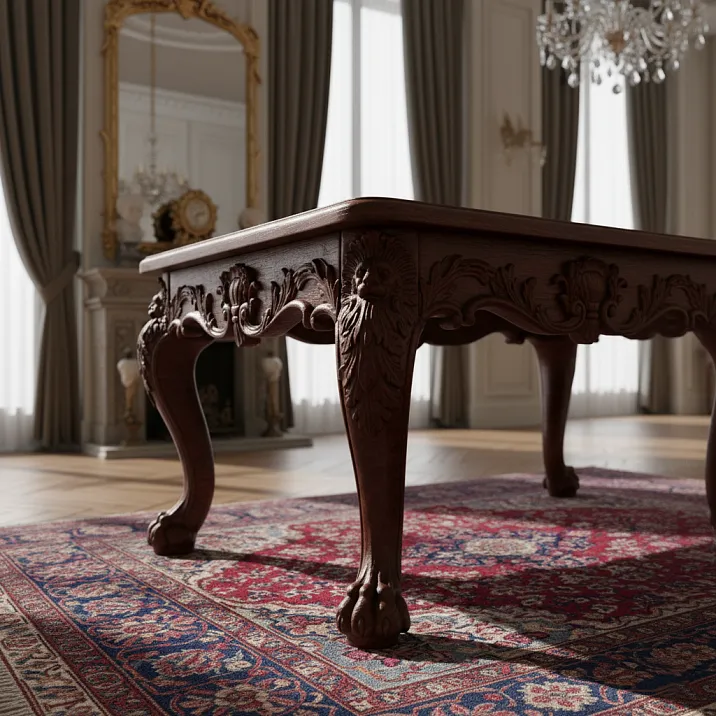
When the countertop — whether stained oak, slab of caragana, or artificial stone — is in hand, the master faces a fundamental question: what to place it on? It seems thatlegs for a table to buy— this is a simple task. But delve deeper into the topic, and a world of shapes, cross-sections, profiles opens up, where every detail affects the strength, aesthetics, and longevity of the structure. The right choice turns an ordinary table into a focal point of the interior, the wrong one — creates dissonance and disappointment.




Shape determines everything: the anatomy of table legs
Shape is not the whim of a designer, it is the language of space, the mathematics of loads, and the psychology of perception. Different profiles carry different semantic loads and possess various technical characteristics.




Square cross-section: when brutality matters
A leg with a square cross-section — embodiment of stability and reliability. Four sides create visual power, making the table resistant to lateral loads. Imagine: a massive oak dining table withwith matching legsa square profile of 80x80 mm — this is a statement of strength and constancy.
A square cross-section provides maximum contact area with the floor, which is critical for heavy countertops. At the same time, such a shape allows even distribution of load across all four sides, eliminating point stress.furniture legsLegs with a square cross-section are ideal for tables that will experience significant vertical and horizontal loads.
Aesthetically, the square leans toward minimalism, industrial style, Scandinavian restraint. Clear lines, straight angles — this is the geometry of order and logic. In loft interiors, square supports create a counterpoint to rough walls and open communications, adding structure to chaos.
Our factory also produces:


Rectangular cross-section: play of proportions
A rectangle is a square stretched in one direction. Such a shape creates an illusion of height, making the leg visually slimmer. A 60x40 mm cross-section looks more elegant than 60x60, while maintaining necessary strength in the direction of the longer side.
Furniture SupportsLegs with a rectangular profile are often installed so that the wider side is oriented along the countertop. This increases the rigidity of the structure in the direction where the table is most vulnerable to rocking. A rectangle is a compromise between strength and elegance.
In classical interiors, rectangular legs are often complemented with chamfers, router grooves, or shallow carvings. These decorative elements break the monotony of flat surfaces, create play of light and shadow, and add refinement to strict geometry.
Get Consultation
Round cross-section: eternal classic
A circle — a form without beginning or end, symbol of perfection and harmony. RoundLegs for tableslegs are universal: they look equally good in classical and modern interiors, have no sharp angles, are safe for children, and are pleasant to the touch.
Technically, a round cross-section evenly distributes load around the entire perimeter, making such legs resistant to cracking. At the same time, the round shape allows easy rotation of the leg during processing, simplifying the creation of complex turned profiles.
The diameter of a round leg determines its load-bearing capacity and visual massiveness. Thin legs of 30-40 mm create a sense of lightness, suitable for coffee tables and elegant furniture. Massive legs with a diameter of 80-100 mm — this is the choice for large dining tables capable of seating the entire family.
Turned shape: art in wood
Turning — the oldest wood processing technique, transforming a simple cylinder into a sculpture.Turned shape— this is when a simple round leg acquires a complex profile: expansions and contractions, bulges and recesses, spheres and cones, assembled into a single composition.
A classic turned leg consists of several elements: base (enlarged base for stability), body (central part with decorative elements), neck (upper part for mounting), capital (transition to countertop). Each element carries both functional and aesthetic load.
The shape of turned elements is determined by style. Baroque loves opulence: numerous bulges, transitions, spherical enlargements. Classicism prefers restraint: smooth transitions, minimal decoration, emphasis on proportions. Modern style plays with asymmetry and fluidity of forms.
The strength of a turned leg depends on the minimum diameter at its narrowest point. If a "waist" of 30 mm is created during turning, this section determines the load-bearing capacity of the entire support.furniture legsLegs with deep recesses require a thicker initial blank.
Conical shape — when the leg tapers from the base to the top, or, less commonly, widens.
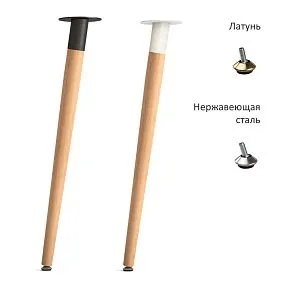
ConicalConicalcreates a sense of dynamism and upward movement. Visually, it lightens the table, making it appear 'floating,' even if the tabletop is heavy.
The taper angle determines the character of the piece. A shallow cone (2-3 degrees) is barely noticeable but creates a delicate, refined effect. A steep cone (10-15 degrees) is a bold design statement, emphasizing the geometry of the form.
ConicalLegs for chairsespecially popular in Scandinavian design. They create the recognizable silhouette of mid-20th century furniture, when designers sought a balance between functionality and minimalist beauty.
Technically, a cone is more complex to manufacture than a cylinder, but simpler than a complex turned shape. Meanwhile, a conical leg has good strength: the gradual change in cross-section evenly distributes stresses along its length.
Trapezoid: Unusual Geometry
Trapezoidal section — when one side is wider than the other.Trapezoidcreates an interesting visual effect: the table looks different from various viewing angles. This is a choice for those seeking originality and not afraid to experiment.
A trapezoid may be oriented with its wider side down (classic pyramidal stability) or up (a bolder solution, creating a sense of lightness). The first option is technically preferable, the second is more aesthetically interesting.
In modern interiors, trapezoidal legs are often painted in contrasting colors, which emphasizes their unusual geometry. A white trapezoid on a dark floor or black on a light one — the contrast enhances the architectural quality of the form.
Strength: What Will Last, What Will Break
Beauty without strength is a temporary phenomenon. The table must serve for decades, enduring daily loads. The strength of the legs is determined by the material, shape, cross-section, and method of attachment.
Wood Species: Comparative Analysis
Oak — the standard of strength. Density 680-720 kg/m³, hardness by Brinell 3.7-3.9, compressive strength along the grain 52-60 MPa.legs for a table to buyMade of oak — means choosing maximum reliability. An oak leg with a 60 mm diameter can withstand a load of up to 200 kg without deformation.
Beech is almost equal to oak in strength. Density 650-680 kg/m³, hardness 3.6-3.8, bending strength even higher than oak — 95-120 MPa versus 90-110.Furniture Legs and SupportsMade of beech is ideal for heavily used furniture.
Ash has a unique combination of strength and elasticity. Density 650-690 kg/m³, but the wood is more resilient, better resisting impact loads.Table legsMade of ash — a choice for furniture that is frequently moved.
Birch is less dense (630-650 kg/m³), but more affordable. For medium-sized tables, birch legs are quite sufficient, especially if the cross-section is increased. What oak can withstand at 60 mm diameter, birch can withstand at 70-80 mm.
Spruce — the softest among common species (density 480-520 kg/m³).buy legs for a tableMade of spruce makes sense for light structures: coffee tables, children's furniture, decorative elements.
Dependence of Strength on Shape
A square section of 60x60 mm provides the same load-bearing capacity as a circular section with a 70 mm diameter. This is due to material distribution: in a square, there are no 'voids' at the corners, unlike in a circle circumscribed around it.
A turned leg is always weaker than a cylindrical leg of the same average diameter. The reason is variable cross-section. If the minimum diameter in the turned section is 40 mm, it is precisely this that determines the strength, even if the main body of the leg is 70 mm.
A conical leg is stronger than a cylindrical one at the same minimum diameter. The expansion toward the base creates additional rigidity, especially against bending.Legs for coffee tablesConical legs withstand lateral loads better than straight ones.
Trapezoidal cross-section creates strength anisotropy: the leg is stronger along the wide face and weaker along the narrow one. This must be considered during installation: the wide face should be oriented in the direction of maximum load.
Effect of height on stability
The higher the leg, the greater the risk of lateral bending. A standard dining table height of 720 mm requires legs with a diameter of at least 50-60 mm made of hardwood. For a bar counter 1100 mm high, supports with a diameter of 70-80 mm or additional braces are needed.
Critical length is the height at which the leg begins to work not under compression but under longitudinal bending. For an oak leg with a 60 mm diameter, the critical length is about 1200 mm. Exceeding this value requires increasing the diameter or installing horizontal braces.
the base for a tableWith braces, the overall stiffness of the structure increases by orders of magnitude. Braces — horizontal blocks connecting legs — transform four separate supports into a single frame, significantly increasing stability.
Methods of fastening and their strength
Dowel joint — the strongest. The wooden dowel fits into the groove of the tabletop or brace, creating a monolithic connection. When properly executed, the strength of a dowel joint reaches 80-90% of the strength of solid wood.
Bolted fastening is simpler to install but creates point loading. An M8 bolt withstands about 300 kg of pull-out force from oak, but requires quality threads and washers with increased diameter to distribute pressure.
Mounting plates — a modern solution combining ease of installation with sufficient strength.Buy furniture supportsFastening with threaded rods for mounting plates — standard for mass-produced furniture.
Adhesive bonding enhances any mechanical fastening. Modern polyurethane adhesives create a bond stronger than the wood itself. The combination of dowel and adhesive — maximum reliability, proven over centuries.
Finishing: protection and aesthetics
Unprotected wood is vulnerable: moisture, UV radiation, mechanical damage quickly degrade its appearance. Proper finishing extends service lifelegs for the tableby dozens of times and determines their aesthetics.
Coating with enamel: color and protection
Enamel is a covering that completely hides the wood texture. When a clean color — white, black, red, any from the RAL palette — is needed, enamel is the choice.Coating with enamelcreates a smooth, uniform surface resistant to moisture and stains.
Enamel coating technology includes several stages: sanding wood to perfect smoothness, applying primer (closes pores, creates adhesive layer), intermediate sanding, applying base enamel layer, final sanding, applying topcoat. Professional enamel coating — 5-7 layers of finish.
Enamel can be glossy, semi-gloss, or matte. Glossy finish creates a lacquered surface effect, reflects light, visually enlarges space. Matte enamel is more practical: scratches and fingerprints are less noticeable, it creates a sense of warmth and coziness.
Colored enamel allows creating bold design solutions. Emerald legs under marble tabletops, terracotta supports for a Mediterranean-style table, graphite legs in an industrial interior — enamel opens up endless possibilities.
The drawback of enamel is that it hides the wood texture. If the natural beauty of wood is valued, enamel is not suitable. Moreover, an enamel surface is more prone to chipping upon impact.
Coating with oil: naturalness and tactile quality
Oil is the opposite of enamel. It does not create a surface film but penetrates into the wood structure, highlighting the texture.Coating with oilpreserves the tactile quality of wood: the surface remains pleasant to the touch, warm, alive.
Oils can be natural (linseed, tung, nut) or modified (with additives like driers to speed drying, wax for additional protection, pigments for tinting). Natural oils are most eco-friendly; modified oils are more practical.
Oil coating technology is simpler than enamel: wood is sanded, oil is applied with a brush or pad, rubbed into the surface, excess is removed. After 24 hours — reapply. Usually 2-3 layers are sufficient.
Oil reveals the beauty of wood. Oak with its large pores and distinct texture looks luxurious under oil. Beech takes on a warm honey tone. Ash displays a contrasting grain pattern.Buy chair legsWith oil finish — the choice of those who value naturalness.
Hard Wax Oil — a modern modification combining the penetrating properties of oil with the protective qualities of wax. This coating is resistant to moisture and dirt while preserving the natural appearance of wood.
The drawback of oil is less protection compared to varnish or enamel. Oil-based surfaces need to be refreshed periodically — applying a fresh layer every 1-2 years to maintain protective properties.
Wax Coating: Tradition and Shine
Wax is the oldest method of wood finishing, known since antiquity.Wax Coatingcreates a silky surface with a soft sheen, highlighting the nobility of the wood.
Waxes can be natural (beeswax, carnauba) or synthetic. Beeswax is the classic choice, imparting a warm golden hue and a pleasant honey scent to wood. Carnauba wax (from Brazilian palm) is the hardest natural wax, creating a durable coating with high gloss.
Waxing technology: wood is sanded, wax is applied in a thin layer, allowed to absorb, then polished to a shine with a soft cloth. The process is repeated 3-4 times. The final polishing creates the characteristic satin sheen.
Wax can be applied over oil — the oil-wax combination coating combines the penetrating protection of oil with the surface sheen of wax. This is a classic finish fordecorative elementsand expensive furniture.
Tinted wax allows changing the color of wood while preserving its texture. Wax with pigments settles into pores and grooves, emphasizing relief and creating an effect of patina and aging.
The drawback of wax is low resistance to moisture and heat. Wax coating requires regular renewal and is not suitable for furniture that will be heavily used in humid environments.
Varnishing: Universal Protection
Varnish is the most universal coating, creating a durable protective film. Varnishes come in various bases: alkyd, polyurethane, acrylic, nitrocellulose. Each type has its own characteristics.
Polyurethane varnish — the modern standard for furniture. It forms an elastic, durable film resistant to abrasion, moisture, and chemical exposure.buy legswith polyurethane varnish — a practical solution for everyday furniture.
Water-based acrylic varnishes are eco-friendly, odorless, and dry quickly. They are less durable than polyurethane but sufficient for furniture under medium loads. Acrylic varnishes do not yellow over time, which is important for light-colored woods.
Nitrocellulose varnishes dry quickly, are easy to sand and polish. Professional antique furniture finishing often uses nitrocellulose varnishes — they allow achieving perfect smoothness and mirror sheen.
Varnishes differ by gloss level: from deep gloss (90-95% light reflection) to deep matte (5-10%). Semi-gloss and semi-matte varnishes (30-50%) — the optimal compromise: sufficient gloss for beauty, sufficient matte finish for practicality.
Tinted varnishes contain pigments that change the color of wood. You can lighten dark wood or, conversely, darken light wood, achieving the desired shade while preserving the visibility of the texture.
Staining: Color in Depth
Staining (toning) — this is coloring wood in bulk, not surface application. Stain penetrates into the structure, coloring fibers.Balusters for staircaseand furniture legs are often stained to achieve noble shades.
Stains can be water-based, alcohol-based, or oil-based. Water-based stains are the most accessible and safe, but they raise wood fibers, requiring additional sanding. Alcohol-based stains dry quickly, do not raise fibers, but are difficult to apply. Oil-based stains provide even color, dry slowly, and are easy to apply.
Staining allows mimicking expensive woods: beech stained with "walnut" color, visually indistinguishable from real walnut. Pine stained "to look like oak" acquires a noble appearance. This is economically justified when a specific color is needed within a limited budget.
Uneven staining creates artistic effects. If stain is applied not as a continuous layer but selectively — it creates a patina effect, an aged look, and emphasizes texture.decorative rose outletsare often treated this way.
After staining, wood must be covered with a protective layer — varnish, oil, or wax. Stain alone does not protect; it only colors.
Patina: effect of time
Patina is the traces of time on wood — natural darkening in areas of frequent contact, lightening on edges due to wear. Artificial patination imitates these effects, creating an impression of antiquity.
Patina technology: base paint layer (usually light), partial removal of paint from protruding parts, application of dark pigment into recesses, finishing coating.— everything must correspond to the chosen era.and patinated furniture legs blend organically into Provence, shabby chic, and vintage interiors.
Gold patina — a luxurious option for classic interiors. Gold paint or leaf (imitation of gilt) is applied to raised parts of carving, creating the effect of aged gilded furniture.
Silver patina — a cooler, more aristocratic option. Silver highlights on a dark background create the effect of aged silver touched by time.
Contrasting patina — when the base color and patina color differ significantly (e.g., white with black patina or ivory with brown). This creates a dramatic effect, emphasizing the relief of carving.
Style compatibility: what fits where
Shape, material, and finish must match the interior style. Dissonance between legs and the overall space concept destroys harmony.
Classic: turned forms and natural tones
Classic style requires turned legs with smooth transitions, symmetrical elements, restrained decoration.buy legs for a tableTurned profile from oak with oil or semi-matte lacquer finish — an error-free choice for classic interiors.
Height of classic legs for dining tables — 700–720 mm, diameter at the main part — 70–90 mm. Profile includes a base with diameter 100–120 mm for stability, smoothly transitioning into the main body with rounded and carved sections, and a capital — an expanded upper part for attaching the tabletop.
Color palette of classic style — natural wood tones: light oak, golden beech, dark walnut. Light toning is permitted to enhance elegance, but wood grain must remain visible.
Baroque and Rococo: carving and gilding
For lavish Baroque and Rococo styles, simple turning is insufficient. Here, intricate carving is requiredbuy furniture legswith floral ornaments, acanthus scrolls, cartouches. The cabriole form with its characteristic double curve — classic Rococo.
Finish — white enamel with gold patina, creating the effect of palace furniture. Gilding may be full (entire surface covered with gold paint) or selective (gold only on raised parts of carving).
Carved legs require handcrafting by master carvers, significantly increasing cost.Moldings decorationThese styles also heavily use gilding and intricate carving.
Minimalism: geometry and monochrome
Minimalism rejects ornamentation, focusing on line purity and functionality. Square or rectangular legs without decoration, covered in matte enamel — ideal for minimalism. Colors — white, black, gray.
Conical legs also fit well into minimalist interiors.furniture legSimple conical shape from light wood with colorless matte lacquer — typical solution for Scandinavian minimalism.
In minimalism, leg height is often reduced — 400–500 mm, creating a sense of groundedness, stability, and calm. Low furniture visually expands space, which is important for small rooms.
Loft: metal, brutality, contrasts
Industrial loft style loves contrasts: rough wood and metal, dark colors and exposed texture.furniture legSquare-section oak legs, brushed (removal of soft fibers with stiff brushes to emphasize texture) and coated with dark oil — typical solution.
Wooden legs are often combined with metal elements: steel brackets, bolts with large heads, industrial fasteners. This enhances industrial aesthetics and creates a sense of authenticity.
Colors — dark wenge, black, graphite gray. Less often — untreated light wood contrasting with black metal.Wooden wall decorLoft interiors also favor rough, unfinished forms.
Provence: aged charm and pastel tones
The French provincial style requires an aged effect. Patinated legs with chipped paint, scratches, and cracks — all of this creates the impression of furniture that has lived through several generations.Buy legsTurned profile with white paint and brown patina — classic Provence.
Colors are pastel: cream, lavender, mint, blue. The finish is always matte, often with a chalk paint effect (chalk paint). This paint creates a velvety surface, enhancing the sense of age.
Leg shapes are turned but without excessive complexity. Simple balusters with 2-3 rounded sections, smooth transitions, no fussiness. Provence values simplicity and functionality, veiled by a romantic aura of antiquity.
Scandinavian style: light wood and cones
Scandinavian design — light wood species (birch, pine, beech), simple forms, functionality. Conical legs made of light wood with clear oil or lacquer finish — quintessence of Scandinavian style.
Leg diameter is small — 40-60 mm, creating a sense of lightness and airiness. The furniture seems to float above the floor.Legs for a stool to buyConical profile — typical solution for Scandinavian interiors.
Finish emphasizes naturalness: oil, wax, clear matte. No bright colors, no gloss. The wood grain should be visible and tactile. This is the philosophy of harmony with nature, embodied in furniture.
Combining materials: wood and more
Solid wood — classic, but modern design often combines materials, creating interesting visual and tactile effects.
Wood and metal
Wooden legs with metal caps or inlays — popular solution. Brass caps on oak legs add luxury to a classic interior. Steel inlays on beech legs enhance the industrial aesthetic of a loft.
Buy furniture legs for a 200-room hotel project — this is not an ordinary deal, but a partnership requiring a special approach.With integrated metal elements — this is both aesthetics and additional protection. A metal foot at the base of the leg protects the wood from abrasion, a metal neck reinforces the joint.
Combined constructions — when the upper part of the leg is wooden and the lower part is metal, or vice versa — create an interesting visual contrast. This is characteristic of modern eclectic interiors, not afraid of bold combinations.
Wood and glass
Glass top on wooden legs — classic combination for creating a sense of lightness and airiness. Wood provides warmth and stability, glass — transparency and visual expansion of space.Legs for countertopsLight wood species (beech, birch) pair better with transparent glass.
Attaching glass to wooden legs requires special adapters with soft gaskets to prevent chipping. Precision installation is crucial — even slight misalignment creates stress in the glass, risking cracks.
Wood and stone
Marble or granite top on wooden legs — luxurious combination for classic interiors. Stone provides cold beauty and monumentality, wood — warmth and organic feel.Countertop substructureSolid oak can support the weight of a heavy stone slab.
Correct load calculation is essential. A marble tabletop 1200x800x30 mm weighs about 70 kg. Plus dynamic load from items on the table — total weight may reach 150-200 kg. This requires strong legs with diameter of at least 80 mm or using five legs instead of four.
Practical Tips for Selection
Theory is important, but practice determines the result. A few tips based on master experience and real usage.
How to determine required cross-section
Empirical rule: diameter of round leg in millimeters should be at least one-tenth of height in millimeters. For standard height 720 mm, minimum diameter is 72 mm. This is for oak and beech. For softer species (birch, pine), coefficient increases to 0.12-0.15.
For square legs, side length should be 10-15% less than diameter of equivalent round leg. That is, a 60x60 square is approximately equal to a 70 mm round leg in load-bearing capacity.
Using braces can reduce leg cross-section by 20-30%, as braces take part of the load and significantly increase structural rigidity.base to buyWith braces — sensible solution for large tables.
How to choose finish based on usage conditions
For kitchen table, where water splashes, grease, and high temperatures are possible — optimal finish is polyurethane lacquer or enamel. Oil and wax are insufficient protection against intense exposure.
For dining table used moderately — oil or oil-wax. This preserves naturalness, pleasant tactile feel, and ease of reapplying finish.
For children’s table — only eco-friendly finishes: water-based acrylic lacquer or natural oil. No toxic nitro lacquers or solvent-based polyurethane enamels.
For outdoor terrace tables — special yacht varnishes or exterior oils with UV filters. Ordinary furniture finishes quickly deteriorate under sun and moisture.
How to match legs with the tabletop
General rule: a dark tabletop with light legs (or vice versa) creates contrast. Tabletop and legs of the same color create a monolithic look. Which is better depends on the style and size of the room.
In small spaces, contrasting legs visually lighten the table. A white tabletop on black legs appears to float. In large rooms, a monolithic approach creates a sense of solidity and stability.
Tabletop thickness affects leg proportions. A thin tabletop (20-30 mm) requires elegant legs with a 40-60 mm diameter. A thick tabletop (50-70 mm) needs sturdy supports of 70-100 mm, otherwise visual imbalance occurs.
Tabletop shape is also important. A round tabletop pairs better with round legs. Rectangular tabletops suit square or rectangular legs. But this is not a strict rule — contrasting shapes can create interesting effects.
Number of legs
Standard — four legs at the corners. This ensures maximum stability, even weight distribution, and comfortable seating (legs do not interfere with knees).
Three legs — a solution for small round or triangular tables. A triangle is always stable on any surface and does not wobble. However, three legs support less load than four legs of the same thickness.
Five or six legs — for large tables over 2 meters long. Additional supports prevent tabletop sagging and distribute weight. Usually, one or two legs are added at the center of long sides.
One central leg — an elegant solution for small round tables. Requires a massive support of 150-200 mm diameter or a complex base with a cross-shaped foundation.Wooden balusterA large-diameter base can serve as a central table leg.
Care and Maintenance
Proper care extends lifespanbuy table legsfor decades.
Regular cleaning
Wooden surfaces are cleaned with slightly damp, soft cloth without abrasives. Cleaning once a week during general cleaning is sufficient. Enamel surfaces can be cleaned with mild detergents; oil and wax finishes require only dry or slightly damp cloth.
Important to immediately remove spilled liquids, especially from oil finishes. Water left on wood creates dark stains that are hard to remove. Hot items should not be placed directly on wooden legs — use coasters.
Recoating
Oil is refreshed simply: surface is lightly sanded with fine sandpaper (grit 320-400), cleaned of dust, and covered with fresh oil. The procedure takes 30-40 minutes and is performed once every 1-2 years.
Wax is refreshed even more simply: apply a thin layer of wax and polish with soft cloth. Can be done every half-year to maintain shine and protection.
Varnish and enamel cannot be partially refreshed — damaged surfaces require full sanding and reapplication of all layers. This is labor-intensive but necessary every 5-10 years depending on usage intensity.
Protection against damage
Felt pads on leg bottoms protect not only the floor but also the legs themselves from scratches during movement. Replace pads when worn — torn felt scratches more than it protects.
When installing furniture on heated floors, use thermal insulation pads. Constant heating dries out wood, leading to cracking. Floor temperature under furniture legs should not exceed 25-27°C.
Protect wooden legs from direct sunlight. UV radiation destroys varnish, causes fading and darkening of wood. If the table is near a window, use curtains or blinds at noon.
Conclusion: thoughtful choice for perfect result
Choosingbuy table legsThis is not a technical task, but a creative process where physics meets aesthetics. Square or round cross-section, polished or geometric shape, cone or trapezoid — each solution carries meaning, changes the character of the table, and influences the perception of the entire interior.
Strength is determined not only by wood species, but also by shape, cross-section, height, and method of attachment. Oakfurniture legslegs with 60 mm diameter withstand what would break pine legs of 80 mm. But a properly designed structure with braces can make even relatively thin supports strong.
Finishing is not only about beauty, but also protection, durability, and tactile quality. Enamel coating creates a bright color accent and maximum protection. Oil coating preserves the natural warmth of wood. Wax coating provides traditional gloss and aroma. Each type of finish has its own philosophy, advantages, and application area.
Comparing shapes, analyzing strength, choosing a finish — this is the path to creating a table that will serve for decades, delighting the eye and enduring all daily loads.Buy legs for furnitureChoosing — means making an informed decision, considering interior style, usage conditions, personal preferences, and technical requirements.
STAVROS company offers more than 130 models of solid wood furniture legs. Each leg undergoes strict quality control, is manufactured on modern equipment, and can be customized to individual requirements. From simple cylindricallegs for chairsto complex carved legs in baroque style — STAVROS assortment covers the entire spectrum of needs for furniture makers, designers, and those who enjoy creating beauty with their own hands.
Warehouse stock in Moscow ensures fast delivery of popular models, possibilityself-pickupon the day of ordering. Delivery throughout Russia is handled through reliable logistics companies. Services for tinting, painting, and patination allow you to obtain a finished item in the desired color and finish without additional effort.
Professional consultations help select the optimal solution for each project. STAVROS specialists will calculate the required cross-section, recommend wood species, suggest the best finish type, and assist with choosing fasteners. This is not just selling components — it’s partnership in creating quality furniture.
Choose wisely, create with passion, enjoy with delight. May every table in your home stand on sturdy, beautiful, perfectly matched legs — embodying your taste and pursuit of perfection.


