Article Contents:
- First mistake: ignoring load calculation
- Second mistake: incorrect leg height
- Third mistake: material mismatch with usage conditions
- Fourth mistake: incorrect choice of mounting type
- Fifth mistake: neglecting floor covering protection
- Sixth mistake: ignoring style and proportions
- Seventh mistake: purchasing without sample and testing
- Eighth mistake: mismatch with tabletop shape
- Ninth mistake: neglecting wood quality
- Tenth mistake: incorrect mounting to unsuitable tabletop
- How to avoid mistakes: checklist before purchase
- Professional recommendations from experts
- Frequently Asked Questions
- Conclusion

It seems, what could be simpler —legs for a table to buy— attach to the tabletop and use. But it is precisely this apparent simplicity that becomes a trap for thousands of buyers every year. Incorrectly chosen legs turn a beautiful tabletop into an unstable structure, scratch expensive parquet, fail under load, and destroy the interior design concept. The table starts rocking within a month, legs crack under weight, fasteners come loose, and the floor gets dents and scratches.
Why does this happen? Because choosingfurniture legs— is not an intuitive process, but an exact calculation, where dozens of parameters must be considered. Height and proportions, material and load-bearing capacity, type of mounting and compatibility with the floor, stylistics and ergonomics — each factor is critical. An error in even one aspect leads to disappointment and the need to redo everything from scratch.
In this article, we will systematically examine all typical mistakes made when purchasing table legs, and provide specific recommendations on how to avoid them. You will learn how to correctly calculate height, choose material based on specific loads, select mounting, protect the floor, and coordinate style with interior design. Each recommendation is based on practical experience of manufacturers and real customer cases.


First mistake: ignoring load calculation
The most common and dangerous mistake — purchasing legs without considering the actual weight of the structure. Beautiful thin, polished legs look elegant in catalogs but cannot withstand a thick five-centimeter oak tabletop. Result — sagging, cracks, collapse.
Load calculation begins with the weight of the tabletop. A heavy oak, ash, or walnut board weighs between twenty and forty kilograms per square meter depending on thickness and wood density. A 120x80 cm oak tabletop with 4 cm thickness weighs about forty kilograms. Add operational load — dishes, appliances, elbows of people standing up, accidental pressure when rising. Total — sixty to eighty kilograms.
Load-bearing capacity of legs depends on material, diameter, and construction. A thin metal tube with 2 cm diameter can withstand up to fifty kilograms per leg — sufficient for a lightweight coffee table, but catastrophically insufficient for a dining table.Wooden legs for tableLegs made from solid oak with 8x8 cm cross-section can withstand up to two hundred kilograms each — with a multiple safety margin.
Number of legs distributes load. Four legs — standard for rectangular tables, ensuring stability. Three legs for round tables require precise center of gravity calculation and higher load-bearing capacity per leg. A central leg for a round table must be heavy with a wide base; otherwise, the table will tip over under lateral load.
Cross-section shape affects strength. Round, polished legs are stronger than square ones of the same diameter due to even stress distribution. Ornate carved legs with thin struts — the weakest, used only for light decorative furniture. Straight square legs with stiffeners are optimal for heavy structures.
Tabletop material determines requirements for legs. Lightweight materials (MDF, plywood, glass) weigh two to three times less than solid wood, allowing use of elegant legs. Stone (marble, granite, artificial stone) is 1.5 to 2 times heavier than wood, requiring reinforced metal legs or heavy wooden ones.
Dynamic loads are considered separately. A dining table experiences constant localized pressure — elbows, hand pressure when standing up, accidental impacts. Workshop or kitchen island tables are subjected to impact loads. A coffee table in the living room is lightly loaded. Each case requires its own safety margin.
Safety rule — threefold safety margin. If calculated load is eighty kilograms,legs for a table to buythe total load-bearing capacity must be at least two hundred forty kilograms. This guarantees longevity, prevents deformation, and ensures safety.




Second error: incorrect leg height
The height of the legs determines the convenience of using the table. A table that is too low forces you to hunch over, strains your back, and causes discomfort. A table that is too high does not allow you to place your legs properly, puts pressure on your thighs, and makes eating or working a torment.
The standard height of a dining table is seventy-five to seventy-eight centimeters from the floor to the top surface of the tabletop. This value was derived by ergonomists for an average person of 170–180 centimeters height. For a height below 165 cm, a table of seventy-two to seventy-five centimeters is more convenient. For a height above 190 cm — seventy-eight to eighty centimeters.
The calculation of leg height takes into account the thickness of the tabletop. If the tabletop is four centimeters, and the total height of the table should be seventy-six, the legs should be seventy-two centimeters. If the tabletop is two centimeters (glass, thin plywood), the legs should be seventy-four. Sellers often indicate leg height without accounting for the tabletop, which is misleading.
Work tables for standing work — a separate category. Height from ninety to one hundred ten centimeters depending on the user's height and type of work. A kitchen island for standing preparation — ninety to ninety-five centimeters. Children's tables — adjustable or designed according to the child's height, from fifty to seventy centimeters.
Bar tables and counters — one hundred five to one hundred ten centimeters. Require special highlegs for the tablelegs and corresponding bar stools. Attempting to use standard legs with brackets leads to an unstable structure.
Coffee tables — forty-five to fifty-five centimeters. The height should match the height of the sofa or armchair seat. A table that is too low is inconvenient — you have to lean forward. A table that is too high obstructs the view and hinders conversation.
Adjustable legs — a solution for non-standard situations. Screw adjustment by two to five centimeters allows compensation for uneven floors, adaptation to different users, and use of the table in different modes. However, adjustment complicates the structure, increases cost, and requires periodic tightening.
The most common error is buying legs 'by eye' without measurements — bring them home, screw them in, and it turns out the table is three centimeters higher than needed. Returning to the store is problematic, cutting legs — damages the design. Correctly — measure with a tape measure the height of an existing convenient table, subtract the thickness of the new tabletop,buy legs for a tableto precisely calculated height.
Our factory also produces:


Third error: material mismatch with usage conditions
Leg material must correspond to the installation location, usage mode, and climatic conditions. Wooden legs are perfect for dry, warm living rooms, but catastrophic on an open terrace in the rain.
Solid wood — classic for home furniture.furniture legsMade of oak, beech, ash — sturdy, beautiful, eco-friendly, pleasant to the touch. But wood reacts to humidity — swells in dampness, dries out in heat, may warp and crack. Requires treatment with protective compounds and periodic renewal of the finish.
Oak — optimal choice for heavy furniture. Dense, hard wood with beautiful grain withstands heavy loads, is resistant to abrasion, and durable. Oaklegs for a table to buyis more expensive than beech or pine, but lasts for decades without loss of quality.
Beech — an affordable alternative to oak. Dense, uniform wood without pronounced grain is easy to process, stain, and dye. Slightly less strong than oak, but sufficient for standard home tables. Beech is more susceptible to moisture than oak and requires quality varnishing.
Pine and other conifers — budget option for light tables. Soft wood is easy to process, but does not withstand load, gets compressed by fasteners, and wears out quickly. Suitable for coffee tables, children's furniture, temporary structures. Not strong enough for dining tables.
Metal — strength and durability. Steel, aluminum, chromeTable legswithstands enormous loads, does not fear moisture, does not deform. Ideal for kitchens, workshops, outdoor furniture. Drawbacks — cold to the touch, industrial appearance not always suitable, heavy, scratches floors without protective caps.
Composite materials combine advantages of different types. Metal frame with wooden inlays — strength of metal and aesthetics of wood. Wooden leg body with metal tube inside — beauty of wood and structural reinforcement. Polymer coatings on metal protect against corrosion and add color.
Usage conditions dictate the choice. For dining room in a house — solid oak or beech. For kitchen — wood with moisture-resistant coating or metal. For terrace — only metal with anti-corrosion coating or exotic wood (teak, larch). For workshop — metal. For children — light wood with eco-friendly coating.
Protective coating extends the life of wooden legs. Lacquer creates a film protecting against moisture and dirt. Oil penetrates into the wood, enhances the grain, but requires regular renewal. Wax coating gives a soft sheen and protects against water. Enamel covers the grain, creates any color, but requires restoration if chipped.
Get Consultation
Fourth error: incorrect choice of fastening type
The reliability of the table depends on seventy percent on the fastening of the legs to the tabletop. Weak connection leads to loosening, creaking, and in critical cases — collapse of the structure.
Direct fastening with screws — simplest, but not always reliable method. Screw is screwed through a metal plate on the upper end of the leg into the lower surface of the tabletop. Suitable for light tables with thick tabletops (minimum three centimeters). Requires precise marking, otherwise legs will stand unevenly.
Screw length is critical. Too short (ten to twelve millimeters) screws do not hold load, pull out under lateral force. Too long screws penetrate the tabletop completely — a disaster for expensive solid wood. Rule — screw should enter the tabletop to two-thirds of its thickness, but not more than four centimeters.
Mounting plates — professional solution. Metal plate with holes is attached to the leg and tabletop with bolts or screws, creating a strong connection. Plate distributes load over a larger area, preventing fastener pull-out. Suitable for heavy tables, metal legs, non-standard constructions.
Corner blocks — classic carpentry method. Wooden block with cross-section of three by three or four by four centimeters is attached to the tabletop and leg, creating a rigid connection. Strengthens the structure, prevents loosening, but is visible from below — aesthetics suffer. Optimal for workbenches, kitchen islands, heavy dining tables.
Leg braces — horizontal supports between legs to which the tabletop is attached. They create a rigid frame, evenly distribute load, and significantly reinforce the structure. The downside — they reduce legroom and complicate manufacturing. Required for large tables (longer than 180 cm) and thin tabletops.
Threaded connections — a disassemblable construction. The leg has a threaded pin that screws into a metal insert in the tabletop. Allows easy removal and installation of legs for transport. Less secure than rigid mounting, but convenient for mobile furniture.
Adhesive bonding strengthens any connection. Wood glue is applied to contact surfaces before installing fasteners. After drying, it creates an additional bond, preventing play and squeaks. Essential for expensive furniture where quality and longevity are critical.
The mistake of saving money on fasteners — using pre-assembled screws made of soft steel, which bend and shear under load. Correct —buy legs for a tableand additionally purchase high-quality screws or bolts made of hardened steel. An extra cost of 300 rubles will save you from problems for years.
Error number five: neglecting floor protection
Even idealLegs for tableswithout protection leave marks on the floor. Scratches on parquet, dents on linoleum, chips on tiles — the result of unprotected contact between wood or metal and the floor.
Wool pads — a classic solution for hard floors. Self-adhesive discs made of dense wool, 3–5 mm thick, are glued to the bottom end of the leg. The soft material slides across the floor without scratches, dampens sound, and protects both the leg and the flooring. Lasts one to two years, then requires replacement.
Plastic or rubber caps are slipped over the leg and securely fastened. Suitable for round-section metal and wooden legs. Rubber is softer and better protects delicate floors, but wears out faster. Plastic is stronger and longer-lasting, but may scratch soft surfaces.
Teflon sliding pads — a premium solution. Teflon provides nearly zero friction, allowing the table to move easily even under load, leaving the floor undamaged. Expensive, but justified for heavy furniture on expensive floors (marble, exotic hardwood parquet).
Silicone pads — a universal option. Soft silicone dampens vibrations, absorbs shocks, does not slip (the table won’t shift accidentally), and does not scratch. Suitable for any floor and any leg. The downside — collects dust and requires periodic cleaning.
Adjustable pads with a screw mechanism perform a dual function — protect the floor and compensate for its unevenness. By tightening the screw, you can level the table on an uneven floor. Ideal for old houses with sagging floors, or for outdoor installation.
The choice of protection depends on the type of floor. For parquet and laminate — wool or soft rubber. For tiles and stone — plastic or Teflon. For linoleum — soft pads are mandatory, otherwise dents will remain from the weight. For carpet — hard caps to prevent sinking.
The pad size must match the leg diameter. Too small a pad won’t protect the floor — the load is concentrated on a tiny area. Too large a pad looks unsightly and collects dirt. Optimal — the pad diameter equals or slightly exceeds the leg diameter at the point of contact with the floor.
Periodic replacement of protective elements is necessary. Wool wears out, rubber hardens and cracks, plastic scratches. Inspect pads every six months and replace when worn. The cost is negligible, but protects floors worth tens of thousands.
Error number six: ignoring style and proportions
Technically correct legs can ruin the design if they don’t match the interior style and table proportions. Heavy carvedfurniture legsin baroque style look absurd under a rough, unfinished plank tabletop in loft style. Thin chrome spikes disappear under a heavy slab tabletop.
Classic style requires traditional forms. Polished legs with smooth curves, carved elements, reeded details, balusters, and capitals — all are attributes of classicism. Color — natural wood or noble patina. Proportions — balanced; the leg should not be thinner than 5–8% of the tabletop width.
Modern minimalism implies simple forms. Straight metal or wooden legs with square cross-section, without decoration, in neutral colors (black, white, gray, natural wood). The leg thickness can be minimal if sufficient strength is ensured — visual lightness is important.
Loft and industrial style — metal and rough wood. Steel pipes, I-beams, H-beams, painted black or left unfinished. Or massive wooden beams from old beams with preserved patina. Intentional roughness, brutality, absence of elegance.
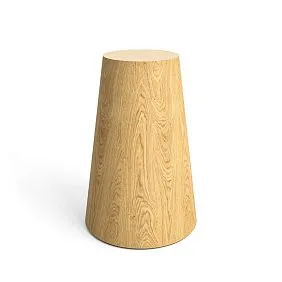
Scandinavian style — light wood with simple forms.Legs for wooden tablesconical or cylindrical, made of birch, pine, beech, painted white or light gray, or with transparent oil. Elegant but not fragile, functional but beautiful.
Proportions are critical for harmony. General rule — leg height relates to tabletop width as 1:2 or 1:3. That is, for an 80 cm wide table, 75 cm high legs look balanced. For a narrow console table 40 cm wide, the same legs will appear bulky.
Leg diameter or thickness visually and structurally matches the tabletop mass. A thick, heavy 5–6 cm tabletop requires legs with a diameter of at least 8–10 cm. A thin 2 cm tabletop harmonizes with elegant 4–6 cm legs.
The number of legs affects perception. Four legs — classic, visually stable. One central leg for a round table should be massive and accentual. Three legs — dynamism, modernity, but require perfect balance. Six to eight legs — monumentality, suitable for huge tables.
Leg color should match the tabletop and surroundings. Contrasting combinations (light tabletop — dark legs or vice versa) create graphic contrast and emphasize forms. Monochromatic combinations (everything in one color range) — softer, calmer, but may appear dull. Accent color (vividly colored legs) — bold, but requires support in the interior.
Made from quality wood, they last thirty to fifty years without losing strength. The protective coating requires renewal every five to ten years, but the wood itself remains strong. Pine lasts ten to fifteen years, then begins to loosen.
Orderbuy table legsOnline purchase by photo — lottery. The image on the screen does not convey the real color, texture, weight, or finish quality. What looks substantial in the photo may turn out fragile in reality.
The wood color on screen and in real life differs. The monitor shows oak as light yellow, but in reality it may be warm honey or cool gray-brown. The walnut tint on the photo appears noble, but in person it looks reddish and unnatural. Always request a sample or visit a showroom.
Surface texture and finish quality are not visible in photos. Is the surface smoothly sanded or rough? Are there chips on the edges? How do knots and cracks look? Is the lamella gluing neat or with gaps? These details are critical for the final impression, but are not discernible in the photo.
Weight is an important indicator of quality. A light leg made of loose wood or with voids inside (glued from thin strips) won't withstand load. Heavy monolithic legs are reliable. But weight can only be assessed by hand — you can't understand it from an online description.
Mounting elements are often not shown in photos. What mounting surface is there? Are there holes for screws? What diameter? What thread for bolts? You'll only find out upon receipt, and it may be incompatible with your countertop.
Stability testing is possible only in reality. Attach the legs to the countertop, load, shake, lean on it. The table must stand firmly, without play or creaking. If it wobbles, the legs are incorrectly sized or the mounting is weak. Better to know this before purchase.
Return policy is a mandatory condition for online orders. If the legs don't match in color, size, or quality — you must be able to return them without problems. Check the return policy before purchasing. Some sellers do not accept returns for solid wood items — this is a risk.
Consulting with a specialist before ordering avoids mistakes. Describe your project — countertop dimensions, material, table purpose, interior style. Get recommendations on choosing a specific leg model, mounting type, and floor protection. Professionals will consider nuances you may not know.
Error #8: Mismatch of countertop shape
The countertop shape dictates the placement and type of legs.Legs for round tablesand rectangular — different tasks, different solutions.
A rectangular countertop with four legs — classic. Legs are placed at the corners, offset from the edge by five to ten centimeters. This ensures stability, even load distribution, and convenient seating placement. People won't bump knees into legs, chairs can move freely.
A square countertop requires the same principles — four legs at the corners. But an alternative is a single central massive leg or a three- or four-armed base. This frees up space for feet, but reduces stability — the table may tip over under strong lateral pressure.
A round countertop works best with a single central leg. A massive turned column or carved support with a wide base ensures stability and doesn't interfere with seating around. Three or four legs around the perimeter also work, but must be positioned so that they don't bump into seated people's knees.
An oval countertop is a compromise between rectangular and round. Four legs are placed closer to the center along the long sides, ensuring stability and legroom. Two massive leg-tumblers at the ends — an alternative option, creating a monumental look.
Non-standard shapes (polygons, irregular contours, asymmetrical) require individual calculation. The center of gravity must project inward within the area bounded by supports. Otherwise, the table will be unstable. Better to order a consultation or custom-made legs for the specific project.
Countertop size determines the number and placement of legs. A small table 60x60 — four thin legs suffice. A large table 200x100 — requires reinforced legs or additional supports in the middle, otherwise the countertop will sag.
Console tables (wall-mounted narrow) require a special approach. Two legs at the front edge, the rear edge mounted to the wall. Or four legs, but the rear ones closer to the wall. You cannot place all four legs symmetrically — the table will tip forward under even slight load on the front edge.
Not all
Not allWooden legs for tableare the same. Wood quality, processing method, presence of defects determine durability and appearance.
Wood grade is critical. The highest grade — no knots, cracks, resin pockets, uniform texture and color. Suchlegs for a table to buyare more expensive but look noble and last decades. First grade allows small healthy knots and minor tone deviations — acceptable for most tasks. Second grade with large knots, cracks, uneven color — only for hidden elements or budget solutions.
Wood moisture should be 8–12%. Under-dried wood (moisture above 15%) will continue drying after installation, shrink, crack, and warp. Over-dried (below 6%) is brittle and easily splits. Moisture can be checked with a moisture meter, but sellers rarely provide this option.
Kiln-dried wood guarantees even moisture removal from the entire wood volume. Air-dried (atmospheric) wood is cheaper but uneven — surface is dry, inside is moist. After processing and installation, internal moisture escapes, causing wood deformation. For qualityfurniture legskiln-drying is mandatory.
Grain direction affects strength. Longitudinal grain along the leg axis — maximum strength in bending and compression. Crosswise (end-grain) — wood is weak and easily splits. During turning or carving complex shapes, grain may run suboptimally — reducing strength.
Lamella gluing — common technology to reduce internal stresses. The leg is glued from several narrow strips (lamellas) with alternating grain direction. This prevents warping, but requires quality glue and precise processing. Poor gluing will delaminate within one to two years.
Knots are not always a defect. Small, healthy knots add natural character to the wood, emphasizing its organic origin. However, large knots (over one centimeter), especially loose or rotten ones, are serious defects that weaken the structure. End-grain cracks are acceptable only if superficial (up to two millimeters deep); deeper cracks constitute a defect.
Surface treatment must be flawless. Smooth, free of fuzz, burrs, or irregularities. Run your hand along the leg—do you feel roughness? That means sanding was done poorly. Well-sanded wood feels pleasant to the touch, like silk.
Tenth mistake: incorrect leg attachment to an unsuitable countertop
Not every countertop can serve as a base for leg attachment. The material, thickness, and construction determine whether and how legs can be mounted.
Solid wood slab 3 cm thick or more is an ideal base. It securely holds screws and bolts, does not break under load, and is long-lasting.Legs for tablesLegs are attached directly through the slab or apron.
MDF and particleboard require caution. Thickness under 25 mm cannot hold screws—they will pull out under load. Special fasteners (mounting plates, bolts with nuts, metal bushings embedded in the countertop) are needed. Particleboard is weaker than MDF and will crumble around fasteners over time.
Veneer is strong in layers, but thin (up to 15 mm) does not hold fasteners. Veneer 20–30 mm thick works well if fastened through distributing plates. Birch veneer is stronger than coniferous veneer.
Glass cannot be drilled at home without risk of cracking. Glass countertops require special legs with suction cups, rubber gaskets, or adhesive mounting. Alternatively, glass is laid on a pre-installed frame of legs and aprons—without rigid fastening.
Stone (marble, granite, artificial) requires special mounting. Drilling is only possible with diamond tools. Mounting is done using metal dowels embedded in holes with epoxy adhesive. Or, stone rests freely on a metal frame, held by its own weight.
Thin countertops (up to 2 cm) of any material require reinforcement. Either a subframe of wooden battens glued underneath along the perimeter and center—legs attach to this. Or, aprons between legs, forming a rigid frame.
Old or damaged countertops may not hold fasteners. If the wood is rotten, MDF has swollen from moisture, or veneer has delaminated—no fastening will help. Restoration or replacement of the countertop is needed.
An uneven bottom surface of the countertop complicates mounting. If the slab has natural irregularities, either mill the leg mounting areas or use shims for leveling. Otherwise, legs will stand crooked and the table will wobble.
Ways to avoid mistakes: checklist before purchase
Let’s organize recommendations into a practical checklist that will helpbuy legs for a tablecorrectly.
Load calculation:
-
Weigh or calculate the countertop’s weight
-
Add operational load (minimum 20 kg)
-
Multiply by three for safety margin
-
Ensure the total load-bearing capacity of the legs exceeds the calculated load
Height determination:
-
Determine the table’s purpose (dining, work, coffee, bar)
-
Measure the countertop’s thickness
-
Calculate required leg height (standard table height minus countertop thickness)
-
Check if the manufacturer offers the required size
Material selection:
-
Assess usage conditions (humidity, temperature, loads)
-
For indoor tables—solid oak or beech
-
For outdoor use—metal or exotic woods
-
For temporary use — pine or inexpensive materials
-
Ensure the quality of the protective coating
Style selection:
-
Determine the interior style
-
Choose leg shape matching the style
-
Check proportions (leg thickness to tabletop width)
-
Coordinate color with surroundings
Mounting planning:
-
Assess tabletop material and thickness
-
Choose mounting type (screws, plates, dowels)
-
Purchase quality fasteners
-
Prepare mounting tools
Floor protection:
-
Determine floor covering type
-
Choose appropriate pads (felt, rubber, plastic)
-
Ensure required size is available
-
Buy with extra for replacement
Quality check:
-
Request a sample or visit a showroom
-
Inspect legs for defects (cracks, knots, unevenness)
-
Check surface finish quality (smoothness)
-
Confirm wood moisture content and drying method
Testing:
-
Temporarily mount legs on the tabletop
-
Check stability, absence of wobbling
-
Load the table, lean on the edge
-
If problems arise — refuse purchase or replace
Professional recommendations from craftsmen
Carpenters and furniture makers with years of experience share secrets of proper selection and installationlegs for the table.
Golden ratio for leg thickness: leg diameter or cross-section should be 1/10 of tabletop width. For an 80 cm tabletop — 8 cm legs. This is a universal proportion that works for most tables.
Glue joints are always stronger: even if using bolts or screws, add carpenter’s glue to contact surfaces. After drying, the joint becomes monolithic and won’t loosen for years.
Always place protection on the floor immediately: do not postpone it. The first movement of the table without pads will leave scratches. Attach felt pads or install protective caps before installing legs.
For heavy tables, use braces: horizontal crossbars between legs significantly strengthen the structure. Yes, they take up space for feet, but a heavy table without braces will not last long.
Make mounting marks with millimeter precision: use a square, ruler, pencil. An error of two to three millimeters — and legs will stand crooked, the table will wobble. It’s better to spend half an hour on marking than to redo everything.
Buy legs with a safety factor of two to three times: it seems the table weighs fifty kilograms, legs can handle sixty — that’s enough. No. Dynamic loads, accidental impacts, full weight bearing — all this creates peak loads. A double safety margin is the minimum.
For adjustable legs, tighten bolts every six months: over time, threaded connections loosen due to vibrations. Periodic tightening prevents loosening.
Do not use legs made of soft wood for heavy tables: pine, spruce, linden cannot withstand load. Fasteners press into the wood, creating dents, and the leg loses contact with the tabletop. Only hard woods — oak, beech, ash, birch.
Check the quality of painted legs: scratch an inconspicuous spot with a fingernail. If the paint flakes off — poor coating, it will peel off in half a year. If it holds firmly — good.
For round tables, the central leg must be twice as thick as required for four legs: one support bears the entire load and must ensure stability against tipping. Diameter should be at least fifteen centimeters for a one-meter diameter table.
Frequently Asked Questions
Can I use legs from one table for another?
Yes, if key parameters match: height (taking into account the new tabletop), load-bearing capacity, type of fastening, style. However, mounting holes on the tabletops may not align — you’ll need to drill new holes or adapt the fastening.
How to determine the quality of legs when buying online?
Review the description: wood species, grade, drying method, coating type. Request additional photos and videos. Read reviews from real buyers. Clarify the return policy. Carefully inspect the item before signing documents upon delivery — check for cracks, chips, and quality of sanding. Do not hesitate to refuse acceptance if quality does not meet expectations.
Which wood species is best for a kitchen table?
Oak is the optimal choice. It is dense, does not absorb moisture and odors, resistant to temperature fluctuations, and easy to clean. Beech is also good, but requires quality lacquering to protect against moisture. Avoid softwoods (pine, spruce) — they wear out quickly, leaving dents from dishes and appliances.
Is it necessary to buy legs and tabletop from the same material?
No, but it is desirable to coordinate their styles. A contrasting combination (metal legs and wooden tabletop, white legs and dark wood) looks stylish if unified under a single concept. The main thing is technical compatibility: the fastening must securely join different materials.
How long do wooden table legs last?
With proper care — for decades. Oak and beech legs made from quality wood last thirty to fifty years without loss of strength. Protective coating requires renewal every five to ten years, but the wood itself remains strong. Pine legs last ten to fifteen years, then begin to loosen.Legs for tablesMade from quality wood, they last thirty to fifty years without losing strength. The protective coating requires renewal every five to ten years, but the wood itself remains strong. Pine lasts ten to fifteen years, then begins to loosen.
Can I shorten legs myself?
Yes, but carefully. Cut off excess with a hand saw or circular saw strictly perpendicular to the axis. Sand the end with sandpaper. The key — cut all four legs identically, otherwise the table will wobble. Better to mark the cut line with a carpenter’s square, work on a workbench with support.
What to do if the table wobbles after installing legs?
Several causes: uneven floor, different leg lengths, weak fastening. Check the floor with a level — if uneven, use adjustable shims. Measure all leg lengths — if different, trim the longer ones or pad the shorter ones. Tighten fasteners — possibly screws or bolts have loosened.
Are braces needed for a dining table?
Desirable for tables longer than 180 cm or with thin tabletops (less than 3 cm). Braces prevent tabletop sagging, significantly strengthen the structure, and prevent legs from loosening. For compact tables with thick tabletops, they may be omitted.
How to care for wooden table legs?
Regularly wipe with a dry soft cloth to remove dust. Once a week — with a slightly damp cloth and mild wood cleaner. Do not use abrasives or aggressive chemicals. Once a year, renew the wax or oil coating. Avoid direct sunlight and proximity to heating appliances — wood dries out and cracks.
Can I paint legs a different color?
Yes. Remove the old coating with sanding or stripping. Sand the surface with 120-180 grit sandpaper. Apply wood primer. After drying, paint with acrylic paint or enamel in two to three coats with intermediate sanding. Finish with a clear protective lacquer for protection and gloss.
Which legs are better for a transformable table?
Folding metal legs with a secure locking mechanism. Wooden legs for folding tables are unsuitable — too heavy and inconvenient for transformation. Modern telescopic steel legs with powder coating are the optimal choice for mobile furniture.
Is it worth paying extra for carved legs?
It depends on the interior and budget. CarvedFurniture legs— an element of luxury, suitable for classical, palace, and baroque interiors. In modern minimalism, they look out of place. If the style requires decoration and the budget allows, this is a justified investment in beauty and uniqueness.
Conclusion
Selection and Purchaselegs for the tableIt is not a spontaneous decision, but a thoughtful process requiring consideration of dozens of factors. The correctness of the choice affects not only the appearance of the furniture, but also its functionality, durability, and safety of use. Mistakes cost dearly — both literally and figuratively. Money spent on unsuitable legs is wasted. Time spent on redoing is lost. Disappointment from the result spoils the mood.
But errors can be avoided simply by approaching systematically. Calculate the load with a safety margin. Precisely determine the required height. Choose a material suitable for the operating conditions. Coordinate the style with the interior. Plan reliable mounting. Protect the floor. Check the quality before purchase. Follow professional recommendations. And your table will stand firmly, serve for decades, delight the eye, and provide comfort.
Invest in quality.buy legs for a tableOak legs made from solid wood are more expensive than pine, but the difference pays off many times over. Oak legs will last fifty years without problems, while pine legs will need replacement after ten years. In the long term, quality is always more cost-effective than saving money.
Work with proven manufacturers. Company reputation, work experience, customer reviews, quality guarantees — all this protects against disappointment. A reliable supplier not only sells quality products but also consults, helps with selection, and resolves any issues.
If you are looking for a reliable partner to purchase qualitylegs for the tableand other furniture components, pay attention to the company STAVROS. This is not just an online store, but a manufacturing company with years of experience working with natural wood and a deep understanding of customer needs.
STAVROS specializes in products made from solid noble wood species — oak, beech, ash. The catalog features more than one hundred thirty modelsof furniture legs and supports— from classic turned to exquisite carved, from compact ones for coffee tables to robust ones for large dining tables. Each model is made from premium wood of the highest or first grade, dried in a kiln to a moisture content of 8–10 percent.
STAVROS's production is equipped with modern woodworking equipment, allowing precise dimensions, ideal geometry, and flawless surfaces. Turning lathes for cylindrical and figured forms, milling centers for carved elements, and finishing equipment — each production stage is controlled by experienced masters.
Assortmentbuy table legsAt STAVROS, you will find legs to meet any requirements. For classic interiors — turned legs with elegant curves, fluting, and capitals. For modern interiors — minimalist straight or conical shapes. For luxurious palace styles — carved legs with floral ornaments, scrolls, and complex compositions. Heights range from thirty centimeters for coffee tables to one hundred ten centimeters for bar counters.
In addition to ready-made models, STAVROS offers custom manufacturinglegs for the tableaccording to individual drawings. You can order a unique design, non-standard sizes, and specific finishes. For serial furniture manufacturers, large batches with guaranteed stable quality and adherence to deadlines are possible.
The finishing of products is done with eco-friendly compositions from European manufacturers. Transparent oils and varnishes highlight the natural beauty of the wood, preserving its texture. Staining and toning allow you to create any shade — from light bleached to dark wenge. Enamel painting provides any color from the RAL catalog. Patination, artificial aging, and gilding — all decorative finishing techniques are available.
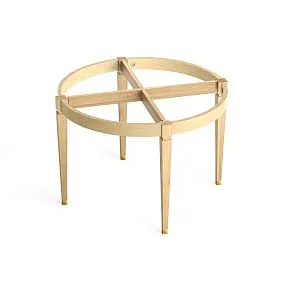
Components for DIY table assembly are also available in the catalog.table bases for tables— ready-made frames made of legs and aprons, to which you only need to attach the tabletop.Furniture Supportsof various heights and configurations.decorative elementsfor decorating legs and tabletops.
To create a cohesive interior, STAVROS offers a full range of architectural elements.Wooden Skirting Boards, Crown Molding, Casings, Moldingsmade from the same wood species create a harmonious unity of space.wooden planks on the walladd a modern accent.
Consultative support is an essential part of STAVROS's service. Experienced specialists will help calculate the load on legs, select the optimal height, choose the appropriate material, and plan the mounting. You will receive professional recommendations based on practical experience from thousands of completed projects.
The quality of STAVROS's products is confirmed by conformity certificates, ecological assessments, and years of experience working with demanding clients. The company uses only legally certified wood, avoids toxic materials, and complies with safety standards. Each item undergoes quality control at every stage — from raw material selection to final packaging.
The warehouse program ensures prompt delivery of popular items. Own warehouses in Moscow and St. Petersburg, along with partnerships with trusted transportation companies, guarantee delivery to any region of Russia. Professional packaging prevents damage during transit.
The STAVROS online store is convenient for browsing the assortment and placing orders. Detailed descriptions of each model with technical specifications, multiple high-quality photos from various angles, and reviews from real customers help make the right choice. A simple filter system by height, diameter, wood species, and style quickly finds the desired model.
Flexible pricing makes quality items accessible. Direct sales from the manufacturer without middleman markup, wholesale discounts for large orders, loyalty program for regular customers. At the same time, the company does not compromise on material quality or processing — the price is honest and reflects the true value of the items.
Choosing STAVROS, you get not justlegs for a table to buybut a reliable foundation for furniture that will serve for decades. Quality proven over time, professional support at every stage, honest prices, prompt delivery — the foundation of the company’s philosophy.
Create furniture that will become the pride of your home. Tables around which families will gather, celebrate holidays, work, and create. Furniture that withstands the weight of life, does not lose its beauty, and will be passed down to children and grandchildren. With qualitylegs for tables made of solid woodfrom STAVROS, your projects will gain a solid foundation, and interiors — completeness and elegance.
STAVROS — your reliable partner in creating furniture that serves generations!