Article Contents:
- Specifics of a kitchen table: how it differs from others
- Leg materials: what will withstand the kitchen
- Solid wood
- Metal (steel, aluminum, chrome)
- Plastic
- Leg shape and construction: stability first
- Four legs at the corners
- Central support (one leg)
- Two wide supports (P-shaped, X-shaped)
- Adjustable legs
- Stability on tile: how to avoid slipping
- Anti-slip pads (feet pads)
- Increased support area
- Proper weight distribution
- Floor protection: how to avoid scratching tile
- Soft pads — first line of defense
- Rugs and mats under the table
- Proper table movement
- Load capacity: how much should legs withstand
- Leg height: ergonomics of a kitchen table
- Leg installation: secure mounting
- Wooden legs for wooden tabletops
- Metal legs for any tabletop
- Check after installation
- Where to buy quality legs for a kitchen table
- Conclusion: when the table stands firmly

A kitchen table lives in extreme conditions. Here, people cook, eat, work, and socialize. Hot pots are placed on the tabletop, food is cut, liquids are spilled. The table is moved for cleaning, bumped with feet, and leaned on with full weight. All of this happens on a floor that also doesn’t forgive mistakes — ceramic tile is slippery, easily scratched, and cracks from point impacts. Under these conditions, table legs become a critical element. Not a decorative detail, but a functional joint, whose reliability determines the safety, comfort, and longevity of the furniture and floor covering.
When you decidelegs for kitchen table to buyYou will encounter questions: how to ensure stability on slippery tile? How to protect expensive flooring from scratches? Which legs can withstand the weight of a heavy tabletop and daily loads? What materials, shapes, and sizes are optimal specifically for the kitchen? This article provides answers — specific, practical, based on real experience of using kitchen furniture.


Kitchen table specifications: how it differs from others
Before choosing legs, you need to understand: how does a kitchen table differ from a coffee table, desk, or dining table in the living room? The difference in operating conditions determines the requirements for supports.
High humidity. Cooking, washing dishes, boiling a kettle on the kitchen. Humidity is higher than in other rooms. Condensation settles on all surfaces, including table legs. This is critical for wooden legs — they may swell, deform, and lose shape. Metal legs without protective coating rust.
Temperature fluctuations. Near the stove, oven, or radiator, the table experiences temperature changes. Wood expands and contracts, which may lead to cracks and loosening of joints. Plastic legs become brittle from heating.
Mechanical loads. During cooking, heavy items are placed on the kitchen table, and food is cut. Vertical and lateral loads are higher than on a dining room table where only meals are served. Legs must withstand not only the static weight of the tabletop and dishes, but also dynamic loads from support, impacts, and vibrations.
Frequent cleaning. The kitchen is cleaned more often than other rooms. The table is moved to clean the floor beneath it. Legs slide across tiles, creating a risk of scratches. If legs lack protective caps, they scratch ceramic, leave marks, and damage glaze.
Slippery floor. Ceramic tiles, porcelain tiles, poured floors — smooth, slippery surfaces. Stability of the table is harder to maintain on these than on wood, carpet, or textured linoleum. The table may slide under load, shift during cleaning, or rock if the floor is uneven.
Greasy stains. Fat settles on all surfaces, including the floor. The oily film makes tiles even more slippery. Table legs without anti-slip caps slide on the greasy floor, causing the table to lose stability.
All this means: kitchen table legs must be moisture-resistant, strong, stable on slippery surfaces, and non-scratch. Ordinary decorative legs from a furniture store may not meet these requirements.




Leg materials: what will withstand the kitchen
Kitchen table legs are made from different materials. Each has pros and cons for kitchen conditions.
Our factory also produces:


Solid wood
Traditional material.Wooden legs for tableOak, beech, ash are beautiful, warm to the touch, and eco-friendly. But for the kitchen, proper preparation is needed.
Requirements for wooden legs in the kitchen:
Wood must be dried to 8–10% moisture. Undried wood on a humid kitchen will absorb moisture, swell, and deform. Over-dried wood will shrink and develop cracks.
Protective treatment is mandatory. Oil, wax, and lacquer create a water-repellent film, protecting against swelling and contamination. For the kitchen, water-based lacquer (eco-friendly, odorless) or oil-wax (penetrates wood structure, creates strong protection) is preferable.
Hardwoods are preferable to softwoods. Oak, beech, ash withstand loads and do not dent from impacts. Pine is soft and easily damaged.
Advantages of wooden legs:
-
Aesthetics, naturalness
-
Warmth of the material (pleasant to touch)
-
Durability with proper treatment
-
Repairability (can be sanded and repainted)
Disadvantages:
-
Require protective treatment
-
Sensitive to humidity (without treatment)
-
More expensive than plastic and simple metal
-
Scratch floors without caps
Get Consultation
Metal (steel, aluminum, chrome)
Modern choice. Metal legs are strong, withstand heavy loads, and are not afraid of humidity (if coated with a protective layer).
Types of metal legs:
Painted steel (powder coating). Steel is coated with powder enamel, which protects against corrosion and provides color (black, white, gray, colored). Strong, inexpensive, suitable for loft, industrial, and modern styles.
Chrome-plated. Steel is coated with chrome — shiny, mirror-like surface. Resistant to corrosion, easy to clean. Suitable for high-tech and modern styles. Minus — shows fingerprints, requires frequent wiping.
Stainless steel. The most durable option for the kitchen. Does not rust, does not fear moisture or chemical cleaning agents. More expensive than regular steel, but optimal for the kitchen.
Aluminum. Lightweight, rust-resistant, but less strong than steel. Suitable for light tabletops (small tabletops, particleboard, glass). For heavy solid wood tabletops, steel is better.
Advantages of metal legs:
-
High strength, load-bearing capacity
-
Moisture resistance (with coating)
-
Easy to clean
-
Modern look
-
Adjustable legs (for leveling on uneven floors)
Disadvantages:
-
Feel cold to the touch
-
Scratch floors without caps
-
Heavy (steel)
-
Can rust (without coating or if coating is damaged)
Plastic
Budget option. Plastic legs are lightweight, inexpensive, and moisture-resistant. However, they are only suitable for kitchen tables to a limited extent.
Applications of plastic legs:
Only suitable for light tables — small dining tables, folding tables, portable tables. Plastic is not strong enough for a stationary solid wood table.
Only high-quality plastic (polypropylene, ABS plastic). Cheap Chinese plastic is brittle, cracks under load, and yellows over time.
Advantages:
-
Affordability
-
Moisture resistance
-
Lightness
Disadvantages:
-
Low strength
-
Short lifespan
-
Crack under impact
-
May deform under heat (near stove, radiator)
-
Look cheap
For a full-sized kitchen table, plastic legs are not the best choice. For temporary, portable tables, they are acceptable.
Leg shape and construction: stability first
The shape of the leg affects the table's stability. For kitchens where tables are often loaded unevenly (leaning on edges, placing heavy items in corners), proper leg geometry is important.
Four legs at the corners
Classic construction. Four legs are installed at the corners of a rectangular or square tabletop. The most stable option for most tables.
Advantages:
-
Maximum stability
-
Even load distribution
-
Simple construction
-
Suitable for any tabletop size
Notes:
Legs must be strictly vertical. Sloping (diverging) legs create a light appearance but are less stable.
Distance from table edge to legs — ten to fifteen centimeters. If closer to the edge, there is a risk of tipping when leaning on a corner. If farther toward the center, it is uncomfortable to sit (legs hit the legs).
For long tables (over 1.5 meters), four corner legs may not provide sufficient tabletop rigidity. The tabletop sags in the center. A fifth leg in the middle or a reinforcing beam (horizontal brace between legs) is needed.
Central support (one leg)
Table on a single central support — pedestal in the form of a column or sculptural shape. Popular for small round and square tables.
Advantages:
-
Legroom (legs do not interfere when sitting)
-
Modern look
-
Suitable for round tables
Disadvantages for kitchens:
-
Less stable than four legs (especially on slippery tiles)
-
Requires a heavy, wide base for stability
-
The tabletop should not be too large (up to one meter in diameter)
Central support for a kitchen table is a compromise. Suitable for small tables (for two to three people), for folding tables. For a full dining table for four to six people, four legs are better.
Two wide supports (P-shaped, X-shaped)
Construction for long rectangular tables — two wide side supports instead of four legs. Supports in the shape of the letters P, X, or trapezoid are installed at the ends of the table, connected by a horizontal beam.
Advantages:
-
Stability (wide base)
-
Legroom along the long sides of the table
-
Suitable for long tables (more than two meters)
-
Modern industrial look
Notes:
The supports must be heavy (solid wood, thick metal), otherwise the table will be unstable.
On slippery tiles, wide anti-slip pads are needed on the lower parts of the supports.
Adjustable legs
Special supports with height adjustment capability. The lower part of the leg is a screw that is tightened or loosened, changing the height by thirty to fifty millimeters.
Why needed in the kitchen:
Kitchen floors are often uneven — tiles are laid with unevenness, screed has a slope, old houses with sagging floors. A table on standard legs wobbles. Adjustable legs allow you to set the table strictly horizontally, compensating for floor irregularities.
Types:
Screw-on pads — plastic or metal elements with a screw screwed into the lower end of a wooden leg. Simple, cheap, effective.
Integrated adjustable legs — metal supports where the adjustment mechanism is built into the structure. Professional solution for kitchen furniture.
Important: After adjusting the legs, periodically check them — due to vibrations and loads, screws may loosen. Check and tighten the adjustment every six months.
Stability on tile: how to avoid slipping
Ceramic tile — beautiful, practical, but slippery surface. Glossy glaze, polished ceramic granite practically have no friction. A table on such a floor may slide, especially if leaning on the edge.
Anti-slip pads (pads)
Main solution — soft pads on the lower ends of the legs. They create friction, prevent sliding, dampen vibrations, and protect the floor.
Types of pads:
Felt. Thick felt (natural or synthetic) 3–5 mm thick, glued to the leg. Creates good friction on smooth tiles, protects the floor from scratches, dampens noise when moving the table. Drawback — felt wears out, needs replacement after half a year to a year.
Rubber. Rubber or silicone is more durable than felt. Excellent grip on tiles, does not slip even on wet floors. Available as self-adhesive (simply stick to the leg) or as rubber caps that are slipped onto the leg. Minus — may leave marks on light tiles (from rubber).
Plastic with rubber bottom. Combined caps — plastic body, rubber sole. Securely attach to the leg (with nails or screws), rubber provides grip. Durable, suitable for heavy tables.
Silicone. Soft silicone, transparent or colored. Excellent grip, leaves no marks, does not scratch the floor. More expensive than rubber, but optimal for expensive floors (marble, ceramic tile).
How to choose:
For a lightweight table (up to thirty kilograms) — self-adhesive felt or rubber caps.
For a heavy table (over fifty kilograms) — plastic with rubber bottom, attached with nails or screws.
For expensive flooring — silicone caps (leave no marks, do not scratch).
Cap size: The cap diameter should be slightly smaller than the leg diameter. If the leg is square, 80x80 mm, the cap should be 77x77 mm. If the cap is larger than the leg, it protrudes and looks unattractive.
Increase the support area
The larger the contact area between the leg and the floor, the more stable the table. A thin cylindrical leg with a 30 mm diameter creates a small contact area — 7 square centimeters. A wide leg 80x80 mm — 64 square centimeters, nine times larger.
For a kitchen table on tile, prefer wide legs — at least 60x60 mm for wooden, 40x40 mm for metal (metal is stronger, so it can be thinner).
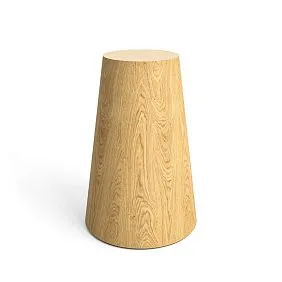
Alternative — legs that widen downward. Conical shape, where the top of the leg is narrower and the bottom is wider. The bottom creates a wide support, while the top does not visually add weight.
Correct weight distribution
The table is stable if the center of gravity is within the support area (between the legs). If the center of gravity is shifted — the table will tip over.
Mistakes:
Heavy tabletop (solid wood, stone) on thin, short legs. High center of gravity, table is unstable when resting on the edge.
Legs too close to the center of the tabletop. If legs are 30-40 cm from the edge, resting on the edge creates an overturning moment.
Solution:
Legs as close as possible to the corners of the tabletop (10-15 cm from the edge).
Heavy tabletop — wide, sturdy legs or additional supports.
For folding tables (where additional tabletop sections appear when unfolded) — additional extendable legs supporting the sections.
Floor protection: how to avoid scratching tiles
Ceramic tile is hard, but the glaze scratches. A sand particle stuck under the table leg, when moving, leaves a deep scratch on the glossy surface. Wood and especially metal without protection scratch tiles.
Soft caps — first line of defense
The same caps that prevent slipping also protect the floor. Felt, rubber, silicone — soft materials that do not scratch ceramic, ceramic tile, or stone.
Important: Caps must be clean. If sand, dirt, or abrasive particles get under the cap, they act like sandpaper, scratching the floor with every table movement. Remove caps once a month, clean them and the legs, and reattach them.
Rugs and mats under the table
Additional protection — a mat under the table. The table stands on a rug, legs rest on a soft surface, tile is protected.
Types:
Transparent protective mat (PVC, polycarbonate). Does not hide tile, protects from scratches, easy to clean. Suitable for the area under the table.
Textile rug. Creates coziness, zones the dining area, protects the floor. Minus — textile on the kitchen gets dirty and requires frequent cleaning.
Bamboo or cork mat. Natural materials, water-resistant, easy to clean. Suitable for the kitchen.
Size: The mat should be larger than the area under the table by fifty to seventy centimeters on each side. When chairs are pulled out, they remain on the mat without scratching the tiles.
Correct table movement
If you need to move the table (for cleaning, rearranging), do it correctly:
Lift the table (two people, each lifting by the edge), move it. Do not drag it across the floor — this scratches both tiles and the feet pads.
For heavy tables, use furniture casters (temporarily place under the legs, move the table, remove the casters). Available in furniture stores.
For regular movement (if you clean under the table daily), install casters with brakes. During meals, the brakes are engaged, and the table remains stationary. For cleaning, release the brakes, and the table rolls easily.
Load capacity: how much the legs should withstand
The kitchen table carries the weight of the countertop, dishes, food, and people’s elbows resting on it. The total load is greater than it appears.
Load calculation:
A solid oak countertop, 100x80 cm, 40 mm thick, weighs about 30-35 kg.
Dishes for four people — 10-12 kg.
Food (dishes with food, drinks) — 5-8 kg.
Elbow support from a person — 15-20 kg per side of the table.
Total: Under normal conditions, the total load is 70-80 kg. During active use (kneading dough, cutting meat), it may reach 100-120 kg.
Leg load capacity:
A wooden leg made of oak or beech, 60x60 mm in cross-section, withstands a vertical load of 100-120 kg.Solid wood furniture legsFrom reputable manufacturers, they have certificates indicating load capacity.
A metal leg made of steel pipe, 40x40 mm, wall thickness 2 mm, withstands 200-300 kg.
Adjustable plastic leg (for kitchen furniture) withstands 80-120 kg.
Safety margin: Choose legs with load capacity 1.5-2 times greater than the calculated load. This ensures longevity, no deformation, and safety.
For a standard kitchen table (total weight 100-120 kg), four legs must each withstand at least 40-50 kg. Ideally — 70-80 kg per leg.
Leg height: kitchen table ergonomics
Standard kitchen table height from floor to countertop — 75-78 cm. This is the optimal height for sitting on a standard chair (seat height 45 cm).
Leg height calculation:
Leg height = Table height − Countertop thickness − Mounting thickness (if any)
Example: Table height 76 cm. Countertop 40 mm (4 cm). The leg is mounted directly to the countertop, without additional mounting. Leg height: 76 − 4 = 72 cm.
Adjustable legs:
If the floor is uneven, use adjustable legs. The base leg height is made 2-3 cm less than calculated. The adjustment screw compensates for this difference and levels the table.
Example: Calculated leg height 72 cm. Purchase legs 70 cm high with adjustable feet (adjustment range 3-4 cm). After installation, turn the screws to the desired height and level the table.
Non-standard height:
For tall people (height over 190 cm), a 80 cm high table is more comfortable.
For short people or children — a table lower, 70-73 cm.
Bar tables — height 90-110 cm, used with bar stools.
Leg mounting: secure fastening
Quality legs are useless if poorly secured. The method of fastening depends on the material of the leg and tabletop.
Wooden legs to wooden tabletop
Screwed connection: The leg has a threaded pin (metal rod) that is screwed into a hole in the tabletop. The hole is pre-drilled, a metal bushing (threaded sleeve) is inserted into it, and the leg pin is screwed into the bushing. Secure, but requires precision — the holes must be strictly perpendicular.
Plate mounting: A metal plate with holes is attached to the leg. The plate is screwed to the tabletop with screws or dowels. More secure for heavy tabletops.
Dowel connection: Traditional carpentry method. The leg has a dowel that fits into a socket in the tabletop. The dowel is glued. Most secure connection, but requires professional execution.
Metal legs to any tabletop
Metal legs usually have a mounting plate on top. The plate is screwed to the tabletop with screws (for wood) or bolts through through-holes (for glass, stone).
Important: Use sufficiently long screws — at least 30-40 mm for a 40 mm thick tabletop. Short screws will not ensure reliability, the leg will loosen.
Check after installation
After installing the legs, check:
Tabletop levelness: Place a level on the tabletop in different directions. The bubble should be exactly in the center. If not — adjust the legs or place thin shims under the shorter leg.
Stability: Press down on each corner of the table from top to bottom, then try to rock the table side to side. The table should not rock, creak, or move. If it rocks — tighten the fasteners, check the leg adjustment.
Sliding: Lean on the edge of the table with your body weight. The table should not slide across the floor. If it slides — install anti-slip pads or replace existing ones with more effective ones.
Where to buy quality legs for a kitchen table
Legs are sold in home improvement hypermarkets, furniture stores, specialized online furniture hardware stores. But quality varies.
Cheap legs from hypermarkets are often made from poorly dried wood (deform after half a year), coated with poor-quality lacquer (peels off from moisture), have inaccurate geometry (legs of different lengths, table rocks).
Company STAVROS has specialized in producingSolid wood furniture legsAll items are made from premium solid oak, beech, ash, dried to 8-10% humidity in a kiln. This guarantees dimensional stability, absence of deformation or cracking even in humid kitchen conditions.
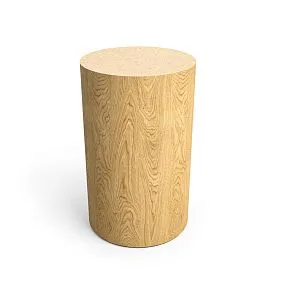
STAVROS catalog features various types of legs: straight cylindrical, conical, turned with decorative profiles, square, rectangular. Height from 10 to 80 cm. Cross-section from 30x30 to 100x100 mm. Each leg has specified load capacity and recommended application area.
Legs are processed on high-precision equipment — all legs are strictly identical in length (tolerance no more than half a millimeter), surface is carefully sanded. Additional processing is possible — staining, patination, oil or lacquer coating, including moisture-resistant for kitchen conditions.
In addition to standard legs, STAVROS manufactures custom-sized items. Need a leg of non-standard height, cross-section, or shape — provide a drawing, receive an item exactly matching your requirements.
STAVROS consultants will help select legs for your table — calculate required load capacity, recommend material and shape, suggest mounting method. Delivery available in Moscow, St. Petersburg, and regions of Russia. We work with both private customers and furniture manufacturers.
Also, STAVROS offers other furniture and interior elements:balusters for staircases, cornices and moldings, Solid wood skirting boardsDecorative elements — everything for creating a harmonious interior from natural materials.
Conclusion: when the table stands firmly in place
The kitchen table is the center of the kitchen. Here, the day begins with breakfast and ends with a family dinner in the evening. Here, people cook, eat, talk, and work. And throughout all this time, the table must remain stable — not wobbling, not sliding on tiles, not scratching the floor. The table legs are those that ensure this stability, reliability, and longevity.
Choosing the right legs transforms an ordinary table into a reliable support. Solid wood with moisture protection lasts for decades. Metal with powder coating withstands kitchen humidity. A wide cross-section ensures stability. Soft pads prevent sliding on tiles and protect expensive flooring. Adjustable legs compensate for floor unevenness. Proper mounting ensures structural rigidity.
Do not economize on legs. Cheap legs made from poorly dried wood or thin metal deform, loosen, and require replacement within a year or two. Qualitytable legs made of solid woodwill last twenty to thirty years, outlasting several countertops, maintaining strength and appearance.
Create a kitchen where the table stands firmly rooted. Where you can lean on it without fearing it will shift. Where you can knead dough without worrying the countertop will sag. Where expensive tiles are protected from scratches, and your family gathers around a beautiful, reliable, and comfortable table. STAVROS provides tools to create such a kitchen — high-quality legs made of natural wood, professional consultations, and individualized service for every order. Contact us — we will turn your table into a model of stability and durability.