Article Contents:
- Why furniture supports are more important than they seem
- Hygiene and ventilation
- Ease of cleaning
- Visual lightness
- Floor unevenness compensation
- Materials: wood as timeless classic
- Oak: the standard of strength
- Beech: flexibility and uniformity
- Types of furniture legs: variety of forms and functions
- Tapered and cylindrical legs
- Cabriole: curved elegance
- Square and rectangular supports
- Carved and turned legs
- Supports for sofas and armchairs
- Supports for dressers and cabinets
- Production technology: from block to finished support
- Selection and preparation of timber
- Cutting and Rough Processing
- Turning and milling
- Wood Carving
- Sanding and Preparing for Finishing
- Finishing and protection
- Leg attachment: reliability above all
- Threaded connection with insert nut
- Dowel and glue
- Mounting plate
- Adjustable Supports
- Design solutions: legs as a style element
- Scandinavian minimalism
- Classic and neoclassic
- Loft and Industrial Style
- Provence and Country Style
- Modern eclectic style
- Advantages of wooden supports over alternatives
- Ecological safety
- Durability
- Repairability
- Aesthetics
- Compatibility with other interior elements
- How to choose furniture legs: practical tips
- Load capacity compliance
- Support height
- Style and design
- Material and finish
- Method of mounting
- Caring for wooden legs: preserving beauty
- Regular Cleaning
- Moisture Protection
- Recoating
- Protection from Mechanical Damage
- Supports for different furniture types: application specifics
- Supports for kitchen sets
- Legs for Tables
- Supports for sofas and armchairs
- Supports for dressers and cabinets
- Why STAVROS: the professionals' choice
- Assortment
- Material quality
- Design Possibilities and Stylistic Solutions
- Individual approach
- Ecological safety
- Logistics
- Frequently Asked Questions
- Which wood species is better for furniture legs — oak or beech?
- How to determine the necessary height for sofa legs?
- Can legs be replaced on existing furniture?
- How to care for wooden legs coated with oil?
- What is better for kitchen furniture: wooden or plastic legs?
- How long do wooden furniture legs last?
- Can legs be made according to a custom sketch?
- What thread diameter is used for attaching legs?
- How do turned legs differ from carved ones?
- Does the shape of legs affect furniture stability?
- Conclusion: investment in quality and beauty

Furniture supports are a detail many underestimate. And in vain. They affect not only the stability of an item but also the perception of the entire interior. Properly chosen furniture legs can turn an ordinary chest of drawers into a design accent, give a sofa lightness or, conversely, solidity. They lift the body above the floor, open up space for air circulation and cleaning, and compensate for floor unevenness. But most importantly — they create that very character which distinguishes faceless mass-produced furniture from a piece of joinery art.
When it comes to quality supports for furniture made from natural wood, one manufacturer stands out on the market — a company that has been setting standards in this niche for several decades. We're talking aboutsolid wood productsthat combine traditional craftsmanship and modern wood processing technologies.


Why furniture supports are more important than they seem
Walk into any furniture showroom. Sofas, chests of drawers, armchairs, tables — all stand on legs. But have you ever thought about the role they play?




Hygiene and ventilation
Furniture standing directly on the floor creates an enclosed space under the body. Dust and moisture accumulate there, forming an environment for microorganisms to multiply. Furniture supports lift the item, ensuring free air circulation. This is especially critical for upholstered furniture and kitchen sets, where humidity levels are higher.
Our factory also produces:


Ease of cleaning
Vacuuming under a sofa on legs takes seconds. Under a low sofa without supports — a headache. Regular cleaning becomes easier, home hygiene improves.
Get Consultation
Visual lightness
Raised furniture looks more elegant. A sofa on high wooden legs creates a sense of spaciousness, even if the room is small. Light penetrates under the body, there's no visual 'pressure' on the floor. The effect is especially noticeable in Scandinavian and minimalist style interiors.
Compensation for floor unevenness
Perfectly level floors do not exist. Even after professional screeding, there remain imperceptible variations to the eye. Quality furniture supports with adjustable height allow leveling the furniture, eliminating wobbling, squeaking, and uneven load on the frame.
Materials: wood as an eternal classic
Furniture supports are made from metal, plastic, polyurethane. But nothing compares to natural wood. It is warm to the touch, alive, with a unique texture. Wood 'breathes,' does not emit toxic substances, is easy to process and repair. And most importantly — furniture on wooden legs possesses special nobility.
Oak: the standard of strength
Oak is synonymous with reliability. Its wood density reaches 700–800 kg/m³, Brinell hardness — about 3.7–4.0 HB. This means oak supports withstand colossal loads without deformation. Oak furniture legs serve for decades, retaining their original shape and aesthetics. Oak texture is expressive, with characteristic medullary rays that create a unique pattern on the cut. After tinting or brushing, this pattern becomes even more noticeable and impressive.
Oak is resistant to moisture (after appropriate treatment), not afraid of temperature fluctuations, does not crack. Oak products are ideal for kitchen sets, where operating conditions are harsher. At the same time, oak wood lends itself well to carving, turning, milling — craftsmen can create supports of any complexity, from simple conical to carved with ornaments.
Beech: flexibility and uniformity
Beech is a material with a uniform, dense structure without pronounced annual rings. Color — light, warm, from creamy to pinkish. Beech is easily tinted, accepts any shades, which opens wide possibilities for designers. Its density is slightly lower than oak (about 650 kg/m³), but for furniture supports this is more than sufficient.
Beech legs are distinguished by smooth surface — the wood is easily sanded to a mirror shine. Beech is elastic, which is important when creating bent elements. If the support design involves curved lines, beech is the optimal choice. It is more affordable than oak in price but does not lag behind in quality and durability.
An interesting feature of beech: after steam treatment, it can be bent into complex shapes. This is precisely why famous Viennese furniture was made from beech. For modern furniture supports, this opens possibilities for creating unique, elegant forms that are impossible from other species.
Types of furniture legs: diversity of forms and functions
The world of furniture supports is diverse. Each type performs its own task, fits into a certain style, and possesses unique characteristics.
Conical and cylindrical legs
The most common. Conical furniture legs are a classic that never goes out of style. The cone shape—from a wide base to a narrow bottom—ensures stability. These legs are suitable for sofas, armchairs, dressers, and coffee tables. They are versatile and pair well with furniture in Scandinavian, minimalist, and contemporary styles.
Cylindrical legs are straight, with the same diameter along their entire length. They look strict and graphic. Suitable for furniture in loft, industrial, and high-tech styles. They are often coated with matte varnish or tinted in dark shades—wenge, black, graphite.
Cabriole: Curved Elegance
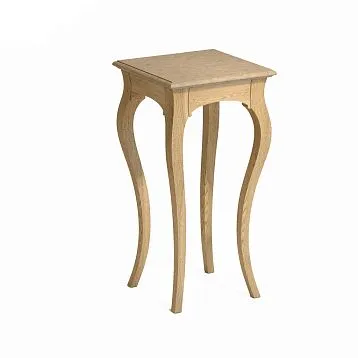
Cabriole is an S-shaped leg that originated in 18th-century furniture. The upper part curves outward, the lower part inward, ending in a 'paw' or ball. It is a true work of art that requires high carving skill. Cabriole is used in classic, Baroque, and Rococo furniture. Such a leg transforms an ordinary chair or dresser into an antique piece.
Modern manufacturers create simplified versions of cabriole—without carving but retaining the characteristic curved shape. This allows the classic leg to be incorporated into a contemporary interior, creating an eclectic style.
Square and Rectangular Legs
Geometry in its pure form. Square furniture legs give an item solidity and stability. They are suitable for massive tables, beds, and cabinets. Rectangular legs visually elongate furniture, making it slimmer. They are often made with chamfered corners to soften the strictness of the forms.
Square legs easily combine with decorative elements made of solid wood, for example, moldings, allowing for the creation of a unified stylistic ensemble in the interior.
Carved and Turned Legs
Here, an endless field for creativity opens up. Turned legs are created on a lathe—the craftsman forms alternating convex and concave elements, creating rhythm and dynamism. Each turned leg is unique, especially if it's handcrafted.
Carved legs are the pinnacle of craftsmanship. The carving can be geometric, floral, or narrative. Acanthus leaves, grapevines, floral ornaments—all of this transforms a leg into a work of art. Such legs are used in exclusive furniture, antique replicas, and designer projects. Their creation requires not only machines but also the hands of an experienced carver who feels the wood and understands its structure.
Carved furniture legs are not just a functional element but also a way to express individuality, emphasize status, and create an atmosphere of luxury. They are indispensable in interiors of classic, Empire, and Victorian styles.
Legs for Sofas and Armchairs
Upholstered furniture requires special legs. They must withstand significant weight (up to 300–400 kg for a set of four legs) while maintaining stability under dynamic loads—when a person sits down, stands up, or moves. Sofa legs usually have an increased diameter or contact area with the floor to distribute the load.
The height of legs for upholstered furniture is an important parameter. Legs that are too low make cleaning under the sofa difficult and create a squat appearance. Legs that are too high make the furniture unstable and visually 'detach' it from the floor. The optimal height is 10–15 cm for standard sofas, 8–12 cm for armchairs.
Legs for Dressers and Cabinets
Case furniture imposes different requirements. Here, strength and stability are critical, not so much height. A dresser weighing 50–80 kg when fully loaded can reach 150–200 kg. The legs must withstand this load without sagging, squeaking, or play.
For dressers, four massive legs with square or rectangular cross-sections are often used. Sometimes a fifth, central leg is added for additional support. The material is oak or beech with a thickness of at least 40×40 mm. Attachment is via metal threaded inserts or concealed mounting plates.
Legs for kitchen cabinets are a separate story. Here, moisture resistance is important, as there is a higher risk of water getting on the floor in the kitchen. The wood is treated with water-repellent impregnations and coated with durable varnish. Combined legs are often used—a wooden leg with a metal or plastic tip that contacts the floor and is not afraid of moisture.
Production Technology: From Block to Finished Leg
Creating a high-quality furniture leg is a multi-stage process that requires knowledge, experience, and precise equipment. Let's examine it in detail.
Selection and Preparation of Wood
It all starts with raw materials. For premium legs, top-grade wood is selected—free of knots, cracks, rot, wormholes, and other defects. The fibers should be straight, without swirls or cross-grain. Even a small defect can lead to leg breakage under load.
The selected boards undergo kiln drying to a moisture content of 8–10%. This is a critically important stage. If the wood is under-dried, it will continue to lose moisture during use, leading to deformation and cracking. Over-dried wood becomes brittle and is difficult to work with. Optimal moisture content is the key to product stability.
After drying, the wood undergoes acclimatization—it is kept in workshop conditions for several days to stabilize internal stresses. Only after this does processing begin.
Cutting and Rough Processing
The boards are cut into blanks of the required sizes, taking into account allowances for processing. If a leg with a large cross-section or complex shape is required, lamination is used—several lamellas are joined under a press using environmentally friendly glue. Properly executed lamination is stronger than solid wood, as it compensates for the internal stresses of the wood.
The blanks undergo rough processing—planing, milling, shaping the basic form. At this stage, the main excess material is removed, and the general contour of the future leg is formed.
Turning and milling
If the leg is turned, the blank is mounted on a lathe. The craftsman, controlling the cutting tools, creates characteristic convexities, concavities, and diameter transitions. The process requires experience—the slightest mistake can ruin the blank. Modern CNC lathes allow for creating identical legs with an accuracy of up to tenths of a millimeter, but for exclusive items, hand-turning is preferred.
Milling is used to create flat facets, grooves, and decorative elements. CNC milling machines can cut the most complex ornaments, repeating them with absolute precision. This is especially important in serial furniture production, where all legs must be identical.
Threaded connections for wood
Creating carved legs requires the handwork of a carver. The craftsman, using chisels, knives, and a rotary tool, carves patterns, following a sketch or their own design. Carving is the most labor-intensive stage; one complex leg can take several hours of work. But the result is worth it—such a leg becomes a true decoration of the furniture.
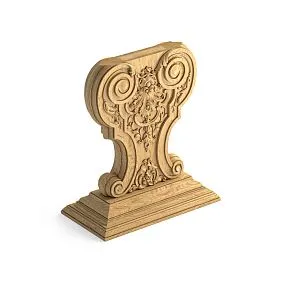
QualityCarved wooden elementsare distinguished by the clarity of lines, depth of detailing, and harmony of composition.
Sanding and preparation for finishing
After shaping, the leg is sanded. First with coarse-grit abrasive (grit 80–120), then medium (150–180), and finally fine (220–320). The surface should be smooth, without burrs, scoring, or scratches. The quality of sanding determines the appearance of the final finish.
Special attention is paid to hard-to-reach areas—concave sections, recesses of carvings. Special sanding attachments, sponges are used here, and details are manually refined.
Finishing and Protection
Final finishing is not only about aesthetics but also about protecting the wood from moisture, dirt, and mechanical damage. Finishing options include:
Staining with wood stain—allows changing the color of the wood, emphasizing the grain. Stains can be water-based, alcohol-based, or oil-based. Applied with a brush or sprayer, fixed with varnish after drying.
Varnishing—creates a durable transparent coating. Varnishes come in glossy, semi-matte, and matte finishes. Applied in several layers with intermediate sanding. Varnish coating is durable, easy to clean, and retains its original appearance for many years.
Oil impregnation—oil penetrates the wood structure, emphasizes the grain, and imparts a silky feel. Oil coating is eco-friendly, pleasant to the touch, and easy to renew. Drawback—requires periodic renewal (every 2–3 years), less resistant to moisture compared to varnish.
Wax finishing—wax is applied over oil or on its own. Creates a soft matte sheen, additional protection. Wax coating requires careful maintenance but looks noble, truly 'alive'.
Patination and brushing—techniques of artificial aging. Patina is paint rubbed into recesses, creating an antique effect. Brushing is the removal of soft fibers with a stiff brush to reveal the relief of annual rings. These techniques are popular in Provence, country, and shabby chic interiors.
The final coating is applied in special chambers with controlled temperature and humidity. This ensures even drying, absence of drips, and runs.
Leg attachment: reliability above all
The strongest leg is useless if it is not securely fastened. There are several ways to attach supports to the furniture body.
Threaded connection with an insert nut
The most common method. An insert nut is a metal sleeve with internal threads that is screwed or glued into the furniture body. The leg has a top part with external threads of the corresponding diameter (M8, M10, M12). During assembly, the leg is screwed into the insert nut until it stops.
Advantages: strength, ability to adjust height (if the insert nut is long), disassembly—legs can be unscrewed for transport. Disadvantage: requires precision in installing insert nuts—they must be positioned strictly at the corners of a rectangle or square. A misalignment of even 5–10 mm will lead to uneven load distribution and furniture instability.
Dowel and glue
Traditional joinery method. Holes are drilled in the body and leg, into which a wooden dowel (cylindrical pin) with glue is inserted. The connection is strong, non-disassemblable. Used in exclusive furniture where disassembly is not intended.
Advantage: absence of metal elements, a 'clean' wooden joint. Disadvantage: difficulty of repair—if a leg breaks, replacing it is not easy.
Mounting plate
Used for heavy furniture. A metal plate with threaded holes is attached to the body from the inside. The leg has a mating part—a stud or screws that are screwed into the plate. The method provides maximum strength, withstands loads of up to several hundred kilograms per support.
Adjustable Supports
To compensate for floor unevenness, adjustable legs are used. A plastic or metal adjuster with screw threads is screwed into the bottom of the leg. Rotating it allows changing the support height within 10–20 mm. This allows perfect leveling of furniture, eliminating wobbling.
Adjustable supports are especially important for kitchen cabinets and heavy dressers, where even a slight misalignment can lead to skewed fronts, door jamming, and uneven wear.
Design solutions: legs as a style element
Furniture supports are not just fasteners but also an important design element. Properly chosen legs can radically change the perception of furniture.
Scandinavian minimalism
Conical or cylindrical legs, medium height (12–15 cm), made of light wood—beech, ash, birch. Often painted white, gray, or pastel tones. Simple shape, without decoration. Emphasis on functionality, conciseness, and naturalness of the material.
In Scandinavian interiors, furniture on legs creates a sense of lightness and airiness. Light passes under the sofa, armchair, table, visually expanding the space. This is especially important for small apartments where every square meter counts.
Classicism and neoclassicism
Carved or turned legs made of dark wood—oak, walnut, mahogany. Medium or low height, cabriole or turned shape with alternating convex and concave elements. Finish—glossy varnish, patina, gilding.
Classical furniture requires appropriate supports. Here, every detail is thought out, every element carries meaning. Legs not only support the body but also adorn it, demonstrating the carver's skill and the owner's status.
Loft and industrial style
Simple geometric shapes—square or rectangular legs, often made of dark wood or metal. Low height, brutal, minimalist shape. Matte finish, sometimes with an effect of untreated wood.
In loft style, furniture on legs is combined with exposed utilities, brick walls, and concrete floors. Here, simplicity, functionality, and absence of unnecessary decor are important.
Provence and country
Legs are conical or turned, of medium height, made of light wood. Finish — white or pastel paint with a distressed effect, patination, brushing. Carved elements are often added — floral motifs, scrolls, but restrained, without excess.
In Provencal interiors, furniture on legs looks cozy, homely. Distressing, uneven paint create a feeling that the furniture has served more than one generation, preserving family history.
Modern eclectic style
Mixing elements of different styles. Classic carved legs can be combined with a modern, laconic body. Or vice versa — minimalist conical supports under a vintage chest of drawers. The main thing is a sense of proportion, a balance between tradition and innovation.
Eclecticism allows for experimentation, creating unique interiors where each item has its own history. Legs in such an interior are an accent that connects different eras and styles.
Advantages of wooden supports over alternatives
The market offers supports made of metal, plastic, polyurethane. So why do professionals and quality connoisseurs choose wood?
Ecological safety
Wood is a natural material, absolutely safe for health. It does not emit toxic substances, does not cause allergies. In a home with wooden furniture, it is easier to breathe, more comfortable to be in.
Plastic and polyurethane supports can emit volatile compounds, especially when heated (for example, if furniture is placed near a radiator or on heated floors). Metal itself is inert, but is often coated with paint or powder coating, the quality of which is not always controlled.
Durability
A quality wooden leg, with proper care, lasts for decades. Oak, beech — wood that only becomes stronger over the years. Plastic yellows over time, becomes brittle, cracks. Polyurethane loses elasticity, crumbles. Metal legs are prone to corrosion, especially in damp rooms.
Repairability
A wooden leg can be sanded, repainted, coated with a new layer of varnish. If a crack appears, it can be filled with wood putty, refinished. A plastic or polyurethane support, if broken, can only be thrown away.
Aesthetics
Wood has unique warmth and vitality. The texture of the wood, its grain, tactile sensations — all this creates a special atmosphere. Furniture on wooden legs looks noble, expensive, regardless of the price category of the body itself.
Plastic and polyurethane, even high-quality ones, remain imitations. Metal is cold, industrial, not suitable for all interiors.
Compatibility with other interior elements
Wooden legs harmoniously combine withwooden skirting boards, cornices, moldings, creating a unified stylistic ensemble. This is important for the holistic perception of the interior.
How to choose furniture legs: practical tips
Choosing furniture supports is a task that requires attention to detail. Here are the key criteria.
Load capacity compliance
The first question: what weight should the legs support? For a light coffee table, thin conical supports with a diameter of 25–30 mm are sufficient. For a heavy sofa, massive legs with a diameter of 50–60 mm or a square cross-section of 40×40 mm are required.
Manufacturers indicate the maximum load per set of legs. It is better to choose supports with a safety margin — if the estimated weight of the furniture is 100 kg, take legs rated for 150–200 kg. This ensures durability and prevents deformation.
Support height
The height of the legs affects the overall appearance of the furniture and ease of use. Low legs (5–8 cm) make furniture squat, stable, suitable for massive items. Medium (10–15 cm) — universal, suitable for most sofas, chests of drawers, tables. High (15–20 cm and above) — create a sense of lightness but require careful fastening to ensure stability.
For kitchen tables, the optimal leg height is 70–75 cm from the floor to the tabletop. For dining tables — 72–76 cm. For coffee tables — 40–50 cm.
Style and Design
Legs should match the style of the furniture and interior. Carved legs under a modern minimalist sofa will look absurd. Simple conical supports under a classic chest of drawers — boring. Analyze the overall concept, choose legs that complement, not conflict with, the design.
Material and finish
If the furniture body is made of oak, it is logical to choose oak legs. If made of beech — beech legs. But you can also play with contrast: light body + dark legs or vice versa. The main thing is that the textures combine.
The finish should match the finish of the body. If the furniture is coated with matte varnish, the legs are also better matte. Gloss to gloss, oil to oil.
Fastening method
Clarify what type of fastening is provided in your furniture. If inserts are already installed, legs with a thread of the corresponding diameter are needed. If fastening is on a mounting plate, check the distance between the holes.
For new furniture that you assemble yourself, choose the most convenient and reliable fastening method — usually a threaded connection with an insert.
Caring for wooden legs: preserving beauty
Wooden supports are low-maintenance but require minimal care.
Regular cleaning
Wipe the legs with a soft, damp cloth once a week to remove dust and dirt. Do not use abrasive cleaners or stiff brushes—they can scratch the finish.
Protection from moisture
Wood does not like prolonged contact with water. If liquid is spilled on a leg, wipe it dry immediately. Do not place furniture with wooden legs in rooms with constantly high humidity (bathroom, sauna) without additional protection.
Recoating
Refresh the finish every 2–3 years. If the legs are oiled, apply a new coat of oil after light sanding. If varnished, you can sand the surface with fine-grit sandpaper (320 grit) and apply a new coat of varnish.
Protection from mechanical damage
Do not drag furniture across the floor—lift and carry it. When rearranging, use furniture sliders. You can attach felt or silicone pads to the legs—they protect the floor from scratches and the leg itself from wear.
Supports for different types of furniture: application specifics
Supports for kitchen units
The kitchen is a high-demand zone. Humidity, temperature fluctuations, risk of water, grease, and aggressive cleaning agents. Supports for kitchen furniture must be maximally protected.
Wood with water-repellent impregnation is used, coated with durable varnish or enamel. Combined legs are often used—a wooden body with a plastic tip at the bottom. Adjustable supports are mandatory to compensate for floor unevenness and ensure precise alignment of countertops.
Leg height for kitchen cabinets is usually 100–150 mm. This allows for running utilities under the cabinets, makes cleaning easier, and ensures ventilation.
Legs for tables
Tables come in different types: dining, coffee, writing, console. Each type requires its own supports.
Dining tables—legs 70–75 cm high, massive, stable. Often four supports at the corners or a central support (pedestal) for round tables. Material—oak or beech, finish matching the interior style.
Coffee tables—legs 40–50 cm, elegant, lightweight. Tapered, cylindrical, sometimes curved. Aesthetics are important here, as the table often becomes a focal point in the living room.
Writing desks—legs 72–76 cm high, sturdy, ensuring tabletop stability. Often a design with two side pedestals, each on its own supports.
Legs for Sofas and Armchairs
Upholstered furniture requires reliable, sturdy supports. A sofa weighing 80–100 kg with two seated people (another 150–180 kg) creates a load of up to 280 kg on four legs—about 70 kg per leg. Plus dynamic loads when sitting down or standing up.
Legs for sofas are usually massive, 50–60 mm in diameter or square section 40×40 mm. Attachment via threaded inserts using metal reinforcing plates inside the body. Height 10–15 cm—optimal for most models.
For armchairs, leg height can be less—8–12 cm, giving the armchair stability and a cozy look.
Supports for dressers and cabinets
Dressers are heavy furniture, especially when drawers are full. Four supports are usually sufficient, but for wide dressers (over 120 cm), a fifth, central support is recommended to prevent bottom sagging.
Legs for dressers—square or rectangular, 8–12 cm high. Attachment via mounting plates or threaded inserts. Material—oak or beech, finish matching the color of the fronts.
Why STAVROS: the choice of professionals
When it comes to high-qualitysolid wood products, the company STAVROS holds a special place in the market. Over three decades of experience, own production, strict quality control at every stage.
Assortment
The STAVROS catalog includes over 130 models of furniture legs and supports. From simple tapered to intricate carved, from miniature for lightweight furniture to massive for heavy cabinets. Each model is available in several finish options.
The responsible manufacturer provides complete information about the origin of the wood, drying methods, and processing. Quality and environmental certification confirm a serious approach to production.
Only selected premium-grade wood is used—oak, beech, ash. Kiln drying to optimal moisture content, acclimatization, and careful selection eliminate defects. Each blank is inspected before processing.
Production technologies
Modern equipment: CNC lathes, milling centers, sanding machines. This ensures geometric precision, product repeatability, and high surface quality. For exclusive orders—handcrafted work by experienced carvers.
Individual Approach
STAVROS works with both retail customers and furniture factories. Custom supports can be made from individual sketches, in non-standard sizes, and from rare wood species. Minimum order—from one piece.
Ecological safety
All products are certified and comply with environmental standards. Safe water-based varnishes, paints, and oils are used. Production is equipped with dust collection systems, and waste is disposed of or recycled.
Stavros organizes delivery within Moscow using its own transport or partners with logistics providers for delivery to regions. Packaging ensures the preservation of even delicate carved elements.
Fast delivery throughout Russia and CIS countries. Goods are carefully packaged to prevent damage during transportation. Pickup from warehouses in Moscow and St. Petersburg is available.
Frequently asked questions
Which wood species is better for furniture legs — oak or beech?
Both materials are excellent. Oak is harder, stronger, and has a more pronounced texture. It suits classic, heavy, massive furniture pieces. Beech is slightly softer but strong enough for most applications. It is easier to stain and costs less. For exclusive premium-class furniture, choose oak. For quality serial furniture, beech is optimal.
How to determine the required leg height for a sofa?
The standard seat height of a sofa from the floor is 40–45 cm. If the sofa body (without legs) has a height of 35 cm, legs 10–12 cm high are needed. For a higher seat, legs should be 12–15 cm. Also consider the thickness of the floor covering — on a high-pile carpet, the sofa will sink by 2–3 cm.
Can legs be replaced on existing furniture?
Yes, if the design allows. Check the attachment type: if threaded inserts are used, selecting new legs is easy. If the legs are glued in, replacement is more difficult — you will need to carefully cut out the old ones, install inserts, and attach new supports. In any case, it is better to consult a carpenter or furniture maker.
How to care for wooden legs coated with oil?
Oil coating requires periodic renewal. Every 2–3 years, treat the surface with a fine sanding sponge (grit 320) to remove dirt and the top layer of oil. Then apply a fresh, thin layer of wood oil, let it absorb for 15–20 minutes, and wipe off excess with a soft cloth. After 24 hours, the legs are ready for use.
What is better for kitchen furniture: wooden or plastic legs?
Both options are suitable for kitchens, but with caveats. Plastic legs are not afraid of moisture, do not rot, and are easy to clean. However, they are less durable, yellow over time, and look cheap. Wooden legs are more aesthetic, stronger, but require protection from moisture. The optimal choice is wooden legs with a quality lacquer coating and plastic tips at the bottom.
How long do wooden furniture legs last?
With proper use and care — for decades. Oak supports can last 50–70 years without losing functionality. Beech — 30–50 years. The main thing is to avoid prolonged exposure to moisture, mechanical impacts, and extreme temperatures. Periodically renew the coating, and the legs will look like new.
Can legs be made according to a custom sketch?
Yes. The company STAVROS offers a service for manufacturing furniture supports according to custom sketches. You provide a drawing or photo of the desired model, technologists assess feasibility and calculate the cost. Production takes from 2 to 6 weeks depending on complexity. Both single pieces and serial production are possible.
What thread diameter is used for attaching legs?
The most common diameters are M8, M10, M12. M8 (8 mm diameter) — for light furniture: chairs, small tables. M10 (10 mm) — a universal option for sofas, armchairs, dressers. M12 (12 mm) — for heavy furniture: large cabinets, massive tables. When ordering legs, specify the diameter of the inserts installed in your furniture.
How do turned legs differ from carved ones?
Turned legs are created on a lathe — a rotating workpiece is processed with cutters, forming symmetrical convexities and concavities around the axis. The shape is always axisymmetric. Carved legs are created manually with chisels, knives, and rotary tools. The carving can be asymmetrical, complex, with patterns and ornaments. Turned legs are cheaper and faster to produce. Carved ones are more expensive, more exclusive, each is unique.
Does the shape of the legs affect the stability of the furniture?
Yes, but not critically. The main factors are the support area and load distribution. Wide legs with a large contact area with the floor are more stable than narrow ones. Tapered legs (wide at the top, narrow at the bottom) are slightly less stable than cylindrical ones of the same diameter, but the difference is insignificant for furniture weighing up to 100 kg. For heavy furniture, it is better to choose square or rectangular legs with a large support area.
Conclusion: Investment in quality and beauty
Furniture support is more than just a fastener. It is an element that defines the character of the product, affects comfort of use, and extends service life. Quality wooden legs turn ordinary furniture into a point of pride, creating an atmosphere of coziness and nobility in the home.
Choosingreliable legs and supports for furniture, you invest in durability, eco-friendliness, aesthetics. Wood is a material tested by centuries, which only becomes more beautiful over the years, acquiring a noble patina of time.
The company STAVROS combines the best traditions of carpentry and modern production technologies. Each leg, each support is the result of meticulous work, attention to detail, and a pursuit of perfection. A wide range allows selecting a solution for any style — from classic to contemporary minimalism. An individual approach ensures the possibility of realizing the boldest design ideas.
Furniture on quality wooden legs serves for decades, pleases the eye, creates a sense of solidity and reliability. This is not just a purchase — it is an investment in comfort, beauty, and quality of life. Choose the best, choose wood, choose STAVROS.