Article Contents:
- Philosophy of authenticity: why do we need real wood?
- Carved beauty: an art that has lasted thousands of years
- Natural materials: palette of nature
- Oak: strength and dignity
- Birch: warmth and coziness
- Ash: Dynamism and Light
- Walnut: Intellectual Refinement
- Spruce and pine: democratic beauty
- Where and how to use carved decor: practical guide
- Walls: canvas for creativity
- Ceilings: the fifth wall
- Doors and windows: framing space
- Furniture: function plus beauty
- Staircases: movement as art
- Fireplaces: hearth as sanctuary
- Stylistic diversity: carving for every taste
- Classic and neoclassic: heritage of centuries
- Art Deco: geometry of luxury
- Scandinavian style: simplicity as art
- Eco-style and wabi-sabi: beauty of imperfection
- Modern style: when wood meets high-tech
- Ethnic directions: voice of culture
- Color and texture: endless variations
- Natural shades: from light to dark
- Staining: play of shades
- Patina and brushing: effect of time
- Combining: multi-layered design
- Technology and tradition: how carved decor is made today
- Digital design
- CNC milling: precision and speed
- Hand-finishing: soul of the piece
- Quality Control
- Ecological choice: responsible decision
- Sustainable forestry
- Carbon footprint
- Durability as ecology
- Second life of wood
- Psychology of Wood: Why It Makes Us Happier
- Stress Reduction
- Improved Concentration
- Sleep Quality
- Emotional connection
- Practical Tips: How to Integrate the Trend into Your Home
- Step One: Space Analysis
- Step Two: Defining Accents
- Step Three: Selecting Elements
- Step Four: Species and Tones
- Step Five: Professional Consultation
- Step Six: Installation
- Step Seven: Maintenance
- Price Question: Investment in Quality of Life
- Ownership cost
- Emotional value
- Investment Potential
- Flexible solutions
- Frequently Asked Questions about Natural Materials and Carved Decor
- Is it true that wooden elements require complex maintenance?
- Can wood be used in bathrooms or kitchens?
- How to combine carved decor with modern minimalism?
- Is it eco-friendly to use wood?
- How to check the quality of carved decor before purchase?
- How long do carved wooden elements last?
- Can I order carved decor according to a custom design?
- How does carved decor affect room acoustics?
- Is wood compatible with smart home systems?
- How to choose between solid wood and veneer?
- Can wood cause allergies?
- Conclusion: Create Beauty, Choose Authenticity

The world is tired of plastic blandness. This fatigue is deep, almost physiological — the human body evolved for millions of years in the presence of nature, and the sudden shift from natural decor to synthetic landscapes over the past half-century has been a real shock to the biological system. Today we are witnessing not just a return to natural materials — it is a powerful, instinctive movement back to roots, authenticity, to what truly matters.Fresh Interior Design Ideas2025 shouts loudly and clearly: wood, stone, clay, linen — these are the true heroes of modern space.
Why is this radical shift happening now? The answer is simple yet complex. Digitalization has trapped humans in virtual worlds where everything is fleeting, ephemeral, intangible. The pandemic turned the home from a temporary refuge into a permanent fortress where life unfolds. The ecological crisis has forced us to recognize the fragility of our planet. All of this converges into one picture: humans desperately need materiality, tangibility, connection to the real world. And carved decor made of natural wood becomes the bridge that connects us to nature, history, and artisanal traditions.Innovations in designNow, they lie not in the use of the latest synthetic materials, but in reviving forgotten techniques, in the ability to make wood speak in a new way, to speak in modern language.




Philosophy of authenticity: why do we need real wood?
Pause for a moment: when you touch plastic imitation of wood, what do you feel? A cold, lifeless surface that deceives the eye but cannot deceive the skin. Now run your hand over a natural oak table, over a carved beech inlay, over a warm pine panel. Instantly, millions of tactile receptors activate, the brain receives a signal: "This is real. This is alive. This is safe." Our nervous system recognizes natural materials on a biological level, responding to them with relaxation, reduced stress, and improved mood.
Wood possesses unique physical properties that cannot be fully reproduced artificially. It breathes, regulating humidity in the room. It absorbs and reflects sound in a special way, creating a comfortable acoustic environment. It has a natural aroma, which, according to studies, reduces cortisol — the stress hormone. Each board is unique — growth rings tell the story of the tree's growth, knots and irregularities create an irreplaceable pattern. This is the antithesis of mass production, where every item is identical to another.
New interior decorToday — it is not technological breakthroughs in the chemical industry, but the revival of artisanal craftsmanship. Woodcarvers, joiners, restorers — these professions, which seemed to be fading into the past, are experiencing a new flourishing. Young people tired of office routine behind a computer are going to learn to work with their hands, to create material objects that will outlive their creators. There is a deep existential meaning here: in the age of digital immortality of photographs and texts, a physical wooden object becomes a way to leave a real, tangible mark in the world.




Carved beauty: an art that has lasted thousands of years
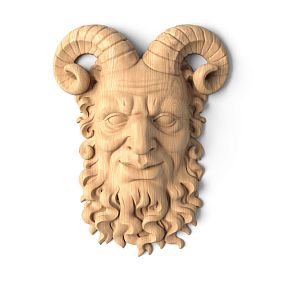
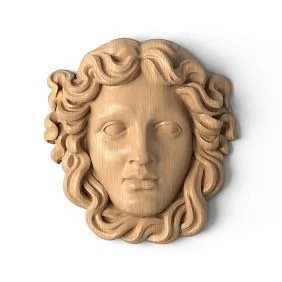
Woodcarving is one of the oldest arts of humanity. Long before the advent of writing, our ancestors carved symbols, ornaments, images of gods and spirits into wood. These traditions were passed down from generation to generation, accumulating cultural meanings and technical refinements. Each culture developed its own unique style of carving: the geometric precision of Scandinavian patterns, the lavish baroque of European carving, the delicate filigree of Eastern ornaments, the powerful expressiveness of African masks.
Today, carved decoration is undergoing a remarkable transformation. On one hand, masters revive traditional techniques, studying ancient samples, restoring forgotten methods. On the other hand, modern technologies open up unprecedented possibilities. CNC machines allow carving the most complex patterns with millimeter precision. 3D modeling allows seeing the result before starting work. Laser cutting creates delicate lace-like compositions that were previously impossible.
But the philosophy of using carved decoration is changing. If in the past carving was a sign of wealth and status (only the wealthy could afford to decorate their homes with carved elements), today it becomes a means of self-expression.Decorative InsertsOn furniture, carved wall panels, delicate partitions — this is no longer a demonstration of financial means, but an artistic statement, a way to make the interior unique, to fill it with meaning.
Our factory also produces:


Natural materials: the palette of nature
Wood is not one material, but an entire universe of diversity. Each species has unique properties, character, energy. Choosing a species is not just a technical question, but a deeply emotional decision.
Get Consultation
Oak: strength and dignity
The king among trees, symbol of power and longevity. Oak is so dense and hard that items made from it serve for centuries, becoming family heirlooms. Expressive texture with clear growth rings creates a graphic, masculine pattern. The color palette of oak ranges from light golden to rich brown, and stained oak acquires a noble black-gray tone that cannot be artificially reproduced.Solid Wood ItemsOak is an investment not for years, but for generations.
Beech: warmth and coziness
Lighter and more uniform than oak, beech creates a feeling of softness and friendliness. Its pinkish tones fill the space with warmth, making the interior welcoming. Beech is excellent for carving — its dense but not overly hard wood allows creating the most intricate patterns with fine details. This is the ideal choice forcarved decorative elements, where fine detailing is important.
Ash: Dynamics and Light
The contrasting texture of ash with long fibers creates a sense of movement, energy. This is a tree for modern interiors, where graphic quality and material expressiveness are valued. The light shade of ash visually expands the space, filling it with air. At the same time, ash is strong enough for heavily used elements — stairs, flooring, countertops.
Walnut: intellectual elegance
Dark, with a rich palette of chocolate tones, walnut is associated with libraries, offices, creative workshops. Its complex texture with wavy lines creates almost a hypnotic effect. Walnut is ideal for creating accent elements that attract attention and become the compositional center of the interior.
Pine and spruce: democratic beauty
Coniferous species are accessible, but this does not diminish their merits. Light, with characteristic knots, pine creates an atmosphere of a country house, a dacha, a cozy cottage. The resinous aroma of coniferous wood has a therapeutic effect, improving breathing and mood.Decorative materialsPine allows implementing large-scale projects within a limited budget, without sacrificing the natural beauty of the material.
Where and how to use carved decoration: practical guide
The most common mistake when working with carved decoration is either its complete absence (the interior becomes cold and impersonal), or excess (the space turns into a museum exhibit). The art lies in balance, in the ability to place accents so that carved elements serve the overall composition.
Walls: canvas for creativity
Wall DecorationMade from natural wood, it fundamentally changes the perception of space. Vertical or horizontal wooden slats create rhythm, structure the plane, visually correct the proportions of the room. Carved panels become artistic accents, replacing paintings. Molding and picture frames divide the wall into sections, creating architectural depth.
Accent walls are especially effective when wood is used expressively. This can be a wall fully covered with carved wooden panels, or a composition of individual carved elements forming an abstract or narrative pattern. It is important that such a wall has sufficient 'air' around it — other walls should be more neutral to avoid a feeling of overcrowding.
Ceilings: the fifth wall
The ceiling — often forgotten, but critically important part of the interior. Wooden beams, coffered ceilings, carved cornices around the perimeter — all of this adds volume and creates architectural expressiveness. In high rooms, massive wooden beams visually lower the ceiling, making the space more cozy. In low rooms, conversely, thin light-colored planks create a sense of height.
Doors and windows: framing space
Carved casings, portals, frames around door and window openings — a classic technique that never loses relevance. These elements serve a dual function: practical (covering gaps and irregularities) and decorative (creating architectural divisions, emphasizing style).Facade DecorationHouses also actively use carved casings, transforming an ordinary building into an architectural object.
Furniture: function plus beauty
For furniture decorationCarved elements have been used for several centuries. Appliqués on cabinet facades, carved legs of tables and chairs, decorative chair backs — these details transform utilitarian items into works of furniture art. Especially valued when modern furniture with simple forms is complemented by carved elements — this creates an interesting contrast between the minimalist silhouette and the decorative details.
Staircases: movement as art
A staircase in a house is not just a functional element, but a dramatic center of space. Carved balusters, decorated handrails, carving on the treads — all of this turns ascending the staircase into an aesthetic experience.pilasters and columnsAt the base of the staircase, they create solemnity, emphasizing the significance of this zone.
Fireplaces: hearth as sanctuary
The fireplace traditionally was the heart of the home, the place where the family gathered. Even if today the fireplace does not perform a heating function, it remains a powerful symbolic center. A carved wooden fireplace portal creates a sense of warmth, coziness, tradition. Applied carved elements allow transforming a simple fireplace into a luxurious focal point of the entire interior.
Stylistic diversity: carving for every taste
One of the greatest advantages of carved decoration — its stylistic versatility. Wood fits organically into almost any interior style, changing only the character of carving, wood species, and processing methods.
Classic and neoclassic: heritage of centuries
Here, carved decoration appears in all its traditional splendor. Symmetrical compositions, plant ornaments, classical motifs — acanthus, palmettes, rosettes. Columns and pilasters with carved capitals create architectural grandeur. Cornices with modillions, friezes with reliefs, mirror and door frames in cartouches — all of this is the language of classical architecture, translated into interior design by carvers.
Art Deco: geometry of luxury
The style of the 1920s is returning with renewed strength. Sharp geometric patterns, stepped forms, stylized plant motifs — art deco loves wood of valuable species, often stained black or gray. Carving here is more restrained than in classicism, but no less expressive. Contrasts between smooth and relief surfaces create a dramatic effect.
Scandinavian style: simplicity as art
Northern tradition leans toward minimalism, but this does not mean abandoning decoration. Carving here is minimalist — simple geometric patterns, stylized natural motifs. Light wood species — pine, birch, beech. Processing emphasizes the natural texture of the wood.Decorations for homeIn Scandinavian style, they create an atmosphere of calmness, purity, connection with nature.
Eco-style and wabi-sabi: beauty of imperfection
Here, the unprocessed, natural state, traces of time are valued. Wood with knots, cracks, uneven texture. Carving may be rough, deliberately simple. Or even absent — the beauty of the material is self-sufficient. Colors are natural, without staining. This is a philosophy of accepting nature as it is, without striving for perfection.
Modern style: when wood meets high-tech
The most interesting happens at the intersection of tradition and modernity. Carved wooden elements in an ultra-modern interior create an unexpected, captivating contrast. Smooth concrete walls and carved wooden panels. Glass surfaces and massive carved tables. Minimalist furniture and decorative carved appliqués. This play of opposites creates spaces full of tension and energy.
Ethnic directions: voice of culture
Carving is a universal language, but each culture speaks it with its own accent. African masks and totems with their powerful expression. Eastern screens with delicate landscapes. Indian jalis with intricate geometric patterns. Russian casings with symbolic ornaments. Using ethnic carved elements allows creating an interior with strong cultural identity, filled with stories and meanings.
Color and texture: endless variations
Natural wood is beautiful on its own, but modern processing technologies reveal its potential on a new level, creating endless visual effects.
Natural tones: from light to dark
Preserving the natural color of wood is the most honest and noble approach. Light wood — birch, beech, whitewashed oak — creates a sense of spaciousness, purity, Scandinavian minimalism. Mid-tones — natural oak, walnut, mahogany — are versatile, creating a balance between warmth and restraint. Dark wood — wenge, stained oak, black wood — is dramatic, luxurious, creating intimacy and coziness.
Staining: play of shades
Staining allows you to change the color of wood while preserving its texture. Grey tones — the hit of recent years — create a modern, urban look. Golden and honey tones highlight the warmth of wood. Greenish and bluish hues create unusual, artistic effects. Importantly, staining keeps the wood’s structure visible, preserving the feeling of natural authenticity.
Patina and brushing: the effect of time
Artificial aging of wood — a technique that creates the feeling of antiquity and history. Patina can be light, creating a vintage charm, or dark, accentuating the relief of carving. Brushing — mechanical removal of soft fibers — makes the wood’s texture convex and tactile. These techniques are especially effective on carved elements, where the relief becomes even more expressive.
Combining: multi-layered design
Modern designers love combining different shades and species of wood in one interior. Light flooring and dark furniture. Natural walls and stained carved elements. The main rule — maintain color temperature: warm tones with warm, cool with cool. This creates harmony even with contrasting combinations.
Technology and tradition: how carved decoration is made today
Creating carved decoration is a unique symbiosis of ancient craft techniques and modern technologies. The process begins with an idea, a sketch, which can be drawn by hand or created in a 3D program.
Digital Design
Modern software allows you to see the future product before starting work. The designer creates a 3D model, experiments with shapes, proportions, details. The client can virtually "try on" a carved element in their interior, seeing how it will look in real scale. This saves time and eliminates errors.
CNC milling: precision and speed
CNC machines have revolutionized the production of carved items. What used to require weeks of manual craftsmanship by a master is now completed in hours with millimeter precision. Complex 3D reliefs, repeating ornaments, identical sets of elements — all of this has become accessible thanks to CNC.
Hand-finishing: the soul of the piece
But technology does not replace the master. Final processing, sanding, patina, staining — all of this requires manual work, experience, artistic intuition. It is precisely at this stage that an impersonal blank transforms into a work of art, acquiring character and individuality.Decoration manufacturingAt STAVROS, it includes both high-tech production and manual work by masters, guaranteeing perfect quality.
Quality control
Each item undergoes multi-stage quality control. Geometry, carving quality, absence of defects are checked. The wood must be properly dried to avoid deformation during use. The finish is even and durable. Only perfect items reach the client.
Ecological responsibility: a conscious choice
In the era of ecological crisis, choosing materials for interiors becomes an ethical question. Natural wood, with a responsible approach, is one of the most eco-friendly materials.
Sustainable Forestry
Responsible manufacturers work only with certified wood from forests where logging is controlled and compensated by new plantings. FSC or PEFC certificates guarantee that the wood was obtained legally and sustainably. This is not just formalities — it is real contribution to preserving the planet’s forests.
Carbon footprint
Wood absorbs carbon dioxide during growth, binding carbon into its structure. When we use wooden items in interiors, we effectively create a carbon sink that will hold CO₂ for decades. Unlike the production of plastic, concrete, or metal, which releases large amounts of greenhouse gases, processing wood has a minimal carbon footprint.
Durability as ecology
Decoration IdeasAn interior made of natural wood is an investment in durability. Quality wooden items serve for decades, many — for centuries. They can be restored, repainted, adapted to new styles. This is the opposite of the culture of disposability, where furniture made of particle board is discarded after 5–7 years, sent to landfills.
A second life for wood
Old wooden elements can be reused. Beams from dismantled buildings become countertops. Old doors become headboards. Even sawdust and shavings are used to produce pellets or composite materials. Wood is a material with an infinite life cycle.
The psychology of wood: why it makes us happier
Science increasingly confirms what our ancestors intuitively knew: wood positively affects human psychology and physiology.
Stress reduction
Studies show: even simple observation of wood reduces cortisol — the stress hormone. Participants in experiments in wooden interiors demonstrated lower blood pressure, calmer heartbeats, and a more relaxed state compared to those in rooms with synthetic materials.
Improved concentration
Wooden elements in workspaces increase productivity. Natural materials create a comfortable environment that does not distract but also does not tire from monotony. Students in classrooms with wooden finishes show better results in attention and memory tests.
Quality sleep
Bedrooms with wooden elements promote deeper and better sleep. Wood regulates humidity, creating an optimal microclimate. Natural wood aromas have a mild sedative effect. Warm tones and soft textures create a sense of safety.
Emotional Connection
The tree awakens emotions on an archetypal level. This is a material with which humans have interacted for millennia — building homes, creating tools, starting fires. This deep connection is activated when we surround ourselves with wood, creating a sense of roots, belonging, and home in the deepest sense of the word.
Practical tips: how to incorporate the trend into your home
You are inspired by the idea of natural materials and carved decoration, but you don't know where to start? Here is a step-by-step guide.
Step one: space analysis
Assess your interior objectively. What style dominates? How much wood is already present? What specifically bothers you — coldness, blandness, lack of character?Decorations for roomsmust align with the overall concept, enhance it, rather than conflict with it.
Step two: defining focal points
Do not try to incorporate wood everywhere at once. Choose 1-2 key zones that will become focal points. This could be an accent wall in the living room, a headboard in the bedroom, a fireplace arch, door and window trim. Focus your efforts on these zones to create a powerful visual impact.
Step three: selecting elements
Decide which specific carved elements you want to use. For walls — these could be panels, rails, or wall hangings. For furniture — carved appliqués, decorative legs. For architectural details — window casings, cornices, moldings. Studycarved items catalogto understand the variety of options.
Step four: species and tones
Choose the wood species that matches your style and budget. For classic — oak or walnut. For Scandinavian — ash or birch. For eco-style — pine with knots. For modern — any species in stained finish. Decide whether you need staining, patina, or if you want to preserve the natural color.
Step five: professional consultation
Do not neglect the help of specialists. Interior designers will help you properly integrate elements into your existing space. Consultants from manufacturers will advise on technical details and installation options.STAVROS specialistsoffer free consultations, helping clients choose optimal solutions.
Step six: installation
Quality installation is critically important. Even the most beautiful elements will look poorly if installed crookedly or with gaps. If you have experience and tools, you can install simple elements yourself. However, complex carved compositions, panels, cornices are better left to professionals.
Step seven: maintenance
Wooden elements require minimal but regular maintenance. Wipe them with a soft cloth to remove dust. Once a year, renew the protective coating — oil or wax. Avoid direct contact with water. With proper care, carved decoration will delight you for decades.
Cost question: investment in quality of life
Natural wood and carved decoration are more expensive than plastic and MDF. But let’s consider the question more deeply.
Ownership cost
Cheap furniture made of particle board will last 5-7 years, then you’ll have to throw it away. Over 30 years, you’ll replace 4-5 sets, each time spending money, time, and nerves. High-quality wooden furniture will not only not become outdated over 30 years, but will acquire a patina of time and become more valuable. The economics are obvious.
Emotional value
How much is your peace worth? Quality sleep? Joy from contemplating beauty every day? Carved decoration made of natural wood creates an atmosphere that affects your well-being, mood, and productivity. These 'intangible' benefits have enormous real value for quality of life.
Investment potential
High-quality carved elements made of natural wood do not depreciate over time. Antique furniture, vintage carved panels, and vintage decorative elements are worth more than new ones. By purchasing natural wood, you create assets that can be passed down to your children or sold, returning your investment.
Flexible solutions
If your budget is limited, start small. A few carved appliqués on furniture, one wooden cornice, a small panel — even these elements will change the atmosphere. Gradually expand, add new elements. Wood is universal — new items will easily integrate with existing ones.
Frequently asked questions about natural materials and carved decoration
No, it's a myth. Modern protective coatings make wood practically maintenance-free. Simply wipe elements with a soft cloth to remove dust, and once a year renew the oil or wax. Avoid direct contact with water and aggressive chemicals. With proper treatment, wood is not afraid of moisture or temperature fluctuations.
Yes, with proper treatment. For humid areas, choose stable species — teak, larch, or thermally treated wood. Use high-quality protective coatings — oil-wax or special lacquer. Good ventilation is essential. Wooden countertops in kitchens are a classic that, with proper care, can last for decades.
Can wood be used in bathrooms or kitchens?
It is possible, and it creates a stunning effect. Choose restrained, geometric carving, not overloaded with details. Use single accents — one panel, one cornice, several appliqués on furniture. The contrast between smooth modern surfaces and relief-carved elements creates drama and depth.
How to combine carved decoration with modern minimalism?
It is not only possible, but also creates a stunning effect. Choose restrained, geometric carving, not overloaded with details. Use single accents — one panel, one cornice, several appliqués on furniture. The contrast between smooth modern surfaces and relief-carved elements creates drama and depth.
Is it eco-friendly to use wood?
Absolutely. Choose wood with sustainable forestry certification. Wood is a renewable resource that absorbs carbon. Manufacturing wooden items requires minimal energy. Wood is fully biodegradable. It is one of the most eco-friendly materials.
How to check the quality of carved decor before purchase?
Inspect the item for cracks, chips, or unevenness. The carving should be sharp, without blurred details. The surface should be smooth, without burrs. The coating should be even. Smell it — quality wood has a pleasant natural aroma, no chemical odors. Request certificates for the wood and coatings.
How long do carved wooden elements last?
With proper care — for decades, often centuries. Antique carved furniture and decor from the 18th-19th centuries remain in excellent condition. The key is quality of the original material (well-dried hardwood), professional craftsmanship, and regular maintenance. Wooden items can be restored multiple times.
Can I order carved decor according to my own design?
Yes, many manufacturers, including STAVROS, offer custom production based on your sketches. You can choose the wood species, size, shape, carving pattern, and finish. Designers will help adapt your idea technically and create 3D visualizations. It’s more expensive than standard items, but the result is absolutely unique.
How does carved decor affect room acoustics?
Positively. Wood is an excellent sound-absorbing material. Relief-carved surfaces further scatter sound, eliminating echo and reverberation. Rooms with wooden finishes sound warm and soft. That’s why wooden finishes are traditionally used in concert halls and recording studios.
Is wood compatible with smart home systems?
Absolutely. Modern technologies integrate easily into wooden elements. Lighting is embedded into carved panels. Sensors are hidden in moldings. Speakers are mounted into wooden panels. Wood and high-tech do not contradict each other — they complement each other, creating spaces where tradition meets innovation.
Solid wood is whole timber, veneer is a thin slice glued onto a base. Solid wood is more expensive but stronger, longer-lasting, and can be restored multiple times. Veneer is cheaper and allows economical use of rare species. For carved decor, solid wood is preferable — carving on veneer wears out quickly. For flat elements, high-quality veneer is a worthy alternative.
Solid wood — whole timber, veneer — thin slice glued onto a base. Solid wood is more expensive but stronger, more durable, and can be restored multiple times. Veneer is cheaper and allows economical use of rare species. For carved decoration, solid wood is preferable — carving on veneer wears out quickly. For flat elements, premium-quality veneer is a very suitable alternative.
Can wood cause allergies?
Natural wood is hypoallergenic and even beneficial for allergy sufferers. Problems may arise only from low-quality protective coatings or dust accumulating in carved elements. Choose eco-friendly water-based oils and lacquers. Regularly wipe carved elements to remove dust. Coniferous species release phytoncides, improving air quality.
Conclusion: Create beauty, choose authenticity
We live in an era of choice. Never before has humanity had such a variety of materials, technologies, and opportunities for space design. But precisely because of this, our choice becomes a manifesto, a statement of values, a way to tell the world: 'This is what matters to me.'
Choosing natural wood and carved decor means declaring your commitment to authenticity, quality, and tradition. You opt for longevity over disposability. You choose nature over synthetics. You choose artisan craftsmanship over mass production. This is not just a design decision — it’s a philosophy of life.
Fresh Interior Design IdeasWood has often been overlooked by the past. Wood has been used in interiors for millennia, but each era finds a new way to interpret it. Today, when technology allows creating carved elements of unprecedented complexity and beauty, when ecological awareness demands responsible material choices, when people are tired of mass-market blandness — wood is experiencing a true renaissance.
Innovations in designToday, it’s not about creating something fundamentally new, but about reinterpreting timeless values. How to make ancient materials speak in modern language? How to connect artisan traditions with digital technologies? How to create a space that is simultaneously comfortable, beautiful, eco-friendly, and unique? The answers to these questions come from craftsmen working with wood.
New interior decorOur work from STAVROS is the result of this search. For more than twenty years, we have created carved items from natural wood, combining Russian master traditions with modern technologies. Our catalog features over 5,900 models: from classic pilasters and cornices to modern wooden battens and minimalist panels. We work with noble species — oak, ash, beech — guaranteeing premium quality.
Our production is equipped with machines from leading European manufacturers, but final finishing is always done manually by experienced masters. This preserves the soul of the item, its uniqueness, which no machine can create. We offer not just a product, but a comprehensive solution: consultations on selection, individual design, custom production based on sketches, delivery across Russia, professional installation.
STAVROS works not only with private clients but also with leading designers, furniture manufacturers, and restoration workshops. We participated in the restoration of interiors of the Konstantinovskiy Palace, the Hermitage, the Alexandrovskiy Palace, and the Troitsko-Izmaylovskiy Cathedral. These projects require the highest craftsmanship, deep knowledge of historical styles, and flawless quality — and we proudly meet such challenges.
But for us, each private client who wants to make their home more beautiful is equally important. Whether it’s a modest apartment or a luxurious mansion, we approach every project with the same attention and professionalism. Your home is the space of your life, and it deserves the best.
We believe that beauty matters. That the materials surrounding us affect our well-being, mood, and quality of life. That craftsmanship is not outdated, but a living tradition worth preserving and developing. That natural wood is not just a material, but a connection to nature, history, and culture.
Choosing STAVROS means choosing quality proven over time. Uniqueness that cannot be replicated. Beauty that never tires. Ecological integrity that does not harm the planet. Craftsmanship valued for centuries.
Let natural wood enter your home. Let carved elements tell stories, create moods, and fill the space with meaning. Let your interior become not just furniture, but a work of art where it’s pleasant to live.
The future of design lies in natural materials. The future lies in authenticity and quality. The future lies with those who value beauty. And this future is created by STAVROS.