












































































Article Contents:
- Why choose unfinished furniture legs — advantages
- Main point: you define the finish yourself
- Economics in your favor
- Clean surface — perfect adhesion
- Indispensable for restoration
- How to paint or varnish a wooden leg yourself
- Surface preparation: the zero stage that determines everything
- Priming: why and when it's needed
- Working with a brush or sprayer: which is better
- Stain, oil, acrylic paint — what to choose
- Water-based stain: color depth without film
- Oil: living surface without film
- Acrylic enamel: solid color for modern interiors
- Patina: when history is needed
- Comparative table of coatings for wooden legs
- Leg installation: threaded screw, metal plate
- Types of fastening systems for wooden legs
- Step-by-step installation of a leg on a threaded plate (for upholstered furniture)
- Installation on a mounting plate (flag bracket) for case furniture
- How to select leg height for a sofa, cabinet, bed
- Sofa: seating ergonomics and visual balance
- Cabinet and dresser: ventilation and cleaning accessibility
- Bed: mattress height and under-bed space
- Coffee and side table: proportion to sofa
- Bar counter and tall furniture: calculation for chairs
- Prices and assortment of unfinished legs
- What affects the price of an unfinished leg
- FAQ: Answers to Popular Questions
- About the Company STAVROS

There are things you buy twice. The first time — because you need to. The second — because you did it right. An unfinished solid wood furniture leg is exactly such a thing. You take it in your hands — smooth, warm, smelling of fresh wood shavings — and understand: there's nothing superfluous here. No factory color that doesn't match your fronts. No forced glossiness you didn't order. Just pure wood, waiting for your decision.
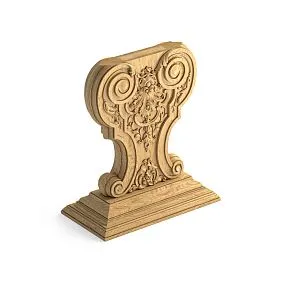
Unfinished furniture legs— this is not a 'semi-finished product'. It's a conscious choice by those who know: the color, texture, and character of a piece should be determined by the specific project, not the production line. It's freedom. And that's exactly what brings people here — furniture makers, interior designers, restorers, and simply people who want to do everything right.


Why choose unfinished furniture legs — advantages




The main point: you define the finish yourself
When you buy a leg with a factory finish, you're buying someone else's decision. Someone else's color, someone else's level of gloss, someone else's application technology. If that decision perfectly matches your project — you're lucky. But in practice, that's rare. Slightly darker or lighter, slightly more glossy, a slightly different texture under the finish — and suddenly the legs 'don't fit', as if they were bought elsewhere.
furniture legsUnfinished legs completely eliminate this problem. You choose the stain yourself — exactly the shade you have on your shelf. You choose the varnish yourself — matte, semi-matte, or satin gloss — depending on the cabinet fronts' finish. You control the result from start to finish, rather than accepting someone else's standards.
This is especially critical during restoration or updating of existing furniture. When replacing broken legs on a sofa that's been standing for eight years, matching the exact color of the old finish with a factory option is practically impossible. With an unfinished leg — you stain the new leg to precisely match the others and achieve an indistinguishable result.
Our factory also produces:


Economics in your favor
Factory finish is added value. Sometimes — noticeable. The processes of priming, applying paint or varnish, drying in a chamber, quality control of the finish — all this is factored into the product's price. If you need exactly this finish — it's justified. If you're going to repaint it to your color anyway — you're paying for something you'll have to remove.
An unfinished furniture leg costs less than a comparable one with a finish, given similar wood quality and surface treatment. You spend the price difference on finishing exactly in the amount needed: a liter of good stain and a small bottle of varnish cost significantly less than a factory-finished set.
Get Consultation
Clean surface — perfect adhesion
Here's a technical argument rarely discussed. Any factory finish is a barrier. A good barrier when it protects. But it becomes a problem when you need to apply something on top. Stain doesn't adhere to varnish. Varnish doesn't bond with a waxed surface without special preparation. Factory paint requires sanding and priming before repainting.
Unfinished wood after factory sanding — has open pores, ready to accept any compound. Stain will penetrate the fiber structure evenly. Oil will saturate the wood to its full depth. Varnish will apply without bubbles or peeling. This is precisely why professional joiners and furniture makers prefer to work with a clean surface — the result is predictable and reproducible on it.
Indispensable for restoration
Restoring antique furniture is a separate world with very strict requirements. Matching the exact tone for a century-old sideboard, replicating the finish character of a 19th-century armchair, preserving the material's 'lived-in' quality without kitschy newness — all this is only possible when working with clean wood. Factory finish is excluded here in principle: it cannot be 'aged' to the required level without destroying the finish structure.
Preciselybuy furniture decorwithout a finish is standard practice in all restoration workshops. Solid wood provides a starting point: then the master guides the piece in the desired direction — patina, wax, toning, aging — with full control over each layer.
How to paint or varnish a wooden leg yourself
Surface preparation: the zero stage on which everything depends
Before opening a can of stain or varnish, you need to properly prepare the leg's surface. Even if it's already factory-sanded — a little additional preparation by hand yields a different result.
Start with a thorough inspection of the surface. Note all knots, cracks, areas with darkening. Knots on coniferous wood (if you bought pine or spruce legs) must be treated with nitrocellulose lacquer or a special sealer — otherwise, resin from the knot will 'bleed' through any finish.
Sanding the factory surface with a 220-grit sponge is the standard first step. Movement — strictly along the grain. Sanding against the grain leaves cross-grain scratches that are clearly visible after applying stain. Use a bright light source directed at an angle to the surface: this makes scratches immediately noticeable before applying the finish.
After sanding, be sure to remove dust. The best method — a vacuum with a soft brush attachment, then wiping with a slightly damp, lint-free cloth. Absolutely do not use a wet cloth with excess water: water raises the wood grain, making the surface rough. This is precisely why the cloth should be 'almost dry'.
Final check before applying finish: hold the leg up to bright light and inspect it at an angle. The surface should be uniformly matte, without shiny scratches. If there are shiny scratches — another pass with 240-grit sanding.
Priming: why and when it's needed
Priming a wooden leg before the final finish is a mandatory step for varnish and enamel finishes. Not mandatory — for oil finishes.
Primer serves two functions: it evens out the surface's absorbency (different areas of wood absorb varnish differently, and without primer, the finish applies unevenly) and creates an adhesion layer for the final finish.
For wooden legs, use acrylic wood primer. It's applied with a brush in one coat, dries in 2–4 hours. After drying, the surface is sanded with a 320-grit sponge — removing raised grain and roughness. This is called 'inter-coat sanding' — a mandatory operation for a professional result.
If you plan to use stain before varnish, primer is not applied: it will seal the pores and the stain won't penetrate the wood structure. The order in this case is: stain → intermediate varnish coat (thin, matte) → 320-grit sanding → final varnish.
Brush vs. Sprayer: Which is Better
The choice of coating application tool is a practical, not theoretical, matter. For turned supports with profiled details, a brush is preferable: it reaches into recesses and grooves, whereas a spray gun only 'hits' the direct zone and requires multiple angle changes. For conical and block-shaped straight supports, a sprayer provides a more uniform result and requires less time.
Choose a brush with synthetic bristles for acrylic compositions (acrylic varnish, acrylic enamel, water-based stain) and with natural bristles for alkyd compositions (alkyd varnish, alkyd enamel, solvent-based oil). Brush width: 20–25 mm for supports up to 60 mm in diameter, 35–40 mm for wider items.
Stain, Oil, Acrylic Paint: What to Choose
Water-Based Stain: Color in Depth Without a Film
Water-based stain is the most common way to change the color of a wooden support without losing its texture. The composition penetrates the wood pores and stains the fibers from within, without creating a film on the surface. After the stain dries, the surface remains matte and 'alive'—the wood grain is not only preserved but enhanced: dark pores contrast with light fibers.
Water-based stain raises the wood grain—this is its main drawback. After applying the first coat and allowing it to dry completely (2–4 hours), the surface becomes rough. Sanding with a 240-grit sponge removes the raised grain, making the surface smooth again. After this, apply a second coat of stain (for a deeper color) or immediately apply a final varnish coating.
Practical tip: To achieve an even tone on the end grain of the support—ends always absorb stain more strongly than side surfaces—apply a first thin coat of pre-diluted stain (1:3 with water) to the ends. When it dries, apply the main coat over the entire surface. The ends and sides will stain evenly.
Popular colors for furniture supports: 'natural oak'—enhances the natural color without a sharp change in tone; 'walnut'—warm brown, universal; 'wenge'—almost black with a purple tint, graphic; 'espresso'—dark brown without bluish tones; 'grey oak'—cool Scandinavian tone, very popular in recent years.
Oil: A Living Surface Without a Film
Oil coating for wooden supports is a different philosophy of working with the material. Oil does not create a film like varnish. It penetrates the wood pores and polymerizes inside, becoming part of the material. The surface after oiling is tactilely uniform with untreated wood—only more saturated, darker, more 'alive'.
Forsolid wood furniture supportsThe best oils are so-called 'hard oils' with added wax or resin. Pure linseed or tung oil dries very slowly (24–72 hours between coats) and does not provide sufficient protection in areas of active contact. Hard oil with wax additives dries faster—8–12 hours—and provides a light hydrophobic barrier.
Application technique: Apply oil in a small amount with a pad or thin brush, rubbing in circular motions. After 15–20 minutes, remove excess with a dry, lint-free cloth. This is mandatory: residual oil on the surface will not be absorbed and will form a sticky layer during polymerization. After 12–24 hours, apply a second coat following the same procedure.
Oil coating requires periodic renewal: once a year for furniture in actively used areas, once every 2–3 years for items with moderate load. The renewal procedure takes 20 minutes: wipe dry, apply a thin coat of oil, remove excess. No sanding, no special preparation.
Acrylic Enamel: Opaque Color for Modern Interiors
When an opaque color without visible wood grain is needed—white, graphite, olive, ochre—the choice is clear: acrylic enamel. This is a covering coating that completely hides the wood grain, creating a uniform matte or semi-matte surface.
It is precisely for acrylic enamel that an unpainted furniture support is an ideal blank. White supports on white cabinets—the principle of 'merging' the leg with the body. Black supports on a light sofa—the principle of a 'graphic accent'. Both techniques require precise color matching, and only working with pure wood guarantees this.
Technique: wood primer → sanding with 320 grit → first coat of enamel → sanding with 400 grit → second coat of enamel → if necessary, final sanding with a 600-grit polishing sponge for a smoother result. For turned profiled supports, use a 20–25 mm brush with synthetic bristles; for straight ones, a mini roller will give a more even coat.
Patina: When History is Needed
Patination of a wooden support is creating an effect of noble aging: recesses are darker, protrusions are lighter. This technique works perfectly on turned supports with relief profiles—balusters, bobbins, cabrioles—where there is something to darken and something to highlight.
For DIY patination of an unpainted support: apply dark acrylic paint (wenge, espresso, umber) over the entire surface. While the paint is not completely dry (after 5–7 minutes), take a slightly damp cloth and wipe the protruding parts—balusters, edges of grooves, facets. The dark color will remain in the recesses, the protrusions will appear lighter. After complete drying, apply a thin coat of matte varnish for fixation.
Comparative Table of Coatings for Wooden Supports
| Finish type | Hides Texture | Protection | Repairability | Style |
|---|---|---|---|---|
| Water-Based Stain + Varnish | No | High | Easy | Any |
| Oil (Hard) | No | Medium | Very easy | Eco, Scandinavian, Rustic |
| Acrylic enamel | Yes | High | Medium | Minimalism, Modern |
| Patina + Varnish | Partially | Medium | Complex | Classic, Provence |
| Alkyd varnish | No | High | Medium | Classic, traditional |
Leg installation: threaded screw, metal plate
Types of fastening systems for wooden legs
Installing a wooden furniture leg is a task that needs to be solved before you choose a specific model. The type of fastening is a mandatory order parameter. Incorrect fastening = inability to install the leg without rework.
There are four main fastening systems, and each has its own area of application.
Threaded stud (M8 or M10) — standard for upholstered furniture (sofas, armchairs, benches, poufs). A metal threaded stud is glued into the top end of the leg. A corresponding metal plate with a threaded hole is installed in the base of the upholstered furniture. Replacement takes 2 minutes: counterclockwise — remove, clockwise — install. When purchasing, specify the diameter and thread pitch of the corresponding plate: M8×1.25 — the most common option, M10×1.5 — for heavy furniture.
Metal mounting plate (flag type) — for case furniture: dressers, cabinets, wardrobes. The plate is attached to the bottom panel of the case with several screws, the leg is screwed into the plate through the central bolt. Advantage: easy to install, easy to dismantle, the plate compensates for minor base irregularities.
Tapered dowel with glue — traditional joinery method. Coaxial holes are drilled in the bottom panel of the case and in the top end of the leg, into which a wooden dowel is driven with wood glue. Assembly is non-removable, strength is high, there are no metal elements. Used in products where aesthetics are more important than disassembly: antique reproductions, designer furniture.
Screws through the bottom panel — for lightweight case furniture: cabinets, small dressers, benches. Holes for screws are drilled in the bottom panel, the leg is screwed from below. The method is simple and reliable for products with moderate load. Disadvantage: with repeated assembly/disassembly, the thread in the wood gets stripped.
Step-by-step leg installation on a threaded plate (for upholstered furniture)
Step 1. Preparation. Turn the furniture upside down or tilt it on its side. Inspect the existing threaded plates: make sure they are not damaged, the thread is clean. If necessary, clean the thread of dirt and old glue residue with a thin screwdriver.
Step 2. Fitting. Screw the new leg into the plate by hand — without tools. It should go in smoothly, without jamming. If it jams — the thread is either different or clogged.
Step 3. Tightening. Screw the leg in until it stops. The last half-turn can be done with a little force — for secure fixation. Do not overtighten: stripping the thread in the soft metal of the plate is an irreversible failure that will require replacing the plate.
Step 4. Check. Place the furniture in its working position. Check stability: rock it with moderate force. If it wobbles — one leg is not fully screwed in or one plate is misaligned relative to the plane. Identify the 'culprit' by feel (rock it, pressing on the corners alternately) and fix it.
Installation on a mounting plate (flag type) for case furniture
Step 1. Marking. Turn the furniture case over. Determine the position of each leg: usually — in the corners of the bottom panel with an offset of 20–40 mm from the edge. Check the diagonals: the distance from the left front leg to the right rear should equal the distance from the right front to the left rear (±1 mm). If the diagonals are not equal — the legs will stand unevenly.
Step 2. Plate attachment. Place the plate on the marked spot, mark the holes for the screws. Drill holes with a drill bit 1 mm thinner than the screw diameter (this will prevent panel splitting). Screw the plate with screws and washers — washers increase the contact area and prevent the screw head from sinking into soft MDF.
Step 3. Leg installation. Screw the leg into the plate. Check perpendicularity: the leg should stand strictly vertical, without tilt. If necessary, place a thin washer under one side of the plate to correct the angle.
Step 4. Applying protective pads. Glue a felt or silicone pad onto the bottom end of each leg. Without pads, wooden legs scratch parquet and laminate with any furniture movement.
How to choose the leg height for a sofa, cabinet, bed
Sofa: seating ergonomics and visual balance
Sofa seat height is a key ergonomic parameter. Standard for an adult 165–180 cm tall: seat height 42–48 cm. At the same time, feet are flat on the floor with a 90° angle at the knees, back is supported by the backrest without strain.
How to calculate the required leg height: measure the distance from the lower plane of the sofa frame to the floor (this is the height the legs must provide). Typically, for a sofa with a frame height of 25–30 cm, legs of 150–180 mm are needed.
If the sofa is already purchased and the seat seems too low — replacing the legs with taller ones immediately fixes this. Every 20 mm of additional leg height raises the seat by the same 20 mm. This is a simple solution that costs incomparably less than buying a new sofa.
Visual balance: for massive wide sofas, legs 100–120 mm high create a 'grounded' and stable look. For light compact sofas, legs 160–200 mm add airiness and visually lift the furniture.
Cabinet and dresser: ventilation and accessibility for cleaning
For case furniture — bedside cabinets, dressers, TV stands — legs primarily serve the function of a ventilation gap and the ability to clean under the furniture.
Minimum leg height for a vacuum cleaner with a flat nozzle to pass under the furniture: 80 mm. For a mop — 100 mm. Comfortable height for a vacuum cleaner with a round brush — 110–130 mm.
From a design perspective, 80–120 mm supports on a chest of drawers create a 'floating' furniture effect — the body visually lifts off the floor, making the room appear larger. This is especially valuable in small bedrooms and hallways.
For bathroom vanity units under sinks — supports should be made of moisture-resistant wood (larch, teak) or have a moisture-protective coating. Height is determined by the sink standard: the standard height of the vanity top surface is 85–90 cm.
Bed: mattress height and under-bed space
The correct bed height is not just an ergonomic issue, but also a functional one. Standard: the top surface of the mattress is 55–65 cm from the floor. This allows a person to sit on the bed with their feet resting comfortably on the floor without strain.
The support height for a bed is calculated as follows: desired mattress height minus the base height (slatted frame + frame sides) minus the mattress height. For a bed with a 150 mm base and a 200 mm mattress, with a desired height of 600 mm: support = 600 – 150 – 200 = 250 mm.
If you want to use the under-bed space for storage — supports should be at least 250–300 mm to accommodate standard storage containers with a height of 200–220 mm.
Coffee and side tables: proportion to the sofa
The height of a coffee table should be comparable to the seat height of the adjacent sofa — 5–10 cm lower or equal. This ensures comfortable use without leaning or reaching upward.
With a sofa seat height of 45 cm, the optimal coffee table height is 38–45 cm. With a lower sofa (35–40 cm) — table 30–38 cm. Table leg height = table height – tabletop thickness.
For a coffee table with a lightweight top made of transparent glass or thin wood, conical wooden supports of 350–400 mm create a very distinctive look — elegant, weightless, modern.
Bar counter and tall furniture: calculation for stools
For bar counters and high work surfaces, the standard height is 100–110 cm. This corresponds to a 'standing at the counter' position for a person 165–185 cm tall: arms on the counter at a comfortable angle, without forcing a lean or raising the shoulders.
Bar stool height (from floor to seat) for a counter height of 100–110 cm: 65–75 cm. The gap between the seat and the counter — 25–30 cm — is the standard for comfortable seating at a bar counter.
To create a bar counter from a countertop with wooden supports, the support height is calculated as the counter height minus the countertop thickness. With a standard 40 mm countertop and a desired height of 100 cm: supports = 960 mm. With a thicker 60 mm countertop: supports = 940 mm.
Prices and assortment of unfinished supports
What affects the price of an unfinished support
The price of an unfinished wooden furniture support is the sum of several factors, each of which can be calculated.
Wood species: oak supports are more expensive than beech ones of the same shape — approximately 20–30% more. This is an objective difference in the cost of the raw material.
Shape complexity: a turned baluster with five profile elements costs more than a conical support of the same size — more machine time, higher material consumption during turning. A geometric support with milled facets is an intermediate price point.
Size: large supports cost more than compact ones — more material, more processing time.
Configuration: a support with a pre-installed metal stud costs more than a similar one without a fastener. The difference is usually 50–150 rubles — this is the cost of the stud plus the gluing operation.
In the STAVROS catalog, prices for unfinished furniture supports: from 390 rubles for compact turned legs (model MN-222) to 12,850 rubles and above for modern designer supports of complex shape (MN-241). Table bases for tables — from 45,000 rubles.
FAQ: Answers to popular questions
What is the difference between an unfinished support and a 'support for painting'?
They are the same thing. 'Unfinished' and 'for painting' are synonyms describing the condition of the support without a finish coating. It can be coated not only with paint, but also with stain, oil, wax, varnish — any composition of the buyer's choice.
Is it necessary to sand the factory surface before applying a finish?
Yes. Even high-quality factory sanding results in a surface with a grit of 150–180. For applying stain or varnish, 220–240 is optimal. A light pass with a 220-grit sponge before coating takes 3–5 minutes and provides a fundamentally different finish quality.
Can the support be painted in a RAL color?
Yes, that's exactly what the unfinished surface is for. Any tinting center can mix acrylic enamel to the desired RAL. Standard procedure: primer → sanding → two coats of enamel → sanding with a polishing sponge.
How to connect a support to a metal plate if the threads don't match?
Replace the metal plate in the furniture base. They are sold separately and cost 50–100 rubles. Standard plates are designed for M8 or M10 threads — make sure you buy a plate with the required thread type.
Which oil to choose for an unfinished beech support?
Hard wax oil for furniture — Osmo, Rubio Monocoat, or similar domestic alternatives. For light wood species (beech, ash, birch), choose 'clear' or 'natural oak' oil — tinted oils will noticeably color light wood, and the color will differ from what is expected.
How to calculate the height of a support for a dining table for standard chairs?
Standard dining table height is 74–76 cm. Standard chairs are designed for this exact height. Support height = table height – tabletop thickness – apron or rail height (if present). With a 28 mm tabletop and 80 mm apron for a 750 mm table: supports = 750 – 28 – 80 = 642 mm.
Can patina be applied to an unfinished support at home?
Yes, this is one of the most accessible and impressive DIY finishing options. Apply dark acrylic paint, after 5–7 minutes wipe the raised areas with a damp cloth. Seal with matte varnish. This creates an aged wood effect without professional equipment.
At what wood moisture content can supports be installed?
The standard for residential spaces is wood moisture content of 8–12%. A raw support with 15–18% moisture content will continue to dry after installation, which can lead to cracks and changes in geometry. A quality manufacturer always indicates the moisture content of products upon leaving production.
About the company STAVROS
If you've read this far — it means you truly care about the details. And that means our conversation will be honest.
STAVROS — a manufacturer of wooden furniture supports and solid wood products with a long history and a production facility operating under controlled conditions: temperature 20–24°C, air humidity at least 40%. This is not just protocol information for a nice website — it's the condition under which wood remains stable from the first pass on the machine to the final packaging.
The STAVROS catalog features over 130 models of unfinished furniture supports: turned, tapered, geometric, cabriole, table aprons. Each support is made from kiln-dried solid beech or oak, each has undergone final sanding up to 180 grit. This is not a blank — it's a starting surface on which the finish applies correctly.
Order — from a single piece, shipping — on the day of order from the warehouse, delivery — throughout Russia and CIS countries. If you need consultation on model selection, height calculation, or mounting type — STAVROS specialists will answer your specific question, not redirect you to the FAQ section.
An unfinished support is the beginning. What comes next is up to you. STAVROS ensures the best beginning.


