












































































Article Contents:
- Style Code: What Makes Up a Neoclassical Interior
- Symmetry as a Philosophy
- Light Palette with Deep Accents
- Noble Materials: Authenticity and Imitation
- Classical Furniture in a Modern Context
- How to Combine Classical and Modern Pieces
- Solid Wood Products: Tactile Luxury
- Molding as an Architectural Language
- How to Calculate the Proportions of Molding Frames
- Molding Profile: Thin or Massive?
- Molding and Wall Color
- Practice: Installing Molding on the Wall
- Floor: The Foundation of Neoclassical Space
- Baseboard: The Detail That Decides Everything
- Wooden Panels: Cladding, Boiserie, and Panels
- Wooden Cornices and Casings
- Plaster Stucco: Beauty That Comes at a Heavy Cost
- Polyurethane: A Modern Answer to Timeless Forms
- Polyurethane Panels for Accent Walls
- Chandelier as the Center of the Composition
- Sconces and Wall Lamps
- Hidden Lighting
- Fabrics That 'Speak' of Style
- Curtains: The Architecture of the Window
- Decorative Portal as an Architectural Centerpiece
- The 'Less is More' Principle
- Mirrors as a Spatial Tool
- Plants and floral compositions
- Living Room: Formal Space
- Bedroom: Territory of Rest
- Kitchen and Dining Room: Classic at the Table
- Entryway: First Impression
- Bathroom: Classic in Stone and Water
- First Mistake: Overdoing the Decor
- Second Mistake: Scale Mismatch
- Third Mistake: Cheap Imitations
- Fourth Mistake: The Forgotten Ceiling
- Fifth Mistake: Blind Copying
- How Does Neoclassicism Differ from Classical Style?
- Is Neoclassicism Suitable for Small Apartments?
- What Type of Baseboard is Best for a Neoclassical Interior?
- Can Polyurethane Moldings Be Used Instead of Plaster Ones?
- Which Colors Are Suitable for Neoclassicism?
- Is Symmetry Mandatory in Neoclassicism?
- How Much Does It Cost to Create a Neoclassical Interior?
- Where to Buy Decorative Elements for a Neoclassical Interior?

There exists a style that doesn't shout about itself, doesn't demand immediate recognition, and doesn't strive to shock. It enters a room quietly, with dignity, takes its place—and in an instant, you understand that this is exactly how a space should look if you want to live in it long and happily. We are talking about neoclassicism—a direction that has absorbed the best from centuries-old European architectural traditions and reinterpreted them through the lens of modern comfort. HereClassic Furnitureit coexists with laconic forms, wall moldings don't weigh down but frame the space, and natural wood in the finish creates that tactile connection with reality that is so lacking in a world of glass and plastic. If you are looking for an interior that will look expensive, thoughtful, and relevant not for one year, but for decades—this article is written for you.
Neoclassicism differs from classicism in that it is not museum-like. It does not force you to live inside a historical reconstruction, dictate heavy floor-to-ceiling velvet drapes, or require gilded candelabras on every table. It takes a principle from the past—symmetry, proportion, respect for materials—and adapts it to how we live today. Open spaces, an abundance of light, functional furniture, technological materials—all of this is perfectly compatible with elegant moldings, paneled facades, and solid wood baseboards. The only question is how to find that very balance. Let's figure it out.
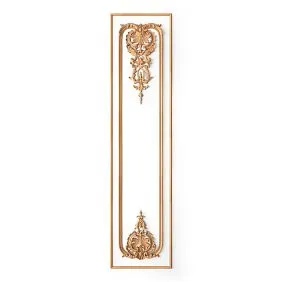



Style Code: What Makes Up a Neoclassical Interior




Symmetry as a Philosophy
Let's start with what distinguishes neoclassicism from any other style at the DNA level. It is symmetry. Not rigid, not mechanical, but living, breathing symmetry that creates a sense of order and harmony. Two identical armchairs on either side of a fireplace. Paired sconces on the wall on both sides of a mirror. Matching nightstands on either side of the bed. Molded frames on the wall mirroring each other.
Why does this work? Because the human brain is programmed to perceive symmetry as a sign of order, stability, and safety. When you enter a room where all elements are balanced, you subconsciously relax. You don't need to 'read' a chaotic space; your gaze easily glides along predictable lines—and this creates comfort.
But neoclassicism does not turn symmetry into dogma. Soft deviations are allowed—and even welcomed: an asymmetrical composition of paintings within a symmetrical molded frame, a single armchair in a corner, a living plant that disrupts the geometry. These 'imperfections' make the interior human and livable, preventing it from turning into a blueprint.
Our factory also produces:



Light Palette with Deep Accents
Neoclassicism speaks softly—and that is precisely why it is heard. The foundation of the color palette consists of light, dusty tones: ivory, warm white, pearl gray, sandy, pale blue, powder. These colors reflect light, visually expand the space, and create a sense of airiness, lightness, and purity.
Against this background, accents appear—restrained but expressive. The deep blue upholstery of a sofa. Olive velvet of an armchair. The dark wood of a console table. Bronze hardware. A marble tabletop. Each accent is like a note in a melody: it sounds precisely because there is silence around it. Overload the interior with bright spots—and the melody turns into noise.
At the same time,Wooden wall claddingin a neoclassical interior, it can become that very deep accent that both warms and structures the space. Panels of natural wood on the lower part of the wall, tinted in a warm walnut or smoky oak shade, create a 'grounding' effect—they anchor the interior to the earth, giving it weight and solidity without weighing down the upper part of the room.
Get Consultation
Noble Materials: Authenticity and Imitation
Neoclassicism is a style that respects materials. Marble, wood, brass, glass, linen, silk, velvet—all these materials carry tactile and visual information that cannot be faked. When you run your hand over a natural marble tabletop, you feel the coolness and smoothness of the stone. When you touch the armrest of a wooden chair, you sense the warmth and texture of the fibers. These are genuine sensations that make the interior come alive.
Does this mean there is no place for modern materials in a neoclassical interior? No, it does not. Polyurethane moldings, MDF panels, marble-look porcelain tile—all of these work perfectly in neoclassicism if used skillfully. The essence is not that every element must be made of 'authentic' material, but that the overall impression is cohesive and convincing.Sculptural decorationsmade of polyurethane are visually indistinguishable from their plaster counterparts, yet they are lighter, more durable, and significantly easier to install. For a style that values the result, not the process, this is an ideal solution.
Furniture Accents: When Every Piece Tells a Story
Classical Furniture in a Modern Context
There is a common misconception that classical furniture is something bulky, dark, covered in carvings and gilding, suitable perhaps only for a palace hall. In reality, the classical furniture tradition is incredibly diverse. It includes strict Georgian forms, elegant lines of the French Louis XVI style, and the restrained grace of Swedish Gustavian design. Neoclassicism draws from this heritage, selecting the lightest, most elegant, most universal elements.
Classic Furniturein a neoclassical interior is not a museum exhibit, but a functional item that serves and pleases the eye simultaneously. A console table with fluted legs in the hallway. A chest of drawers with facades adorned with delicate carving in the bedroom. A dining table with an oval top and elegant supports. A bookcase with paneled doors and a cornice.
Each of these pieces carries a reference to tradition but does not contradict the modern way of life. The chest of drawers holds all necessary items. The console serves as a place for keys, mail, and a decorative lamp. The dining table gathers the family around it. Function and form are in balance—and it is precisely this balance that constitutes the core of neoclassicism.
How to Combine Classical and Modern Pieces
The most common question asked by people who decide to decorate an interior in a neoclassical style is: 'Can I place a classical chest of drawers next to a modern sofa?' The answer is yes. Moreover, it is precisely such combinations that make neoclassicism neoclassicism, not a copy of a historical interior.
The key to successful combination is unity of scale and palette. A classical chest of drawers with carved details and a modern sofa with clean lines will coexist perfectly if they are in the same color scheme and proportionate to each other. A fragile console table next to a massive sectional sofa will look lost. But the same table next to a two-seater sofa of elegant proportions—perfect.
Another technique is using textiles as a connecting element. Pillows on a modern sofa, made from fabric with a classical pattern (damask, stripe, medallion), echo the carved decor on a classical chest of drawers. A throw in a shade that repeats the tone of the wooden furniture ties different pieces together. A painting in a classical frame above a modern fireplace unites two worlds into one.
Solid Wood Products: Tactile Luxury
In a neoclassical interior, wood plays a special role. It is not just a material—it is a message about authenticity, connection with nature, about things that serve for generations.Solid Wood Items—be it furniture, baseboards, door casings, or wall panels—bring into the space that warmth and depth which no synthetic material can convey.
Oak, beech, ash, walnut—each wood species has its own character. Oak is solid and restrained, with a pronounced texture and muted tones. Walnut is darker and more contrasting, with a picturesque grain pattern. Beech is light and uniform, ideal for spaces where visual calm is needed. The choice of species depends on the overall palette of the interior and the mood you want to create.
Wall Maps: The Art of Creating Classical Frames from Moldings
Moldings as an Architectural Language
If one had to name a single technique that instantly transforms an ordinary room into a neoclassical space, it would be moldings. Rectangular frames on walls, formed by thin profile strips, are the hallmark of the style, its most recognizable and most accessible element.
Wall finishing with moldings— this is not just a decorative technique, but a full-fledged architectural tool that solves several tasks at once. Moldings structure a large wall plane, breaking it down into human-scale fragments. They create rhythm—the repetition of identical rectangles around the perimeter of a room introduces visual order. They add relief and play of light and shadow, turning a flat surface into a three-dimensional one. And they create 'frames' for placing paintings, mirrors, sconces—a ready-made coordinate system for decor.
How to Calculate the Proportions of Molding Frames
Frame proportions are the most important part of working with moldings. Incorrectly calculated frames can ruin even the most expensive interior. Too small—they get lost on the wall and look ridiculous. Too large—they 'eat up' all the space and leave no room for furniture. Too narrow—they resemble postage stamps. Too wide—they press down on the ceiling.
Golden rule: the lower border of the frame should be at a level of 20–30 centimeters from the top edge of the baseboard. The upper border—at a level of 10–20 centimeters from the ceiling cornice. The side borders—at a distance of 10–15 centimeters from the wall corners or from adjacent frames. At the same time, the distance between frames should be the same—this ensures that very symmetry which lies at the foundation of the style.
For a wall 2.7 meters high and 4 meters wide, an optimal composition consists of three vertical frames about 90 centimeters wide and 160–180 centimeters high. For a wall with a door or window opening, frames are placed on both sides of the opening, mirroring each other. This is a classic technique that works unfailingly.
Molding Profile: Thin or Massive?
The choice of molding profile depends on the scale of the room and the degree of 'classicality' of the interior. For strict neoclassicism with a minimalist slant, thin, flat moldings 30–50 mm wide with a simple rectangular cross-section are suitable. They create clear lines without overloading the wall and pair excellently with modern furniture.
For a more 'ornate' neoclassicism, choose moldings with a profiled cross-section—with a semi-circular bead, a quarter-round recess, a cavetto. Such moldings catch more light, create a more pronounced relief, and give the wall a classical resonance. Width—50–80 mm.
For formal rooms—living rooms, dining rooms—you can use a combination: a main frame made of wide molding, and inside it—a second frame made of narrow molding. A double frame creates a multi-layered, 'rich' effect, characteristic of 18th-century palace interiors.
Moldings and Wall Color
The classic approach—moldings of the same color as the wall. This technique creates a monochromatic surface where the relief is read exclusively through the play of light and shadow. It is especially effective when using matte paint in warm tones: ivory, warm gray, pale lavender. Moldings 'appear' with side lighting and 'dissolve' with frontal lighting, creating a living, changing surface.
An alternative approach—contrasting moldings. White moldings on a wall painted a deep color (dark blue, emerald, graphite) create the effect of classic boiserie and give the interior drama. This technique requires impeccable execution: any unevenness or gap on a contrasting background will be visible as plain as day. Therefore, for contrasting compositions, the quality of the moldings themselves and the thoroughness of their installation are especially important.
Practice: Installing Moldings on a Wall
It is better to finish walls with moldings before the final painting. The sequence is as follows: marking frames on the wall (using a level and tape measure), cutting moldings at 45-degree angles (with a miter saw or miter box), mounting with construction adhesive, securing with small nails until the glue dries, puttying joints and nail heads, sanding, priming, painting. The entire process for one wall takes 4–6 hours (excluding drying time), and the result transforms the room so much that you won't believe it—it's the same room as yesterday.
Forwall finishing with moldings— you can use products made of polyurethane, MDF, or even plaster. Polyurethane moldings are the most practical choice for apartments: they are lightweight, moisture-resistant, do not crack due to house settling, and are easily cut with a regular utility knife (thin profiles) or a handsaw (wide ones). MDF moldings give a more 'woody' texture and a sense of massiveness. Plaster ones—the most authentic option, but heavy and fragile.
Wooden Nuances: Natural Wood as an Interior Anchor
Floor: The Foundation of a Neoclassical Space
If walls in neoclassicism are the background, then the floor is the foundation. It is the floor that 'grounds' the interior, giving it weight and reality. In classical interiors of the 18th–19th centuries, the floor was the main decorative element: parquet with geometric patterns, marble slabs, wide-format oak boards. Neoclassicism inherits this respect for the floor, although it allows for more modest solutions.
The ideal floor for a neoclassical interior is engineered wood flooring or parquet made of oak, ash, or walnut. Wide boards (150–220 mm) with a pronounced texture, tinted in a natural or slightly bleached shade, create a sense of solidity and warmth. Installation—plank (boards parallel) or 'herringbone' (classic French or Hungarian parquet).
For those for whom natural parquet is not within budget, a high-quality laminate with a realistic wood texture will be an excellent alternative. Modern technologies allow creating laminate that is visually and tactilely almost indistinguishable from natural wood. The main thing is to choose thick (10–12 mm) laminate with a bevel on the perimeter of each board: this creates the feeling of 'real' boards.
Baseboard: The Detail That Decides Everything
We've already discussed how in neoclassical design, every detail matters. The baseboard is a detail many overlook, and that's a mistake. It's precisely the baseboard that completes the transition from floor to wall and provides the "frame" for the entire room. A low, narrow, unremarkable baseboard devalues even the most luxurious finish. A tall, profiled, proportional one elevates even a modest interior.
For a neoclassical space, the optimalskirting made of solid wood— is 80–120 mm high with a classic profile. The profile can include a cavetto (rounded top edge), a quarter-round recess, a semi-circular bead—that is, the same elements as in the wall moldings. This creates visual unity: the moldings on the wall and the baseboard at the floor 'speak' the same architectural language.
The color of the baseboard in neoclassicism is traditionally white or matching the walls. A white baseboard on light walls creates a classic 'frame' that emphasizes the architecture of the room. A baseboard matching the wall color is a more modern approach that visually increases the wall height. Both options are equally appropriate; the choice depends on personal preference and context.
A wooden baseboard can be painted or varnished. A painted baseboard (with white enamel or acrylic paint) is a neoclassical classic. A varnished baseboard with visible wood grain is an option for those who want to emphasize the naturalness of the material. In this case, the wood species and tone of the baseboard should match the flooring.
Wooden Panels: Cladding, Boiserie, and Raised Panels
Wooden wall cladding— in the lower part of a room is one of the most elegant techniques of neoclassical design. This zone, from the floor to a level of 90–120 centimeters, is called a dado (from the Italian 'dado'—plinth). Traditionally, it was finished with wooden panels that protected the wall from damage and simultaneously decorated the interior.
In neoclassicism, the dado zone can be designed in several ways. Classic raised panels—rectangular frames with a recessed central part—create a 'boiserie' effect and give the wall volume and rhythm. Smooth panels with a top finishing molding are a more restrained option, suitable for modern interpretations of the style. Vertical tongue-and-groove cladding made of natural wood, painted the color of the wall, is the most laconic option, adding texture without visual 'noise'.
Wooden dado panels work excellently in hallways, corridors, dining rooms, and bathrooms — that is, in high-traffic areas where walls are subject to mechanical impact. Wood coated with high-quality enamel or lacquer withstands impacts, scratches, and regular cleaning significantly better than painted plaster.
Wooden cornices and architraves
In addition to baseboards and wall panels, wood in a neoclassical interior is present in the form of ceiling cornices, door and window architraves, and decorative beams. Woodenceiling cornicewith a classic profile is a detail that finishes the wall at the top, just as a skirting board finishes it at the bottom. Together, they create an architectural 'frame' within which the decor is placed — moldings, paintings, wallpaper, paint.
Wooden architraves around doorways are another characteristic element of neoclassicism. Unlike standard narrow architraves made of laminated MDF, classical architraves are 80–120 mm wide and have a profiled cross-section. They frame the doorway just as a frame frames a painting — turning a functional element into a decorative accent. To complete the composition, a pediment — a small decorative cornice — can be installed above the door, crowning the doorway and giving it architectural significance.
Lightness instead of heaviness: why polyurethane beats plaster
Plaster stucco: beauty that comes at a heavy cost
Plaster stucco is wonderful. A thousand-year tradition, handcrafted work, the uniqueness of each element. But let's be realistic: in a modern apartment, plaster stucco creates more problems than it solves.
First, weight. A two-meter-long plaster ceiling cornice can weigh five to seven kilograms. To mount such a cornice, serious fasteners are needed — dowels, screws, sometimes even anchors. Installation takes significantly more time and requires professional skills.
Second, fragility. Plaster is a material with low impact strength. Any mechanical impact — an accidental hit from a stepladder, a child's ball, even a careless movement while rearranging furniture — can lead to chipping or cracking. Repairing plaster stucco is not easy and does not always yield an invisible result.
Third, hygroscopicity. Plaster absorbs moisture, making it unsuitable for use in bathrooms and undesirable in kitchens. In rooms with unstable humidity levels, plaster stucco can crack or become stained over time.
Fourth, cost. High-quality handcrafted plaster stucco costs significantly more than polyurethane alternatives. Add to that the cost of installation (which is more complex) and repair (which is inevitable) — and the price difference becomes substantial.
Polyurethane: a modern answer to timeless forms
PolyurethaneSculptural decorations— this is a case where technology does not kill aesthetics but serves it. Polyurethane allows for the reproduction of the most complex classical forms — acanthus scrolls, rosettes, medallions, fluting — with a precision unattainable by a handcraftsman. Each element is cast in a mold and has perfectly reproducible geometry.
At the same time, polyurethane is lightweight (a two-meter-long cornice weighs less than a kilogram), durable (does not chip upon impact), moisture-resistant (does not absorb water), and easy to install (attached with special adhesive). It can be cut with a regular handsaw or utility knife, sanded with sandpaper, and painted with any interior paint. After painting, a polyurethane element is visually indistinguishable from plaster — the same white relief, the same play of light and shadow, the same architectural expressiveness.
For a neoclassical interior, polyurethane offers a full set of decorative elements:
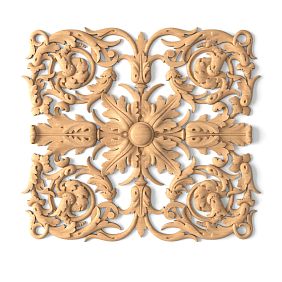
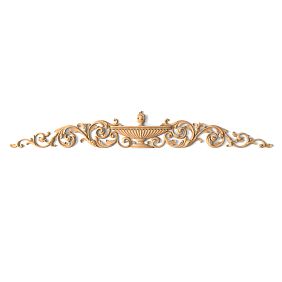
Ceiling cornices of various profiles and sizes — from modest 30-millimeter strips for minimalist interiors to massive 200-millimeter cornices for formal rooms. Rosettes with diameters from 20 to 80 centimeters — for decorating the chandelier mounting point. Moldings and profiles for creating wall frames. Overlay elements and ornaments — separate decorative fragments (floral garlands, corner scrolls, central medallions) that can be glued onto molding frames, onto furniture fronts, or directly onto the wall.
Overlay elements are the most 'neoclassical' product. They allow a simple molding frame to be transformed into an exquisite decorative composition. A polyurethane corner ornament installed in the inner corners of a frame instantly gives it the appearance of classic boiserie. A central rosette inside the frame — and now the wall resembles panels in Versailles salons. All of this — without plasterwork, without dust, without waiting days for drying.
Polyurethane panels for accent walls
In addition to point decorative elements, ready-made wall panels with relief patterns are made from polyurethane.Polyurethane wall panels— these are large-format elements (usually 60×60 cm or 60×120 cm) that are mounted on the wall edge-to-edge and form a continuous relief surface.
For neoclassicism, panels with geometric patterns are suitable — rectangular panels, diamonds, coffers. They create the effect of classic wall paneling but are installed in just a few hours and do not require carpentry skills. After installation and painting, such a wall looks like the work of a master cabinetmaker who worked on it for a week. In reality, installation takes a day, including joint puttying and painting.
Lighting in a neoclassical interior
Chandelier as the centerpiece
If in a minimalist interior a chandelier is an optional element (recessed lighting can suffice), in neoclassicism the chandelier is the anchor around which all ceiling decor is built. A classic chandelier with crystal pendants, a chandelier with fabric shades on curved arms, a minimalist queen chandelier with a brass frame — all these options work in a neoclassical space.
The chandelier is traditionally complemented by a ceiling rosette — a round or oval decorative element that frames the mounting point. The rosette not only decorates the ceiling but also 'gathers' the ceiling space, creating a visual center. In a room with molding frames on the walls and a cornice around the perimeter of the ceiling, the rosette completes the three-dimensional decorative system — walls, ceiling, and floor are connected by a unified architectural language.
Sconces and wall lights
Wall lights are another essential element of a neoclassical interior. Sconces on either side of a fireplace, mirror, bed headboard, or painting create soft, diffused lighting and add vertical light accents. In neoclassicism, sconces are usually symmetrical — two identical lights on either side of a central element.
Sconces can be complemented with small decorative polyurethane elements — a rosette or medallion around the mounting point. This gives the wall light significance and integrates it into the overall decorative system.
Hidden lighting
Neoclassicism does not exclude the use of modern lighting technologies. An LED strip hidden in a ceiling cornice niche creates a soft, 'floating' glow around the perimeter of the ceiling. This technique visually raises the ceiling, adds volume to the room, and creates an atmosphere of cozy evening lighting.
To implement hidden lighting, special cornices with a 'shelf' are used—a protruding horizontal surface on which the LED strip is placed. The light from the strip is directed upward, onto the ceiling, and reflects off it as a soft, diffused stream. This is one of the few cases where modern technology fits absolutely organically into a classical architectural system.
Textiles: the soft power of neoclassicism
Fabrics that 'speak' of style
Textiles in a neoclassical interior are not just upholstery and curtains. They are the voice of the space, its timbre and intonation. Velvet, silk, linen, cotton jacquard—each fabric contributes its own note to the overall sound.
Velvet is the main fabric of neoclassicism. Its deep, shimmering surface absorbs light and creates a sense of luxury without being loud. Velvet upholstery on a sofa, velvet cushions, velvet drapes—all of this adds tactile richness to the interior. The colors of velvet in neoclassicism are muted, complex: dusty rose, olive, gray-blue, deep blue, warm gray.
Linen is the counterpoint to velvet. Its texture—rough, natural, lively—brings a note of ease to the interior. Linen curtains, linen pillow covers, a linen tablecloth—all of this 'lowers the temperature' of formality and makes the interior livable, homely.
Silk and satin are for accents. A silk pillow on a linen sofa, a satin lampshade on a lamp, a silk shawl casually draped over the back of an armchair—these details add shine and elegance without excess.
Curtains: window architecture
Curtains in a neoclassical interior are not just drapes, but architectural framing of the window opening. A classic curtain consists of several layers: a sheer tulle (or voile), a main drape, and possibly a valance. The drape—from the cornice to the floor, without interruption, with a slight 'puddle' on the floor (2–3 centimeters). The cornice—hidden or decorative, depending on the overall concept.
The color of the curtains echoes the other textiles in the room. If the sofa is upholstered in gray-blue velvet—the drapes can be of the same tone, but in a lighter or darker shade. If the cushions are dusty pink, the drapes are in a warm beige palette. The principle is harmony, not literal matching.
Fireplace: the heart of the neoclassical living room
Decorative portal as an architectural centerpiece
A fireplace in a neoclassical interior is not so much a source of heat as it is the architectural and emotional center of the room. The entire composition of the living room is built around the fireplace: a sofa opposite, armchairs on the sides, a mirror or painting above the mantel, sconces on either side.
In an urban apartment, where a real fireplace is impossible, its role is played by a decorative fireplace portal. A polyurethane portal is an ideal solution for neoclassicism: it is lightweight, easy to install, can be painted any color, and looks absolutely convincing. Inside the portal, you can install an electric fireplace with a flame imitation, an ethanol bio-fireplace, or simply place decorative candles.
The fireplace portal is framed by pilasters (vertical elements) and an entablature (horizontal cornice). The pilasters can be smooth or fluted, the entablature—with a profiled cornice and frieze. All these elements are available in polyurethane and assemble like a construction set—quickly, cleanly, without 'wet' processes.
Above the mantel, a mirror in a classic frame, a painting, or a decorative composition is traditionally placed. The mirror visually doubles the space and reflects light, which is especially valuable in rooms with low ceilings or insufficient natural light.
Accessories and decor: the final notes
The principle of 'less is more'
Neoclassicism does not tolerate clutter. Every decorative item must be a conscious choice, not a random purchase. It is better to have one large painting in a worthy frame than ten small postcards pinned to the wall. It is better to have one vase of exquisite shape than five souvenirs from different resorts.
Decorative items in a neoclassical interior are books in beautiful bindings, ceramic vases, sculptural forms, candles in brass candlesticks, fresh flowers. All of this is placed on consoles, mantels, bookcases—but not everywhere, only in 'focal points' defined by the architecture of the room.
Mirrors as a spatial tool
Mirrors in neoclassicism play the same role as in 18th-century classical interiors: they expand space, multiply light, and create visual depth. A large mirror in a classic frame with molding trim is one of the main accents of a neoclassical room.
A mirror can be placed above the fireplace, above a console in the hallway, on the wall opposite the window (for maximum light reflection), or between two windows (a classic technique known as trumeau). The mirror frame can be made of wood, polyurethane, or MDF—the main thing is that it is proportional to the mirror itself and the rest of the decor.
Painting and graphics
Art on the walls is a mandatory element of neoclassicism. These do not necessarily have to be canvases by old masters—contemporary painting, graphics, photography in classic frames look excellent in a neoclassical context. What matters is not the genre, but the presentation: a worthy frame, proper placement (the center of the picture—at eye level), proportionality to the wall and furniture.
Paintings and photographs are logically placed within molding frames on the wall—one work in one frame. This creates a gallery feel and turns the wall into a thoughtful exhibition.
Neoclassicism in different rooms
Living room: a formal space
The living room is the main room of a neoclassical interior. It gathers all the key elements of the style: symmetrical furniture arrangement around a fireplace (or its decorative counterpart), molding frames on the walls, a ceiling cornice with a rosette, high baseboards, a classic chandelier, and floor-to-ceiling curtains.
The living room furniture group is built around a central axis: fireplace (or TV, or accent wall) - coffee table - sofa. On the sides are armchairs, floor lamps, and side tables. Everything is symmetrical, everything is balanced, but not rigidly: one of the armchairs can be placed at an angle, a floor lamp can be slightly closer to the sofa, a stack of books can be only on one of the side tables.
In the living room, the role of classic furniture is especially important. This is precisely where a formal commode with carved decor, an elegant console table, a bookcase with paneled fronts are appropriate. These items create the 'character' of the room and define its atmosphere.
Bedroom: A Territory of Tranquility
The bedroom in neoclassicism is a space where the style softens, becomes more intimate and relaxed. Moldings on the walls are still relevant, but the frames can be larger and simpler (one or two large frames instead of several small ones). The color palette is warmer and softer: powder shades, warm gray, cream.
The center of the bedroom is a bed with a high, soft headboard. The headboard can be upholstered in velvet, suede, or fabric with a delicate pattern. On the sides are matching bedside tables and matching wall sconces. Above the bed is a large painting or a decorative composition made of moldings.
Textiles in the bedroom play a key role: a multi-layered bedspread, decorative pillows of different sizes, a throw at the foot of the bed, heavy curtains. All this creates a feeling of a cocoon - soft, warm, protected.
Kitchen and Dining Room: Classic at the Table
A neoclassical kitchen is a place where the functionality of modern appliances is combined with the elegance of classic forms. Kitchen cabinet fronts are paneled, with a thin profile, painted in light tones. Handles are brass or chrome, with a classic silhouette. Countertop is made of natural or artificial stone. Backsplash is ceramic tile with a classic pattern (subway tile, arabesque, mosaic).
The dining area in neoclassicism is a separate 'world' within the kitchen. A dining table with classic legs, chairs with soft upholstery, a chandelier above the table, moldings on the wall adjacent to the table - all this creates the feeling of a formal dining room, even if the 'dining room' is part of a 20-square-meter kitchen-living room.
Entryway: First Impression
The hallway sets the tone for the entire apartment. In a neoclassical interior, it is decorated with the same care as the living room. A console with a mirror, moldings on the walls, high baseboards, a decorative ceiling cornice - all this creates a feeling of 'entering a home,' not just a passageway to a coat rack.
If the hallway is spacious enough, you can place a small pouf or bench for changing shoes, a decorative table for small items, a coat rack or a cabinet with classic fronts. Even in a narrow corridor, moldings on the walls and high baseboards create a sense of architectural completeness.
Bathroom: Classic in Stone and Water
A neoclassical bathroom is luxury without ostentation. Marble (or porcelain stoneware that looks like marble) on the floor and walls. A classic freestanding bathtub on legs or a built-in bathtub with a wide ledge. A mirror in a shaped frame. Brass or chrome hardware.
Polyurethane moldings and cornices are perfect for the bathroom due to their moisture resistance. Molding frames on the bathroom wall, a mirror framed with polyurethane profiles, a ceiling cornice - all this creates a feeling of a classic boudoir and turns morning washing into a small ritual.
Common Mistakes When Creating a Neoclassical Interior
Mistake One: Overdoing the Decor
Neoclassicism is not 'the more moldings, the better.' An excess of decorative elements turns the interior from elegant to overloaded. If there are molding frames on the walls, a cornice and rosette on the ceiling, high baseboards on the floor, a pediment above the door, and carving on the furniture, the space begins to 'suffocate.' Choose two or three key decorative techniques and use them consistently, and leave the other surfaces calm.
Mistake Two: Scale Mismatch
Massive moldings and cornices in a small room with a 2.5-meter ceiling are a death sentence. They 'eat up' space and create a feeling of tightness. For compact rooms, choose thin moldings (30–40 mm) and low cornices (50–70 mm). Leave large elements for spacious rooms with high ceilings.
Mistake Three: Cheap Imitations
Plastic baseboard with a 'wood-like' pattern, door handles made of flimsy zinc, paintings in frames from a hardware store - all this devalues a neoclassical interior. It's better to spend a little more on quality Skirting made of solid wood, on brass hardware, on decent frames for paintings - and get an interior that looks and feels expensive.
Mistake Four: The Forgotten Ceiling
The walls are decorated with moldings, the floor with parquet, but the ceiling remains a flat white desert. A ceiling cornice is the minimum necessary to complete a neoclassical space. Without it, the walls seem to break off into emptiness, and the entire architectural system falls apart.
Mistake Five: Blind Copying
Copying photos from magazines and Pinterest is not the best strategy. The interior in the photo was shot in a specific room, with specific proportions, under specific lighting. Your apartment has different walls, different windows, different light. Get inspired, but adapt: choose molding proportions to suit your walls, colors to suit your light, furniture to suit your lifestyle.
How to Create a Neoclassical Interior: A Step-by-Step Route
Allow me to suggest a sequence of actions that will help you avoid mistakes and achieve a holistic, harmonious result.
The first step is defining the color palette. Choose three to four main colors: two neutrals (for walls and ceiling), one medium (for furniture and textiles), and one accent (for details). All colors should be from the same temperature family—either warm or cool.
The second step is planning the decorative system. Determine which walls will receive molding frames, what ceiling cornice will be used, and what baseboard will be installed. Draw wall elevations indicating the dimensions and proportions of decorative elements.
The third step is selecting and purchasing materials. Moldings, cornices, baseboards, door casings, rosettes—it's best to order all of these at once, from the same collection, to ensure stylistic unity. On the STAVROS website, you can find all the necessary elements—from baseboards to ceiling cornices.
The fourth step is installing the decorative elements. First—the ceiling cornice and rosette. Then—the moldings on the walls. Then—the door casings. All joints are filled with putty and sanded.
The fifth step is painting. The ceiling, walls, decorative elements—everything is painted after installation. This ensures perfect color unity and hides the joints.
The sixth step is laying the flooring and installing the baseboard. The baseboard is the final element of the 'architectural system.' After its installation, the interior acquires a finished look.
The seventh step is furnishing and decorating. Furniture, textiles, lighting, accessories—all of these come into an already decorated space and take their designated places.
Neoclassical and Budget: Can You Create a Stylish Interior Inexpensively?
The answer is yes, but with caveats. Neoclassicism is a style that does not forgive cheapness in details. However, it does not require astronomical budgets if you approach it wisely.
Save on scale, not on quality. Instead of herringbone parquet throughout the apartment, lay high-quality laminate. Instead of a marble countertop, use porcelain stoneware. Instead of a massive oak baseboard, use an MDF baseboard for painting. Instead of plaster stucco, use polyurethane elements. Each of these substitutions saves a significant amount but does not reduce the visual quality of the interior.
Invest in key details. Three elements you shouldn't skimp on: the chandelier (it's the center of attention), the sofa upholstery (it's the largest item in the room), and door handles (they are touched dozens of times a day). These three things create a disproportionately large impression with relatively small costs.
Do what you can yourself. Installing moldings, painting walls, installing baseboards—all of this is quite within the capabilities of a careful person with a minimal set of tools. Savings on labor can amount to 30–50 percent of the total finishing cost.
Neoclassical and Time: Why This Style Never Goes Out of Fashion
Fashion is cyclical. Minimalism gives way to maximalism, loft to Scandinavian style, Scandinavian style to Japanese wabi-sabi. Trends come and go, leaving behind interiors that look outdated in five years. Neoclassicism is one of the few styles that remains relevant for decades. Why?
Because neoclassicism is based on principles, not techniques. Symmetry, proportion, quality of materials, respect for details—these principles are not subject to fashion. They have been the foundation of architecture for three thousand years—from ancient Greek temples to modern luxury residences.
Specific elements of neoclassicism—colors, fabrics, accessories—can be updated according to current trends. Velvet cushions can be replaced with linen ones. Curtains can be remade from new fabric. Paintings can be swapped for others. But the architectural foundation—moldings, cornices, baseboards, furniture proportions—remains unchanged. This is an investment in lasting beauty.
Frequently Asked Questions About Neoclassical Interiors
What is the difference between neoclassical and classical style?
Classical style strives for historical accuracy and formality. Heavy furniture, an abundance of gilding, massive chandeliers, heavy curtains, excessive carving—all of this is characteristic of classicism in its pure form. Neoclassicism preserves the principles of classicism—symmetry, proportion, architecturality—but rejects excess. Furniture becomes lighter, the palette brighter, the decor more restrained. Neoclassicism is classicism adapted for living, not for a museum.
Is neoclassicism suitable for small apartments?
Yes, if you observe scale. In compact spaces, use thin moldings, low cornices, a light color palette, and mirrors to visually expand the space. Avoid massive furniture and large decorative elements. Neoclassicism in a small apartment is not a scaled-down copy of a palace, but an independent solution based on the same principles but considering the scale.
What baseboard is best for a neoclassical interior?
The optimal choice is a baseboard with a height of 80–120 mm with a classic profiled section. Material—solid wood or MDF for painting. Plastic baseboard is categorically inappropriate in neoclassicism. Color—white (painted with enamel) or matching the walls.
Can polyurethane moldings be used instead of plaster ones?
Not only can they be used, but they should be. Polyurethane moldings are lighter, stronger, more moisture-resistant, and cheaper than plaster ones. After painting, they are visually indistinguishable from plaster. For apartments in new buildings where settling is possible, polyurethane is the only correct choice: it does not crack when walls deform.
What colors are suitable for neoclassicism?
The foundation of the palette is light, dusty tones: ivory, warm white, pearl gray, beige, powder, pale blue. Accents—muted saturated colors: deep blue, olive, burgundy, chocolate. Bright, acid, neon colors are inappropriate in neoclassicism.
Is symmetry mandatory in neoclassicism?
Symmetry is a fundamental principle, but not a rigid rule. The main composition (furniture arrangement, placement of moldings, position of the chandelier) should be symmetrical. But individual elements—books on a shelf, a plant in a corner, a decorative pillow—can break symmetry, adding liveliness to the interior.
How much does it cost to create a neoclassical interior?
The cost depends on the area, choice of materials, and scope of work. The basic option (polyurethane moldings, MDF skirting boards, painting, laminate) is accessible for most budgets. The premium option (solid wood, natural stone, handcrafted stucco, parquet) is significantly more expensive. But even with a limited budget, neoclassicism is possible — the key is to invest in crucial details and not skimp on proportions.
Where to buy decorative elements for a neoclassical interior?
Quality moldings, cornices, skirting boards, overlay elements, and classic furniture for a neoclassical interior can be found in the catalog of the company STAVROS. The wide assortment allows you to select elements for an interior of any scale and budget.
Conclusion: an interior that looks expensive and relevant for years to come
Neoclassicism is not a fleeting trend. It is a philosophy of living space based on time-tested principles of beauty and harmony. Symmetry, proportion, quality of materials, attention to detail — all of this makes a neoclassical interior timeless. It does not become outdated, does not grow tiresome, and does not create a desire to 'redo everything' after three years.
Creating such an interior is a deliberate process that requires attention to every element: from the ceiling cornice to the door handle, from the molding frame on the wall to the baseboard on the floor. But the result is worth the effort—a space where you feel good today and will feel good in ten, twenty, thirty years.
The company STAVROS has been helping to realize neoclassical interiors for many years. The STAVROS catalog featuresClassic FurniturehandcraftedSolid wood products— skirting boards, cornices, architraves, panels, as well asSculptural decorationspolyurethane — moldings, rosettes, overlay elements for walls and ceilings. Every STAVROS product is created with respect for the material, the form, and the space it will become a part of. This is not just decor — these are architectural details that shape the character of your home. STAVROS is a company for those who build an interior not for a season, but for decades. For those who understand: true beauty is not a shout, but a calm confidence in every line, every profile, every material.


