Article Contents:
- What Are Wall Slat Panels: Construction and Operating Principle
- Why Wall Slat Panels Are Experiencing a Golden Age
- Types of Wall Slat Panels by Material
- Solid Wood Slat Panels
- MDF Slat Panels
- Wood-Toned Slat Panels
- Specialized materials
- Design Parameters: What Determines the Visual Result
- Slat Width
- Slat Spacing (Gap)
- Rail cross-section profile
- Panel height
- Wall-mounted slat panels in interiors of various rooms
- Living room: accent and zoning
- Bedroom: a natural cocoon for rest
- Hallway: the first and last point of impression
- Study: a workspace with character
- Kitchen-living room: slat decor in combined spaces
- Bathroom: wooden spa
- Styling solutions for wall-mounted slat panels
- Minimalism: When Less is More
- Scandinavian Style: Naturalness as a Philosophy
- Neoclassicism: Dialogue Between Tradition and Modernity
- Loft: Natural vs. Industrial
- Modern Style: Architectural Geometry
- Japanese Interior: Rhythm as Meditation
- Color and Texture Solutions for Wall Slat Panels
- White slatted panels
- Gray slatted panels
- Warm Wooden Tones
- Dark Accent Tones
- Colored Slat Panels
- Combining Wall Slat Panels with Other Finishing Elements
- Reiki and polyurethane decor
- Reiki and lighting
- Reiki and furniture
- Reiki and floor
- Installation of wall slat panels: from preparation to finishing details
- Foundation Preparation
- Material acclimatization
- Mounting methods
- Marking: a crucial step
- Finishing the Perimeter
- Material Calculation
- Common mistakes when choosing and installing wall slat panels
- Care for wall slat panels
- Wooden slats with oil coating
- Wooden slats with varnish coating
- MDF battens for painting
- Wall slat panels in commercial interiors
- Frequently Asked Questions
- How do wall slat panels differ from clapboard?
- Which wall is best for mounting slat panels in a living room?
- How difficult is DIY installation?
- Are wall slat panels suitable for a bathroom?
- How to calculate the amount of material?
- How long do wooden wall slat panels last?
- Can wood and MDF slat panels be combined in one interior?
- Conclusion

A wall is not a backdrop. This is a statement that more and more people who have experienced 'the renovation is done, but you don't want to live there' agree with. When the four planes of a room are painted a neutral color and devoid of any architectural content, the space turns into a box. A box with furniture inside. Wall slat panels are the first and most effective way to turn a box into an interior: to create rhythm, depth, materiality, and that very character of space for which the renovation is actually undertaken.
Slat wall panels are not a new phenomenon in architecture. Wooden slats on walls were used in Japanese byōbu partitions, in Scandinavian wooden houses, and in German half-timbered tradition. The modern format is a reinterpretation of this centuries-old practice in a concise, technological, and aesthetically universal form. The slats have become thinner and more precise. Materials have expanded. Application possibilities have too.
What are wall slat panels: construction and operating principle
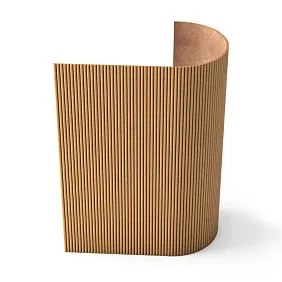
A wall slat panel is a structure consisting of parallel slats (strips) of a fixed cross-section, mounted at equal intervals on a substrate or directly onto the wall surface. The key element is the equal spacing. It is the uniformity of the distances between the slats that creates that very rhythm, which is the main visual advantage of slat decor.
Each slat casts a shadow into the gap between itself and the adjacent slat. The depth of the shadow depends on the thickness of the slat and the angle of lighting. Change the position of the light source — and the shadow changes, and with it — the entire visual appearance of the wall. Morning side light from a window creates one picture. Evening spot lighting — a completely different one. This is a living surface that exists in time — not static decor that is the same at any time of day.
Wall slat panelsperform several functions simultaneously: decorative (create a visual image), architectural (manage the perception of space), acoustic (diffuse sound waves), and when applied correctly — zoning (visually demarcate functional zones without physical partitions).




Why wall slat panels are experiencing a golden age
If you look into any professional design magazine, a catalog of interior solutions, or a Pinterest feed — slat walls are everywhere. Apartments and private houses, restaurants and offices, showrooms and medical centers, schools and libraries. This is not a trend. This is an architectural pattern.
Modern people are tired of synthetics. They are tired of wood-look films on particleboard, plastic skirting boards, and drywall niches. They want material. Real, tactilely rich, with pattern and character. Wood is the main answer to this demand. And the slat panel is the most architecturally precise way to use wood in an interior: not an imitation of parquet on a wall, not 'wooden wallpaper,' but an honest structure of slats, where the natural material works as an element of architecture.
Simultaneously, another demand is at work — the demand for spatial clarity. When an apartment has an open floor plan, and furniture cannot define a zone, — a wall slat panel becomes a zoning tool. Slats on the wall behind a sofa create a 'belonging' to the sofa area, without blocking light or destroying the openness.
Our factory also produces:
Types of wall slat panels by material
Get Consultation
Solid wood slatted panels
This is the flagship.Solid oak slat panels— a natural material with a unique fiber pattern, tactile richness, and durability. Each slat carries its own pattern: medullary rays, annual rings, tonal transitions from sapwood to heartwood — this is a painting created by nature without a designer's involvement.
Oak is the optimal species for wall slatted panels. A hardness of 5900 N on the Janka scale, stability during humidity changes, resistance to mechanical impact, excellent stainability with tints — all this makes it a material that covers most tasks. For wet rooms — larch or teak with an oil finish. For eco-style — pine with a lively knot pattern.
MDF slatted panels
MDF with a density of 750–850 kg/m³ is a synthetic material with a perfectly uniform structure. Its main advantage: a surface ready for painting. Wall slatted panels made from paintable MDF open up unlimited color possibilities — from pure white to deep emerald, from pastel powder to deep anthracite. Any color — provided the correct enamel is selected.
MDF slats are geometrically precise, have no surface defects, and are easy to work with tools. For modern, minimalist, and monochrome interiors — the optimal choice.
Slatted panels with wood-tone tinting
Tinted MDF slats with a decorative finish imitating a specific wood species — oak, walnut, ash, wenge — are a compromise between the aesthetics of natural wood and the affordability of MDF. From a certain distance and under standard lighting, high-quality tinting is indistinguishable from solid wood. For ceiling panels, for rooms with large areas where the cost of solid wood is significant — a rational choice.
Specialized materials
Aluminum slats — for commercial spaces with fire safety requirements (non-combustible material). PVC slats — for rooms with high humidity. Thermowood (thermally modified wood) — for areas with unstable humidity, offering significantly increased moisture resistance compared to regular wood.
Design parameters: what determines the visual result
Slat width
This is the main parameter that determines the 'density' and character of the slat pattern:
-
15–25 mm — very narrow slats, delicate dense rhythm, suitable for small rooms and refined interiors
-
30–50 mm — standard width, a universal option for most living spaces
-
50–80 mm — wide slats, monumental rhythm, for large rooms with high ceilings
-
80–120 mm and more — very wide slats, more of a louvered than a slatted effect, for large-scale commercial spaces
Slat spacing (gap)
Spacing — the distance between slats (gap width). Determines how 'open' or 'closed' the surface appears.
-
Spacing equals slat width — balanced rhythm, 50% slat / 50% gap
-
Spacing less than slat width — surface is 'denser', slats dominate over gaps
-
A step larger than the slat width creates a more 'airy' surface, where gaps dominate over the slats.
The wider the gap, the more important the color and quality of the surface behind the slats: it is clearly visible and actively contributes to the visual image.
Slat cross-section profile
-
Rectangular — strict, architectural, modern
-
With beveled edges (chamfer) — softer, more delicate, slightly more classic
-
Semi-circular (bead) — decorative, more ornamental
-
Wavy or complex — specific decorative solutions
The profile affects the character of the shadow: a rectangular slat gives a clear, 'architectural' shadow. A semi-circular one gives a soft, diffused shadow.
Panel height
Wall slat panels can cover the entire height of the wall (from floor to ceiling) or part of it:
-
Full height — maximum architectural effect, battens 'stretch' upward
-
Lower part of the wall (instead of a traditional baseboard panel) — a classic solution, especially in neoclassical interiors
-
Upper part of the wall — a non-standard solution, creates a 'canopy' over the space
| Panel height | Visual effect | Recommended Use |
|---|---|---|
| From baseboard to ceiling | Maximum expressiveness, vertical connectivity | Living room, bedroom, hallway |
| 1/3 of the wall from the bottom | Classic baseboard | Neoclassical interiors, hallways |
| 2/3 of the wall | Architectural "frame" | Dining rooms, living rooms with high ceilings |
| Only accent zone | Focused accent | Wall behind the bed, TV zone |
Wall slat panels in interiors of different rooms
Living room: accent and zoning
The living room is the main platform for wall slat panels. Here they realize their full potential. The wall behind the sofa is a classic scenario: slats create an "architectural background" for the relaxation area, visually anchoring it in the space. The TV wall is the second most popular scenario: slats transform the area with the screen into an architectural composition, not just a "TV hanging on the wall."
In living rooms with open floor plansWall slat panelsThey serve a zoning function. The sofa area is 'marked' by a slatted wall, while the dining area is not. This is a soft boundary that doesn't disrupt the openness but gives each functional zone its own 'place'.
Bedroom: A natural cocoon for rest
The bedroom is a room where a person spends a third of their life. The material here works on a physiological level: wooden slats create a natural, organic environment that reduces stress and sets the mood for rest. This is not a metaphor—it's a documented property of natural materials in interior design.
The wall behind the bed headboard with wall-mounted slatted panels made of light oak or ash is the most popular scenario for a bedroom. Slats from floor to ceiling create a vertical 'cocoon' around the sleeping area. Side sconces with warm light—the shadows in the gaps between the slats are soft, meditative. This is an image you'd want to wake up to in the morning.
Hallway: The first and last point of impression
The hallway is the most 'responsible' room in terms of first impressions. This is where a person greets guests, and where every day begins and ends. A slatted wall in the hallway is not just decor. It's an architectural signal about the quality of the entire interior.
Narrow vertical slats in the hallway visually 'raise' the ceiling—especially important for corridors with a standard height of 2.5 m. Dark slats on one wall create depth in a space that would otherwise be perceived as a 'tube'. Wall-mounted slatted panels in the hallway are a small area with maximum visual impact.
Study: A work environment with character
The era of ubiquitous video calls has made the background of a workspace part of one's professional image. A slatted wall behind the desk is an image of competence and attention to detail, which is subconsciously perceived in any video call. Dark oak slats, bookshelves, directed lighting—this is a study where serious conversations about serious matters can take place.
Kitchen-living room: Slatted decor in combined spaces
In modern apartments, the kitchen and living room are increasingly combined into one space. The slatted wall here serves a zoning function: it creates a 'belonging' to the living area, visually separating it from the kitchen island or work zone. At the same time, there is no physical partition—light and air move freely.
Bathroom: wooden spa
Wooden slats in the bathroom—a concept that just a few years ago many considered risky. Today, it is one of the most sought-after requests in residential bathroom design. The key to success is the right material: thermally modified wood or teak with an oil finish, installation with air gaps, good ventilation. If these conditions are met, wooden slats in the bathroom will last a long time and create an atmosphere that cannot be replicated with tiles.
Style solutions for wall slatted panels
Minimalism: when less is more
In a minimalist interior, every element carries meaning—or it doesn't. Wall slatted panels in minimalism are one element with maximum informational load: one rhythm, one material, one tone. White MDF slats on a white wall—a monochrome relief visible only in shadow. This is ultimate restraint with maximum expressiveness. Wood panels in minimalism—a delicate tone, a simple rectangular profile, without ornament.
Scandinavian style: naturalness as a philosophy
Scandinavia has given the world a special view of interior design: simplicity, functionality, natural materials, light comfort. Wall slatted panels made of light ash or oak with a white oil finish—this is the quintessence of the Scandinavian approach to walls. Rhythmic slats, light natural tone, matte surface—naturalness without decorative excess.
Neoclassicism: dialogue between tradition and modernity
In classic and neoclassical interiors, wall slatted panels reinterpret historical wooden cladding. Slats made of tinted oak in a warm walnut tone on the lower part of the wall, framed bypolyurethane moldings—this is the modern language of classical architecture. A cornice around the perimeter, a ceiling rosette,molded elements— all this creates a unified system in which wooden slats are organic.
Loft: Natural vs. Industrial
In a loft with brick and concrete, wooden slats provide thermal balance. Dark tinted oak slats against a concrete ceiling and brick wall represent a natural opposition to the industrial. Not a contradiction, but a counterpoint: two different material languages that enhance each other. This is what makes a loft interior with wooden slats memorable.
Modern style: Architectural geometry
in modern interiorsWall slat panels— an element of architectural geometry, not decorative finishing. Clear lines, uniform rhythm, neutral tones — gray, anthracite, dark walnut. No ornamentation, no historical references. Only structure.
Japanese interior: Rhythm as meditation
In Japanese aesthetics, rhythmic patterns are part of the philosophy. Wall-mounted wooden slats in a Japanese interior create a meditative surface: thin planks, minimal gaps, matte oil that emphasizes the natural grain. It is a surface you can look at for a long time — and each time find something new.
Color and texture solutions for wall slat panels
White slatted panels
White is absolutely universal. MDF slats with white matte enamel work in any style, in any room, with any window orientation. On a white background, shadows in the gaps are barely noticeable in diffused light but expressive under directed light. On a dark background, white slats create maximum graphic contrast.
Gray slatted panels
Gray is the main neutral tone of modernity. Light gray ('ash', 'mist') is a delicate modern accent. Medium gray is neutral and calm. Dark gray (anthracite, graphite) is a monumental accent only for large spaces with good lighting.
Warm wooden tones
Natural oak, cognac, tobacco, walnut — warm tints that create a sense of natural warmth. Versatile for residential interiors. Especially good when combined with oak parquet or engineered wood flooring — a unified natural tone 'encloses' the space from top to bottom.
Dark accent tones
Wenge, anthracite, dark graphite — highly accent tones for slatted panels. Only for one wall in a well-lit space. Risky in small rooms. In large spaces with big windows and good artificial lighting — very impressive.
Colored slatted panels
MDF slats for colored enamel — sage, terracotta, dusty pink, deep blue, rich green. This is an accent color solution that works only when the slat color 'responds' to other accents in the interior — textiles, furniture, accessories.
Combining wall slatted panels with other finishing elements
Slats and polyurethane decor
One of the most professionally sound combinations — wall slatted panels framed bycornices, moldings, and polyurethane stuccoPolyurethane decor 'completes' the slatted field: a cornice along the top edge creates an architectural frame, while a horizontal molding divider between the lower panel zone and the upper part of the wall is a classic architectural technique.
In neoclassical interiors, this is an essential system: slats + moldings + cornice = a full-fledged architectural wall, not just 'glued-on slats.' Polyurethane easily takes on any profile, does not deform, and paints well—an ideal material for finishing elements.
Slats and Lighting
Lighting is the 'director' of a slatted wall. Without proper lighting, slats lose half their visual potential. Key scenarios:
-
Directed track lighting from above—sharp linear shadows in the gaps, maximum shadow pattern.
-
Side floor lamp or sconce lighting—shadows at an angle, changing throughout the evening as the light source moves.
-
LED strip behind the slats—diffuse glow from within the slatted field, creating a 'floating' wall effect.
-
Recessed spotlights in the gaps—linear light pattern along the wall.
Slats and Furniture
The rule of material unity: wooden slats and wooden furniture should either be in the same tonal range (warm + warm, cool + cool) or intentionally contrasting with a clear connecting element. Warm oak slats + light neutral furniture with metal legs—a working contrast. Dark slats + dark heavy furniture without light elements—an overloaded, 'dark' space.
Reiki and floor
The direction of battens on the wall and the direction of parquet or laminate on the floor is a fundamental question. The classic rule: vertical battens + horizontal parquet — a counterpoint of directions. Or vertical battens + vertical herringbone parquet layout — a unified direction that enhances the sense of height. Horizontal battens + horizontal parquet — risky, can create a feeling of 'flattened' space.
Installation of wall batten panels: from preparation to finishing details
Foundation Preparation
The wall must be level, dry, clean, and primed. For wooden panels — base moisture content no more than 4%. Visible irregularities exceeding 5 mm per meter — puttying or installation on a frame. A frame made of 60×27 mm metal profile with a spacing of 400–600 mm is a standard solution for significant irregularities.
Material acclimatization
Wooden wall panels before installation — mandatory acclimatization for 48–72 hours in the room under normal conditions (18–22°C, humidity 45–65%). MDF — 24–48 hours. Neglecting acclimatization is a direct path to material deformation after installation.
Methods of mounting
Mounting adhesive + finishing nails — for panels on a substrate on level walls. MS-polymer type adhesive is applied with a notched trowel, the panel is pressed and secured with finishing nails during polymerization.
Self-tapping screws through the frame — for installation on metal profiles. Self-tapping screws are screwed into the battens through the substrate. For concealed fastening — special clips that secure the panel without visible fastening points.
Concealed fastening system — clips or tongue-and-groove connection. Surface without visible screws — the cleanest possible result.
Marking: a fundamental step
An error in marking is an uncorrectable result. Vertical orientation of battens is checked with a level on the first batten — all subsequent ones are installed maintaining verticality. Horizontal battens — checked with a horizontal level. Corner transitions — measured and calculated in advance. Starting and finishing battens at corners — often need to be trimmed in width, this must be considered when calculating material.
Perimeter Completion
The top edge of the slatted field without a cornice is a visual incompleteness. Three solution options:
-
A wooden horizontal slat of larger cross-section (same wood species, same tone) — a 'cap' made of natural wood
-
a polyurethane cornicewith a selected profile — the possibility of any shape and style
-
Hidden lighting cornice — a horizontal shelf behind which an LED strip is hidden; the slats go 'under the lighting'
The bottom edge — a wooden baseboard orPolyurethane skirting board. Corner transitions — corner wooden inserts or special profile elements.
Material calculation
Wall area (width × height) — the basic volume. Cutting allowance — 10–15% for rooms with straight angles, 15–20% for rooms with complex geometry. All material is ordered from the same batch: different batches may slightly differ in tone.
Typical mistakes when choosing and installing wall slatted panels
Slats without finishing elements. Open ends of the slatted field at the top and bottom — this is an unfinished solution that is immediately perceived as a 'DIY job'. Cornice and baseboard are mandatory elements of professional finishing.
Incorrect orientation of the slats. Horizontal slats in a narrow corridor 'narrow' it even more. Horizontal slats in a room with a low ceiling visually 'press down' the ceiling. The orientation of the slats should work for the geometry of the room, not against it.
Dark slats in an insufficiently lit room. Dark wooden slats on the north side without sufficient artificial lighting create a heavy, 'oppressive' wall. For rooms lacking light — only light tones.
Slats on all walls in a small room. An accent works only on contrast. Slats on all four walls of a small room — not an accent, but a 'cage'. Maximum — one, rarely two walls.
Ignoring lighting during design. Lighting planning should be part of the wall slat panel project, not an afterthought. Directional light on a slatted wall — designed in advance, includes laying appropriate electrical wiring.
Ordering material from different batches. When reordering from another batch, the tone may slightly differ. A difference in tone between two adjacent panels on the same wall is a critical visual defect.
Care for wall slat panels
Wooden slats with oil finish
Soft damp cloth, neutral cleaning agent, no abrasives or acidic compounds. Every 1–3 years — renew the oil finish: light sanding with fine sandpaper (grit 240), dust removal, applying oil along the grain, removing excess after 15–20 minutes.
Wooden slats with varnish finish
Wet cleaning with a soft cloth. With significant wear — re-sanding and re-varnishing. Varnish finish is more resistant to mechanical impact and moisture, so in commercial spaces with high traffic, it is preferable to oil.
MDF slats for painting
Wet cleaning, neutral detergent. If color renewal is needed — repainting without any special preparation (with good initial paint quality, light degreasing is sufficient).
Wall slat panels in commercial interiors
In commercial architecture, wall slat panels simultaneously solve decorative, functional, and image-related tasks. In a restaurant — atmosphere and acoustic comfort. In a hotel — first impression and establishment's image. In an office — corporate style and work environment. In a medical facility — reducing anxiety and a sense of quality.
For commercial spaces, additional characteristics are important: material durability under high traffic (oak under hard lacquer), possibility of quick replacement of damaged sections, compliance with fire safety requirements (if necessary — fire retardant treatment).
Frequently asked questions
How do wall slat panels differ from clapboard?
Slat panel and clapboard are different products. Clapboard has a tongue-and-groove system and creates a continuous surface. A slat panel consists of slats with gaps, creating a rhythmic structure. Slat panels create a shadow pattern and a sense of depth; clapboard does not.
On which wall is it best to install slat panels in a living room?
Classic choice — the wall behind the sofa (main 'viewing' wall) or TV wall. In open-plan living rooms — the wall that visually divides zones. Slat panels on all walls — not recommended.
How difficult is DIY installation?
On a flat, prepared wall — quite feasible. Adhesive + finishing nails — a simple operation. Precise marking, maintaining vertical alignment, and proper perimeter finishing are important. With frame mounting and hidden fasteners — more complex, better to involve a specialist.
Are wall slat panels suitable for a bathroom?
Yes, provided the material is chosen correctly. For bathrooms—teak, thermally modified wood, or larch with an oil finish. Regular oak without special protection in a bathroom risks warping under regular steam exposure.
How to calculate material quantity?
Wall area (width × height) + 10–15% extra for cutting. For complex rooms with niches, protrusions, arches—15–20%. All volume should be from the same batch.
How long do wall wooden slat panels last?
With the right material choice, quality finish, and normal operating conditions—decades. Solid oak under a hard lacquer in a commercial space can withstand 10–15 years of active use without losing its appearance.
Can wood and MDF slat panels be combined in one interior?
Yes, if tonal unity is maintained. Wooden slats on an accent wall + MDF slats in an adjacent room in a similar tone—acceptable. Different materials on the same wall—a visually conflicting solution.
Conclusion
Wall slat panels are not just a finishing material. They are an architectural tool that changes how space relates to a person: making it warmer, more organized, more expressive. Behind the simple structure of parallel slats lies the full power of line, rhythm, light, and shadow. When these elements work together, the wall ceases to be a neutral background and becomes an architectural statement.
The right choice of wood species, width, tone, orientation, finish, and finishing elements turns a set of slats into a complete interior system. It is precisely such a system—precise, expressive, durable—that is worth creating if you want an interior, not just a box with furniture.
Full rangesolid oak and MDF slat panelsfor walls, ceilings, and columns, as well ascornices, moldings, stucco, and decorative elements made of polyurethanefor professional architectural finishing — in the STAVROS company catalog.
STAVROS — production of decorative interior solutions with European quality standards. Wall slat panels with precise geometry, chamber-dried wood, a rich palette of tints, and a full range of finishing elements to create spaces where every detail is in its place.