Article Contents:
- Types of Wall Moldings
- Moldings — Universal Composition Tool
- Attached Elements — Individual Accents
- Relief Panels — Art on the Wall
- Wall Reliefs — Sculptural Painting
- Pilasters — Vertical Dominants
- Friezes and Borders — Horizontal Bands
- Consoles and Brackets — Functional Decoration
- Wall Rosettes — Circular Accents
- Materials for Wall Moldings
- Polyurethane — Modern Leader
- Gypsum — Classical Tradition
- Wood — Natural Warmth
- Polystyrene — Budget Option
- Composite Materials — Innovations
- Choosing Wall Moldings by Interior Style
- Classicism — Strict Symmetry
- Baroque and Rococo — Ornate Decoration
- Empire — Imperial Power
- Modern — Natural Lines
- Art Deco — Geometric Luxury
- Neoclassicism — Modern Classicism
- Minimalism — Plaster Without Ornament
- Installing Wall Moldings: Step-by-Step Guide
- Step 1: Surface Preparation
- Step 2: Marking and Planning
- Step 3: Preparing Elements
- Step 4: Applying Adhesive and Installation
- Step 5: Filling Joints and Gaps
- Stage 6: Painting and Decorative Finishing
- Application of Wall Moldings in Different Rooms
- Living Room — Formal Space
- Bedroom — Intimate Elegance
- Office — Representative Rigor
- Dining Room — Hospitality and Coziness
- Entryway and Hallway — First Impression
- Bathroom — Moisture-Resistant Beauty
- Common Mistakes When Choosing and Installing Wall Moldings
- Scale Error — Small Moldings in a Large Room
- Style Error — Mixing Incompatible Elements
- Symmetry Error — Breaking the Balance
- Installation Error — Poor Surface Preparation
- Painting Error — Incorrect Color Choice
- FAQ: Answers to Popular Questions About Wall Moldings
- Conclusion: STAVROS Company — Expert in Wall Moldings

Wall — not just a vertical plane limiting space. It is a canvas on which the architectural drama of the interior unfolds. AndSculptural wall decoration— a tool that transforms a neutral surface into a work of art. When you enter a room and the first thing that catches your eye — a relief panel above the fireplace, elegant moldings forming a symmetrical grid, a bas-relief with botanical ornament — you realize: here a professional worked, who understands the power of wall decoration.
Why some interiors seem flat and lifeless, while others are voluminous, lively, and memorable? The difference lies in the third dimension, which molding creates. Even a minimal relief of 5–10 millimeters changes the perception of the plane: shadows, highlights, and the play of light throughout the day appear. The wall begins to breathe, live, tell a story.Wall finishingUsing molding elements — is a way to add depth, character, and individuality to the interior.


Types of Wall Moldings




Moldings — a Universal Composition Tool
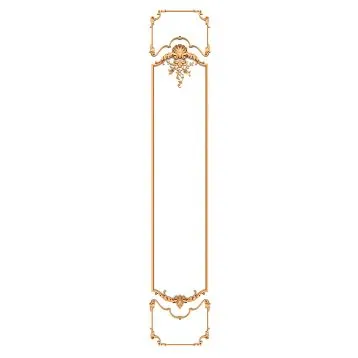
Molding — a profiled trim piece, the basis of wall composition.Wall finishing with moldingsIt allows creating panel systems (boiserie), framing doors and windows, dividing walls into horizontal bands, creating frames for wallpaper or paint.
Moldings are classified by width: narrow (15–30 mm) for fine detailing, medium (40–80 mm) for panel systems, wide (90–150 mm) for architectural accents. By profile, moldings can be smooth (working through geometric section) or ornamented (with botanical patterns, geometric motifs, dentils, Ionic profiles).
Classic use of moldings — creating rectangular panels on walls. Panels are arranged symmetrically, forming a rhythmic grid. Inside the panel, there may be contrasting paint, wallpaper, fabric, wooden paneling. The molding creates a frame that organizes the plane, making it structured.Internal wall finishingWith moldings, a simple wall becomes an architectural element.
Moldings frame door and window openings, creating architectural casings. A wide molding around a door makes the opening grand and ceremonial. A molding at the junction of wall and ceiling creates a transition, visually lifting the room. A horizontal molding at chair-back height protects the wall from mechanical damage and divides it into two zones.
Our factory also produces:


Applied Elements — Individual Accents
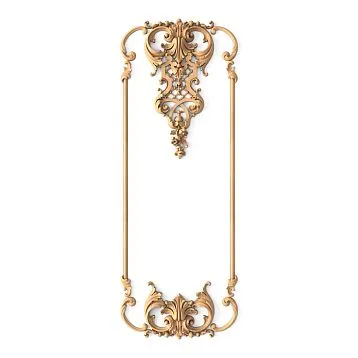
Applied elements — decorative items of fixed size, applied to the wall as ornaments. These can be botanical ornaments (acanthus leaves, rosettes, garlands), geometric patterns (rosettes with radial symmetry), cartouches (escutcheons with scrolls), corner elements (decorations for panel corners), mascarons (faces, lion heads, satyrs).
Applied elements create accents, visual focal points. Corner applied elements at molding intersections transform technical joints into decorative solutions. An applied element above a door or window creates a keystone, emphasizing the importance of the opening. An applied element at the center of a panel becomes the compositional core.decorative wall finishingDesigners use applied elements to place accents.
The size of the applied element should correspond to the scale of the room and surrounding elements. Small applied elements (5–10 cm) are suitable for intimate interiors, creating fine detailing. Medium (15–30 cm) — universal. Large (40–80 cm) require large rooms, high ceilings, becoming independent artworks.
Get Consultation
Relief wall art — art on the wall
Relief wall art is a relief composition that unites multiple elements into a single artwork. Wall art can be narrative (depicting people, animals, mythological scenes) or ornamental (vegetal patterns, geometric compositions). The size of wall art ranges from small (30×40 cm) to monumental, covering entire walls.
Wall art can be single-piece (a complete composition) or modular (composed of several parts that fit together on the wall). Modular wall art is convenient for transporting and installing large compositions. The relief of wall art can be low (bas-relief, protruding 5–20 mm) or high (high-relief, protruding 30–100 mm or more).
A panel can be single-piece (a complete composition) or modular (composed of several parts that fit together on the wall). Modular panels are convenient for transporting and installing large compositions. The relief of the panel can be low (bas-relief, protruding 5–20 mm) or high (high-relief, protruding 30–100 mm or more).
Wall bas-reliefs — sculptural painting
Bas-relief is a type of wall art where the image protrudes from the background plane by less than half its volume. Bas-reliefs create the effect of sculptural painting: a three-dimensional image that remains part of the wall. Classic bas-relief themes include ancient myths, allegories of the seasons, putti with garlands, battle scenes, and portraits.
Modern bas-reliefs can be abstract — relief waves, geometric compositions, vegetal patterns without specific forms. Or thematic — cityscapes, nature motifs, ethnic ornaments.Internal decorative wall claddingHigher-level designs often include original bas-reliefs.
Bas-relief can cover the entire wall, creating an illusion of spatial depth. Or it can be a local accent — a 1×1.5 meter panel that draws the eye. The relief of bas-relief interacts with light: side lighting creates dramatic shadows, emphasizing volume. Frontal lighting makes the relief softer and more painterly.
Pilasters — vertical dominants
Pilaster — a flat vertical protrusion on the wall, imitating a column. It consists of a base, shaft (fust), and capital. Pilasters create vertical divisions on the wall, organize space, and establish rhythm. Pilasters frame door and window openings, divide walls into segments, flank fireplaces, niches, and cabinets.
The height of a pilaster can be full wall height (from skirting to cornice) or partial (e.g., from skirting to 2/3 of wall height). The width of a pilaster ranges from 8 to 25 cm depending on room scale. The shaft of a pilaster can be smooth, fluted (with vertical grooves), or ornamented.
The capital of a pilaster determines the style: Doric (simple, with echinus and abacus), Ionic (with volutes), Corinthian (with acanthus leaves), Composite (combination of Ionic and Corinthian). The base can be simple (plinth) or complex (Attic, alternating torus and scotia).Wall Finishing ElementsDesigns often include pilasters as architectural accents.
Friezes and borders — horizontal bands
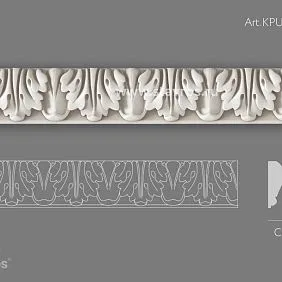
Frieze — a horizontal band, usually below the ceiling, decorated with ornament. In classical order systems, the frieze is part of the entablature between architrave and cornice. In interiors, friezes can be sculptural (relief ornament), painted (painting), or combined. Frieze height ranges from 10 to 40 cm depending on room height.
Frieze ornamentation: meander (zigzag line at right angles), palmettes (stylized palm leaves), garlands (wreaths of flowers and fruits), volutes (egg-shaped elements), acanthus (acanthus leaves), geometric patterns. Frieze can be continuous (ornament flows without interruption) or repetitive (repeating motifs at equal intervals).
Border — a narrow decorative strip (3–10 cm high) that frames planes and creates transitions between zones. A border at 90–120 cm from the floor divides the wall into two zones: lower (panels, dark paint, wallpaper) and upper (light paint, wallpaper). A border around a door or window creates an additional frame.
Consoles and brackets — functional decoration
Console — a projecting element that visually (and sometimes physically) supports a shelf, cornice, or balcony. On walls, consoles are placed under shelves, under windowsills, under fireplace openings. Consoles create the impression that heavy elements do not hang on the wall but rest on supports.
Console shape can be simple S-shaped or richly ornamented with acanthus leaves, volutes, and mask-like elements. Console size ranges from miniature (10–15 cm high) for light shelves to robust (40–60 cm) for fireplace openings. Consoles can be single or paired (symmetrically on both sides of an element).
Bracket — a type of console, usually simpler in form, performing a real load-bearing function. Brackets support heavy shelves, curtain cornices, wall cabinets. They are less decorative, more functional, but with quality execution, they become ornaments.
Wall rosettes — round accents
Wall rosettes — round or polygonal decorative elements with symmetrical ornament radiating from the center. Unlike ceiling rosettes, wall rosettes are smaller in size (5 to 40 cm in diameter) and are used as accents in molding compositions, above doors, or at the centers of panels.
Rosettes can be simple — with petals, radiating rays. Or complex — with multi-layered compositions of leaves, flowers, scrolls. The relief of a rosette creates play of light and shadow, drawing attention. A rosette at the center of a molding panel becomes the compositional core, from which framing lines radiate.
Materials for wall molding
Polyurethane — modern leader
Polyurethane molding — the top choice for modern interiors.Polyurethane wall claddingIt has significant advantages: lightness (a 2-meter cornice weighs 1–2 kg vs. 15–20 kg of plaster), durability (does not crumble or crack under impact), moisture resistance (can be used in bathrooms and kitchens), ease of installation (sticks to special adhesive without additional fixation).
Polyurethane accurately reproduces details, matching plaster. Modern molding technologies allow creating delicate reliefs and complex ornaments that, after installation, are indistinguishable from plaster. Polyurethane molding can be painted with acrylics, patinated, or gilded — all decorative finishes are available.
Another advantage of polyurethane is the flexibility of individual items. There are flexible moldings for curved walls, columns, arches. Ordinary polyurethane also has slight elasticity, which simplifies installation on uneven surfaces.Buy decorative wall finishes— a practical and affordable solution.
Gypsum — classical tradition
Plaster wall finishing— choice for those who value authenticity, historical accuracy, uniqueness. Gypsum is a material with a thousand-year history, used to create masterpieces of antiquity, Renaissance, and Baroque. Gypsum molding has a special matte texture, noble glow, and exquisite detailing.
Gypsum allows creating unique elements: hand sculpting enables realizing any sketch, creating custom reliefs. Gypsum molding can be cast in historical forms, recreating authentic ornaments of the 18th–19th centuries for palace and mansion restoration.
Disadvantages of gypsum: heavy weight (requires reinforced mounting), brittleness (easily damaged during transport and installation), hygroscopicity (absorbs moisture, unsuitable for bathrooms without special treatment), high cost (3–5 times more expensive than polyurethane). Installing gypsum molding requires professionalism — heavy elements are mounted on gypsum mortar with additional mechanical fixation.
Wood — natural warmth
Wooden wall cladding— may include carved elements functionally similar to molding: moldings, appliqués, panels, rosettes. Wood creates a special atmosphere of warmth, coziness, connection with nature. Wood carving is an ancient craft, each handmade item is unique.
Wooden moldings and appliqués are manufactured by machine cutting (routing) or by hand. Machine cutting provides precision repetition and affordable pricing. Hand carving — exclusive, the living energy of the craftsman, uniqueness of each element. Wood species for carving: oak (strong, noble texture), beech (dense, uniform), linden (soft, easy to cut, ideal for fine carving), walnut (hard, beautiful texture).
Wooden molding requires protection: lacquering, oils, waxes protect against moisture, insects, mold. Wood can be stained, patinated, painted. Or left in natural color, where wood grain becomes part of the decor.Internal wooden wall finishes— create cozy, eco-friendly interiors.
Polystyrene — budget option
Polystyrene molding — the most affordable option. Lightweight (lighter than polyurethane), easy to install (sticks to any adhesive), easily cut (even with a regular knife). Price 3–5 times lower than polyurethane. But quality matches: brittleness (breaks under pressure), coarse texture (large-grained structure visible), low detail (fine ornament details not processed), short lifespan (turns yellow within 5–10 years from sunlight).
Polystyrene molding suits temporary solutions, rental apartments, budget projects where high aesthetics are not required. Or for elements viewed from afar — high cornices, where coarse texture is not visible. But for elements at eye level — moldings, appliqués, panels — polystyrene looks cheap, revealing the budget nature of the project.
Composite materials — innovations
Polymer concrete, glass fiber concrete, artificial stone — composite materials combining concrete strength with decorative possibilities. Primarily used for facade molding, but occasionally for interiors — fireplace surrounds, columns, large panels.
Composites withstand any loads, are not afraid of moisture, temperature fluctuations, mechanical damage. They allow creating elements of any complexity with exquisite detailing. Disadvantage — heavy weight requiring reinforced mounting, and high cost. Composite molding — choice for exclusive projects requiring maximum strength and longevity.
Choosing wall molding by interior style
Classicism — strict symmetry
Classical molding is strictly symmetrical, based on the order system. Moldings form rectangular panels arranged with mathematical precision. Pilasters divide walls into equal parts. Ornamentation is restrained: meanders, Ionic, acanthus leaves, laurel wreaths. Color — white, ivory, delicate gilding on capitals possible.
Wall cladding in an apartment— in classical style requires precise adherence to proportions. Panel height, molding width, distances between elements calculated according to the golden ratio. Panels for classicism — ancient themes, allegories, portrait medallions in strict frames.
Baroque and Rococo — lavish decoration
Baroque molding is volumetric, dynamic, theatrical. Moldings are interrupted by cartouches, consoles, garlands. Panels — lavish compositions with angels, amorini, fruits, flowers. Ornamentation: S-shaped and S-shaped scrolls, shells, masks with expressive faces. Gilding is abundant, often on colored backgrounds — red, green, blue.
— Rococo — lightened Baroque. Molding is delicate, asymmetrical, playful. Characteristic motif — rocaille, whimsical shells. Colors are soft: pastel pinks, blues, pistachio. Rococo panels — pastoral scenes, putti with flowers, birds, musical instruments.Interior Wall Finishes Photo— in Baroque style demonstrates luxury and abundance of decoration.
Empire — imperial power
Empire — style of Napoleon’s empire — combines the strictness of classicism with symbols of power. Molding includes military attributes: laurel and oak wreaths, crossed swords, shields, eagles, torches. Egyptian motifs — sphinxes, palmettes, lotuses. Pilasters are powerful, with rich Corinthian capitals.
Color solution is contrasting: white or gold molding on bright walls — magenta, emerald, blue. Empire panels — battle scenes, triumphs, allegories of victory. Moldings form large panels with gilded frames. Empire — style of grand halls, offices of power.
Modern — natural lines
Modern rejected classical orders and symmetry. Modern molding — smooth, flowing lines reminiscent of plant stems, waves, women’s hair. Ornamentation — stylized irises, lilies, poppies, dragonflies, butterflies. Asymmetry — key principle: moldings are placed freely, creating a sense of organic growth.
Modern paneling — stylized plant compositions, female profiles with flowing hair, abstract wavy forms. Colors are complex: lilac, green-gray, ochre. Modern — a style for creative, artistic interiors.
Art Deco — geometric luxury
Art Deco — style of the 1920s–1930s, combining geometry with luxury. Moldings feature stepped profiles, zigzags, sun rays, stylized fountains. Moldings form geometric compositions — hexagons, trapezoids, stepped frames. Panels — stylized Egyptian and African motifs, graphic plant patterns.
Materials are luxurious: gold leaf, silvering, black lacquer.3D Wall FinishingMay include Art Deco elements to create expressive, glamorous interiors. Art Deco — a style for status-oriented, impactful spaces.
Neoclassicism — modern classicism
Neoclassicism — adaptation of classical forms to modern lifestyle. Moldings are more restrained, with simplified proportions and restrained ornamentation. Moldings form simple panels, without excessive detailing. Pilasters are narrow, with simplified capitals. Panels are small, with minimalist plant motifs.
Color — white, gray, beige, possible delicate gold leaf. Neoclassicism — a universal style suitable for city apartments, country houses, offices.Wall cladding optionsIn neoclassicism, they combine classical elegance with modern comfort.
Minimalism — molding without ornamentation
Minimalist moldings — restrained profiles without ornamentation, simple geometric forms. Moldings are smooth, with clear geometric cross-sections. Panels are strict, rectangular, without embellishments. Color often blends with the wall; elements work through relief, not contrast.
Plank wall cladding— a modern alternative to moldings in minimalism.wall finishing with lathsCreates rhythm and relief without classical associations. Minimalism requires precision in proportions and quality of execution — here, there is no ornamentation to cover up mistakes.
Wall molding installation: step-by-step guide
Stage 1: Surface preparation
The wall must be flat, dry, clean, and strong. Check flatness with a level or laser level: deviations over 5 mm per meter require leveling. Leveling is done with plaster (for large irregularities) or putty (for minor defects). After leveling, the wall is sanded, and dust is removed.
The wall is primed with deep-penetration acrylic primer. Primer strengthens the surface, improves adhesive bond, reduces absorbency. Primer is applied with a roller or brush in one to two coats with intermediate drying time of 2–4 hours. After full drying of the primer (usually 24 hours), proceed with installation.
Stage 2: Marking and planning
Before installation, create a layout of element placement. For panel systems made of moldings, draw rectangles on the wall, maintaining symmetry and proportions. Use a laser level or plumb bob to create strictly vertical and horizontal lines. Markings are made with a pencil, thin lines that will later be covered by molding.
For appliqués and panels, mark central points and axes of symmetry. Check that elements are placed at a comfortable viewing height: panels above a fireplace — at eye level of a seated person (around 120–140 cm from the floor), appliqués above a door — in the upper third of the opening.Decorative wall finishingRequires careful planning.
Stage 3: Element preparation
Unpack the molding, check completeness and absence of damage. Polyurethane elements must acclimate to room temperature — leave them in the room for a day before installation. This prevents deformation after installation.
Moldings must be cut to required sizes and angles. For right angles (90 degrees), use a 45-degree bevel cut. It’s easiest to cut with a miter saw with a swivel base, which ensures precise angle. If you don’t have a saw, use a miter box — a device with guides for cutting at required angles.
Cut edges are sanded with fine sandpaper (P180–P240), and burrs are removed. If the element will be painted after installation, the back side (which adheres to the wall) is primed for better adhesion.
Stage 4: Applying adhesive and mounting
For polyurethane molding, use special mounting adhesive — liquid nails, polyurethane adhesive, acrylic mounting adhesive. Adhesive is applied to the back of the element in a zigzag line or dots (for small appliqués). Do not apply adhesive excessively — excess will squeeze out and stain the wall.
Element is placed on the wall according to the layout, pressed with even pressure. Excess adhesive is immediately wiped off with a damp cloth. Element is held pressed for 3–5 minutes (depending on adhesive type — read instructions). Heavy elements are additionally secured with painter’s tape or supported until the adhesive fully sets (usually 24 hours).
Gypsum molding is mounted on gypsum plaster (plaster, gypsum putty). Plaster is applied to the wall and to the element, element is pressed and leveled. Heavy gypsum elements are additionally secured with anchors, self-tapping screws, or anchors. Fastener heads are recessed and puttied.
Stage 5: Filling joints and seams
After the glue dries (24 hours), the joints between elements are filled with putty. For polyurethane, acrylic putty is used; for plaster, plaster putty is used. The putty is applied with a rubber spatula, pressed into the joint, and excess is removed.
After the putty dries (2–4 hours), the joints are sanded with fine sandpaper (P240–P320) until smooth. Quality work makes the joints invisible — the molding appears as a single element. The joint between the molding and the wall is also filled with putty if there are gaps.
Step 6: Painting and decorative finishing
The molding is primed with acrylic primer to improve paint adhesion and ensure even coloring. After the primer dries (2–4 hours), paint is applied. Interior acrylic or latex paints are used, matte or semi-matte (gloss on molding is not recommended).
Paint is applied with a brush (for small details and relief) or a short-pile roller (for smooth surfaces). Usually, 2–3 coats with intermediate drying are required.Wall cladding for paintingincludes preparation and painting of the molding elements.
To create an aged effect, patination is applied: after the base coat, dark paint (umber, sienna, gray) is rubbed into the recesses of the relief, creating contrast. Gold leaf is applied using leaf gold on a special adhesive (mixin) or imitation gold — gold paint or gold leaf. Lacquering — applying translucent layers of paint — creates depth of color and complex shades.
Application of wall molding in different rooms
Living room — formal space
Living room — the place where wall molding is fully expressed. Moldings create a panel system dividing walls into symmetrical segments. Pilasters frame fireplaces, televisions, bookcases. A panel above the fireplace becomes a compositional center. A frieze under the ceiling unifies the space, creating a sense of completion.
Wall finishing in a houseA living room with molding creates an atmosphere of grandeur and elegance. The molding color can be classic white or matching the wall color for a modern effect. Gold leaf is appropriate in classical interiors. Large appliqués in the corners of panels, consoles under shelves, and rose centers on panels — all contribute to creating a rich, detailed interior.
Bedroom — intimate elegance
In the bedroom, molding is more intimate and delicate. Moldings frame the headboard, creating a decorative frame. A panel above the headboard — a romantic scene, botanical ornament, abstract composition. Small appliqués on walls create elegant accents.
The molding color in the bedroom is often soft: ivory, pastel, blue-gray, gray tones. Patination creates an effect of softness and age. Molding in the bedroom should not be aggressive or large — it creates a background for rest, a calm, soothing atmosphere.Decorative Wall Finishes PhotoBedrooms demonstrate delicate use of molding.
Office — formal dignity
An office requires formal, solid molding. Bouillons of moldings and wooden panels create a classic English or French style. Pilasters frame bookcases and doorways. Panels with heraldic symbols, books, globes, and scientific instruments create thematic decor.
Molding color — white on dark walls (creates contrast, formality) or dark wood (creates monolithic solidity). Gold leaf is used sparingly — on pilaster capitals, panel frames. An office is a place where molding emphasizes status, seriousness, and a business atmosphere.
Dining room — hospitality and coziness
In the dining room, molding creates an atmosphere of hospitality and festivity. Moldings frame the buffet and sideboard areas. A panel on the wall opposite the table draws attention and becomes a conversation topic. A frieze with botanical or gastronomic motifs (grapevines, fruits, game) emphasizes the room’s purpose.
Pilasters divide the wall into segments where paintings, mirrors, and decorative plates can be placed. Consoles under shelves create spaces for vases and decorative dishes. The dining room is a space where molding can be sufficiently rich and decorative without becoming museum-like.
Hallway and corridor — first impression
Entryway — the face of the house, the first thing a guest sees. Molding here creates an impression of a status-conscious interior at first glance. Moldings on walls, sculpted doorways, appliqués above doorways, mirror frames.Wall finishing and decorationThe entryway sets the tone for the entire house.
A corridor, especially long, benefits from vertical rhythm of pilasters and horizontal division by moldings. This visually makes the corridor more interesting, breaks the monotony of a long wall. Appliqués placed at equal intervals create rhythm, guiding the eye along the space.
Bathroom — moisture-resistant beauty
Molding in the bathroom is always polyurethane, moisture-resistant. Moldings frame mirrors, creating decorative frames. A panel above the bathtub with marine motifs, shells, waves emphasizes the room’s purpose. Small appliqués on walls create elegant accents.
Molding color in the bathroom can be white or colored — blue, green, turquoise, matching the tiles. Gold leaf or silvering adds luxury. A bathroom with molding transforms from a utilitarian space into a spa area, a place for relaxation.
Typical mistakes when choosing and installing wall molding
Scale error — small molding in a large room
A common mistake — using too small elements in spacious rooms with high ceilings. A narrow molding (30–40 mm) in a hall with 3.5-meter ceilings disappears, looks unclear. Small appliqués (10–15 cm) in a large living room do not create focal points, visually scatter.
Rule: the scale of molding should correspond to the scale of the room. For high ceilings (3.2–4 meters), moldings 80–120 mm wide, appliqués 30–50 cm, panels 80×120 cm and larger are needed. For standard rooms (ceilings 2.7–3 meters), moldings 50–80 mm, appliqués 20–35 cm are suitable. For small rooms (ceilings 2.5 meters) — moldings 40–60 mm, appliqués 15–25 cm.
Style error — incompatible mix
Molding must match the interior style. Baroque ornate moldings with angels in a minimalist interior look ridiculous. Strict classical moldings in a loft with brick walls and industrial furniture create a dissonance.
Demonstrate successful stylistic solutions.Wall finishing samplesdemonstrate successful stylistic solutions.
Symmetry error — imbalance
Classical molding requires strict symmetry. Wall panels must be the same size and spaced evenly. Corner moldings must be identical. Pilasters must stand vertically, capitals at the same level.
Asymmetry is acceptable only in styles where it is a principle — modern, contemporary eclecticism. But even there, asymmetry must be thought out, creating dynamic balance, not random.
Mounting error — poor surface preparation
Molding highlights wall imperfections. If the wall is uneven, the molding will repeat all waves, creating gaps either at the bottom or top. If the wall is dusty or weak, the adhesive won’t set, and elements will fall off. If the wall is not primed, the adhesive will be absorbed, failing to provide secure fixation.
Requires patience and care.DIY decorative wall finishingrequires patience and carefulness.
Coloring error — incorrect color choice
The color of molding significantly affects perception. White molding on white walls disappears — it needs to be emphasized with a colored background or side lighting. Contrasting molding (black on white, dark gray on light) creates a graphic, modern effect, but requires flawless wall quality and installation — any imperfections are visible.
Colored molding (blue, green, pink) — a bold solution that can be striking but risky. It’s important that the molding color harmonizes with the overall interior palette, not appearing random. Gold requires moderation: excessive gold in a small room creates a kitsch, museum-like feeling.
FAQ: Answers to popular questions about wall molding
Wall molding — decorative relief elements installed on walls to create architectural expression: moldings, appliqués, panels, bas-reliefs, pilasters, friezes. Made from plaster, polyurethane, or wood.
Wall molding — decorative relief elements installed on walls to create architectural expressiveness: moldings, appliqués, panels, bas-reliefs, pilasters, friezes. Made from plaster, polyurethane, or wood.Sculptural wall decorationAdds volume, relief, and style to the interior.
For most projects, polyurethane is the optimal choice: lightweight, durable, moisture-resistant, easy to install, and affordable. Plaster is for exclusive projects, restoration, when maximum detail, authenticity, and the ability to create unique elements are needed. Polyurethane is 3–5 times cheaper than plaster.
For most projects, polyurethane is the optimal choice: lightweight, durable, moisture-resistant, easy to install, and cost-effective. Plaster is suitable for exclusive projects, restorations, when maximum detail, authenticity, and the ability to create unique elements are required. Polyurethane is 3–5 times cheaper than plaster.
Can molding be installed by oneself?
Polyurethane molding can be installed by yourself with basic repair skills. You need: adhesive, circular saw or miter saw, putty, paint, level. Plaster molding is better left to professionals — it is heavy, fragile, and requires experience.Wall-mounted elementsPolyurethane appliqués — a good option for beginners.
How much does wall molding cost?
Polystyrene moldings — from 50 rubles per linear meter. Polyurethane — from 300 to 3000 rubles per meter depending on complexity. Polyurethane appliqués — from 200 to 5000 rubles per piece. Plaster molding — from 500 to 10,000 rubles per linear meter, panels from 15,000 rubles. Custom work — from 30,000 rubles.
Dry cleaning with a soft brush or vacuum cleaner with a brush attachment removes dust. Wet cleaning with a well-wrung cloth without aggressive cleaners. Painted molding is more resistant. Do not wash plaster molding excessively. Polyurethane molding can be wiped with a damp cloth. Damaged elements are patched and repainted.
Dry cleaning with a soft brush or vacuum cleaner with a brush attachment removes dust. Wet cleaning with a well-wrung cloth without aggressive cleaning agents is recommended. Painted molding is more resistant. Do not wash plaster molding excessively. Polyurethane molding can be wiped with a damp cloth. Damaged elements are patched and repainted.
In which styles is wall molding appropriate?
Classicism, Baroque, Rococo, Empire, Modern, Art Deco — historical styles where molding is mandatory. Neoclassicism, contemporary classicism — molding is adapted and simplified. Minimalism, Scandinavian style, loft — possible minimalist molding without ornamentation.Wall finishing photos in apartmentsdemonstrates diversity.
What is boiserie?
Boiserie — French system of wall panels framed with moldings. Classical boiserie — wooden panels at the lower part of the wall, framed with carved moldings. Modern boiserie can be created with moldings on painted walls, creating an imitation of panels.Internal decorative wall finishingfor creating wall molding.
Yes, you can paint stucco; it is a common practice. Acrylic or latex paints for interiors are used. First, the stucco is primed, then paint is applied in 2–3 layers. Possible options: white stucco on a colored wall (classic), stucco matching the wall color (modern approach), colored stucco (bold solution), gilding or patina.
Yes, wall molding is painted with acrylic or latex paints for interiors. It is primed first, then painted in 2–3 layers. Options: white, matching wall color, contrasting, with gold leaf, with patina. Painting hides the material of manufacture — painted polyurethane is indistinguishable from plaster.
What is a sculptural panel?
Sculptural panel— a relief composition on the wall, unifying multiple elements into a single artwork. It can be narrative (people, animals, scenes) or ornamental (vegetal, geometric patterns). Size from 30×40 cm to several meters. A panel is a visual accent in interior design.
What are wall reliefs?
Wall reliefs— relief images protruding from the background plane by less than half their volume. They create the effect of sculptural painting. Themes: ancient myths, allegories, portraits, abstractions. A relief can cover an entire wall or serve as a local accent. Relief interacts with light, creating shadow play.
Conclusion: STAVROS — expert in wall molding
Wall molding is a powerful tool for transforming interiors. It adds a third dimension to flat surfaces, creates architectural expressiveness, emphasizes style, and sets accents. From classic moldings to modern appliqués, from ornate reliefs to minimalist profiles — the range of solutions is vast.Decorative wall paneling, Decorative wall finishing with woodcan complement molding, creating complex compositions.
Choosing wall molding requires understanding the interior style, room proportions, and material properties. Polyurethane — a practical, universal, and accessible material for most projects. Plaster — the choice for exclusive, historical interiors. Wood — for those who value naturalness and warmth. Installation requires careful preparation, precision, and patience — but the result is worth it.
Wall finishing in a private house, Interior wall finishing in an apartment, Wall room finishing— each project is unique. Wall molding adapts to any task: from a chamber bedroom to a grand hall, from a strict office to a romantic dining room.
STAVROS — the leading supplier of materials for decorative interior finishes — offers an extensive range of wall molding. The catalog includesPolyurethane Items— moldings of all sizes and profiles, appliqués with diverse ornamentation, panels, pilasters with capitals and bases, consoles, rosettes.moldings, cornices, baseboards— made of natural wood for those who value natural materials.
STAVROS works with end clients, designers, architects, and construction companies. Professional consultants will help select elements to match the project’s style, calculate the required quantity, explain installation nuances.Racks for internal wall cladding— a modern alternative to classic moldings, also available in the assortment.
Decorative Wall Finishing in a Room, Decorative wall finishing for interiors— all these tasks are solved with STAVROS wall molding. High-quality materials, precise dimensions, detailed relief, eco-friendliness, durability — the company offers solutions for projects of any complexity and budget.
Wall molding transforms a blank space into a work of architectural art.Decorative wall finishingtransforms an indifferent space into a work of architectural art.
STAVROS — this is not just selling materials. It is a center of expertise where specialists, passionate about their craft, know every nuance of working with molding, ready to share experience and assist at every stage of the project. From selecting elements to consultations on installation and maintenance — STAVROS accompanies you at every step.
Relief wall finishing, 3D wall finish, Decorative wall finishing in Moscow— the company’s project geography covers the entire country. Thousands of completed projects, from private apartments to large public spaces, confirm STAVROS’s professionalism and reliability.
Creating an interior with wall molding is a creative process where every detail matters. Moldings set rhythm and structure, appliqués set accents, panels become compositional centers, pilasters organize space. Everything works together, creating a symphony of forms, lines, reliefs, light, and shadow.
is not a fleeting trend. It is timeless classicism that has adorned palaces and temples for centuries, and today is accessible to anyone who values beauty, quality, and individuality. From ancient orders to modern minimalism — molding adapts to any style, remaining relevant and expressive.
If you plan towall finishing in an apartment, wall finishing in a house, wall finishing in a private house— consult STAVROS specialists. Here, you will be helped to choose elements that perfectly fit the project’s concept, calculate the required quantity, learn about installation nuances, and receive optimal price-to-quality ratios.
Wall molding from STAVROS — quality, reliability, and aesthetic perfection guaranteed. Each element undergoes strict quality control, meets European standards, and is made from eco-friendly materials. Polyurethane products feature precise dimensions, clear relief, and stable geometry. Wooden elements are selected from the best species, undergo proper drying and finishing.
Your home deserves better. Wall molding is not just decoration—it’s a way to express your individuality, create a space that reflects your tastes, values, and lifestyle. STAVROS Company provides tools to realize any design idea—from classic luxury to modern minimalism.
Transform your space with STAVROS wall molding. Let every wall tell its story, every relief create a play of light, every detail contribute to a harmonious, expressive, memorable interior. Because a home is not just walls. It’s a place where beauty, comfort, and soul reside.