Article Contents:
- Why decorate walls: aesthetic and practical functions
- Classification of wall decor: a designer's arsenal
- Moldings: universal structuring strips
- 3D panels: modern volumetric relief
- Pilasters: vertical architectural elements
- Appliques: point decorative accents
- Frames and trims: accent contours
- Friezes and borders: ornamental strips
- Corner elements: installation practicality
- Wall molding installation: step-by-step technology
- Wall preparation: foundation of reliability
- Marking: composition accuracy
- Wall mounting adhesive: adequate choice
- Molding installation technique
- 3D panel installation: modular technology
- Pilaster installation: vertical architecture
- Wall decoration ideas: stylistic compositions
- Classical boiserie: aristocratic panels
- Accent walls with 3D panels: volumetric modernity
- Pilasters and symmetry: order architecture
- Molding frames: minimalism graphics
- Frequently asked questions: installation and operation practice
- Conclusion: walls as an architect's canvas

A wall is silent. Painted monochromatically, covered with neutral wallpaper, it performs a utilitarian function (divides space, holds shelves, serves as furniture background—nothing more). A wall with molding speaks. Moldings form strict symmetrical frames, pilasters vertically divide the plane creating classical rhythm, appliques accentuate zones turning the wall into an architectural composition—space gains character, style, individuality.Polyurethane wall moldingA transformation tool accessible to everyone (simple fast adhesive installation, democratic price, visual effect incomparably more powerful than costs—a standard apartment turns into a memorable authorial classical interior).
Wall decor is older than ceiling decor. Egyptian temples (walls covered with reliefs and bas-reliefs—pharaohs, gods, hieroglyphs told the story of eternity), Greek palaces (columns, pilasters, friezes divided walls creating harmonious proportional order architecture), Roman baths and villas (boiserie panels, marble stucco divided walls horizontally and vertically—zoning, decoration, structuring), Renaissance, Baroque, Classicism (walls of palaces and mansions were adorned with incredible stucco—gilded moldings, carved pilasters, medallions, panels, friezes—the apotheosis of decorative art). The twenty-first century democratized technology (polyurethane replaced plaster, carved wood, marble, cost dropped dozens of times, installation time reduced from weeks to days—classical wall decor became massively accessible to the middle class).


Why decorate walls: aesthetic and practical functions
A bare wall is visually poor. The gaze slides without finding engaging details (the brain processes information quickly, a monotonous plane doesn't stimulate, attention scatters, space is perceived as a faceless box). A wall with molding is visually rich (moldings create graphic lines, pilasters set rhythmic verticals, appliques accentuate focal points—the gaze finds details, scans relief and chiaroscuro, the brain is engaged, perception is enriched). Psychological effect (a room with decorated walls seems more interesting, expensive, cozier—even if the area, square footage, and furniture are identical to a bare room, the subjective impression of richness is many times stronger).
Practical functions of wall decor. Zoning (moldings divide the wall into panels — bottom darker, top lighter, a resting area is highlighted with a frame, a dining area is framed — space is structured without physical partitions), defect masking (cracks, unevenness, wallpaper seams are hidden under moldings — cosmetic repair instead of major, saving time and money of thousands of rubles), corner protection (pilasters, corner overlays protect protruding corners from damage by furniture or vacuum cleaners — practicality and aesthetics are compatible), integration of utilities (cables and wires are hidden behind wide moldings — functionality does not kill beauty).




Classification of wall decor: a designer's arsenal.
The range of elements is extremely wide (each type solves specific tasks, combination gives infinite compositions — from restrained minimalism to lush Baroque). We will examine categories in detail with practical application.
Our factory also produces:


Moldings: universal structuring strips
Wall molding — a profiled strip (standard length two to two point forty meters, width from two to fifteen centimeters, thickness one to three centimeters — mounted vertically, horizontally, diagonally in any configuration). Profile is relief (protrusions, recesses, ornaments create chiaroscuro — simple smooth semicircular for minimalism, complex carved with acanthus leaves and dentils for classic and Baroque). Material is dense polyurethane (three hundred to three hundred fifty kilograms per cubic meter — relief clarity is photographic, detailing is jewelry-like, paint lays perfectly).
Functions of moldings on the wall. Creating frames and panels (moldings form rectangles and squares on the wall — inside, contrasting paint, wallpaper, or fabric; classic boiserie panels are imitated affordably), horizontal division (molding at a height of ninety to one hundred twenty centimeters from the floor — the lower part of the wall, the plinth, is darker and more textured, the upper part is lighter, classic proportions are reproduced), vertical division (vertical moldings with a spacing of sixty to one hundred twenty centimeters — the wall is divided into sections, rhythm is regular, architectural quality appears), framing objects (mirrors, paintings, televisions, doors are outlined with molding — contour emphasizes and highlights significance).
Dimensional typology of wall moldings. Narrow (width two to four centimeters — delicate, barely noticeable, modern interiors, minimalism, restrained neoclassicism, price two hundred to three hundred fifty rubles per meter), medium (five to eight centimeters — universal, visible but not overwhelming, classic for most projects, price three hundred to five hundred rubles), wide (ten to fifteen centimeters — monumental, massive, high ceilings, spacious rooms, Baroque, Empire, ceremonial style, price five hundred to one thousand two hundred rubles per meter).
Get Consultation
3D panels: modern volumetric relief.
3D panel — a square or rectangular slab (standard size fifty by fifty, sixty by sixty, thirty by one hundred twenty centimeters, thickness two to four centimeters, three-dimensional relief depth five to thirty millimeters — waves, squares, honeycombs, abstract geometry, imitation of brick, stone, wood). Installation is modular (panels are glued butt-to-butt forming a seamless plane or with contrasting grout — an accent wall behind a sofa, bed, or television is fully covered, the effect of volumetric texture is powerful).
Styles of 3D panel reliefs. Geometric (squares, rhombuses, hexagons, triangles — constructivism, minimalism, high-tech, relief is strict, rhythmic), wave-like (horizontal, vertical, radial waves — organic, softness, movement, modern styles, eco, Scandinavian), imitative (brickwork, stone wall, wooden planks — loft, industrial, country, natural texture without the weight and cost of real materials), abstract (chaotic patterns, asymmetry, artistry — avant-garde, eclecticism, bold modernity).
Application of 3D panels. Accent wall (behind a sofa in the living room, behind a bed in the bedroom, behind a television — the area is highlighted by volume, attracts attention, becomes the focal point of the composition), zoning (part of the wall is covered with panels — a resting area, work area, dining area is designated without partitions), commercial interiors (hotel and office receptions, restaurant bar counters, exhibition stands — volumetric texture impresses and is memorable, status is enhanced).Polyurethane wall moldingincludes 3D panels of dozens of reliefs, textures, and styles.
Pilasters: vertical architectural elements.
Pilaster — a vertical projection of rectangular cross-section (height from floor to ceiling or partial one and a half to two meters, width eight to twenty centimeters, projection from the wall three to eight centimeters, consists of base, capital, and shaft — imitates a flat column built into the wall). Classical orders (Doric simple massive, Ionic with volutes on the capital, Corinthian with lush acanthus leaves — styles from strictness to luxury, ceiling height determines the choice of order).
Functions of pilasters. Vertical division of the wall (pilasters with a spacing of one and a half to three meters divide the wall into sections — classical architectural rhythm is reproduced, the plane is structured), framing openings (door, window, niche are flanked symmetrically by pilasters — the opening is emphasized, framed, becomes an architectural portal), zoning (pilasters mark the boundary of zones — living room-dining room, bedroom-dressing room, visual transition without a door), masking structures (a load-bearing column is clad with a decorative polyurethane pilaster — a utilitarian structure turns into a style element).
Completeness of pilasters. Base (lower part height fifteen to thirty centimeters, profile stepped, protruding — visual support, solid foundation), shaft (middle part smooth or fluted with vertical grooves — height from floor to ceiling minus base and capital, can be solid two-meter or composite from meter-long sections joined), capital (upper part height twenty to fifty centimeters, ornamented, carved — Ionic volutes, Corinthian acanthus leaves, lush completion). Pilasters are sold as sets (base plus shaft one to three sections plus capital, price five to twenty-five thousand rubles per set depending on height, order complexity).
Overlays: point decorative accents.
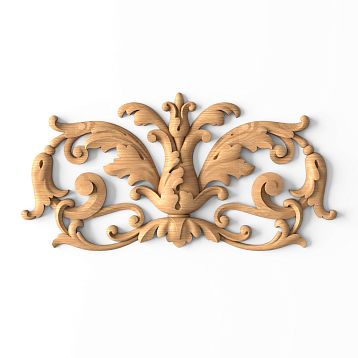
Overlay — a small-sized element (ten to fifty centimeters length and width, thickness one to three centimeters, shape round, oval, rectangular, figured — rosettes, medallions, cartouches, corner ornaments, central accents). Function is accentuation (glued in the center of a molding panel, on corners of frames, above doors, at intersections of moldings — a visual focal point, ornament is enhanced, composition is completed).
Types of overlays. Rosettes (round diameter ten to thirty centimeters, concentric or radial ornament — center of a boiserie panel, intersection of vertical and horizontal moldings, classic symmetry), medallions (oval, rectangular, with narrative or ornamental motifs — faces, coats of arms, flowers, arabesques, above doors on friezes, artistic accents), corner (L-shaped, acanthus or geometric ornament — corners of molding frames, junctions of perpendicular moldings, masking of angular joints), cartouches (shield-shaped, figured, center empty or relief — monograms, dates, symbols, Baroque, Rococo decorative styles).
Placement of overlays is compositional. Centering (overlay in the geometric center of a rectangular panel — absolute symmetry, classic strictness), corner (overlays at all four corners of a panel — regular rhythm, perimeter enhancement), linear (overlays along a horizontal or vertical molding with equal spacing — ornamental frieze, decorative strip), chaotic (overlays of different sizes arbitrarily — modern eclecticism, living asymmetry).
Frames and trims: contours of accents.
Frame — moldings forming a closed contour (rectangular, square, round, oval — mirror, painting, television, decorative panel are framed). Function is accentuation of boundaries (an object inside a frame is visually more significant, gaze is fixed, spatial hierarchy is built — the main thing is framed, secondary is without a frame).
Trimming of openings. Door (polyurethane architraves wide five to twelve centimeters with ornament or smooth — the doorway is highlighted, becomes an architectural portal, above the door a pediment or triangular or segmental pediment — classicism, Empire, solemnity), window (reveals are trimmed with moldings, the outer contour is reinforced with a wide profile — the window is accentuated, the interior's facade quality is emphasized), niche (moldings along the perimeter of the niche, inside contrasting paint or hidden lighting — the niche turns into a decorative display showcase).
Empty frames on walls. Imitation of picture galleries (moldings form rectangles and squares — inside contrasting paint or wallpaper or nothing but the frame, gallery or museum effect, walls come to life compositionally), zoning by color (inside frames one color paint, outside another — zones are highlighted by color and structure simultaneously, design is complex, multi-layered), affordable boiserie (molding frames imitate wooden panels — visually expensive, actually accessible, classic democratized).Polyurethane wall decorincludes framing moldings of dozens of profiles, sizes, and styles.
Friezes and borders: ornamental strips.
Frieze — a horizontal strip under the ceiling (height five to twenty centimeters, repeating ornament — Greek meander, palmettes, garlands, geometry — ancient classical tradition). Mounted at a height of twenty to forty centimeters from the ceiling (visually separates the ceiling from the wall, creates a decorative strip encircling the room along the perimeter — ornamental rhythm, compositional completeness).
Wall border (similar to a frieze but height smaller three to eight centimeters, ornament more delicate — a strip dividing wall zones horizontally, at a height of ninety to one hundred twenty centimeters divides the wall into lower and upper parts, or under the ceiling as a simplified frieze). Application (classic interiors, children's rooms with thematic borders, commercial spaces restaurants hotels — decorativeness without overload, restrained elegance).
Corner elements: installation technology.
Internal and external corner — the problem of joining moldings (cutting at forty-five degrees requires precision of a miter box and skills, complex ornaments do not join perfectly — gaps and misalignments spoil the appearance). Solution: ready-made corner elements (produced specifically for each molding profile — internal corner L-shaped, external also, ornament continues seamlessly, installation is radically simplified — glue straight sections of moldings, insert ready-made corners, the joint is perfect, time is saved two to three times).
Types of corner elements. Simple (for smooth semi-circular moldings - exact ninety-degree angle, easy joining), ornamental (for carved moldings with acanthus and dentils - ornament on the corner element repeats the molding ornament, transition is smooth, visually seamless, professional quality), decorative corner blocks (square overlays for corners with rosettes and ornaments - not just a molding joint but a decorative accent, corners of frames are decorated and enhanced, Baroque and Classicism opulent styles).
Installation of wall molding: step-by-step technology
Installation of polyurethane elements on walls is easier than on ceilings (gravity is not an enemy but an ally, the element is pressed against the wall by its own weight, adhesive sets faster, supports are rarely needed). Let's consider the stages sequentially and practically.
Wall preparation: the foundation of reliability
The wall must be clean (dust, dirt, grease are removed with a damp cloth and detergent - surface is degreased with alcohol if it's a greasy kitchen, adhesive will set firmly), dry (moisture is excluded - adhesive will not polymerize correctly, the element may peel off after months, checked by hand touch if cold and damp, dry it), even (irregularities greater than three to five millimeters create gaps - leveled with putty or compensated with a thick layer of adhesive, perfection is not mandatory but rough defects are unacceptable), strong (crumbling plaster, peeling wallpaper are removed with a putty knife, primed with deep-penetration acrylic primer - surface strengthening is critical).
Wall priming. Universal acrylic primer (applied with a roller, brush in hard-to-reach corners, consumption one to two hundred grams per square meter, dries in two to four hours). Functions (strengthening - binds particles of old plaster, paint, wallpaper, adhesion improves - adhesive sets three to four times stronger, absorbency decreases - wall does not suck moisture from the adhesive, element adjustment time increases). Priming is mandatory (cost is negligible, two to four hundred rubles per room, reliability is many times higher, neglect is risky and economically foolish).
Marking: composition accuracy
Molding frames (calculate panel size - wall length four meters, height two seventy, three panels horizontally equals width of each one hundred twenty centimeters minus molding width, two vertically equals height of each one hundred ten, draw a grid with pencil and laser level - lines strictly horizontal and vertical, parallelism and perpendicularity checked with a construction square, deviation of one to two millimeters per meter is noticeable to the eye). Pilasters (measure wall width, divide by desired number of sections - wall five meters, four sections, pilasters every one meter twenty-five from corners, mark verticals with pencil, check with plumb line strictly vertical, base is installed first on floor or on plinth).
3D panels (start from corner or center symmetrically - depends on wall configuration and number of panels, mark bottom horizontal with level, panels are glued from bottom to top in rows, joints are aligned tightly butt-to-butt or with two to three millimeter contrasting grout lines). Overlays (panel center is determined by measuring diagonals, intersection point is geometric center, overlay is centered, contour is marked with pencil, glued and pressed).
Adhesive for wall mounting: adequate choice
Specialized polyurethane adhesive (Tytan Professional, Orac FDP500, Moment Montazh Supersilny - price four hundred to eight hundred rubles per three hundred to five hundred milliliter tube, consumption one tube for ten to twenty meters of moldings, fifteen to thirty overlays). Advantages (chemical affinity of polyurethane to polyurethane - maximum molecular adhesion, initial setting five to ten minutes holds without hands, full cure in twenty-four hours, pull-off strength tens of kilograms, elasticity after polymerization compensates for thermal expansion and vibrations, does not crack or peel for decades).
Alternative: universal liquid nails (Moment Montazh Express, Titan Wild, Kraftool - price two hundred to four hundred rubles more affordable, hold sufficiently for light narrow moldings and thin panels, for heavy pilasters and large overlays specialized adhesive is better, reliability is higher, insurance is more expensive than adhesive cost). Acrylic mounting adhesive (white, setting slower twenty to thirty minutes, requires temporary supports, cheaper one hundred fifty to three hundred rubles, more convenient for non-professionals - adjustment time longer, mistakes can be corrected, final strength comparable to polyurethane).
Molding installation technique
Molding is applied to the marked location (check fit and tight contact with wall, if gaps or wall unevenness - mark problematic spots, later compensate with thick adhesive layer or locally putty the wall), cut to length (internal corners are cut at forty-five degrees with a miter box if no ready-made corner elements, measure accurately, better measure twice cut once, one centimeter error, molding short, gap ugly), adhesive is applied (in a zigzag pattern on the back side contacting the wall - coverage sixty to eighty percent of area, not solidly excess, not in dots contact area small), pressed (with palms evenly not fingers - pressure is distributed, adhesive flattens and fills microscopic irregularities, hold for three to five minutes until initial setting, release, molding sits by itself).
Joining moldings. Corners (use ready-made corner elements or cut forty-five degrees with miter box - for complex ornaments ready-made corners are mandatory, manual joining of pattern cannot be perfectly done, fill joint with protruding adhesive, remove excess immediately with damp cloth, after drying gaps are puttied, sanded, painted, disappear), end connections (molding joined end-to-end on straight wall - ends cut perpendicularly or at an oblique angle hiding the joint, adhesive applied to both ends, press tightly, remove excess, after drying sand, putty, paint, seam invisible).
3D panel installation: modular technology
Panels are glued from bottom to top (first row horizontally aligned strictly with laser level - any deviation of one to two millimeters accumulates towards the top, tenth row will shift by centimeters visible to the eye, ruining the composition). Adhesive is applied (with notched trowel comb on the back side of panel in a solid layer - three to five millimeter teeth ensure even distribution, optimal consumption, no air under panel, maximum adhesion). Panel is pressed against wall (aligned with marking and adjacent panels, joints tight butt-to-butt if seamless installation or with two to three millimeter gap if contrasting grout is planned, press with palms evenly for thirty seconds to a minute, adhesive sets, panel holds).
Panel trimming. At ceiling and floor (panel may not fit entirely - trimmed with hacksaw for metal or electric jigsaw, cut is even, test fit before gluing, five to ten millimeter gaps are normal, will be covered by baseboard or cornice). At sockets and switches (hole of required size is cut out - with hole saw or jigsaw, test fit mandatory, mistake not correctable, panel ruined). Corner panels (trimmed at forty-five degrees or joined with straight end - depends on type of angle internal or external, visually both options acceptable, choose easier to install).
Pilaster installation: vertical architecture
Base is installed first (on floor or on plinth fifteen to thirty centimeters high from floor - vertical checked with plumb line, adhesive applied generously, base is heavy requires reliable fixation, pressed and propped with blocks until setting one to two hours). Shaft is mounted on base (end joint tight, adhesive applied to both ends, pressed against wall additionally with dowels if height over two meters weight is critical, verticality controlled with plumb line and level - even millimeter deviation over two and a half meters is noticeable to the eye, architectural integrity ruined). Capital completes (installed on shaft, joint filled with adhesive, pressed, capital horizontality checked with level - must be strictly horizontal parallel to floor and ceiling, tilt visible immediately, composition destroyed).
Flutes and shaft decoration. Flutes vertical grooves (give pilaster shaft classical texture, shafts sold smooth or fluted - stylistic choice, Doric and Ionic orders must be fluted, modern interpretations can be smooth). Overlays on shaft (rosettes, medallions, ornamental strips glued onto smooth shaft - element individualization, author's composition, Baroque and Neo-Baroque maximum opulence).
Wall decoration ideas: stylistic compositions
Each style requires specific elements (selection of moldings, pilasters, overlays determines result - Classicism strict, Baroque opulent, Minimalism restrained, understanding style language is critical). Let's examine typical solutions proven by designer practice.
Classical boiserie: aristocratic panels
Boiserie (French term) - wooden panels framed by moldings covering walls of palaces and castles in the seventeenth to eighteenth centuries. Modern interpretation (polyurethane moldings form rectangular frames on wall, inside contrasting paint, wallpaper, fabric, or natural wood inserts - visually expensive, actually affordable, democratized classic). Traditional boiserie height (lower third of wall - ninety to one hundred twenty centimeters from floor, rectangular vertical sections forty to eighty centimeters wide, framing molding width five to ten centimeters, classic profile).
Boiserie color solutions. Monochrome (moldings and infill same color different shades - gray moldings dark infill light, beige similarly, restrained elegant sophistication), contrast (moldings white infill dark blue, green, burgundy - drama expressiveness, suitable for spacious rooms with high ceilings), natural (moldings painted to resemble wood, infill oak or walnut veneer or wood-imitation wallpaper - warmth, organic, warm classic).
Accent walls with 3D panels: modern volumetric
Wall behind sofa (living room - sofa is composition center, wall behind it accentuated with 3D panels geometric or wave relief, hidden lighting from below or above enhances volume, sculptural monumental effect). Wall behind bed (bedroom - bed headboard accentuated with panels soft organic relief or imitation tufting, coziness, intimacy, protection). Wall behind TV (media zone - TV mounted on wall covered with contrasting dark panels, technology dissolves into background or conversely stands out, holistic thoughtful composition).
3D panel lighting. From below (LED strip hidden behind wide floor baseboard or behind lower panel - light directed upward, relief lit from below, shadows deep dramatic, evening intimate effect), from above (strip behind cornice or behind upper panel - light directed downward, relief lit softly evenly, daytime neutral effect), integrated (LED spots integrated into panels locally - accentuating areas, complex play of light and shadow, avant-garde technological).
Pilasters and symmetry: order architecture
Living room (pilasters flank the fireplace, window, and door symmetrically — a classical portal is formed, the area is accentuated and framed, creating a formal, ceremonial feel). Dining room (pilasters rhythmically divide the wall into sections — mirrors, paintings, boiserie, and panels are placed between the pilasters, creating a regular rhythm and strict architectural quality). Study (pilasters frame bookshelves, creating a scholarly, solid library atmosphere, with dark wood plus polyurethane painted to look like wood — harmony of materials and textures).
Order selection. Doric (simple, massive, without excess — minimalist neoclassical restraint, standard ceiling height 2.60-2.80 m), Ionic (elegant volute capitals — elegant classicism, ceilings 2.80-3.20 m), Corinthian (lush acanthus leaves — Baroque, Empire, luxury, high ceilings 3.50-5 m, spacious rooms are a must).
Molding frames: minimalist graphics
Modern interior (walls painted in a light, solid color, narrow moldings 2-4 cm form large rectangular frames — strict graphics, calm rhythm, structured minimalism). Molding color (white on a white background — subtle, barely noticeable relief, contrasting black/gray on white — sharp, expressive graphics, gold on beige — a hint of classicism without opulence).
Modern asymmetry. Frames of different sizes (chaotically placed squares and rectangles — dynamism, liveliness, rejection of classical symmetry, bold modernity), diagonals (moldings at a 45-degree angle or arbitrary — avant-garde expression, suitable for creative individuals and unconventional spaces), layering (frames of different depths overlap — three-dimensional complexity, play of planes and perspectives).
Frequently asked questions: installation and operation practice
Can polyurethane stucco be glued to wallpaper?
Depends on the type of wallpaper and its adhesion strength to the wall. Thin paper wallpapers (cannot be glued onto — the molding will fall off along with the wallpaper in weeks/months, the wallpaper cannot support even the weight of light molding, glue soaks the paper, zero adhesion). Dense vinyl or non-woven wallpapers (can be glued onto if the wallpaper is firmly attached to the wall — check by tearing a piece of wallpaper in an inconspicuous spot; if it comes off with difficulty along with the plaster, it holds firmly and will support the molding; if it peels off easily, cannot be glued onto). Recommendation (it's better to glue molding onto a bare, painted or plastered wall — 100% reliability; then wallpaper around the molding or paint everything together — maximum versatility).
How to join moldings with ornament so that the pattern matches?
Use ready-made corner elements (manufacturers produce corners for each ornamental molding profile — the pattern on the corner element continues the molding pattern smoothly, the joint is visually seamless, installation is simple and fast without the hassle of fitting). If there are no ready-made corners (cutting complex ornaments at 45 degrees requires precision — use a precision miter box, a saw with fine teeth, cut slowly and carefully, test-fit repeatedly and adjust, fill the joint with glue, putty after drying, then paint — perfection is unattainable but acceptability is possible). Alternative (decorative square corner overlays — glued onto the corner over the molding joint, mask imperfect joining, turn the problem into a decorative accent, a traditional Baroque/Classicism solution).
How long does it take to install molding panels on a wall?
Depends on area, complexity, and the craftsman's experience. A room with a perimeter of 20 m and wall height of 2.70 m (boiserie on the lower third of the wall, six rectangular panels, simple moldings — a professional craftsman takes one day, 8 hours of work including marking, cutting, gluing, and joint puttying; a novice DIYer takes 2-3 days over a weekend). Complexity (ornamental moldings with ready-made corner elements — time as for simple ones; with manual corner cutting — time doubles, guaranteed hassle; numerous overlays — each takes 3-5 minutes to glue, 100 overlays add 5-8 hours). Recommendation (don't rush, precision is critical — crooked marking and uneven joints ruin the effect; better slow and high-quality than fast and crooked; redoing is more expensive than initial carefulness).
How to care for wall molding made of polyurethane?
Care is minimal and simplest. Dust (accumulates slowly on the relief — dust off with a feather duster every six months to a year, or use a vacuum with a soft brush attachment on low power; the relief is cleaned and retains clarity). Wet cleaning (wipe once every 1-2 years with a damp cloth and a neutral, mild detergent — kitchen grease if near the kitchen, accidental splashes, stains; dirt is easily removed; polyurethane is moisture-resistant and chemically inert). Repainting (after 10-15 years if the paint has faded, stains or wear appear — paint with acrylic paint using a roller/brush for the relief, 1-2 coats; freshness is restored, the molding looks new; cost of a can of paint is 1000-2000, work takes a day, result is another decade of service). Polyurethane is low-maintenance (doesn't require impregnations/antiseptics like wood, not afraid of moisture like plaster, doesn't crumble like polystyrene foam — an ideal material operationally).
Can polyurethane molding be painted in dark colors?
Absolutely any colors are possible (polyurethane is supplied primed white — a universal base for any painting; interior acrylic paint can be tinted to thousands of shades from RAL, NCS, Tikkurila catalogs). Dark colors (black, graphite, dark blue, burgundy, chocolate — moldings are painted with a foam roller, relief with a brush, 2-3 coats for full coverage; result is dramatic, contrasting, expressive). Decorative effects (patination with gold, silver, bronze on relief protrusions; two-tone painting — moldings one color, overlays another; gradients, transitions — avant-garde artistry; possibilities are limitless). Recommendation (dark colors require impeccable installation quality — any unevenness or imperfect joint is more visible than on white; be careful or hire professionals).
Conclusion: walls as the architect's canvas
A wall is unrealized potential. Painted a solid color, it is a neutral, functional background (holds shelves, divides rooms, reflects light — nothing more). A wall decorated with molding is an architectural work (moldings structure graphically, pilasters divide vertically, overlays accentuate pointwise, 3D panels texture volumetrically — the space gains character, style, and unique individuality).Wall elements made of polyurethanea mass-accessible transformation tool (adhesive installation doesn't require professionals or special tools, price is democratic — thousands to tens of thousands per room, not hundreds; visual effect is incomparably more powerful than the cost — a standard apartment turns into a memorable, authorial interior worthy of magazine publications).
Choice of elements determines style (narrow, smooth moldings — minimalism, modernity; wide, carved — classic, Baroque; order pilasters — Classicism, Empire, formality; geometric 3D panels — high-tech, loft, industrialism; ornamental overlays — Baroque, Rococo, maximum decorativeness; understanding the language of styles is critical; designer consultation helps avoid stylistic and taste errors). Installation is technological (glue, level, miter box, spatula — simple, accessible tools; technology is logical and understandable; YouTube video instructions are detailed and visual; a novice copes independently over a weekend; a professional does it faster and better but more expensive — choice depends on budget, time, ambitions, and required quality).
Durability is absolute (polyurethane lasts 30-50 years without degradation — doesn't crack, yellow, peel, or crumble; moisture resistance allows use in bathrooms, kitchens, facades; mechanical strength withstands accidental impacts and intensive use; a one-time investment pays off with decades of beauty and daily comfort). Economics (material cost is thousands to tens of thousands per room — comparable to mid-price wallpaper or parquet flooring; DIY installation is free or a craftsman costs 2-5 thousand; total 10-30 thousand comprehensively; visual effect adds 100-300 thousand to apartment value when selling; investment pays off many times over).
Company STAVROS — a St. Petersburg manufacturer of architectural decor founded in 2003, with 23 years of impeccable work and crystal-clear reputation — specializes in highest-quality European polyurethane wall molding (assortment of over 1000 SKUs — wall moldings: 180 profiles, width 2-15 cm, all styles from minimalism to Baroque/Empire; 3D panels: 80 models of geometric, wave, imitation, abstract reliefs; pilasters: 40 sets of Doric, Ionic, Corinthian orders, height 1.5-3 m; overlays: 150 models of rosettes, medallions, cartouches, corner ornaments from 2 to 50 cm; friezes, borders: 30 types of ornaments — meanders, palmettes, garlands, geometry; ready-made corner elements for most molding profiles — installation is radically simplified, professional joint quality is guaranteed).
STAVROS production is technologically advanced (German and Italian equipment — automated, high-precision pressure casting lines; electronic component dosing with ±0.2% tolerance; silicone molds reproducing micron details — acanthus leaf veins, dentils, beads, egg-and-dart ornament with photographic accuracy; material is two-component European polyurethane from Bayer, Covestro, BASF — density 350 kg/m³ stable, interior grade 300-350, facade grade 400-500 with UV stabilizers; multi-stage quality control — visual, instrumental, laboratory; each element is checked; defects are mercilessly removed before shipment; the client receives guaranteed 100% flawless, perfect products).
STAVROS catalog is available online 24/7 (website with high-resolution professional studio photos — relief of elements is visible in detail down to the smallest veins and ornaments; precise dimensional drawings in millimeters — length, width, height, thickness, weight, coverage area are indicated; current prices updated daily — full transparency; no seasonal discounts, sales, or promotions, price is always honest; automatic material calculation calculator — input wall dimensions, panel configuration, the system instantly calculates molding footage, number of corners/overlays, and total cost; selection is convenient, intuitive, and doesn't require special architectural knowledge). Ordering is simple, fast, without bureaucracy (standard shopping cart; delivery address to any city/town in Russia/CIS; flexible payment methods — all types of cards: Visa, Mastercard, MIR, UnionPay; invoice for legal entities, organizations, individual entrepreneurs; cash upon pickup from the St. Petersburg showroom or to the courier in Moscow; process takes 5-10 minutes; order confirmation via email/SMS instantly).
Delivery is reliable, controlled, predictable, fast (federal transport companies — PEK, Delovye Linii, SDEK, Baikal-Service, KIT, ZheDorExpedition; online tracking, tracking number sent via email/SMS; full 100% cargo insurance — damages are compensated, free return/replacement; professional multi-layer packaging — elements protected with bubble wrap, rigid corrugated cardboard; vulnerable corners reinforced with polystyrene foam/polyethylene foam; predictable timelines — 7-12 days for regions Siberia, Urals, Far East; 3-5 days for central Russia, Volga region, South; 1-2 days for Moscow, St. Petersburg, Leningrad region). Free, qualified, personalized, prompt consultations from technologists/designers (toll-free hotline phone; email response in 2-4 business hours; working online chat on the website; convenient messengers: WhatsApp, Telegram, Viber — help in selecting elements for a specific interior style: classic, neoclassic, Baroque, minimalism, Provence, loft, Art Deco; accurate calculation of material quantities — layout scheme for moldings, panels, pilasters; detailed step-by-step recommendations on glue, installation, painting, considering specifics of your walls: wallpaper, plaster, concrete, drywall; 23 years of experience, thousands of tens of thousands of projects implemented across Russia from Kaliningrad to Vladivostok, from Murmansk to Sevastopol).
Choose STAVROS molding — St. Petersburg quality tested by time with two decades of impeccable work; material is certified European polyurethane, safe, durable, moisture-resistant, strong; production is technological, automated, guaranteeing stability, detail reproducibility batch to batch; assortment is the widest and deepest, covering all needs, styles, budgets from economy to premium; prices are fair, transparent, without intermediary markups or hidden commissions; delivery is fast, reliable to any point in the country and near abroad; expert, professional consultations helping to make the correct, optimal decision and avoid stylistic, technological, financial mistakes. Create walls that tell stories (yours, family, cultural), reflect character, individuality, taste (aristocratic classic, intellectual minimalism, artistic Baroque), become works of small architectural art (accessible to everyone wishing to decorate life with beauty, harmony, and timeless, eternally relevant style). Turn typical, faceless apartments into unique, authorial, memorable spaces (guests gasp, photograph, ask where you bought it, how you did it; you proudly tell, demonstrate, share experience, inspire). With STAVROS wall molding, beauty ceases to be a privilege of the select rich (democratization of luxury, classic for all, dreams of palace interiors are realizable with reasonable, accessible average budgets). Decorate walls — transform life!