Article Contents:
- Material Battle: When MDF Outperforms Solid Wood on All Fronts
- Geometric Stability: When Shape is Independent of Weather
- Pricing Policy: Saving Without Losing Quality
- Processing Technology: Easy and Pleasant to Work With
- Environmental Safety: Debunking Myths
- Painting Possibilities: Any Color to Your Liking
- Profile Variety: From Strict Geometry to Elegant Lines
- Flat Profile: Minimalism in Its Purest Form
- Rounded Profile: Classic with a Soft Character
- Shaped Profile: When Details Create Style
- Profile Combination: Creating Unique Solutions
- Installation Technology: Three Methods to Choose From
- Finish Nails: Time-Tested Classic
- Mounting Adhesive: Invisible Fastening
- Telescopic Fasteners: Technology of the Future
- Hybrid Method: Adhesive Plus Nails
- Painting Masterclass: From Primer to Protective Layer
- Surface preparation: the foundation of foundations
- Priming: Creating the Ideal Base
- Paint Selection: What to Paint MDF With
- Painting Technique: Professional Secrets
- Protective Coating: Varnish as the Final Touch
- Doorway Kit: Architrave Plus Architectural Elements
- Sandrik: The Crowning Element of the Doorway
- Threshold: Finishing the Doorway at the Bottom
- Door Extensions: Expanding the Door Frame
- Decorative Overlays: Additional Accents
- Answers to popular questions
- Can MDF Architraves Be Installed in Wet Areas?
- How Long Do MDF Architraves Last?
- How to Care for Painted MDF Architraves?
- Can architraves be repainted a different color?
- What is the optimal architrave width for a standard apartment?
- How do MDF architraves differ from polyurethane ones?
- Is it necessary to paint MDF architraves or can they be left as is?
- Conclusion: choice of professionals

A door opening without proper framing is like a portrait without a frame. You can install the most expensive door, choose perfect hardware, but without quality architraves, the picture remains incomplete. The choice of material forof window and door framingtoday is acute: on one hand — traditional solid wood with its status and naturalness, on the other — modern MDF with a whole set of practical advantages. What makesMDF skirting board for paintinga real find for those seeking a balance between quality, aesthetics, and reasonable price?
This material has ceased to be a compromise. MDF has reached a level where it surpasses natural wood in many parameters while maintaining affordability and technological efficiency. When it comes to framing door openings throughout a house or apartment, the price difference becomes noticeable, and the advantages of MDF are fully revealed. Why are more and more designers, architects, and simply savvy homeowners choosing this material to create a finished interior?


Material battle: when MDF outperforms solid wood on all fronts
Debates about what's better — solid wood or MDF — have been going on for a long time. But the practice of recent years has clarified everything. It turns out that in the conditions of modern apartments and houses, MDF architraves demonstrate stability, durability, and convenience that traditional wood cannot provide. Let's consider the key factors determining the choice.




Geometric stability: when shape doesn't depend on weather
Solid wood is a living material. It breathes, expands from humidity, contracts in dry air. During the heating season, when indoor humidity drops to 20-30%, wooden architraves begin to warp, crack, and pull away from the wall. In spring, when humidity increases, they swell, bend, and joints separate. This process is inevitable and inherent in the very nature of the material.
MDF lacks this drawback. The production technology turns wood fibers into a homogeneous mass that has no grain direction or internal stresses.MDF baseboardsretain their geometry under any fluctuations in humidity and temperature. Install once — and forget about the problem for decades.
Imagine: winter, radiators are hot, air is dry. Wooden architraves shrink in size, gaps appear between the wall and the profile. In spring, humidity returns, architraves expand, but the gaps remain — the wood has already deformed. This doesn't happen with MDF. The material remains stable at humidity from 10% to 80%, covering the entire range of conditions in residential spaces.
Our factory also produces:


Pricing policy: saving without losing quality
Let's be honest: budget always matters. A set of quality architraves made from solid oak or beech for one door can cost from 3000 to 6000 rubles or more. If there are 5-7 door openings in an apartment, the total amount becomes substantial.MDF skirting board for paintingwill cost 2-3 times less with comparable or even better surface quality.
But the savings aren't limited to purchase. MDF doesn't require additional processing before painting — the surface is perfectly smooth from the factory. Solid wood needs sanding, leveling, filling knots and resin pockets. This is time, tools, materials. MDF is primed and painted immediately, without preparation.
At the same time, the service life of MDF architraves is not inferior to solid wood, and in some parameters surpasses it. Absence of cracks, shape stability, resistance to mechanical damage — all this extends the product's life. Investing in quality MDF architraves pays off with years of trouble-free operation.
Get Consultation
Processing technology: working is easy and pleasant
Anyone who has cut solid wood knows: the material is capricious. Either the saw gets stuck in a resinous area, or the edge chips near a knot, or the wood tears along the grain. Sharp tools, experience, and care are required. When cutting at a 45° angle for joining architraves, the slightest inaccuracy becomes noticeable.
MDF cuts easily and precisely. The homogeneous structure allows for a perfectly even cut without chips or tear-outs. The material has no hard areas or resin pockets, the saw goes smoothly and predictably. Even a beginner with basic tools can achieve a professional result.
This is especially important during self-installation.framing the doorway with a casingrequires precise cuts and careful installation. With MDF, this task becomes simpler and more accessible, not requiring professional equipment or years of experience.
Environmental safety: dispelling myths
There's a persistent myth that MDF is a synthetic and harmful material, unlike 'natural and safe' solid wood. In fact, quality MDF of class E1 is absolutely safe for residential spaces and in environmental indicators is not inferior to solid wood.
MDF is made from crushed wood fibers, compressed under high temperature and pressure. Lignin and paraffin — natural substances contained in wood itself — are used as binders. Modern technologies allow minimizing the use of formaldehyde resins or completely abandoning them.
Solid wood, by the way, isn't always as harmless as it seems. Some species (for example, oak) release tannins that can cause allergic reactions. Resinous wood from coniferous species releases volatile substances when heated. MDF is neutral and has no inherent odor.
By choosing architraves from trusted manufacturers, you get certified material with confirmed safety.MDF Moldingsundergo strict quality control and comply with all sanitary standards.
Painting options: any color of your choice
Natural wood color is beautiful but doesn't always fit the interior concept. Painting solid wood is challenging: wood has a porous structure, absorbs paint unevenly, and the grain shows through the coating. Achieving a perfectly smooth painted surface requires multi-layer priming, sanding, re-priming, and only then painting.
MDF is made for painting. Its dense, smooth surface accepts primer and paint evenly. Just one coat of primer and two coats of paint are enough to achieve a flawless finish in any shade. Want snow-white architraves for a Scandinavian interior? No problem. Deep graphite for a loft? Easy. Soft pastel for Provence? Simple.
The ability to tint paint to any color from RAL or NCS catalogs opens up limitless design possibilities. You can match the exact shade to walls, doors, or other interior elements. You can create contrasting accents or subtle nuances—it all depends on your vision.
Variety of profiles: from strict geometry to elegant lines
The shape of the architrave defines the character of the entire door opening. Narrow and flat creates minimalist austerity. Wide with expressive relief adds classical solemnity. Rounded profiles soften lines and make the interior cozier. Choosing a profile means choosing the mood of your home.
Flat profile: pure minimalism
A flat architrave is a rectangular strip without additional relief. It might seem the simplest solution, but its strength lies precisely in this simplicity. Flat architraves are perfect for modern minimalist interiors where every extra detail is perceived as excess.
The width of flat profiles ranges from 40 to 100 mm. Narrow architraves (40-60 mm) are almost invisible, delicately framing the opening without drawing attention. Medium ones (70-80 mm) create balanced framing for standard doors. Wide ones (90-100 mm) make the opening more significant, emphasizing the architecture of the space.
Flat architraves pair perfectly with modern doors—smooth, without panels or decoration. They suit interiors in loft, minimalist, Scandinavian, and Japanese styles. The laconic form doesn't compete with other interior elements, allowing for clean, restrained spaces.
Installing flat architraves is extremely simple. The lack of relief means that miter joints at 45° become practically invisible. The flat surface paints easily, requiring no work on recesses or protrusions. This is the optimal choice for DIY installation.
Rounded profile: classic with a soft character
A rounded architrave has a convex front surface—from a barely noticeable radius to a pronounced semicircular shape. This classic form softens the geometry of the opening, making the transition from wall to door smoother and more natural.
Rounded profiles are versatile. They look equally good in both classic and modern interiors, in city apartments and country houses. The soft shape creates a sense of coziness and completeness without overloading the space with decorative elements.
The radius of rounding affects perception. A small radius (5-10 mm) provides delicate softening of the form, suitable for narrow architraves (50-70 mm). A medium radius (15-20 mm) creates expressive volume, good for profiles 70-90 mm. A large radius (25-30 mm) forms a semicircular profile, requiring a width from 80 mm.
The play of light and shadow on the rounded surface adds dynamism. Throughout the day, as lighting changes, the architraves look different—morning relief is barely noticeable, daytime protrusions are brightly lit, evening creates soft shadows. This liveliness of form makes the interior less static.
Figural profile: when details create style
Figural architraves have a complex profile with grooves, protrusions, and decorative elements. This is the choice for interiors where detailing matters, where every element carries aesthetic weight. Classic, neoclassical, Provence, and English interiors require precisely such architraves.
Moldingswith figural profiles can include various elements: flutes (vertical grooves), beads (convex semicircular elements), astragals (small protruding shelves), quarter-rounds, shelves, ridges. The combination of these elements creates recognizable classic profiles.
The width of figural architraves usually starts from 70 mm and can reach 120-150 mm. The wider the profile, the more possibilities for decorative detailing. Narrow figural architraves have one or two relief elements. Wide ones can include complex multi-tiered compositions.
Figural profiles require quality execution. MDF shows its best here: the homogeneous dense structure allows for clear, detailed relief without chips or blurriness. All edges are sharp, all grooves deep, all transitions smooth. After painting, the relief becomes even more expressive.
Combining profiles: creating unique solutions
You don't have to use one type of profile throughout the entire apartment. You can combine different architraves depending on the room's purpose and the door's character. The main thing is to maintain stylistic unity and avoid overly sharp contrasts.
For example, in public areas of the apartment (entryway, living room, dining room), you can install wider and more decorative architraves that emphasize the space's status. In private rooms (bedrooms, children's rooms), use simpler and more laconic profiles that create a calm atmosphere.
Combining by color also yields interesting effects. All architraves of the same profile but in different color schemes: white in the living room, gray in the bedroom, colored in the children's room. This creates visual zoning while maintaining formal unity.
It's important to remember: the more complex the profile, the more crucial its execution quality.MDF door and window casings for paintingfrom trusted manufacturers guarantee clear relief, absence of defects, and perfect geometry of every element.
Installation technology: three methods to choose from
How to secure door casings so they last for decades without falling off, squeaking, and maintain a neat appearance? There are three main fastening methods, each with its own advantages and applications. The choice depends on wall type, casing weight, installer skill, and removal requirements.
Finish nails: time-tested classic
The most common and reliable method is fastening with finish nails. These are thin nails 40-50 mm long with a small head diameter of 1-1.5 mm, which can be easily countersunk into the material and becomes almost invisible.
The technique is as follows: the casing is fitted in place, fastening points are marked at 40-50 cm intervals. Nails are driven with a hammer or special pneumatic gun at a slight angle to the surface—this ensures more secure fixation. Heads are countersunk with a nail set to a depth of 1-2 mm.
The resulting indentations are filled with acrylic putty matching the casing color or for subsequent painting. After drying, the fastening points become completely invisible. If casings are already painted, a matching color wax pencil can be used.
Method advantages: high fastening reliability, simplicity of execution, possibility of removal (nails can be pulled out). Disadvantages: need for tools (hammer, nail set), visible fastening marks before puttying, inability to use on fragile walls (drywall without proper reinforcement).
For concrete or brick walls, it is recommended to drill thin pilot holes before driving nails. This prevents casing splitting and makes driving nails into hard walls easier. Drill bit diameter should be 0.5 mm smaller than nail diameter.
Mounting adhesive: invisible fastening
Adhesive fastening provides an absolutely smooth surface without a single visible fixing element. Special mounting adhesives like 'liquid nails' are used, ensuring strong MDF-to-wall bonding.
Installation process: adhesive is applied to the back of the casing in a zigzag pattern or dots at 10-15 cm intervals. The casing is pressed against the wall, firmly held, and fixed in position with painter's tape or temporary supports. After 24 hours, adhesive fully cures, fixations are removed.
Important condition: the wall must be flat, clean, and dry. Any unevenness, dust, or moisture reduces adhesive adhesion. Wall surface is degreased before adhesive application. Deep penetration primer is applied to very porous or loose walls.
Advantages: no visible fastening elements, possibility of mounting on drywall walls, quick installation. Disadvantages: impossibility of quick removal without damaging casing, demanding wall quality requirements, need for adhesive curing time.
Adhesive method is ideal for already painted casings where preserving flawless coating is important. This method also suits drywall partitions where nail driving could damage fragile material.
Telescopic fastenings: future technology
Telescopic casings are a system where the casing has a special groove that fits over a projection on the door frame. The fastening becomes hidden, removable, and depth-adjustable. This is the most modern and technological installation system.
The structure consists of two elements: door frame with L-shaped projection and casing with matching groove. The casing slides onto the frame projection and is fixed by friction. Additional adhesive fixation ensures connection immobility.
The main advantage of telescopic system is depth adjustability. If walls have unevenness or varying plaster thickness, the casing can be shifted along the groove, ensuring tight wall contact on all sections. This is critically important for old houses with uneven walls.
Installing telescopic casings requires precision during door frame installation. The frame must be installed perfectly level, without distortions. However, subsequent casing installation takes minutes: groove slides onto projection, casing is pressed to wall, fixed with a drop of adhesive if needed.
System disadvantage—higher cost compared to regular casings. Full kit is also required: both frame and casings must be telescopic. But the result—perfectly fitted opening without a single visible fastening.
Hybrid method: adhesive plus nails
For maximum reliability, a combined method is often used: adhesive for area bonding and several finish nails for additional fixation at key points. This is especially relevant for wide casings (from 80 mm) which have greater weight and wind resistance.
Mounting adhesive is applied to casing back, then casing is pressed to wall and fixed with 3-4 finish nails at corners and center. Nails serve as clamps, holding casing during adhesive curing. After complete drying, main load transfers to adhesive bond, nails play auxiliary role.
This method combines mechanical fastening reliability with load distribution characteristic of adhesive bonding. Result—maximum strong and durable fastening, resistant to vibrations, temperature fluctuations, and humidity.
Master class on painting: from primer to protective layer
Paintingof MDF casings for painting—a process requiring patience and technology adherence. You can buy highest quality casings but ruin them with improper painting. Or achieve results indistinguishable from expensive factory products by knowing several professional secrets.
Surface preparation: the foundation of the foundation
Even perfectly smooth MDF requires preparation before painting. Surface may have transport marks, dust, grease stains from hands. All this will compromise paint adhesion and ruin the finish coating.
First step—casing inspection. Check edges for chips, corners for dents, surface for scratches. Sand minor defects with P220-P280 sandpaper. Fill deep dents with acrylic wood putty, wait for drying, sand smooth.
Second step—dust removal. Wipe entire surface with damp lint-free cloth or special tack cloth for dust removal. Let casings dry completely. Do not use solvents or alcohol for MDF cleaning—they may damage surface.
Third step—degreasing. If surface has grease stains (from hands, packaging materials), remove with mild soap solution. Wipe, let dry. Now surface is ready for priming.
Priming: creating the ideal base
Primer performs several critical functions: evens surface absorption capacity, improves paint adhesion, reduces paint consumption, prevents fiber raising (if present). Skipping primer—the main amateur mistake.
Use water-based acrylic primer specifically designed for MDF or wood. Solvent-based primers can damage the MDF surface. Application is done with a brush, roller, or spray gun — the choice depends on the volume of work and available equipment.
For a small number of architraves (3-5 pieces), a 50-70 mm wide brush with medium-stiffness synthetic bristles is most convenient. Apply the primer in a thin, even layer along the length of the architrave. Pay special attention to the ends — they are more porous and require additional treatment.
When using a roller, use a foam or velour roller with short pile. It provides a more even coverage without brush marks. Pour the primer into a paint tray, roll the roller with light pressure. Ensure no drips form — immediately blend any excess.
Primer drying time is typically 2-4 hours at a temperature of 20-25°C and normal humidity. After the first coat is completely dry, lightly sand the architraves with fine P320-P400 sandpaper to remove any possible unevenness and raised fibers.
Apply the second coat of primer perpendicular to the first — this ensures maximum even coverage. After the second coat dries, do another light sanding. Now the surface is perfectly smooth, with sealed pores, ready for final painting.
Paint selection: what to paint MDF with
Several types of paint are suitable for painting MDF architraves, each with its own characteristics:
Water-based acrylic paints — the optimal choice for most cases. Dry quickly (2-4 hours between coats), have no strong odor, are easy to apply, and create a durable, washable coating. Available in matte, semi-matte (satin), and gloss finishes.
Alkyd enamels — provide a harder and more wear-resistant coating, especially in gloss finish. Have a characteristic odor, dry longer (6-8 hours), require good ventilation during work. Suitable for architraves that will be subject to intensive use.
Polyurethane paints — a professional option with maximum resistance to abrasion, moisture, and chemical exposure. More difficult to work with, more expensive, but the result is comparable to factory painting. Used when an extra-class coating is required.
For most interior architraves, a quality acrylic paint is sufficient. Choose reputable brands, don't skimp on material. Cheap paint may have insufficient coverage, require 4-5 coats instead of 2-3, and give an uneven color.
Painting technique: professional secrets
Painting should be done in a clean room with a temperature of 18-25°C and humidity of 40-60%. Avoid drafts — they cause paint to dry quickly and form streaks. Dust in the air will settle on the freshly painted surface and ruin the coating.
Thoroughly stir the paint before work. If it's too thick, you can add 3-5% water (for acrylic paints) or the appropriate thinner (for alkyd paints). Paint that is too thin will run and form drips, paint that is too thick will apply unevenly and leave brush marks.
Apply the first coat of paint thinly, almost translucent. Its task is to create a colored base and reveal possible defects. Guide the brush or roller along the length of the architrave with long, even strokes without stopping. Each subsequent stroke overlaps the previous one by one-third of its width.
Pay special attention to shaped profiles. Depressions and protrusions require careful work. For complex relief, use a thin brush that will penetrate all the grooves. Immediately blend excess paint in depressions, otherwise it will form drips.
After the first coat dries (2-4 hours for acrylic, 6-8 for alkyd), evaluate the result. If defects appear — lightly sand them with fine sandpaper. Remove dust with a tack cloth. Apply the second coat of paint — more dense and covering.
The second coat is the main one. It forms the final color and evenness of coverage. Apply the paint slightly thicker than the first coat, but without fanaticism — thick coats take longer to dry and can crack. Guide the tool in the same direction as the first coat.
A third coat is usually only required when painting in very light colors (white, cream) or when using paints of insufficient coverage quality. Professional paints provide full coverage in two coats.
Protective coating: varnish as the final touch
Painted architraves can be left without additional protection — modern paints are durable enough. But applying a protective varnish significantly extends the coating's service life, makes maintenance easier, and enhances the color.
Use water-based acrylic varnish — it is compatible with acrylic paints, does not yellow over time, and has no odor. The choice of sheen level depends on the interior style: matte for modern styles, semi-matte (satin) for classic, gloss for Baroque and Empire.
Apply varnish in a thin layer with a soft brush or foam roller after the paint is completely dry (24 hours for acrylic). One coat of varnish is usually sufficient. If enhanced protection is required (for architraves in the kitchen, bathroom, hallway), apply a second coat after 4-6 hours.
After final drying (24 hours), the architraves are ready for installation. The coating reaches full strength in 7 days. During this period, avoid intensive mechanical impact, wet cleaning, and cleaning agents.
Doorway trim: architrave plus architectural elements
Door Frame Installationis not just architraves on the sides and top. Full architectural trim includes additional elements that make the opening expressive and complete. A pediment above the door, a plinth at the bottom, extensions for widening the frame — these details turn an ordinary opening into an architectural object.
Pediment: the crowning element of the opening
A pediment is a decorative cornice installed above a doorway. It protrudes 5-15 cm from the wall plane, creating a canopy over the door. This element comes from classical architecture, where pediments crowned windows and doors on facades.
In an interior, a pediment serves several functions. First, it visually increases the height of the opening, making it more significant. Second, it creates architectural expressiveness characteristic of classical styles. Third, it can be used functionally — as a shelf for decorative items.
The shape of the pediment varies from a simple rectangular cornice to complex profiles with brackets and decorative elements. ForMDF architravesPediments made from the same material are a suitable match — they share the same density, accept paint equally, and create a unified composition.
The pediment is installed during the mounting of the top architrave. It is fixed to the wall above the opening with adhesive and dowels (for heavy structures). The top architrave is installed beneath the pediment, forming a cohesive ensemble. After painting in a single color, the boundary between the elements becomes virtually unnoticeable.
Pediments are particularly fitting in interiors of classical, neoclassical, and English styles. They emphasize the room's status, creating rhythm and order in the spatial architecture. In minimalist interiors, pediments are typically not used as they are considered an excessive decorative element.
Threshold: finishing the opening at the bottom
A threshold is a strip installed at the bottom of an opening at the junction of different floor coverings. It serves several purposes: it covers the technical gap between coverings, creates a neat transition, and prevents debris from getting under the door.
The threshold material should match the architraves. For MDF architraves, it is logical to use thresholds made from MDF of the same profile and color. This creates visual unity in the opening's framing — the side architraves, top architrave, and threshold form a complete frame.
There are different types of thresholds. Flat ones are simple strips 40-70 mm wide that cover the joint. Profiled ones have a slight central elevation, creating a smooth transition between coverings of different heights. T-shaped ones are for cases where the floor level in adjacent rooms differs significantly.
The threshold is secured with adhesive or screws, which are countersunk into the material and filled. It is important to ensure the threshold fits tightly against both floor coverings to avoid gaps and creaking when stepped on.
In modern interiors, thresholds are often omitted in favor of a single floor covering throughout all rooms. However, in classical interiors where different materials are used in different rooms (parquet in the living room, tiles in the hallway), a high-quality threshold becomes a necessary element.
Door casing extensions: widening the door frame
Door casing extensions are additional strips installed on the door frame to increase its width. They are necessary when the wall thickness exceeds the standard frame width (usually 70-80 mm). Without extensions, an unfinished section of wall remains between the frame and the architrave.
MDF Moldingsinclude extension strips of various widths — from 50 to 200 mm. They are selected to match the color of the door frame or architraves, creating a unified color scheme for the opening.
Extensions are installed simultaneously with the frame mounting. The extension strip is inserted into the frame's groove (if the frame has one) or attached flush using mounting foam. After installing the extensions, the architraves are mounted, covering the joint between the extension and the wall.
High-quality MDF extensions share the same advantages as architraves: dimensional stability, the ability to be painted any color, and a homogeneous structure without defects. They do not warp from humidity, do not crack, and last as long as the entire door structure.
Decorative overlays: additional accents
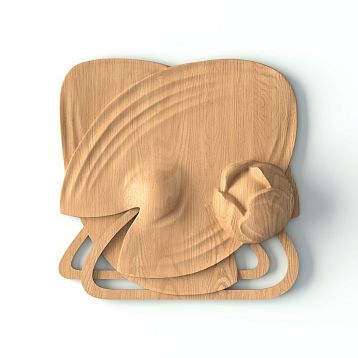
To create a more expressive framing for the opening, you can useDecorative Inserts— carved elements made of wood or MDF that are glued onto the architraves or the wall next to the opening.
Overlays can have various forms: corner rosettes crowning the top corners of the opening; vertical elements placed along the side architraves; central compositions above the door. They create three-dimensional decoration, adding artistic value to the opening.
Carved overlays are especially effective in classical interiors. Floral ornaments, volutes, acanthus leaves, rosettes — these elements transform a simple opening into a work of decorative art. After being painted along with the architraves, the overlays appear as a single whole.
Overlays are installed with adhesive after the architraves are mounted and painted. The overlay is test-fitted, the gluing area is marked, adhesive is applied to the back, the element is pressed into place and secured with painter's tape until set. Afterward, final painting or patination can be done if needed to highlight the relief.
Answers to Popular Questions
Can MDF architraves be installed in damp rooms?
Standard MDF is not intended for rooms with consistently high humidity. However, for bathrooms and toilets where humidity increases periodically, high-quality moisture-resistant MDF (with green core marking) is quite suitable. The key is to ensure high-quality painting on all sides, including the edges and the back. The paint creates a protective barrier that prevents moisture from penetrating the material.
For rooms with extreme humidity (saunas, steam rooms, swimming pools), it is better to use architraves made from solid moisture-resistant wood or polymer materials. But for typical apartment bathrooms with good ventilation, MDF architraves last for decades without issues.
How long do MDF architraves last?
With proper installation and painting, architraves made from quality MDF last 20-30 years or more. The material does not warp, crack, or lose its shape. The only thing that might be needed over these years is refreshing the paint if scratches or wear appear.
The service life depends on operating conditions. In rooms with a stable microclimate (living rooms, offices), architraves can last practically forever. Under conditions of increased load (hallways where architraves are frequently bumped with bags and clothing), mechanical damage may occur, but the structure itself remains stable.
How to care for painted MDF architraves?
Maintenance is minimal. Regular dry cleaning — wiping with a soft cloth to remove dust. Once a month, you can do a wet cleaning with a slightly damp cloth without detergents. For heavy soiling, use a mild soap solution, then immediately wipe dry.
Avoid abrasive cleaners, solvents, and aggressive cleaning agents — they can damage the paint finish. Do not use stiff brushes or sponges. If scratches appear, they can be touched up with paint of the same shade using a fine brush.
Can architraves be repainted a different color?
Yes, this is one of the main advantages of MDF architraves. If you decide to change the interior color scheme after a few years, the architraves can be easily repainted. The surface is lightly sanded with fine sandpaper to improve adhesion, dusted off, and one or two coats of new paint are applied.
For a radical color change (e.g., from dark to light), an intermediate primer coat or a covering white paint may be required. But overall, the repainting process is significantly simpler and cheaper than replacing the architraves with new ones.
What is the optimal architrave width for a standard apartment?
For typical apartments with ceiling heights of 2.5-2.7 m, an architrave width of 60-80 mm is optimal. Narrower ones (40-60 mm) may look disproportionately thin, especially on wide doors. Wider ones (90-100 mm and more) are suitable for rooms with high ceilings from 3 m and above.
Also consider the wall width. If the walls are narrow (the wall section between the door and the corner is less than 20 cm), a wide architrave will visually make the space even narrower. In such cases, it is better to choose an architrave of 60-70 mm.
How do MDF architraves differ from polyurethane ones?
Polyurethane is a synthetic material that allows for very complex relief and curved elements. Polyurethane architraves are lighter than MDF, are not afraid of moisture, and come with a factory finish. But they are more expensive, less environmentally friendly, and cannot be repaired if damaged (only replacement).
MDF is a wood-based material, heavier and denser. The relief is less variable but quite sufficient for most styles. The main advantages are the possibility of self-painting in any color, repairability, and a more natural character of the material.
The choice depends on priorities. For wet rooms and complex shapes — polyurethane. For main living areas with requirements for environmental friendliness and repainting capability — MDF.
Is it mandatory to paint MDF architraves or can they be left as is?
Raw MDF has an uneven brownish color and a porous surface. Without a coating, the material quickly gets dirty, absorbs moisture, and can deform. Painting or varnishing is not an aesthetic whim but a necessary protection.
You can coat the architraves with clear varnish, preserving the natural color of the material. But usually MDF is painted, as it is precisely the ability to obtain any shade that makes this material so attractive. Properly painted MDF architraves look no worse, and often better, than solid wood products.
Conclusion: Choosing professionals
A door opening is not just a technical hole in the wall. It is an architectural element that can be inconspicuous or expressive, cheap or status, temporary or eternal. Everything depends on the details, the quality of materials, and attention to nuances.
MDF door and window casings for paintinghave become the choice of professionals for a reason. This material combines the practicality of modern technologies with the aesthetics of natural wood. It is stable, durable, affordable, easy to install, and opens up endless possibilities for color solutions.
Geometric stability means that the architraves will remain straight after one, five, ten years. There will be no gaps, warping, or delamination. The technological processing makes installation accessible even for non-professionals. The possibility of painting allows for the implementation of any designer idea.
The variety of profiles — from laconic flat to elegant shaped — provides freedom of choice for any interior style. Three installation methods allow for selecting the optimal option for specific conditions. The painting technology, although requiring attentiveness, is accessible to anyone willing to follow simple rules.
Company STAVROS has been producingMDF Moldingsof the highest quality. Each architrave is produced on high-precision CNC equipment, ensuring perfect profile geometry. MDF with a density of 760-850 kg/m³ and emission class E1 guarantees safety for living spaces.
Quality control at all production stages prevents defective products from reaching customers. Multi-stage sanding creates a perfectly smooth surface ready for priming. Precision profiling ensures flawless joining of elements during installation.
STAVROS's assortment includes dozens of architrave profiles — from narrow minimalist to wide classic. Each profile is developed considering modern design trends and tested by time. You can choose a ready-made solution or order custom manufacturing for your project.
The stock program allows for receiving architraves in the shortest possible time. Delivery is carried out throughout Russia, and the quality of packaging guarantees the safety of products during transportation. Technical support helps with profile selection, material quantity calculation, and consults on installation and painting issues.
By choosing STAVROS, you choose confidence in the geometry of each architrave, material safety, and professional support at all stages. You get a product that will serve for decades, maintaining impeccable appearance and functionality.
Let every door opening in your home be decorated with dignity. Let the details create harmony, and the quality of materials give confidence in durability. Start with the right choice — choose MDF architraves from STAVROS, and your interior will gain completeness, style, and character.