












































































Article Contents:
- Baroque: theatricality and dynamics of ornament
- Acanthus: the main character of Baroque ornament
- Grapevine and floral garlands: abundance of nature
- Putti, masks, figurative elements: sculpturality of Baroque
- Baroque geometry: cartouches, volutes, C-shaped scrolls
- Empire: severity of antiquity and military symbolism
- Laurel and oak wreaths: symbols of victory
- Military trophies and weapons: imperial symbolism
- Geometry and antique motifs: palmettes, meander, fluting
- Egyptian motifs: sphinxes, hieroglyphs, lotuses
- How to select overlays and stucco: principles of historical authenticity
- First principle: unified ornamental group
- Second principle: scale hierarchy
- Third principle: coordination of carving technique
- Fourth principle: color and material unity
- Fifth principle: rhythm and distribution
- Selection examples: specific scenarios
- Baroque living room: acanthus and gold
- Empire study: laurel and bronze
- Frequently asked questions: practical answers
- Can acanthus be used in Empire style?
- How much do carved overlays and stucco decor cost for a Baroque interior?
- Which ornaments are suitable for modern interpretation of Baroque?
- Where to order historically accurate overlays and stucco?
- Can carved overlays be added to modern furniture?
- Conclusion: historical accuracy and craftsmanship from STAVROS

Imagine a palace hall: gilded scrolls of acanthus leaves creep along chair legs, soar onto cabinet cornices, flow onto walls where they continue in stucco garlands, frame mirrors, and ascend to ceiling rosettes. Or a strict Empire-style study: bronze eagles crown furniture columns, laurel wreaths frame wall medallions, crossed swords adorn friezes above doors. This is not a random collection of decorations—it is a language of ornaments where each motif carries meaning, wherecarved furniture overlaysandRelief Decorationon the walls form a unified ornamental system that creates historical authenticity of style. Baroque and Empire are diametrically opposite styles in spirit, but equally demanding in the accuracy of their ornamental vocabulary. An error in motif selection destroys the style: a Gothic trefoil in Baroque is absurd, just as an acanthus leaf in Empire is inappropriate where laurel should be.
Why is ornament so critical for historical styles? Because Classicism, Baroque, Empire are not just a set of forms, but a philosophy expressed through symbols. Each ornament is a hieroglyph carrying meaning. The acanthus of Baroque is a symbol of overcoming, earthly passions, connection with antiquity. The grapevine is abundance, joy, Christian symbolism of communion. The laurel wreath of Empire is victory, glory, military valor. The eagle is imperial might, connection with Rome, power. To use these motifs thoughtlessly is like writing a text with words whose meanings you don't understand. The result visually resembles the original, but is devoid of meaning, spirit, persuasiveness.




Baroque: Theatricality and Dynamics of Ornament
Baroque of the 17th-18th centuries is the style of the Counter-Reformation, absolutism, theater. The Church and monarchy used art as a tool to influence emotions, to suppress rationality with beauty, splendor, excess.baroque furniture— are not just objects for sitting and storage, but stage objects demonstrating the power, wealth, taste of the owner.




Acanthus: The Main Character of Baroque Ornament
Acanthus — a stylized leaf of a Mediterranean plant with serrated edges, deep cutouts, curved forms — is the dominant motif of Baroque. Why acanthus? Because its plasticity allows for endless variations — the leaf bends, twists into a spiral, forms volutes, from which new leaves grow, creating cascades, fountains of carving.
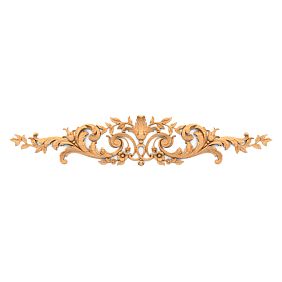
carved furniture overlays with acanthus ornamentation is the central element of Baroque chests of drawers, cabinets, armchairs. Acanthus leaves frame central medallions on facades, creep up legs from bottom to top, turning them into stylized stems. Corner appliqués — quarters of acanthus rosettes — are placed in the corners of doors, creating a framed composition.
But acanthus on furniture is only part of the system.Relief Decoration of walls continues the acanthus theme. Cornices are decorated with acanthus consoles — brackets supporting the protruding part. Panel moldings are framed with acanthus borders. Panel corners — acanthus corner appliqués, identical to furniture ones, but on a larger scale. Ceiling rosettes — concentric circles of acanthus leaves radiating from the center, where the chandelier is suspended.
The visual connection furniture-architecture is created through the repetition of the acanthus motif. A chest of drawers with acanthus appliqués stands against a wall with acanthus moldings — the ornaments rhyme, the furniture is perceived as an organic part of the architecture, not a foreign object.
The technique of acanthus carving is critical. Baroque acanthus is deep — relief of 15-30 millimeters, creating dramatic chiaroscuro. The leaves are not flat, but three-dimensional — veins, curled edges, bends of the central vein are visible. Light slides over convexities, shadows gather in concavities — the acanthus lives, moves, breathes.
Moderncarved furniture overlays with acanthus are manufactured on CNC machines using 3D models reproducing historical samples. Cutters layer by layer carve the relief from solid linden, oak, beech. Final finishing by hand — a carver cleans up details with a chisel, adds nuances that the machine cannot reproduce. The result is visually indistinguishable from 18th-century hand carving, but produced in hours, not weeks.
Our factory also produces:


Grapevine and Floral Garlands: The Abundance of Nature
Grapes — the second most significant Baroque motif. Clusters with leaves, tendrils, intertwining vines decorate furniture in dining rooms, wine rooms, sideboards. The symbolism is dual: secular — abundance, harvest, joy of feasts; Christian — the blood of Christ, communion, Eucharist.
Carved appliqués with grapes are placed on the pediments of sideboards — a horizontal composition with clusters hanging down, leaves framing from above. On doors — vertical appliqué-garlands, where the vine winds from bottom to top. On table legs — spiral appliqués, where the vine wraps around the leg, creating volume, movement.
Relief Decoration of walls continues the grape theme. Above doorways — horizontal plaster or wooden panels with clusters. Cornices — borders of winding vines. Mirror corners — grape corner appliqués.
Floral garlands — roses, lilies, daisies, tied with ribbons — are another Baroque motif.carved furniture overlays of the floral type decorate bedrooms, boudoirs, ladies' rooms. Tenderness, romanticism, femininity — the character that flowers bring.
It is important to coordinate botany. If there are roses on the furniture — roses on the walls as well, not a random mix. If grapes — grapes everywhere. Botanical consistency creates thematic unity.
Get Consultation
Putti, Masks, Figurative Elements: The Sculpturality of Baroque
Baroque is not limited to plants — figurative elements turn decoration into sculpture. Putti — plump winged infants, symbolizing angels, cupids, spirits — are a favorite motif. Putti hold garlands, play musical instruments, support cartouches, frolic in clouds.
Carved appliqués with putti are complex, requiring the highest skill. Faces are detailed — eyes, mouths, curls are visible. Bodies are proportional, with folds of plump skin, wings with feathers. Putti are placed on cabinet pediments, in the center of panels, framing mirrors.
Relief Decoration with putti crowns ceilings — flying cherubs surround the central chandelier, support shades. Above doors — putti hold a coat of arms, the owner's monogram, a crown.
Masks — grotesque, comedic, tragic faces — decorate keystones of arches, centers of rosettes, furniture handles. The theatricality of Baroque is expressed through masks of commedia dell'arte, ancient gods, allegorical characters.
Animal motifs — lion's paws as furniture legs, eagle heads on armchair armrests, dolphins on fountains — add dynamism, strength, power.
Figurative appliqués require perfect scale. Putti 15-20 centimeters tall are appropriate on a 2.5-meter tall cabinet, but grotesque on a small box. Masks 8-10 centimeters in diameter are suitable for door appliqués, but get lost on a wide wall frieze.
The Geometry of Baroque: Cartouches, Volutes, C-shaped Scrolls
Baroque is not purely botanical — geometric elements structure the lushness, create a framework for the organic.
Cartouche — an ornamental frame, framing a coat of arms, monogram, text. The shape is oval, rectangular, figured with cutouts, curves. The edges of the cartouche are decorated with acanthus, ribbons, scrolls.carved furniture overlays in the form of cartouches are placed in the center of facades — an empty cartouche awaits the owner's initials, a heraldic appliqué.
Volute — an S-shaped or spiral scroll originating from the Ionic capital. Volutes frame panels, crown pilasters, and form the corners of cartouches. Paired volutes, mirror-symmetrical, create dynamic balance.
C-shaped and reverse C-shaped scrolls — the foundation of Baroque ornamentation. Complex compositions are assembled from them — rocaille of Rococo (late Baroque). Scrolls intertwine, form frames, and connect disparate elements.
Geometric overlays on furniture harmonize with the geometry of wall stucco decoration. If furniture facades are framed with C-shaped moldings, wall panels are also framed with C-shaped profiles. Visual rhyme through the geometry of forms.
Empire: the severity of antiquity and military symbolism
The Empire style of the early 19th century — the style of Napoleon, imperial power, military victories, a return to antiquity not as a game, but as an ideology. If Baroque is emotion, movement, excess, then Empire is rationality, stasis, severity.Classic FurnitureEmpire furniture is rectilinear, monumental, adorned not with organic scrolls, but with geometric and military motifs.
Laurel and oak wreaths: symbols of victory
The laurel wreath — the main motif of the Empire style, a symbol of triumph, glory, immortality. Roman generals were crowned with laurel, Napoleon revived the tradition. Laurel wreaths adorncarved furniture overlaysEmpire wreaths — round or oval compositions of laurel leaves, tied at the bottom with a ribbon.
Laurel carving differs from acanthus. The leaves are narrow, elongated, with longitudinal veins, without serrated edges. The relief is less deep — 5-10 millimeters, creating restrained chiaroscuro. The leaves are ordered, symmetrical, forming regular circles, ovals.
Wreaths are placed in the center of commode and secretary facades, on cabinet pediments. Inside the wreath — a medallion, often with a profile of an ancient hero, emperor, allegorical figure.Relief DecorationWall decoration continues the laurel theme — wreaths above doors, on friezes, framing mirrors, paintings.
Oak wreaths — a symbol of strength, durability, civic virtue — an alternative to laurel. Oak leaves with acorns create more massive, weighty compositions, suitable for men's studies, libraries.
It is important not to mix. If furniture has laurel wreaths — walls should also have laurel. Oak is a separate theme, requiring consistency.
Military trophies and weapons: the symbolism of empire
Empire — the style of a military empire, and the ornament reflects this. Crossed swords, spears, shields, helmets, cuirasses, drums, trumpets, banners — military attributes become decor.
carved furniture overlaysFurniture with military trophies adorns studies, state rooms. Horizontal compositions above cabinet doors — crossed swords with a laurel wreath, a shield with a coat of arms, a helmet with a plume. Corner overlays — crossed spears, torches.
Relief DecorationWall decoration enhances the military theme. Friezes under the ceiling — bas-reliefs with battle scenes, processions of legionaries, triumphal processions. Panels above doors — compositions of armor, banners, trophy weapons.
Eagle — an imperial symbol, originating from Roman legions, revived by Napoleon. Carved eagles with outstretched wings crown the backs of throne chairs, cabinet pediments, consoles.Relief DecorationWall decoration — eagles on cornices, above mirrors, on ceiling rosettes.
Lions — a symbol of strength, royalty — adorn armrests of chairs in the form of lion heads, table legs in the form of paws with claws. Sphinxes — the mystique of Napoleon's Egyptian campaign — appear as console supports, armrests, overlays.
Military symbolism requires restraint. An excess of weapons turns the interior into an arsenal. Dosed use — 2-3 motifs per room — creates emphasis without overloading.
Geometry and antique motifs: palmettes, meander, fluting
Empire is geometric. Ornament is based on regular forms, symmetry, repetition.
Palmette — a stylized fan-shaped leaf, resembling a palm or lotus, an antique motif that adorned Greek vases, friezes. Palmettes form borders, frame panels, crown pilasters.carved furniture overlaysFurniture overlays in the shape of palmettes are placed at the corners of facades, creating a strict frame.
Meander — a continuous geometric ornament of right angles forming a broken line. A Greek motif symbolizing eternity, infinity. Meander frames panels, runs along friezes, adorns furniture cornices.Relief DecorationWall decoration — meander borders on walls, ceilings.
Fluting — vertical grooves on columns, pilasters, furniture legs. Creates rhythm, verticality, connection with antique architecture. Table, chair, and cabinet legs in Empire style are often fluted — straight columns with grooves.
Rosettes — round or polygonal floral or geometric compositions. Empire rosettes are strict — radial petals, symmetrical, without the organic complexity of Baroque rosettes. Rosettes adorn the centers of facades, panel corners, ceiling plafonds.
Egg-shaped ornament (ovolo) — a series of alternating oval forms and arrows, an ancient motif. It frames moldings, cornices, and creates borders.
Empire geometry demands precision. Symmetry is absolute — the left half mirrors the right. Proportions are mathematical — the golden ratio, modular systems.carved furniture overlaysandRelief Decorationmust adhere to this strictness, otherwise Empire style disintegrates, turning into eclecticism.
Egyptian motifs: sphinxes, hieroglyphs, lotuses
Napoleon's Egyptian campaign of 1798-1801 brought Egyptomania to Europe. Empire style absorbed Egyptian motifs, adapting them to imperial aesthetics.
Sphinxes — lions with human heads — become supports for consoles, armrests of chairs, overlays on furniture. Stylized, Europeanized, yet recognizable.
Lotuses — the sacred flower of Egypt — replace acanthus in capitals, overlays. The lotus form is geometric, suited to Empire strictness.
Hieroglyphs, obelisks, pyramids appear as decorative motifs on friezes, panels, clocks.Relief Decorationwith Egyptian motifs is exotic, but must be dosed — excess turns the interior into a museum Egyptian gallery.
How to select overlays and moldings: principles of historical authenticity
Having an understanding of Baroque and Empire ornamental systems, how to practically selectcarved furniture overlaysandRelief Decorationto create a historically authentic interior?
First principle: unified ornamental group
For Baroque, one or two ornamental groups are chosen — acanthus plus grapes, or acanthus plus floral garlands. All overlays on furniture and all wall molding decor belong to these groups. No laurel wreaths, military trophies, Egyptian lotuses — these are Empire, alien to Baroque.
For Empire — laurel wreaths plus military trophies, or palmettes plus meander. No acanthus scrolls, putti, grapevines — these are Baroque.
Mixing Baroque and Empire is a common mistake. A chest of drawers with acanthus overlays stands against a wall with laurel wreaths — a stylistic rupture, eclecticism, lack of historical authenticity.
Second principle: scale hierarchy
Overlays on furniture are smaller than wall molding decor, but proportionally coordinated. If a laurel wreath on the wall is 600 millimeters in diameter, a wreath on furniture is 200-300 millimeters — a proportion of approximately 1:2 or 1:3.
An acanthus overlay on a cabinet cornice — a leaf 150 millimeters high. An acanthus console on the wall — a leaf 400-500 millimeters high. The scale is coordinated with the size of the objects.
Violating scale destroys harmony. Large moldings on walls with small overlays on furniture — imbalance, the furniture gets lost. Large overlays on furniture with delicate moldings — the furniture dominates, overwhelms the architecture.
Third principle: coordination of carving technique
The depth of relief on overlays and moldings must correspond. Baroque — deep carving 15-30 millimeters, creating dramatic chiaroscuro.carved furniture overlaysBaroque overlays are also deep.Relief DecorationBaroque wall molding made of plaster, wood, polyurethane has relief of the same depth.
Empire — restrained relief 5-15 millimeters. Empire overlays and moldings are also shallow, strict, with clear edges, without Baroque softness.
Mixing deep and shallow relief creates visual dissonance. Deep Baroque overlays on furniture with flat Empire moldings on walls — a technical rupture.
Fourth principle: color and material unity
Baroque often uses polychromy — gilding of carvings, colored painting of backgrounds, contrasts.carved furniture overlaysBaroque furniture overlays are gilded against a background of dark wood (walnut, mahogany).Relief DecorationBaroque wall molding is also gilded against a background of colored walls (burgundy, emerald, blue).
Empire style is more restrained — natural wood of light species (Karelian birch, maple, ash) with bronze overlays. Or white, cream paint with gilding only on the relief.Classic FurnitureEmpire style and wall moldings are coordinated in color — white with gold, light wood with bronze.
Materials are coordinated. Wooden furniture with wooden overlays pairs with wooden molded wall decor. Or furniture with wooden overlays pairs with gypsum wall moldings, but painted the same color.
Polyurethane molding is acceptable on walls for cost savings, but must be painted identically to the wooden furniture overlays to blur the material difference.
Principle five: rhythm and distribution
Ornament should not cover everything like a solid carpet — this is excess that ruins perception. Ornament is dosed, creating accents, rhythm, pauses.
Baroque room: furniture with acanthus overlays on facades, legs. Walls — panels with acanthus corner overlays, but most of the panels are smooth, painted. Cornice with acanthus consoles every 800-1000 millimeters, smooth profile between them. Ceiling — central rosette with acanthus, the rest of the area is smooth.
Empire room: furniture with laurel wreaths in the center of facades, the rest smooth. Walls — wreaths above doors, mirrors, the rest smooth or with geometric meander. Frieze under the ceiling — palmettes with an interval creating rhythm.
Rhythm creates breathing room, space for perceiving details. Solid ornament tires, devalues each element.
Selection examples: specific scenarios
Theory is clear, let's consider practical examples of selectingcarved overlays for furnitureandstucco decorationfor Baroque and Empire interiors.
Baroque living room: acanthus and gold
Room 45 square meters, ceiling 3500 millimeters. Walls painted dark burgundy. Molded decor made of gypsum, painted cream with gilding on the relief.
Panels on the walls are formed by moldings 120 millimeters wide with an acanthus border profile. Panel corners — gypsum acanthus overlays 150×150 millimeters, gilded. Centers of some panels — oval medallions 400 millimeters in diameter with acanthus framing, smooth inside for placing paintings.
Ceiling cornice 200 millimeters wide with acanthus consoles 300 millimeters high every 900 millimeters. Between consoles — smooth profile with a gilded bead.
Ceiling rosette 1200 millimeters in diameter — concentric circles of acanthus leaves radiating from the center, gilded on a cream background.
Furniture: chest of drawers made of solid walnut, height 1100 millimeters, width 1600 millimeters. Three-drawer facades framed by wooden molding frames with acanthus profile, width 40 millimeters, gilded. Central drawer — oval carved overlay 250 millimeters in diameter with acanthus leaves framing an empty cartouche for a monogram, gilded. Facade corners — acanthus corner overlays 60×60 millimeters, gilded.
Wardrobe height 2400 millimeters. Pediment — horizontal carved overlay 600×200 millimeters with acanthus leaves forming a garland, gilded. Doors — frames made of moldings with acanthus, corners with overlays. Wardrobe cornice — profile with acanthus consoles, repeating the ceiling cornice on a smaller scale.
Armchairs: legs carved, acanthus leaves climbing from bottom to top. Armrests — acanthus scrolls. Back — oval, framed by an acanthus frame.
Mirror above the chest of drawers: frame made of wooden molding 150 millimeters wide, acanthus profile, gilded. Corners — acanthus overlays 100×100 millimeters. Top of the frame — horizontal overlay with putti holding a garland, gilded.
Visual unity: acanthus everywhere — furniture, walls, ceiling, mirror. Gilding unites all elements. Scale is coordinated — large elements on walls and ceiling, medium on furniture, small on armchairs. Ornament is not solid, but accented — large panels are smooth, ornament in corners, centers, on cornices.
Empire study: laurel and bronze
Room 30 square meters, ceiling 3200 millimeters. Walls painted light gray. Molded decor made of polyurethane, painted white with bronze gilding on the relief.
Panels on the walls are formed by moldings 100 millimeters wide with a meander profile. Panel corners — polyurethane overlay-palmettes 80×80 millimeters, bronzed. Above the door — laurel wreath 500 millimeters in diameter made of polyurethane, inside the wreath a medallion with an emperor's profile, bronzed.
Frieze under the ceiling — border of palmettes with a 200-millimeter interval, bronzed on a white background.
Ceiling rosette 800 millimeters in diameter — geometric composition of concentric circles, radial petals, strict symmetry, bronzed.
Furniture: writing desk made of Karelian birch, height 780 millimeters, width 1800 millimeters. Legs — straight columns with fluting, capitals with bronze overlay-palmettes. Desk front — three drawers, central one with a carved wooden overlay — laurel wreath 150 millimeters in diameter, inside the wreath a bronze rosette. Side drawers — rectangular bronze overlays with meander.
Bookcase height 2300 millimeters. Pediment — triangular pediment with a carved wooden overlay — crossed swords with a laurel wreath, bronzed. Doors are glazed, framed by moldings with meander. Corners — overlay-palmettes. Cornice — profile with modillions (brackets) in the form of palmettes.
Chairs: frame made of light wood, legs straight with fluting. Armrests — lion heads made of bronze. Backrest — rectangular, framed with a molding featuring a meander pattern, in the center a bronze overlay — a laurel wreath.
Mirror: rectangular frame made of wooden molding 120 millimeters wide, profile with an egg-and-dart ornament, painted white with bronze gilding. Top of the frame — a bronze overlay — an eagle with outstretched wings.
Visual unity: laurel wreaths, palmettes, meander, military motifs everywhere. Bronze unites the furniture and stucco. Geometry is strict — symmetry is absolute. Color is light — gray walls, light furniture, white stucco — Empire restraint.
Frequently Asked Questions: Practical Answers
Can acanthus be used in Empire style?
Technically yes, but historically inaccurate. Acanthus is a Baroque motif, symbolizing organic forms, movement, emotionality. Empire prefers laurel, oak — symbols of victory, strictness. If the goal is historical authenticity, acanthus is excluded. If the goal is a general classical atmosphere without strict adherence to the style, acanthus is permissible, but then it is eclecticism, not pure Empire.
How much do carved overlays and stucco decor for a Baroque interior cost?
For a room of 40 square meters, a Baroque interior requires approximately the following costs:
carved furniture overlaysCarved overlays made of solid linden with acanthus — central 10-15 pieces at 3000-8000 rubles = 30,000-120,000 rubles. Corner 40-60 pieces at 800-2000 rubles = 32,000-120,000 rubles. Linear acanthus moldings 15-20 meters at 2500-5000 rubles = 37,500-100,000 rubles.
Relief DecorationStucco decor for walls made of gypsum or polyurethane — panel moldings 60-80 meters at 1500-3000 rubles = 90,000-240,000 rubles. Corner overlays 20-30 pieces at 1500-4000 rubles = 30,000-120,000 rubles. Cornice with consoles 20 meters at 3000-6000 rubles = 60,000-120,000 rubles. Ceiling rosette 15,000-50,000 rubles.
Gilding of carvings — 50-70% of material cost = 150,000-400,000 rubles.
Installation — 100,000-200,000 rubles.
Total: 530,000-1,470,000 rubles. Budget option with polyurethane without gilding — 250,000-400,000 rubles. Premium with hand carving and gold leaf — 2,000,000-4,000,000 rubles.
What ornaments are suitable for a modern interpretation of Baroque?
Modern Baroque (neo-Baroque) simplifies ornaments while preserving recognizability. Acanthus is stylized — leaves less detailed, relief shallower 10-15 millimeters instead of 20-30. Color is monochrome — white on white, black on black — instead of polychromy and gilding.
carved furniture overlaysCartouches are chosen geometrized — simplified, scrolls stricter.Relief DecorationMoldings are more minimalist — with a light acanthus profile, rosettes are strict.
Modern Baroque is combined with minimalist furniture — ornament is local, accent, not total.
Where to order historically accurate overlays and stucco?
The company STAVROS specializes in producingcarved overlays for furnitureSTAVROS company specializes in the production of carved overlays and stucco decor based on historical samples. Collections 'Baroque Classic', 'Empire Imperial' include overlays and stucco, coordinated in ornament, scale, carving technique.
Custom production — based on drawings, photographs of museum samples, STAVROS manufactures exact copies of historical elements. Carvers with handwork experience, CNC centers for reproducibility, gilding with gold leaf or imitation gold leaf.
Can carved overlays be added to modern furniture?
Yes, and this is a popular transformation method. An IKEA chest of drawers with smooth fronts turns into a Baroque one with the addition of acanthus overlays.carved overlays for furnitureOverlays are glued onto the fronts, painted to match the furniture color or in contrast, gilded.
It is important to maintain proportions — the overlay should not be too large for a small front or too small for a large one. The central overlay occupies approximately 1/3-1/2 of the front area, corner overlays — 1/10-1/8 of the front size.
Conclusion: historical accuracy and craftsmanship from STAVROS
Baroque and Empire are styles that require not just beautiful decorations, but an accurate ornamental language, where every motif is significant, every detail is historical.carved furniture overlaysandRelief DecorationOrnament is not an arbitrary set of scrolls, but a system of symbols that creates the style. Baroque acanthus tells of earthly passions and antique beauty, Empire laurel — of victories and imperial glory. Grape clusters — of abundance, military trophies — of valor. Mixing these languages is like writing a French text with English words: superficially similar, but meaningless.
The STAVROS company — a guardian of historical traditions of decorative and applied arts — creates carved overlayscarved furniture overlays, classic furnitureand stucco decor that correspond to the canons of Baroque, Empire, and other historical styles. Over twenty years of studying museum collections, archival drawings, antique samples have allowed the creation of an ornament library — hundreds of models of acanthus leaves, laurel wreaths, palmettes, cartouches, putti, military trophies, reproducing originals with millimeter accuracy.
STAVROS production uses traditional and modern technologies. Hand carving by master carvers, trained by bearers of the tradition, creates unique elements of museum quality. CNC carving based on 3D models created from scanning historical samples ensures reproducibility, accuracy, and accessibility. Combined technique — rough processing on CNC, final hand finishing — optimal balance of speed and quality.
Premium materials — linden wood for intricate carving (soft, easy to cut, holds details), oak wood for durability, beech wood for painted elements. Chamber drying to 8-10% moisture content, preventing deformation. Professional coatings — 22-23 karat gold leaf for premium gilding, imitation gold leaf (composition leaf) for budget options, shellac varnish for patination, acrylic paints for colored finishes.
The 'Imperial Empire' collection — laurel wreaths, military trophies, palmettes, meanders, eagles, sphinxes. Overlays forclassic furnitureand wall moldings form a unified ensemble, recreating the spirit of the Napoleonic era.
Custom design — for clients restoring historical interiors or creating original projects. STAVROS manufactures overlays from photographs of lost samples, reproduces ornaments from descriptions, creates variations on historical motifs. 3D modeling, prototyping, and client approval ensure result accuracy.
Gilding — a separate specialization of STAVROS. Master gilders master the technique of gilding with gold leaf on gesso (adhesive ground), allowing the gold to be polished to a mirror shine — a traditional technique used for centuries. Imitation gold leaf (composition leaf) is applied over varnish, creating a golden sheen at a lower cost. Patination of gilding — applying dark paints into the recesses of the carving — creates the effect of a century-old history, the nobility of an antique.
Installation by STAVROS — a guarantee of installation quality. Craftsmen arrive with overlays, moldings, adhesives, and fasteners. Overlays are centered with jeweler's precision, glued without gaps. Moldings are installed with symmetry and rhythm. Final retouching of joints and touch-up painting ensure a seamless appearance. 3-year warranty.
Art history consultations — STAVROS collaborates with art historians and specialists in historical styles. The client receives not just a sale of overlays, but expertise — which ornaments are historically accurate for 1680s Baroque, how Russian Empire style differs from French, how to coordinate furniture and architecture. Consultations are free for clients ordering sets.
STAVROS showrooms in Moscow and St. Petersburg showcase installation interiors — a Baroque living room with furniture, moldings, gilding; an Empire study with bronze overlays, military trophies. Visit, see how ornaments create style, touch the carving, evaluate the gilding, get a consultation.
Choosing STAVROS, you choose historical accuracy over approximation, craftsmanship over stamping, the nobility of solid wood over imitation, gold over paint, knowledge over guesswork. Create interiors wherecarved furniture overlaysBaroque tells stories of acanthus gardens and grape harvests, whereRelief DecorationEmpire style celebrates victories and imperial glory, wherebaroque furniturewith putti and garlands coexists with moldings of the same formal language, whereClassic FurnitureEmpire style with laurel wreaths is coordinated with the architecture of laurels and eagles on walls, ceilings, cornices, where every ornament is meaningful, where decor is not accidental but logical, consistent, historically convincing.
STAVROS delivery throughout Russia and the CIS.carved furniture overlaysand molded decor are packed individually — each overlay in bubble wrap, cardboard spacers between layers, wooden crates to protect gilding and carving. Moscow and St. Petersburg — delivery in 1-3 days. Regions — 5-10 days. International delivery to Kazakhstan, Belarus, European countries for Russian-speaking clients restoring historical buildings, creating classic interiors.
Educational materials on the STAVROS website — detailed articles on Baroque and Empire styles, history of ornaments, carving and gilding techniques. Video instructions for installing overlays on furniture, mounting moldings. Photo galleries of completed projects — Baroque palaces, Empire studies, Neoclassical living rooms — inspiring, showcasing possibilities.
Open-access ornament library — hundreds of photos of overlays, moldings with descriptions of ornaments, sizes, stylistic affiliation. Study, choose, design your own interiors with an understanding of historical context.
Collaboration with interior designers — STAVROS provides professional designers with 3D models of overlays and moldings for integration into projects. Specifications, drawings, installation recommendations facilitate design. Designer discounts, priority production for large projects.
Restoration of historical interiors — STAVROS participates in projects to restore palaces, estates, mansions from the 19th century. Taking measurements of lost overlays from traces on furniture, recreating moldings from fragments, copying ornaments from preserved samples. Work with museums, restoration workshops, restoration architects.
Authenticity expertise — STAVROS specialists determine the age, style, and manufacturing technique of antique overlays and moldings. Consultations for collectors, antique salons, auction houses. Free expertise for clients purchasing antique furniture and planning to complement it with modern overlays from STAVROS in a unified style.


