












































































Article Contents:
- Preparation Stage: Laying the Foundation for Success
- Wood Acclimatization – A Mandatory Requirement
- Necessary Tools: Assembling the Arsenal
- Wall Preparation: Creating the Perfect Foundation
- Material Quantity Calculation: Minimizing Waste
- Fastening Methods: Choosing the Optimal Technique
- Fastening with Screws: Reliability and Disassembly
- Adhesive Installation: Aesthetics Without Visible Fasteners
- Combined Fastening: Double Reliability
- Angle Cutting Technique: Precision to the Millimeter
- Measuring the Room's Actual Angle
- Using a Miter Saw: Speed and Accuracy
- Cutting with a Miter Box and Handsaw: A Budget Alternative
- Fitting and Finishing Cut Edges
- Joining Baseboards: Internal and External Corners
- Internal Corners: Joining Two Planes
- External Corners: In Plain Sight
- Lengthwise Joining: Invisible Seams
- Final Finishing: From Installation to Perfection
- Sealing Fastening Points and Seams
- Sanding and Preparing for Coating
- Painting and Toning
- Final Coating with Oil or Varnish
- Typical Installation Mistakes: Learning from Others' Errors
- Installation Without Acclimatization
- Too Tight Pressing Against the Floor
- Incorrect Angle Cutting
- Lack of Expansion Gaps
- Installation on Unprepared Walls
- Frequently Asked Questions About Installing Wooden Baseboards
- STAVROS — your partner in creating the perfect interior

Can an ordinary room be transformed into a finished interior in one day? Yes. It's enough to properly install a wooden skirting board — an element that seems secondary but actually defines the perception of the entire space.Installation of Wooden Skirting BoardDIY — is not magic or rocket science. It's a sequence of logical actions where every step has meaning, every movement leads to a result. You don't need to be a carpenter with thirty years of experience. You need the right tools, an understanding of the process, and attention to detail.
Why should you install a wooden skirting board yourself instead of hiring a professional? First — savings. Professional installation costs 300-600 rubles per linear meter. In an apartment with a perimeter of 70 meters, that's 21,000-42,000 rubles — an amount comparable to the cost of mid-range skirting boards themselves. Second — quality control. You're not rushing to finish the job and run to the next one. You're working for yourself, carefully fitting every joint, checking every fastener. Third — satisfaction. Looking at the result of your own work is more pleasant than looking at the work of a hired craftsman.
Installation of wooden baseboardsrequires certain skills in working with tools, but not extreme ones. If you know how to hold a handsaw, drill, or screwdriver — you'll manage. If you don't — you'll learn in the process. Patience and accuracy are more critical than skills. Haste is the main enemy of quality installation. Precise marking, accurate cutting, careful fitting — that's what distinguishes professional work from shoddy work.
This article is a detailed guide for those who have decided to tackle the installation of a wooden skirting board themselves. All stages are covered — from material preparation to finishing. Different fastening methods for different wall types are described. It shows how to correctly cut corners so that joints are perfect. Common mistakes made by beginners and ways to avoid them are listed. After reading, you will have a clear understanding of the process and confidence in your own abilities.


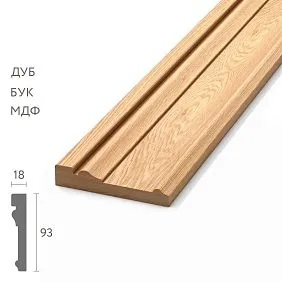
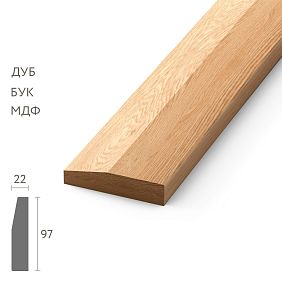


Preparation stage: laying the foundation for success




Wood acclimatization is a mandatory condition
Wood is a living material. It absorbs moisture from the air and releases it back, expands and contracts depending on the temperature and humidity of the environment. A skirting board brought from a cold warehouse has one moisture content. A heated apartment with working radiators is a completely different microclimate. If you install the skirting board immediately without letting it adapt, deformation will begin.
Proper acclimatization begins with unpacking. Remove the protective film or cardboard immediately upon arrival of the material. Skirting boards are laid horizontally on a flat surface with spacers between layers for air circulation. Do not stand them vertically against the wall — they will sag under their own weight. Do not stack them without spacers — the planks in the middle will be isolated from the air.
The room temperature should be stable at 18-22°C. Air humidity 40-60% — normal conditions for a living space. If the apartment has recently been renovated, walls are still damp from plaster, humidity may be elevated. Use a moisture meter or give extra time for the room to dry. Installation in a damp room is a direct path to skirting board deformation in 2-3 months.
Minimum acclimatization period is 48-72 hours for skirting boards of standard thickness 16-22 mm. Wide, massive skirting boards 25-30 mm thick require 5-7 days. The thicker the wood, the slower the moisture exchange, the longer the adaptation needed. Haste at this stage negates all subsequent efforts. Patience will pay off with the absence of problems in the future.
During acclimatization, check each plank. Straightness — look along the plank towards the light, any curvature is noticeable. Absence of cracks, chips, loose knots — defective planks are set aside for return or use in inconspicuous places. Matching shades — wood of the same species can vary in tone. Group planks by shades so there are no sharp color transitions in one room.
Our factory also produces:


Necessary tools: assembling the arsenal
Miter saw or miter box with a handsaw — the main tool for precise angle cutting. A miter saw provides a perfectly straight cut at a given angle in seconds. Cost from 5000 rubles for a household model. A miter box — a plastic or wooden guide with slots for 45° and 90° angles — is a budget alternative for 300-800 rubles. Works slower, requires skill, but sufficient for a one-time job.
A fine-toothed wood saw is necessary when working with a miter box or for on-site trimming. A coarse tooth gives a ragged edge, a fine one gives a clean cut. A blade length of 40-50 cm is optimal for skirting boards. Japanese saws cut on the pull stroke, give the thinnest kerf — a professional choice. European saws cut on the push stroke — more familiar to most.
Drill or hammer drill for drilling holes for dowels in concrete and brick walls. A drill will handle drywall and wood. For concrete, a hammer drill with an impact mechanism is needed. Concrete drill bits 6 mm in diameter for standard dowels. Wood drill bits 2-3 mm in diameter for pre-drilling holes for screws in the skirting board.
Screwdriver or screwdriver for driving screws. A screwdriver speeds up work many times, especially with large volumes. A cordless model is more convenient than a corded one — no cord in the way. Bits for cross-head screws PH2 or PZ2 depending on the screw type. A magnetic bit holder prevents screws from falling.
A 60-100 cm long spirit level for controlling installation horizontality. A bubble level is simpler and cheaper, a laser level is more accurate and convenient. A laser level projects a horizontal line along the entire wall — ideal for marking. A 5-7 meter tape measure for measurements. A pencil for marking — hardness TM or T gives a thin line.
Sandpaper grit P120-P180 for processing cuts, removing burrs, final sanding. A wooden block for convenient holding of sandpaper. Rubber and metal spatulas for filling joints and fastener locations. Mounting adhesive or liquid nails for adhesive fastening method. Painter's tape for fixing the skirting board until the adhesive sets.
Get Consultation
Wall preparation: creating the perfect foundation
Walls must be even — a critical condition for tight skirting board fit. Check with a straightedge or long level: apply to the wall, see if there are gaps. Irregularities of more than 3-5 mm per linear meter will create gaps between the skirting board and the wall. Protrusions interfere with fastening, depressions leave gaps.
Protruding irregularities — plaster bumps, putty drips — are cut off with a spatula or sanded with an abrasive mesh. Deep depressions are filled with putty, leveled, sanded after drying. Time spent on wall leveling is an investment in installation quality. Perfectly even walls allow the skirting board to fit tightly along its entire length without gaps.
Cleaning the surface from dust, dirt, wallpaper residue is mandatory. Dust reduces adhesive adhesion, interferes with dowel fastening. Wet cleaning of walls in the skirting board installation area, then drying. If walls are painted with oil paint or coated with glossy varnish, the surface is sanded with sandpaper to improve adhesive grip.
Priming walls in the skirting board fastening area is recommended, especially for porous substrates — plaster, drywall. Primer strengthens the surface, reduces absorbency, improves adhesive adhesion. Applied with a brush or roller, dries 2-4 hours depending on primer type. Saving on primer results in weak fastening and skirting board peeling off in a year or two.
Marking the installation level is done before starting installation. A laser level projects a line along the wall — simple and accurate. A bubble level is moved from point to point, marks are made with a pencil every 50-100 cm, then connected into a line. The line must be strictly horizontal, even if the floor is uneven. The skirting board is installed level, not following the floor's curvature.
Material quantity calculation: minimizing waste
Room perimeter — the base value for calculation. Measure each wall with a tape measure, sum them up. Subtract the width of doorways where skirting board is not installed from the sum. Get the net length. Add a 10-15% reserve for trimming, mistakes, defective sections. Reserve is mandatory — better to have a meter or two left over than be half a meter short and have to buy more with the risk of shade mismatch.
Standard skirting board length is 2.2-2.5 meters. Divide the total requirement by the length of one plank, round up — get the number of planks. Consider that corners require cutting both ends of the joining planks — some material will become waste. Complex room configurations with many corners, protrusions, niches increase waste to 15-20%.
Corner elements, if using ready-made ones rather than cutting them — are counted individually. An internal corner — one element, an external corner — one element. Transition strips for connecting skirting boards of different heights or profiles — by the number of joints. End caps for open skirting board ends — by the number of uncovered ends.
Fasteners are calculated based on the installation spacing. Standard spacing is 50-70 cm. Divide the perimeter by the spacing to get the number of fastening points. For each point — one dowel and one screw. Add a 20-30% reserve for defects, losses, and errors. Dowels and screws are sold in packs; it's often more cost-effective to buy a pack with a reserve than to purchase missing pieces individually.
Adhesive for the adhesive mounting method is used at a rate of approximately 1 tube (300-400 ml) per 10-15 linear meters when applied in dots at 30-40 cm intervals. For continuous application, consumption is 2-3 times higher. Wood filler for sealing joints and fastening points — 0.5-1 kg for a standard-sized room. Sandpaper — 3-5 sheets of different grits.
Mounting methods: choosing the optimal method
Fastening with screws: reliability and removability
Mounting wooden skirting boardsUsing screws — the classic method, providing maximum reliability. Suitable for all types of walls — concrete, brick, drywall, wood. Allows for baseboard removal if necessary without destroying it. The only downside — visible fastening points requiring masking.
The technology begins with marking drilling points. Place the baseboard against the wall, align it with a level, and mark the fastening points with a pencil. The first point — 10-15 cm from the edge of the strip. Subsequent points every 50-70 cm. The last point — 10-15 cm from the second edge. On a standard 2.4-meter strip, this results in 4-5 fastening points.
Drilling holes in the baseboard is done with a thin drill bit (2-3 mm) — slightly smaller than the screw diameter. Drill perpendicular to the baseboard surface, exactly at the marked points. Pre-drilling prevents wood splitting when driving the screw. For countersunk head screws, additionally perform countersinking — widening the top of the hole to the head diameter with a 6-8 mm drill bit to a depth of 3-5 mm.
Drilling the wall is done through the holes in the baseboard. The baseboard is pressed against the wall in the correct position, and the wall is drilled through the holes. For concrete and brick, use a hammer drill with a 6 mm concrete drill bit. Drilling depth 40-50 mm — 10 mm longer than the dowel to accommodate dust. For drywall — a 6 mm metal drill bit, depth until hitting the frame profile.
Installing dowels: insert a plastic dowel into the hole, tap it in with light hammer blows until fully seated. The dowel should fit tightly and not protrude above the wall surface. If the hole is damaged and the dowel is loose — use a larger diameter dowel or fill the hole with a wooden plug coated in adhesive.
Attaching the baseboard with screws: press the baseboard against the wall, screw the screws through the holes into the dowels. Screw carefully, without excessive force. Overtightening can split the baseboard or compress the wood. The screw head should be recessed into the countersink 1-2 mm below the baseboard surface for subsequent masking with filler.
For drywall walls, use special butterfly anchors or Molly anchors if the baseboard is attached directly to the drywall. It's more reliable to attach to the metal frame — locate the profiles with a magnet or by tapping, drive screws precisely into the profile. Self-drilling metal screws with a sharp tip penetrate the drywall and enter the profile, providing a secure attachment.
Adhesive installation: aesthetics without visible fasteners
Adhesive mounting is suitable for perfectly flat walls and lightweight baseboards. Advantage — no visible fastening points, perfectly smooth baseboard surface. Disadvantage — inability to remove without damage, poor reliability on uneven walls.How to install wooden skirting boardsMounting with adhesive correctly — a matter of selecting the right composition and application technique.
Adhesive selection is critical. Liquid nails based on neoprene or MS polymers — a universal option for wood. They set in 10-15 minutes, full polymerization in 24 hours. A tube with a cartridge for a caulking gun is more convenient than squeezing from a tube. Consumption: one 400 ml tube for 12-15 meters with dot application.
Specialized parquet adhesive based on MS polymers provides maximum bonding strength and elasticity. Compensates for wood thermal expansion, not damaged by moisture. 1.5-2 times more expensive than liquid nails, but more reliable. For oak and other hardwoods, heavy wide baseboards — the best choice.
Surface preparation: clean the wall of dust, degrease with alcohol in the bonding areas. The back of the baseboard is also wiped clean of dust. Some manufacturers coat the back with a protective layer that reduces adhesion — sand with P120 sandpaper to improve adhesion.
Applying adhesive is done on the back of the baseboard in dots or a snake pattern. Dot application — drops 10-15 mm in diameter every 30-40 cm along the entire length of the strip. If the baseboard has two longitudinal stiffening ribs on the back, apply adhesive to both ribs. Snake pattern — a continuous wavy line along the stiffening rib.
Installing the baseboard: place it against the wall in the desired location, press firmly. Pressure should be uniform along the entire length — use palms, not fingers. Hold the pressure for 30-60 seconds for initial adhesive setting. Check levelness with a level, adjust position if necessary — you have 2-3 minutes before the adhesive sets completely.
Fixing until full setting: attach the baseboard to the wall with painter's tape every 50-70 cm. The tape holds the baseboard pressed while the adhesive polymerizes. Remove the tape after 12-24 hours when the adhesive is completely dry. If the baseboard is heavy, place temporary supports — blocks, boxes — underneath to prevent slipping.
The adhesive method does not work on very uneven walls. If the wall has depressions deeper than 3 mm, the adhesive won't fill the gap, and the baseboard will only hold on protruding points. After a few months under vibration and thermal deformation, the baseboard will detach. On such walls, use screws or a combined method.
Combined mounting: double reliability
A combination of adhesive and screws provides maximum reliability while maintaining aesthetics. The adhesive ensures uniform contact along the entire length, screws provide insurance against detachment. The method is optimal for wide, tall baseboards 140-200 mm, which have significant weight and windage.How to install wooden baseboardsUsing a combined method — a synthesis of the best from both methods.
Work sequence: mark the baseboard for screws with an increased spacing of 80-100 cm instead of the standard 50-70. The number of fastening points is halved. Drill holes in the baseboard and wall, install dowels. Apply adhesive to the back of the baseboard in dots at 30-40 cm intervals.
Press the baseboard against the wall, screw the screws into the dowels, but not fully — leave a 1-2 mm gap. The screws hold the baseboard in the correct position but do not press it completely. The adhesive, under the weight of the baseboard and screw pressure, distributes evenly, filling micro-irregularities. After 2-3 hours, when the adhesive has set, tighten the screws fully, sinking the heads into the countersink.
Result — the baseboard is glued along its entire length, additionally secured with screws at key points. Even if the adhesive weakens over time, the screws will hold. Even if a screw loosens from a crumbling dowel, the adhesive prevents the baseboard from falling off. Double insurance for durability.
The combined method requires more time and materials — adhesive plus fasteners. But for critical projects where removal is not planned and reliability requirements are high — it's the best choice. Classic interiors with wide carved baseboards, premium oak baseboards — are installed using the combined method.
Miter cutting technology: precision to the millimeter
Measuring the actual room angle
Most rooms have angles that differ from the ideal 90°. Old buildings with settled floors, new constructions with construction flaws — angles of 88°, 92°, 85° are more common than exact 90°. Cutting a baseboard at a standard 45° for such an angle creates a gap. You need to measure the actual angle and calculate the precise cutting angles.
A protractor is a simple tool consisting of two planks with a hinge and a protractor. The planks are placed against the walls forming the angle, and the degree is read on the protractor. An electronic protractor provides accuracy to tenths of a degree, a mechanical one to a degree. For baseboards, accuracy to a degree is sufficient.
Calculating miter angles: if the room angle is 88°, then each of the joining planks is cut at 44° (half of 88°). If the angle is 92°, cut at 46°. The formula is simple: the room angle is divided by two, each plank is cut at the resulting angle. An internal angle requires cutting from the front side of the planks, an external angle from the back.
Without a protractor, you can use the template method. Take two pieces of cardboard or plywood, place them against the walls forming the angle, transfer the angle line onto the template with a pencil. The template is placed against the baseboard, the line is transferred, and the cut is made. The method is less accurate but works in the absence of a protractor.
Checking room squareness using the diagonal method: measure the diagonals of the room. If they are equal, the angles are right angles. If they differ, the room is not square, and the angles deviate from 90°. A difference of 2-3 cm in diagonals for a 4x5 meter room means an angle deviation of 2-3°. Critical to consider when cutting.
Using a miter saw: speed and accuracy
A miter saw is a professional tool that provides a perfect cut at any angle in seconds. The saw blade is mounted on a rotating mechanism with a graduated scale. Set the desired angle, lock it, place the baseboard, lower the blade with one motion — you get a perfect cut.How to Cut Wooden BaseboardUsing a miter saw is a matter of correctly setting the parameters.
Selecting the miter angle: for a standard 90° angle, set 45° on the saw scale. For non-standard angles — the calculated value. Modern miter saws have an additional blade tilt in the vertical plane — for complex compound angles typical for ceiling baseboards. For floor baseboards, simple rotation in the horizontal plane is usually sufficient.
Securing the baseboard on the saw table: the baseboard is pressed against the fence with its flat back side. The decorative front part faces you. The baseboard is secured with a clamp or the saw's hold-down — it must not move during the cut. The cut line is aligned with the saw blade — usually, saws have a laser pointer showing the exact line.
Making the cut: turn on the saw, let the blade reach full speed, lower it smoothly onto the baseboard. Do not push — the saw cuts under its own weight. Excessive pressure overloads the motor and creates a ragged edge. Guide the blade through the entire thickness of the baseboard, lift it, turn it off. Let the blade stop completely before removing your hands.
Cut quality control: the end should be smooth, without chips or tears. Minor irregularities are acceptable — they are sanded with sandpaper. Large chips, especially on the front edge, are unacceptable — the plank is rejected or recut with a margin. The cut angle is checked with a square or by fitting against the wall.
A miter saw provides perfect repeatability. Set the angle once — cut dozens of planks with the same result. For large volumes — the only reasonable choice. For a one-time repair, buying a saw may be excessive — rent it for a day or use a miter box.
Cutting with a miter box and handsaw: a budget alternative
A miter box — a plastic or wooden box with slots at 45° and 90° angles — is an affordable tool for precise cutting without expensive equipment. Cost ranges from 300 rubles for a simple plastic one to 3000 rubles for a professional metal one with a rotating mechanism. For one-time work, a simple one is sufficient.
Placing the baseboard in the miter box: the baseboard is laid in the miter box in the same position as it will be installed on the wall. The flat back side is pressed against the side wall of the miter box. The cut line is aligned with the 45° slot. The baseboard is firmly pressed by hand to prevent it from moving during sawing.
Making the cut with a handsaw: the handsaw is inserted into the miter box slot, pressed against the slot walls for precise guidance. Saw with smooth motions without excessive pressure. The first motions are light — they form the kerf, then you can increase the pressure. Ensure the handsaw does not deviate from the slot — any deviation causes angle inaccuracy.
Cut quality with a miter box depends on the quality of the miter box and handsaw. Cheap plastic miter boxes quickly get worn by the handsaw, slots widen, and accuracy decreases. A handsaw with large teeth gives a ragged edge. Optimal — a metal miter box and a handsaw with fine teeth, 12-15 teeth per inch.
Limitations of a miter box: suitable only for standard 45° and 90° angles. For non-standard angles, a professional rotating miter box or miter saw is needed. Work speed is lower — one cut takes 1-2 minutes versus 10 seconds on a miter saw. Requires physical effort and skill for straight sawing. But for small volumes — a quite acceptable method.
Fitting and finishing cut surfaces
A perfect cut doesn't exist — there are always micro-irregularities requiring finishing. Sandpaper P120-P180 on a wooden block is the finishing tool. The baseboard end is sanded with light motions along the cut. The goal is to remove burrs, smooth irregularities, and create a perfectly flat surface for the joint.
On-site fitting is mandatory before final installation. Two cut planks are placed against the corner, and the joint tightness is checked. An ideal joint — without gaps or cracks along the entire cut length. Reality — often there are micro-gaps due to room angle or cut inaccuracy. Gaps up to 0.5 mm are acceptable — filled with putty. Larger ones require adjustment.
Adjustment is done with a sharp knife or sandpaper. If the gap is at the top of the joint — remove material from the top edge of the end. If at the bottom — from the bottom edge. Work microscopically — remove a layer of 0.2-0.3 mm, fit again. Repeat until perfect fit. Patience is the key to quality.
An alternative method for adjusting angles — cutting with a small margin, then on-site adjustment with a plane or rasp. Cut the angle 1-2 mm larger than calculated, fit, adjust with the tool until exact fit. Requires skill with a plane but provides maximum accuracy on non-standard angles.
Finishing the front edge of the cut: if there are chips from sawing on the decorative front part of the baseboard, they are sanded with fine sandpaper P220-P320. Motions along the grain, light, without pressure. The goal is to smooth the chip to invisibility without damaging the finish around it. After sanding, the cut can be touched up with stain or paint matching the baseboard color.
Joining baseboards: internal and external corners
Internal corners: junction of two planes
An internal corner is where two walls form an incoming angle, typical for most rooms. Two baseboard planks meet at an angle, ends cut at 45°, and join each other.How to Connect Wooden BaseboardAchieving a high-quality internal corner is a task of precise cutting and careful installation.
Installation sequence: the first plank is installed from the corner along the first wall. The end cut at 45° is exactly in the corner, the plank is attached to the wall by the chosen method. The second plank is cut at the corresponding 45° angle, placed against the first in the corner. The joint is checked for tight fit.
If the joint is perfect — the planks form a smooth angle without gaps or steps — the second plank is attached. If there is a gap — adjustment is performed as described above. Micro-gaps up to 0.5 mm are acceptable — they are filled with wood putty matching the baseboard color. Gaps larger than a millimeter are unacceptable — clearly visible, putty stands out, spoils the appearance.
Joint fixation for increased strength: the ends of both planks at the joint are coated with PVA wood glue. The planks are joined, and the glue bonds the ends. After the glue dries, the joint becomes a single unit and does not separate due to vibrations or thermal expansion. Excess glue squeezed out during joining is immediately wiped off with a damp cloth before it hardens.
Additional joint reinforcement on the back side: if there is access to the back of the baseboard, the joint is reinforced with staples from a stapler or thin nails. A staple is driven across the joint, pulling the two planks together. The staple remains on the back, invisible side and does not spoil the front appearance. Provides additional strength in critical areas.
Internal corners are less noticeable than external ones—usually furniture is placed in corners, so the eye doesn't fall there. But that's no reason to do a sloppy job. A well-executed internal corner is a sign of craftsmanship, even if no one sees it. A poorly made one is a source of squeaks and gradual joint failure under load.
External corners: in plain sight
An external corner is a protruding element where two walls form an outer corner. It is less common than internal corners but much more noticeable—it is in plain sight and not covered by furniture. The protruding corner is subject to mechanical impacts—it gets bumped by people passing by or hit by furniture during rearrangement. The quality of the joint must be impeccable.
The cut for an external corner differs from an internal one in the direction of the cut. If in an internal corner the short part of the cut is on the back of the baseboard and the long part on the front, then in an external corner it's the opposite. The short part is on the front, the long part on the back. This is critical—if you mix them up, you'll get a gap instead of a joint.
Protection of external corners from damage: on protruding corners where there is a high risk of impact, it is recommended to reinforce the structure. A metal or plastic corner profile installed in front of the baseboard protects against direct impacts. A wooden decorative corner glued over the joint of two planks hides the joint and protects the ends from chipping.
An ideal external corner joint—without the slightest gaps or height differences. Two planks form a smooth line, the transition from one to the other is imperceptible. Even a 0.3 mm gap on an external corner is visible under certain lighting. Fitting must be more thorough than for an internal corner.
Some craftsmen prefer not to cut external corners but to use ready-made decorative corners. A corner is a three-dimensional element made of the same wood, covering the joint of two planks. The planks are cut at a right angle, placed against the corner from both sides, and the corner is glued or screwed on top. This method simplifies the work but is not suitable for all interior styles.
Lengthwise connection: invisible joints
Standard baseboard lengths are 2.2-2.5 meters. Walls are often longer—several planks need to be joined. A lengthwise joint is a weak point in the structure, prone to separation. The task is to make it as inconspicuous and strong as possible. Proper placement, precise cutting, and reliable fixation are the three conditions for a quality joint.
Joint placement is planned in advance. Ideally—in places where furniture will stand, covering the joint. A wardrobe, chest of drawers, or sofa overlaps the baseboard—the joint behind them is completely invisible. Avoid joints on open, extended wall sections where they are clearly visible. If a visible joint is unavoidable, try to place it at the level of a door or window—there, the eye focuses on the opening, not the baseboard.
Cutting for a lengthwise joint is done at a 90° or 45° angle. A straight 90° joint is simpler to execute—two planks are cut straight, and the ends are joined. But such a joint is noticeable—the joint line is perpendicular to the baseboard and clearly visible. A mitered 45° joint is less noticeable—the line runs at an angle, and the eye perceives it as a texture element. Execution is more complex, but the result is more aesthetic.
Joint fixation: the ends of both planks are coated with wood glue and joined tightly. Each plank is attached to the wall independently—the fastening point of the first plank is 5-7 cm from the joint, and the fastening point of the second plank is also 5-7 cm from the joint on the other side. Two fastening points near the joint prevent it from separating.
Reinforcing the joint with a connecting strip on the back side: a 10-15 cm piece of baseboard is glued to both joined planks on the back, invisible side, overlapping the joint. This creates a plate that pulls the two planks into a single unit. The method is used in critical areas—on long, open walls where the joint is subject to stress.
Finishing: from installation to perfection
Filling fastening points and joints
Screw heads countersunk into counterbores are visible—shiny metal against wood. Joints, even perfectly fitted, have the thinnest connection line. The task of finishing is to make these defects invisible, creating the impression of a single, solid structure.
Wood filler is the main material for filling. Choose one to match the baseboard color—oak, beech, walnut, light, dark. Manufacturers offer dozens of shades. If you don't find an exact match, buy a basic light filler and tint it with acrylic paints to the desired tone. Water-based filler is more convenient to work with, odorless, and dries quickly.
Filling screw holes: filler is applied with a rubber spatula precisely into the hole, filling the counterbore flush with the surface. Excess is immediately removed with the spatula before it dries. If the filler sinks after drying—reapply. Deep holes are filled in two layers with intermediate drying.
Filling joints is done with a thin layer of filler that fills micro-gaps. Filler is applied along the joint line, pressed into the gap, and excess is removed with a damp sponge. Work carefully—filler should not smear on the baseboard surface around the joint. Only into the gap itself.
Drying time for filler is indicated on the packaging—usually 2-6 hours depending on layer thickness and air humidity. After complete drying, filled areas are sanded with fine sandpaper P220-P320. Sanding levels the filler with the baseboard surface and removes roughness. Use light movements along the wood grain.
Quality check of filling: run your finger over the filled area. There should be no step, protrusion, or depression. The surface is absolutely smooth, the transition is imperceptible. Visually, the filling may slightly differ in color from the surrounding wood—this is normal; after the final coating with oil or varnish, the difference will disappear.
Sanding and preparation for coating
Even a high-quality factory baseboard has micro-irregularities, fibers, and roughness. Sanding before the final coating is essential for perfect smoothness. Use sandpaper P180-P220 on a sanding block or sander. Move along the grain with even pressure.
Sand the entire surface of the baseboard, not just the filled areas. Pay special attention to ends, edges, and recesses of the molded profile. Recesses are sanded with sandpaper wrapped around a wooden rod of suitable diameter. The goal is to remove factory varnish or protective coating if it is of poor quality and create an even surface.
After sanding, be sure to remove dust. A vacuum with a soft attachment collects large particles. A damp cloth wipes the surface, removing fine dust. Then a dry cloth removes moisture. The surface must be absolutely clean and dry before applying the coating—any dust will cause roughness under varnish or oil.
Sand the entire surface of the baseboard, not just the filled areas. Pay special attention to ends, edges, and recesses of the molded profile. Recesses are sanded with sandpaper wrapped around a wooden rod of suitable diameter. The goal is to remove factory varnish or protective coating if it is of poor quality and create an even surface.
After sanding, be sure to remove dust. A vacuum with a soft attachment collects large particles. A damp cloth wipes the surface, removing fine dust. Then a dry cloth removes moisture. The surface must be absolutely clean and dry before applying the coating—any dust will cause roughness under varnish or oil.
If the baseboard will be painted, sanding is less critical—paint hides minor defects. But for transparent coatings—oil, varnish—sanding is essential. Any unevenness, fiber, or scratch will be visible after applying a transparent composition. Moreover, oil and varnish emphasize defects, making them more noticeable. Quality sanding is the foundation of a beautiful final coating.
Priming wood before coating is recommended for even absorption. Untreated wood absorbs oil and varnish unevenly—dense areas of annual rings absorb less, porous areas more. The result is a blotchy surface. Wood primer evens out absorption, creating a uniform base. Applied with a brush along the grain, dries in 1-2 hours.
Painting and tinting
The paint completely covers the wood texture, creating a uniform colored layer. It is chosen when a specific interior color is needed — white, gray, black, or colored. Water-based acrylic paints are more convenient than alkyd paints — they are odorless, dry quickly, and tools are easy to clean. For baseboards, paints for wood and furniture with increased wear resistance are suitable.
Paint preparation: mix thoroughly, and if necessary, dilute with water to working viscosity according to the instructions. Tinting is done in the store or independently using tinting pastes. Prepare paint with a surplus — you won't be able to touch up to exactly the same shade a month later.
Applying the first coat with a soft-bristled brush. A brush 30-50 mm wide is convenient for baseboards. Dip the brush one-third into the paint, wipe off excess on the edge of the can, apply along the grain with long strokes. Do not apply a thick layer — two thin coats are better than one thick one with drips. The first coat is a primer, creating a base.
Intercoat drying and sanding: the first coat of paint raises the wood grain. After drying, the surface is rough. Light sanding with fine P320-P400 sandpaper removes the raised grain, creating smoothness. Dust is removed, and the second coat of paint is applied. The second coat provides color density and coverage.
The third finishing coat is applied for perfect coverage. Brush movements are light, without pressure. The goal is an even, thin layer without streaks, runs, or misses. Quality paint and proper technique yield a result indistinguishable from factory coating.
Toning with stain or oil preserves the wood texture while changing the color. Stain penetrates the pores, coloring the wood from within. Oil with pigment provides both color and protection. The range of shades is vast — from light maple to dark wenge. Toning emphasizes the natural beauty of wood, making the texture more contrasting.
Applying stain or oil: the composition is applied with a brush or cloth along the grain. Soak the surface generously, let it absorb for 5-10 minutes, remove excess with a dry cloth. Even rubbing gives an even tone. Uneven application results in spotting. A second coat is applied after 4-6 hours for a more saturated color.
Final coating with oil or varnish
Oil is a natural composition that penetrates the wood structure. It protects against moisture, dirt, and abrasion while preserving the tactile feel and breathability of the wood. Oils like Osmo, Biofa, Tikkurila are specifically for wooden surfaces. They come in clear and pigmented, matte and with a slight sheen.
Applying oil: room temperature 18-25°C, humidity up to 65%. Oil is applied in a thin layer with a brush or cloth along the grain. Let it absorb for 10-15 minutes, remove unabsorbed excess with a dry, lint-free cloth. It is critical to remove all excess — oil not wiped off will harden into sticky spots.
Oil polymerization — 12-24 hours depending on the type. Avoid contact and loads during this time. A second coat is applied after 24 hours for enhanced protection. Oil is periodically renewed — every 2-3 years, light sanding and a fresh layer restore the original appearance.
Varnish creates a durable protective film on the wood surface. Alkyd, polyurethane, acrylic — each type has its characteristics. For floor baseboards, polyurethane is recommended — maximum wear resistance. Matte, semi-matte, glossy — choose the level of sheen to your taste.
Applying varnish with a synthetic-bristle brush. The first coat is a primer, diluted 10-15% with solvent for better penetration. Apply a thin layer without runs. Drying time 4-6 hours, intercoat sanding with fine P400 sandpaper. The second coat — undiluted, denser. The third finishing coat — the thinnest and most careful.
Full varnish polymerization time — 7 days. During this time, the surface hardens and gains strength. Avoid mechanical impact and wet cleaning. After complete drying, the varnished baseboard withstands any household loads, can be washed, and lasts for years without changing appearance.
Wax finishing treatment — additional protection over oil or paint. Hard wax is rubbed into the surface with a soft cloth, polished to a shine. Creates a water-repellent layer, imparts a noble satin sheen. Renewed every 6-12 months by simply rubbing in fresh wax.
Typical installation mistakes: learning from others' errors
Installation without acclimatization
The most common mistake — installing baseboard immediately after delivery. Material was delivered, installation started right away. After a month or two, the baseboard deformed, joints separated, gaps appeared. The reason — the wood adapted to the room's microclimate after installation, changing dimensions.
Wood from a cold warehouse has increased moisture. In a warm apartment with working radiators, moisture evaporates intensively, the baseboard dries out. A 2.4-meter plank can shrink by 3-5 mm. Multiply by all planks — joints will separate by millimeters, corners will shift. Preliminary acclimatization for 3-5 days solves the problem.
The opposite situation — baseboard from a dry warehouse into a freshly renovated apartment with high humidity from plastering work. Wood absorbs moisture, swells, expands. The baseboard jams in corners, bows into an arc, pulls away from the wall. Wait for the room to dry completely before installation.
Signs that acclimatization is insufficient: baseboard feels damp to the touch, has a characteristic smell of fresh wood, resin droplets visible on ends (for coniferous species). Give additional time. Dry baseboard ready for installation — dry to the touch, odorless, ends clean.
Too tight pressing to the floor
Beginners strive to install baseboard as tightly as possible to the floor to avoid a gap. The logic is understandable — a gap seems like a defect. But this is a mistake leading to problems. Flooring — parquet, laminate, solid board — has its own life. Expands with increased humidity, contracts with decreased humidity.
An expansion gap of 10-15 mm between the edge of the floor and the wall is provided precisely for these movements. If the baseboard is pressed hard against the floor, it blocks expansion. The floor pushes against the baseboard, deforms, buckles. Or the baseboard cracks under the pressure of the expanding floor.
Correct installation: baseboard touches the floor but is not pressed hard against it. A 1-2 mm gap between the lower edge of the baseboard and the floor is acceptable and correct. The baseboard is attached to the wall, not the floor. The floor moves freely in its gap, the baseboard visually covers this gap but does not mechanically hinder movement.
Check: after installation, try to insert a thin plastic card between the baseboard and the floor. If the card passes with slight resistance — the gap is correct. If it doesn't pass at all — the baseboard is pressed too tightly, risk of problems. If it passes freely — the gap is a bit large, but not critical.
Incorrect miter cut
The angle is cut, baseboards installed, but there's a gap of several millimeters at the joint. Classic mistake — incorrect determination of the miter angle. The room has an 87° angle, but cut for standard 45°. Or cut on the correct side for an inside corner, but an outside corner was needed.
Before cutting, always measure the actual room angle with an angle finder or template. Make marks on baseboards — which is for which angle, which side to cut. Haste leads to ruined planks. Cut incorrectly — the plank is 10-15 cm shorter, goes to waste or for a short section.
Fitting before final installation is mandatory. Cut two planks, hold them to the corner without fastening. Check the tightness of the joint from all sides. If there's a gap — adjust to perfection. Only after fitting and adjustment, fasten finally. Correcting an already secured baseboard is difficult.
If you've botched the cut — don't try to fill a large gap with putty. Putty in gaps wider than 1 mm will chip, crack, and look shoddy. It's better to saw off the ruined end, take a new plank, and make the cut correctly. Or use the ruined plank on a short section where a cut isn't needed.
Lack of Expansion Gaps
The skirting board is installed as a single, continuous structure around the entire perimeter of the room without breaks. Wood expands and contracts with changes in humidity during use. In a long room of 6-8 meters, the change in length of the skirting board can be 5-8 mm per year between summer and winter.
If the skirting board is rigidly fixed at every point along its entire length, it has nowhere to expand. Stress accumulates, the skirting board deforms, warps, pulls away from the wall. Screws rip out of the wall plugs. Or the skirting board cracks along the grain — the wood fails under internal stress.
Correct technique: on long walls over 5 meters, an expansion joint is provided — a 2-3 mm gap between two planks. Visually, it's a regular lengthwise joint, but technically it's a gap for expansion compensation. The gap is filled with an elastic, wood-toned sealant that compresses and stretches with the wood.
The fastening should not be overly rigid. Screws are tightened firmly, but not to the limit. The wood should have microscopic freedom of movement relative to the wall. For adhesive methods, use elastic MS-polymer based adhesives, not rigid epoxy compounds.
Installation on unprepared walls
The wall is dusty, has remnants of wallpaper paste, is uneven — and the skirting board is fixed directly onto it. After six months, the skirting board peels off in sections. Wall plugs pull out of the loose plaster. The skirting board hangs, held only at a few points. Saving an hour on preparation resulted in the need for a redo.
Dust on the wall reduces adhesive adhesion significantly. The glue sticks to the layer of dust, and the dust has poor adhesion to the wall. Under the weight of the skirting board, the entire assembly falls off. Wet cleaning of the wall in the fixing area is a mandatory step; don't skip it.
Wall unevenness creates gaps between the skirting board and the surface. The adhesive in the gap doesn't work — it's designed for a thin layer, not for filling voids. Screws at protruding points hold the skirting board, but unevenly — in some places it's pressed tight, in others it hangs in mid-air. Leveling the wall with putty solves the problem.
A weak base — old, crumbling plaster, loose drywall — doesn't hold wall plugs. The plug spins in the hole, the screw won't tighten. Strengthen the base with a deep-penetration primer. For critical cases, use chemical anchors — a compound that fills the hole and hardens around the plug.
Frequently Asked Questions about installing wooden skirting boards
Can wooden skirting boards be installed on uneven walls?
Yes, but with limitations and additional measures. Unevenness up to 5 mm per meter is acceptable — the skirting board is fixed with screws more frequently than the standard spacing, and the adhesive fills micro-unevenness. Unevenness of 5-10 mm requires leveling the wall with putty in the skirting board fixing area or using a wider skirting board, which evens out the unevenness due to its width.
Unevenness greater than 10 mm does not allow for quality skirting board installation. Large gaps form, the skirting board only makes contact at isolated points, and the appearance is shoddy. Wall leveling is mandatory. An alternative is flexible MDF or plastic skirting that follows the wall's curvature, but this is a compromise, losing the advantages of wood.
Do I need to remove the skirting board when replacing the floor covering?
It depends on the fixing method and the type of replacement. If the skirting board is on screws — it's easily removed by unscrewing them and can be reinstalled after the floor is replaced. If it's glued — removal destroys the skirting board, requiring a new one. If planning a future floor replacement, choose screw fixing.
When replacing with a covering of similar thickness, the skirting board is sometimes left in place — the new covering is fitted underneath it. But this requires careful trimming of the covering and isn't always possible. It's easier to remove the skirting board, lay the floor, and reinstall the skirting board.
When replacing with a covering of a different thickness — e.g., thin laminate with thick solid wood flooring or vice versa — the skirting board may end up at the wrong height. The gap between the skirting board and the floor becomes too large or disappears entirely. Reinstalling the skirting board at the correct height or replacing it with a different profile will be required.
How to install skirting board in a room with underfloor heating?
The technique is no different from standard, but it's important to account for the floor's thermal expansion. Underfloor heating expands more than usual — surface temperature is 25-28°C vs. room temperature of 20°C. The expansion gap between the floor and the wall should be increased to 15-20 mm.
The skirting board is fixed only to the wall, with no connections to the floor. The bottom edge of the skirting board must be 2-3 mm from the floor. The floor expands when the heating is on and contracts when it's off. The skirting board must not impede this movement.
Acclimatization of the skirting board is done with the underfloor heating on. A room with underfloor heating has lower humidity. The skirting board must adapt specifically to these conditions. If acclimatized with the heating off and then turned on — the skirting board will shrink, and joints will open up.
Which fixing method is more reliable — adhesive or screws?
For long-term reliability without plans for removal, the combined method — adhesive plus screws — is the most reliable. The adhesive ensures even adhesion, and the screws provide backup against pulling away. Adhesive alone holds well on perfectly flat walls but is risky on uneven ones.
Screws alone — sufficiently reliable with the correct fixing spacing of 50-60 cm and quality wall plugs. Advantage — possibility of removal for repairs, floor replacement, wallpaper re-gluing. Disadvantage — visible fixing points requiring concealment.
For concrete and brick walls, screws with wall plugs are more reliable than adhesive. For drywall walls, adhesive is sometimes more reliable — butterfly plugs in drywall loosen over time, while adhesive holds steadily. For wooden walls, screws without wall plugs are optimal.
How long does it take to install skirting board in a standard apartment?
For an experienced craftsman, a standard two-room apartment with a perimeter of 70-80 meters — one working day of 6-8 hours. This includes marking, cutting corners, fixing, and sealing joints. For a beginner doing the job for the first time — 2-3 days, accounting for test fits, re-dos, and learning.
Acclimatization takes 3-5 days before installation — this is not working time, the material simply sits. Finishing — puttying, sanding, coating — another 1-2 days after installation. The full cycle from material delivery to finished result — 5-8 days for DIY work.
A professional crew with two workers completes a three-room apartment in a day, including corners, fitting, and final sealing. But this is based on dozens of completed projects, a refined technique, and professional tools. Don't rush to match their speed — quality is more important than pace.
Can wooden baseboards be attached to wallpaper?
Technically yes, but it's not recommended for long-term reliability. Adhesive attachment to wallpaper holds the baseboard due to the strength of the wallpaper paste behind the wallpaper. If the wallpaper is glued properly onto a primed wall — it can hold for years. If the wallpaper is on weak plaster or poorly glued — the baseboard will fall off along with the wallpaper.
Attaching with screws through wallpaper damages them at the drilling points. The screw goes through the wallpaper into the wall, pressing the baseboard. The wallpaper around the screw tears and deforms. If the baseboard is wide, the defects are hidden. If narrow — wallpaper damage is visible above the baseboard.
The correct sequence: first wall leveling, baseboard installation, then wallpapering. The wallpaper is trimmed precisely along the top edge of the baseboard. The joint between the wallpaper and baseboard becomes perfect. With this technology, wallpaper can be replaced without removing the baseboard.
If wallpaper is already up and the baseboard needs to be installed — carefully cut the wallpaper along the baseboard installation line with a utility knife. Remove the strip of wallpaper in the attachment area. Attach the baseboard to the cleaned wall. The top edge of the wallpaper is covered by the baseboard. Attachment reliability is maximum, wallpaper is preserved.
How to handle baseboards in doorways?
The baseboard ends at the door frame, precisely butting against the casing. The end of the baseboard is cut at a right angle, sanded, and painted or coated with a protective compound if necessary. The joint between the baseboard and casing should be tight, without a gap.
If the casing protrudes beyond the wall plane — common with bulky wooden casings — the baseboard is cut from the back to bypass the protrusion. A handsaw or jigsaw is used. The cut is made precisely along the casing profile. Visually, the baseboard fits tightly to the casing; technically, it bypasses the protrusion.
If the baseboard is wider than the casing in height — possible in rooms with high baseboards (140-200 mm) and narrow casings (70-90 mm) — the baseboard butts against the casing with its lower part, the upper part protrudes. Looks disharmonious. Solution — cut the baseboard at an angle to create a smooth transition to the casing, or replace the casings with wider ones.
A threshold in a doorway separates floor coverings of different rooms. The baseboard approaches the threshold from both sides, ending before it. The ends of the baseboards are finished like those at casings. The threshold serves as a visual and technical boundary between zones.
STAVROS — your partner in creating the perfect interior
Installation of wooden baseboards— the final chord of renovation, but that doesn't mean you can relax. It's precisely the final details that determine the perception of the entire space. A baseboard installed with jeweler-like precision, with joints without gaps, with perfect finishing — is a sign of professionalism. Sloppy installation with gaps, crooked corners, visible defects — ruins the impression even of expensive renovation.
The company STAVROS understands the importance of every detail. Over twenty years of work in the field of manufacturing wooden interior products. Thousands of completed projects — from compact apartments to country residences.Milled products from solid oak, beech, ash— specialization perfected.
Own production on modern European equipment guarantees consistent quality. High-precision CNC milling machines ensure perfect profile geometry, repeatability of dimensions from batch to batch. Program-controlled drying chambers bring wood moisture to a stable 8-10% — baseboards do not deform after installation.
The assortment includes all popular profiles and sizes. Simple straight baseboards for modern interiors. Classic shaped ones for traditional styles. Carved ornamented ones for exclusive projects. Heights from 60 to 200 mm cover the needs of any room — from low Khrushchyovkas to high Stalin-era buildings.
Custom manufacturing — a direction STAVROS is proud of. If the standard catalog doesn't contain the needed profile — it will be made to order. Technologists will develop the profile based on your sketches, samples, historical analogues. A minimum order of 20 linear meters makes custom production accessible not only for palaces.
Finishing is done with professional compounds from European manufacturers. Osmo, Biofa oils penetrate the wood structure, highlight the grain, protect from moisture. Sayerlack, Hesse varnishes create a wear-resistant coating that retains its properties for decades. Brushing, patination, tinting — any effects upon request.
Consultative support helps choose the right materials and installation technology. STAVROS specialists will answer questions about attachment methods for specific wall types. Calculate material quantity considering layout. Recommend tools and consumables. Give advice on finishing.
Delivery is organized throughout Russia and CIS countries. Own warehouse in Moscow ensures shipment within 1-2 days. Regional delivery by transport companies — 5-14 days depending on distance. Packaging in shrink film and cardboard boxes protects baseboards during transportation from moisture and mechanical damage.
Pricing policy — honesty without hidden markups. Prices on the website correspond to reality. Oak baseboard simple profile 80 mm — from 1400 rubles per meter. Shaped profile 120 mm with brushing — from 2600 rubles. Custom carved products — from 4500 rubles. Discounts for bulk orders from 50 meters make comprehensive finishing cost-effective.
24-month quality warranty covers all manufacturing defects. If a baseboard deforms, cracks, changes geometry due to manufacturer's fault — replacement or refund is unconditional. A multi-stage control system eliminates defects, but the warranty is your insurance and our responsibility for every product.
Environmental certificates confirm product safety for health. Wood from FSC-certified forests — sustainable forestry without barbaric logging. Finishing compounds with EU certificates, approved for use in children's and medical institutions. Natural materials, safe technologies — the philosophy of STAVROS.
STAVROS — not just a material supplier. It's a partner interested in the success of your project. A company that puts experience, knowledge, and a drive for perfection into every product. That understands that a baseboard is not a trifle, but an important detail shaping the character of an interior. That works for those building a home for decades.
Choosing STAVROS products, you get not only quality material but also confidence in the result. Baseboards that won't deform in a year. Profiles perfectly matching each other in size and shade. Support at all stages — from selection to installation. Warranties protecting your investment.
Visit the STAVROS website, explore the catalog, appreciate the variety of solutions.wooden moldings, cornices, baseboards— from solid noble wood — an investment in durability and beauty. Order samples of liked products — receive them in hand, personally assess the texture, quality of finishing. Consult with specialists — get expert recommendations.
Your home deserves the best materials. Natural wood, processed by masters. Baseboards installed with jeweler-like precision. Details that turn a space into a true Home with a capital H. With STAVROS, this is not a dream — it's a reality, available here and now. Make a choice that will serve generations.


