Article Contents:
- Why Choose a Round Handrail: Functionality and Ergonomics
- Preparation Stage: What You Need to Know Before Starting Work
- Required Tools and Materials
- Material Selection: Which Wood is Best for Balusters and Handrail
- Marking Technology: Accuracy Above All
- Marking Baluster Installation Locations on Steps
- Calculating Baluster Height Considering Staircase Incline Angle
- Baluster Fastening Methods: Choosing the Optimal Method
- Fastening with Threaded Rods
- Mounting on wooden tenons
- Fastening with Angled Screws
- Fastening to Concrete or Metal Base
- Installing Support Posts: Foundation of Reliability
- Support Post Fastening Methods
- Baluster Installation: Step-by-Step Instructions
- Cutting Balusters to Match Handrail Angle
- Determining the Miter Angle
- Performing the Cut
- Result verification
- Installing the Handrail Bracket: Intermediate Link
- Selecting and Preparing the Handrail Bracket
- Mounting the Strip to the Balusters
- Installing the Round Handrail: Final Stage
- Preparing the Handrail for Installation
- Cutting a Groove in the Handrail for the Bracket
- Installing handrail on mounting strip
- Attaching the Handrail to Support Posts
- Alternative Method: Installation Without Handrail Bracket
- Preparing Balusters
- Installing Connecting Elements
- Marking and Drilling Holes in the Handrail
- Handrail Installation
- Using Brackets for Additional Support
- Final finishing and wood protection
- Sanding Before Applying Finish
- Choosing Protective Coating
- Finish Application Technology
- Installation Features for Spiral and Turning Staircases
- Corner Balusters for Turns
- Handrail curvature at turns
- Calculating Baluster Height on Spiral Staircases
- Common Installation Mistakes and How to Avoid Them
- Inaccurate marking
- Misaligned Holes
- Incorrect calculation of baluster height
- Insufficient fixation of support posts
- Weak handrail fastening
- Use of unseasoned wood
- Premature loading of the structure
- Care for wooden balusters and handrails
- Regular Cleaning
- Updating protective coating
- Fastener Condition Inspection
- Protection from moisture and temperature fluctuations
- Calculation of material and labor costs
- Material Costs
- Cost of Professional Installation
- Savings with Self-Installation
- Normative requirements and safety
- Handrail height
- Distance between balusters
- Structural strength
- Absence of injury-prone elements
- Frequently Asked Questions
- Can wooden balusters be installed outdoors?
- What handrail diameter to choose?
- How Long Does Installation Take?
- Can balusters be mounted without a sub-rail?
- How often should the oil coating be renewed?
- Does the handrail need additional wall fastening?
- Which wood species is best for a staircase in a residential house?
- Can wooden balusters be painted?
- Conclusion

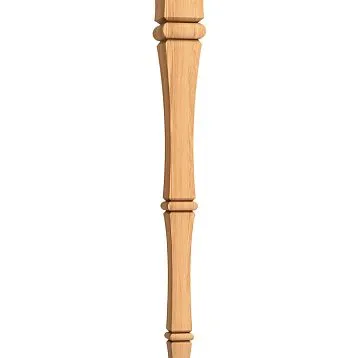
Building a staircase in a private house is not just a construction task, but a true art that requires precision, understanding of structural features, and a sense of aesthetics. This is especially true for the installation of railings, where every detail matters. When it comes toinstalling wooden balusterswith a round handrail, many homeowners wonder: is it possible to do this work independently, without resorting to professional services? The answer is unequivocal — yes, if you approach the process with expertise, patience, and the right tools.
Wooden balusters combined with a round handrail create a classic, elegant look that has been relevant for centuries and does not lose its appeal. This type of railing is distinguished by its versatility, reliability, and ability to integrate organically into almost any interior style — from strict classic to modern minimalism. But behind the external simplicity of the design lies many technological nuances that must be considered during independent installation.


Why a round handrail: functionality and ergonomics
The choice of handrail shape is not just a designer's whim. Round handrails have a number of undeniable advantages that make them an optimal solution for most staircase structures. Firstly, ergonomics: the round shape fits perfectly in the palm, providing a comfortable and secure grip when ascending or descending the stairs. This is especially important for children and the elderly, for whom movement safety is a priority.
Secondly, manufacturing technology.round wooden handrail 50 mmis produced on lathes, which allows achieving perfect cross-sectional geometry along the entire length of the product. This simplifies installation and ensures uniform load distribution. Thirdly, aesthetic versatility: round handrails harmoniously combine with both turned and milled balusters of various shapes, creating a visually balanced composition.
A diameter of 50 mm is considered optimal for most residential spaces. It is sufficiently massive to ensure structural strength and at the same time comfortable for an adult's hand to grip. A smaller diameter may feel insufficiently reliable, a larger one may create discomfort when grasping. This is why professional manufacturers, such as STAVROS, offer round handrails of a standard diameter, proven by decades of practical use.




Preparatory stage: what you need to know before starting work
The success of any construction endeavor is laid at the preparation stage. Before proceeding withinstallation of wooden balustersand handrail installation, it is necessary to carefully consider and plan all stages of the work. This applies not only to the selection of materials and tools but also to understanding the structural features of your specific staircase.
The first thing to start with is accurate measurements. Measure the total length of the future railing from the initial support post to the final one. Consider all turns, bends, and features of the staircase flight geometry. Determine the number of steps and, accordingly, the number of balusters. Standard practice involves installing one or two balusters per step, depending on their width. For a step width of less than 800 mm, one baluster is sufficient; for a greater width, two are recommended to ensure the necessary rigidity of the railing and compliance with safety standards.
The second important point is assessing the condition of the base. Balusters must be attached to a strong, stable surface. If the staircase is wooden, check the condition of the steps: look for cracks, deflections, signs of rot, or insect damage. If defects are present, they must be corrected before starting the railing installation. For concrete stairs, it is important to ensure the integrity of the surface, the absence of crumbling, and sufficient strength for anchor installation.
The third aspect is understanding the fastening technology. There are several main methods offastening wooden balusters: on studs, on dowels, on self-tapping screws, using specialized fastening systems. Each method has its advantages and area of application. The choice of a specific method depends on the type of base, the wood species of the balusters, the expected load, and aesthetic requirements.
Our factory also produces:


Required Tools and Materials
For high-quality work performance, installing wooden balusters and handrails you will need the following set of tools:
-
Electric drill or cordless screwdriver with speed control
-
Wood drill bits of various diameters (6, 8, 10, 12 mm)
-
Miter saw or jigsaw for precise trimming of balusters and handrails
-
Construction level at least 600 mm long, preferably laser
-
Measuring tape, ruler, square
-
Chalk line for marking lines
-
Clamps for fixing elements during gluing
-
Rubber mallet for fitting parts without damaging wood
-
Sanding machine or sandpaper of different grits
-
Brushes for applying glue and protective coatings
As for materials, the list here depends on the chosen installation technology:
-
Wooden balusters of required height and design
-
Round handrail of required diameter and length
-
Support posts for the beginning and end of the staircase, as well as for turns
-
Handrail Support Bar PR-003 for attaching balusters to the handrail
-
Threaded studs M6 or M8, 80-100 mm long
-
Wooden dowels 10-12 mm in diameter
-
Wood screws of various lengths
-
High-quality wood glue for carpentry
-
Wood filler matching the chosen wood species
-
Protective coating: oil, wax, varnish, or impregnation
Get Consultation
Material selection: which wood is best for balusters and handrails
Choosing the wood species is a fundamental decision that affects the durability, appearance, and performance characteristics of the stair railing. Different wood species have unique properties, and understanding these differences will help make the optimal choice for your specific case.
Oak is a classic choice for making wooden balusters and handrails. This species is distinguished by exceptional strength, hardness, and durability. Oak balusters can withstand significant loads without deformation and retain their properties for decades. The structure of oak wood is dense, with a pronounced texture, giving the products a noble appearance. The color palette ranges from light honey to rich brown shades depending on the processing method. Oak takes well to tinting and various types of finishing. The only drawback is the relatively high cost and the need to use quality tools due to the material's high hardness.
Beech is a worthy alternative to oak with similar strength characteristics. Beech wood has a lighter, warmer shade and a uniform structure without pronounced annual rings. This makes beech balusters visually more neutral and suitable for interiors in light tones. Beech processes well, accepts various types of finishes, and is sufficiently wear-resistant. In terms of price-quality ratio, beech often proves to be the optimal choice for residential premises with medium intensity of use.
Ash is a strong and elastic species that is comparable to oak in its mechanical properties but has a lighter shade and less pronounced texture. Ash has a beautiful silky sheen and takes well to tinting. Its elasticity makes it less prone to cracking with sudden humidity changes, which is important for homes with unstable microclimates.
Larch is a coniferous species with unique properties. It contains a large amount of natural resins, making the wood extremely resistant to moisture, rot, and biological damage. Larch is the optimal choice for outdoor stairs and structures in high-humidity areas. The wood color ranges from light yellow to reddish-brown with a beautiful annual ring texture. In strength, larch surpasses pine by one and a half to two times, although it is inferior to oak.
Pine is the most affordable option for making balusters. Its soft wood is easy to work with, which simplifies the creation of turned elements with complex shapes. However, pine is less strong and durable compared to hardwoods and is more prone to dents and scratches. Pine balusters are optimal for country houses, utility rooms, or when on a limited budget. With proper treatment with protective compounds and careful use, pine can last for many years.
Professional manufacturers, such as STAVROS, offerwooden balustersbalusters made from various wood species, allowing each client to choose the optimal solution according to their requirements, budget, and interior style.
Marking technique: accuracy above all
Quality marking is half the battle wheninstalling a round handrailand balusters. Even minor errors at this stage will lead to problems later: balusters will not be aligned, the handrail will be installed with gaps or misalignments, and the overall appearance of the structure will be far from ideal.
Marking the installation points for balusters on steps
Start by determining the positions of the extreme points—the starting and ending support posts. These elements are installed first and serve as reference points for the entire structure.The starting post for the staircasemust be installed strictly vertically, which is checked with a level on two planes. Any deviation from vertical at this stage will worsen as you progress along the staircase flight.
After installing the support posts, proceed to mark the positions of the intermediate balusters on the steps. There are several approaches to determining the attachment points. The classic option is to install balusters along the centerline of the step at an equal distance from the front edge. The typical distance is 10–15 cm from the tread edge but may vary depending on the step depth and the overall geometry of the staircase.
If two balusters are installed on one step, the distance between them should be calculated to ensure visual harmony and compliance with safety requirements. Building codes stipulate that the gap between adjacent balusters should not exceed 10–12 cm—this is important to prevent children from slipping between the posts. With a typical step width of 80–100 cm and baluster diameters of 40–50 mm, two posts per step provide optimal rigidity and safety for the structure.
Use a chalk line or laser level for marking. Stretch the line along the staircase flight so that it passes through the intended centers of all balusters. Ensure the line is perfectly straight and at an equal distance from the step edges along the entire length. Mark the installation point for each baluster with a pencil or marker, adding a cross-shaped notch for precise drill positioning when drilling holes.
Calculating baluster height considering the staircase slope
One of the most common mistakes made by novice craftsmen is incorrect calculation of baluster height when installing on a sloped staircase. Since the steps are at different levels and the handrail must run parallel to the flight line, the height of each baluster will vary. The wrong approach is to purchase balusters of equal length and attempt to install them without trimming. This will result in either a stepped handrail or the need for emergency on-site adjustments with a lot of waste.
The correct technique involves two main approaches. The first is to pre-calculate the height of each baluster considering the staircase slope and order elements of the required length. The second, more common in individual construction, is to purchase balusters with a height allowance (10–15 cm more than calculated) and then perform precise trimming after installation. The second method is preferable as it allows for height adjustments based on actual installation conditions and minimizes the impact of accumulated errors.
The standard handrail height above the step level is 90–95 cm. This is the optimal value for the convenience of people of average height. For children's staircases, an additional handrail at a height of 60–70 cm may be used. When calculating, note that this height is measured from the step surface to the top point of the handrail, not to the top end of the baluster. If aHandrail cleathandrail is used, its thickness (usually 20–25 mm) must be subtracted from the calculated baluster height.
Methods for attaching balusters: choosing the optimal method
There are several proven techniques for attaching wooden balusters to staircase steps. The choice of a specific method depends on the type of base, wood species, aesthetic preferences, and the load level on the railing. Let's examine the main methods in detail.
Mounting with threaded rods
This is one of the most reliable and common methods forinstalling wooden balusters. The method provides a strong connection while remaining hidden, not compromising the aesthetics of the structure. The execution technique is as follows:
A hole with a diameter of 6–8 mm (for an M6 or M8 stud) is drilled strictly along the central axis into the lower end of the baluster to a depth of 50–70 mm. It is important to ensure the hole is perpendicular to the end surface—use a drill press or jig for this. A metal threaded stud 80–100 mm long is screwed into the hole to a depth of about 60 mm, leaving 20–40 mm exposed. Before installing the stud, the inner surface of the hole is coated with wood glue or epoxy resin for additional fixation.
A corresponding hole with a diameter slightly larger than the stud (7–9 mm for an M6–M8 stud) is drilled into the step at the baluster installation point to a depth of 30–50 mm. The hole must also be strictly vertical. Some craftsmen first create a shallow counterbore with a diameter of 15–20 mm and depth of 5–7 mm for a tighter fit of the baluster end on the step.
The exposed part of the stud is coated with glue, and the baluster is placed onto the step with a rotating motion. It is important not to apply excessive force to avoid splitting the wood. After placement, check the baluster's verticality with a level on two planes—along and across the staircase flight. If necessary, the position can be adjusted with light taps from a rubber mallet. Allow the glue to dry completely (usually 24 hours) before continuing work.
Fastening with wooden dowels
This traditional joinery method provides a reliable connection and is entirely "wooden," which is important for enthusiasts of classic techniques. Wooden dowels (cylindrical rods) with a diameter of 10–12 mm are made from hardwoods—oak, beech, birch.
The technique is similar to stud attachment but with some specifics. Holes with a diameter exactly equal to the dowel diameter (with an accuracy of 0.1 mm) are drilled into the baluster and step to a depth of 40–50 mm in each element. The dowel should fit into the hole with slight interference, ensuring a tight fit. The total dowel length is 80–100 mm.
Before installation, the dowel is generously coated with wood glue and inserted into the hole in the baluster to its full depth. The exposed part is also coated with glue, and the baluster is placed onto the step. Unlike a metal stud, a wooden dowel has no threads, so the connection relies solely on glue and friction forces. This requires a more meticulous approach to hole preparation and the selection of high-quality glue.
Advantage of the method — a fully wooden joint that has no metal elements and is not subject to corrosion. Disadvantage — lower strength compared to metal studs and inability to disassemble without destroying the joint.
Fastening with angled screws
This method is used less frequently, mainly for temporary structures or in cases where other methods are inapplicable for some reason. Screws are driven into the baluster at a 30-45 degree angle through the bottom end into the body of the tread.
For quality execution, it is necessary to pre-drill a pilot hole 3-4 mm in diameter at the same angle at which the screw will be driven. This prevents wood splitting and ensures precise fastener direction. Wood screws 70-90 mm long and 4.5-5 mm in diameter are used. It is recommended to install two screws on opposite sides of the baluster to ensure stability.
Screw heads are countersunk into the wood to a depth of 3-5 mm, and the resulting recesses are filled with wooden plugs or putty matching the baluster color. After the putty dries, the installation areas are sanded to achieve a smooth surface.
Disadvantage of the method — visible fastener marks (even after filling) and somewhat lower reliability compared to studs or dowels. Advantage — simplicity and speed of installation, no need for precise axial hole drilling.
Fastening to concrete or metal base
If the staircase is made of concrete or metal, the technology for fastening balusters differs somewhat. For concrete bases, two main methods are used: installation on anchors and installation on embedded elements.
When using anchors, holes are drilled in the concrete for chemical or mechanical anchors. A metal flange (plate) with fastener holes is installed in the bottom end of the baluster. The flange is bolted to the anchors with M6-M8 bolts. This method provides a strong connection and allows for disassembly if necessary.
The second option is using embedded metal studs, which are installed in the concrete during pouring or mounted in drilled holes using a chemical anchor. A wooden baluster with a hole drilled in the end is placed on the protruding stud, similar to installation on a wooden base.
For metal stringers, a bolted connection through a flange at the base of the baluster is used. The flange is bolted to the metal through pre-drilled holes. This method provides maximum connection strength and allows for adjustment and disassembly.
Installing support posts: the foundation of reliability
Support posts are key elements of stair railings that bear the main load and determine the geometry of the entire structure.Starting post, finishing post, and intermediate supports at stair turns must be installed with maximum precision and securely fastened.
A typical support post has a square or rectangular cross-section ranging from 80×80 to 120×120 mm for residential stairs. For large-scale structures, posts up to 200 mm in diameter may be used. The post height depends on its location and the stair slope angle, but typically ranges from 900 to 1100 mm from the tread level to the top point.
Methods for fastening support posts
The most reliable method for fastening a support post is through-bolt connection. A through hole for an M10-M12 bolt is drilled in the tread (or in the floor beam for the starting post). A hole is also drilled in the center of the bottom end of the post to a depth of 100-150 mm. A bolt with a wide washer is passed from below through the hole in the tread, runs inside the post, and is tightened with a nut countersunk in a pre-made recess in the upper part of the hole.
The second method is installation on large-diameter threaded studs (M10-M12) 150-200 mm long. One end of the stud is fixed in the tread or floor (with adhesive, in expansion, or using an anchor), the other end enters a hole in the post end. To reinforce the connection, additional fasteners are used: side screws or metal brackets connecting the post to the tread or wall.
The third option, used for starting posts against a wall, is combined fastening. In addition to the main fastener through the bottom end, the post is additionally fixed to the wall using powerful anchors or bolts, ensuring maximum structural rigidity.
After installing the support post, it is critically important to check its vertical alignment in two planes using a level. Even a slight deviation of 1-2 degrees at a post height of 1000 mm will cause the top point to shift by 17-35 mm, leading to misalignment of the entire railing system. If necessary, the position is adjusted using wooden wedges placed under the post base or by trimming protruding parts of the end.
Installing balusters: step-by-step instructions
After installing the support posts and completing the marking, you can proceed to install the regular balusters. The process requires attentiveness, precision, and sequential actions. Let's consider the typical sequence of work when using the most common fastening method — on threaded studs.
Step 1: Preparing balusters
If balusters were purchased with extra height, preliminary length adjustment can be performed at this stage. However, final trimming is usually done after installation, when the balusters are already mounted and the cut line can be precisely determined considering the actual geometry. For now, ensure all balusters have even, perpendicular ends without chips or damage.
In the bottom end of each baluster, drill an axial hole 6-8 mm in diameter to a depth of 60-70 mm. To ensure accuracy, use a drill press or a special jig that guarantees perpendicular drilling. Prepare threaded studs M6 or M8, 80-100 mm long, in a quantity corresponding to the number of balusters.
Step 2: Installing studs in balusters
Apply wood glue or epoxy resin to the threaded part of the stud. Screw the stud into the baluster hole to a depth of 60 mm so that 20-40 mm remains outside. For screwing, you can use two screws clamped on the stud as a lever or a special wrench. Allow the adhesive to set (2-3 hours is sufficient when using fast-drying compounds).
Step 3: Drilling holes in treads
According to the previously completed marking, drill holes in the treads with a diameter 1-2 mm larger than the stud diameter (for M6 stud — 7-8 mm hole, for M8 — 9-10 mm) to a depth of 30-50 mm. The depth should be such that the stud enters the hole almost completely, but the baluster end fits tightly against the tread surface.
When drilling, monitor the vertical alignment of the drill bit—use a square or level for control. Deviation from vertical at this stage will cause the baluster to stand at an angle. Some craftsmen additionally perform counterboring—a shallow, widened hole with a diameter of 15-20 mm and a depth of 5-7 mm for a tighter fit of the baluster's lower end.
Step 4: Installing Balusters on the Steps
Apply adhesive to the protruding part of the dowel and around the hole in the step. Position the baluster, aligning the dowel with the hole, and seat it with a twisting motion. Do not apply excessive force—if the baluster does not seat, check the alignment of the dowel and the hole.
After seating, be sure to check the baluster's vertical alignment with a level in two directions. Adjustments can be made with light taps from a rubber mallet. Install all balusters on the flight of stairs in this manner, constantly monitoring their vertical alignment and position in a straight line.
Step 5: Installation Check
After installing all balusters, perform a final geometry check. Stretch a string along the top ends of the balusters—it should touch all balusters evenly without sagging or protruding. If deviations are found, while the adhesive is still wet, you can adjust the position of problematic balusters.
Check the distances between adjacent balusters—they should be uniform along the entire length of the flight. Ensure all balusters are securely fixed and have no play. Allow the adhesive to dry completely for 24 hours before continuing work.
Cutting Balusters at the Handrail Angle
One of the most critical operations duringinstallation of balusters for a round handrailis the precise cutting of the top ends at an angle corresponding to the slope of the flight of stairs. This operation ensures a tight fit of the handrail shoe or the handrail itself to the balusters along the entire length.
Determining the cut angle
The angle of the staircase and, accordingly, the baluster cutting angle can be determined in several ways. The simplest is using a sliding bevel gauge. Place one arm of the gauge on the horizontal surface of a step, and the other—on a string stretched along the flight, passing through the top points of the balusters. Lock the angle and transfer it to the miter saw.
An alternative method is calculation. Measure the vertical height and horizontal length of the flight of stairs. The slope angle is determined as the arctangent of the height-to-length ratio. For example, with a flight height of 3000 mm and a length of 4000 mm, the angle is approximately 36.9 degrees. For cutting balusters, an additional angle to 90 degrees is needed, i.e., 90 - 36.9 = 53.1 degrees from the baluster's vertical.
Performing the Cut
For high-quality baluster cutting, a miter saw with the ability to set the cutting angle is necessary. Set the angle determined in the previous step on the saw. Perform a test cut on a baluster offcut or a wooden blank of similar cross-section. Place the offcut against an installed baluster and check that the cut surface is parallel to the staircase slope.
After verifying the angle, proceed to cut the installed balusters. Determine the cutting height—it should provide an overall railing height of 90-95 cm from the step surface to the top of the handrail. Account for the thickness of the handrail shoe (usually 20-25 mm) and the height of the handrail itself (50 mm for a round handrail with a 50 mm diameter).
Mark the cutting line on all balusters. For this, use a stretched string or a long, straight batten, which you apply to the balusters at the required angle. Draw the line with a pencil. Cut the balusters one by one, constantly checking the cutting angle. After cutting, sand the ends with fine-grit sandpaper to remove burrs and achieve a smooth surface.
Checking the Result
After cutting all balusters, place a long, straight batten or the handrail shoe itself on their ends. The batten should rest evenly on all balusters without gaps or rocking. If individual balusters with deviations are found, perform additional cutting or sanding to level them. This stage is critically important for high-quality handrail installation.
Installing the Handrail Shoe: An Intermediate Link
Usehandrail shoeis a classic and proven technology forinstalling a wooden round handrail. The shoe serves several functions: it ensures even distribution of the handrail load across all balusters, simplifies installation, and creates a strong and reliable connection.
Selecting and Preparing the Handrail Shoe
The handrail shoe typically has a rectangular cross-section measuring 20×40 mm or 25×50 mm. The shoe's width is chosen depending on the baluster diameter—the shoe should reliably rest on their top ends without protruding beyond the edges. For standard balusters with a diameter of 40-50 mm, a shoe width of 40-45 mm is optimal.
The shoe material should match the material of the balusters and handrail. If the balusters are made of oak, use an oak shoe; for beech balusters—a beech shoe. This ensures uniformity of the structure in terms of strength, coefficient of thermal expansion, and visual appearance after finishing.
The shoe length should match the length of the flight of stairs with a small margin. If several shoe sections need to be joined, the connection is made with a miter joint at a 45-degree angle or using a butt joint reinforced with dowels.
Attaching the rail to balusters
The handrail shoe is placed on the cut ends of the balusters and secured with screws. The screws are driven from above through the shoe into the body of the baluster at an angle of 60-70 degrees to the vertical. This provides secure fastening while keeping the screw heads hidden under the handrail.
For each baluster, use one or two screws depending on its diameter. Pre-drill pilot holes with a diameter of 3-4 mm to prevent splitting of the shoe and baluster. Use wood screws 50-60 mm long and 4-4.5 mm in diameter.
When installing the rail, ensure it is perfectly aligned along the balusters. Use clamps to temporarily secure the rail before screwing in the screws. Make sure the rail fits tightly against the ends of all balusters without gaps.
On support posts, the rail must also be securely fastened. Here, more powerful fasteners can be used—screws 70-80 mm long or even through bolts, if provided for by the design.
Installation of a round handrail: the final stage
Installing a round handrail is the final and most noticeable stage of creating a stair railing. The quality of this work largely determines the overall impression of the staircase and its ease of use.
Preparing the handrail for installation
If the length of the flight of stairs exceeds the standard length of the handrail (usually 2000-3000 mm), it will be necessary to join several sections. Round handrails are joined end-to-end using internal dowels or pins.
The ends of both sections are cut perfectly straight at a 90-degree angle (or at the required angle for corner joints). Use a miter saw for maximum precision. In the center of each end, drill holes with a diameter of 10-12 mm (for a wooden dowel) or 8-10 mm (for a metal pin) to a depth of 50-60 mm.
A wooden dowel 100-120 mm long or a metal pin is coated with glue and inserted into the hole of one section to its full depth. The second section is placed onto the protruding part. The joint is tightly tightened. For greater reliability, the joint can be additionally secured with screws screwed in at an angle from the ends (the heads are countersunk, and the holes are filled with wooden plugs).
Cutting a groove in the handrail for the sub-rail
If usingHandrail Support Bar PR-003In the lower part of the handrail, it is necessary to cut a longitudinal groove into which the rail will fit. The width of the groove must exactly match the width of the rail (usually 20-25 mm), and the depth should be 15-20 mm.
The groove is cut on a milling machine or using a hand router with a parallel guide. It is important to ensure dimensional accuracy and that the groove is perpendicular to the axis of the handrail. Some manufacturers, including STAVROS, offer handrails with a pre-cut groove, which significantly simplifies installation.
If the groove is cut independently, start with a small depth and gradually increase it, checking the fit of the rail. The rail should fit into the groove with slight tension—tightly, but without excessive force.
Installing the handrail on the handrail mounting plate
Apply wood glue to the top surface of the sub-rail and into the groove of the handrail. Carefully place the handrail with the groove onto the rail, starting from one end. Proceed along the rail, gradually fitting the handrail along its entire length.
For a tight fit, use a rubber mallet, applying light taps through a wooden block. Do not apply excessive force to avoid damaging the handrail. If the handrail does not fit, check the correctness of the groove and rail dimensions.
After the handrail is fully seated, additionally secure it with screws. Screws are screwed from bottom to top through the sub-rail into the handrail at an angle of 30-45 degrees. The distance between fastening points is 250-350 mm (on each baluster or every other, depending on their density).
Pre-drill holes with a diameter slightly smaller than the screw shank diameter (for oak and beech—3-4 mm for a 4.5-5 mm screw). Carefully screw in screws 60-70 mm long to avoid splitting the wood. The screws should pass through the handrail, the rail, and enter the baluster to a depth of 20-30 mm.
Attaching the handrail to newel posts
The ends of the handrail must be securely connected tothe support posts of the staircase. There are several methods:
Insertion into a groove: A groove matching the profile of the handrail is milled into the top of the post. The groove depth is 30-40 mm. The end of the handrail is inserted into the groove, secured with glue and a wooden dowel installed from the side through the post into the handrail. This method requires precision in making the groove but creates the strongest and most aesthetic connection.
Angled connection: The end of the handrail is cut at the required angle (usually 90 degrees to the plane of the post) and tightly pressed against the post. The connection is secured with screws screwed at an angle through the handrail into the post, or with dowels. The joint can be covered with a decorative overlay.
Use of special connecting elements: For joining handrails at an angle (on staircase turns), special corner elements are used—goosenecks, corner transitions. These elements are connected to straight sections of the handrail using dowels or pins.
Alternative method: installation without a sub-rail
Although usinghandrail shoeis the most common and reliable method, there is an alternative technology—direct fastening of a round handrail to balusters. This method is used less frequently but has its advantages in certain situations.
Baluster preparation
With direct fastening, the upper ends of the balusters are not cut at an angle but remain flat, perpendicular to the axis of the baluster. In the center of each end, a hole is drilled for a dowel or pin with a diameter of 8-10 mm and a depth of 30-40 mm.
Installation of connecting elements
Wooden dowels or metal pins 60-80 mm long are installed into the holes in the balusters with glue so that 20-40 mm protrudes outward. After the glue dries, all protruding dowels must be at the same level and strictly vertical.
Marking and drilling holes in the handrail
This is the most difficult stage of this method. The handrail is placed on the protruding dowels of the balusters, and the drilling points are marked manually. The marking must be extremely precise, as any error will result in the handrail not fitting onto the balusters.
After marking, holes are drilled in the handrail with a diameter 1 mm larger than the dowel diameter to a depth corresponding to the length of the protruding part of the dowel. The holes must be strictly perpendicular to the lower plane of the handrail.
Handrail installation
The inner surfaces of the holes in the handrail are coated with glue. The handrail is carefully fitted onto the dowels of all balusters simultaneously. This requires a certain skill, as it is necessary to align multiple connections at the same time.
After fitting, the handrail is additionally secured with screws, screwed in at an angle from the side through the handrail into the baluster. The screw heads are countersunk and filled with wooden plugs or putty.
Advantages of the method: No visible handrail support strip, which may be preferable from an aesthetic point of view. Fewer structural elements.
Disadvantages: Significant complexity in precise marking and drilling holes in the handrail. Lower connection strength compared to using a handrail support strip. Difficulty of execution for novice craftsmen.
Using brackets for additional support
In some cases, especially with a large span length or increased requirements for railing strength, it is advisable to use additional support elements.Wooden Bracketscan be installed between the wall and the handrail, providing additional support and relieving some of the load from the balusters.
Brackets are especially relevant for wall-mounted handrails that are installed along a wall without balusters. In this case, the brackets are the main load-bearing element. The distance between brackets is usually 80-120 cm depending on the diameter of the handrail and the expected load.
Wooden bracket KR-050LorKR-038from STAVROS is made of solid oak or beech and can withstand significant loads. Carved decorative finishing turns a utilitarian element into an interior decoration.
The bracket is attached to the wall using powerful anchors or screws capable of supporting the weight of the handrail and the load applied to it. The handrail is placed in the upper part of the bracket (which usually has a profiled recess for a round handrail) and secured with screws from below.
Final finishing and wood protection
After installation is complete, the structure requires finishing, which will protect the wood from external influences and highlight its natural beauty. Properly executed finishing extends the service life of wooden elements several times.
Sanding before applying the coating
Before applying protective compounds, the entire surface of the balusters, handrail, and posts must be thoroughly sanded. Start with 120-150 grit abrasive to remove large irregularities, tool marks, and possible contaminants. Then sequentially move to finer abrasives: 180-220 for main sanding and 320-400 for finishing.
Pay special attention to connection points where there may be slight height differences or irregularities. All transitions should be smooth, without steps or depressions. If putty was used to fill screw holes or other defects, ensure it is completely dry and sanded flush with the main surface.
After sanding, thoroughly remove wood dust using a vacuum cleaner and a damp tack cloth. The surface must be absolutely clean before applying the coating.
Choose a protective coating
Various types of coatings are used for wooden staircase elements:
Wood oils — natural compounds that penetrate the wood structure, highlighting its grain and providing protection from within. Oils do not form a film on the surface; the wood retains its natural tactile feel and ability to 'breathe.' However, oil coating requires periodic renewal (every 1-2 years) and is less resistant to intensive wear.
Oil-wax — a combined composition that combines the penetrating properties of oil with the protective qualities of wax. Forms a thin protective layer on the surface, giving the wood a silky sheen. More resistant to abrasion compared to pure oil, but also requires periodic maintenance.
Water-based varnishes — modern compounds that form a durable transparent film on the wood surface. Provide a high degree of protection against moisture, dirt, and mechanical damage. Have no strong odor, dry quickly, and are environmentally safe. There are matte, semi-matte, and glossy options. Disadvantage — the surface becomes less natural to the touch.
Polyurethane-based varnishes — the most durable and wear-resistant coatings for wooden stairs. Withstand intensive use, resistant to abrasion, moisture, and chemicals. Ideal for high-traffic stairs. Disadvantages — strong odor during application, long full polymerization time (up to 2 weeks), high cost.
Forwooden handrailsit is recommended to use oil or oil-wax, as these coatings provide pleasant tactile sensations when gripping. For balusters and support posts, varnishes can be used, which provide more durable protection.
Coating application technology
Oil compositions are applied with a brush or pad in a thin layer along the wood grain. After 15-20 minutes, when the oil has been absorbed, excess is removed with a soft, lint-free cloth. The surface should be evenly impregnated but without puddles or drips. After the first layer dries (usually 12-24 hours), a second layer is applied. For stairs with intensive use, three layers of oil are recommended.
Varnishes are applied with a soft-bristled brush or spray gun. The first layer is a primer, which can be applied more generously to fill the wood pores. After drying (according to the manufacturer's instructions), the surface is lightly sanded with 320-400 grit abrasive to remove raised fibers and obtain an ideally smooth base. Dust is thoroughly removed.
Subsequent layers of varnish are applied thinly, without drips. Drying time is maintained between layers (from 2 to 6 hours for water-based varnishes, up to 12-24 hours for polyurethane). Usually, three layers are sufficient to obtain a durable and beautiful coating. The last layer is not sanded.
It is important to observe the temperature regime when applying coatings. The optimal temperature is 18-25°C, air humidity — no more than 60%. At lower temperatures, the coating dries more slowly; at higher temperatures, it may absorb unevenly or dry too quickly with the formation of defects.
Features of installation on spiral and turning stairs
Installing balusters and handrails from woodon spiral and turning stairs has its own features that must be taken into account. The main difficulty is that balusters are installed on treads located at different angles, and the handrail must smoothly follow the turns.
Angled balusters for turns
On turning sections of the staircase, specialcorner balusters, which serve as support points when changing the direction of the handrail. These elements typically have a more massive cross-section (60-80 mm compared to 40-50 mm for regular balusters) and greater length.
Wooden corner baluster is installed on a corner step and serves as a transition element between two straight sections of the railing. The fastening of the corner baluster must be particularly reliable, as it bears additional load from the bending of the handrail.
For fastening, two or four large-diameter threaded studs (M8-M10) are used instead of one. The studs are installed at the corners of the square or rectangular base of the corner baluster. Additionally, the connection can be reinforced with metal brackets or side screws.
Handrail curvature at turns
A round handrail on turning sections can be bent in several ways. The first is using ready-made bent elements (goosenecks), which are connected to straight sections. These elements are manufactured in factory conditions by bending steamed wood and have various bending radii.
The second method is bending the handrail yourself. For this, a straight section of the handrail is generously moistened with hot water or steam for 1-2 hours. The softened wood is bent according to a template of the desired shape and fixed with clamps. After complete drying (3-5 days), the wood retains the given shape. This method requires experience and is not suitable for all types of wood — ash bends best, oak after steaming, beech worse.
The third method is a composite handrail made of short straight sections connected at small angles. With a sufficient number of segments (5-7 per quarter circle), a visually smooth curve is created. Each connection is made on dowels or studs with glue.
Calculating the height of balusters on a spiral staircase
On a spiral staircase, each step has its own height relative to the starting point, with the height changing not linearly, as on a straight flight, but in a spiral. Calculating the height of each baluster requires knowledge of the spiral geometry: radius, pitch, number of steps per revolution.
Practical calculation method: install support balusters (corner) at key points — the beginning of the spiral, a quarter turn, half turn, and so on. Stretch a flexible cord between them or use a flexible batten that will take the shape of the spiral. Use this template to measure the height of each intermediate baluster.
Installing balusters on a spiral staircase may require special qualifications, especially when creating a smooth handrail bend. If you are not confident in your skills, it is recommended to contact professionals who have experience with complex curved structures.
Typical mistakes during installation and how to avoid them
Even experienced craftsmen sometimes make mistakes wheninstalling wooden balusters and handrails. Let's consider the most common problems and ways to prevent them.
Inaccurate marking is the most common cause of installation problems. Using poor measuring tools or carelessness when transferring dimensions leads to misalignment and geometric distortion.
Errors in marking the installation locations of balusters lead to elements not being in line, creating visual chaos. To avoid this, use a laser level or a carefully stretched cord to determine the center line. Check the marking twice before starting drilling. Remember the rule: measure twice, cut (or drill) once.
Non-coaxial holes
Holes in balusters and steps must be strictly coaxial and perpendicular to the surface. A deviation of even a few degrees will cause the baluster to stand at an angle. Use a drill stand or jig to ensure perpendicular drilling. When drilling into a step, control the drill position with a square.
Incorrect calculation of baluster height
Purchasing balusters of the same height for an inclined staircase is a gross mistake. Always order balusters with a height allowance (100-150 mm more than the calculated height) for subsequent precise trimming. Do not try to calculate the height of each baluster theoretically — it is better to trim after installation, when all actual dimensions can be taken into account.
Insufficient fixation of support posts
Support posts must be secured as reliably as possible, as they bear the main load. Do not rely only on glue — use mechanical fasteners: through bolts, powerful studs, additional side anchors. Check the verticality of the posts in two planes.
Weak handrail fastening
The handrail must be securely fixed not only with glue but also with mechanical fasteners. Do not skimp on screws — use them in sufficient quantity (on each baluster or every other one). Pre-drill pilot holes to avoid splitting the wood.
Using wet wood
Wood with a moisture content above 12-14% will dry out after installation, leading to deformations, cracks, and weakened connections. Use only dry, kiln-dried wood. Before installation, let the material acclimate in the room for 7-10 days.
Premature load on the structure
Do not use the staircase until all adhesive joints are completely dry. Minimum time — 24 hours, optimal — 48-72 hours. Premature loading can lead to displacement of elements, weakening of connections, and the need for rework.
Care for wooden balusters and handrails
Proper care extends the service life of wooden staircase elements and preserves their attractive appearance for decades.
Regular cleaning
Wooden handrails andbalusters for staircasesshould be regularly cleaned of dust and dirt. Use a soft dry cloth or a slightly damp wipe. Do not use aggressive detergents, abrasive sponges, or solvents. To remove stubborn stains, use special wood care products appropriate for the type of protective coating.
Updating protective coating
Oil finishes require periodic renewal. When dry, matte areas appear (usually on the handrail that is constantly in contact with hands), apply a thin layer of oil. Before doing so, clean the surface of dirt and lightly sand with 320-400 grit abrasive.
Lacquer coating is more durable and requires renewal less frequently. When wear or scratches appear, the area is sanded, cleaned, and locally coated with lacquer. For an inconspicuous repair, sanding is performed with a smooth transition from the damaged area to the undamaged one.
Fastener condition monitoring
Once a year, check the reliability of the fastening of all railing elements. Check for any play in the connections of balusters to steps, handrail to balusters, and support posts to the base. If loosening is detected, tighten the fasteners or, if necessary, perform repairs using additional glue or mechanical fasteners.
Protection from moisture and temperature fluctuations
Avoid direct water contact with wooden staircase elements. During wet cleaning of steps, ensure water does not run onto the balusters. Maintain stable indoor air humidity (45-60%) using humidifiers in winter and dehumidifiers during damp periods. Sudden humidity fluctuations lead to wood deformation, cracking, and weakened connections.
Calculation of material and labor costs
Budget planning forinstallation of balusters and round handrailhelps avoid unexpected expenses and properly allocate funds.
Cost of materials
Main costs include:
Balusters: Price depends on wood species, processing complexity, and length. Simple turned pine balusters — from 150-200 rubles per piece, beech — 300-400 rubles, oak — 500-800 rubles. Carved balusters with complex relief can cost 1000-2000 rubles or more. For a typical staircase with 12-15 steps, 12-30 balusters are required (1-2 per step) plus 2-4 support posts.
Handrails:round wooden handrail 50 mmpine costs 400-600 rubles per linear meter, beech — 800-1200 rubles, oak — 1500-2500 rubles. For a flight length of 3-4 meters, a corresponding length of handrail is required.
Handrail base strip:Strip PR-003costs 150-300 rubles per linear meter depending on wood species.
Support posts: Price starts from 1500-2000 rubles for a simple pine post, 3000-5000 rubles for beech or oak. Carved posts with complex decor can cost 8000-15000 rubles.
Fasteners and consumables: Threaded studs, dowels, screws, glue, putty, protective coatings — total 2000-4000 rubles.
Total material cost for a medium-sized staircase (12-15 steps) made of beech or oak is 30000-60000 rubles depending on element complexity.
Cost of Professional Installation
If you decide to hire professionals, installation cost is typically 50-100% of material cost. Installation of a typical railing will cost 15000-40000 rubles depending on design complexity, region, and craftsmen's qualifications. Installation of spiral and curved staircases costs more — 40000-80000 rubles.
Savings with DIY installation
Performing the work yourself allows significant savings. However, it is necessary to realistically assess your skills and capabilities. Installation errors can lead to damage to expensive materials and the need for replacement, negating all savings. If you have no carpentry experience, it is recommended to start with a simple straight staircase using ready-made standard-sized elements.
Normative requirements and safety
When designing and installing stair railings, it is necessary to comply with building codes regulating safety.
Handrail height
Standard handrail height is 90 cm from the step surface. For children's institutions, an additional handrail is provided at a height of 50-60 cm. Height can vary within 85-100 cm depending on specific conditions, but it is not recommended to make it less than 85 cm for safety reasons.
Distance between balusters
The gap between adjacent balusters should not exceed 10-12 cm. This requirement is especially important for homes with children — a larger gap creates a risk of a child slipping between the posts. To meet this requirement, two balusters are installed on wide steps (over 80 cm).
Structural strength
The railing must withstand a horizontal load of at least 100 kg applied to the handrail. This is ensured by reliable fastening of all elements, proper material selection, and adherence to installation technology. The handrail should not bend, wobble, or have play under load.
Absence of injury-prone elements
All railing elements must have a smooth, well-finished surface without burrs, chips, or protruding fasteners. Screw heads are countersunk and filled. Handrail ends at the staircase termination are rounded or covered with decorative caps.
Frequently asked questions
Can wooden balusters be installed outdoors?
Yes, but with certain limitations. For exterior applications, special durable wood species are used — larch, oak, thermowood.Outdoor wooden balustersrequire more thorough protective treatment — multi-layer coating with weather-resistant compounds that need to be renewed every 2-3 years. Fasteners must be made of stainless materials.
What handrail diameter should I choose?
The standard and most convenient diameter is 50 mm. This size is comfortable for an adult's palm to grip and provides sufficient strength. 40 mm diameters are used for lightweight structures or children's stairs. 60-70 mm diameters are used for large-scale main staircases or when increased strength is required.
How long does installation take?
For an experienced craftsman, installing a railing on a straight staircase with 12-15 steps takes 2-3 working days. A beginner will need 4-6 days, including time to correct possible mistakes. Additionally, time for adhesive joints to dry (1-2 days) and applying protective coatings (2-4 days considering drying time between layers) must be taken into account.
Can balusters be installed without a handrail bracket?
Yes, installation with direct fastening of the handrail to the balusters is possible. However, this method requires high precision in marking and drilling holes in the handrail. For beginner craftsmen, it is recommended to usethe handrail bracket PR-003, which simplifies installation and provides a more reliable connection.
How often should the oil finish be renewed?
On handrails that are constantly in contact with hands, the oil coating wears off faster. Local renewal may be required after 1-2 years of use. Balusters and support posts, with careful handling, retain their coating for 3-5 years. Complete renewal of the entire railing is typically performed every 5-7 years.
Does the handrail need additional fastening to the wall?
If the staircase is located along a wall, it is recommended to install additionalWooden Bracketsbrackets connecting the handrail to the wall. This reduces the load on the balusters and increases the overall rigidity of the structure. The distance between brackets is 80-120 cm.
What wood species is best for a staircase in a residential house?
For heavily used staircases, hardwoods are optimal — oak, beech, ash. Oak is the most durable and prestigious, but also more expensive. Beech offers an excellent price-quality ratio. For staircases with moderate load (in dachas, attics), pine or larch is suitable.
Can wooden balusters be painted?
Yes, wooden balusters can be coated with opaque paints that completely hide the wood grain. However, this deprives the structure of one of its main advantages — the natural beauty of wood. If you want to change the color, it is better to use tinting compounds (stains, colored oils) that change the shade but preserve the visible grain.
Conclusion
installation of wooden balusterswith a round handrail by yourself is a quite feasible task for a person with basic woodworking skills and the necessary tools. The key success factors are thorough preparation, precise marking, adherence to technology at each stage, and the use of quality materials and fasteners.
A properly installed railing serves for decades, ensuring safety when moving on the staircase and decorating the interior. At the same time, the wooden structure retains the possibility of repair and renewal — damaged elements can be replaced, worn-out coating can be restored.
If the complexity of the work seems excessive or you lack sufficient experience, contact professionals. The company STAVROS offers a full range of services — from designing the staircase railing to professional installation. The catalog features a wide selection ofwooden balusters, handrails for staircasessupport posts andstaircase componentsmade from various wood species. The products are manufactured from selected dry solid wood in compliance with all technological requirements.
STAVROS is not just a manufacturer of architectural wood elements; it is a team of professionals with many years of experience who will help turn your dream of a beautiful and safe staircase into reality. Quality materials, precise execution, attention to detail — these are the principles on which the company's work is built. By contacting STAVROS, you receive a quality guarantee, professional consultation, and confidence in the durability of the created structure.