












































































Article Contents:
- Terminology and Classification: Understanding the Basics
- Molding: Universal Decorative Profile
- Trim: Ceiling and Wall Format
- Cornice: Transition from Wall to Ceiling
- Baseboard: Floor Protection and Framing
- Materials for Moldings: Comparative Analysis
- Solid Oak: The Standard of Quality and Durability
- Solid Beech: Optimal Balance
- High-Density MDF: Stability and Affordability
- Individual Approach: Molding to Your Taste
- Interior Design System: Comprehensive Approach
- Ceiling Solutions: Cornices and Coffers
- Wall Panels: Wainscoting and Framing
- Opening Framing: Casings and Portals
- Baseboard System: Completing the Composition
- Stylistic Solutions: Moldings in Different Interiors
- Classicism: Symmetry and Proportions
- Empire: monumentality and grandeur
- Baroque: Opulence and Dynamism
- Ceiling Molding: Framing the Upper Surface
- Art Deco: geometry and luxury
- Neoclassicism: A Modern Interpretation of Traditions
- Minimalism: Function Without Decoration
- Installation Technology: Professional Secrets
- Surface Preparation: Critical Stage
- Marking: Precise Placement
- Angle cutting: mastery of joining
- Fastening: Adhesive and Mechanical Fasteners
- Finishing: Flawless Surface
- Designing Molding Compositions: Rules of Harmony
- Golden Ratio: The Mathematics of Beauty
- Scaling: Matching the Space
- Rhythm and Repetition: Creating Dynamics
- Symmetry and Balance: Visual Stability
- STAVROS Company: The Professional Choice of Decorators

Architectural detailing of an interior defines the perception of the entire space. The bland, smooth walls of modern new-builds require artistic interpretation, structuring, and the imparting of historical context or stylistic definition.interior picture frame moldingsbecome the language of architecture, allowing the expression of the owner's individuality, the creation of recognizable aesthetics, and the integration of the space into a specific stylistic tradition. In 2026, there is a renaissance of classical decoration techniques—designers are returning to solutions tested over centuries, adapting them to modern realities. But how to use moldings in an interior competently? Which materials are preferable for various conditions? How to combine different elements into a unified composition? This article provides comprehensive answers at a professional level.


Terminology and Classification: Understanding the Basics
Professional work with architectural decor requires precise understanding of terminology. Confusion in definitions leads to design errors, incorrect material selection, and mismatched expectations with reality.




Molding: universal decorative profile
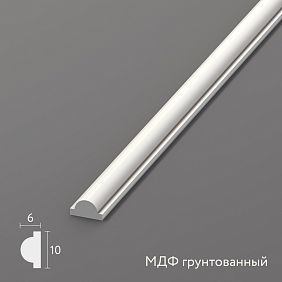
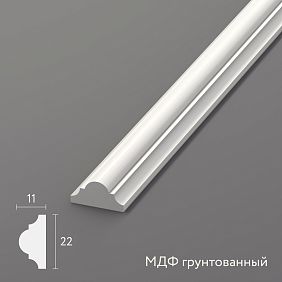
interior wall molding— is a profiled strip with a relief front side, designed for framing, zoning, and decorating vertical and horizontal surfaces. The term originates from the English 'molding' — forming, casting, which indicates the technology for replicating an identical profile.
The key feature of molding is its versatility of application. The same profile can be used for framing doorways, creating wall panels, decorating furniture, and finishing ceilings. This flexibility makes moldings a basic tool for interior designers.
Molding cross-section varies from minimalist 10×8 mm to large-scale 120×50 mm. Narrow profiles create delicate framing without dominating the composition. Wide ones form an expressive architectural accent that defines the character of the entire space. The correct width choice is determined by the scale of the space, ceiling height, and stylistic concept.
Our factory also produces:


Baguette: ceiling and wall format
Interior wall molding— is a term historically denoting a decorative profile for framing paintings, mirrors, and tapestries. In modern practice, 'baguette' often refers to wide moldings used for creating panel systems on walls, although formally this is not entirely correct.
Confusion arose due to visual similarity — baguette frames and wall moldings are indeed similar in profile. But functionally, these are different elements. A baguette frame is a standalone product containing a rabbet for installing glass and a back panel. A wall molding is a strip attached directly to the wall without additional structures.
In professional circles, it is recommended to distinguish between these concepts. When ordering 'baguette for walls' from a manufacturer, clarify that you mean a wide molding for panel systems. This will prevent misunderstandings and ensure you receive exactly what is required.
Get Consultation
Cornice: transition from wall to ceiling
Ceiling cornice is a specialized profile designed for finishing the joint between the wall and ceiling. Unlike universal molding, a cornice has an asymmetrical cross-section — the wide part is attached to the wall, the narrow part adjoins the ceiling. The angle between the planes is usually 90-100°, ensuring a tight fit.
Cornices are classified by the height of the front part — from compact 45 mm to monumental 200 mm. The choice is determined by the room's height. The golden rule is that the cornice height is 1/10-1/12 of the room's height. For standard 2.7 meters, a 70-90 mm cornice is optimal; for high 3.5 meters — 120-150 mm.
The cornice profile can be simple geometric or complex classical with ovals, dentils, and acanthus leaves. Simple profiles are universal, suitable for modern and minimalist interiors. Complex ones work in classical, neoclassical, and historical styles.
Baseboard: floor protection and framing
Floor baseboard formally also belongs to moldings but is distinguished as a separate category due to its specific function. In addition to its decorative role, the baseboard protects the lower part of the wall from mechanical damage, conceals the thermal gap of the flooring, and hides wiring.
Baseboard height varies from minimalist 50 mm to representative 140 mm. The choice depends on the scale of the room and style. High baseboards of 100-140 mm are characteristic of classical interiors, creating a sense of solidity. Low ones of 50-70 mm are typical for modern minimalism, not drawing attention.
The baseboard construction may include a cable channel for laying wiring, which is especially convenient during renovation. Although aesthetically, a solid wooden baseboard without technological cavities is preferable — it is more massive, solid, and durable.
Materials for moldings: comparative analysis
The choice of material determines the performance characteristics, durability, appearance, and cost of moldings. Each material has an optimal area of application.
Solid oak: the benchmark of quality and durability
Oak moldings are a premium choice for high-class interiors. Density of 650-750 kg/m³ ensures mechanical strength, resistance to accidental impacts, and abrasion. Oak moldings do not deform with humidity fluctuations within 45-65%, maintaining geometry for decades.
Oak texture is expressive — clear annual rings create a characteristic pattern, recognizable at first glance. The color palette varies from light golden (young oak) to dark brown (bog oak). Natural tannin content up to 10% protects against biological damage and imparts a characteristic tart aroma.
The cost of oak moldings is 50-70% higher than beech, but durability compensates for the expense. Service life with proper care reaches 50-80 years. The possibility of multiple restorations — sanding, repainting, varnishing — makes oak economically justified in the long term.
Processing oak requires quality tools. High density and silicon inclusions quickly dull cutting edges. Professional workshops use carbide tools, ensuring clean processing without chips or tear-outs.
Solid beech: optimal balance
Beech moldings are the choice of practical professionals who value the price/quality ratio. Density of 620-680 kg/m³ is sufficient for interior applications, providing strength at a lower cost. A homogeneous fine-pored structure creates a calm texture of delicate pinkish hues.
The main advantage of beech is its formability. After steaming at 100-110°C, the wood becomes plastic, allowing the creation of bent elements with a minimum radius of 400-600 mm. For arched openings, bay window areas, and curvilinear compositions, beech is indispensable. Oak does not possess such plasticity.
Beech moldings are easy to process — milled, sanded, painted. The neutral color is ideal for tinting into any shades — from light bleached to dark wenge. The uniformity of the structure ensures even dye absorption without spotting.
The disadvantage of beech is its hygroscopicity. With humidity fluctuations exceeding ±15%, deformations are possible. Therefore, beech moldings require a stable microclimate — temperature 18-24°C, humidity 45-65%. Under proper conditions, beech serves 30-40 years without problems.
High-density MDF: stability and affordability
MDF moldings are a budget-friendly solution for large-scale projects where cost savings are important without critical loss of quality. The material density of 750-850 kg/m³ exceeds solid wood, ensuring surface hardness. Absolute dimensional stability is the main advantage of MDF.
The uniformity of the structure allows for the creation of the most complex profiles, which are impossible in solid wood. Thin relief elements, fine carving, openwork compositions — MDF is milled without chipping or breakage. For products intended for painting, this is the optimal material.
The surface of MDF moldings is perfectly smooth after sanding. The adhesion of paint and varnish materials is excellent — paint applies in an even layer without drips or stains. Painted MDF moldings are visually indistinguishable from solid wood, while the cost is 60-70% lower.
The eco-friendliness of modern E1 class MDF meets the strictest standards. Formaldehyde content does not exceed 0.1 mg/m³ — this is the level of natural wood. There is no odor, and safety for living spaces is confirmed by certificates.
Polyurethane: Lightness and Moisture Resistance
Polyurethane moldings have gained popularity due to their light weight and moisture resistance. A density of 200-300 kg/m³ allows for the creation of large-sized elements without overloading walls. A 200 mm high cornice made of polyurethane weighs 400-500 g/m compared to 2-3 kg/m for a wooden counterpart.
Moisture resistance makes polyurethane ideal for bathrooms, kitchens, and spaces with variable humidity. The material does not absorb water, does not swell, and does not deform. It can be installed close to moisture sources without risk of damage.
The range of profiles is impressive — from simple geometric to luxurious classical with fine detailing. Casting technology allows for the reproduction of historical samples with millimeter precision. Museum restoration often uses polyurethane to recreate lost elements.
The drawback of polyurethane is its artificiality. No matter how perfect the imitation, the material remains synthetic, lacking the tactile warmth of wood. For premium interiors where naturalness is important, polyurethane is not suitable. But for budget projects or wet areas — it is optimal.
Interior design system: a comprehensive approach
Competent use of moldings involves a comprehensive solution covering all architectural elements of a room — from floor to ceiling.
Ceiling solutions: cornices and coffers
The ceiling is the fifth wall, requiring the same attention as vertical surfaces. A cornice around the perimeter creates compositional completeness, visually increasing the height by 10-15%. Light reflected from the cornice makes the ceiling brighter and the room more spacious.
Hidden lighting behind the cornice is a popular technique in modern design. An LED strip is placed on the wall behind the cornice, creating backlighting. The ceiling appears to float, detaching from the walls. The effect is enhanced when using cornices with an internal shelf width of 50-80 mm.
Coffered ceilings are a complex system of intersecting beams and moldings forming a geometric pattern. The recesses between the beams are accentuated by color or contrasting finishes. Such ceilings are characteristic of classic libraries, studies, and formal halls.
Creating coffers requires precise calculation. The cell size is determined by the proportions of the room. For a 4×5 meter room, cells of 800×1000 mm are optimal, forming a regular 5×5 section grid. Moldings with a cross-section of 60×40 mm create expressive relief without excessive bulk.
Wall paneling: boiserie and framing
Wall paneling systems made from moldings are the quintessence of classic interior design. French boiserie of the 17th-18th centuries, English wainscoting, Russian palace interiors — all use the same principle: the wall is divided by moldings into rectangular sections filled with contrasting finishes.
A typical scheme includes three tiers. The lower tier up to a height of 90-100 cm — baseboard panels protecting the wall from mechanical damage. The middle tier up to 200-220 cm — main decorative sections sized 60×80 cm or 80×100 cm. The upper tier — a frieze 30-50 cm high under the ceiling cornice.
Moldings form the frames of the sections. The width of the framing molding is 40-80 mm depending on the section size. Inside, the frame is filled with fabric, wallpaper, decorative plaster, or painted in a contrasting color. The interplay of textures and shades creates depth, volume, and visual richness.
A modern interpretation of boiserie simplifies the system while preserving the principle. Moldings form several large 100×120 cm sections painted in two or three colors. The result is an elegant solution referencing classic style without overloading the space.
Opening framing: architraves and portals
Door and window openings are critical points in an interior, requiring expressive framing. Architraves made from moldings create a frame that emphasizes the geometry of the opening, integrating it into the overall wall composition.
The width of the architrave is determined by the size of the opening. A standard 2000×800 mm door is framed with architraves 70-90 mm wide. Narrower ones look stunted and fail to create the proper effect. Wider ones overload and make the opening visually heavy.
Classic design includes vertical side architraves and a horizontal top element of increased height — a pediment. The pediment projects forward by 20-40 mm, creating a cornice effect. Under the pediment, aa decorative element— console, bracket, or carved insert is often placed.
Fireplace portals require large-scale framing with moldings 100-150 mm wide. Side posts — pilasters with capitals. The upper part — a massive shelf 200-300 mm deep on decorative brackets. Such framing turns the fireplace into an architectural accent organizing the entire living room space.
Baseboard system: completing the composition
The floor baseboard completes the vertical composition, creating a transition from wall to floor. Harmony is achieved when the baseboard relates to the ceiling cornice in terms of profile style. It is not necessary to use identical elements, but a visual connection should be discernible.
Tall baseboards 100-140 mm create solidity characteristic of classic interiors. The profile cross-section repeats the upper cornice on a reduced scale. If the cornice contains ovolos and dentils, the baseboard includes simplified versions of these elements.
Modern interiors prefer minimalist baseboards 60-80 mm with a simple geometric profile. Emphasis is on clean lines and the absence of decorative excess. The baseboard performs the function of a neat finish without attracting attention.
The color scheme for baseboards varies. The classic approach is a baseboard matching the floor color, creating unity in the horizontal plane. The modern approach is a baseboard matching the wall color, visually increasing their height. The contrasting approach is a bright accent that defines the spatial boundary.
Stylistic solutions: moldings in different interiors
Each historical and contemporary style imposes specific requirements for the use of moldings.
Classicism: symmetry and proportions
Classical interiors are built on mathematically precise proportions, symmetry, and regularity. Moldings here are structural elements of the architectural order, adapted to interior scale. Profiles contain classical elements: ovolos (egg-shaped forms), beads (alternating spheres and disks), dentils (tooth-like forms), and egg-and-dart motifs.
A ceiling cornice 150-200 mm high includes several rows of decorative elements. The lower row consists of dentils 30-40 mm high with a 40-50 mm pitch. The middle row features large ovolos measuring 50×30 mm. The upper row is a cyma reversa (S-shaped profile) transitioning to the ceiling. The complexity of the profile creates a play of light and shadow, emphasizing the sense of scale.
Wall panels are formed by moldings 60-80 mm wide with a classical profile. The corners of sections are accentuated with decorative elements—rosettes, corner inserts, cartouches. Each section, measuring 80×100 cm, contains a symmetrical composition.
The color scheme tends toward light, noble shades. Ivory, antique white, and light beige create a sense of purity and solemnity. Gilding of individual elements accentuates the relief and adds luxury.
Empire: Monumentality and Grandeur
The Imperial style demands monumentality of forms, richness of decor, and opulence of materials. Moldings here are large, massive, with pronounced plasticity. Cornices 200-250 mm high dominate the space, emphasizing ceiling heights of 3.5-4.0 meters.
Characteristic elements of the Empire style are wreaths, laurel branches, military trophies, eagles, and sphinxes. These motifs are reproduced in applied decoration that complements molding frames. Symmetry is absolute, the composition is strictly centered.
The color palette is contrasting—white moldings against saturated walls (burgundy, emerald, sapphire) or dark moldings against light walls. Gilding is widely used, emphasizing imperial grandeur.
Baroque: opulence and dynamism
Baroque interiors are distinguished by maximal decorativeness, curvilinear forms, and asymmetry of compositions. Moldings here serve as the base for carved decoration with floral ornaments, putti, and mascaron. Straight lines are avoided in favor of smooth curves, volutes, and scrolls.
Bent beech moldings create arched frames, oval medallions, and curvilinear panels. A minimum radius of 400-600 mm allows for the formation of characteristic Baroque shapes. The combination of straight and curved elements creates a dynamic composition.
Gilding over white or colored gesso is a typical finish for Baroque moldings. The technique is labor-intensive, but the result is impressive. Gold leaf is applied over a red or green bole, creating a deep glow.
Modern: natural forms and asymmetry
The Art Nouveau style rejects classical order forms, drawing inspiration from nature. Moldings imitate plant tendrils, waves, and flowing forms. Asymmetry, fluidity, and the avoidance of right angles are characteristic features.
Bent moldings create arches of complex outlines—pointed, parabolic, multi-centered. Openings are framed by moldings of variable width, expanding at key points. Decorative elements include stylized flowers, buds, and leaves.
The color scheme tends toward natural shades. Greens, ochres, and terracotta tones create an organic atmosphere. Contrast is achieved by combining light moldings with dark walls or vice versa.
Art Deco: geometry and luxury
Art Deco combines geometric clarity with the luxury of materials. Moldings feature stepped profiles, zigzag elements, and solar motifs. Symmetry is absolute, compositions are centered, and rhythm is emphasized.
Wide, flat moldings 100-120 mm wide with minimal relief are characteristic. Decorative effect is achieved not through plasticity but through the play of contrasts—inlays with metal inserts, combinations of different wood species, and matte and glossy surface finishes.
Colors are saturated—black, gold, burgundy, emerald. Contrasting combinations create the graphic quality characteristic of the style. Moldings are often painted in metallic shades—bronze, brass, patinated copper.
Neoclassicism: modern interpretation of traditions
Contemporary Neoclassicism takes classical forms, simplifying them to the bare minimum. Moldings have recognizable classical profiles but without excessive detailing. Ovolos and dentils are stylized, enlarged, and lack fine detailing.
Cornices 80-120 mm high provide architectural support without dominating. Wall panels are formed from large 100×150 cm sections framed by 50-70 mm moldings. The number of elements is minimal, each serving the overall composition.
The color scheme is neutral—gray, beige, and gray-blue shades create a calm, elegant atmosphere. White moldings on light gray walls are a typical, fail-safe solution.
Minimalism: function without decoration
Minimalist interiors use moldings extremely sparingly, only where functionally necessary. Baseboards are of minimal height, 50-60 mm, with a simple rectangular cross-section. Door casings are thin strips 40-50 mm wide without relief.
Ceiling cornices are often omitted entirely, replaced by a shadow gap—a 10×10 mm recess along the ceiling perimeter that creates visual separation without a physical element. If a cornice is used, it is a simple rectangular profile 40×20 mm.
The color of the moldings matches the wall color, creating a monolithic surface. Contrast is absent; moldings are perceived as thin lines that structure the space without dominating it.
Installation technique: professional secrets
The quality of installation determines the final result no less than the quality of the moldings themselves.
Surface preparation: a critical stage
Moldings highlight all surface imperfections. A wall deviation of more than 5 mm per meter of length leads to gaps and poor adhesion. Therefore, surface preparation is critical.
Walls are checked with a long 2-3 meter straightedge. Detected irregularities are chiseled off (protrusions) or filled with putty (depressions). The goal is to create a plane with a deviation of no more than 3-5 mm over 2 meters. A perfect plane is not required, but major defects are unacceptable.
Room corners are checked with a square. A deviation from 90° of more than 2-3° creates problems when joining moldings. If a corner is out of square, the moldings are cut not to the standard 45°, but to the actual angle. This angle is determined by measuring with a protractor or using a template method.
The surface is cleaned of dust and primed with a deep-penetration primer. The primer strengthens the surface layer of plaster and improves the adhesion of the adhesive. Without priming, the molding may peel off after a few months.
Marking: placement accuracy
The horizontality of the ceiling cornice is controlled with a laser level. A line is marked on the wall around the entire perimeter of the room. The molding is attached with its bottom edge along this line. Even a 5-10 mm deviation is noticeable to the eye and creates a sense of crookedness.
For wall panels, a full-scale drawing is created on the wall with a pencil. Central axes, section corners, and the position of all moldings are marked. Symmetry is checked by measuring distances from corners and the center of the wall. Any asymmetry is glaring and spoils the impression.
The verticality of moldings is controlled with a plumb line or laser level. A deviation of more than 2-3 mm per meter of height is noticeable and creates a sense of leaning. This is especially critical for door casings, where verticality is compared to the vertical of the door frame.
Angle Cutting: The Art of Joining
45° miter joints require the highest precision. A deviation of 0.5° leads to a gap visible from a distance. A miter saw with a laser guide provides the necessary accuracy. The blade must be sharp and without wobble — a dull blade tears fibers and creates chips.
The molding is placed in the saw with the face side up, pressed against the fence, and cut in one continuous pass without stopping. A slow feed ensures a clean cut. Rushing leads to tear-out of fibers at the blade exit.
For inside corners, a 45° miter cut is often insufficient due to imperfect wall geometry. A more reliable method is contour copying. One molding is installed up to the corner without cutting the end. The second is cut with a jigsaw along the profile contour, forming a tight fit regardless of the wall angle.
Outside corners require a perfect 45° miter cut. The joint is checked 'dry' without glue. If gaps are present, the ends are refined with sandpaper on a wooden block. The goal is contact across the entire cut plane without gaps.
Fastening: adhesive and mechanical fasteners
Light moldings up to 500 g/m are attached with adhesive without additional mechanical fasteners. Polyurethane adhesive is applied in a zigzag pattern on the back of the molding. The molding is pressed against the wall and secured with painter's tape or temporary props until the adhesive sets (15-20 minutes).
Heavy moldings over 1 kg/m require combined fastening. Adhesive provides adhesion, mechanical fasteners provide reliability. Finish nails or screws are used, driven at an angle into the wall through the molding. Fastener spacing is 400-500 mm.
Nail or screw heads are countersunk 2-3 mm, and the holes are filled with putty. After the putty dries, the fastener locations are sanded and become invisible. Quality putty and sanding make the fasteners completely undetectable.
Ceiling cornices over 100 mm in height require reinforced fastening with wall plugs. Holes 6-8 mm in diameter are drilled through the molding into the wall at 400-500 mm intervals. Nylon wall plugs are inserted, and 50-70 mm long screws are driven in. The heads are countersunk and filled with putty.
Final finishing: flawless surface
Molding joints are filled with acrylic sealant matching the product color. The sealant is applied in a thin bead and smoothed with a wet finger or rubber spatula. Excess is immediately removed with a damp sponge. After drying, the joint is practically invisible.
Gaps between the molding and the wall are filled with acrylic sealant. It is important to choose a sealant that can be painted. Silicone sealants cannot be painted; their use is limited to areas where painting is not planned.
Unpainted solid wood moldings are coated with oil, wax, or varnish using the technology described earlier. MDF moldings are primed and painted in 2-3 coats with intermediate sanding. The final coat is a semi-matte or matte varnish, creating a protective film.
Designing molding compositions: rules of harmony
Creating harmonious molding compositions requires an understanding of the principles of proportion, rhythm, and scale.
The Golden Ratio: the mathematics of beauty
The Golden Ratio proportion (1:1.618) is the mathematical basis of harmony, used in architecture for millennia. Applied to molding compositions, this means dividing a wall into parts in this ratio.
A wall 2.7 meters high is divided into a lower part of 1.67 m (2700 mm / 1.618) and an upper part of 1.03 m. Horizontal moldings are placed at these levels. This creates a division perceived as naturally harmonious.
Panel sections are also proportioned according to the Golden Ratio. A rectangle with sides of 610 and 987 mm corresponds to the 1:1.618 proportion. Several such sections arranged in a row create a rhythmic composition pleasing to the eye.
Scaling: matching the space
The width of moldings is determined by the scale of the room. A small 3x3 meter room with a 2.7-meter ceiling requires delicate moldings of 40-60 mm. Wider ones would overwhelm the space and create a sense of crampedness.
A spacious 6x8 meter living room with a 3.5-meter ceiling allows for, and indeed requires, large-scale moldings of 80-120 mm. Narrow ones here would get lost and fail to create the proper architectural effect. The rule is simple — the larger the room, the larger the scale of the decor.
The ratio of molding width to section size is approximately 1:10-1:15. An 800x1000 mm section is framed with a 60-80 mm molding. A narrower one creates an impression of fragility, a wider one of excessive massiveness.
Rhythm and repetition: creating dynamics
Regular rhythm — the repetition of identical elements at a constant interval — creates a calm, classical atmosphere. Wall panels of the same size, arranged in a row, form a predictable yet harmonious composition.
Variable rhythm — alternating elements of different sizes — creates dynamism and visual interest. Narrow section, wide, narrow, wide — such alternation attracts attention, makes one examine the details.
An accent element disrupts regularity, becoming the compositional center. Among identical sections, one stands out in size, shape, or decoration. This could be a central wall section containing a fireplace, television, or artwork.
Symmetry and balance: visual stability
Symmetry is the foundation of classical compositions. A central axis divides the wall in half, with elements mirrored on the left and right. Such a composition is static, balanced, and creates a sense of stability and order.
Asymmetrical balance is characteristic of modern solutions. Elements are not mirrored, but the visual weight of the left and right parts is approximately equal. This is achieved through playing with sizes, tone, and saturation. Asymmetry creates dynamism and modernity.
Radial composition is built around a central point. Elements radiate like rays or concentric circles. Characteristic of ceiling rosettes, medallions, and central wall panels. Creates a focal point that draws the eye.
STAVROS Company: the professional choice of decorators
STAVROS is a leading Russian manufacturer ofmoldings, cornices, and baseboardsmade from solid wood and MDF since 2002. Production facilities are equipped with the latest generation European equipment, ensuring perfect geometry for each profile.
The catalog features over 70 models of moldings, cornices, and baseboards in various styles — from classic carved to minimalist modern. Each profile is designed with historical accuracy or modern design trends in mind. The size range covers all popular formats, from compact 10×8 mm to large-scale 200×90 mm.
Selected oak and beech solid wood with 8-12% moisture content, kiln-dried, is used. Multi-stage quality control at every stage guarantees stable characteristics and absence of defects. High-density MDF (750-850 kg/m³) of E1 class ensures environmental friendliness and dimensional stability.
Finishing options include natural wood with oil, primed for painting, painted in any RAL color, patinated, and brushed. Each option creates a unique aesthetic, allowing the realization of any design concept.
A wide stock program ensures shipment of popular profiles on the day of request. Own warehouses in Moscow and St. Petersburg with constant availability of best-selling items. Delivery across Russia via reliable transport companies with cargo safety guarantee.
For professionals — designers, architects, construction companies, furniture manufacturers — a loyalty program with individual conditions is available. Priority production of custom profiles, technological project support, assistance with calculations and design.
Production capabilities allow for manufacturing moldings according to custom drawings. High-precision CNC milling machines reproduce profiles of any complexity. Minimum order quantity for custom products — from 50 linear meters. Production time is 10-14 working days.
STAVROS consultants possess deep expertise in interior decor. They will help select optimal profiles for a specific style, calculate the exact amount of materials, and provide recommendations for installation and finishing. Call the toll-free number 8 (800) 555-46-75.
Showrooms in Moscow and St. Petersburg are open for visits. All profiles are presented in full size here; you can assess the quality of processing, compare various finishing options, and select a color to match your own samples. Experienced specialists will provide consultation.
Choosinginterior picture frame moldingsChoosing STAVROS, you choose proven quality, confirmed by thousands of completed projects. Products created in compliance with European standards at an affordable Russian cost. Materials that will last for decades, preserving beauty and functionality.
Create interiors worthy of admiration! Spaces where every detail is thought out and refined, where classical traditions harmoniously combine with modern comfort. With moldings, cornices, and baseboards from STAVROS, this is not just possible — it is a reality available today. Transform your home, give it character, individuality, and a unique style right now!


