Article Contents:
- What Has Changed: The Evolution of Moldings in Interior Fashion
- Minimalism as a Philosophy of Form
- Geometry and Lines in Modern Interior Architecture
- Materials and Technologies: Wood in an Era of High Demands
- Tactility and Natural Warmth
- Ecological and health benefits
- Strength and durability
- Wood Species for Modern Moldings
- 2026 Profiles: Shapes Defining Trends
- Rectangular Profile: The Power of Simplicity
- Beveled Profile: Dynamics and Light
- Stepped Profile: Depth and Shadow
- Rounded Profile: Softness of Form
- Application of Wooden Moldings in Space: Where and How
- Walls: Structuring and Accentuating
- Ceilings: Completion and Visual Effects
- Doors and Windows: Modern Framing
- Furniture: Details Defining Quality
- Color and Finish: From Natural Wood to Bold Solutions
- Natural Wood: Honesty of Material
- Painting: integration into the palette
- Toning: Preserving Texture While Changing Color
- Installation and Maintenance: Practical Aspects
- Surface Preparation: The Foundation of Quality
- Fastening: reliability and invisibility
- Final Finishing After Installation
- Maintenance and Durability
- Trends 2026: what's relevant now
- Vertical Slats: Rhythm and Dynamics
- Large Geometric Compositions
- Combinations of Wood with Other Materials
- Painting in Architectural Colors
- Frequently Asked Questions
- Why Are Wooden Moldings Better Than Polyurethane Ones?
- Can Wooden Moldings Be Installed Independently?
- Which Wood Species to Choose for Moldings?
- How to Care for Wooden Moldings?
- In Which Interior Style Are Wooden Moldings Appropriate?
- How Much Do Wooden Moldings Cost?
- Can wooden moldings be painted any color?
- How do moldings affect the perception of space?
- Are moldings needed in small spaces?
- Where to buy quality wooden moldings?
- Conclusion

Look at the modern interior that delights and inspires. What makes it special? Not just expensive furniture or high-tech appliances. The main thing is the details that create depth, structure, and character of the space. And among these detailsmodern wooden moldings 2026occupy a special place. They are no longer perceived as an attribute exclusively of classical interiors with stucco and gilding. Today, moldings are experiencing a rebirth—in minimalist, laconic, geometrically precise formats that perfectly fit into the aesthetics of Scandinavian style, modern classicism, and even industrial lofts.
In 2026, trends in the use ofof wooden moldingsdictate new rules. Forget about lush carved profiles with an abundance of decorative elements—their time has remained in the past, giving way to clean lines, simple cross-sections, and the play of light on planes and edges. Modern moldings are architecture in miniature, a language of forms that speaks of restrained luxury, of taste that does not need flashy details. It is a tool wielded by designers who understand the power of minimalism and know how to extract maximum expressiveness from minimal means.



What has changed: the evolution of moldings in interior fashion
Just a decade ago, moldings were associated almost exclusively with historical styles—Baroque, Rococo, Classicism. Massive cornices with acanthus leaves, panels with floral ornaments, architraves with columns and capitals—all of this was beautiful but required a certain context, high ceilings, spacious rooms, and appropriate furniture.
Modern interiors are often compact spaces in urban apartments, where every square meter counts, where the philosophy of 'less is more' prevails. Old moldings would look absurd here, visually overload the space, and steal room. Designers and manufacturers have responded to this challenge by rethinking the very concept of molding.
Instead of decorativeness—functionality. Instead of ornament—geometry. Instead of massiveness—graphic quality. Modern-style moldings solve specific tasks: they structure wall space, create visual rhythms, emphasize architectural features, and mask technical joints. And they do this through minimalist expressiveness—the play of planes, shadows, and proportions.




Minimalism as a philosophy of form
Minimalism in molding design is not the absence of form but its ultimate concentration. Every line, every curve, every edge has meaning and function. Nothing superfluous, nothing accidental. The profile of a modern molding can be described by a few geometric primitives—a rectangle, a bevel, a slight rounding.
But complexity is hidden in this simplicity. The proportions must be perfect—the ratio of the profile's width and height, the bevel angle, the rounding radius. The slightest deviation, and the molding looks either crude or unexpressive. Creating a modern minimalist molding requires no less skill than crafting a carved Baroque one—it's just a different kind of skill, rooted in the mathematics of proportions rather than the virtuosity of carving.
Our factory also produces:


Geometry and lines in modern interior architecture
Molding modern stylelives in a world of horizontals and verticals, right angles and parallel lines. The modern interior strives for order, for a clear structure that is understood at first glance. Moldings become elements of this structure.
Horizontal moldings create lines that visually expand the space, make the ceiling appear lower (if the molding is on the wall closer to the ceiling) or higher (if the molding divides the wall at one-third from the floor). Vertical moldings stretch the room upward, create rhythm, and add graphic structure.
Compositions of moldings forming geometric shapes—rectangles, squares, sometimes complex polygons—are especially popular. These frames highlight sections of walls, create focal points, and add a third dimension to a flat surface. Inside the frames, there can be contrasting paint, wallpaper, decorative panels—the molding serves as a frame that structures the variety and creates order.
Get Consultation
Materials and technologies: wood in an era of high demands
Why wood? In the age of polyurethane, plastic, composites, when moldings of any shape can be made from lightweight and inexpensive materials, why do designers and premium segment clients choose wood? The answer lies in the unique properties of this natural material.
Tactility and natural warmth
Wood is a living material. Even after processing, varnishing, or painting, it retains a barely perceptible warmth that a person feels even without touching. This warmth creates an atmosphere that cannot be replicated with synthetic materials. A plastic molding can perfectly imitate the shape and color of a wooden one, but the energy of the space will be different.
Tactile contact with a wooden surface evokes positive sensations on a subconscious level. Humans are evolutionarily predisposed to perceive wood as safe, natural, and correct. In interiors with wooden elements, people feel more comfortable and calmer. This is not esotericism but biopsychology, confirmed by numerous studies.
Ecological and Health Benefits
In 2026, environmental awareness has reached such a level that interior materials are chosen not only for beauty and price but also for their impact on health and the environment. Wood is unrivaled here—it is a renewable resource, a biodegradable material that does not emit harmful substances under normal operating conditions.
Polyurethane and plastics, even high-quality ones, can emit volatile organic compounds, especially in the first months after installation. For people with heightened sensitivity, allergies, and families with small children, this is a critical factor. Wooden moldings coated with eco-friendly water-based varnishes or oils are absolutely safe.
Strength and Durability
Hardwood—oak, beech, ash—has mechanical strength comparable to some metals. A wooden molding does not deform, bend, or break from accidental impacts. Unlike plastic and polyurethane moldings, which can yellow over time or crack from temperature fluctuations, wood retains its properties for decades.
With proper processing and installation,Buy wooden moldingsthat you decide on will last as long as the house stands. This is a long-term investment that pays off not only in durability but also in the preservation of aesthetic qualities.
Wood Species for Modern Moldings
Not all wood is suitable for producing high-quality millwork. Modern requirements dictate strict criteria: geometric stability, minimal tendency to crack, density that allows creating thin edges without chipping, and beautiful grain.
Oak is the classic premium segment choice. Density of seven to eight hundred kilograms per cubic meter, high hardness, resistance to deformation. Oak grain is expressive—large pores, contrasting annual rings, light medullary rays. Color varies from light golden to dark brown, allowing selection to match any interior palette. Oak moldings are ideal for classic, neoclassical, and Scandinavian interiors.
Beech is a more homogeneous, light wood with a fine-pored structure. Density around seven hundred kilograms per cubic meter, high strength, beautiful even color from creamy to light pink. Beech moldings are good for minimalist interiors where a smooth surface without pronounced grain is important. Beech takes stains easily, accepting any shades from whitewashed to dark wenge.
Ash is wood with expressive contrasting grain, high strength and elasticity. Color from light gray to yellowish. Ash is especially popular in modern interiors for its dynamic grain that creates visual movement. Ash moldings look great both natural and stained in gray shades for industrial and loft interiors.
Pine is a budget option for projects with limited budgets. Soft wood (density about five hundred kilograms per cubic meter), light, with characteristic resin ducts and knots. Pine moldings suit cottage, country interiors where a deliberately natural, unpolished aesthetic is appropriate. Pine is not used in the premium segment due to low mechanical strength and tendency to crack.
Profiles 2026: Shapes Defining Trends
Which specific molding profiles are relevant this year? Designers and manufacturers highlight several key directions.
Rectangular Profile: The Power of Simplicity
The most minimalist option—a molding with a rectangular cross-section without any decorative elements. It's simply a strip of specific width and thickness, perfectly sanded, with clean edges. Width varies from twenty to one hundred millimeters, thickness from ten to twenty-five millimeters.
Such moldings are used to create geometric compositions on walls—frames, grids, panels. They can be painted the wall color (creating relief solely through shadows) or a contrasting color (emphasizing the graphic quality of the composition). In Scandinavian interiors, whitewashed rectangular moldings on white walls are popular—creating a subtle play of white shades.
Beveled Profile: Dynamics and Light
A molding with one or two beveled edges creates more interesting light play. The bevel angle is usually thirty-five to forty-five degrees. Light falling on the beveled surface creates a gradient from light to dark, giving the molding volume and expressiveness.
Beveled moldings are often used as a transition between wall and ceiling instead of traditional crown molding. They are softer, more elegant than massive cornices, but create a clear boundary that finishes the wall. The beveled profile is also popular for framing door and window openings in modern interiors.
Stepped Profile: Depth and Shadow
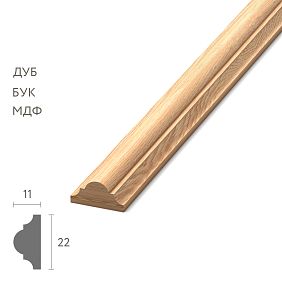
A profile consisting of several planes at different levels creates complex shadow play. This is no longer a flat molding but a three-dimensional element visible from any lighting angle. Stepped moldings are wider than usual—from fifty to one hundred fifty millimeters—and are used as significant architectural elements.
This profile is good for highlighting accent zones—niches, fireplaces, TV areas. It creates a sense of a portal, transition, framing something important. In modern classic, stepped moldings replace ornate historical profiles, preserving the idea of framing but in a modern, laconic execution.
Rounded Profile: Softness of Form
Moldings with soft rounded edges, without sharp corners—a compromise between traditional profiles and modern minimalism. They are perceived more softly by the eye, more pleasant to the touch (important for handrails, casings), and create a cozier atmosphere.
Rounded profiles are popular in Scandinavian-style interiors, where organic quality, naturalness, and absence of aggressive forms are valued. The rounding radius is small—three to six millimeters—enough to soften the form but not turn the molding into something classical.
Application of Wood Moldings in Space: Where and How
Modern moldings are a universal tool applicable in almost any interior zone. Let's consider specific use cases.
Walls: Structuring and Accenting
Large monochrome walls often look boring, especially in minimalist interiors.interior wall decorUsing moldings solves this problem without overloading the space. Several vertical strips create rhythm, making the wall dynamic.
The 'frame decor' technique is popular—rectangles or squares are marked on the wall, with moldings attached along their contours. This creates a paneled effect, referencing classic interiors but executed with modern means. Inside the frames, you can use contrasting paint, wallpaper, decorative plaster, or textile panels.
Compositions of moldings are especially effective in zones with accent lighting. Hidden lighting behind moldings creates a floating frame effect, adds depth, makes the wall lively and dynamic. This is a popular technique in bedrooms (headboard area), living rooms (TV area), and hallways.
Ceilings: Finishing and Visual Effects
The transition from wall to ceiling is an area requiring proper design. Traditional crown molding often looks massive in modern interiors with low ceilings. An alternative is thin horizontal moldings that create a clear boundary without visual heaviness.
If the ceiling has a complex form—multi-level, with niches, height variations—moldings help emphasize this architecture. They follow the contour of levels, frame niches, create graphic lines that make complex geometry readable and ordered.
Ceiling moldings are also used for concealed lighting installation, to mask technical elements (ventilation grilles, sensors), and to create decorative coffers in a modern style.
Doors and windows: modern framing
Casing is also a type of molding that frames door and window openings. In modern interiors, casing has become extremely minimalist—narrow (forty to sixty millimeters wide) rectangular strips without decoration. They create a clear outline of the opening but do not draw attention to themselves.
Trend 2026—concealed casing, where the door or window is installed flush with the wall, and the framing is created with thin inlaid moldings that form a shadow gap around the perimeter. This is the pinnacle of minimalism—the opening is highlighted but in the most subtle way possible.
For windows, wide window sills with a profiled edge, made from the same material and in the same style as the wall moldings, are popular. This creates stylistic unity among all interior elements.
Furniture: details that define quality
Moldings are used not only as architectural elements but also in furniture manufacturing. Modern cabinet, dresser, and bed fronts are often decorated with thin wooden strips that create geometric compositions. This echoes wall decor and creates interior cohesion.
Furniture moldings are especially effective on contrasting surfaces—light strips on a dark front or vice versa. Metalized moldings (painted in bronze, copper, or steel colors) are also popular, adding a touch of industrial aesthetics.
Color and Finish: From Natural Wood to Bold Solutions
How are modern wooden moldings finished? There are many options, and the choice depends on the overall interior concept.
Natural wood: honesty of the material
A transparent finish—oil or varnish—preserves the natural texture and color of the wood. This is the choice for interiors that value eco-friendliness, naturalness, and a connection with nature. Scandinavian style, eco-minimalism, Japanese aesthetics—here, natural wood moldings are right at home.
It is important to choose the right wood species to match the interior's color scheme. Light species (beech, ash, pine) for light walls, dark species (fumed oak, walnut) for contrast with white surfaces. An oil finish preserves the tactile feel of the wood, while varnish creates a smoother, more protected surface.
Painting: Integration into the Palette
Painted wooden moldings are a popular trend for 2026. Paint allows moldings to be integrated into the interior's color scheme, making them part of a unified composition. White moldings on white walls, gray on gray, graphite in loft spaces.
High-quality painting of wooden moldings requires proper surface preparation and the use of suitable materials. Water-based acrylic paints are the optimal choice for interior work. They are eco-friendly, odorless, dry quickly, and form a durable coating.
A modern trend is matte finishes. Gloss is a thing of the past; today, a velvety, tactilely pleasant matte surface is valued. It does not glare, does not highlight minor imperfections, and creates a sense of quality and luxury.
Toning: preserving texture while changing color
The golden mean between natural wood and paint is toning with stains or colored oils. The wood grain remains visible, but the color changes—from bleached oak to dark wenge, from gray to green or blue.
Colored toning is a bold trend in recent years. Moldings are toned in muted, complex colors—dusty pink, blue-gray, olive, terracotta. These unusual shades on the natural wood grain create a unique effect that cannot be achieved with plastic or painted wood.
Mounting and Care: Practical Aspects
The beauty of wooden moldings is only revealed with proper installation. Crooked installation, visible joints, gaps—all of this negates the effect of even the highest-quality material.
Surface preparation: the foundation of quality
Moldings are attached to a wall that must be perfectly flat. Any unevenness, bumps, or depressions will be visible after the molding is installed—it will not hide them but rather emphasize them. Therefore, before installation, walls are leveled with plaster or drywall, sanded, and primed.
For marking installation locations, a long level, laser level, tape measure, and pencil are used. Marking accuracy is critical—the slightest deviation from horizontal or vertical will be glaring. Professionals mark not individual points but draw continuous level lines to guide installation.
Fastening: Reliability and Invisibility
Wooden moldings are attached to the wall in several ways. The most reliable is a combination of adhesive and mechanical fasteners. Mounting adhesive (liquid nails, polyurethane glue) is applied to the back of the molding, the molding is pressed against the wall, and additionally secured with finishing nails or thin screws.
Finishing nails are almost invisible—their heads are small, without caps, and they are countersunk into the wood and filled with putty. When moldings are painted, the fastener locations are completely hidden. For natural finishes, wooden plugs matching the grain are used.
Molding joints—at corners and where straight sections meet—are executed with jeweler-like precision. Corners are mitered at forty-five degrees on a miter saw and joined without gaps. The slightest gap is noticeable and spoils the impression. Professionals adjust joints by hand to achieve a perfect fit.
Finishing After Installation
After installing the moldings, final finishing is performed. Fastener locations, joints (if there are micro-gaps), and minor defects are filled with wood putty, matched to the molding's color or prepared for painting.
After the putty dries, the surface is sanded with fine-grit sandpaper. Then, if the moldings are to be painted, primer and two to three coats of paint are applied. Between coats, light sanding is done for a perfectly smooth final finish.
If the moldings have a natural finish, after puttying and sanding, oil or varnish is applied. It is important that the product is applied evenly, without drips, runs, or missed spots. Carefulness at this stage determines whether the result will look professional or amateurish.
Care and longevity
Wooden moldings in the interior do not require complex maintenance. Regular dry or damp cleaning with a soft cloth removes dust. Avoid using aggressive cleaning agents, abrasives, or solvents—they can damage the finish.
An oil finish requires periodic renewal—every five to seven years, depending on conditions. The procedure is simple: light sanding and application of a fresh coat of oil. A varnish finish lasts longer—ten to fifteen years without renewal.
Painted moldings are the most low-maintenance — high-quality paint lasts for decades, and if necessary, they can be repainted in a different color, completely refreshing the interior without replacing the moldings themselves.
Trends 2026: what's relevant now
What specific trends dominate the use of wooden moldings this year?
Vertical slats: rhythm and dynamism
Vertical wooden slats are one of the main trends. They are used to create accent walls, zoning, and decorating bed headboards. The slats are mounted with uniform spacing (usually with gaps equal to or slightly larger than the width of the slat), creating a rhythmic structure.
The effect is enhanced if lighting is installed behind the slats — LED strips creating light strips in the gaps. This results in a dynamic, lively surface that changes depending on the lighting. This is popular in bedrooms, living rooms, and commercial interiors (restaurants, offices, hotels).
Large geometric compositions
Large-scale frames made of moldings, covering an entire wall or a significant part of it — a trend that originated in classic interiors but reinterpreted in a minimalist key. One large rectangular frame, divided by internal crossbars into smaller sections, creates the impression of a paneled wall.
Different materials or colors are used inside the sections — wallpaper, paint, fabric, mirror panels. The moldings serve as dividers, creating order in diversity. This is a complex solution requiring careful planning, but the result is impressive — the wall becomes a work of art.
Combinations of wood with other materials
Modern design loves contrasts and combinations. Wooden moldings are combined with metal profiles (brass, bronze, black steel), concrete surfaces, and marble. These combinations create a richness of textures, a play of warm and cold, natural and industrial.
The combination of wood and metal is especially effective in loft interiors. Wooden moldings soften the brutality of concrete and brick, add warmth, and make the space livable. Metal inserts in wooden compositions create an industrial accent highly valued in lofts.
Painting in architectural colors
Architectural (complex, muted) colors — terracotta, sage, dusty rose, graphite, indigo — are increasingly popular in 2026 interiors. Wooden moldings, painted or tinted in these colors, create an exquisite palette that looks expensive and contemporary.
Professional tinting is important — complex colors are difficult to achieve precisely, requiring the mixing of several pigments. But the result is worth it — the interior gains depth, individuality, and stands out from mass solutions in white and gray tones.
Frequently asked questions
How are wooden moldings better than polyurethane ones?
Wood is a natural, eco-friendly, durable material with unique texture and tactile properties. Wooden moldings are stronger, do not yellow, do not emit harmful substances, and create a special atmosphere in the interior. Polyurethane is cheaper and lighter but inferior to wood in prestige and eco-friendliness.
Can wooden moldings be installed independently?
Installation requires precision, the right tools (miter saw, level), and woodworking skills. Simple straight sections are suitable for DIY installation. Complex compositions, corners, and joints are best entrusted to professionals — improper installation will ruin even high-quality material.
What type of wood to choose for moldings?
For premium interiors — oak or ash. For the mid-range — beech. For budget projects or country house interiors — pine. The choice also depends on the desired texture — oak and ash have a pronounced grain, beech is more uniform.
How to care for wooden moldings?
Regular dry or damp cleaning with a soft cloth. Do not use abrasives or aggressive chemicals. Oil finishes should be renewed every five to seven years. Painted moldings are the most low-maintenance and can be repainted if necessary.
In what interior style are wooden moldings appropriate?
Modern moldings are versatile — they suit Scandinavian style, minimalism, contemporary classic, loft, and eco-interiors. The choice of profile, color, and application method is adapted to the specific style.
How much do wooden moldings cost?
The price depends on the wood type, profile complexity, and length. Pine moldings — from two hundred rubles per linear meter, beech — from five hundred, oak — from eight hundred. Complex profiles and exclusive wood types can cost several thousand per meter.
Can wooden moldings be painted any color?
Yes, wood takes paint beautifully. Use high-quality water-based acrylic paints with prior priming. Staining with wood stains is also possible while preserving the visibility of the grain.
How do moldings affect the perception of space?
Horizontal moldings widen, vertical ones elongate upward. Large compositions create focal points. Moldings structure large flat surfaces, add depth, and make the interior more complex and interesting.
Are moldings needed in small spaces?
Yes, but it's important not to overload. Choose thin profiles painted in the color of the walls, creating a delicate structure. Avoid too frequent or massive moldings—they will visually shrink an already small space.
Where to buy quality wooden moldings?
Choose specialized manufacturers and suppliers with experience, a wide range, consultation options, and delivery. Pay attention to processing quality, geometric precision, and wood moisture content (should be eight to ten percent).
Conclusion
modern wooden moldings 2026— is not just a decorative element, but a tool for creating a thoughtful, structured, aesthetically perfect interior. In the era of minimalism and conscious consumption, wooden moldings acquire special value—they combine functionality with beauty, naturalness with modernity, durability with relevance.
Trends for 2026 confirm: wood has not lost its appeal in the era of high technology and synthetic materials. On the contrary, its value has increased—as the value of authenticity in a world of imitations, as the value of eco-friendliness in an era of awareness, as the value of quality in a sea of mass production.
By choosing wooden moldings for your interior, you are making a choice in favor of long-term perspective. This is not a fleeting tribute to fashion that will become outdated in a couple of years. This is classic, reinterpreted for modernity, the foundation on whichStylish interior decoris built, which will remain relevant both in ten years and in twenty.
Company STAVROS has been engaged in the production and supply of high-quality wooden millwork for the Russian market for over two decades. Over these years, STAVROS has become one of the industry leaders, offering products that combine the traditions of carpentry craftsmanship with modern technologies and design trends.
The STAVROS assortment features an extensive collection ofmodern-style millwork—moldings, baseboards, cornices, architraves of various profiles and sizes. All products are made from selected wood of noble species—oak, beech, ash, larch—which undergoes strict quality control and proper kiln drying.
The use of high-precision computer numerical control equipment guarantees perfect profile geometry, surface purity, and component interchangeability. Every STAVROS product is the result of a synthesis of master craftsmanship, material quality, and technological excellence in the manufacturing process.
STAVROS offers not only standard catalog items but also custom manufacturing based on individual sketches. If you need a molding of a unique profile, non-standard size, or made from a special type of wood—STAVROS specialists will bring your idea to life. Minimum order quantities, flexible approach, and consulting support at all stages—from concept to installation.
By choosing STAVROS, you choose a reliable partner who understands the value of quality, respects craft traditions, and keeps up with current design trends. STAVROS is a guarantee that your interior will be not only beautiful but also durable, eco-friendly, and relevant for years to come.