Article Contents:
- What are wooden moldings and why do they change the perception of space
- Types of wooden moldings and their functions
- Ceiling cornices: the crown of the composition
- Wall moldings: structure and accents
- Floor skirting boards: protection and finishing
- Door and window casings: framing openings
- Round wooden trim: a universal element for stairs and decor
- Diameters and their application
- Wood species for round trim
- Combining moldings and round trim in interior design
- Panel systems with round elements
- Staircase complexes with decorative moldings
- Interior styles and choosing moldings
- Classicism: Symmetry and Ornamentation
- Minimalism: purity of lines
- Scandinavian style: naturalness and simplicity
- Loft: contrasts and brutality
- Technical aspects of installing moldings and trim
- Surface Preparation
- Adhesive mounting
- Mechanical fasteners
- Corner joints
- Finishing treatment: varnish, oil, paint
- Lacquering: protection and gloss
- Oil and Wax Treatment
- Painting: color and style
- Economics of choice: solid wood vs alternatives
- Polyurethane moldings: affordable and practical
- MDF moldings: a compromise option
- Solid wood: an investment in durability
- Trends and Modern Solutions
- Geometric compositions
- Accent walls with slats
- Integrated lighting
- Frequently Asked Questions
- What is the optimal molding width for a standard apartment?
- Can you combine wooden and polyurethane moldings?
- How to Care for Wooden Moldings?
- What diameter of round molding should be chosen for a handrail?
- Is It Necessary to Prime Molding Before Painting?
- Can wooden molding be bent for curved sections?
- Which wood species is best for moldings?
- How to calculate the required amount of molding?
- Can wooden moldings be used in the bathroom?
- How long do wooden moldings last?
- Conclusion
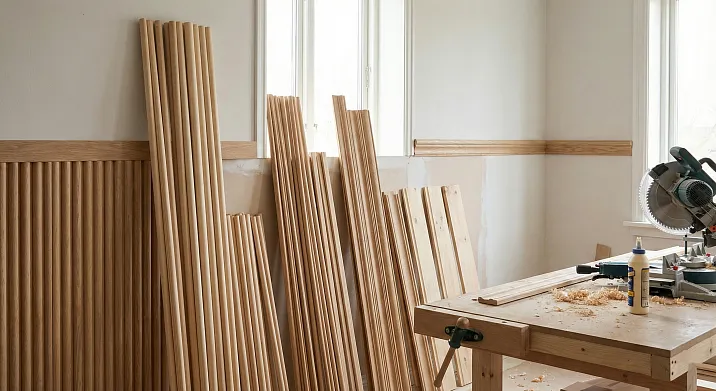
Imagine a room with perfectly smooth walls, new flooring, fresh paint — and yet the interior looks unfinished, devoid of character, flat. Something is missing. And that missing link becomes architectural detailing — those very relief lines, frames, profiles that transform an impersonal space into a thoughtful composition. We're talking about moldings and millwork — elements that seem secondary until you see how they work. One correctly installed cornice changes the visual height of the ceiling. One wall panel, framed by an elegant profile, creates an accent that draws the eye. AndWooden moldingsin combination withround wooden millworkform a multi-layered interior architecture that distinguishes thoughtful design from mere renovation.


What are wooden moldings and why do they change the perception of space
Wooden moldings— these are decorative strips of various profiles that are attached to walls, ceilings, furniture to create relief, frames, and visual separation of planes. Unlike polymer counterparts, wooden moldings possess tactile warmth, natural texture, and the ability to be restored multiple times. They don't just decorate — they structure space, set rhythm, and create a hierarchy of elements.
How does molding work in an interior? It draws lines that the eye reads as boundaries, accents, guides. A horizontal molding at chair-back height visually divides the wall into two zones, creating a classic paneling system. Vertical moldings on the sides of a doorway make it taller and more significant. A ceiling cornice separates the wall plane from the ceiling, adding architectural depth to the room. Without these lines, the interior loses structure and becomes monotonous.
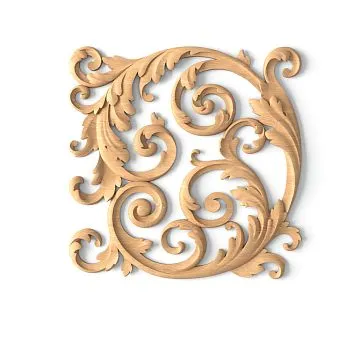
The profile of the molding determines its character. A flat strip with a bevel — this is minimalism and restraint. A relief profile with flutes and protrusions — this is classic and solemnity. A carved molding with a floral ornament — this is luxury and exclusivity. The choice of profile depends on the interior style, ceiling height, and purpose of the room.




Types of wooden moldings and their functions
Our factory also produces:


Ceiling cornices: the crown of the composition
A ceiling cornice is mounted at the junction of the wall and ceiling, creating a smooth transition between planes. It visually raises the ceiling if painted the same color as the wall, or lowers it if highlighted with a contrasting color. Classic cornices have a complex profile with decorative elements — ovolos, dentils, acanthus leaves. Modern cornices are laconic — simple geometry, clear lines, without excessive decoration.
The height of the cornice is selected proportionally to the room's height. For standard apartments with ceilings of two sixty — two eighty centimeters, a cornice height of eighty — one hundred twenty millimeters is optimal. For tall formal rooms — one hundred fifty — two hundred millimeters and more. A cornice that is too small will get lost in the space, one that is too large will overload and visually lower the ceiling.
Get Consultation
Wall moldings: structure and accents
Wall moldings are used to create paneling systems, frame mirrors and paintings, decorate fireplaces, and zone space. They can be placed horizontally, vertically, or in combination, forming rectangular sections on the wall — classic boiserie.
The width of wall molding varies from thirty to one hundred fifty millimeters. Narrow moldings create fine graphics, suitable for small rooms and modern interiors. Wide moldings form powerful frames, appropriate in spacious halls with high ceilings. Combining moldings of different widths adds complexity and expressiveness to the composition.
Floor skirting boards: protection and finishing
A skirting board is a molding that covers the joint between the wall and floor, protecting the lower part of the wall from mechanical damage and hiding the technological gap between the flooring and the wall. The function of a skirting board is utilitarian, but that doesn't mean it has to be unexpressive.
Buy wooden moldingsfor use as skirting boards — this means choosing a profile that will combine with the cornice and wall moldings, creating a unified system. A classic skirting board has a rounded top edge and a relief surface. A modern one — a rectangular cross-section with a bevel or without one at all.
The height of the skirting board depends on the room's height. Standard — seventy — ninety millimeters for apartments with ceilings up to three meters. For tall rooms — one hundred — one hundred forty millimeters. A massive, tall skirting board makes the interior more solid, but requires corresponding proportions of the cornice — otherwise the composition will lose balance.
Door and window casings: framing openings
A casing frames a door or window opening, hiding mounting gaps and creating a finished look. It can be simple — a flat strip, or complex — with carved elements, capitals, bases. The width of the casing — from fifty to one hundred twenty millimeters, depending on the size of the opening and the overall scale of the interior.
Casings are often combined with window sills, cornices above openings, pilasters on the sides — such a composition is called a portal and is characteristic of classic interiors. A portal turns an ordinary door opening into an architectural element, an accent that attracts attention.
Round wooden millwork: a universal element for stairs and decor
If moldings are planar profiles, thenwooden round balusters— these are cylindrical blanks that are used where roundness, ergonomics, and volume are needed. The most obvious application — stair handrails. But round millwork is also used as a decorative element: wall rails, support posts, panel framing, furniture parts.
Diameters and their application
Round millwork is produced in a wide range of diameters — from twenty to one hundred millimeters. Thin millwork (twenty — thirty millimeters) is used for decorative rails, light partitions, furniture parts. Medium diameter (forty — fifty millimeters) — this is the standard for stair handrails, wall rails, round balusters. Large diameter (sixty — one hundred millimeters) — these are support posts, columns, powerful decorative elements.
round molding purchaseshould be chosen considering the specific task. For a stair handrail, a diameter of fifty millimeters is optimal — it is comfortable to grip by hand, provides reliable support, and withstands load. For decorative purposes, you can choose any diameter that harmonizes with the overall scale of the interior.
Wood species for round trim
Oak is the benchmark for strength and durability. Oak round millwork lasts for decades even under intensive use. The texture of oak is expressive, with clear annual rings. The color varies from light golden to dark brown, depending on the treatment and staining.
Beech is a softer, but still hard wood. Beech millwork is easier to process, bends well after steaming, which is important for creating radius elements. The texture of beech is uniform, with small specks. The color is pinkish or reddish-brown.
Ash is an elastic and viscous wood species, resistant to impact loads. Ash trim is suitable for high-traffic staircases. The texture is contrasting, with pronounced stripes. Color ranges from light gray to olive-brown.
Larch is a coniferous species with the density of hardwoods. It contains natural resins that protect against moisture and decay. Larch trim is ideal for outdoor structures — verandas, terraces, gazebos. Color is golden-reddish, darkening over time.
Combining moldings and round trim in interior design
The real magic begins when flat moldings and round trim unite into a single composition. A flat molding creates a frame, and a round batten, attached on top or inside the frame, adds volume and tactility. Such a combination is characteristic of classic interiors — palaces, mansions, libraries.
Panel systems with round elements
Classic boiserie are wall panels framed by moldings. Traditionally, panels are rectangular, but adding round elements creates additional expressiveness. A thin round batten running along the center of a wide flat molding forms a linear accent. A round batten, attached vertically inside a panel, creates a vertical rhythm.
Such combinations require precise calculation of proportions. The diameter of the round batten should not exceed half the width of the flat molding, otherwise the composition will lose balance. The distance between vertical battens should correlate with the panel size — battens are usually installed at intervals of thirty to fifty centimeters.
Staircase complexes with decorative moldings
A staircase is not only treads and handrails, but also an architectural composition that can include moldings. A flat molding, attached to a riser, adds relief to the step.carved wooden moldings, installed on the side panels of a staircase, transform a utilitarian structure into a decorative interior element.
Round wooden balusters, used as a handrail, combines with flat moldings framing the staircase flight. Such a combination creates visual integrity, uniting the staircase with the overall interior of the room.
Interior styles and the choice of moldings
Classic: symmetry and ornamentation
A classic interior is unthinkable without moldings. Here they serve as architectural detailing, characteristic of palatial buildings. Ceiling cornices with complex profiles and carved elements, wall moldings forming panel systems, door portals with capitals and bases — all this creates an atmosphere of solemnity and nobility.
Decorative wooden moldings in classic style often feature gilding, patina, artificial aging. The color palette is white, ivory, gold, bronze. Symmetry is mandatory — moldings are arranged mirror-symmetrically relative to the central axis of the room.
Minimalism: purity of lines
A minimalist interior uses moldings sparingly. There are no carved ornaments or complex profiles here — only clear geometric shapes. Flat strips with bevels, rectangular cross-section, minimal relief. Colors are white, gray, natural wood without tinting.
Wooden wall moldings in minimalism perform a functional role — they conceal joints, create subtle accents, zone the space. They do not draw attention to themselves, but work for the overall composition, supporting a sense of order and conciseness.
Scandinavian style: naturalness and simplicity
Scandinavian interior values natural materials and simple forms. Wooden moldings here are used in their natural color — light oak, beech, ash. The finish is matte — oil or wax, which emphasize the wood grain and preserve tactility.
Profiles are simple — rectangular or with a slight rounding. Wall battens made of round trim, installed vertically at a certain interval, create a rhythmic composition characteristic of Scandinavian style. Such a wall looks lively, tactile, without overloading the space.
Loft: contrasts and brutality
Loft combines rough industrial materials with the nobility of wood. Moldings are used selectively here — where it is necessary to soften the brutality of concrete and metal. Wooden strips contrast with cold surfaces, creating warm accents.
Profiles can be deliberately rough — with traces of processing preserved, with uneven edges. Or, conversely — perfectly smooth, creating a contrast with the roughness of the walls. Color is dark — fumed oak, wenge, graphite.Round wooden trim to buy for loft should be made of dark wood species or with dark tinting.
Technical aspects of installing moldings and trim
Surface preparation
Quality installation begins with surface preparation. Walls and ceilings must be level, otherwise the molding will not fit tightly, creating gaps. The permissible unevenness is no more than two millimeters per meter. If the wall is wavy, it needs to be leveled with plaster or drywall.
The surface is cleaned of dust, dirt, old paint. It is primed with a deep-penetration compound to improve adhesive adhesion. Marking is done with a laser level or chalk line — lines must be strictly horizontal or vertical.
Adhesive mounting
For lightweight moldings (up to five kilograms per linear meter), adhesive installation is used. Polyurethane adhesives or liquid nails are used. Adhesive is applied to the back of the molding in a zigzag strip, the molding is applied to the wall, and pressed for several seconds.
The adhesive setting time is from fifteen minutes to one hour, depending on the type. During this time, the molding can be adjusted, aligning it with the markings. After setting, the adhesive polymerizes within twenty-four hours, after which the molding can be painted, tinted, or varnished.
Mechanical fastening
Heavy moldings (over five kilograms per meter) require mechanical fastening. Self-tapping screws are used, which are screwed through the molding into the wall at intervals of thirty to fifty centimeters. Holes for the screws are pre-drilled to prevent the wood from splitting.
The screw heads are countersunk two to three millimeters below the surface of the molding. The holes are filled with wooden plugs, which are glued and sanded flush. After finishing, the fastening points become invisible.
Corner Joints
The most complex stage of installation is corner joints. For internal and external corners, moldings are cut at a forty-five-degree angle on a miter saw. Cutting accuracy is critical—even a half-degree deviation will create a visible gap.
The ends are coated with glue, joined, and clamped until dry. If a gap still forms, it is filled with wood putty and sanded. A high-quality corner joint is invisible even upon close inspection.
Finishing: varnish, oil, paint
Lacquering: Protection and Shine
Varnish creates a durable protective film on the wood surface. Polyurethane varnishes are the most wear-resistant and suitable for moldings in high-touch areas. Acrylic varnishes dry quickly, are odorless, but less durable. Alkyd varnishes are a compromise option in terms of price and quality.
Varnish is applied in two to three coats with intermediate sanding. The first coat is a primer, which raises the grain. After drying, the grain is sanded with 320-grit abrasive, and the second coat is applied. The third coat is the finish, providing final protection and determining the level of gloss—gloss, semi-matte, or matte.
Oil-based treatment
Oil penetrates the wood, impregnating it, while wax creates a thin protective film on the surface. This treatment preserves the natural texture and tactile feel of the wood. An oil-treated molding is pleasant to the touch, non-slip, and has a matte surface.
Oil is applied generously, rubbed in with a cloth, and excess is wiped off after twenty to thirty minutes. After drying (24 hours), the surface is polished with a soft cloth. Oil coating requires renewal every one to two years, but the process is simple and does not require removal of the old coating.
Painting: color and style
Painting allows changing the color of the molding to match the overall interior palette. Water-based acrylic paints are used—they are odorless, dry quickly, and form a durable coating. Oil paints provide a denser layer but take longer to dry and have an odor.
Before painting, the molding is primed with white acrylic primer. The primer evens out the wood's absorbency, seals the pores, and creates a base for the paint. Paint is applied with a roller or brush in two to three coats with intermediate sanding using fine-grit abrasive.
Economics of choice: solid wood vs. alternatives
Polyurethane moldings: cheap and practical
Polyurethane moldings are two to three times cheaper than wooden ones. They are lightweight, moisture-resistant, do not crack, and are easy to install. However, polyurethane is a synthetic material that lacks texture, does not breathe, and yellows over time. A polyurethane molding looks artificial and does not create the warmth and coziness of natural wood.
For budget projects, temporary structures, or damp areas, polyurethane may be justified. But for residential interiors where atmosphere, eco-friendliness, and durability are important, wood is preferable.
MDF moldings: a compromise option
MDF moldings are thirty to forty percent cheaper than solid wood. They are geometrically stable, do not warp, and hold paint well. However, MDF is pressed fibers with a binder that lacks natural texture. An MDF molding can be painted but cannot be coated with clear varnish or oil—there is no texture.
For painted interiors where the molding will be white or colored, MDF is a reasonable choice. For interiors that value the natural texture of wood, solid wood is needed.
Solid wood: an investment in durability
Wooden moldings made from solid wood are the most expensive option. But it is an investment that pays off in durability, repairability, and aesthetics. A wooden molding lasts thirty to fifty years, can be repeatedly restored, repainted, and refreshed. A polyurethane or MDF molding will require replacement after ten to fifteen years.
Moreover, wooden moldings increase property value. The presence of high-quality wooden trim is a status symbol valued in the market. An apartment or house with wooden moldings sells faster and at a higher price than with polymer counterparts.
Trends and modern solutions
Geometric compositions
A modern trend is creating geometric compositions from moldings. Rectangles, hexagons, rhombuses formed by flat slats on a wall. Inside the shapes—contrasting paint, wallpaper, decorative plaster. Such a wall becomes an art object, a focal point of the interior.
For geometric compositions, narrow moldings—thirty to fifty millimeters—are used, creating thin lines that do not overload the composition. The color of the molding can be contrasting or tonal, depending on the desired effect.
Accent walls with slats
Vertical slats made from round or rectangular molding, installed on a wall at a specific interval, create a rhythmic textured surface. Such a wall is visually, tactilely, and acoustically interesting—the slats dampen sound waves, improving the room's acoustics.
The interval between slats varies from five to twenty centimeters. A frequent interval creates dense graphics, a sparse one—an airy composition. The slats can be painted in different shades, creating a gradient or pattern.
Integrated lighting
Moldings with integrated lighting are a trend of recent years. An LED strip is installed in a special groove of the molding, creating soft diffused lighting. Such a molding not only decorates but also illuminates, adding an extra level of comfort.
Lighting is especially effective in ceiling cornices—light is directed at the ceiling, creating a floating surface effect. In wall moldings, lighting creates soft shadows that emphasize the relief.
Frequently asked questions
What molding width is optimal for a standard apartment?
For apartments with ceilings of 2.60–2.80 meters, the optimal molding width is 50–80 millimeters. Narrower moldings will get lost, wider ones will overwhelm the space. For high ceilings, moldings 100–150 millimeters wide can be used.
Can wooden and polyurethane moldings be combined?
Technically possible, but aesthetically undesirable. Wooden and polyurethane moldings look different—wood has texture, polyurethane does not. The combination will be noticeable, especially in natural light. It's better to choose one material for the entire interior.
How to care for wooden moldings?
Regular dry cleaning with a soft cloth or brush. Wet cleaning—once a month with a slightly damp cloth without excess water. Do not use aggressive detergents or abrasives. Oil coating renewal—once every one to two years. Varnish coating renewal—once every five to seven years.
What diameter of round molding should be chosen for a handrail?
The optimal diameter for a stair handrail is fifty millimeters. This is the gold standard that ensures a comfortable hand grip. For children, forty millimeters can be chosen. For massive grand staircases—sixty millimeters.
Is it necessary to prime molding before painting?
Absolutely necessary. Primer evens out the wood's absorbency, seals the pores, and improves paint adhesion. Without primer, the paint will apply unevenly, fade quickly, and adhere poorly.
Can wooden molding be bent for curved sections?
Yes, but only after steaming or soaking. The wood becomes pliable, bends to the template, and is fixed until dry. Thin profiles made of beech or ash bend more easily. Bending thick and complex profiles is difficult; it's better to use ready-made curved elements.
What type of wood is best for moldings?
For classic interiors—oak, noble texture, maximum strength, durability of fifty years or more. For modern interiors—beech or ash, lighter with a uniform texture. For budget projects—pine, affordable price, but lower wear resistance.
How to calculate the required amount of molding?
Measure the perimeter of the room or the length of all sections where the molding will be installed. Add ten to fifteen percent extra for cutting and possible errors. For complex corners and joints, the extra may reach twenty percent.
Can wooden moldings be used in the bathroom?
Yes, provided there is high-quality moisture-resistant treatment and good ventilation. It's better to choose oak or larch—wood species resistant to moisture. Treatment with yacht varnish or oil with UV filters will provide protection. However, in areas of direct water contact, it's better not to use wood.
How long do wooden moldings last?
With proper care, solid wood moldings last thirty to fifty years with the possibility of multiple restorations. Oak moldings can last one hundred years or more—moldings from the eighteenth century have been preserved in historical buildings.
Conclusion
Buy wooden moldings—is a solution that transforms a bland space into a thoughtful interior with character, structure, and architectural depth. In combination withwooden round moldingthey form a multi-layered composition where flat and three-dimensional elements complement each other, creating visual richness.
The correct choice of profile, wood species, and finish determines the style and durability. Oak moldings create classic solemnity. Beech—elegant restraint. Ash—modern dynamism. Quality installation and regular care guarantee that the moldings will retain their appearance for decades.
STAVROS offers a full range of wooden moldings, cornices, baseboards, and round molding made from solid oak, beech, and ash. Each product undergoes strict quality control—from raw material selection to finishing. Chamber drying with humidity control of eight to twelve percent, precise processing on high-tech equipment, multi-stage sanding—all this guarantees geometric stability and impeccable appearance.
STAVROS works with private clients, designers, and construction companies across Russia and CIS countries. Flexible pricing, prompt delivery, technical support at all stages—from selection to installation. The catalog featurestypes of wooden moldingand ready-made solutions for various interior styles.
By choosing STAVROS moldings and molding, you choose quality tested by time, materials created with respect for the traditions of woodworking craftsmanship and attention to modern requirements. This is an investment in the beauty, durability, and value of your property.