Article Contents:
- Plastic moldings: a revolution in decoration
- What is plastic molding: materials and technologies
- Advantages of plastic moldings
- Disadvantages of plastic moldings
- Polyurethane moldings: balance of quality and practicality
- Polyurethane as a material: characteristics and properties
- Advantages of polyurethane moldings
- Comparison with Other Materials
- Applications: where to use plastic and polyurethane
- Wall moldings: structuring space
- Ceiling moldings: completing verticals
- Frame for openings: doors and windows
- Furniture moldings: facade decoration
- Painting technology: from preparation to finish
- Preparation of plastic moldings
- Preparation of polyurethane moldings
- Choosing paint: what suits plastic and polyurethane
- Paint application techniques
- Decorative effects: patina, gilding, metallic
- Practical recommendations: installation and maintenance
- Installation: adhesive and technology
- Care for painted moldings
- Repainting: updating the interior
- Frequently Asked Questions
- What is the difference between plastic and polyurethane molding?
- Can plastic moldings be used in the bathroom?
- What adhesive to use for installation?
- How much do plastic and polyurethane moldings cost?
- Can I install and paint them myself?
- Conclusion: practicality of modern solutions

A quiet revolution is taking place in interior architecture: traditional materials are giving way to high-tech polymer composites, which surpass them in most operational parameters.Plastic molding to be paintedandPolyurethane wall molding for paintingThis is not just an alternative to wood or gypsum, but a new generation of decorative elements combining practicality, durability, and aesthetic perfection. In 2026, when material requirements include not only beauty but also resistance to moisture, temperature fluctuations, and mechanical loads, polymer moldings become the optimal choice for modern interiors.


Plastic moldings: a revolution in decoration




What is plastic molding: materials and technologies
The term 'plastic molding' encompasses a wide class of products made from various polymers — polystyrene, polypropylene, PVC (polyvinyl chloride), composite plastics.Plastic molding to be paintedis manufactured by extrusion — forcing molten polymer through a forming nozzle, creating the molding profile.
Polystyrene — the most common material for budget plastic moldings. It is lightweight (density 1000-1050 kg/m³), easy to cut, mounts with adhesive, and costs 2-3 times less than polyurethane. Polystyrene moldings are supplied white and primed for painting. The surface is smooth, dense, and well accepts water-based paints.
PVC (polyvinyl chloride) — a more durable plastic, resistant to moisture and chemical exposure. PVC moldings are used in rooms with aggressive conditions — bathrooms, kitchens, industrial spaces. They are not afraid of water, cleaning agents, or temperature fluctuations. The PVC surface is dense, non-porous, and ideal for painting.
Composite plastics — multi-component compositions combining various polymers with reinforcing additives (glass fiber, mineral fillers). Composites are stronger than ordinary plastics, have a lower coefficient of thermal expansion, and are more stable during temperature fluctuations.Plastic molding to be paintedfrom composites — a premium solution.
Our factory also produces:


Advantages of plastic moldings
Moisture resistance — the main advantage of plastics. Unlike wood or MDF, which swell from water, or plaster, which softens, plastic is completely inert to moisture. Plastic moldings can be installed in bathrooms, showers, saunas, pools, and kitchens — places where other materials quickly deteriorate.
Dimensional stability — plastic does not expand or contract due to humidity changes, unlike wood. The linear expansion coefficient is minimal and easily compensated during installation. Moldings retain their original geometry for decades, without gaps or detachment from walls.
Lightweight — plastic moldings are 3-5 times lighter than wooden or plaster analogs. This simplifies transportation, installation, and reduces load on structures. Ceiling moldings made of plastic do not require reinforced mounting and can be mounted with ordinary adhesive.
Ease of processing — plastic is easily cut with a standard saw, circular saw, even a sharp knife. No special tools are required. Cuts are clean, without chips.Plastic molding to be paintedis installed quickly and easily.
Affordable price — plastic moldings are 2-4 times cheaper than wooden ones, and 1.5-2 times cheaper than polyurethane. With a limited budget, plastic is the optimal solution, providing a decent result at minimal cost.
Ecological safety — modern plastics are safe, do not emit toxic substances, and have sanitary-hygienic certificates. Polystyrene and PVC are used in the food industry, confirming their safety. Plastic moldings can be used in children's rooms, medical facilities.
Get Consultation
Disadvantages of plastic moldings
Brittleness of polystyrene — moldings made of ordinary polystyrene are quite brittle, easily break under impact or rough handling. Care is required during installation. Impact-resistant polystyrene (with rubber additives) lacks this drawback, but costs more.
Limitations regarding paint — polystyrene is afraid of solvents. Alkyd enamels, nitro paints, and white spirit-based paints cannot be used — they dissolve polystyrene. Only water-based paints — acrylic, latex, water-emulsion — are suitable. PVC and composites are more resistant, but also prefer water-based paints.
Thermal sensitivity — plastics soften at elevated temperatures (above 60-80°C). Near powerful lamps, fireplaces, or radiators, plastic moldings may deform. Adequate distances from heat sources are required.
Less pronounced relief — compared to polyurethane or wood, polystyrene moldings have less pronounced relief. Fine decorative details may be simplified due to technological limitations of extrusion. For classic interiors with rich decoration, plastic is not always optimal.
Polyurethane moldings: balance of quality and practicality
Polyurethane as a material: characteristics and properties
polyurethane moldings— these are high-density foam polyurethane products (300-400 kg/m³). Polyurethane is a polymer obtained by reacting polyols with isocyanates. During the reaction, a foamed structure with closed pores forms, creating a lightweight, strong material.
Production of polyurethane moldings occurs by casting into molds. Liquid polyurethane composition is poured into silicone or polyurethane molds, where it foams and hardens, taking the shape of the molding. Casting allows reproducing the finest ornament details — scrolls, leaves, rosettes appear clear and expressive.
Polyurethane wall molding for paintingis supplied white or primed. Primer creates a base for paint, improves adhesion, and equalizes absorbency. Quality moldings are primed in two layers at the factory, ensuring ideal preparation for painting.
Advantages of polyurethane moldings
Ornament detail — polyurethane reproduces the finest relief details with precision down to tenths of a millimeter. Classic ornaments — acanthus leaves, roses, scrolls, denticles (teeth), grooves (channels) — appear volumetric, expressive, visually indistinguishable from plaster moldings or wood carving.
Lightweight yet strong — polyurethane is 5-7 times lighter than plaster, 2-3 times lighter than wood, yet strong and elastic. It withstands mechanical loads and impacts (within reasonable limits), does not crumble or break.Buy wall moldings for paintingmade from polyurethane — means obtaining the optimal weight-to-strength ratio.
Moisture resistance — polyurethane with closed pores does not absorb moisture, does not swell, does not deform. Polyurethane moldings are suitable for bathrooms, kitchens, pools. After painting with moisture-resistant paint, they are completely waterproof.
Ease of installation — polyurethane moldings are mounted using special adhesive or quality liquid nails. The lightweight material allows bypassing mechanical fastening. Moldings are easily cut with a saw, and a stop block ensures precise mitering of angles.installing polyurethane moldingis accessible to non-professionals.
Flexibility — there are flexible polyurethane moldings that replicate the curves of arches, columns, and curved surfaces. This expands application possibilities — you can decorate bay windows, round rooms, arched openings, and create complex curved compositions.
Painting versatility — polyurethane accepts any paint — water-based emulsions, acrylics, latex, alkyds, oil-based. You can create matte, semi-gloss, or glossy finishes, apply metallic paints, achieve patina or gilding effects, and create multi-layer decorative coatings.Polyurethane wall molding for painting— it’s a canvas for creativity.
Durability — polyurethane does not age or lose its properties for decades. It is resistant to ultraviolet light (with UV stabilizers), temperature fluctuations, mold, fungi, and insects. The service life of polyurethane moldings is 30–50 years without changes in appearance.
Comparison with Other Materials
Polyurethane vs. Gypsum: polyurethane is 5–7 times lighter, stronger, moisture-resistant, and easier to install. Gypsum is brittle, heavy, moisture-sensitive, and requires professional installation. However, gypsum has a unique matte texture and 'breathes,' regulating humidity. For dry rooms requiring authenticity — gypsum; for all others — polyurethane.
Polyurethane vs. Wood: polyurethane is lighter, moisture-resistant, more stable (does not crack or dry out), and cheaper. Wood is more eco-friendly, has natural texture, and feels more tactile. For classic interiors with natural materials — wood; for modern, practical spaces — polyurethane.
Polyurethane vs. MDF: polyurethane reproduces more complex ornamentation, is moisture-resistant, and lighter. MDF is stronger when bent and has a wood-based core (more eco-friendly for some). MDF is moisture-sensitive and requires end protection. For humid spaces and complex decoration — polyurethane; for dry spaces with simple profiles — MDF.
Polyurethane vs. Polystyrene: polyurethane is stronger, has a more defined relief, and is more expensive. Polystyrene is cheaper, lighter, and easier to cut, but brittle and limited in paint options. For budget projects with simple decoration — polystyrene; for quality classic interiors — polyurethane.
Application areas: where to use plastic and polyurethane
Moldings for walls: space structuring
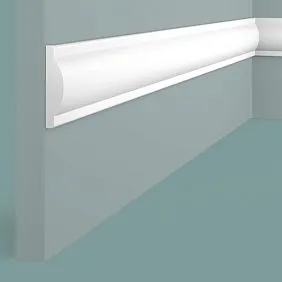
Buy wall moldings for painting— it means obtaining a tool for creating architectural structure. Wall moldings form panels — rectangles on walls, creating rhythm and visual division. Plastic and polyurethane moldings are ideal for this task.
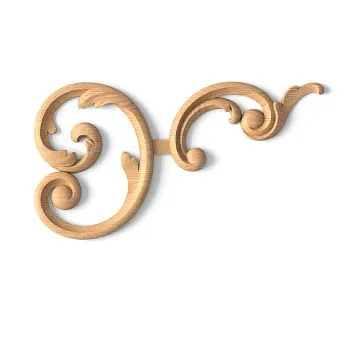
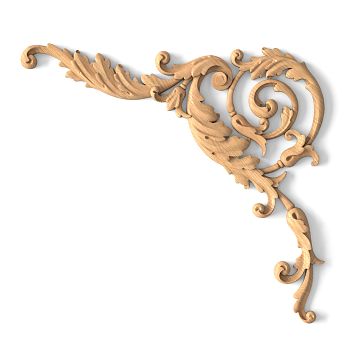
Classic panels: moldings form rectangles in the lower third of the wall (imitating boiserie), in the middle, or along the entire height. Corners are fitted withdecorative rose outletsorCorner moldingsAfter installation, the entire composition is painted — panels in one color, the rest of the wall in another, moldings as accent.
Wallpaper division: when combining different wallpapers, moldings run along the boundary, hiding the seam and creating a clear division line. Usually at a height of 90–120 cm from the floor.Polyurethane wall molding for paintingis painted in neutral or contrasting color.
Vertical division: vertical moldings divide long walls into sections, creating proportionality. Suitable for narrow, long spaces — corridors, galleries. Vertical moldings visually raise the ceiling, creating a sense of elegance.
Ceiling moldings: completing verticality
Ceiling moldings for painting— cornices (gables) — run along the perimeter of the room at the junction of wall and ceiling. They hide the junction, create visual completion, and add height to the room (especially when painted to match the ceiling).
Simple cornices: smooth or with minimal profile, suitable for minimalist and modern interiors. Polystyrene cornices 5–10 cm wide — an affordable solution. Painted white (classic), in wall or ceiling color (visual effects), or contrasting (accent).
Profiled cornices: with relief, grooves, ornament — for classic interiors. Polyurethane cornices reproduce complex classic profiles. Width 10–20 cm for standard rooms, 20–30 cm for high ceilings.Polyurethane Ceiling Moldingscreates a palace-like atmosphere.
Cornices with hidden lighting: a special profile with a niche for LED strip. An LED strip is mounted behind the cornice, creating a floating ceiling effect. The cornice is painted to match the ceiling, and the lighting enhances the effect.Polyurethane wall molding for paintingwith (in this case, ceiling) lighting — a relevant solution for 2026.
Frame for openings: doors and windows
Moldings are used to frame door and window openings, creating an architectural frame.Window and Door Framingfrom polyurethane or plastic — a practical solution, especially for humid spaces.
Polyurethane door and window casings reproduce classic wooden profiles but surpass wood in moisture resistance and stability. After painting, they visually match wood.Decorative molding for door openingsfrom polyurethane creates a finished look.
Furniture moldings: facade decoration
Moldings are used to decorate furniture facades — kitchens, cabinets, chests. Polyurethane and plastic moldings are glued onto flat MDF facades, creating relief and classic style. After painting to match the facade color, a unified composition is formed.
Frame facades: moldings form rectangular frames on cabinet doors, imitating a classic latticed structure. A simple flat facade becomes an elegant classic.Wooden smooth furniture molding for paintingor polyurethane — the choice depends on budget.
Crown molding decoration: furniture crown moldings (top part of cabinets) are decorated with ornamental moldings. This creates completeness and classic elegance. Polyurethane moldings are lighter than wooden ones and do not burden the structure.
Painting technology: from preparation to finish
Preparation of polystyrene moldings
Polystyrene moldings are supplied primed, but the quality of priming varies. Before painting, inspect the surface — if there are defects, stains, scratches, additionally prime with acrylic primer for plastics. Primer is applied with a brush in a thin layer, dries in 2-4 hours.
PVC moldings have a smooth, non-porous surface with low adhesion. To improve paint adhesion, use a special primer-activator for plastics. It creates an intermediate layer to which paint adheres securely. Without primer, paint may peel off.
Molding joints, connection areas withcorner molding elementsFill with acrylic sealant. After drying, sand with fine sandpaper (grit 180-220). Remove dust with a damp cloth.
Preparation of polyurethane moldings
Polyurethane wall molding for paintingUsually supplied well-primed and does not require additional preparation. Simply clean with a damp cloth and allow to dry.
If moldings were stored under humid conditions, mold spots may appear. Treat with antiseptic, dry, and re-prime. Polyurethane itself is not susceptible to mold, but spores may be present on the surface.
Fill joints and mounting areas with acrylic sealant, sand after drying.installing polyurethane moldingWith careful sealing of joints — the foundation of quality painting.
Paint selection: what suits plastic and polyurethane
For polystyrene: only water-based paints — water-emulsion, acrylic, latex. Solvents damage polystyrene. Best choice — interior acrylic paint. It dries quickly, has no odor, creates a durable coating, and is washable.
For PVC: suitable water-based and slightly solvent paints. Acrylic paints — optimal choice. Alkyd enamels can be used, but test on a scrap piece first — some formulations may soften PVC.
For polyurethane: all types of paints are suitable — water-based, alkyd, oil-based, polyurethane. Universality — an important advantage. For interiors, optimal are acrylics (eco-friendly, odorless, quick-drying). For high-humidity spaces — latex (water-resistant, washable). For extra durability — alkyd enamels (hard coating, but slow-drying and odorous).
Paint application technique
Paint is applied with a brush, roller, or spray gun. Brush — optimal for profiled moldings, allows painting recesses. Flat brush 3-5 cm, synthetic bristles for water-based paints. Paint is applied in long strokes along the molding.
Roller — speeds up work on smooth moldings. Mini-roller 10-15 cm, velour or foam. Paint is applied with even movements. Not suitable for profiled moldings — does not paint recesses.
Spray gun — provides ideal coverage but requires protection of surrounding surfaces. Paint is sprayed in a thin layer, laying evenly. Spray gun is ideal for painting moldings before installation — lay moldings on a flat surface and paint in one pass.
Paint is applied in 2-3 thin layers with intermediate drying of 2-4 hours. First layer — base, second — leveling, third — finish if needed. Thin layers are better than one thick layer — they lay flatter, dry faster, and do not cause runs.
Decorative effects: patina, gold leaf, metallic
Patina: a light base layer (white, cream, gray) is covered with dark paint (brown, black, green) in recesses of the relief. Dark paint is applied with a sponge, immediately partially wiped off with a damp cloth, leaving it in recesses. Creates an effect of noble antiquity.Decorative stuccoWith patina, it looks expensive.
Gold leaf: the base layer is covered with gold paint on raised parts of the relief. Gold paint is applied with a dry brush — brush is dipped in paint, almost dried, then lightly brushed over raised parts. Gold remains on the peaks of the relief, creating a luxurious effect.
Metallic: metallic paints (silver, bronze, copper) create a modern, technological look. Paint is applied in 2-3 layers using standard methods. Result — moldings appear as if made of metal.— everything must correspond to the chosen era.Metallic colors are suitable for loft, high-tech, and industrial styles.
Practical recommendations: installation and maintenance
Mounting: adhesive and technology
Plastic and polyurethane moldings are mounted using special adhesive. For polyurethane — polyurethane adhesive or quality liquid nails such as "Moment Montage". For polystyrene — solvent-free acrylic adhesive or water-based liquid nails.
Adhesive is applied to the back of the molding in zigzag or dot patterns. The molding is pressed against the surface and held for 30–60 seconds. Excess adhesive protruding at the edges is immediately wiped away with a damp sponge. The adhesive sets in a few minutes and fully dries in 24 hours.
For heavy, wide moldings, temporary supports — wooden strips pressing the molding against the ceiling until the adhesive sets — are additionally used. After 24 hours, the supports are removed.installing polyurethane moldingWith supports, reliability is guaranteed.
Molding joints are made at a 45-degree angle (for external and internal corners) or at a right angle (when usingcorner elementsCutting at 45 degrees is done using a panel saw or a stusel — a tool for precise cutting.
Care for painted moldings
Plastic and polyurethane moldings painted with quality paint require almost no maintenance. Dust is removed with a dry or slightly damp soft cloth. For moisture-resistant paints (latex, alkyd), wet cleaning with cleaning agents can be used.
Do not use abrasive agents — they scratch the paint. Do not use solvents for polystyrene moldings — even through the paint, the solvent may damage the base. For stubborn stains, use a soapy solution.
Polyurethane moldings can be washed and disinfected (relevant for medical facilities, kindergartens). They withstand wet cleaning for decades without losing appearance.Polyurethane wall molding for paintingAfter proper painting, they last 30–50 years.
Repainting: interior refresh
An important advantage of paintable moldings — the possibility of multiple repaints. Tired of the color? Changed interior concept? Simply repaint. The surface is lightly sanded with fine sandpaper (grit 220–320) to create texture, cleaned of dust, primed (optional), and painted with new paint.
Polyurethane moldings withstand 10–15 repaints without loss of quality. Polystyrene moldings — 5–7 repaints (thick paint layers increase weight, molding may detach).Buy wall moldings for painting— meaning a long-term solution that evolves with your preferences.
Frequently asked questions
What is the difference between plastic and polyurethane molding?
Plastic (usually polystyrene) is cheaper, simpler, suitable for budget projects. Polyurethane is stronger, has a more defined relief, longer-lasting, and more versatile with paints.Plastic molding to be painted— for economy,Polyurethane molding— for quality.
Yes, this is one of the main advantages. Both plastic and polyurethane are completely moisture-resistant. After painting with moisture-resistant paint (latex), they withstand direct contact with water.
Yes, this is one of the main advantages. Both plastic and polyurethane are completely moisture-resistant. After painting with moisture-resistant paint (latex), they can withstand direct contact with water.Ceiling moldings for paintingPolyurethane — polyurethane adhesive or liquid nails "Moment Montage". For polystyrene — solvent-free acrylic adhesive or water-based liquid nails. Check the composition — solvents damage polystyrene.
Which adhesive to use for installation?
For polyurethane — polyurethane glue or "Moment Montazh" liquid nails. For polystyrene — solvent-free acrylic glue or water-based liquid nails. Check the composition — solvents damage polystyrene.
How much do plastic and polyurethane moldings cost?
Polystyrene — from 50 to 200 rubles per linear meter. Polyurethane — from 200 to 1500 rubles per linear meter (depending on width and profile complexity).Molding priceIt varies over a wide range.
Yes, this is one of the advantages.
Yes, this is one of the advantages.installing polyurethane moldingMounting and painting are accessible to non-professionals. Basic tools are needed — hacksaw or panel saw, brush or roller, adhesive. Manufacturer instructions detail the process.
Conclusion: practicality of modern solutions
Plastic molding to be paintedandPolyurethane wall molding for painting— these are 21st-century materials combining practicality, durability, and aesthetic perfection. They surpass traditional materials in moisture resistance, stability, ease of installation and maintenance, and open up limitless possibilities for color solutions.
Buy wall moldings for painting, Ceiling moldings for painting, Wooden smooth furniture molding for paintingAll these solutions are available in a wide range, allowing you to realize any design concept.
Company STAVROS offers a full range ofpolyurethane moldingsandof wooden elementsPaintable — for walls, ceilings, furniture, plain and profiled, narrow and wide, with ready-to-usecorner elementsAll elements are primed and ready for painting. Experienced consultants will help you select profiles and calculate the quantity, while delivery throughout Moscow, Saint Petersburg, and all of Russia will make your purchase convenient. Create interiors where modern materials serve for decades, maintaining a flawless appearance — choose STAVROS!