












































































Article Contents:
- What is wall molding for the living room
- How molding differs from stucco
- Where molding works best in the living room
- Why molding is used specifically in the living room
- Which moldings are suitable for the living room
- Smooth profiles: minimalism with architectural depth
- Classical profiles with relief
- Polyurethane moldings for the living room
- Paintable moldings to match wall color
- Moldings for TV zones
- What is better for a living room wall: molding, stucco, or panel
- When you specifically need molding
- When stucco is appropriate
- When it's better to buy a slatted panel
- When a flexible slatted panel works
- When is it best to combine moldings and panels
- Wall moldings for the living room by style
- Classic Living Room
- Neoclassical: architecturality without historical heaviness
- Modern Living Room
- Light living room: white molding on a white wall
- Dark living room: contrast as a tool
- Moldings and slatted panels in the living room
- Accent wall: molding + slats
- TV area: moldings and slatted panels
- Vertical rhythm in the living room
- Slatted panels with lighting in the living room
- Combining frames and panels: five rules
- What elements to buy together with molding for the living room
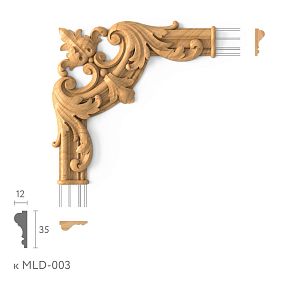
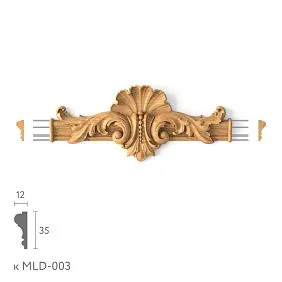
- Molded decor: corner overlays and cartouches
- Polyurethane wall decor
- Slatted panels and flexible slats
- Solid wood wall moldings
- Mistakes when choosing wall molding for the living room
- Too small a profile on a large wall
- Decor overload
- Lack of symmetrical logic
- Conflict between moldings and slatted panels
- Random mix of materials
- Where to buy wall molding for the living room
- For moldings and polyurethane decor
- For slatted panels
- How to avoid mistakes when ordering
- FAQ: Answers to Popular Questions About Wall Molding for the Living Room
- Which Molding to Choose for the Living Room?
- What's Better for Living Room Walls: Molding or Plasterwork?
- Can You Combine Moldings and Slatted Panels?
- Where to Buy a Slatted Panel for the Living Room?
- Is a Flexible Panel Suitable for an Accent Wall?
- Which Moldings Are Suitable for the TV Zone in the Living Room?
- Is Primer Needed Before Painting Molding?
- How to Calculate the Amount of Molding for Wall Frames?
- What Molding Width Is Optimal for 2.7 m Ceilings?
- What color molding to choose for the living room?
- Can molding be removed without damaging the wall?
- Are slatted panels with lighting difficult to install?
- About the Company STAVROS

The living room is not just a room. It is a space where the interior speaks for the owner before they even utter a word. That is why the living room walls are the most important element in the apartment: they are the first to catch the eye, set the tone for the entire space, and remain in memory longer than anything else.
Wall molding for the living room— is a tool that transforms an ordinary painted surface into an architectural object. Frames. Horizontal bands. An accent wall with a geometric program. Decorative panels around the TV. Classic stucco combined with modern vertical slats. All of this is available — and it all starts with choosing the right profile.
A person who seeksWall moldings for the living room, as a rule, already understands what they want: not just 'stick something on the wall,' but to create a decorative system — thoughtful, expressive, and matching the style of the space. Or they want tobuy a slatted panelfor an accent wall and doesn't know how to combine it with molding. Or is looking forwall stuccoand wonders: how does it differ from molding, and are both elements needed at once?
This article is a complete practical answer. No general reasoning, no fluff, with specific scenarios and commercial logic for selection.


What is wall molding for the living room
Before choosing, you need to understand the subject. It sounds trivial, but this is where most people make mistakes: they order 'something decorative for the wall' without understanding the difference between molding, stucco, and overlay, and end up with an inconsistent result.




How molding differs from stucco
Molding is a linear profile. Its function is to create horizontal or vertical lines, frames, and geometric divisions on the wall. Molding is an architectural tool: it organizes the wall space, sets proportions, and divides the surface into zones.
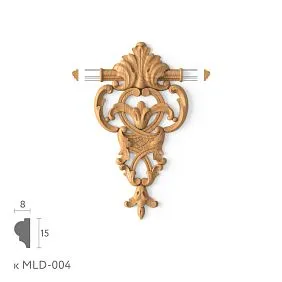
Stucco is three-dimensional decorative overlays: rosettes, cartouches, medallions, corner elements, relief panels. Its function is an ornamental accent at specific points in the decorative system.Molding— a professional term that combines both elements into a single decorative program.
The most important rule: molding andMolding for wallsdo not compete—they complement each other. Molding creates structure, stucco decorates key points of this structure. Stucco taken separately without molding geometry is a 'random decoration' without logic. Molding without stucco is strict geometry without ornamental warmth.
Our factory also produces:


Where does molding work best in a living room
The living room is a space with several functional zones, each requiring its own decorative accent:
-
Area behind the sofa (main accent wall) — a frame program of moldings or a combination of molding with slatted paneling;
-
TV wall — a rectangular frame of molding around the screen, a horizontal strip at screen level, vertical slats as a background;
-
Side walls — a more subdued molding program, supporting the rhythm of the main accent wall;
-
Niches and arches — molding as a framing for architectural elements.
Get Consultation
Why molding is used specifically in the living room
The living room is the only room in the apartment where a full decorative register is appropriate: from a delicate modern profile to a rich classical system with relief moldings anddecorative plasterwork on the walls. In the bedroom — restraint. In the hallway — functionality. In the living room — decorative freedom, limited only by the style and proportions of the room.
Which moldings are suitable for the living room
Choosing molding for the living room is not just a question of 'which is prettier.' It is a coordinate system: interior style × ceiling height × wall area × task (frames / accent wall / TV zone).
Smooth profiles: minimalism with architectural depth
A smooth rectangular profile without ornamentation is a versatile solution for modern interiors. After monochrome painting, it creates exactly the effect that is the whole point: a readable line on the wall, a shadow from a sharp edge, an architectural structure without stylistic commitments.
Smoothmolding in the living room on the wallworks in neutral modern, Scandinavian, and French urban interiors. Profile width: 30–50 mm with standard ceilings of 2.7 m. It is this width that creates a distinct line without decorative aggression.
Classical profiles with relief
Profiles with historical cross-sections—ovolo, ogee, torus, astragal—carry a pronounced play of light and shadow. With side lighting, each change in height creates its own shadow, and the profile 'comes to life' on the wall.
ReliefWall molding for the living roomwith a classic cross-section is the right choice for living rooms in classic and neoclassical styles. After monochrome painting to match the wall, the relief works exclusively through shadow—no color accent, only architectural depth.
Width of a classic profile for the living room: 45–75 mm with ceilings up to 3 m. With ceilings above 3 m—75–120 mm.
Polyurethane moldings for the living room
Polyurethane is the professional standard for wall decor in residential interiors. Its advantages over other materials:
-
reproduces the most complex reliefs without loss of detail;
-
weighs 15–20 times less than plaster — installs with adhesive only;
-
does not crack with temperature fluctuations;
-
accepts any acrylic or latex paint;
-
service life — 30–40 years without deformation.
Polyurethane wall decor— moldings, cornices, trim, corner pieces — all made from the same material. This ensures a uniform finish when painted and a visually monolithic system.
Moldings for painting to match the wall color
One of the most sophisticated and yet 'quietest' techniques. The molding is painted to match the exact wall color — and visually 'disappears' in tone, remaining active through relief and shadow. A wall with tone-matched molding looks richer, 'heavier', more distinguished — not due to contrast, but due to the three-dimensional structure on a monochrome surface.
This is precisely the effect sought by those who understand the difference between an interior with 'expensive details' and a truly expensive interior.
Moldings for the TV zone
The TV area in the living room is a complex decorative challenge: the TV screen itself is a neutral rectangle, and it needs to be 'placed' into an architectural context. Moldings handle this task in several ways:
-
a rectangular molding frame around the television;
-
a horizontal band at screen height across the entire width of the wall;
-
Outer frame around the perimeter of the entire TV wall.
After overall painting, the moldings for the TV zone create the feeling of a 'built-in' architectural object, not a 'hung TV'.
What is better for a living room wall: molding, plasterwork, or paneling?
A fork-in-the-road question that trips up most people. We'll give honest answers without marketing tricks.
When molding is specifically needed
Molding is the choice when the task is to create geometry: frames, belts, horizontal or vertical divisions. Molding organizes the wall surface on the principle of 'an empty field inside a frame'—and it is this field that becomes the decorative object. It works through order and proportion, not through ornament.
If you want to divide the wall into symmetrical rectangular panels—you need molding. If you want to create a horizontal belt in the lower zone of the wall—molding. If you want to highlight an architectural niche—molding. It's always a question of geometry, not decoration.
When is plasterwork appropriate?
wall molding for salePlasterwork is needed when the task is to add an ornamental accent to already created geometry. Corner rosettes in the corners of molding frames, a cartouche in the center of the decorative field, a medallion above the sofa. Plasterwork is the 'punctuation mark' in the architectural text: it is placed where an accent is needed, but it does not create the text itself.
Exactly thereforewall moldingPlasterwork and molding are almost always a pair. First, molding forms the structure, then plasterwork places accents at key points of this structure.
When is it better to buy a slatted panel?
Buy a slatted panel for the wall— the right solution when the task is to create vertical rhythm on a wall. A slat panel consists of parallel vertical lines with equal spacing between them. They create an effect of depth, movement, and 'breathing' of the surface. This is not the geometry of molding (horizontal frames) or the ornament of stucco—it's a rhythmic texture.
A slat panel is a choice for a TV wall, an accent wall behind a sofa, or decorative niches. It is especially expressive when combined with lighting:Slatted panels with lightingcreate warm, diffused light between the slats, which 'enlivens' the wood.
When a flexible slat panel works
Flexible panel— is a slat panel on a flexible base that can be mounted on curved surfaces: arched walls, columns, niches with rounded corners. Where a rigid slat would not lay without gaps—Flexible slatted panelsthey wrap around any geometry without losing rhythm or appearance.
For standard straight walls, a flexible panel is not needed—a regular slat panel is sufficient there. But for non-standard architectural situations, it is an indispensable solution.
When it's better to combine moldings and panels
Combination is one of the most professional techniques in living room decor. Molding sets an outer frame on the wall, inside which a slat panel is mounted. After overall painting (or while preserving the natural color of the slats), a decorative system is obtained in which the molding and panel mutually enhance each other: the frame provides architectural completeness, and the slats provide rhythmic texture.
For more details on how panel molding works specifically in the living room, see the article.Slatted panels in the living room interiorIt thoroughly examines scenarios from an accent wall to full space design.
Wall molding for the living room by style
Style is not a matter of taste. It is an architectural discipline that determines which profile is appropriate and which creates dissonance. We'll explain each typical scenario.
Classic living room
Classic in the living room is a rich decorative program: wide relief molding (55–90 mm) for frames on all walls, a horizontal dado in the lower wall zone, a cornice around the ceiling perimeter. Frame corners feature corner rosettes fromdecorative wall moldings, centers of large fields feature cartouches.
Everything is painted in a single color: white, cream, ivory. Maximum chiaroscuro play with side lighting. Maximum architectural 'weight'. This is exactly what classic paneling looks like — walls that tell the story of the home.
Neoclassical: architecturality without historical heaviness
A neoclassical living room is classic through a modern lens. Smooth or low-relief profile (40–60 mm), simple rectangular frames without corner overlays, neutral shades (white, light gray, dusty beige). No excess — only clear geometry, even proportions, monochrome surface.
Molding for the living roomMolding in the neoclassical spirit is 'quiet luxury': decor that is felt but does not shout. This is what those who want an expensive result without historical quotes strive for.
Modern living room
Molding in a modern neutral living room is delicate and targeted. Narrow smooth profile (20–35 mm), monochrome painting, limited number of frames (1–2 accent walls, the rest are clean). Here, molding is a background for furniture and furnishings, not an independent decorative hero.
In modern living rooms, molding is often not used on all walls, but only on one—an accent wall. This creates a clear decorative focus without overloading the space.
Light living room: white molding on a white wall
White wall + white molding is the most sophisticated option. The profile 'disappears' in color but creates a three-dimensional structure on a flat surface. The shadow from the molding edge on a white background is maximally readable: even a slight relief gives a distinct horizontal line.
White molding on a white wall in a light living room is 'invisible architecture,' which professional designers call one of the most complex and most effective techniques. The complexity lies in the precision of execution. The effectiveness lies in that 'expensive space' effect, which is impossible to explain to someone who hasn't seen it.
Dark living room: contrast as a tool
Dark walls—anthracite, graphite, deep green, navy blue—with white or light molding create a theatrical, expressive result. The contrast enhances every line of the profile: the frames are literally 'drawn' on the dark surface.
This is a bold solution, but with the right color choice—flawless. A dark living room with white molding photographs like a design object and lives in memory as a cohesive artistic image.
Moldings and slatted panels in the living room
This is the most important practical block for those who want not just to 'add molding,' but to create a full-fledged decorative system on an accent wall.
Accent wall: molding + slats
A classic technique: molding creates an outer rectangular frame around the perimeter of the accent wall → a slatted panel with vertical wooden or MDF battens is mounted inside the frame. Everything is painted a uniform color — or the battens are left in the natural wood tone, contrasting with the painted molding.
Result: an accent wall with a two-layer decorative program. The molding creates an architectural frame, the battens create a rhythmic texture inside. Between the battens: depth, play of light, a sense of volume.
Tobuy slatted panelsIn the correct combination with molding — the batten spacing must be coordinated with the molding width. Rule: the batten spacing should not be too contrasting in scale with the profile width. Wide molding + sparse, wide battens = architectural monumentality. Narrow molding + frequent, thin battens = delicate, breathing rhythm.
TV zone: moldings and slatted panels
slatted panel for the television— one of the most popular requests in living room decor. Vertical battens behind the TV create a neutral, rhythmic background, making the screen look not like a 'hung appliance' but as part of the decorative wall.
Adding molding to this solution: an outer rectangular frame around the perimeter of the TV wall (or around the perimeter of the slatted panel) creates architectural completeness. Screen inside the frame → battens as background → molding as framing. Three layers of decorative program on one wall.
Vertical rhythm in the living room
Slatted panels in the living room interior create vertical visual movement. Vertical lines 'pull' the gaze upward — making the room seem taller. In living rooms with ceilings of 2.5–2.6 m, this is practically a mandatory technique for visually increasing the vertical dimension.
Molding in a horizontal register (frames, bands) and battens in a vertical one — two complementary decorative logics. The horizontal organizes, the vertical 'stretches'. The space gains both structure and dynamism.
Slatted panels with lighting in the living room
Built-in LED lighting between slats is a technique that transforms an accent wall from a decorative object into an atmospheric one.Slatted panels with lightingprovide soft, diffused light along the slat rhythm: a warm, delicate glow that 'enlivens' the wood texture and creates a living room atmosphere unattainable with ordinary spot lighting.
In this solution, the molding acts as an architectural frame: it completes the lighting program by separating the illuminated area from the rest of the wall. Without molding, the lighting 'spreads' across the wall; with molding, it concentrates within a decorative rectangle.
Combining frames and panels: five rules
-
One dominant element: either the molding is primary and the panel is the background, or vice versa. Two equally active elements create competition, not harmony.
-
Unified finish: the molding and slats are painted the same color — or the slats are left natural, but then the molding is painted in a neutral white/light color.
-
Coordinated scale: the width of the molding and the spacing of the slats are proportionally coordinated.
-
One accent wall: molding + slats — on one wall. The others — with simple molding or plain.
-
Light source: lighting is planned before installation, not after.
What elements to buy together with molding for the living room
Molding is the start of the program. A complete decorative system for the living room includes several elements that work in a unified key.
Molded decor: corner overlays and cartouches
Corner rosettes at the corners of molding frames are an essential element of a classical program. They conceal the joint of profiles at 45° and add an ornamental accent at 'critical' points of the geometry. Central cartouches in the middle of large fields are an additional decorative layer.
Buy wall moldingfrom the same catalog as the molding guarantees stylistic compatibility. The polyurethane of the molding and the polyurethane of the overlays behave the same when painted: identical adhesion, identical coverage, a unified finish.
Polyurethane wall decor
Decorative wall moldingmade of polyurethane — medallions, relief inserts, decorative friezes — is installed on top of an already created molding program. This is the 'final layer' of a classical decorative system, added only after completing all the geometry.
Logic of sequence: first ceiling cornice → then frame moldings → then corner overlays → then central decorative elements. Only in this sequence does the system look organic.
Slat panels and flexible slats
buy a slatted panelas an addition to a molding program — a sensible choice for an accent wall or TV zone. When ordering, it's important to coordinate: slat material (wood / MDF), finish (painted / natural), slat spacing.
Flexible slatted panelsare added in case of non-standard architectural conditions: arches, rounded surfaces, niches of complex shape.
Solid wood wall moldings
For living rooms with natural wood in furniture and finishes —Moldings for walls to buyfrom solid wood: beech, oak, birch. Wooden moldings create a unified material language with the furniture — without transitioning from 'living' wood to synthetic polyurethane. For oil, varnish, or paint — depends on the furniture's finish.
Mistakes when choosing wall molding for the living room
The practice of decorating living rooms allows for formulating typical errors with surgical precision.
Too small a profile on a large wall
A 15 mm wide molding on a 3 m high wall — a decoratively zero result. The narrow profile does not create a readable shadow; the frames look like scratches. For a standard living room with a 2.7 m ceiling, the minimum is 35 mm, the optimum is 40–55 mm.
Overloading with decor
Relief ornamental molding + corner rosettes + central cartouches + additional decorative belts + slatted panel — in a 20 sq. m living room with a 2.5 m ceiling, this is a disaster. Each decorative element requires space to 'breathe.' An overloaded living room produces an anxious, claustrophobic impression — regardless of the quality of each individual element.
Lack of symmetrical logic
Frames of different sizes without symmetry, different offsets of molding from the wall edge on different walls, misalignment of frame axes with window and door centers — these are errors that are 'read' instantly on an intuitive level. A person cannot explain why they feel uncomfortable in a living room with molding — but the reason is precisely the violation of decorative rhythm.
Conflict between moldings and slatted panels
Classical relief molding (wide, with ornament) + vertical slats in a minimalist spirit — two opposite decorative languages on one wall. Classic requires a classic frame, minimalism — minimalist molding. Mixing styles without a clear concept always yields a poor result.
Random mix of materials
Polyurethane molding + wooden slats in natural tone + plastic skirting — three materials without a single finish. After painting, polyurethane and MDF yield similar results. Natural wood is different. Plastic is the third. Solution: either paint everything in one color, or use materials from the same group (all wooden or all from the same synthetic series).
Where to buy wall molding for the living room
For moldings and polyurethane decor
Buy wall molding for the living room— section of polyurethane moldings, cornices, and skirting boards: here are concentrated all wall profiles for decorative programs of any style.
For overlays and moldings to moldings — section decorative wall moldings: corner rosettes, cartouches, medallions, relief inserts made of polyurethane.
For slatted panels
Buy a slatted panel for the wall— section of slatted panels: vertical panels made of natural wood and MDF for accent walls, TV zones, and non-standard architectural solutions.
Flexible panel— for curved surfaces: arches, rounded niches, columns.
How to avoid mistakes when ordering
Professional selection algorithm:
-
Determine the living room style → choose the profile type (smooth / relief / classic);
-
Measure the walls → calculate the amount of molding with a 15% reserve;
-
Determine if stucco is needed → select corner and central elements from the same series;
-
Resolve the issue with slatted panels → coordinate the finish with the molding;
-
Order everything in one place → guarantee of stylistic compatibility.
FAQ: answers to popular questions about wall molding for the living room
Which molding to choose for the living room?
Depends on the style. Classic — relief profile 55–90 mm. Neoclassical — smooth or slightly relief 40–60 mm. Modern interior — smooth narrow 25–40 mm. With standard ceilings of 2.7 m, the optimum is 40–55 mm.
What is better for living room walls: molding or plasterwork?
They serve different purposes: molding creates geometric structure, plasterwork adds ornamental accents. The best result is a combination:wall moldingplaced at key points of the molding geometry.
Can molding and slatted panels be combined?
Yes, and this is one of the most professional techniques. Molding creates an outer frame, inside which a slatted panel is mounted. Overall painting or coordinated contrast—a unified decorative object.
Where to buy a slatted panel for the living room?
In the sectionof slatted panels— here panels made of natural wood and paintable MDF or with a natural finish are presented.
Is a flexible panel suitable for an accent wall?
Flexible slatted panels— a specialized solution for curved surfaces. On a straight accent wall—a regular slatted panel. On an arched or rounded one—flexible.
What moldings are suitable for the TV area in the living room?
For the TV zone, a smooth or slightly textured profile is optimal: a rectangular frame around the perimeter of the TV wall + a horizontal strip at screen level. Slats behind the TV serve as a background element. A detailed breakdown of techniques is in the article.slatted panel for the television.
Is primer needed before painting molding?
Yes. Polyurethane molding without factory primer requires mandatory acrylic primer before the first coat of paint. With factory primer, you can paint immediately. Technique: 2 coats of paint with intermediate sanding.
How to calculate the amount of molding for wall frames?
Perimeter of each frame = (width + height of frame) × 2. Sum the perimeters of all frames. Add 15% for cutting and joints. This is the total linear meter amount of molding.
What molding width is optimal for ceilings 2.7 m high?
Optimal width for ceilings 2.6–2.8 m: 40–55 mm. This range corresponds to the visual scale of the room and creates a readable line without decorative aggression.
What color molding to choose for the living room?
Molding matching the wall color — 'quiet luxury,' a three-dimensional structure without a color accent. White molding on a light wall — a classic neutral option. Contrast molding (white on a dark wall or dark on a light one) — a theatrical, expressive technique for accent walls.
Can molding be removed without damaging the wall?
Polyurethane molding on acrylic adhesive can be removed with minimal traces, eliminated with putty and painting. On mounting foam — more difficult, often requiring partial plaster repair.
Are slatted panels with lighting difficult to install?
Not difficult, but requiring preliminary planning. The lighting cable is laid before panel installation, the diffuser and LED strip go between the slats. Details are in the articleSlatted panels with lighting.
About the company STAVROS
When it comes to creating a truly worthwhile result in the living room — not 'just molding on the wall,' but a thoughtful architectural program of moldings, stucco, and slatted panels — you need a supplier who has the complete set.
Wall moldings for the living room, Molding for wallsmade of polyurethane,Rafter panelsmade of natural wood and MDF,Flexible slatted panelsfor non-standard surfaces — this entire assortment is collected in the catalog of the company STAVROS.
STAVROS is a manufacturer and supplier of wooden architectural millwork and polyurethane interior decor. Wood and polyurethane moldings, stucco, slatted panels, capitals, cornices, architraves — over 500 items for any style and any project scale.
STAVROS works with private buyers, architectural firms, design studios, and construction contractors. Consultation on selecting a decorative program for the living room, calculating the quantity of elements, assistance in coordinating molding and slatted panels — standard service that turns a list of catalog items into a living interior. Because the living room is the first thing guests see. And STAVROS helps make that 'first' unforgettable.


