Article Contents:
- What is molding for baseboard and when it is searched for
- Why wooden baseboard is better than plastic
- Which profiles are suitable for baseboard
- Wooden floor baseboard made of solid wood
- Wide wooden baseboard
- Molding and baguette as adjacent solutions
- Ceiling baseboard: when not to confuse it with floor baseboard
- What is better to choose: molding, baseboard or cornice
- When you specifically need a floor skirting board
- When a user mistakenly searches for molding
- When cornice is needed
- How not to confuse ceiling and floor profiles
- How to choose molding for skirting board by task
- For classic interiors
- For rooms with high ceilings
- For a neat transition between floor and wall
- For painting
- For installation on heated floors
- How to choose molding for skirting board by material
- Solid wood
- MDF profile
- Ready-made molding
- Profile for painting or tinting
- What elements to buy together with the baseboard
- Door trims
- Ceiling cornice
- Wooden molding: how to assemble a full set
- Decorative elements for classic interior
- Mistakes when choosing molding for baseboard
- Confusion between cornice and baseboard
- Choosing ceiling profile instead of floor profile
- Too narrow profile
- Lack of stylistic connection with doors and moldings
- Incorrect run length
- Installation on adhesive without dowels
- Where to buy baseboard molding: a practical guide to the catalog
- How to choose a profile from the catalog
- Where to look in the catalog
- What to buy as a set
- Table: profile selection depending on room height and style
- FAQ: Answers to popular questions about baseboard molding
- What is baseboard molding?
- How does molding differ from baseboard?
- Can molding be used as a floor skirting board?
- Which profile to choose for the floor?
- What is better to buy: skirting board, cornice, or molding?
- What baseboard height is optimal for a standard apartment?
- Can wooden skirting board be painted?
- How to install wooden skirting board?
- Is a margin needed when purchasing wooden skirting board?
- How to care for a wooden baseboard?
- What is capinos and is it needed for skirting board?
- How to choose skirting board for underfloor heating?
- About the Company STAVROS
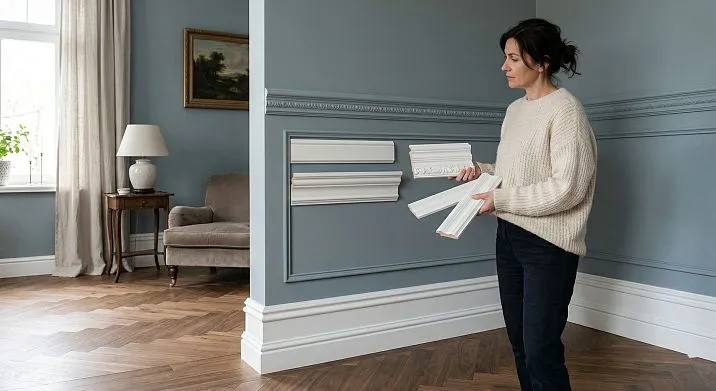
Molding for skirting board— this is a query driven by a very specific practical need: to find the right wooden profile for finishing the lower wall zone. Sometimes the user is looking for the baseboard itself. Sometimes — for a profile that can be used instead of a baseboard. Sometimes — for a decorative element to complement an existing baseboard in a classic interior. The essence is the same: the person wants a beautiful, neat, stylistically precise line where the floor meets the wall.
to buy wooden baseboard— is one of the most stable queries in the category of finishing trim. And the reason is simple: a wooden baseboard is not just a 'little plank by the floor'. It is an architectural element that sets the tone for the entire lower zone of a room, creates the visual foundation of the interior, and unites the floor, wall, and door casings into a single finishing system.
This article is a comprehensive professional answer to the question: which profile to choose, howwooden baseboarddiffers from molding and cornice, what to buy as a set, and what mistakes to avoid. No fluff — only practical advice that works.


What is baseboard molding and when people search for it
First of all — a small semantic clarification that will help you make the right choice from the start.
The query 'baseboard molding' hides three different user intents.
First: the person is looking forWooden baseboarda floor baseboard — a profiled wooden strip that is mounted around the perimeter of a room in the lower zone, covers the gap between the floor covering and the wall, protects the bottom of the wall from mechanical damage, and creates decorative completeness for the lower zone. This is the main commercial goal of the page.
Second: the person is looking for a profile that can be used instead of a standard baseboard — when the standard option doesn't suit the style, width, or relief. In a classic interior, for example, instead of a regular thin baseboard, a wide, profiled molding — 'molding for baseboard' — is installed.
Third: a person looks for an additional profile that is installed over or next to an already mounted skirting board — for example, a capinos (transition profile) or a decorative strip along the top edge of the skirting board. This is a less common scenario, but it occurs in classic interiors.
For all three scenarios, the answer is the same: a high-quality wooden molded profile made of solid wood with the correctly chosen cross-section is needed. And this is exactly what the wooden skirting board and molding catalog offers.




Why wooden skirting board is better than plastic
The comparison is correct and important. Plastic skirting board — fast, cheap, odorless. But it has fundamental drawbacks that are unacceptable in professional finishing.
First, plastic cannot be painted. The standard color is white, sometimes an imitation of wood with a 'laminated' coating. If the interior changes, the plastic skirting board is replaced entirely.
Second, plastic does not hold its shape under temperature fluctuations: it bends in the sun and cracks in the cold. In rooms with underfloor heating, plastic skirting board fails within 2–3 years.
Third, plastic is not repairable: a dent, crack, chip — only a complete replacement. A wooden skirting board can be sanded, filled, and repainted.
and paint it to the desired shade — standard practice in modern design. It is important to use special wood finishes that allow the material to breathe.— means buying for the long term. It is an investment in finishing quality that won't need to be redone in three years.
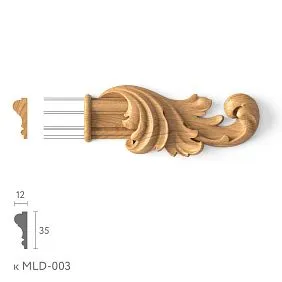
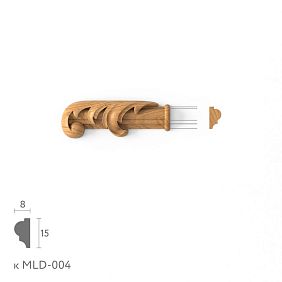
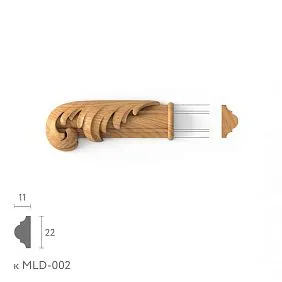
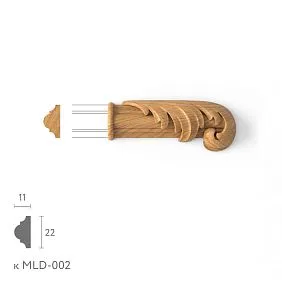
Our factory also produces:
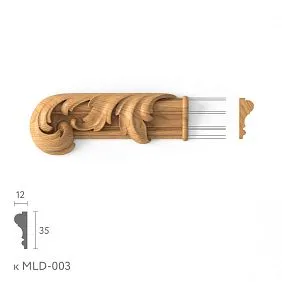
Which profiles are suitable for skirting board
The wooden molding market offers several categories of profiles, each solving its own task. Let's examine them in detail — because this is exactly where most buyers make mistakes.
Get Consultation
Solid wood floor skirting board
This is the main category.Buy high-quality wooden skirting boards— means getting a profile made from solid wood (beech, pine, oak, birch), with the correct cross-section for floor application:
-
Bottom plane — horizontal, rests on the floor surface or skirting parquet;
-
Rear plane — vertical, adjoins the wall;
-
Front surface — profiled, with one or several decorative transitions.
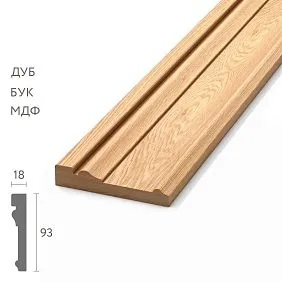
Standard height of solid wood floor skirting: 40–120 mm. Standard thickness (projection from the wall): 10–22 mm. For classic interiors, choose high skirting boards (70–120 mm) with pronounced relief. For modern minimalist ones — low (40–60 mm) with a smooth profile.
Beech is the best material forwooden baseboardspainting: fine uniform pore, density 720 kg/m³, ideal surface for primer and enamel. Oak — for skirting boards under tinting and varnish: pronounced texture, high hardness, noble color after processing. Pine — a budget option with soft wood, recommended only for rooms without intensive traffic.
Wide wooden skirting board
wide wooden baseboard— these are profiles with heights ranging from 80 to 150 mm. In modern interior design, wide skirting boards are experiencing a renaissance: they visually 'raise' the floor and create a powerful architectural horizontal line along the lower zone of the room.
Widewith a classic profile creates a sense of solidity, reliability.— is especially good in rooms with high ceilings: its monumentality corresponds to the vertical scale of the space. In standard rooms with a 2.7 m ceiling, a wide skirting board with a height of 120–150 mm occupies a significant part of the wall — this is a bold, but architecturally logical solution.
Molding and picture frame molding as adjacent solutions
Wooden trim— is a broad category that includes all types of linear wooden profiles: skirting boards, cornices, moldings, architraves, covings, handrails. It is here — in the molding section — that those who are unsure of the exact name of the required element look for a skirting board profile.
Buy wooden molding— is more often a task for framing pictures and mirrors, but in a historical sense, 'picture frame molding' and 'molding' are close concepts. For floor applications, 'skirting board' or 'skirting board profile' is used, not picture frame molding. This is an important terminological distinction that helps avoid mistakes when choosing.
Ceiling skirting board: when not to confuse it with floor skirting
Ceiling skirting board (coving) is a profile for the transition between the wall and the ceiling. It is lighter than a floor skirting, its lower plane is cut at 45° or has a concave profile to fit the internal corner of the ceiling/wall. It cannot be used for the floor — it does not have a stable lower plane to rest on the floor.
This is why it is important to clearly distinguish:Buy wooden ceiling skirting— is a task for the ceiling assembly.buy wooden baseboard for floor— is a completely different product, different geometry, different function.
What to choose: molding, baseboard, or cornice
One of the most common questions before purchase — and one of the most important. Terminological confusion in this category leads to the buyer getting something they don't actually need.
When you specifically need a floor baseboard
A floor baseboard is always needed when the task is to close the gap between the floor covering and the wall, create a neat horizontal line along the lower perimeter of the room, and protect the bottom of the wall from mechanical damage during cleaning.
wooden baseboard— is exactly this product: with a horizontal bottom plane, a vertical back surface, and a decorative front profile.
When the user mistakenly searches for molding
Some people entering the query 'molding for baseboard' are actually looking for a regular floor baseboard, simply calling it 'molding'. This is not a mistake — in common terminology, 'molding' often means any decorative profile, regardless of its application.
If you are looking specifically for a profile for the lower zone of the wall — you need with a classic profile creates a sense of solidity, reliability., not molding in the technically precise sense. Molding in professional terminology is a wall or furniture profile, not a floor one.
When a cornice is needed
wooden cornice— is a profile for the upper zone of the wall, the wall/ceiling transition, or a protruding horizontal element above a cabinet, shelf, or doorway. A cornice differs from a baseboard in its cross-sectional shape: it lacks a lower supporting plane but has a complex relief that works from top to bottom.
If your task is to decorate the top of a wall or create a decorative ledge above furniture, choose a cornice. If the task is the lower zone of the wall near the floor, choose a baseboard.
How not to confuse ceiling and floor profiles
Distinguish them easily by three features:
| Parameter | Floor baseboard | Ceiling baseboard/cornice |
|---|---|---|
| Bottom plane | Horizontal, flat | Cut at 45° or concave |
| Back plane | Vertical, flat | Cut at 45° |
| Installation | Against the wall vertically, resting on the floor | In the corner wall/ceiling |
If you see a profile with two planes cut at 45° — that's the ceiling version. If the bottom plane is horizontal and flat — it's the floor version.
How to choose molding for baseboards based on the task
Now — specifics of selection for specific scenarios. This is where the real design dialogue begins.
For a classic interior
wooden skirting boardsFor classic style — these are wide profiles 80–120 mm high with pronounced relief. A classic baseboard has several horizontal "shelves" in cross-section, which create light and shadow play and reproduce the logic of an architectural plinth. It is the wide relief baseboard that forms the "footing" of a classic interior — that architectural foundation that visually "supports" the entire space from below.
In a classic interior, the baseboard is inseparable from the system: baseboard + door trims + cornice + wall moldings — everything should belong to the same stylistic register and, ideally, the same product line.
For rooms with high ceilings
In rooms with ceilings 3 m and higher, the minimum baseboard height is 80 mm. The rule is simple: the higher the ceiling, the more monumental the lower horizontal element should be. A narrow baseboard in a high room visually "raises" the floor too high and makes the lower wall zone "bare".
For a neat transition between floor and wall
If the goal is simply to close the gap with minimal decorative impact, choose a profile 40–60 mm high with a smooth or minimally textured cross-section. This is a quiet, unobtrusive baseboard — it solves the technical problem and doesn't draw unnecessary attention to itself.
For painting
A profile for painting should have a fine-pored surface without a pronounced texture — exactly like beech. After sanding, priming, and applying enamel, the surface becomes smooth, 'dry,' matte, or satin — depending on the type of paint. The baseboard is painted together with other wooden elements of the room (doors, trims) in a single color — this creates decorative unity for all the wood trim.
For installation on heated floors
When installing on a heated floor, it is important that the baseboard is not rigidly attached to the floor covering — only to the wall, with a small 2–3 mm gap at the bottom to compensate for thermal expansion. This is a structural requirement that is often violated — and then people are surprised by deformed or detached baseboards after a year.
How to choose baseboard molding by material
Material choice is not just a matter of aesthetics. It's a matter of performance in use, compatibility with the floor covering, and ability to accept the final finish.
Solid wood
The best choice in terms of overall qualities.Wooden baseboardmade from solid beech, oak, pine, or birch — this is:
-
High density — does not deform under mechanical stress;
-
Ideal surface — accepts any paint, varnish, or tint;
-
Repairability — can be sanded and repainted;
-
Durability — service life of 20–40 years with proper care;
-
Tactility — when touched, you feel the density and hardness characteristic only of natural wood.
Beech skirting board — professional standard for painting. Oak — for tinting and oil. Pine — budget option for rooms without intensive use.
MDF profile
MDF skirting board — a more affordable option. Made from pressed wood fibers, has a smooth surface, paints well. Main drawback — afraid of moisture: swells and deforms when wet. Not recommended for kitchens, bathrooms, and rooms with wet cleaning. For dry living rooms — an acceptable solution.
MDF Crown— same story: excellent results in dry conditions, limited lifespan in humidity.
Ready-made millwork
Wooden trimmade from solid wood — this is a category that includes all types of linear profiles: skirting boards, architraves, cornices, coves, quarters, chamfers. When purchasing a finishing set (skirting board + architraves + cornice), it is important that all elements belong to the same product line and are made from the same type of wood. Only then will they accept paint uniformly and give a consistent tone after painting.
Profile for painting or for tinting
This is a fundamental choice that is made even before purchase.
For painting — a profile made of beech or birch is needed: fine pores, without pronounced texture, perfect surface after sanding.
For tinting — a profile made of oak or ash is needed: large, expressive texture that beautifully shows through under stain or oil tinting.
For varnish without tinting — both options are suitable, but oak gives a more impressive result due to its natural texture.
What elements to buy together with the baseboard
A proper baseboard is a system element. Buying it in isolation, without a set of coordinated profiles, means getting decorative dissonance in the lower zone of the room.
Door casings
The casing and baseboard in the same room should be made of the same material and, preferably, from the same series. Matching in width and profile relief is stylistic consistency. A mismatch creates a feeling of a 'composite' interior, which is difficult to explain but always noticeable.
Ceiling cornice
wooden cornice— the top completion of the decorative vertical of the room. The principle of material unity: if the baseboard is wooden, the cornice should also be wooden. If both are painted the same color, they form a unified horizontal system of lower and upper wall framing.
For a classic interior: wide baseboard (80–120 mm) + wide cornice (80–120 mm) = a monumental system of horizontal framing. It is this system that creates a sense of 'architectural completeness' in a room.
Wooden moldings: how to assemble a complete set
Wooden trimA complete set for one room includes:
-
Floor baseboard — the lower zone of the wall;
-
Ceiling cornice (cove) — the upper zone of the wall/ceiling;
-
Door casings — framing of door openings;
-
Quarter round or cove — corner transition profile (if necessary);
-
Cap molding — transition profile along the top edge of the baseboard (in classic interiors).
The entire set from one catalog — a guarantee of stylistic and material compatibility.
Decorative elements for a classic interior
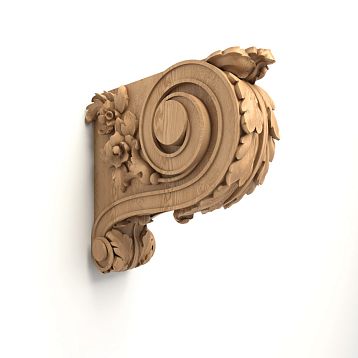
In a classic interior, wooden trim is not limited to baseboards and cornices. It also includes:
-
Corner blocks are decorative square elements installed at the corners where the architrave and baseboard meet;
-
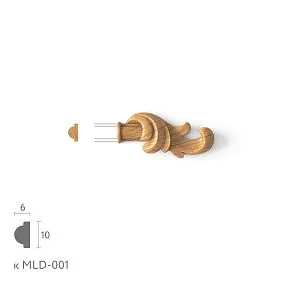
Decorative overlays — carved or relief elements along the top of the baseboard;
-
Wooden handles — if the room has built-in furniture.
Buy wooden moldingfor decorative elements — an additional touch of the classic program.
Mistakes when choosing molding for baseboards
Experience from many installations allows us to highlight several typical mistakes that occur again and again. Knowing about them is the best prevention.
Confusion between cornice and baseboard
The most common mistake is buying a ceiling profile instead of a floor one. In catalog photos, they may look similar, but the cross-sectional geometry is fundamentally different. A ceiling profile with two cut planes physically cannot be installed as a floor baseboard — it lacks a horizontal bottom base for support.
Always specify when ordering: 'floor baseboard' or 'ceiling cornice/cove' — they are not the same thing.
Choosing a ceiling profile instead of a floor one
Development of a previous mistake. A person sees in the search "Buy wooden ceiling molding" and takes the first profile they come across without checking the cross-section. As a result — an incompatible element that cannot be installed as a floor skirting board.
The rule is simple: before ordering, look at the profile's cross-section. If it has a horizontal bottom plane — it's for the floor. If not — it's for the ceiling.
Too narrow profile
A 20 mm high skirting board in a room with 3 m ceilings is an "invisible" element. It does not create the necessary architectural horizontal line, nor does it provide a visual foundation for the interior. The rule of proportional correspondence is mandatory for floor skirting boards: the height of the room is the criterion for choosing the skirting board's height.
Lack of stylistic connection with doors and moldings
A wooden skirting board with a relief classic profile in a room with smooth white doors without architraves and metal skirting boards in adjacent rooms is a decorative "loner." It is beautiful on its own but does not create a system. The skirting board and all wooden finishing elements should belong to the same decorative program.
Incorrect run length
The standard length of a linear profile is 2.4 or 3.0 meters. When purchasing, always calculate with a 10–15% margin: corners require trimming, joints require allowances. Saving on the margin results in a second order from a different batch — and that carries the risk of color mismatch.
Installation with adhesive without dowels
Common installation mistake: skirting board is glued only with liquid nails without mechanical fastening. In rooms with vibration (near highways, on upper floors) the adhesive gradually detaches. Correct installation: adhesive + finishing nails spaced 400–500 mm apart, nails are countersunk and filled.
Where to buy skirting board molding: a practical guide to the catalog
To buy correctly means to buy the first time and not overpay for rework.
How to choose a profile from the catalog
Step 1. Determine the task — floor skirting, ceiling skirting, or cornice. These are three different sections of the catalog.
Step 2. Determine the room height — this will determine the minimum profile height.
Step 3. Determine the style — classic relief profile or smooth minimalist.
Step 4. Determine the finish — for painting (beech) or for tinting (oak, ash).
Step 5. Calculate the quantity — room perimeter minus door opening widths, plus 15% reserve.
Where to look in the catalog
Forwooden floor skirting boards— section of floor moldings. This is where profiles with a horizontal bottom plane for installation at floor level are concentrated.
Forbuy wooden baseboard for floor— page for solid wood skirting board with detailed profile characteristics.
ForMDF cornice— cornice section: ceiling profiles of different widths and relief.
Forwooden trimas a set — section of solid wood moldings, where you can select a complete set of finishing for a room.
What to buy as a set
Minimum correct set for a classic room:
-
solid wood floor skirting board;
-
solid wood ceiling cornice or cove molding;
-
door architraves made of the same material.
Extended kit for classic interior:
-
floor skirting;
-
ceiling cornice;
-
door trims with corner blocks;
-
wall moldings;
-
decorative wooden handles.
Table: profile selection depending on room height and style
| Ceiling Height | Minimum skirting height | Recommended profile style |
|---|---|---|
| 2.5 m | 40–60 mm | Smooth or delicate relief |
| 2.7–3.0 m | 60–80 mm | Smooth or classic relief |
| 3.0–3.5 m | 80–100 mm | Classic relief |
| Above 3.5 m | from 100 mm | Wide classic, monumental |
FAQ: Answers to popular questions about skirting board molding
What is skirting board molding?
"Skirting board molding" is a common name for a wooden profile used as a floor skirting board or in combination with it. In professional terminology, it isWooden baseboarda floor — a linear element for the lower zone of the wall.
How does molding differ from a skirting board?
In a strict professional sense: molding is a wall or furniture profile for decorative surface finishing. A skirting board is a floor profile for the lower zone of the wall. In practice, these terms are often used as synonyms, especially regarding wooden profiles for painting.
Can molding be used as a floor skirting board?
Depends on the profile geometry. If the molding has a horizontal bottom plane — yes, it can be installed at the floor as a baseboard. If the bottom plane is beveled or concave — no, this profile is for another application. For a guaranteed correct result, it's better to choose specifically from the category vary from 40 to 120 mm in height and from 12 to 25 mm in thickness. The length of the planks is usually 2.0-2.5 meters, which allows minimizing the number of joints in the room..
Which profile to choose for the floor?
Buy high-quality wooden skirting boards made of beech — the optimal choice for painting. Made of oak — for tinting. Height — depending on ceiling height and interior style (see table above).
What is better to buy: baseboard, cornice, or molding?
For the lower wall zone — wooden baseboard. For the upper wall/ceiling zone — wooden cornice. For wall frames and decorative structures — molding. These are different tools for different tasks.
What baseboard height is optimal for a standard apartment?
For rooms with a 2.7 m ceiling — 60–80 mm. This is a standard height that is proportional to the room's scale and does not visually 'eat up' the wall.
Can wooden baseboard be painted?
Yes, and this is one of its main advantages. Wooden baseboard made of beech can be painted any color with acrylic or alkyd enamel. Technology: sanding → primer → joint putty → sanding → enamel (2 coats).
How to install wooden skirting boards?
To brick and concrete walls — using dowel nails spaced 400–500 mm apart. To drywall — using finishing nails with adhesive. Gap between skirting board and floor covering — 2–3 mm (expansion compensation). Internal corners — cut at 45° or use corner element.
Is a surplus needed when purchasing wooden skirting boards?
Always add 10–15% to the calculated footage. Cutting corners, joints, possible defects during cutting—all this requires spare material. Buying more from the same batch is often impossible: the shade may differ.
How to care for a wooden skirting board?
For enamel finish — regular damp cleaning with a soft cloth. For oil or wax finish — periodic application of protective oil (once every 1–2 years). For wear — local sanding and repainting without replacing the skirting board.
What is capinos and is it needed for skirting boards?
Capinos — a small transition profile installed along the top edge of the skirting board to create a neat transition to the wall. Used in classic interiors when the top end of the skirting board is visible and requires decorative finishing. For modern interiors — not mandatory.
How to choose skirting boards for underfloor heating?
Only from solid wood or high-quality MDF with moisture-resistant coating. Installation — only to the wall, not to the floor covering. Bottom gap — 2–3 mm. Solid wood skirting board is resistant to thermal loads with proper acclimatization before installation (conditioning in the room for 48 hours).
About the company STAVROS
When the goal is to assemble a full-fledged wooden finishing system, not just 'something similar,' it's worth turning to a specialized manufacturer.buy wooden baseboard for floorfrom solid wood, match it withwooden cornice, architraves, and the entireWooden trimset — all of this is in the STAVROS company catalog.
STAVROS is a manufacturer and supplier of wooden architectural elements and interior moldings made from solid wood. The catalog includeswooden skirting boardsof different profiles and heights, ceiling cornices, wall moldings, architraves, corner blocks, decorative overlays. All elements are made from high-quality solid wood — beech, oak, birch — and are supplied sanded, ready for customer painting or tinting.
STAVROS works with private customers, interior designers, construction organizations, and furniture manufacturers. Consultation on selecting a molding set, calculating material quantities, and assistance in choosing stylistically compatible elements — all of this is part of the standard service. Because the right baseboard is not just a 'strip near the floor.' It is an architectural element that sets the tone for the entire lower zone of your interior. And STAVROS helps make this choice correctly.